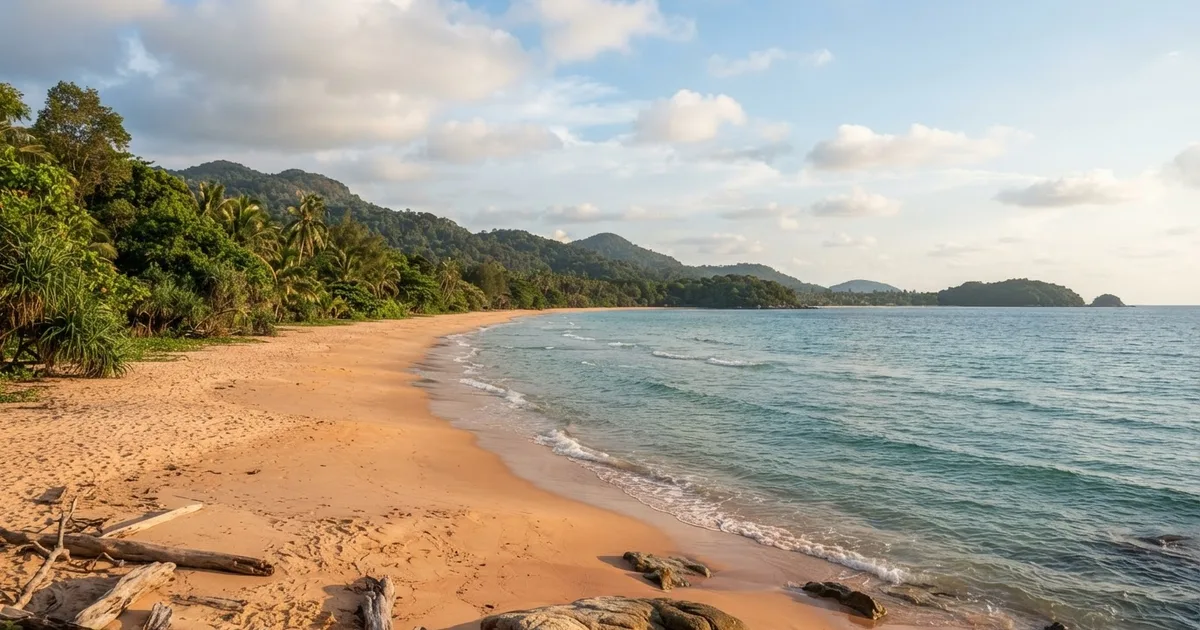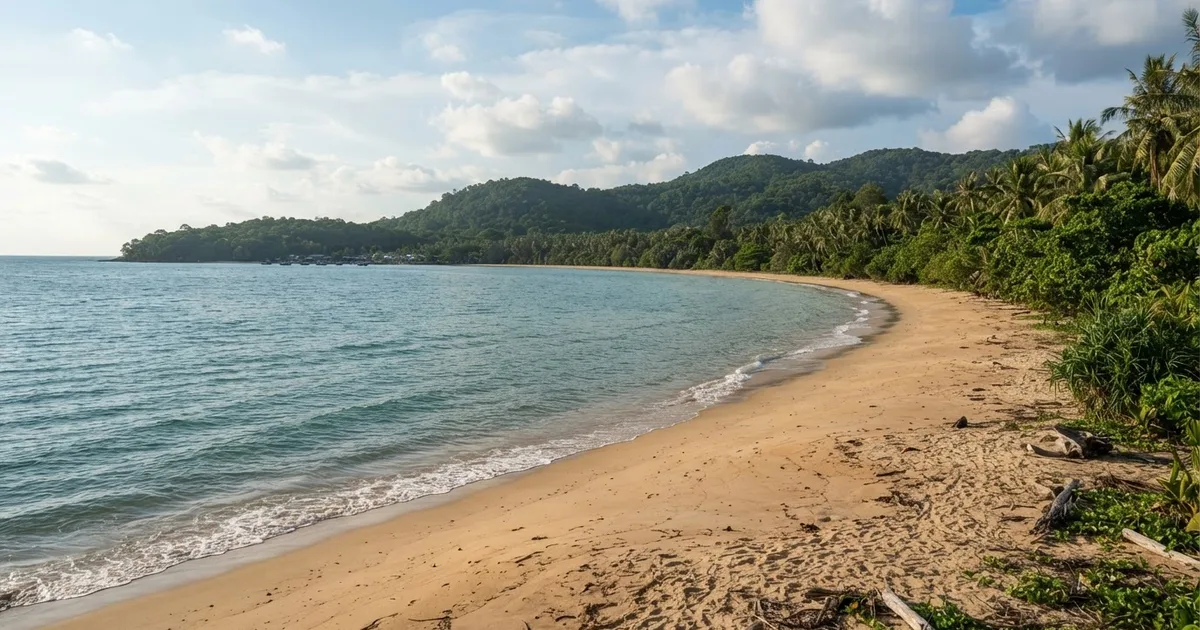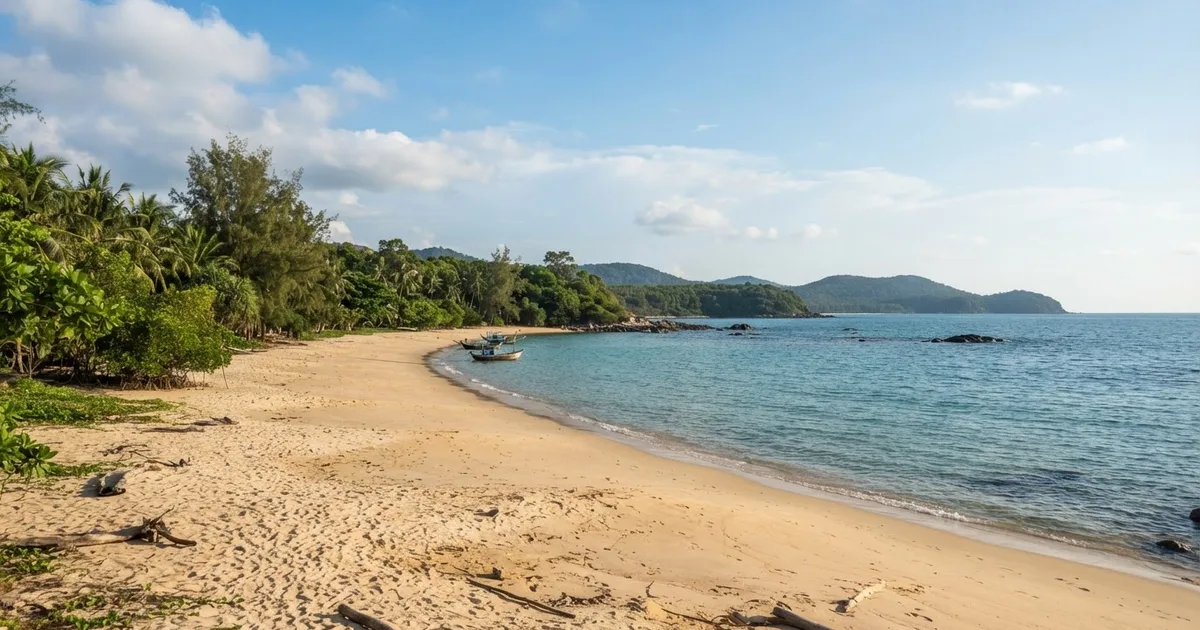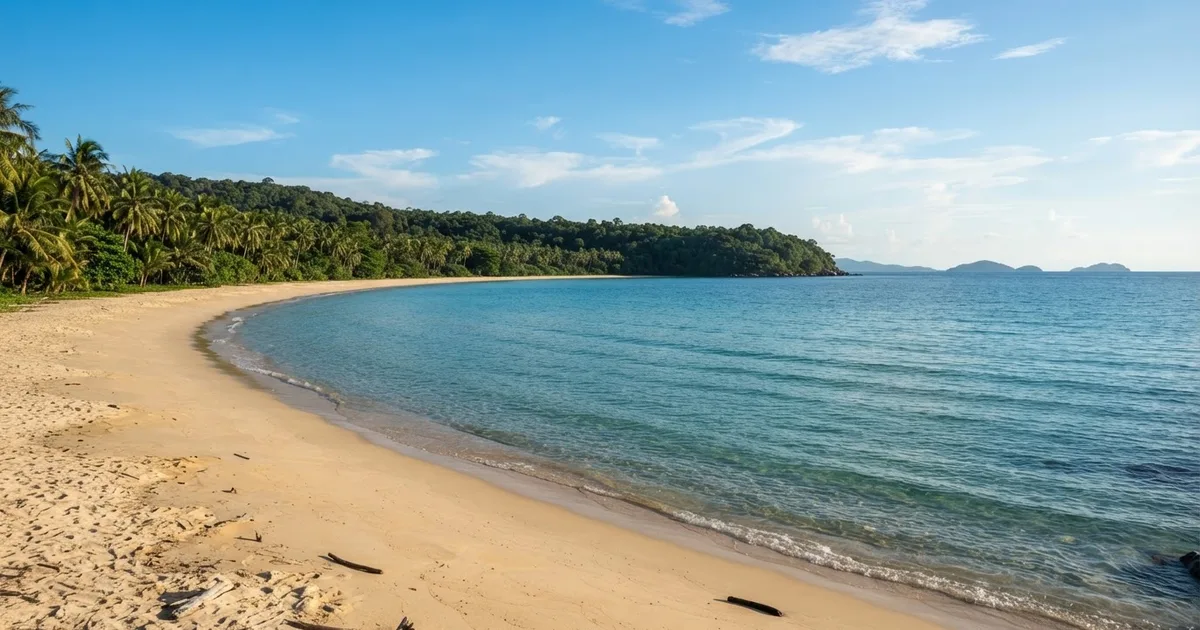
Vung Bau Beach is Phu Quoc's quietest easily accessible beach: a stretch of soft golden sand about 20 km northwest of Duong Dong, free to enter, with low crowds and clear turquoise water that is calmest and clearest from November to April. There are no lifeguards and almost no development - just a shallow, gently sloping bay that suits families and non-swimmers, with a handful of beachfront resorts clustered at the two ends.
Where Is Vung Bau Beach and What Is It Actually Like?
Vung Bau Beach sits on the northwest coast of Phu Quoc, wedged between Cua Can Beach to the south and Bai Dai - also known as Long Beach - to the north. That position matters more than it sounds: it puts the beach on the same coastal road that runs up toward the Vinpearl and Grand World complex, but far enough from both that tour buses and day-trippers rarely stop. The result is a long, open bay with soft sand in a warm golden tone, a shallow shelf underfoot, and water that reads as clear turquoise for most of the dry season.
The beach is genuinely undeveloped compared with Duong Dong's Long Beach or the hotel strip at Ong Lang. There is no promenade, no row of sunbed touts, no jet-ski operator. Some sections are backed by casuarina trees and grass; others are simply sand meeting the road. Access is free and on foot - there is no gate, no ticket and no formal opening or closing time. If you arrive by scooter you park on the shoulder.
What you will find at either end of the bay are low-rise beachfront resorts, which is why the only realistic accommodation directly on Vung Bau is a handful of mid-range and boutique properties rather than a backpacker strip. Everything in between is open beach. The recorded crowd level for Vung Bau is low, and in practice that means mid-week mornings in the dry season with nobody within 100 metres of you.
Local tip: walk 200-300 metres away from whichever resort you park near. The sand is identical, but the sense of having a private beach is the thing people actually come here for.
Vung Bau vs Other Phu Quoc Beaches - and Who It Is Not For
Vung Bau is not the most spectacular beach on the island. Sao Beach in the south has whiter sand, and neighbouring Bai Dai has more dramatic scale. What Vung Bau offers instead is emptiness, easy access and a reliable dry-season window. It is also worth being blunt about who should skip it: if you want beach bars, sunbed service, water sports, restaurants within walking distance or a lively sunset crowd, Vung Bau will feel boring. There is nothing to buy on most of the sand, nowhere to rent a kayak, and no shaded lounger unless a resort allows outside guests that day.
| Beach | Crowd level | Sand and water | Suits best |
|---|---|---|---|
| Vung Bau | Low | Soft golden sand, clear turquoise, shallow gentle shelf | Quiet swimming, families, snorkeling in calm months |
| Cua Can | Low to medium | Similar clarity, slightly darker sand, river mouth nearby | Riverside kayaking and lunch stops en route |
| Bai Dai (Long Beach) | Medium | Long and open, more wind and chop | Long walks, resort stays, sunset photos |
| Ong Lang | Medium | Good clarity, busier in high season | Restaurants and bars within walking distance |
| Sao Beach (south) | High | Whitest sand on the island, fully developed | Postcard photos, boat trips, day tours |
Families with small children and travellers based in the northwest of the island get the most out of Vung Bau. Couples who want a beach bar at sunset, groups looking for jet skis, and anyone without their own transport are a poorer fit - the last group especially, because once you are dropped off at Vung Bau there is no easy way back except a pre-booked taxi or a Grab that may take 15-25 minutes to arrive.
How to Get to Vung Bau Beach from Duong Dong
Vung Bau is roughly 20 km from Duong Dong, the island's main town and night market area. The two practical options are a rental bike or a taxi. There is no public bus that puts you on the sand, and walking the whole way is not realistic in tropical heat.
By rental bike (recommended). A 110-125cc automatic scooter rents for about USD 6-10 per day on Phu Quoc, fuel extra. From Duong Dong, head north on the coastal road toward Cua Can, cross Cua Can Bridge, and follow that road to the end. Turn right there and continue about 500 metres to the concrete bridge, cross it, then turn left - that puts you on the Vung Bau shoreline road. The whole ride takes 35-45 minutes depending on traffic and how often you stop for photos.
By taxi or Grab. Expect USD 12-18 each way from Duong Dong, or USD 15-22 from the Long Beach hotel strip. Ask the driver to wait or to give you a number, because return cars are not guaranteed. A common compromise is to hire a driver for a half-day loop covering Cua Can, Vung Bau and Bai Dai for around USD 35-50 total.
Before you ride out:
- Fill the tank in Duong Dong or Cua Can - there is no petrol station at Vung Bau.
- Check the scooter's brakes and tyres; the coastal road has sand patches on the bends.
- Screenshot the route - mobile signal is patchy along parts of the northwest coast.
- Bring a bike lock; parking is informal and unattended.
- Take drinking water and cash - there are no ATMs and card payment is rare.
Water Conditions, Seasons and Swimming Safety
In the dry season Vung Bau's water is clear turquoise and calm, and the bay's shallow, gently sloping floor makes it one of the safer swimming beaches on Phu Quoc for children and non-swimmers. The best swimming conditions run from November to April. From roughly May to October the southwest monsoon arrives: the water becomes noticeably cloudier, chop picks up, and clarity drops, especially near river mouths and for a day or two after heavy rain.
Snorkeling is worthwhile in calm water, but not around the headlands. Swimmers and snorkelers should expect coral and rocks in places, and sea urchins on the seabed - wear reef shoes, shuffle rather than stride, and never stand on coral. There is no lifeguard cover reported anywhere on Vung Bau Beach, so you are responsible for your own assessment of conditions.
Good for
- Families with young children
- Non-swimmers and weak swimmers
- Quiet snorkeling in the dry season
- Long beach walks and photography
Poor fit for
- Anyone wanting sunbeds, bars or water sports
- Swimming in the wet season, when it is cloudier and choppier
- Visitors without transport or a return plan
- People who need lifeguard cover on duty
Safety note: check the water before you swim. If it looks cloudy, if there is visible chop, or if the tide is pushing hard, treat it as a walking beach rather than a swimming beach and move on to a sheltered bay.
Best Time to Visit Vung Bau Beach, Month by Month
Phu Quoc's dry season runs from November to April and the wet season from May to October. Vung Bau faces northwest, which means it takes the southwest monsoon head-on in the rainy months - this is a beach that performs dramatically better in the dry season than the wet.
| Period | Water clarity | Sea state | Verdict |
|---|---|---|---|
| November - February | Excellent | Calm, glassy mornings | Peak season for swimming and snorkeling |
| March - April | Excellent | Calm, hotter afternoons | Best overall window; arrive early for shade |
| May - July | Fair | Occasional chop | Swimmable on calm days, less reliable |
| August - October | Poor to fair | Choppy, cloudy after rain | Walk and photograph rather than swim |
Time of day matters as much as season. Mornings from about 6:30 to 10:00 are calmest, coolest and emptiest; by 11:00 there is almost no natural shade on the central stretch of sand. Sunset is genuinely good here because the beach faces west, but the light goes fast and the road back to Duong Dong is unlit in sections - plan to leave before full dark if you are on a scooter.
What to Bring, and Where to Stay and Eat Nearby
Because Vung Bau has no facilities along most of its length, treat it like a self-sufficient beach day. Bring reef shoes, at least 1.5 litres of water per person, sun cream, a hat, a sarong or small shade, and cash. Leave valuables at your hotel - there is nobody watching the sand while you swim.
Accommodation directly on Vung Bau is limited to beachfront resorts at the two ends of the bay, mostly mid-range and boutique rather than large chains, which keeps the beach itself quiet. Most visitors instead stay in Duong Dong, Ong Lang or the Long Beach strip and visit Vung Bau as a half-day trip. For food, the reliable options are the resort restaurants at either end plus small local eateries along the Cua Can stretch of road; nearer the beach itself, expect a limited menu and limited opening hours.
Practical checklist for a Vung Bau day trip:
- Reef shoes for urchins and coral
- 1.5 L of water per person minimum
- Cash - no ATMs and almost no card machines
- Fully charged phone with the offline map downloaded
- Fuel checked before leaving Cua Can
- A dry bag for phones and keys if you snorkel
Frequently Asked Questions
Is Vung Bau Beach worth visiting in Phu Quoc?
Yes, if you value quiet over facilities. It is free to enter, has low crowds and clean, soft golden sand, and it sits only about 20 km from Duong Dong. Come for a calm swim and an empty horizon in the dry season; skip it if you want bars, sunbeds or water sports.
How do I get to Vung Bau Beach?
Take a rental bike or a taxi. From Duong Dong, follow the coastal road toward Cua Can, cross Cua Can Bridge, ride to the end of the road, turn right for about 500 metres, cross the concrete bridge and turn left. The drive is around 20 km and takes 35-45 minutes.
Is there an entrance fee at Vung Bau Beach?
No. Vung Bau Beach is free to enter and reachable on foot, with no ticketed access or parking charge reported. You may spend money at a resort restaurant or on a sunbed if one is offered, but the beach itself costs nothing.
When is the water clearest at Vung Bau Beach?
The dry season, November to April, when the bay is calmest and the water clearest turquoise. May to October brings the southwest monsoon: the water turns cloudier, chop increases, and clarity drops further near river mouths and for a day or two after heavy rain.
Is Vung Bau Beach safe for swimming and for children?
The bay is shallow and the slope is gentle, which makes it suitable for children and non-swimmers in calm dry-season conditions. However, there is no lifeguard cover reported. Watch for coral, rocks and sea urchins on the seabed, and avoid swimming in choppy or cloudy water.
Can you snorkel at Vung Bau Beach?
Yes, in calm water it is good for snorkeling. Stay away from the headlands and river mouths, where visibility drops and coral and rocks create hazards. Wear reef shoes, float rather than stand, and pick a morning between November and April for the best visibility.
Are there restaurants, shops or lifeguards at Vung Bau Beach?
Very few. There are resort restaurants at the two ends of the bay and small local eateries along the Cua Can road, but no shops, ATMs or lifeguards along most of the sand. Bring your own water, cash and shade, and keep valuables at your hotel.
Where should I stay near Vung Bau Beach?
The nearest accommodation is beachfront resorts at the ends of Vung Bau Beach itself, mostly mid-range and boutique. Most travellers instead base themselves in Duong Dong, Ong Lang or the Long Beach strip - all within a 20-40 minute ride - and visit Vung Bau as a half-day trip.
Planning a day at Vung Bau Beach? Sabrina Rental on Phu Quoc can sort your scooter, arrange a car and driver for the northwest coast loop, or book a room near the beach - plus local advice on which way the wind is blowing today.
Contact Sabrina Rental