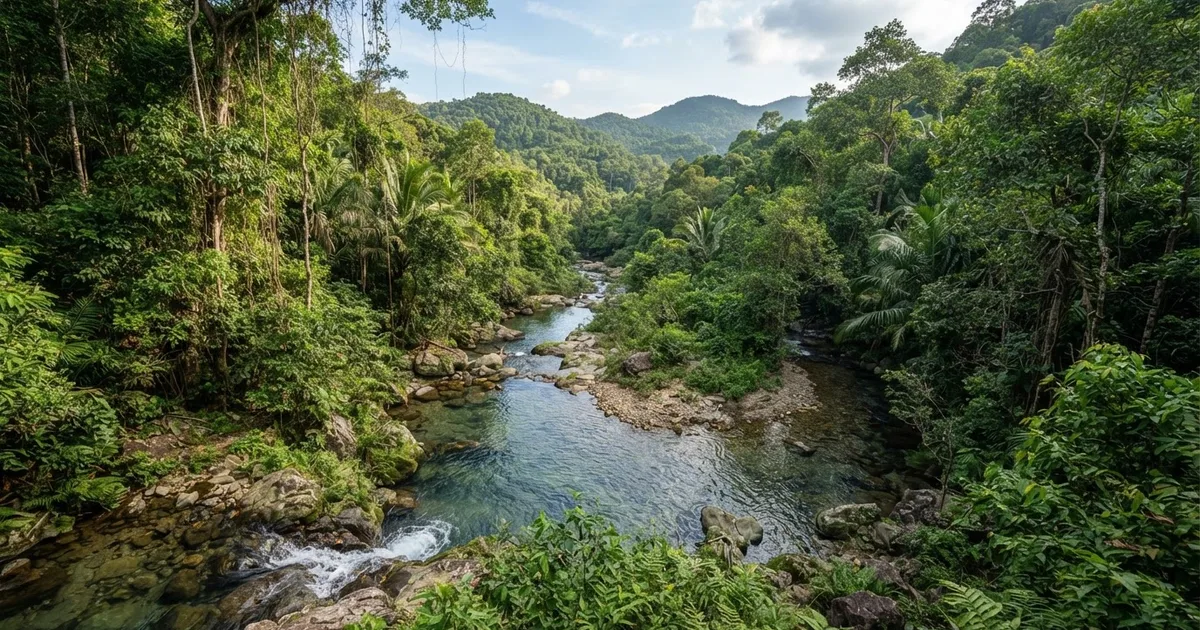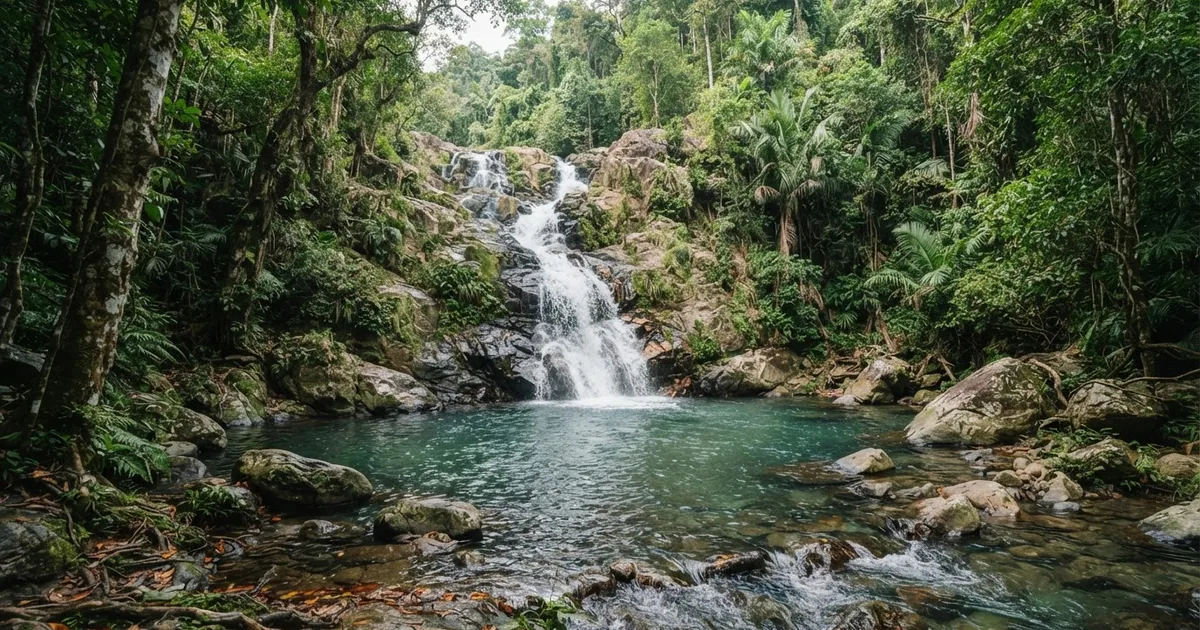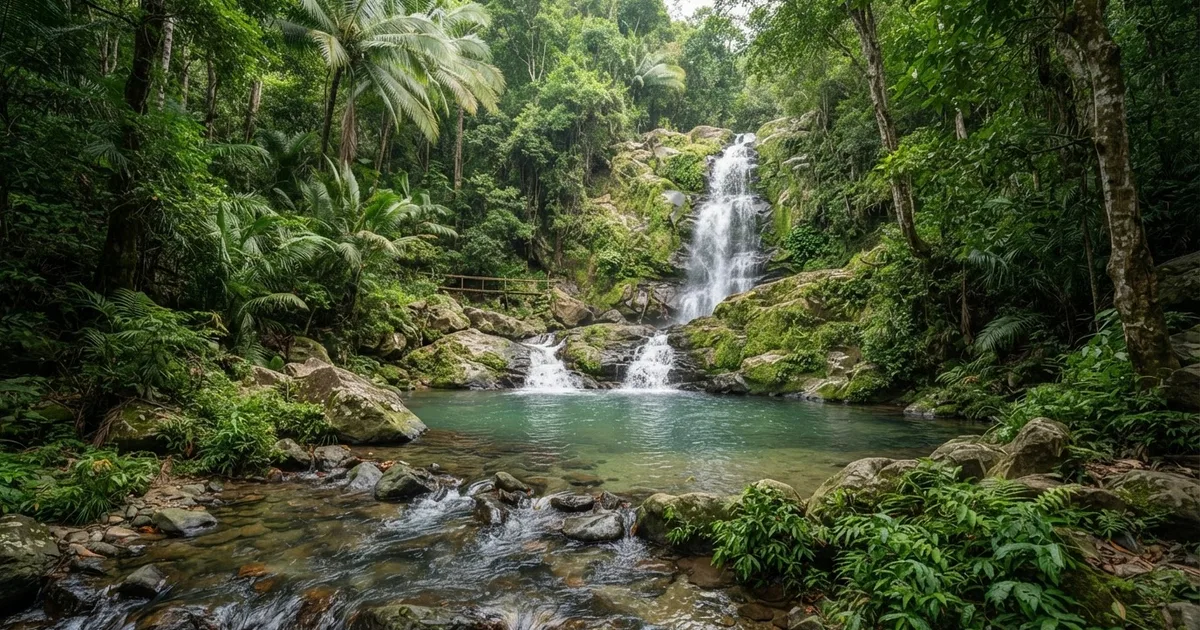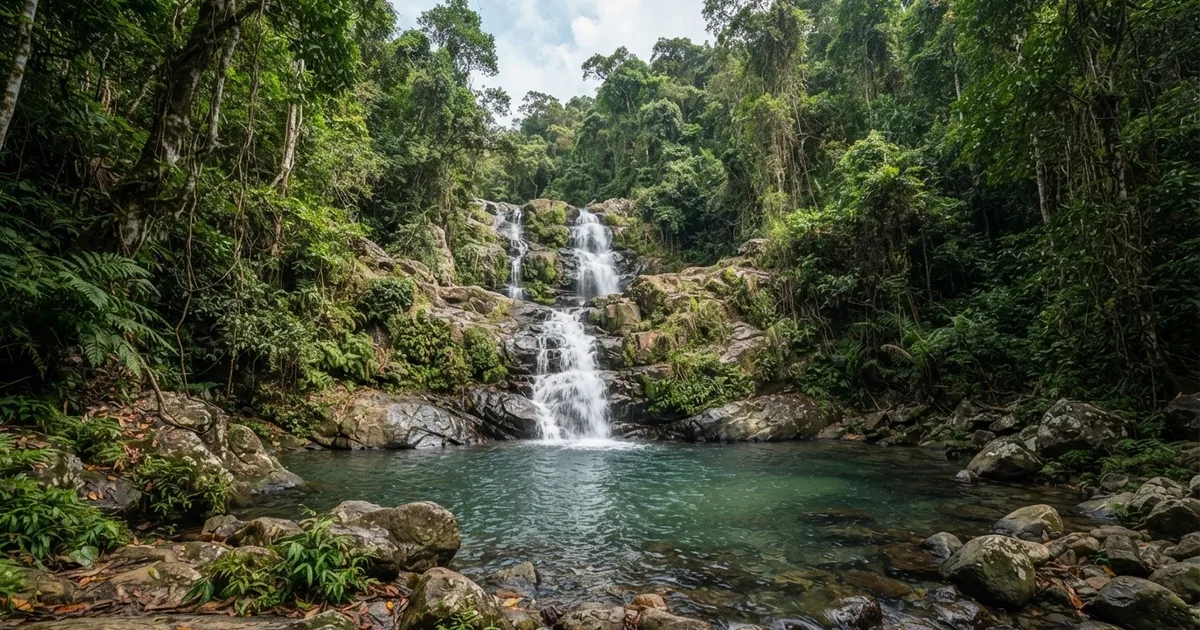
The 3 Waterfall Phu Quoc is worth visiting if you want a quiet nature stop, a short swim, or a picnic beside a jungle stream, but it is not the island’s most dramatic waterfall attraction. The best chance of seeing strong water flow is during the rainy season, generally May to October, although you should avoid visiting during heavy storms. For most travelers, the verdict is simple: go for greenery and relaxation rather than a spectacular cascade.
What is The 3 Waterfall Phu Quoc?
The name “The 3 Waterfall” is used inconsistently in travel listings and local recommendations. It may describe a small waterfall or stream area with several cascades, or an itinerary that combines more than one waterfall on Phu Quoc. Unlike a major theme park or a clearly ticketed attraction, it does not have a consistently published visitor profile covering an official entrance fee, trail length, elevation, or difficulty rating.
That uncertainty matters when planning. The experience should be treated as a natural stream visit rather than a fully developed tourist attraction. Conditions can change substantially between the dry and rainy seasons: a rocky stream that is attractive and peaceful after rain may be shallow or partly dry during a prolonged spell of sunshine.
Travelers commonly compare The 3 Waterfall with Suoi Tranh Waterfall and Da Ban Waterfall. Suoi Tranh is generally the better-known waterfall experience, while Da Ban is valued for its relaxed setting, wooden suspension bridge, swimming spots, and relatively low visitor numbers. The 3 Waterfall is best suited to people who enjoy less polished outdoor places and do not need guaranteed facilities or a large cascade.
Important planning note: Confirm the exact map pin, road condition, opening status, and current local fee before setting out. There is no reliably verified ticket price or published difficulty level for The 3 Waterfall in the available travel information.
Is The 3 Waterfall worth visiting?
For the right traveler, yes. The attraction is worth including when your priority is a green inland landscape rather than a famous beach, a large waterfall, or a structured sightseeing facility. A stream visit can provide a welcome change from Phu Quoc’s coastline, particularly during the rainy months when the jungle is greener and the water is more likely to be flowing.
It is a poor fit for visitors expecting a towering waterfall, a clearly marked hiking route, restaurants, changing rooms, or guaranteed swimming conditions. The available information does not confirm a substantial drop, a formal trail classification, or reliable facilities at The 3 Waterfall. If you have only one free half-day and want the most recognizable waterfall stop, Suoi Tranh may be a safer choice.
Da Ban is another useful comparison. Guides describe Da Ban as definitely worth a visit for travelers seeking a quieter, more natural stop, but they also note that the waterfall itself is small and not as impressive as Tranh Stream. Its strengths are picnicking, swimming, relaxing in nature, a wooden suspension bridge, and fewer tourists. The same expectations are sensible for The 3 Waterfall: judge it as a nature escape, not as a major spectacle.
Good fit
Travelers who enjoy streams, jungle scenery, swimming, picnics, flexible motorbike trips, and uncrowded outdoor places.
Less suited to
Visitors seeking a powerful waterfall, a short guaranteed walk, extensive facilities, or an attraction with transparent ticketing and safety information.
When should you visit for the best waterfall flow?
The best season for waterfall conditions is not the same as the best season for a general Phu Quoc holiday. The island’s rainy season usually runs from May to October, and additional travel guidance identifies June onward as the period when Suoi Tranh can flow at full volume. VinWonders recommends May to September for Suoi Tranh, while another guide considers October to November especially impressive because water levels are highest.
These dates are useful for The 3 Waterfall too, but they are not a guarantee. Rainfall varies from week to week, and a dry interval can reduce a stream to shallow pools. Visiting shortly after moderate rain usually offers a better balance of flowing water and manageable conditions than arriving during a long dry spell or immediately after a severe storm.
There is an important trade-off. November to April is generally the best overall season for Phu Quoc because the weather is sunnier and the sea is calmer. November to March is particularly popular for beach days, boat trips, and comfortable sightseeing. However, the island’s waterfalls may be less impressive during the drier months. If the waterfall is your main reason for visiting, choose a wetter period; if it is one optional stop during a beach holiday, choose the season that suits your wider itinerary.
| Period | Likely conditions | Best for |
|---|---|---|
| May to September | Rainy-season greenery and increasing stream flow | Seeing a livelier waterfall while accepting showers |
| October to November | Potentially high water levels, but changing weather | Travelers prioritizing waterfall scenery |
| November to March | Generally drier, sunnier, and calmer at the coast | Beach holidays with a possible nature stop |
| April | Often still suitable for outdoor sightseeing before the wetter months | Mixed island itineraries and warmer dry-season travel |
What should you expect on the visit?
Do not plan The 3 Waterfall as a polished attraction with a fixed timetable. The available information does not verify the trail length, elevation gain, or official difficulty level. That means the practical experience can depend on the exact access point, recent rainfall, and local conditions. Wear shoes with good grip, carry drinking water, and allow extra time rather than assuming that a map distance represents the complete walk.
The main reward is the setting: shaded vegetation, moving water, rocks, and the chance to slow down away from the busiest coastal areas. During suitable weather, visitors may sit beside the stream, take photographs, or cool off in a calm pool. Water depth and current strength can change after rain, so swimming should be limited to places that are visibly calm and shallow enough for your ability.
Facilities should not be assumed. Bring water, snacks, sunscreen, insect repellent, a small towel, and a bag for rubbish. A waterproof phone pouch is useful during a stream visit. Avoid leaving food waste, soap, or plastic beside the water, and do not climb wet rocks simply to reach a better photograph.
What to pack
- Grippy walking shoes or sandals that can get wet
- At least one bottle of drinking water per person
- Light rain protection during May to October
- Insect repellent and sun protection
- A dry bag or waterproof phone case
- Small snacks and a rubbish bag
How do the road and access conditions affect the trip?
Access can be more challenging during the rainy season. Wet roads become slippery, and unpaved approaches may contain mud, potholes, or puddles. If you are riding a motorbike, reduce your speed before bends, avoid deep standing water, and do not continue if the road appears unsafe. A local driver or rental provider can often give a more useful same-day road update than an old online review.
Da Ban provides a useful reference for the type of access you may encounter at smaller Phu Quoc waterfall sites. Da Ban Stream is about 6 kilometers northeast of Duong Dong Town and around 10 minutes north of town by road under suitable conditions. Guides describe the approach to its parking area as a muddy, pothole-filled dirt road. The distance is short, but the last section can take longer than expected after rain.
Parking information is clearer for Da Ban than for The 3 Waterfall. Some guides report free entrance to Da Ban Stream, with parking typically costing 5,000 to 10,000 Vietnamese dong, or 10,000 Vietnamese dong in some reports. These figures should not be treated as the price for The 3 Waterfall. No reliable current entrance fee for The 3 Waterfall has been verified, so carry small cash and confirm locally.
Leave earlier if you want quiet surroundings and more time to turn back before dark. Mobile coverage, toilets, food stalls, and changing facilities may not be dependable at a small natural site. Tell someone your intended route, especially if you are traveling alone or visiting after recent rain.
How does The 3 Waterfall compare with Suoi Tranh and Da Ban?
Suoi Tranh is the stronger choice if you want a more established and recognizable waterfall outing. It is often recommended from May to September for higher flow, and some guides say it is most impressive around October and November. The waterfall can be relatively small in the dry season, so timing still matters. Suoi Tranh is not automatically a dramatic tropical cascade, but it is usually easier for first-time visitors to understand and include in a conventional sightseeing plan.
Da Ban Waterfall is better for a relaxed half-day close to Duong Dong Town. Its setting includes a wooden suspension bridge, greenery, and places suitable for picnics and swimming. It is generally quieter than better-known attractions. The downside is that the waterfall itself is small and may dry up in the dry season. One source recommends the rainy season, from May to November, for fuller flow and greener scenery, while another favors November to April because drier weather makes access easier.
The 3 Waterfall is the most uncertain option of the three. That uncertainty can be an advantage for independent travelers who want a less predictable, more local-feeling nature stop, but it is a disadvantage for families, visitors with limited time, or anyone who needs confirmed facilities. Choose based on the experience you want rather than the name alone.
| Waterfall option | Main strength | Main limitation | Best suited to |
|---|---|---|---|
| The 3 Waterfall | Quiet, natural stream experience | Unclear fee, trail details, and facilities | Independent travelers who accept uncertainty |
| Suoi Tranh | Better-known waterfall stop | Flow varies by season and may not be dramatic | First-time visitors wanting a recognizable attraction |
| Da Ban | Picnic, swimming, bridge, and peaceful scenery | Small waterfall and muddy access road | Relaxed nature visits near Duong Dong |
How can you visit safely during the rainy season?
Rain can make a waterfall more attractive, but heavy rain also creates the greatest risks. Fast water can rise suddenly, rocks become extremely slippery, and a dirt road can deteriorate within hours. Avoid the heaviest rain days, do not enter the stream when the water is brown or moving quickly, and leave immediately if the water level begins rising.
Check the forecast on the morning of your visit and ask locally about rain upstream, not only the weather at your hotel. A waterfall may become dangerous even when the sky above the parking area looks clear. Keep children within arm’s reach near pools and rocks, and never stand beneath an unstable bank or cascade.
During dry-season visits, the main safety issue is not flooding but heat, dehydration, and slippery rocks around isolated pools. Start early, carry enough water, and do not assume that a dry stream means there is no difficult section. A lightweight first-aid kit and a charged phone are sensible additions to your day bag.
Simple safety rule: moderate rain can improve the view, but heavy rain should postpone the visit. A full stream is not worth crossing slippery rocks or entering fast-moving water.
How should you plan The 3 Waterfall into a Phu Quoc itinerary?
Allow at least half a day rather than trying to squeeze the waterfall between tightly timed tours. The exact journey time depends on your starting point, route, road surface, and walking conditions. A motorbike gives independent travelers flexibility, while a car with a local driver is more comfortable if there has been recent rain or if your group includes children and older travelers.
Combine the waterfall with nearby inland sightseeing only if the weather remains stable. Keep a beach or town activity as a backup during the rainy season, because a storm can make an outdoor waterfall visit unsuitable. In the dry season, combine it with another attraction if the stream is shallow, since the waterfall alone may not justify a long cross-island journey.
For a beach-focused holiday from November to April, treat The 3 Waterfall as an optional nature break. For a rainy-season trip from May to October, make it one of the day’s main stops but avoid promising children or companions that swimming will definitely be possible. Conditions, water level, and access can change quickly.
Frequently Asked Questions
Is The 3 Waterfall Phu Quoc worth visiting?
Yes, if you enjoy quiet natural places, jungle scenery, picnics, and possible swimming. It is a poor choice if you expect a large, dramatic waterfall or complete tourist facilities. Visit with flexible expectations because the available information does not clearly confirm the waterfall’s trail length, difficulty, entrance fee, or facilities.
What is the best month to visit The 3 Waterfall?
The wetter months from May to October usually offer the best chance of fuller water flow and greener scenery. June onward can be particularly promising, while October to November may have high water levels. However, avoid the heaviest rain days, when slippery rocks, rising water, and muddy roads create safety problems.
Can you swim at The 3 Waterfall?
Swimming may be possible in calm pools, but conditions are not guaranteed and no verified swimming area is specified. Check the current, depth, and water clarity before entering. Never swim after heavy rain or in fast-moving brown water, and supervise children closely because rocks and water levels can change.
How much is the entrance fee for The 3 Waterfall?
No reliable current entrance fee for The 3 Waterfall has been verified. Do not rely on an unconfirmed online price. Carry small cash and ask locally before entering. For comparison, some guides report free entrance at Da Ban Stream, with parking commonly reported at 5,000 to 10,000 Vietnamese dong.
How difficult is the walk to The 3 Waterfall?
A dependable difficulty rating, trail length, and elevation figure have not been verified. Plan for uneven, wet ground and possible slippery rocks rather than assuming an easy paved walk. Wear shoes with grip and ask for a same-day local update, especially during the May to October rainy season.
Is The 3 Waterfall suitable for children?
It can suit older children who are comfortable outdoors, but it may be unsuitable for very young children if the route is muddy or the rocks are slippery. There is no verified trail or safety profile, so adults should supervise children continuously near water and postpone the visit during heavy rain.
What is the best alternative to The 3 Waterfall?
Suoi Tranh is the better-known alternative for a conventional waterfall visit, especially from May to September or when water levels are high in October and November. Da Ban is a quieter option about 6 kilometers northeast of Duong Dong Town, with a wooden suspension bridge, picnic areas, and swimming possibilities.
Should I visit in the dry season or rainy season?
Choose the rainy season, May to October, for the best chance of flowing water and lush scenery, but avoid storm days. Choose November to April for sunnier skies, calmer seas, and easier general sightseeing. The right choice depends on whether the waterfall or the wider beach holiday is your priority.
Ask Sabrina Rental for a current local update on road conditions, waterfall access, motorbike rental, or a suitable driver for your Phu Quoc nature trip.
Contact Sabrina Rental