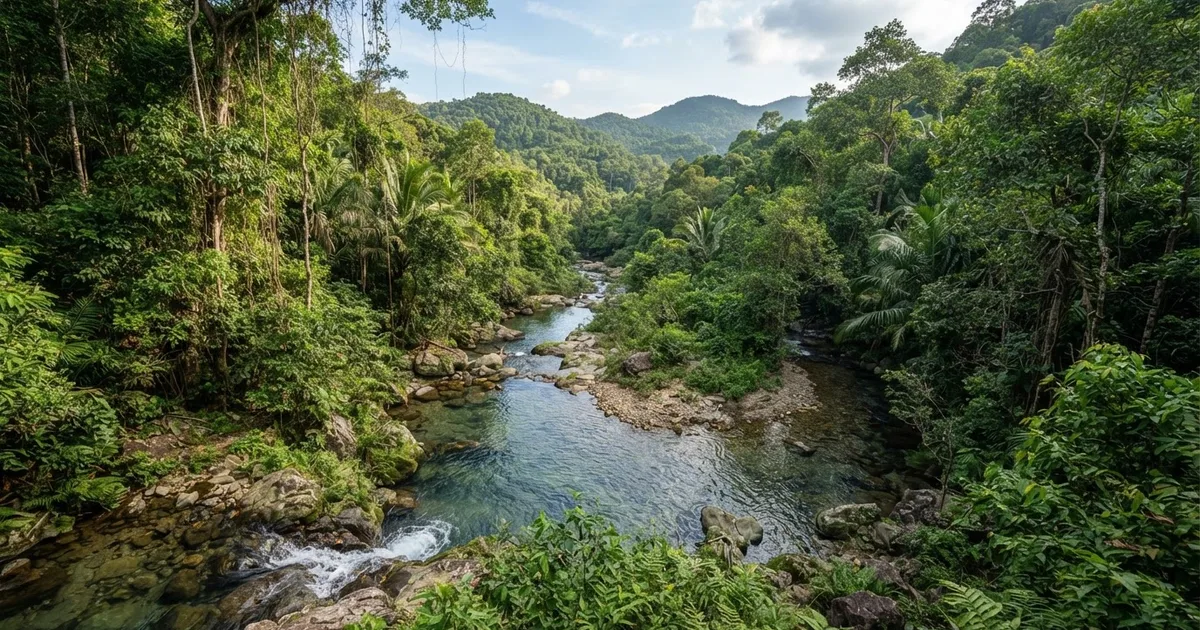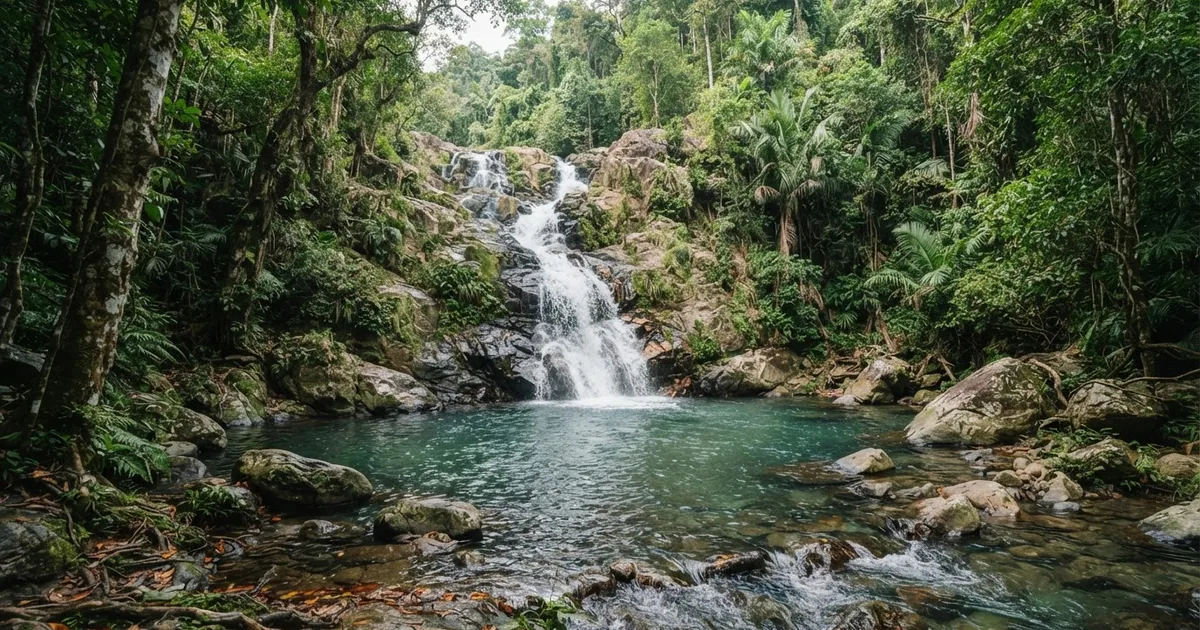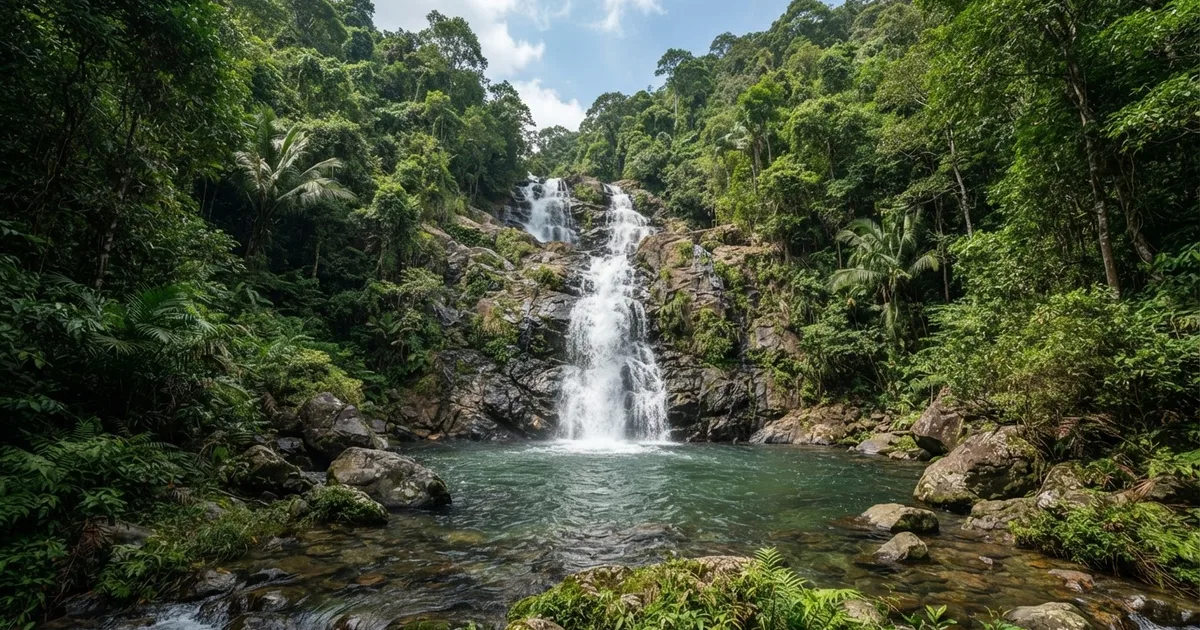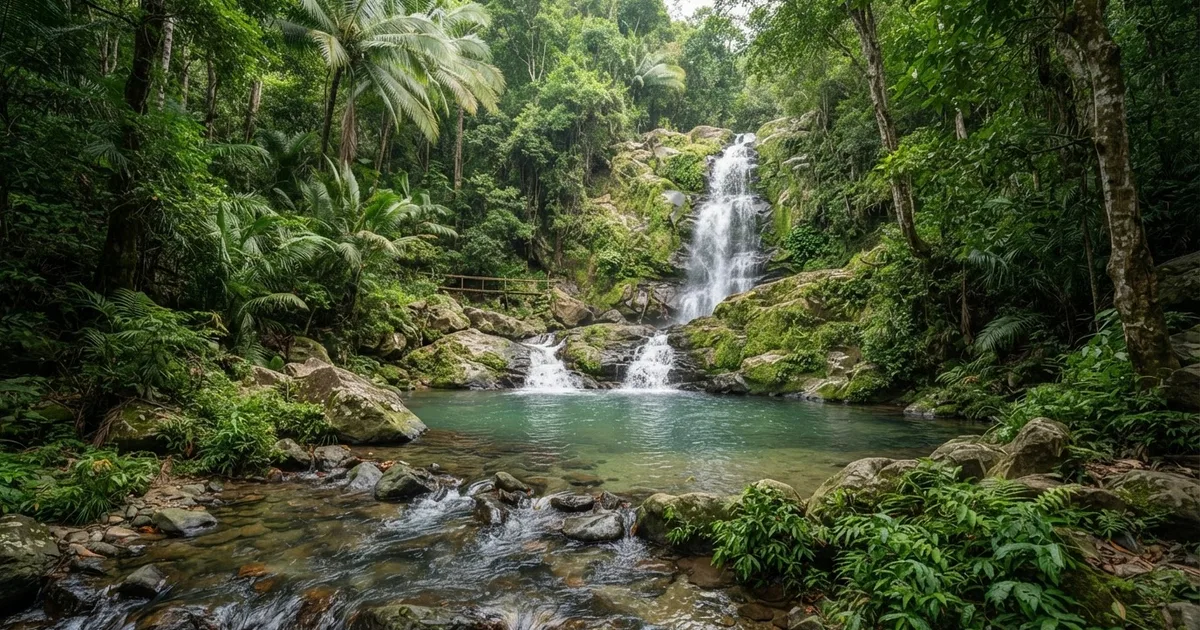
Fairy Waterfall is worth visiting if you want a quiet natural stop for a picnic, a swim, or a few hours beside a forest stream, but it is not Phu Quoc’s most dramatic waterfall. The falls are relatively small and may become weak or dry in the dry season. For the best chance of seeing flowing water, visit between May and November, with June onward usually offering stronger cascades.
Is Fairy Waterfall worth visiting?
Yes, but only if you choose it for the right reason. Fairy Waterfall is best understood as a peaceful forest-stream experience rather than a major sightseeing landmark. The waterfall itself is small, and visitors looking for a powerful, photogenic cascade may find Suoi Tranh more impressive. In contrast, Fairy Waterfall can be a rewarding stop for travellers who enjoy sitting beside running water, swimming in natural pools, crossing a wooden suspension bridge, or having a simple picnic away from busier attractions.
The most important factor is rainfall. During the wetter months, the stream becomes fuller, the surrounding vegetation turns intensely green, and the small cascades look much more attractive. In the dry season, the same place can feel underwhelming because the water level may fall sharply or the stream can partly dry out. A visit after several days of rain is usually more rewarding than a visit based only on the calendar.
Fairy Waterfall is also known in some travel information as Fairy Stream or Da Ban Waterfall. These names are not always used consistently online, so check the exact map pin and current local directions before setting out. The practical advice in this guide applies to the forest-stream attraction commonly described as Da Ban, around 6 km northeast of Duong Dong Town.
A good fit for
Travellers who want a short nature escape, a quiet swim, a picnic setting, or a less commercial stop close to Duong Dong.
A poor fit for
Visitors expecting a tall waterfall, a polished attraction with extensive facilities, or a guaranteed strong flow during the dry season.
When is the best time to visit Fairy Waterfall?
The best general window is the rainy season, roughly May to November. Several local waterfall guides narrow the most reliable period to May through October, while another recommendation extends it through November. From June onward, Suoi Tranh is reported to flow at full volume, and the same seasonal pattern makes Fairy Waterfall and other Phu Quoc streams more appealing.
Rainfall does not make every day ideal. The best combination is a recent period of rain followed by a few hours without heavy downpours. This gives the stream enough water while making the approach safer and more comfortable. Immediately after intense rain, paths may be muddy, the current may be stronger, and smooth rocks can become dangerously slippery.
Phu Quoc’s broader high-season weather window is often described as November to April because the island is generally drier and more suitable for beaches, boat trips, and outdoor touring. That does not mean November to April is the best season for a waterfall. If your priority is flowing water, the wetter months are usually better. Some guides mention December to February as a good time for Fairy Stream, possibly because of a particular local stream or naming variation; conditions can differ from year to year, so check recent rainfall rather than relying on a fixed date.
| Period | Likely conditions | Verdict |
|---|---|---|
| May to June | Rain returns, vegetation becomes greener, and water levels begin improving. | Good time to go, especially after recent rain. |
| July to October | Usually the fullest stream conditions, but mud and slippery rocks are more likely. | Best for waterfall flow; use extra care. |
| November | Often a useful compromise between greener scenery and more manageable weather. | Very good if the stream has recently received rain. |
| December to April | Generally drier island weather, with weaker flow possible at Fairy Waterfall. | Better for beaches than for a waterfall-focused trip. |
Practical check: Ask locally about water flow on the morning of your visit. A recent photograph or short video from the site is more useful than an old online description, because stream levels can change quickly.
Where is Fairy Waterfall and how do you get there?
Fairy Waterfall, commonly associated with Da Ban Stream or Da Ban Waterfall, is about 6 km northeast of Duong Dong Town. Under good road conditions, the journey can take around 10 minutes from town, although heavy rain, traffic, navigation errors, and the rough final approach can make the trip longer.
A motorbike is the most convenient way to reach the area because the distance is short and the attraction is easier to combine with other northern or central Phu Quoc stops. Follow a current map route toward Da Ban Stream, then slow down as you approach the parking area. The last section is described as a muddy, pothole-filled dirt road, particularly during the rainy season. Ride at low speed, avoid standing water when you cannot see its depth, and leave more stopping distance than usual.
Cars can reach the area in suitable conditions, but the approach may be uncomfortable after heavy rain. A taxi or private car is more practical for travellers who do not want to ride on an uneven surface. If you are using a motorbike, wear closed shoes rather than sandals, carry a waterproof bag for your phone, and do not assume that a short distance means a quick journey in wet weather.
Before leaving Duong Dong
- Check the weather and ask whether the stream is currently flowing.
- Bring drinking water, insect repellent, sunscreen, and a small towel.
- Make sure your phone has enough battery for navigation.
- Wear shoes with grip for mud, roots, and wet rocks.
- Carry small cash in Vietnamese currency for parking and refreshments.
- Do not rely on the final dirt road being suitable for a fast ride.
The attraction is usually quieter than Phu Quoc’s better-known beaches and organised parks. That is part of its appeal, but it also means you should not expect a large ticket office, a choice of restaurants, or a full visitor-information service at the stream.
Entrance fees, parking, and facilities
Reports about Fairy Waterfall and Da Ban Stream are not completely consistent. Several guides describe access to Da Ban Stream as free, while parking is commonly reported at 5,000–10,000 VND. Local arrangements can change, especially if a private parking area or nearby landowner is managing access, so carry small notes and confirm the charge before leaving your motorbike.
Do not confuse Da Ban Stream with Suoi Tranh Eco Park, which is a separate and more organised waterfall attraction. A commonly quoted fee for Suoi Tranh Eco Park is 10,000 VND for adults and 5,000 VND for children. Parking there is listed as 10,000 VND for cars and 2,000 VND for motorbikes. These Suoi Tranh prices should not automatically be applied to Fairy Waterfall.
| Item | Fairy Waterfall or Da Ban | Suoi Tranh Eco Park for comparison |
|---|---|---|
| Adult entrance | Often reported as free | 10,000 VND |
| Child entrance | Often reported as free or not separately listed | 5,000 VND |
| Motorbike parking | Usually 5,000–10,000 VND | 2,000 VND |
| Car parking | May depend on the local parking area | 10,000 VND |
Facilities at Fairy Waterfall are likely to be basic compared with a formal eco-park. Bring what you need for several hours, including water, snacks, swimwear, and a bag for rubbish. Treat the stream as a natural site rather than a fully serviced attraction. Toilets, changing areas, food stalls, and safety barriers may be limited or unavailable depending on the current local setup.
Budget guide: The attraction itself may cost nothing, but keep at least 20,000–50,000 VND in small notes for parking, a drink, and unexpected local charges.
What can you do at Fairy Waterfall?
Fairy Waterfall is more suitable for relaxing than for a packed sightseeing schedule. The main activities are sitting by the stream, taking photographs, enjoying a picnic, and swimming where the water is calm and local conditions make it safe. The wooden suspension bridge is another distinctive feature and can make a short visit more interesting, especially for families and photographers.
Swimming requires caution. Never enter the water during a strong downpour, when the current is visibly rising, or when you cannot judge the depth beneath the surface. Rocks that look dry can still be coated with algae and become slippery. Keep children within arm’s reach near moving water, avoid jumping from rocks, and do not swim alone. There may be no lifeguard or formal rescue equipment.
For photography, the wet season offers the best combination of flowing water and dense vegetation. Early morning or late afternoon usually gives softer light, but do not remain on exposed rocks if a storm is approaching. A waterproof phone pouch is more useful than expensive camera equipment because spray, mud, and sudden rain are common possibilities.
A picnic is one of the strongest reasons to choose Fairy Waterfall over a more dramatic but busier attraction. Bring food from Duong Dong, use an existing dry area rather than trampling plants, and take all packaging away. Glass bottles are a poor choice around slippery rocks. If you use a portable speaker, keep the volume low so the forest remains peaceful for other visitors.
Allow around two to three hours for a relaxed visit, including travel from Duong Dong, time beside the water, and a short picnic. A quick stop can take about one hour, but the attraction is not worth a long island detour if the stream is dry. Combine it with nearby countryside roads or another central Phu Quoc stop only after checking the weather and road conditions.
Fairy Waterfall or Suoi Tranh: which should you choose?
The choice depends on whether you value quiet surroundings or a more established attraction. Fairy Waterfall, or Da Ban Stream, is generally the better choice for a natural, low-key outing. It is close to Duong Dong, often has relatively few tourists, and works well for swimming, picnicking, and relaxing. Its weakness is that the waterfall is small and the access road can be rough.
Suoi Tranh is usually the stronger option for visitors who want a more recognisable waterfall experience and clearer visitor arrangements. It is also the better choice if the main goal is to see a more attractive cascade. However, it may feel less secluded, and its entrance and parking charges are more clearly associated with an organised eco-park.
| Feature | Fairy Waterfall or Da Ban | Suoi Tranh |
|---|---|---|
| Best for | Quiet nature, picnics, swimming, and a short escape. | A more established waterfall visit and stronger visual impact. |
| Waterfall character | Small cascade or stream flow; seasonal and weather-dependent. | Generally considered more attractive and more impressive. |
| Tourist levels | Often relatively quiet. | More likely to be visited by organised tours and day-trippers. |
| Access | Rough, muddy, pothole-filled approach possible. | More established park access. |
| Known fees | Access often reported as free; parking around 5,000–10,000 VND. | 10,000 VND adults, 5,000 VND children; parking 2,000 VND for motorbikes and 10,000 VND for cars. |
Choose Fairy Waterfall if the journey itself is part of the experience and you are happy with simple facilities. Choose Suoi Tranh if you have limited time and want a better chance of seeing a conventionally attractive waterfall. If you are visiting in the dry season, neither should be treated as a guaranteed full-flow waterfall, although Suoi Tranh is often the safer choice for a more formal sightseeing stop.
Safety and responsible visiting advice
The main hazards are slippery rocks, sudden rain, muddy roads, potholes, and changing water levels. Rain can make the stream look beautiful while also making it less safe. Test each foothold, use the suspension bridge carefully, and avoid climbing wet sections simply to take a photograph. If thunder is close or the stream becomes brown and fast, leave the water and move away from the banks.
Use a properly maintained motorbike and do not ride the final dirt section quickly. Helmets are essential, and a light rain jacket can be more useful than an umbrella on the approach. If you are not confident on muddy surfaces, hire a car with a driver or ask a local operator about current access rather than forcing the route.
Keep the area clean by carrying out every wrapper, bottle, and picnic item. Do not use soap or shampoo in the stream, feed wildlife, carve names into the bridge or trees, or take plants and stones home. A low-impact visit helps preserve the quiet atmosphere that makes Fairy Waterfall worthwhile in the first place.
Simple safety checklist
- Check recent rainfall and local water conditions before departure.
- Wear shoes with a firm sole and good grip.
- Keep valuables in a waterproof pouch.
- Stay out of the stream during heavy rain or rising water.
- Supervise children continuously near pools and cascades.
- Leave before dark because the road and forest paths are poorly suited to night travel.
Frequently Asked Questions
Is Fairy Waterfall in Phu Quoc worth visiting?
Fairy Waterfall is worth visiting for a quiet forest setting, swimming, and a picnic, especially after rain. The waterfall is small and less dramatic than Suoi Tranh, so it is a poor choice if you expect a tall or powerful cascade. Allow about two to three hours for a relaxed visit from Duong Dong.
What is the best month to visit Fairy Waterfall?
May to November is generally the best period because seasonal rain makes the stream fuller and the vegetation greener. June onward often offers stronger flow. July to October may provide the most impressive water levels, but mud and slippery rocks are more likely, so check conditions before travelling.
Can you swim at Fairy Waterfall?
Swimming may be possible in calm pools, but there is no guarantee of safe conditions. Avoid the water during heavy rain, when the current is strong, or when the depth is unclear. Wet rocks are slippery, and visitors should supervise children closely because formal lifeguard services may not be available.
How far is Fairy Waterfall from Duong Dong?
The site commonly described as Fairy Waterfall or Da Ban Stream is about 6 km northeast of Duong Dong Town. The trip can take around 10 minutes in good conditions, but the muddy, pothole-filled final dirt road may make the journey slower during the rainy season.
How much does it cost to enter Fairy Waterfall?
Access to Da Ban Stream is reported as free by some guides. Parking commonly costs about 5,000–10,000 VND, although local arrangements can change. Carry small cash. These prices are separate from Suoi Tranh Eco Park, where commonly quoted entrance fees are 10,000 VND for adults and 5,000 VND for children.
Is Fairy Waterfall suitable for children?
It can suit children for a short nature outing, but the rough approach, muddy ground, suspension bridge, and slippery rocks require close supervision. Children should not enter moving water without an adult beside them. Families wanting easier facilities and a more organised setting may prefer Suoi Tranh Eco Park.
What should you bring to Fairy Waterfall?
Bring drinking water, snacks, insect repellent, sunscreen, swimwear, a towel, suitable shoes, and a waterproof phone pouch. Carry small notes for parking and take all rubbish home. A rain jacket is useful from May to November, when showers can arrive quickly and the approach may become muddy.
Is Fairy Waterfall better than Suoi Tranh?
Fairy Waterfall is better for a quieter, more natural stop with a picnic or swim, while Suoi Tranh is generally better for a more impressive waterfall and established visitor facilities. Fairy Waterfall is less suitable for travellers with limited time, poor mobility, or a strong preference for paved and organised access.
Want current advice about water levels, road conditions, transport, or a motorbike for Fairy Waterfall? Contact Sabrina Rental for local help planning your Phu Quoc day.
Contact Sabrina Rental