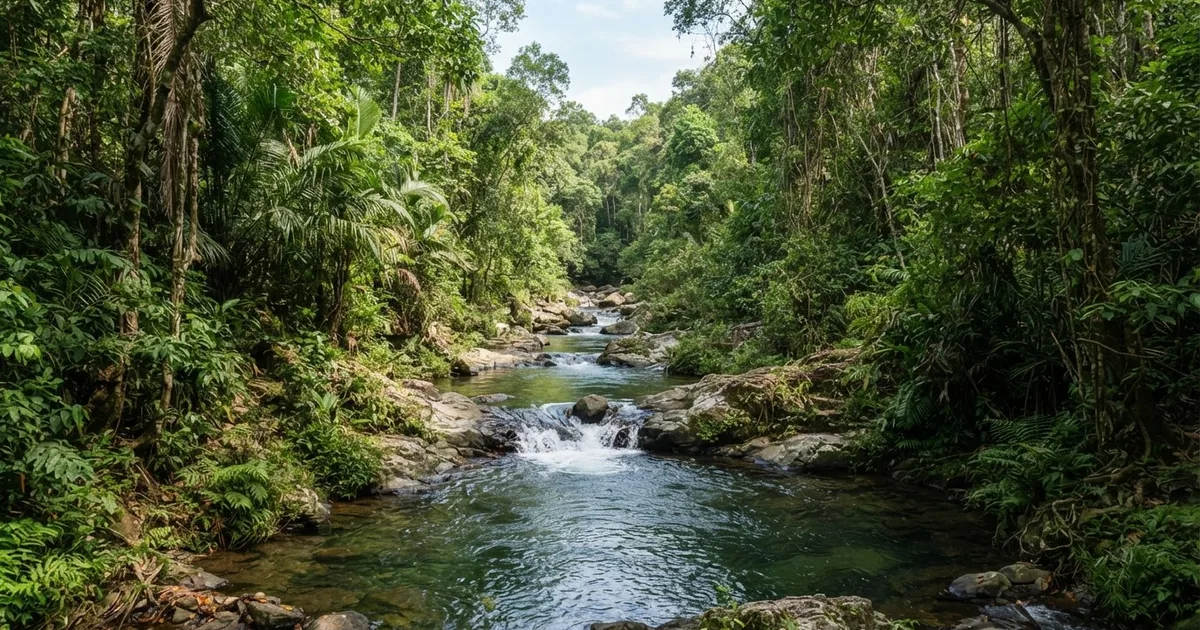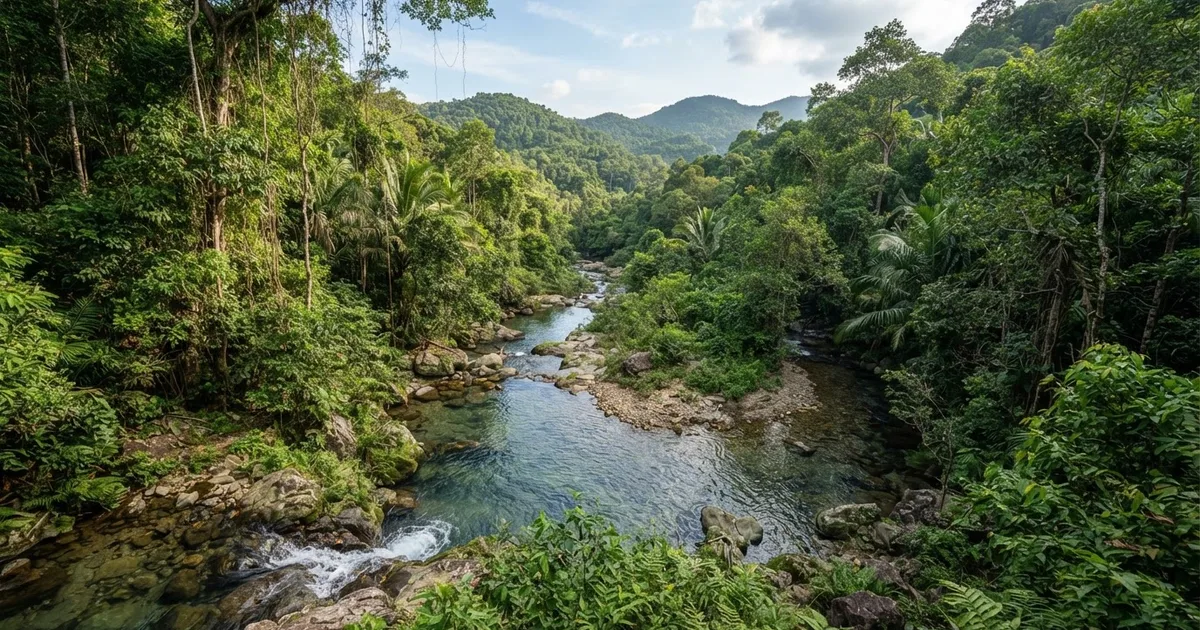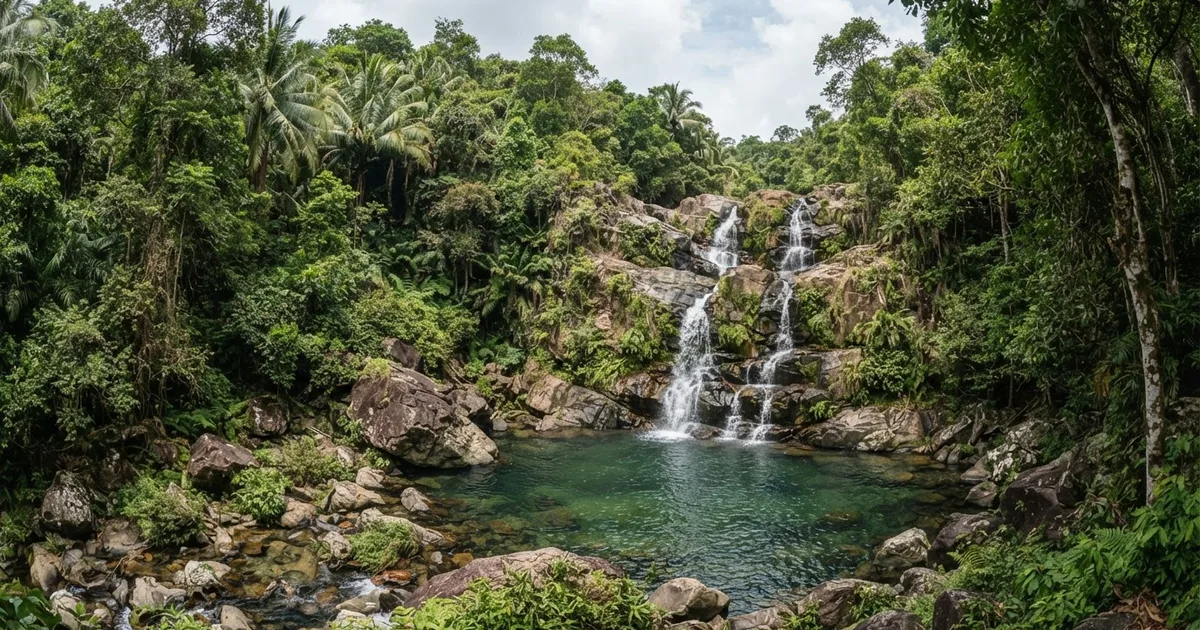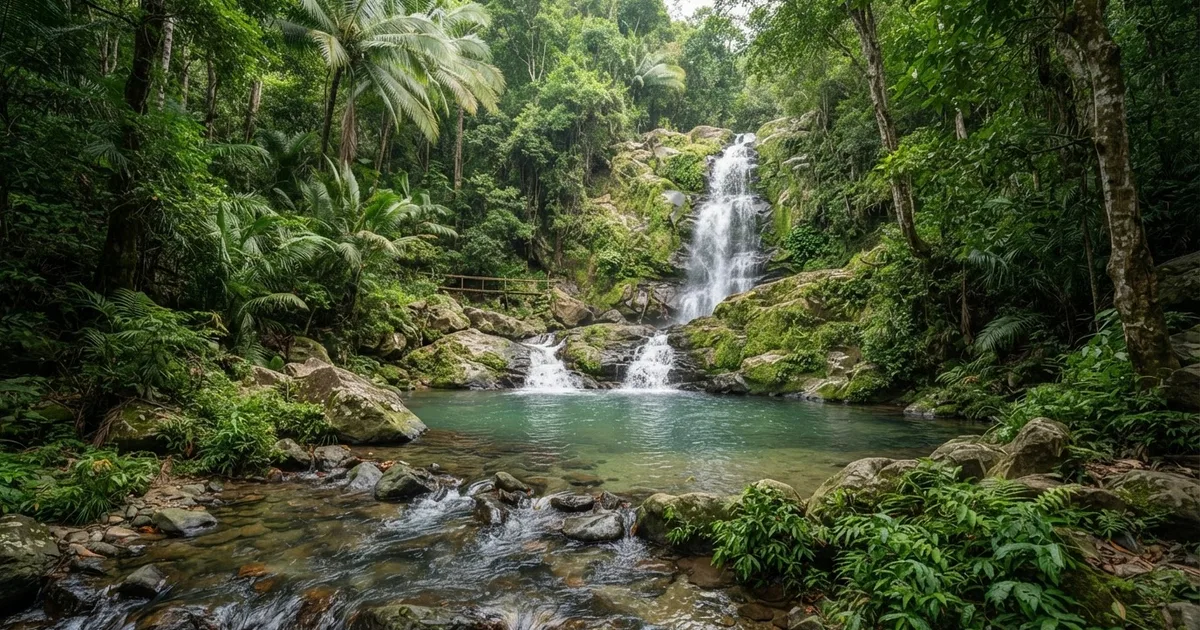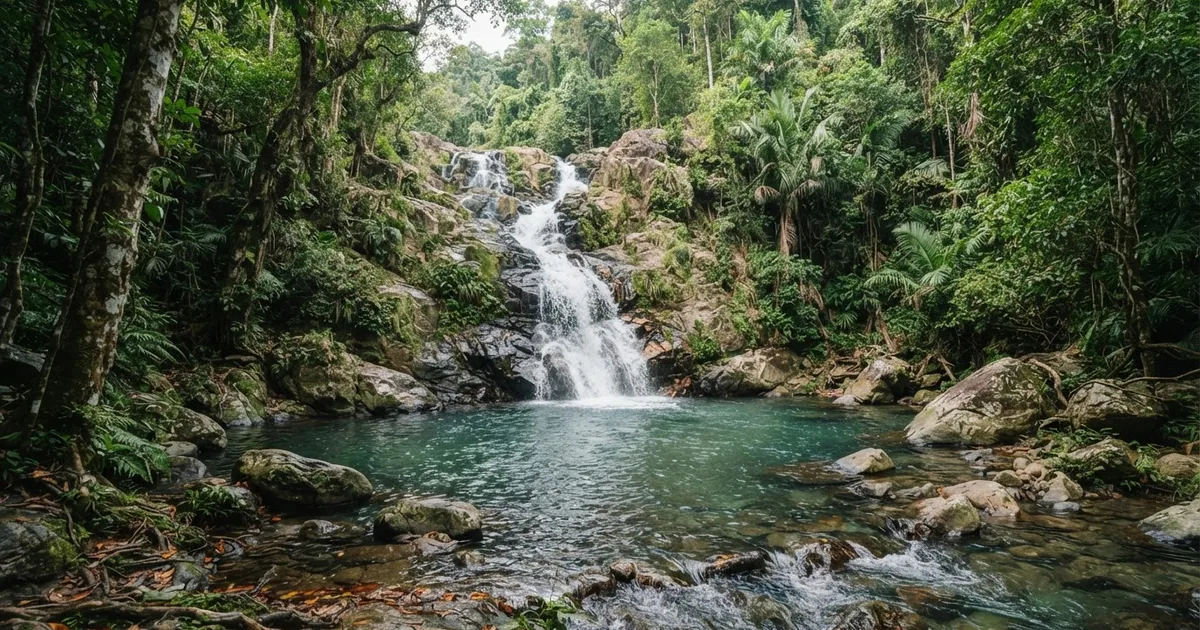
Only two Phu Quoc waterfalls are worth building a day around: Suoi Tranh, the island's best-known cascade, and Da Ban, a smaller stream about 10 minutes north of Duong Dong. Both depend entirely on rain — they run full from roughly May to October, and in the dry season they can shrink to a trickle or dry out completely.
Which Phu Quoc Waterfalls Are Actually Worth the Trip?
Phu Quoc is not a waterfall island. It is a low, granite-and-sand island in the Gulf of Thailand, and what it calls waterfalls are really streams that swell dramatically after rain and then fade. Out of the handful of marked sites, only two have the parking, paths, signage and shade to justify a dedicated detour: Suoi Tranh (Tranh Stream) on the island's south side, and Da Ban to the north-east of Duong Dong.
The rest of the streams you will see on maps are either unmarked, inaccessible in the wet season, or seasonal enough that a guide is essential. If you have one waterfall slot in your itinerary, this is the shortlist.
| Waterfall | Distance from Duong Dong | Entry cost | Best months | Best for |
|---|---|---|---|---|
| Suoi Tranh | Roughly 7–10 km south | Small cash ticket collected at the gate; the price is set locally and changes, so carry small notes | June–September for peak flow | The classic waterfall photo, forest walk, rock pools |
| Da Ban | About 6 km north-east; around 10 minutes by motorbike | Reported as free by several guides; parking typically 5,000–10,000 VND | May–November for water | Picnics, swimming, quiet nature, wooden suspension bridge |
Suoi Tranh is the bigger, busier, more photogenic of the two. Da Ban is smaller, calmer and closer to town, and one travel guide describes it as a place that is definitely worth a visit — with the honest caveat that its waterfall is not as nice as the Tranh Stream waterfall. Set your expectations accordingly: neither is a Ban Gioc or a Kuang Si. What they are is a good excuse for a half-day of jungle, cold water and a picnic.
Suoi Tranh Waterfall: The Island's Headline Cascade
Suoi Tranh is the waterfall most visitors mean when they say they want to see a Phu Quoc waterfall. You park at a gate on the southern side of the island, then walk inland along a shaded forest trail — roughly 15 to 20 minutes at an easy pace — past boulders and small pools before reaching the main cascade and the rock shelf beneath it.
Timing matters more here than anywhere else on the island. In the rainy season, roughly May to October, the stream is full and flowing, and the main fall is at its most impressive. Locals say the strongest window is June to September, when the water volume peaks and the surrounding jungle is at its greenest.
In the dry season the story flips completely. Suoi Tranh can slow to a small trickle or be completely dry, especially through February, March and April. Visitors who arrive in those months sometimes find nothing but wet rocks and a path. That is not a scam or a bad day — it is simply how a monsoon-fed stream behaves.
Tip: Go early. The trail has almost no shade cover at the top of the cascade, and by 11am in the wet season the rocks are both crowded and slippery. Grippy sandals or trainers beat flip-flops — the granite near the falls stays slick even days after rain.
Because Suoi Tranh sits on the island's southern side, it pairs naturally with a beach afternoon at Sao Beach or Ong Lang, or with the island's southern fishing villages. That combination — waterfall in the morning, beach in the afternoon — is the single most efficient way to spend a day here.
Da Ban Waterfall and Stream: The Quiet Alternative
Da Ban is the waterfall nobody argues about, because hardly anyone goes. It sits about 6 km north-east of Duong Dong, roughly 10 minutes from town by motorbike, which makes it by far the easiest Phu Quoc waterfall to reach on a whim.
The site is a stream rather than a dramatic cascade. Its waterfall is small, and reviewers are upfront that it does not match Suoi Tranh for spectacle. What it does offer is atmosphere: a wooden suspension bridge, relatively few tourists, shallow water good for swimming, and enough flat ground and shade for a proper picnic. If your idea of a good afternoon is a cold drink, a book and a stream you can actually get into, Da Ban wins.
Cost is the other argument in its favour. Entry to Da Ban Stream is reported as free by some guides, with parking typically costing 5,000–10,000 VND (some sources quote a flat 10,000 VND). Even at the top end, that is under half a US dollar.
Practical warning: the approach to the Da Ban parking area is a muddy, pothole-filled dirt road. It is rideable on a standard scooter in dry weather and genuinely unpleasant — sometimes unsafe — after heavy rain. If it has poured in the last 24 hours, either take it very slowly or skip it.
On timing, the guides disagree, and it is worth understanding why. Sources that recommend the rainy season (May to November) are answering the question "when is there water?" Sources that recommend November to April are answering "when is the road dry and the stream easy to access?" Both are correct. In the wet months you get fuller flow and greener scenery; in the dry months you get a firm dirt road and easy parking, but a thinner stream. The stream can dry up completely in the dry season, so if seeing water is the point, come between May and November.
Rainy Season vs Dry Season: A Month-by-Month Guide
Every reliable source on Phu Quoc waterfalls agrees on the underlying principle: the rainy season is the best time to visit, and the dry season is less impressive but can still be worth a visit. The confusion in online advice comes from mixing up "best water" with "best weather." Here is both, side by side.
| Period | Water level | Conditions | Verdict |
|---|---|---|---|
| May–June | Rising fast | First heavy rains; trails and jungle greening up | Good — water returning and fewer crowds |
| July–September | Peak flow | Wettest months; slick rocks, muddy side roads | The best water you will see all year |
| October–November | Still flowing | Rain easing, cooler trekking weather, clearer water | Excellent all-round compromise |
| December–January | Falling | Dry, sunny, comfortable, easy access | Fine for the walk; the waterfall is thinning |
| February–April | Trickle or dry | Hot, hard-packed trails, full sunshine | Skip unless you only want the forest walk |
One nuance worth knowing: some locals say the sweet spot for certain Phu Quoc waterfall sites is May to November, specifically because the water is clearer and the trekking weather is cooler than in the height of the dry-season heat. That overlaps neatly with the tail end of the rains.
The practical rule for anyone booking flights around a waterfall visit: if the waterfall is the priority, come between June and September. If comfort on the trail is the priority, come between November and March and accept that the water will be modest.
Who the Phu Quoc Waterfalls Are a Poor Fit For
Being honest about this saves people a wasted morning. Neither Suoi Tranh nor Da Ban is a destination waterfall, and neither rewards a long, hot ride in the wrong season.
Suoi Tranh suits you if…
- You are visiting between June and September
- You want the biggest, most photographed fall on the island
- You are happy with a 15–20 minute forest walk each way
- You can pair it with a southern beach the same day
Da Ban suits you if…
- You want somewhere quiet with few tourists
- You are travelling with children and want shallow, swimmable water
- You want a free or near-free stop 10 minutes from Duong Dong
- You have a picnic, a book and an afternoon to kill
Both are a poor fit if…
- You are on the island between February and April — the streams may be dry
- You expect a tall, powerful waterfall like Ban Gioc or Kuang Si; Phu Quoc's are stream cascades
- You only have two days and want beaches, snorkelling and night markets
- You are not comfortable on a scooter on dirt roads, or it has rained heavily in the last day
- You have mobility issues — both sites involve uneven, slippery ground
Travellers in that last group should redirect the time to the island's real strengths: the cable car to Hon Thom, the night market in Duong Dong, and the beaches on the west coast. A dry waterfall is a five-minute stop; a good beach is a whole day.
Getting There and What to Bring
There is no public transport to either site. You will need a motorbike, a taxi or a Grab. Da Ban is the easier ride — about 6 km and 10 minutes from Duong Dong — but ends with that rough dirt track. Suoi Tranh is further south and the road is sealed the whole way.
- Cash in small notes. Entry gates and parking rarely take cards; carry 20,000–50,000 VND notes plus small change for parking.
- Grippy footwear. The rocks around both falls stay slick for days after rain.
- Water and mosquito repellent. There is little shade at the top of Suoi Tranh and the forest is humid year-round.
- A dry bag. If you plan to swim at Da Ban, phone and keys need protecting.
- Check the weather the night before. Heavy rain makes the Da Ban access road muddy and the Suoi Tranh rocks genuinely hazardous.
- Go in the morning. Cooler, quieter, better light for photos, and you are off the trail before the afternoon heat.
Budget roughly half a day for either site including travel. Suoi Tranh plus a southern beach is a full day; Da Ban plus a Duong Dong lunch is a comfortable morning.
Frequently Asked Questions
What is the best time of year to see Phu Quoc waterfalls?
The rainy season, roughly May to October, when rainfall fills the streams. For Suoi Tranh specifically, the strongest flow is June to September. October and November are a good compromise — water is still flowing but the rain is easing and trekking conditions are cooler.
Is Suoi Tranh Waterfall dry in the dry season?
It can be. From roughly February to April, Suoi Tranh often slows to a small trickle or is completely dry. If seeing flowing water is the point of your visit, avoid those three months and aim for June to September instead.
Is Da Ban Waterfall free to enter?
Several guides report entry to Da Ban Stream as free, with parking typically costing 5,000–10,000 VND — some sources quote a flat 10,000 VND. That is well under one US dollar. Carry small cash notes, as change is not always available on site.
How far is Da Ban Waterfall from Duong Dong?
About 6 km north-east of Duong Dong, which is roughly a 10-minute motorbike ride. The final approach is a muddy, pothole-filled dirt road, so allow extra time after heavy rain and ride cautiously.
Which is better, Suoi Tranh or Da Ban?
Suoi Tranh is bigger and more dramatic; Da Ban is smaller and quieter. One guide notes Da Ban is definitely worth a visit but that its waterfall is not as nice as the Tranh Stream waterfall. Choose Suoi Tranh for the photo, Da Ban for a peaceful picnic and a swim.
Can you swim at Phu Quoc waterfalls?
Da Ban is the better swimming spot, with shallow pools suited to wading and families. Suoi Tranh has rock pools below the main fall. Avoid swimming during or immediately after heavy rain — stream levels rise fast and the current can be stronger than it looks.
Do I need a motorbike to reach the waterfalls?
You need private transport, but it does not have to be a motorbike. Taxis and Grab cars can reach both sites, though drivers may be reluctant to take a low-clearance car up the Da Ban dirt road in wet weather. A scooter is the most flexible option.
How long do I need at each waterfall?
Allow two to three hours at Suoi Tranh including the 15–20 minute walk in each direction. Da Ban needs about an hour to 90 minutes if you swim or picnic. Add travel time and either becomes a comfortable half-day trip.
Need a reliable scooter for the ride to Da Ban or Suoi Tranh, or want someone local to check the road and water conditions for you before you go? Sabrina Rental is based on Phu Quoc and can sort your motorbike, room and island advice in one message.
Ask Sabrina About Rentals & Island Conditions