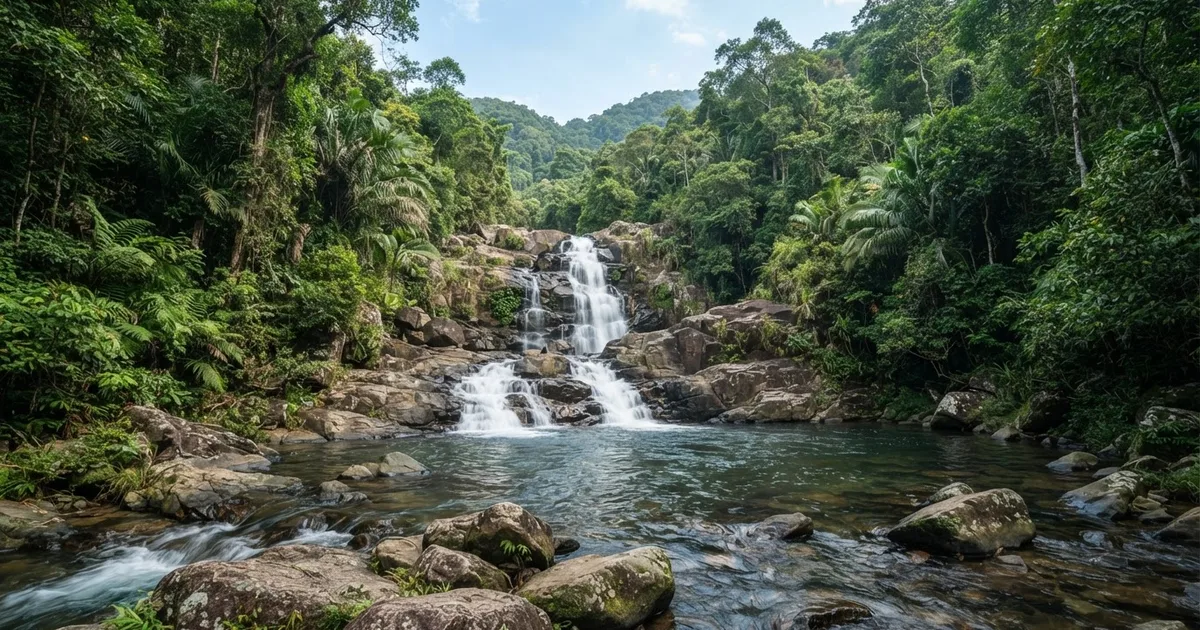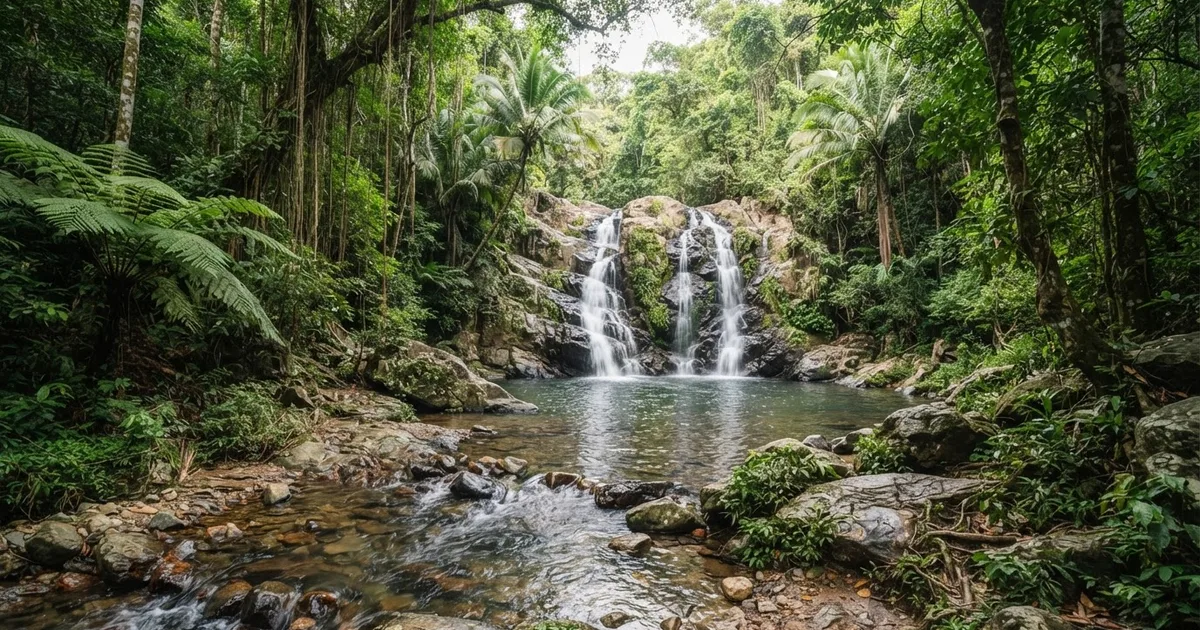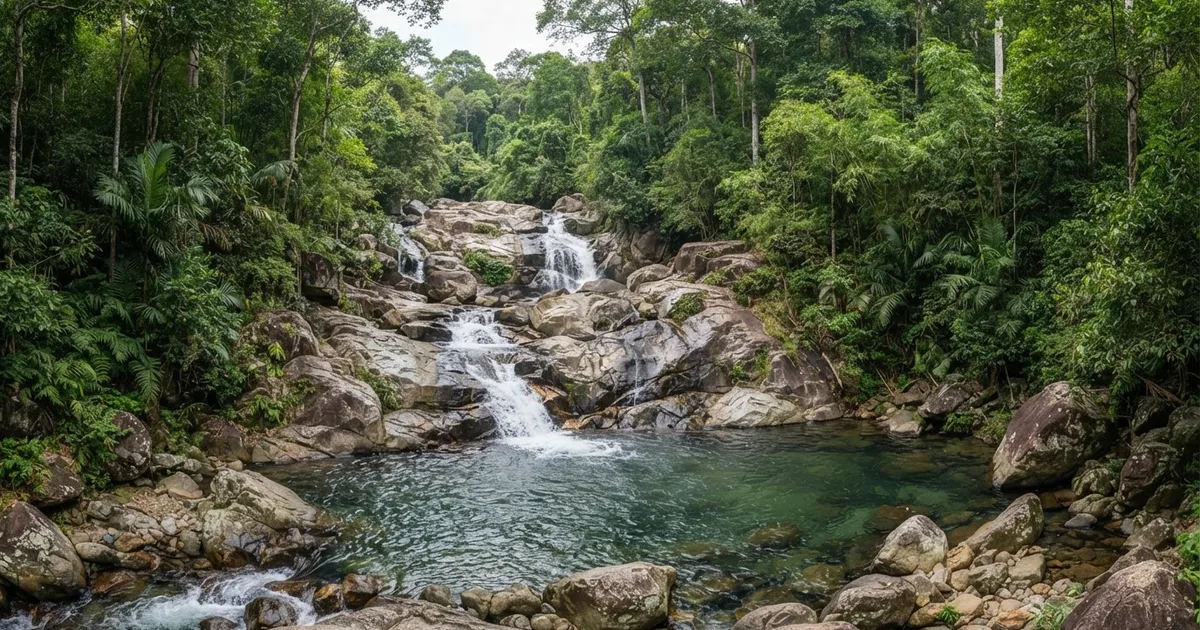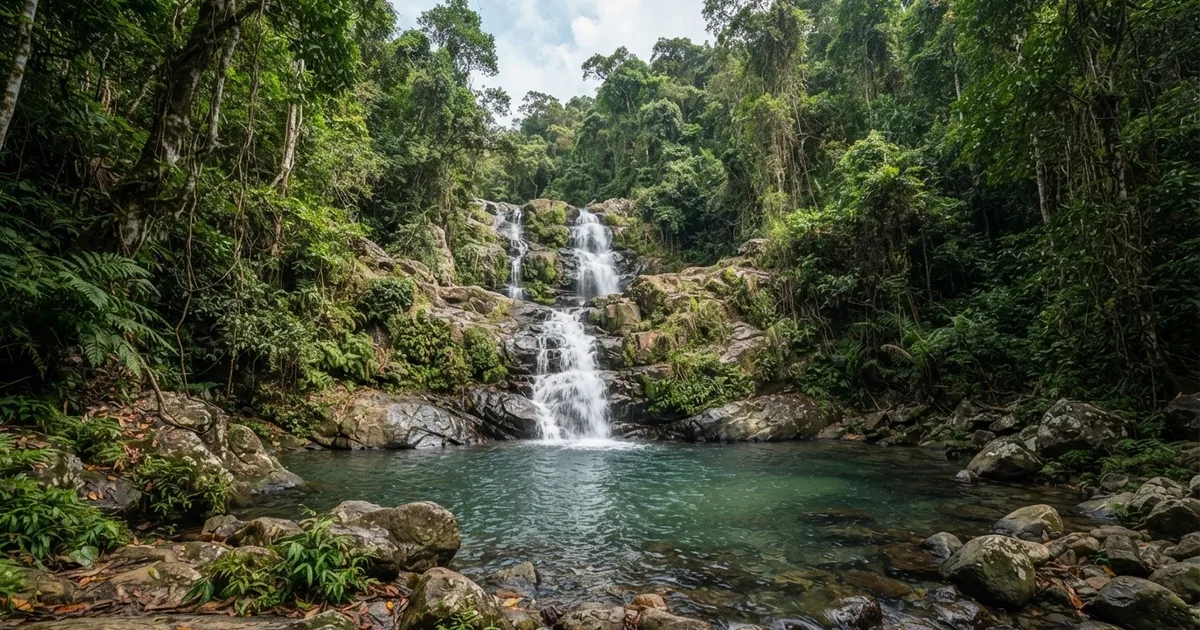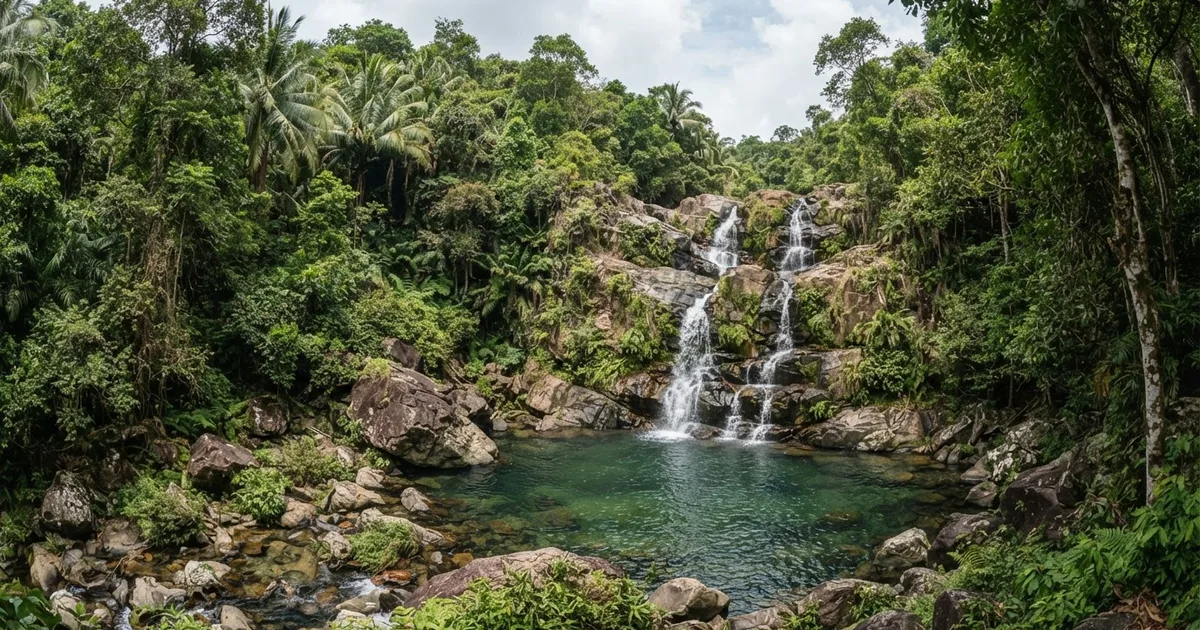
Hang Waterfall Phu Quoc is worth visiting if you want a quiet nature stop and visit between June and October, when rainfall usually makes the streams and falls strongest. It is not the best choice if you expect a tall, powerful waterfall or a fully documented tourist attraction: a published entrance fee and official difficulty rating could not be verified, and the waterfall may be much less impressive during the dry season. Treat it as a short outdoor excursion rather than the main highlight of a Phu Quoc holiday.
Is Hang Waterfall worth visiting?
For the right visitor, yes. Hang Waterfall can be a worthwhile half-day addition to a Phu Quoc itinerary when the island is green and wet. The appeal is the setting: shaded forest, flowing water, rocks, and a break from the beaches and resort areas. The experience is most successful for travelers who enjoy modest natural attractions and do not need extensive facilities or a spectacular cascade.
The most important qualification is seasonal water flow. Phu Quoc's rainy season generally runs from June to October, and this is when its streams and waterfalls are fullest. A visit during this period offers the best chance of seeing moving water, lush vegetation, and a more atmospheric landscape. In the dry season, roughly November to April, the weather is usually sunnier and more comfortable for beaches and outdoor activities, but a small waterfall can become a shallow stream or a series of wet rocks.
Hang Waterfall is a poor fit for visitors looking for a large, easily accessible waterfall with a guaranteed swimming pool, clear signs, restaurants, toilets, and a published ticket system. It is also a poor fit for anyone unwilling to walk on slippery ground or travel along rough rural roads after rain. Before setting out, confirm the current route and local access conditions, because reliable published information about Hang Waterfall is limited.
Worth it if you want
A quiet forest stop, seasonal water, photographs, a simple picnic, and a less urban side of Phu Quoc.
Skip it if you want
A dramatic waterfall, guaranteed deep swimming water, polished visitor facilities, or a precisely documented attraction.
What is Hang Waterfall like in different seasons?
Waterfalls on Phu Quoc are strongly controlled by the monsoon. During the wetter months, repeated rain feeds the island's streams and creates fuller cascades. June through October is therefore the safest recommendation for seeing Hang Waterfall at its most active. October can be particularly attractive because the landscape is intensely green, although heavy rain can also make paths muddy and rocks slippery.
November requires a little more judgment. It can still be wet enough for good water flow, particularly early in the month, but conditions vary from year to year. Some general Phu Quoc guides describe November to March as a favorable overall travel window because the weather becomes drier and more pleasant. That recommendation is excellent for beaches, boat trips, and road travel, but it does not necessarily mean that a small waterfall will be at its fullest.
From December through April, the island's clearer skies and calmer sea make it a popular high season. Hang Waterfall may still be a pleasant woodland destination, but expectations should be modest. The stream can be shallow, and the waterfall may lose the force that makes a rainy-season visit worthwhile. A short period of rain before your visit can improve conditions, but do not assume that one shower will restore a seasonal cascade.
| Period | Likely conditions | Verdict |
|---|---|---|
| June to October | Fuller streams, greener forest, muddy or slippery access possible | Best for the waterfall itself |
| Early November | Potentially good flow with improving weather | Often a useful compromise |
| December to April | Drier roads and sunnier weather, weaker water flow | Better for general island travel than waterfall viewing |
| May | Transition conditions; some rain may have started, but flow is unpredictable | Check locally before committing |
What can you do at Hang Waterfall?
The attraction is best approached as a nature experience rather than a landmark to tick off quickly. Depending on current water levels and local access, visitors may spend time following the stream, taking photographs, sitting beneath the trees, or cooling their feet in shallow water. When conditions are suitable, a natural pool can make the stop more enjoyable, but depth, current, submerged rocks, and water quality can change after every major rainfall.
Allow approximately one to three hours for the waterfall area itself, not including the journey from your accommodation. That gives you time to walk slowly, look for viewpoints, eat a packed snack, and wait for better light for photographs. In the rainy season, allow additional time because muddy sections can slow down a motorbike or walking approach.
Hang Waterfall suits couples, independent travelers, small groups, and families with older children who are comfortable outdoors. It is less suitable for very young children, travelers with limited mobility, or anyone expecting a paved route directly to the water. If you visit with children, keep them away from the edge of cascades and never allow them to enter fast-flowing water without close supervision.
What to bring
- Closed shoes with a firm grip rather than smooth sandals.
- Water, insect repellent, sunscreen, and a small towel.
- A waterproof bag for phones, wallets, and camera equipment.
- Small Vietnamese cash in case parking or a local access charge is requested.
- A light rain jacket during June to October.
- Food packed in reusable containers, with all rubbish taken away.
How difficult is the visit and what is access like?
No official difficulty rating for Hang Waterfall could be verified from the available published information. That does not mean the visit is technically difficult, but it does mean conditions should be assessed on the day. A route that is simple in dry weather may become slippery after rain, and stream crossings or muddy ground can make the final approach more demanding than expected.
Use a cautious speed if traveling by motorbike, particularly during the rainy season. Rural approaches to Phu Quoc waterfall sites can include uneven surfaces, potholes, loose stones, and muddy sections. Park only where local signs or residents indicate, and avoid leaving a motorbike on a narrow track where it blocks access. If heavy rain is falling, postponing the trip is sensible: the waterfall may be more powerful, but the road and rocks may also be less safe.
Wear footwear that can cope with wet rocks and do not rely on flip-flops. Keep both hands free when walking on uneven ground, and avoid climbing directly up a cascade for a photograph. Never stand below unstable branches or loosened rocks after a storm. If the water turns brown, rises quickly, or develops a strong current, stay out of it and move away from the stream channel.
Practical access check
Ask a local rental provider or accommodation host about the road and water level on the same day you plan to visit. This is especially important from June to October, when a short period of heavy rain can change both the approach and the swimming conditions.
How much does Hang Waterfall cost?
A published entrance fee for Hang Waterfall could not be verified. Because of that, do not present a fixed ticket price as guaranteed. Some small natural sites on Phu Quoc have informal local parking or access arrangements that can change, while others may not charge an entrance fee at all.
Carry small Vietnamese banknotes for parking, refreshments, or a local contribution if one is requested. As a useful comparison, guides for Da Ban Stream commonly report free entrance and parking of approximately 5,000 to 10,000 Vietnamese dong, but those figures apply to Da Ban and should not be assumed to be the price at Hang Waterfall.
Your larger expense will usually be transport. A motorbike gives independent travelers the flexibility to leave when the weather changes, while a taxi or private car is more comfortable for a group carrying food and spare clothes. Ask about the complete transport cost before departure and confirm whether waiting time is included if you hire a driver.
| Possible expense | What is known | Planning advice |
|---|---|---|
| Entrance | No published Hang Waterfall fee verified | Carry small cash, but do not assume a fixed ticket price |
| Parking | Not reliably published for Hang Waterfall | Use the designated area and ask locally |
| Transport | Depends on starting point and vehicle | Agree on the total price before leaving |
| Food and drinks | Do not rely on facilities at the waterfall | Bring water and a packed snack |
How does Hang Waterfall compare with Da Ban and Suoi Tranh?
Hang Waterfall is not the only way to see freshwater scenery on Phu Quoc. Comparing it with Da Ban Stream and Suoi Tranh Waterfall helps you choose according to your priorities: solitude, convenience, swimming, or visual drama.
Da Ban Stream is about 6 kilometres northeast of Duong Dong Town and is described by travel guides as approximately 10 minutes from town. It is generally considered worth visiting for a quieter, more natural stop, with a wooden suspension bridge and relatively few tourists. The waterfall itself is small and is often described as less impressive than Tranh Stream. Da Ban is therefore better for a picnic, swimming when water levels allow, and relaxing among trees than for seeing a large cascade.
Da Ban access also has a practical disadvantage: the approach may be muddy and full of potholes, particularly after rain. Some guides report free entrance, with parking commonly around 5,000 to 10,000 Vietnamese dong. The best water flow is generally expected during wetter months, sometimes stated as May to November, although another travel recommendation favors November to April for drier access. This apparent conflict reflects the difference between wanting fuller water and wanting easier road conditions.
Suoi Tranh is the stronger choice for travelers who want a more established and potentially more photogenic waterfall stop. It is reported to be most impressive around October and November, when water levels are high. Hang Waterfall is the better choice only if your priority is a quieter, less predictable nature outing and you are prepared for limited verified information.
| Site | Best for | Main drawback |
|---|---|---|
| Hang Waterfall | Quiet exploration and seasonal forest scenery | Limited published information, variable flow, and uncertain facilities |
| Da Ban Stream | Picnics, relaxing, swimming when conditions allow, and a wooden bridge | Small waterfall and potentially muddy, pothole-filled approach |
| Suoi Tranh Waterfall | A more recognizable waterfall experience and stronger scenery in October or November | Can be less peaceful and less natural-feeling than a quieter stream stop |
How should you plan a Hang Waterfall day?
Start by checking the short-term forecast and asking locally about road conditions. If the weather has been dry for several weeks, the waterfall may not justify a long detour. If heavy rain is forecast throughout the day, the water may be stronger but the route may be unsafe. The most comfortable compromise is often a recent wet period followed by a break in the rain.
Set out in the morning or early afternoon, when you have daylight for the return journey. Avoid combining a remote waterfall visit with too many fixed evening bookings. Wet-season roads take longer, and an unexpected stop for changing clothes, waiting for rain, or walking around a muddy section can add time.
Plan a second option in case Hang Waterfall is inaccessible or nearly dry. Da Ban Stream can work as a relaxed alternative near Duong Dong, while Suoi Tranh may be a better choice when you want a more recognizable attraction. Beaches, local markets, and a coffee stop can also fill the day without forcing you to continue in unsafe weather.
Simple planning sequence
- Check rain, road, and water conditions on the morning of travel.
- Confirm the route with a local accommodation host or rental provider.
- Carry water, cash, grip shoes, and a waterproof phone bag.
- Ride slowly and turn back if the road or stream looks unsafe.
- Leave enough daylight for the return journey.
- Keep Da Ban or Suoi Tranh as a backup, depending on your preferred experience.
Final verdict: who should visit Hang Waterfall?
Visit Hang Waterfall if you are already interested in Phu Quoc's inland landscapes, have flexible plans, and can travel during or soon after the rainy season. The combination of fuller streams, dense green vegetation, and fewer tourists can make it a rewarding change from a beach-only itinerary. It is especially suitable for travelers who judge a destination by atmosphere and exploration rather than by size or facilities.
Choose another attraction if this is your only free day, if you are visiting in the driest months and want guaranteed water, or if you need accessible paths and clearly published prices. Da Ban is a convenient nature stop close to Duong Dong, while Suoi Tranh is likely to satisfy visitors seeking a more conventional waterfall experience. In every case, verify current conditions locally rather than relying on an old map listing or an assumed entrance fee.
Overall, Hang Waterfall deserves a conditional yes: it is worth visiting for the right conditions, but it should not be advertised as Phu Quoc's most dramatic or dependable waterfall. Put it on a flexible itinerary, prioritize safety, and let the season determine whether it becomes a highlight or simply a pleasant forest detour.
Frequently Asked Questions
Is Hang Waterfall Phu Quoc worth visiting?
Yes, if you enjoy quiet natural places and visit during the wetter months, especially June to October. The waterfall is not a guaranteed dramatic attraction, and it may be weak in the dry season. It is a poor fit for travelers seeking extensive facilities, a published ticket system, or an easy paved route.
What is the best month to visit Hang Waterfall?
June to October offers the best chance of strong water flow because it is Phu Quoc's main rainy season. October and early November may provide a useful combination of green scenery and high water levels, although conditions vary annually. Check the local forecast and road conditions before traveling.
Can you swim at Hang Waterfall?
Swimming may be possible in a calm, deep pool when water levels are suitable, but it is not guaranteed. Depth, current, submerged rocks, and water quality change after rain. Never swim during strong flow or rising water, and supervise children closely. Ask locally about safe conditions on the day.
How much is the entrance fee to Hang Waterfall?
No published entrance fee for Hang Waterfall could be verified. Carry small Vietnamese cash in case local parking or access charges apply, but do not rely on an unconfirmed fixed price. For comparison, Da Ban Stream is often reported as free, with parking commonly around 5,000 to 10,000 Vietnamese dong.
Is Hang Waterfall difficult to reach?
No official difficulty rating could be verified. The visit may be straightforward in dry weather, but rain can create mud, slippery rocks, potholes, and difficult stream approaches. Wear shoes with good grip, ride slowly, and ask a local provider or accommodation host about current access before leaving.
Is Hang Waterfall open during the dry season?
The area may still be visitable from roughly November to April, when Phu Quoc is generally sunnier and drier. However, the waterfall can be much smaller or partly dry after a long period without rain. The dry season is better for easier outdoor travel, while June to October is better for seeing flowing water.
How does Hang Waterfall compare with Da Ban Stream?
Hang Waterfall is a quieter, less predictable option with limited published information. Da Ban Stream is about 6 kilometres northeast of Duong Dong and around 10 minutes from town, according to travel guides. Da Ban is better known for picnics, a wooden suspension bridge, and relaxing, but its waterfall is small and its approach can be muddy.
Should I visit Hang Waterfall or Suoi Tranh?
Choose Hang Waterfall for a flexible, quieter nature outing and Suoi Tranh for a more recognizable waterfall experience. Suoi Tranh is generally most impressive around October and November, when water levels are higher. Hang Waterfall is less suitable if you have only one opportunity and need a more predictable attraction.
Contact Sabrina Rental for local advice on current waterfall conditions, transport, motorbike hire, and a practical Phu Quoc itinerary.
Contact Sabrina Rental