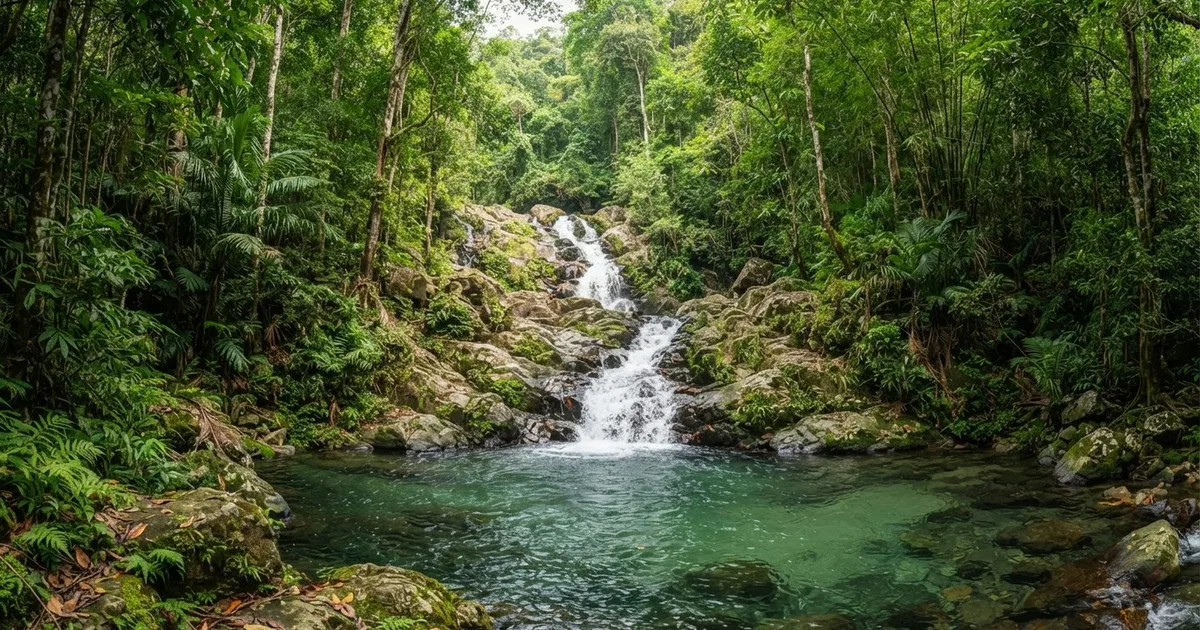
Thac Muoi Tang is worth visiting if you want a quiet nature stop, a picnic, or a refreshing swim rather than a dramatic waterfall spectacle. The waterfall and stream area is about 6 kilometers northeast of Duong Dong Town, with free entry reported by several guides and parking usually costing 5,000–10,000 VND, approximately $0.20–$0.40. Visit during wetter months for the best flow, but use extra care on the muddy approach road.
What is Thac Muoi Tang like?
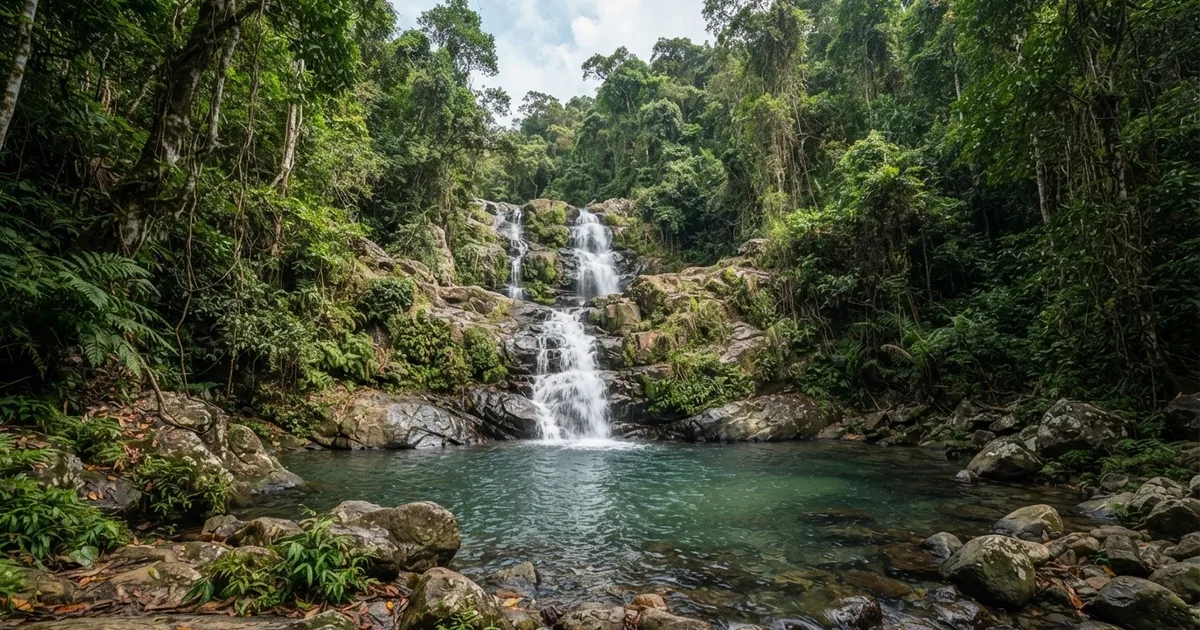
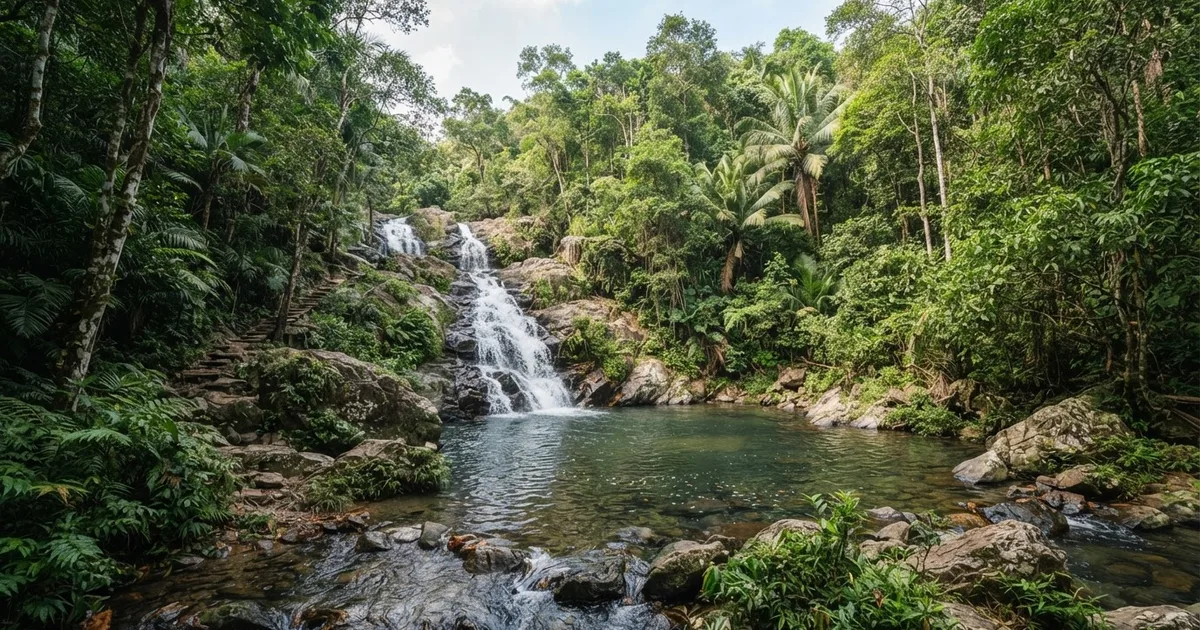
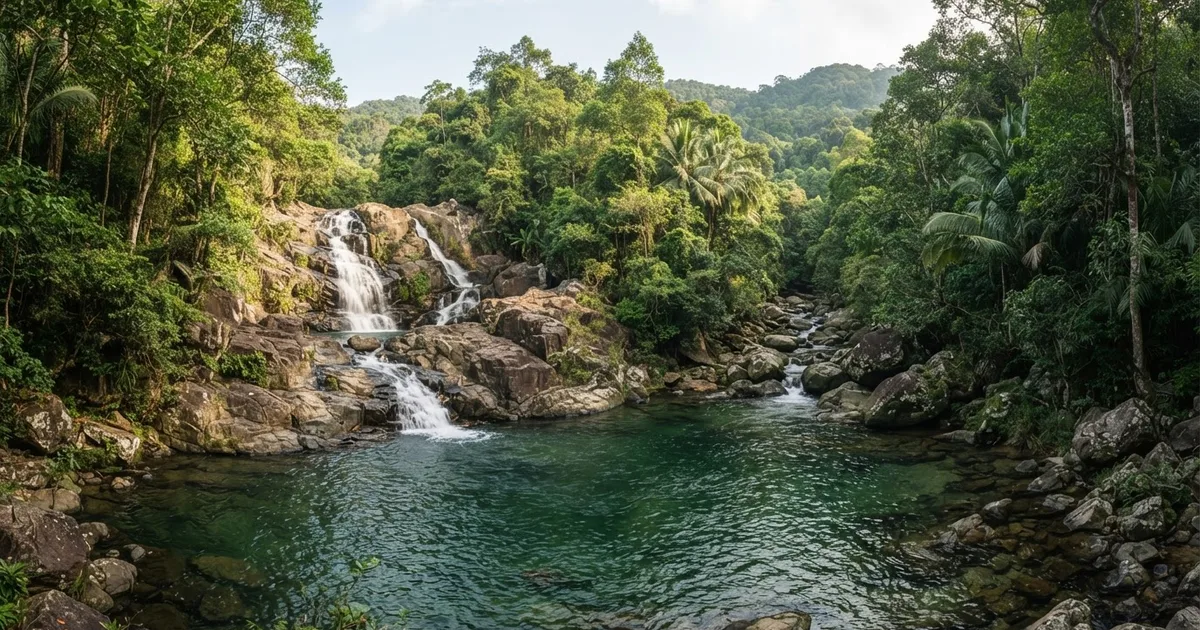
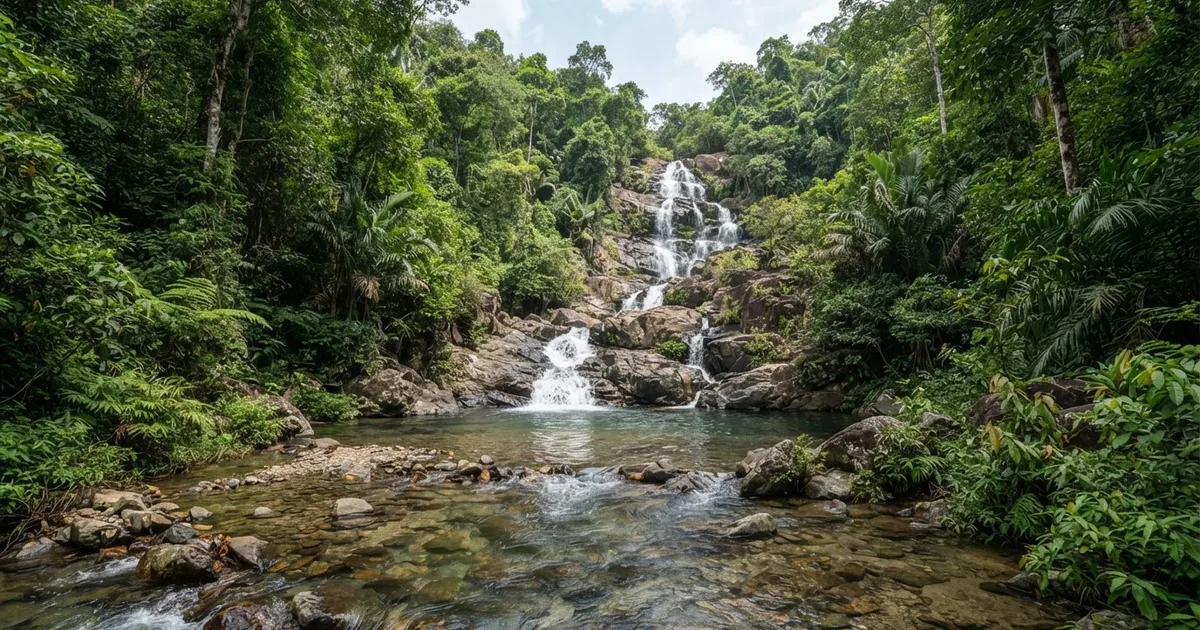
Thac Muoi Tang is a small waterfall and stream attraction in the forested interior of Phu Quoc. Available travel information commonly describes the area together with Da Ban Stream and Da Ban Waterfall, so visitors may see the names used interchangeably on maps, local directions, and travel guides. The setting is more important than the height of the cascade: expect rocks, shallow pools, dense greenery, and a relaxed streamside atmosphere rather than a tall, powerful waterfall.
The site is known for a wooden suspension bridge and relatively few tourists compared with Phu Quoc’s beaches and major attractions. That makes it appealing for travelers who want a short break from the coast. You can walk around the stream, sit beneath the trees, take photographs, enjoy a picnic, and possibly swim when water levels and conditions are suitable.
It is important to set realistic expectations. The waterfall is small and several guides consider it less impressive than Suoi Tranh, another well-known waterfall and stream attraction on the island. If you are expecting a spectacular multi-level cascade, Thac Muoi Tang may feel underwhelming. If you value quiet surroundings and a simple outdoor stop, it can be a worthwhile addition to a day exploring central Phu Quoc.
A good fit for
Travelers who enjoy quiet scenery, short walks, swimming, photography, forest air, and inexpensive local stops.
A poor fit for
Visitors seeking a large waterfall, fully developed facilities, smooth roads, guaranteed swimming conditions, or a full-day attraction.
Is Thac Muoi Tang worth visiting?
For most visitors, the answer is yes, but only when it is treated as a low-cost nature stop rather than one of Phu Quoc’s headline attractions. The area is close enough to Duong Dong Town to visit during a half-day ride, and the combination of a small cascade, stream rocks, forest, and suspension bridge gives it more character than a simple roadside viewpoint.
The strongest reason to go is atmosphere. Da Ban Stream is generally quieter than the island’s beaches, and the surrounding greenery can feel refreshing after several days in the sun. It is a practical place to slow down, eat a packed lunch, or cool off in suitable pools. Entry is commonly reported as free, so even a short visit carries little financial risk.
The main reason not to go is the waterfall itself. It is not as dramatic as Suoi Tranh, and water levels can change significantly. During a prolonged dry period, the stream may become shallow or reduce to a trickle. The final road can also be uncomfortable for inexperienced riders because of mud and potholes.
Plan for roughly one to two hours at the site, excluding travel time. That is enough for the bridge, a walk along the stream, photographs, and a possible swim. Combining it with other central-island stops makes more sense than traveling across Phu Quoc solely to see the cascade.
| Question | Practical answer |
|---|---|
| Is it a major waterfall? | No. It is a small waterfall and stream setting. |
| Is it peaceful? | Usually yes, with fewer visitors than major beach attractions. |
| Is swimming possible? | Sometimes, depending on rainfall, water depth, cleanliness, and safety. |
| Is there an entrance fee? | Entry is commonly reported as free. |
| How long should you stay? | Approximately one to two hours for a relaxed visit. |
How do you get to Thac Muoi Tang?
The stream area is approximately 6 kilometers northeast of Duong Dong Town and is often described as about 10 minutes north of town by road. The exact journey time depends on where you start, traffic, weather, and the condition of the final approach. A motorbike is the most convenient option for independent travelers because it allows you to combine the waterfall with other inland stops.
Follow your navigation app toward the Da Ban stream and waterfall area, then expect the route to become less urban as you approach the site. The last section may include a muddy, pothole-filled dirt road leading toward the parking area. This is the main practical difficulty, particularly after heavy rain. Slow down, avoid deep puddles when their depth is unclear, and do not assume that a route suitable for a car will feel easy on a scooter.
Parking is generally available near the access point and is commonly reported at 5,000–10,000 VND, or approximately $0.20–$0.40. Because local arrangements and prices can change, carry small notes and confirm the price before leaving your motorbike. Entry to the stream area itself is reported as free by some travel guides.
What to check before leaving Duong Dong
- Check the weather forecast and recent rainfall.
- Make sure your motorbike has enough fuel for the return journey.
- Bring water, food, insect repellent, and shoes with good grip.
- Download directions before entering areas with weaker mobile coverage.
- Ask locally about the road if heavy rain has fallen during the previous night.
Visitors who are not confident riding on uneven surfaces can arrange a taxi, private driver, or local guide. A car may be more comfortable for families, although the final road can still be rough. Walking from a distant main road is not an efficient plan, since the site is best treated as a short stop reached by road rather than a long hiking destination.
When is the best time to visit?
There is no single perfect month because the best season depends on whether you prioritize water flow or easy access. The rainy season, especially May to September, generally gives the stream a better chance of being full and the forest a greener appearance. This is the strongest window for visitors whose main goal is to see moving water, sit beside the stream, or take photographs of a more lush landscape.
Heavy rain creates a trade-off. The road can become muddy and slippery, rocks can be wet, and currents may be stronger. Avoid entering the water during or immediately after intense rainfall, and do not cross a stream section if the level is rising. Check local conditions rather than relying only on a seasonal average.
November to April is the island’s drier period and is often described as the safest and easiest season for exploring and rock hopping. The road is more likely to be manageable, and families may prefer the more predictable conditions. However, the stream can become shallow or dry during the driest weeks, which reduces the waterfall’s visual appeal.
For a first trip to Phu Quoc that also includes beaches and boat excursions, November to April is usually the most practical overall season. December to February offers the most reliable beach weather but also brings the highest accommodation prices and largest crowds. Late November to early December is a useful value window, when dry-season conditions begin but peak-season prices may not yet be fully established.
| Travel period | What to expect at Thac Muoi Tang | Best for |
|---|---|---|
| May to September | Fuller stream, greener scenery, but more mud and slippery rocks | Water flow and lush views |
| October to November | Variable rainfall, changing road conditions, often attractive greenery | Travelers balancing scenery and access |
| Late November to early December | Increasingly dry weather with potentially better value than peak season | Good overall compromise |
| December to February | Drier weather and easier exploring, but more tourists and higher prices | First-time visitors combining nature and beaches |
| March to April | Usually accessible, but the stream may be less impressive after dry weather | Rock hopping and a short inland stop |
What can you do at the waterfall?
Most visitors come for a combination of simple activities rather than a demanding hike. Walk beside the stream, cross the wooden suspension bridge, look for shaded rocks, and choose a safe place to sit. The surrounding vegetation and running water provide a cooler contrast to the island’s exposed beaches, especially during the warmer part of the day.
Swimming may be possible in deeper pools, particularly after adequate rainfall. Treat this as a conditional activity, not a guaranteed facility. Inspect the water first, avoid areas with strong flow, do not jump from rocks, and keep children within arm’s reach. Wet rocks can be extremely slippery, and there may be no lifeguard or formal safety service.
A picnic is one of the best reasons to visit. Bring food from Duong Dong and take all rubbish away with you. There may not be reliable food stalls, changing rooms, lockers, or toilets at the site, so do not plan the visit as if it were a developed water park. Carrying a lightweight towel and a change of clothes is useful if you expect to enter the water.
Photography is also rewarding after rain, when the stream, bridge, rocks, and foliage create more visual variety. Morning is generally more comfortable for walking and photography because temperatures are lower and the light is softer. Allow time to dry your footwear before riding back on wet or muddy roads.
Safety tip
Never judge a pool only by its surface. Hidden rocks, sudden depth changes, slippery algae, and strong currents can make natural swimming areas hazardous. If the water is cloudy, fast, or rising, enjoy the stream from the bank instead.
How does it compare with Suoi Tranh?
Suoi Tranh is usually the better choice for travelers who want a more established waterfall attraction and a stronger visual payoff. Travel guides commonly describe Thac Muoi Tang or Da Ban Waterfall as smaller and less impressive than Suoi Tranh. That difference matters if you have limited time and want to visit only one waterfall on Phu Quoc.
Thac Muoi Tang is better suited to people who value a quieter, less developed setting. The wooden bridge, streamside picnic opportunities, and relatively low visitor numbers are part of its appeal. Suoi Tranh may suit visitors who prefer a more recognizable attraction with a clearer tourist route, while Thac Muoi Tang suits travelers who are comfortable with a rougher approach and modest facilities.
| Feature | Thac Muoi Tang and Da Ban area | Suoi Tranh |
|---|---|---|
| Waterfall scale | Small and dependent on recent rainfall | Generally considered more impressive |
| Atmosphere | Quieter and more natural | More established and commonly visited |
| Best activity | Picnic, stream walk, relaxing, and possible swimming | Waterfall sightseeing and a more conventional attraction visit |
| Approach | Can include muddy, pothole-filled dirt road | Usually easier for visitors expecting a developed site |
| Best visitor | Independent travelers seeking a low-cost nature stop | Visitors prioritizing a stronger waterfall view |
If you have enough time, visiting both can give you a more balanced experience. Choose Suoi Tranh for the principal waterfall outing and Thac Muoi Tang for a quieter stop. If you have only a few hours, choose according to your priorities rather than assuming the smaller waterfall will provide the bigger spectacle.
What should you bring?
Pack for an informal outdoor environment rather than a resort attraction. Closed shoes with firm soles are preferable to flip-flops because the road, rocks, and bridge may be wet or uneven. Lightweight clothing, sun protection, insect repellent, drinking water, and a small towel are useful throughout the year.
Bring cash in small denominations for parking, even though entry is commonly reported as free. A waterproof phone pouch or dry bag protects electronics during a wet-season visit. If you are traveling by motorbike, carry only what you can secure safely and keep valuables with you while walking along the stream.
Food may be limited at the site, so buy snacks and drinks before leaving Duong Dong. Take every item of rubbish back with you, including plastic bags and drink containers. Natural attractions remain pleasant only when visitors avoid leaving food waste or disposable packaging behind.
- Grip-soled shoes or sandals suitable for wet rocks
- Water, snacks, and a small picnic
- Swimwear, towel, and dry clothes
- Insect repellent and sunscreen
- Small cash for parking
- Waterproof protection for your phone and camera
- A rain layer during May to October
Suggested half-day plan from Duong Dong
Leave Duong Dong in the morning, when the roads and walking conditions are usually more comfortable. The drive to the stream area is short in distance, but allow additional time for navigation, the final dirt road, parking, and walking. Spend one to two hours exploring the bridge and stream, then eat your picnic away from the water’s edge.
After the waterfall, return toward town for lunch or continue to another central-island attraction. You can also schedule a beach visit later in the day, although allow time to clean and dry your shoes and motorbike before riding on paved roads. Do not make the waterfall the only plan if the forecast shows heavy rain; keep a flexible itinerary and choose a safer indoor or coastal alternative when conditions deteriorate.
In the rainy season, start earlier because showers can intensify in the afternoon. In the dry season, a morning visit helps avoid the strongest heat. Families should allow extra time near the water and consider a private car if younger children or less experienced riders are traveling.
A sensible visit plan
- Check rainfall and road conditions before departure.
- Ride or drive carefully to the parking area.
- Pay the parking charge, if requested, and secure your belongings.
- Walk slowly near the stream and inspect rocks before stepping.
- Enjoy the bridge, scenery, picnic, and safe swimming conditions.
- Leave no rubbish and return before worsening weather or darkness.
Final verdict: who should visit Thac Muoi Tang?
Visit Thac Muoi Tang if your ideal Phu Quoc day includes a short ride, green scenery, a quiet stream, a simple picnic, and the possibility of swimming. Its free reported entrance, low parking cost, and location roughly 6 kilometers from Duong Dong make it an easy addition to an inland itinerary. The wooden suspension bridge and low visitor numbers add character that larger attractions may lack.
Skip it if you have only one day on the island and your priority is a dramatic waterfall, polished facilities, or guaranteed water flow. Suoi Tranh is likely a stronger choice for that purpose. Also reconsider the visit after heavy rain if you are not comfortable on muddy, pothole-filled roads or slippery rocks.
Overall, Thac Muoi Tang is a worthwhile minor attraction, not a must-see landmark. Its value comes from the peaceful setting and inexpensive nature experience. Choose May to September for the best chance of fuller water, or November to April for easier access and more reliable general travel conditions. With realistic expectations, it can be one of the most pleasant quiet stops near Duong Dong.
Frequently Asked Questions
Is Thac Muoi Tang worth visiting?
Yes, if you want a quiet stream, a small waterfall, a picnic setting, and possible swimming. It is not the best choice for a dramatic waterfall spectacle because the cascade is small and can become a trickle during dry weather. Plan for about one to two hours at the site.
Where is Thac Muoi Tang located?
The waterfall and stream area is approximately 6 kilometers northeast of Duong Dong Town on Phu Quoc. Some guides describe the drive as about 10 minutes north of town, although traffic, weather, and the final dirt road can make the journey longer.
How much does it cost to visit Thac Muoi Tang?
Several guides report free entry to the Da Ban stream area. Parking commonly costs 5,000–10,000 VND, approximately $0.20–$0.40. Local arrangements can change, so carry small cash and confirm the parking price before leaving your motorbike.
Can you swim at Thac Muoi Tang?
Swimming may be possible in suitable pools when rainfall has created enough depth, but it is not guaranteed. Check the water before entering, avoid strong currents and wet rock ledges, and never swim during or immediately after heavy rain. There are no reliable lifeguard services.
When is the best time to see the waterfall?
May to September generally offers the best chance of fuller water and greener scenery. November to April is usually drier and easier for access, walking, and rock hopping, but the stream may be shallow. Late November to early December can provide a useful balance between weather and lower peak-season prices.
Is the road to Thac Muoi Tang difficult?
The final approach can be muddy and filled with potholes, especially after heavy rain. Experienced motorbike riders should travel slowly and inspect puddles before crossing. Visitors who are uncomfortable on rough roads can use a taxi, private driver, or local guide, although a car may still experience an uneven final section.
How long should you spend at Thac Muoi Tang?
Allow approximately one to two hours for the bridge, a stream walk, photographs, a picnic, and possible swimming. Add travel time from Duong Dong and extra time for the final road. It is usually better as part of a half-day itinerary than as a full-day destination.
Is Thac Muoi Tang better than Suoi Tranh?
That depends on your priorities. Suoi Tranh is generally considered the more impressive waterfall, while Thac Muoi Tang is quieter and better for a simple nature stop. Choose Suoi Tranh for a stronger waterfall view and Thac Muoi Tang for peace, streamside relaxing, and fewer visitors.
Need current road advice, a motorbike, a driver, or help planning Thac Muoi Tang with other Phu Quoc stops? Contact Sabrina Rental for local assistance before you go.
Contact Sabrina