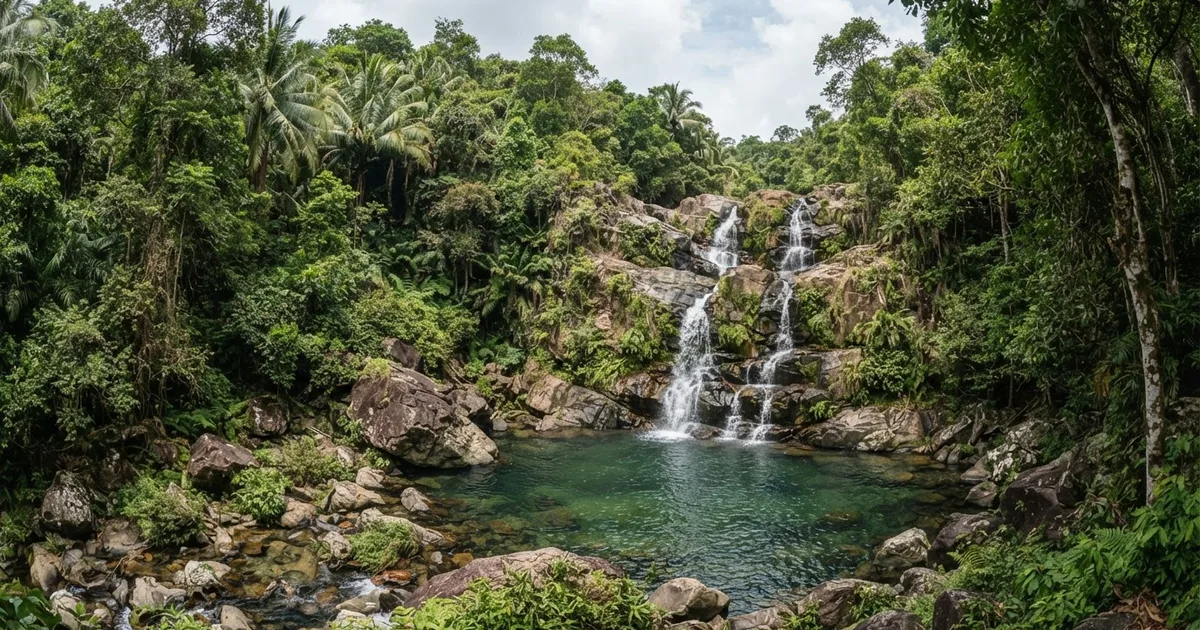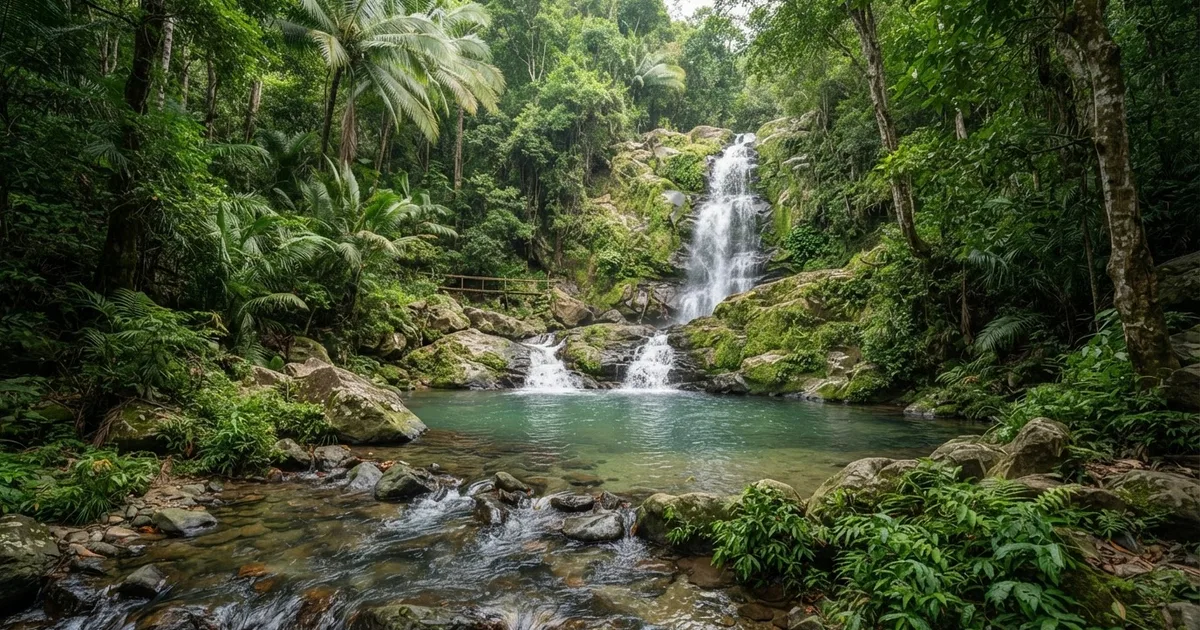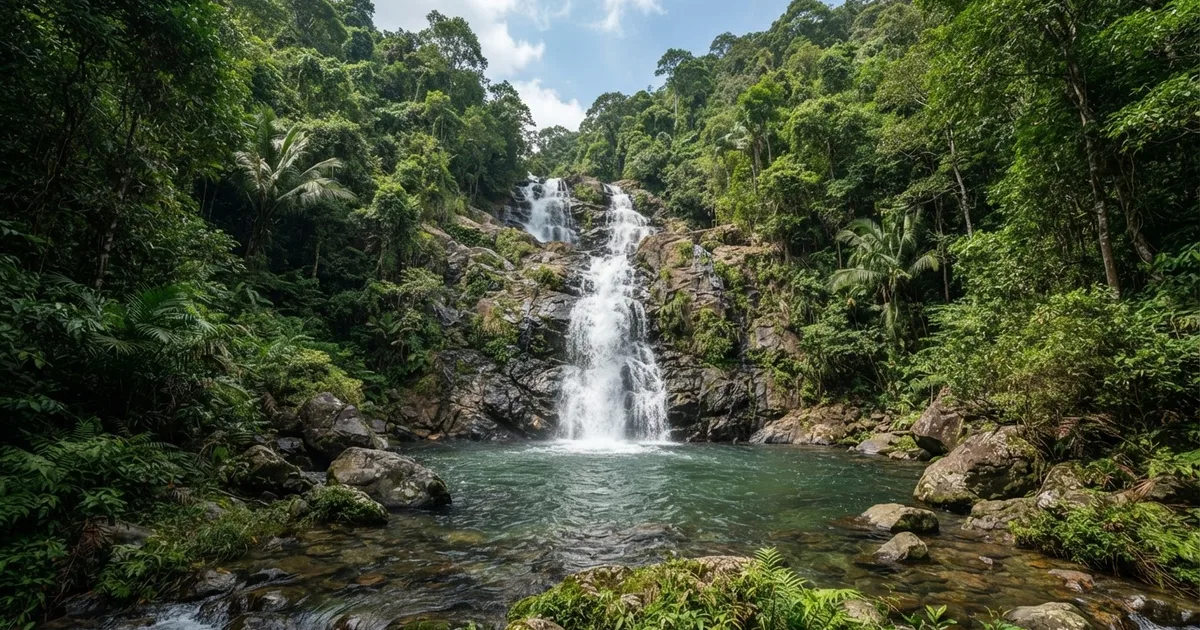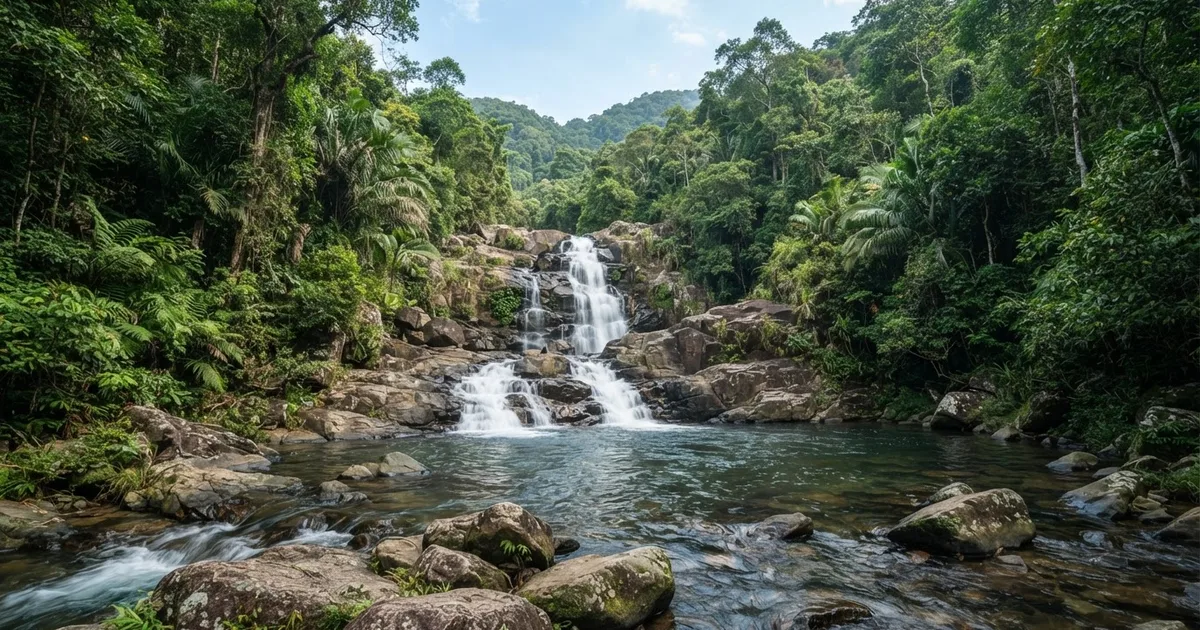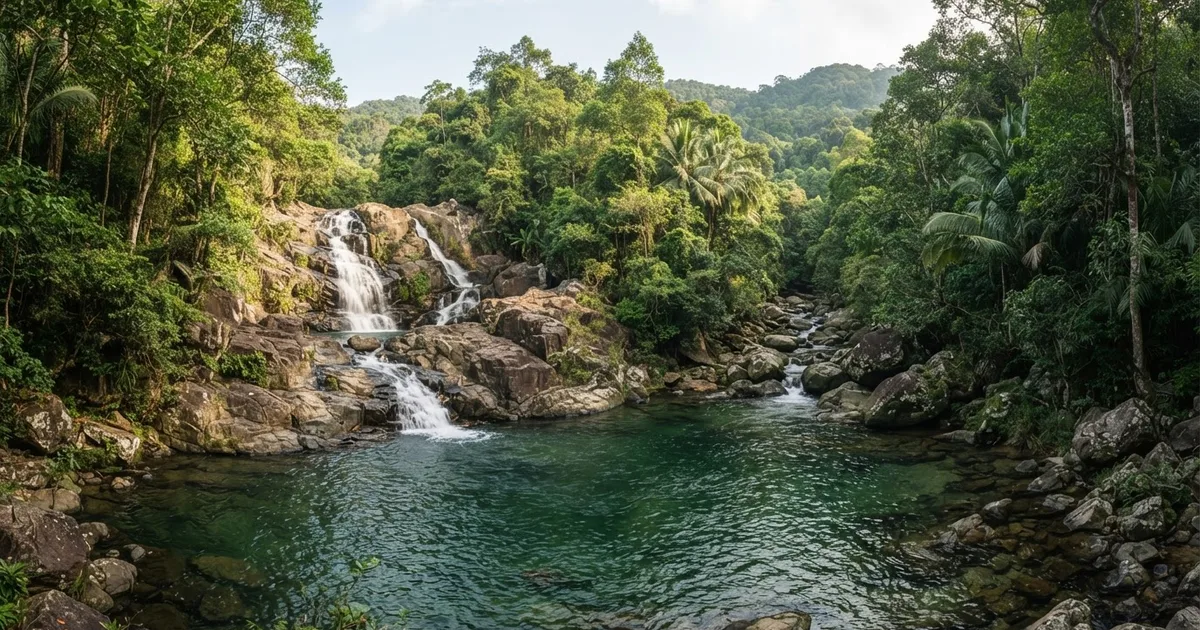
Thac Da Dau, commonly identified in travel information as Da Ban Waterfall or Da Ban Stream, is worth visiting if you want a quiet nature stop, a picnic, or a freshwater swim close to Duong Dong. It is not Phu Quoc’s most impressive waterfall: the cascade is small, and the site can be underwhelming in the dry season when the stream loses water. Plan for the wetter months, allow roughly half a day, and expect a muddy, pothole-filled approach road rather than a polished tourist attraction.
Is Thac Da Dau, or Da Ban Waterfall, worth visiting?
Da Ban is worth visiting for the right reason: it offers a short escape into greenery close to Duong Dong, with rocks, flowing water in the wetter months, a wooden suspension bridge, and relatively few visitors compared with Phu Quoc’s beaches and major attractions. It is an easy choice for travellers who enjoy simple outdoor places and do not need a large cascade, developed viewpoint, or extensive facilities.
The waterfall itself is small and is generally considered less impressive than Suoi Tranh Waterfall. If your main goal is to photograph a powerful waterfall, Da Ban may not justify a long journey on its own. The experience is more about sitting beside Da Ban Stream, cooling off in a natural pool, sharing food under the trees, and enjoying a quieter side of the island.
A good fit for
Visitors who enjoy quiet nature, swimming, casual photography, picnics, and short motorbike excursions from Duong Dong.
A poor fit for
Travellers seeking a dramatic waterfall, smooth roads, luxury facilities, guaranteed dry-weather sightseeing, or a full-day attraction with many activities.
The most important variable is water level. A visit during a dry spell can reveal attractive rocks but leave the waterfall weak or partly dry. In the wetter season, the stream is usually more rewarding, although the access road becomes more slippery and the water may be less clear after heavy rain.
Where is Da Ban Stream and how far is it from Duong Dong?
Da Ban Stream is approximately 6 km northeast of Duong Dong Town, with travel guides commonly describing the journey as about 10 minutes in normal conditions. The actual time can be longer during rain, when the unpaved approach becomes muddy, or when you stop to check directions. It is close enough to fit into a half-day itinerary and is practical for visitors staying around Duong Dong, Long Beach, or the central-western part of Phu Quoc.
The final approach is one of the site’s main practical disadvantages. Reports describe a dirt road with potholes and muddy sections leading toward the parking area. Conditions can change after rain, so ride slowly, keep extra distance from other vehicles, and avoid attempting the roughest sections at speed. A motorbike with reasonable tyres is more suitable than a small vehicle with poor ground clearance, while a taxi or private car may be more comfortable for families and visitors travelling after heavy rain.
Once you arrive, expect a basic natural setting rather than a fully developed attraction. Parking is generally close to the access point, and the walk to the stream is not normally the challenging part of the visit. The wooden suspension bridge is one of the recognizable features of the area and makes a pleasant photo stop, but it should be crossed carefully, especially when the boards or surrounding ground are wet.
Navigation tip: Search for “Da Ban Waterfall” or “Da Ban Stream” as well as “Thac Da Dau.” Names can vary between maps, travel pages, and local references. Check the route before leaving Duong Dong and save the map area offline because mobile coverage and map pins can be inconsistent in greener, less developed areas.
What does a visit to Da Ban Waterfall cost?
Several travel guides report that entry to Da Ban Stream is free. Parking is usually reported at around 5,000–10,000 VND, with 10,000 VND a commonly quoted amount. Prices may change, and the availability of an attendant can vary, so carry small Vietnamese banknotes rather than relying on a card or mobile payment.
| Item | Typical amount | What to know |
|---|---|---|
| Entrance | Free | Guides commonly describe the natural site as having no entrance charge. |
| Motorbike parking | 5,000–10,000 VND | Carry small notes; the amount may vary by day or parking point. |
| Food and drinks | Variable | Do not assume full refreshments are available at the stream. |
| Transport | Variable | Depends on whether you use a rental motorbike, taxi, or private car. |
The low entrance cost is one reason Da Ban works well as an add-on to a wider day out. Bring water, snacks, insect repellent, sun protection, and a bag for rubbish. Facilities may be basic, and a quiet natural site should not be treated like a beach club with reliable restaurants, changing rooms, lockers, or lifeguards.
Swimming is possible in suitable pools, but there is no reason to take unnecessary risks after heavy rain. Avoid areas with fast current, slippery rocks, or a sudden rise in water. Wear sandals or water shoes with grip instead of walking barefoot over wet stones, and keep phones and cameras in a waterproof pouch.
When is the best time to visit Da Ban Waterfall?
The best time for the waterfall itself is usually the wetter season, because Da Ban Stream can become very shallow or dry during prolonged dry weather. This differs from the general recommendation for a beach holiday. Phu Quoc’s dry season is commonly described as November to April, while the wet season generally runs from May to October. The wetter months are more likely to provide flowing water, but they also bring slippery paths, muddy roads, and a greater chance of sudden rain.
For the best balance between road conditions and scenery, consider visiting near the beginning or end of the wet season, provided recent rainfall has been sufficient. May, June, and October are often suggested as more affordable travel months, with prices around 30%–50% lower than peak periods in some guides. July and August can be among the cheapest months, with resort prices reported as 40%–50% below December peak rates, but these months may bring more persistent rain.
The dry season from November to March is generally the most comfortable period for travelling around Phu Quoc. February is often described as the driest month, while November and March can offer a useful balance of pleasant weather, lower crowds, and more reasonable prices. Late November to early December is another smart window before Christmas demand increases. However, dry-season visitors should lower their expectations for the waterfall’s flow and treat Da Ban as a forest and picnic stop first.
| Travel period | Da Ban conditions | Practical verdict |
|---|---|---|
| November–March | Usually drier; the stream may be low, especially in February. | Best for easier roads and broader island sightseeing, not guaranteed waterfall flow. |
| April | Hotter and transitional, with variable rainfall. | Possible, but check recent weather and water levels. |
| May–June | Increasing rain can improve the stream; roads may become muddy. | Good value and potentially good water conditions with flexible planning. |
| July–August | Wet, with a higher chance of slippery access and heavy showers. | Cheaper travel period, but visit only when conditions are safe. |
| September–October | Often wet; water levels may be better but rain can be disruptive. | Suitable for flexible travellers who monitor forecasts. |
Rain can arrive quickly in Phu Quoc. Direct typhoons are relatively rare because the island sits in the Gulf of Thailand, but storms farther north can still bring rough seas and heavy rain. Do not travel to the stream during a severe weather warning, and ask a local accommodation host about the road before setting out.
What can you do at Da Ban Stream?
Da Ban is best approached as a simple outdoor recreation area. The main activities are swimming in calmer sections, relaxing beside the stream, taking photographs, crossing the wooden suspension bridge, and having a picnic. The sound of running water and the surrounding vegetation create a noticeably quieter experience than Phu Quoc’s busy west-coast beach areas.
Swimming conditions depend on recent rainfall and the exact pool. Check the depth with your feet first, avoid jumping from rocks, and never swim beneath a fast cascade after a storm. Wet rocks can be extremely slippery, and the current may be stronger than it appears. Children should remain within arm’s reach of an adult because natural pools do not have lifeguards or marked safe zones.
Photography is more rewarding after rain, when the stream has enough movement and the forest looks fresh. Early morning is usually the most comfortable time for walking and provides softer light. If you are visiting in the dry season, focus on the bridge, exposed rock formations, forest textures, and picnic atmosphere instead of expecting a full waterfall curtain.
What to bring
- Water and a small meal, because food choices at the site may be limited.
- Insect repellent and sunscreen for time beneath and outside the tree cover.
- Grip sandals or water shoes for wet rocks and muddy ground.
- A waterproof phone pouch and a dry change of clothes.
- Small cash for parking, usually 5,000–10,000 VND.
- A rubbish bag so you can take all packaging back with you.
Leave the area quieter and cleaner than you found it. Avoid feeding animals, damaging plants, or using soap in the stream. The appeal of Da Ban comes from its relatively natural character, so a low-impact visit helps preserve the experience for other travellers.
How does Da Ban compare with Suoi Tranh Waterfall?
Da Ban and Suoi Tranh are often considered together because both offer a forest-and-stream experience, but they suit different expectations. Da Ban is generally quieter and more informal, while Suoi Tranh is better known and is often considered the more attractive waterfall stop. Guides commonly describe Da Ban’s waterfall as small and not as nice as Tranh Stream’s waterfall.
| Feature | Da Ban Stream | Suoi Tranh Waterfall |
|---|---|---|
| Best reason to visit | Quiet nature, swimming, and a relaxed picnic. | A more established waterfall and forest attraction. |
| Atmosphere | Relatively few tourists and a simple setting. | Generally more recognized and potentially busier. |
| Water flow | Can become very low or dry in the dry season. | Also seasonal, but often chosen for a more scenic waterfall view. |
| Access | Includes a muddy, pothole-filled dirt-road approach. | Usually selected by travellers wanting a more straightforward attraction. |
| Best for | Independent travellers who enjoy less-developed places. | Visitors prioritizing a classic waterfall photo and clearer visitor infrastructure. |
Choose Da Ban if your itinerary already passes nearby and you would enjoy an unhurried stream stop. Choose Suoi Tranh if the waterfall image is the central reason for your outing. It is also possible to compare both only if recent weather, road conditions, and opening arrangements make the route practical; forcing two waterfall stops into one day can leave less time for the island’s beaches and villages.
Da Ban is a poor substitute for a major natural attraction if you have only one day on Phu Quoc. In that case, prioritize the experiences that matter most to you, such as a beach, a boat trip, snorkeling, or a sunset location. Da Ban becomes more attractive on a two- or three-day stay, when a free or inexpensive nature stop can fill part of a flexible itinerary.
How should you plan a Da Ban Waterfall visit?
Allow approximately two to four hours for the round trip and time at the stream, depending on your starting point and how long you picnic or swim. From Duong Dong, the distance is only about 6 km northeast, but the final dirt road and wet-weather conditions can slow the journey. Start in the morning if you are riding, especially during the rainy season, so you have daylight for the return route.
A motorbike gives independent travellers the simplest way to combine Da Ban with other central or northern stops, but only ride if you are confident on uneven surfaces. Wear closed shoes, secure loose bags, and do not carry more speed into muddy corners than you can safely control. A taxi or private car may be more appropriate for families, older visitors, or anyone travelling immediately after substantial rainfall.
- Check the forecast and ask locally whether the access road is passable.
- Search your map for both Da Ban Waterfall and Da Ban Stream before leaving.
- Carry water, food, cash, insect repellent, and suitable footwear.
- Park carefully and confirm the return route before walking away from the vehicle.
- Inspect the stream before swimming and leave if the current becomes strong or the rain intensifies.
Because the site is close to Duong Dong, you do not need to reserve a complete day for it. A practical plan is to visit in the morning, return for lunch, and continue to another attraction if the weather remains stable. If you are travelling in the wet season, keep the afternoon flexible: a heavy shower can turn a short road into a slow and uncomfortable ride.
Frequently Asked Questions
Is Thac Da Dau the same place as Da Ban Waterfall?
Travel information for this area commonly uses the names Da Ban Waterfall and Da Ban Stream, while some searches use Thac Da Dau. Because place names and map labels can vary, search for both names and confirm the location near Duong Dong before travelling. The commonly described site is about 6 km northeast of Duong Dong Town.
Is Da Ban Waterfall free to enter?
Several guides report free entry to Da Ban Stream. Parking is commonly reported at 5,000–10,000 VND, often around 10,000 VND. Carry small cash because local arrangements can change and card payment should not be expected at a basic natural site.
When does Da Ban Waterfall have the most water?
The wetter months, generally May to October, are more likely to produce a flowing stream and waterfall. The dry season from November to April is better for road conditions but can leave Da Ban shallow or dry. Visit after moderate rain, but avoid the site during dangerous storms or rapidly rising water.
How long should I spend at Da Ban Stream?
Most visitors can allow two to four hours including travel from Duong Dong, a walk, photographs, swimming, and a picnic. The site is close to town at about 6 km northeast, so it works well as a half-day stop rather than a full-day destination unless you combine it with other attractions.
Is the road to Da Ban Waterfall suitable for a motorbike?
A motorbike can reach the area, but the approach includes a dirt road described as muddy and pothole-filled. Ride only if you are comfortable on uneven surfaces, slow down after rain, and avoid travelling in poor visibility. A taxi or private car may be more suitable for families or visitors with limited riding experience.
Can you swim at Da Ban Waterfall?
Swimming and cooling off in calmer stream pools are among the main reasons to visit, particularly in wetter months. There are no lifeguards, and rocks can be slippery. Check depth and current first, avoid swimming after heavy rain, do not jump from rocks, and supervise children closely.
Is Da Ban better than Suoi Tranh Waterfall?
Neither is best for every traveller. Da Ban is quieter and better for a relaxed picnic or natural swim, while Suoi Tranh is generally regarded as the more attractive waterfall. Da Ban’s cascade is small, so travellers seeking a dramatic waterfall are more likely to prefer Suoi Tranh.
Should I visit Da Ban Waterfall in the dry season?
You can visit in the dry season, especially from November to March when Phu Quoc weather is often sunnier and roads are easier. However, February is particularly dry and the stream may have little water. Treat a dry-season visit as a forest, rock, and picnic outing rather than expecting a strong waterfall.
Need current road advice, a suitable motorbike, or help combining Da Ban Stream with other Phu Quoc stops? Contact Sabrina Rental for local guidance and booking support.
Contact Sabrina Rental