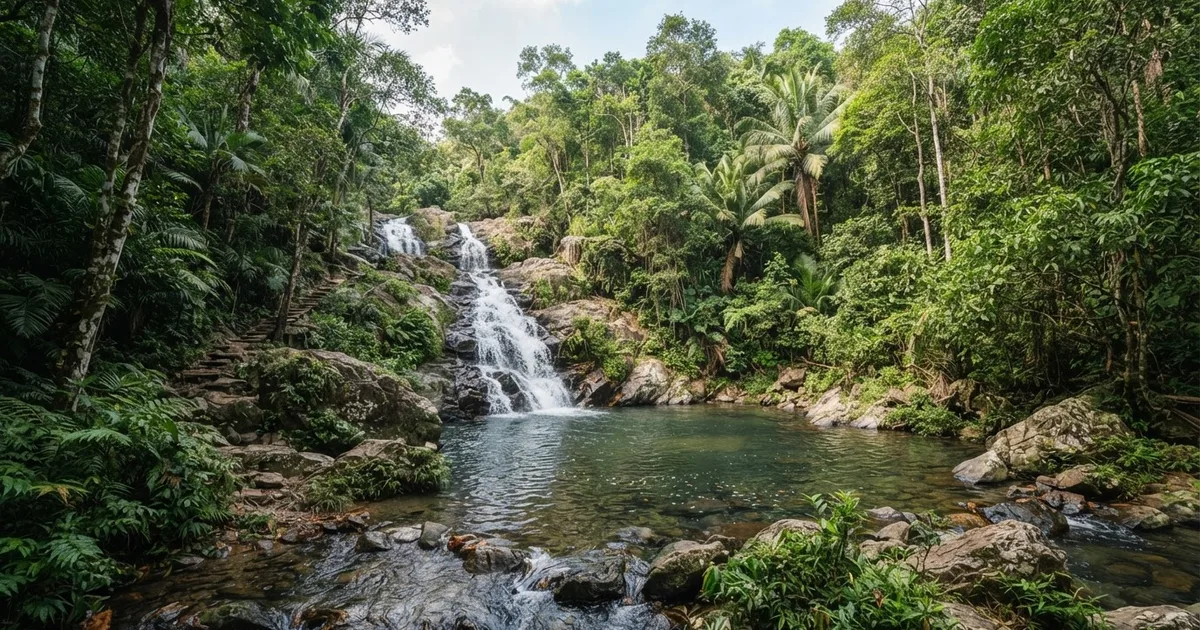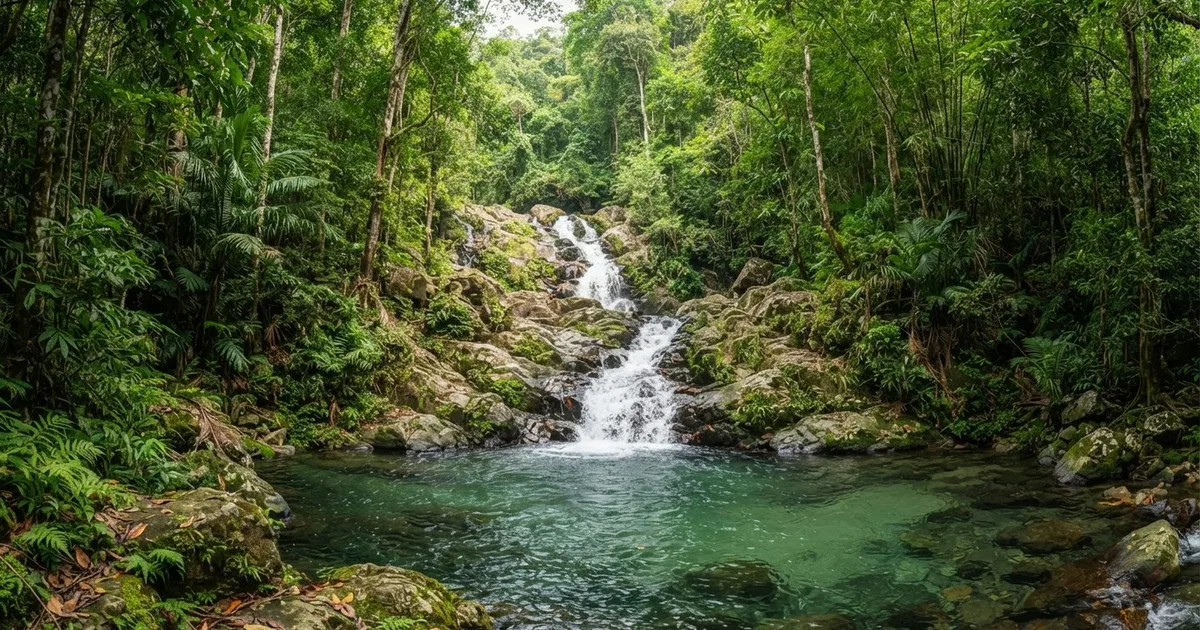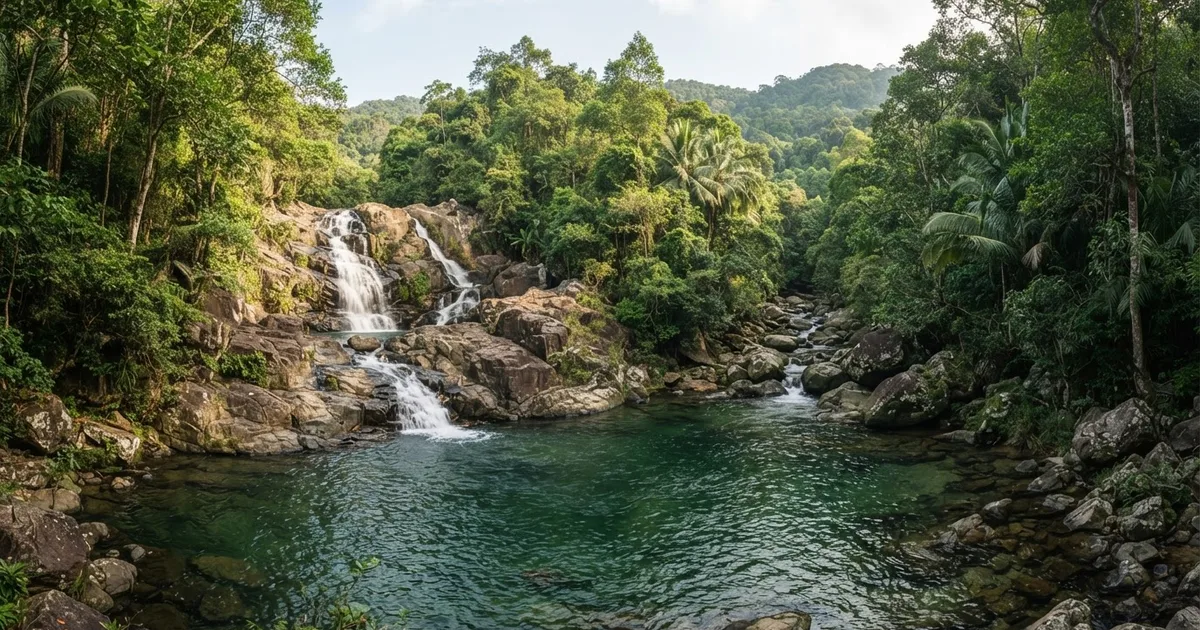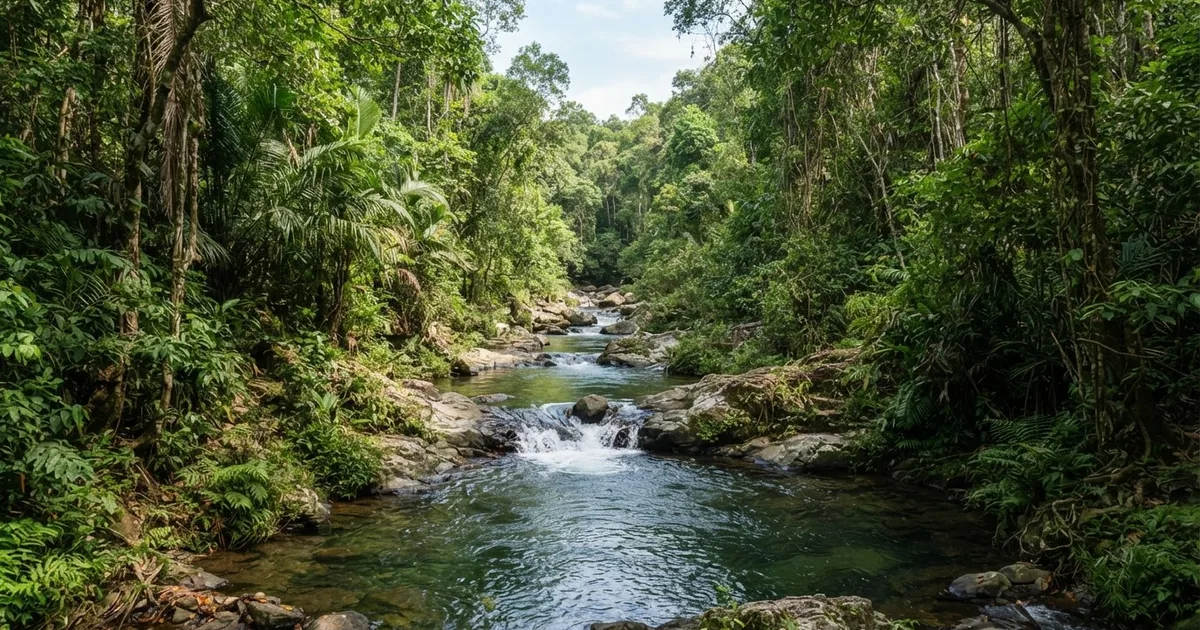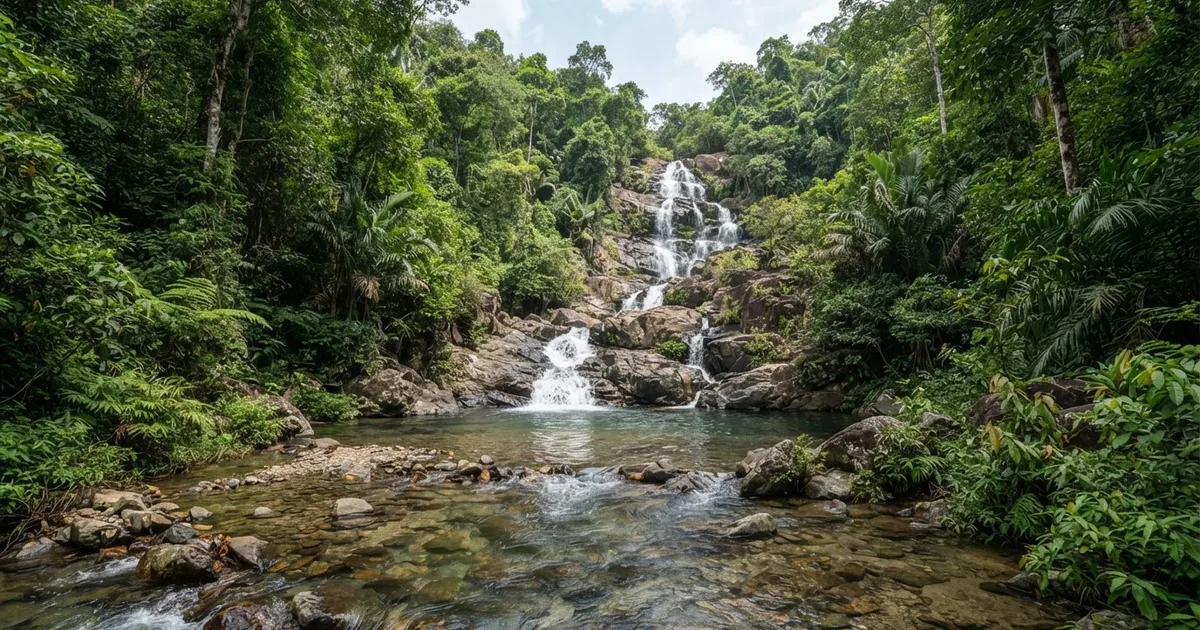
Suoi Tien Waterfall is worth visiting if you enjoy a quiet forest walk, natural scenery, and a simple swimming or picnic stop rather than a dramatic waterfall. Entry is free, parking costs about 10,000 VND, and the waterfall is usually at its most impressive from June to October, when rain keeps the stream full and the forest bright green. During the drier months, the flow can fall sharply, leaving mainly a pleasant woodland trail instead of a strong cascade.
Is Suoi Tien Waterfall worth visiting?
Suoi Tien Waterfall is worth visiting when your expectations match the scale of the site. This is a small, natural waterfall in a forested setting, not a high waterfall with a powerful plunge pool or extensive visitor facilities. Its main appeal is the journey through lush woodland, the sound of running water after rain, and the chance to spend time outdoors away from Phu Quoc's busier beaches and resort areas.
A guide to the site describes the forest scenery as especially beautiful, and that is the strongest reason to include Suoi Tien in an itinerary. The experience is more about walking beside a stream, looking at tropical vegetation, crossing uneven ground, and finding a calm place to sit than about taking one photograph of a spectacular cascade. In wet conditions, the stream adds atmosphere and the surrounding landscape becomes noticeably greener.
It is a poor fit for visitors searching for a dramatic waterfall, a highly developed attraction, or a guaranteed swimming experience in every season. The waterfall can be modest even when conditions are good, while the flow may drop significantly during the dry period from January to April. If you have only one free nature excursion on Phu Quoc and want the most recognizable waterfall experience, compare Suoi Tien with Tranh Stream and Da Ban before deciding.
Choose Suoi Tien if...
You want free entry, a quiet forest setting, a seasonal stream, and a less commercial nature stop.
Choose another attraction if...
You need a large waterfall, dependable water in the dry season, paved access, or extensive facilities.
When is the best time to visit Suoi Tien?
The best time for the waterfall itself is generally June to October. This period brings more abundant water to the stream, and the forest landscape is at its greenest. After sufficient rain, the creek is more likely to flow continuously and the waterfall has more visual impact. These months are therefore the best choice if your priority is seeing Suoi Tien with water rather than visiting only for the trail.
There is an important trade-off: the rainy season can make forest paths slippery, muddy, and less comfortable. Heavy rain may also make rocks near the stream unsafe. Check the local forecast before leaving, avoid the trail during intense rainfall, and do not stand beneath unstable slopes or close to fast-moving water. A light-weather day after rain is usually better than arriving during a storm.
For walking conditions, October to April is often considered the more comfortable and safer hiking period. The weather is generally drier, making the approach and rocks easier to manage. However, January to April can be the least reliable period for the waterfall because the water level may drop sharply. In a particularly dry week, Suoi Tien may feel more like a forest walk with a small stream than a waterfall excursion.
| Period | What to expect | Best for |
|---|---|---|
| June to October | Fuller stream, greener forest, wetter and potentially muddier trail | Seeing the waterfall at its strongest |
| October to December | Often a useful balance of manageable weather and remaining water | Hiking, scenery, and a reasonable chance of flow |
| December to February | Water may be clear and cool, but flow varies with recent rainfall | Comfortable outdoor exploring and stream photography |
| January to April | Water level can fall substantially; parts may resemble a dry forest walk | Travelers who value nature scenery more than the cascade |
Some local recommendations identify December to February as a particularly pleasant period because the water can be clear and cool while outdoor conditions remain manageable. Treat this as a practical compromise rather than a guarantee: rainfall in the preceding days matters more than the calendar alone. If the waterfall is your main reason for going, ask locally about recent rain before setting out.
What does the visit involve?
Suoi Tien is best approached as a short nature outing rather than a full-day attraction. Expect a forest trail leading toward a seasonal creek and waterfall, with uneven ground, roots, rocks, and potentially wet sections. The surroundings are the main reward: dense greenery, shade, stream sounds, and a more natural atmosphere than the developed beach areas of the island.
There is no admission charge for Suoi Tien Creek and Waterfall. Parking is reported at approximately 10,000 VND, although it is sensible to carry small Vietnamese notes because local arrangements can change. The site is not presented as a large managed park with a detailed visitor centre, extensive changing rooms, or guaranteed food services, so bring drinking water, insect repellent, and snacks if you plan to stay.
Wear shoes with a firm sole rather than smooth sandals. A towel, spare clothes, and a waterproof bag are useful after rain or if you sit beside the stream. The most comfortable visit usually involves arriving in the morning, when temperatures are lower and the forest feels cooler. Leave enough time for the walk and for careful stops beside the water instead of rushing to photograph the cascade.
What to bring
- Closed shoes with good grip for wet rocks and uneven ground
- Water and a small snack, particularly if visiting outside town
- Insect repellent and sunscreen
- A waterproof phone pouch or dry bag during the rainy season
- Small cash for approximately 10,000 VND parking
- Spare clothes and a towel if you may enter the stream
Swimming should be treated as conditional, not guaranteed. Water depth and current strength change after rain, while dry-season pools may become shallow. Inspect the area first, avoid jumping from rocks, keep children within arm's reach near moving water, and leave the creek immediately if rain begins upstream.
How should you plan the route and timing?
Plan Suoi Tien as a flexible half-day stop rather than building an entire day around the waterfall. Leave earlier in the day to avoid peak heat and to allow time for a slow walk through the forest. A motorbike is a practical way to reach many of Phu Quoc's nature sites, but road conditions can become more difficult after rain. Ride slowly on unfamiliar surfaces and confirm the final approach locally before departing.
Allow extra time if the recent weather has been wet. Mud, standing water, and slick rocks can make a short trail take much longer than expected. The objective should be a safe walk to the stream, not reaching a particular point at any cost. If the access looks flooded or heavily eroded, turn back and choose a beach, market, or other lower-risk activity instead.
A sensible schedule is to leave in the morning, spend roughly one to two hours allowing for the approach and time beside the water, and then continue to another attraction if conditions are good. The actual hiking time depends on the starting point, route condition, and how far you explore. Avoid returning after dark because forest paths and rural roads are harder to navigate without reliable lighting.
Local planning tip
Ask about recent rainfall on the day you go. A visit soon after rain can produce the best waterfall, while a week of dry weather may leave only a small stream. This single check is often more useful than relying on a fixed month-by-month promise.
Pack lightly and keep valuables protected from water. Mobile reception and facilities may not be consistent along a forest trail, so download directions beforehand and tell someone your approximate plan if you are traveling alone. Families should choose the easiest dry-looking route, supervise children continuously, and avoid making the trip during heavy rain.
How does Suoi Tien compare with Da Ban and Tranh Stream?
Suoi Tien is not necessarily the strongest waterfall choice on Phu Quoc. Da Ban Waterfall is generally considered worth visiting for a quieter, more natural stop, although its waterfall is also small and may not be as impressive as Tranh Stream. Da Ban is better understood as a place for picnics, swimming, relaxing beside the water, and enjoying a wooden suspension bridge than as a major waterfall spectacle.
Da Ban Stream is around 6 kilometres northeast of Duong Dong Town and about 10 minutes north of town by a typical local route. Some guides report free entry, with parking commonly around 5,000 to 10,000 VND or approximately 10,000 VND. Its approach can include a muddy, pothole-filled dirt road, so a motorbike rider should use caution, especially after rain.
Da Ban also has conflicting seasonal advice. May to November is often recommended for fuller flow and greener scenery, while other guides favour November to April because the weather is drier and rock hopping is easier, especially for families. A further recommendation places the best window from May to September, before the stream can fall to a trickle. As with Suoi Tien, recent rainfall and road conditions matter more than a rigid date.
| Site | Main strength | Possible drawback | Best suited to |
|---|---|---|---|
| Suoi Tien | Quiet forest scenery and a seasonal stream | Small waterfall; may be weak from January to April | Travelers wanting a simple, low-cost nature walk |
| Da Ban | Picnics, swimming, relaxing, and a wooden suspension bridge | Small waterfall and potentially muddy, pothole-filled access road | Visitors seeking a quieter stream stop near Duong Dong |
| Tranh Stream | Generally more recognizable as a waterfall attraction | May feel less quiet or less natural depending on visitor levels | Travelers prioritizing a more substantial waterfall experience |
Choose Suoi Tien over Da Ban if you want the simpler, quieter option and do not mind a smaller cascade. Choose Da Ban if a picnic, bridge, or streamside relaxation matters more than waterfall size. Choose Tranh Stream if your main objective is to see a more impressive waterfall. Suoi Tien is a poor fit for anyone who has already visited several small seasonal streams and wants a clearly different, high-impact attraction.
Safety, weather, and responsible visiting
Waterfall conditions can change quickly in tropical weather. Rain falling farther upstream may increase the current even when the area around you appears calm. Do not enter the water during storms, stand beneath overhanging rocks, or cross a fast-flowing section simply to reach a better viewpoint. Keep a safe distance from the edge of slippery rocks and use both hands when climbing over uneven ground.
Sun protection is still important even in shaded forest. Humidity can make a short walk tiring, so drink water regularly and take breaks. Leech and mosquito activity may be higher after rain; long, lightweight clothing and repellent are useful. Closed footwear is safer than flip-flops, particularly where mud and exposed roots are present.
Leave no rubbish, avoid loud music, and do not damage plants or collect rocks. Use existing paths rather than creating shortcuts, and do not use soap or shampoo in the stream. If there are no bins, take all waste back with you. A small natural site can lose its appeal quickly when visitors leave plastic, food packaging, or other litter behind.
Before leaving, check your vehicle, phone battery, weather forecast, and return route. If you are not confident riding on wet rural roads, arrange local transport or ask a local rental and concierge service about the current approach. The waterfall is free, but safety and road conditions should determine whether today is the right day to visit.
Suoi Tien Waterfall verdict by traveler type
Good for nature lovers
Yes. The lush forest scenery and seasonal stream are more important than the waterfall's size.
Good for budget travelers
Yes. Entry is free and reported parking is only about 10,000 VND.
Good for families
Possibly, in dry and stable weather with close supervision; November to April is often considered safer for rock hopping, but water may be lower.
Good for waterfall hunters
Only partly. Visit after rain for the best chance of flow, but choose another site if you require a large or dramatic cascade.
The final answer is therefore conditional: Suoi Tien is worth visiting as a peaceful forest experience, especially from June to October or shortly after rainfall. It is not worth making a long detour solely for the waterfall during a very dry spell. Check recent conditions, take suitable footwear, and combine the stop with another Phu Quoc activity so the day remains enjoyable even if the stream is low.
Frequently Asked Questions
Is Suoi Tien Waterfall worth visiting?
Yes, if you value quiet forest scenery, a seasonal stream, and a low-cost outdoor stop. The waterfall is small, so it is a poor choice for travelers expecting a dramatic cascade. Visit after recent rain, ideally between June and October, when the stream is fuller and the surrounding vegetation is greener.
How much does it cost to visit Suoi Tien Waterfall?
Entrance to Suoi Tien Creek and Waterfall is free. Parking is reported at approximately 10,000 VND. Bring small cash because local parking arrangements can change, and do not assume that food, drinks, changing facilities, or other services will be available at the site.
What is the best month to visit Suoi Tien Waterfall?
June to October is generally best for seeing more water and greener forest scenery. October to April is often more comfortable for hiking because conditions are drier, but the stream may be much lower. December to February can offer clear, cool water, depending on rainfall in the preceding days.
Can you swim at Suoi Tien Waterfall?
Swimming may be possible in suitable pools, but it is not guaranteed throughout the year. Water levels change with the season, and the stream can become shallow from January to April. Inspect the water first, avoid swimming during or after heavy rain, and never jump from rocks or enter a fast current.
How long should you spend at Suoi Tien Waterfall?
Allow roughly one to two hours for a relaxed visit, including the forest walk, photographs, and time beside the stream. Add travel time from your accommodation and extra time if the trail is muddy. Visiting in the morning is usually more comfortable because temperatures are lower and you can return before dark.
Is Suoi Tien suitable for children?
It can be suitable for older children in dry, stable weather, but the trail may include roots, rocks, mud, and slippery surfaces. Adults should supervise children closely beside the stream and keep them away from deep or fast-moving water. Avoid visiting during heavy rain or when the approach is flooded.
Is Suoi Tien better than Da Ban Waterfall?
Neither is universally better. Suoi Tien suits travelers wanting a quiet forest walk and free entry, while Da Ban is stronger for picnics, streamside relaxation, swimming, and its wooden suspension bridge. Da Ban is about 6 kilometres northeast of Duong Dong, but its access road can be muddy and full of potholes.
What should you bring to Suoi Tien Waterfall?
Bring firm-grip shoes, drinking water, insect repellent, sunscreen, small cash for approximately 10,000 VND parking, and a waterproof bag for your phone. A towel and spare clothes are useful if you sit near or enter the stream. Carry all rubbish out because facilities may be limited.
Planning a waterfall day on Phu Quoc? Contact Sabrina Rental for current local conditions, motorbike rental advice, directions, and help combining Suoi Tien with other island stops.
Contact Sabrina Rental