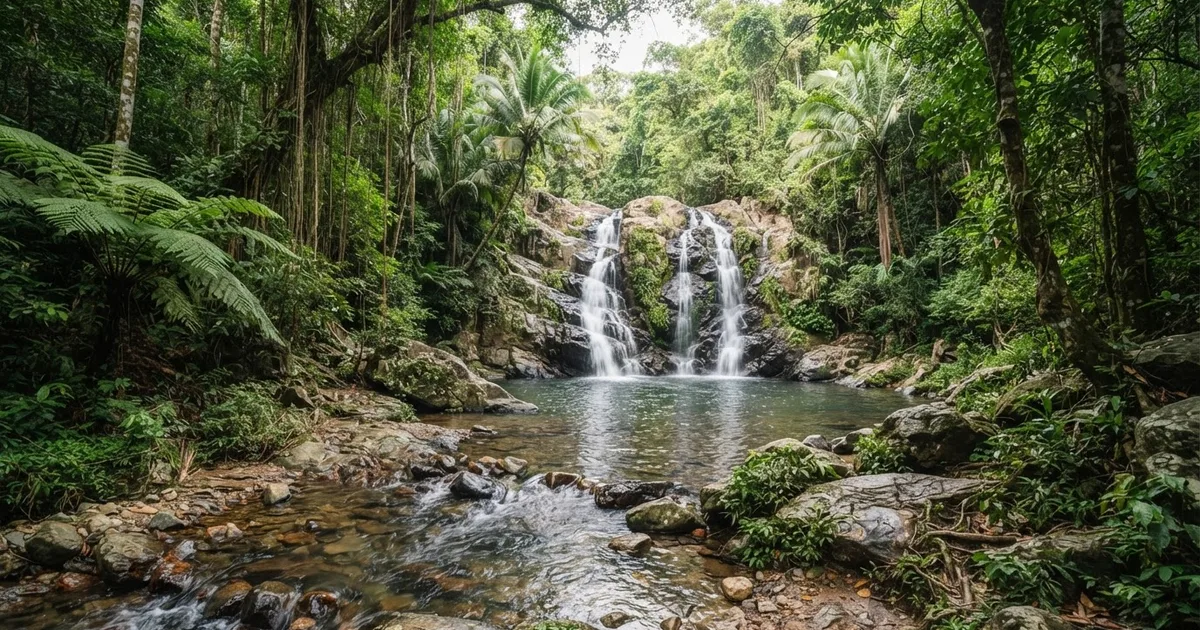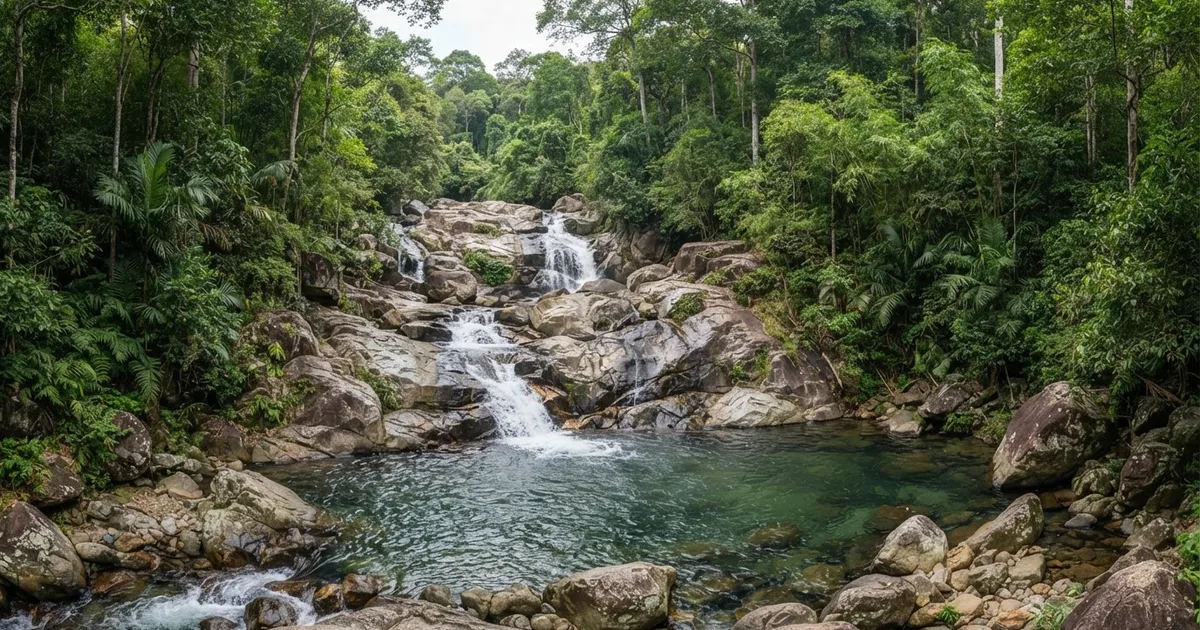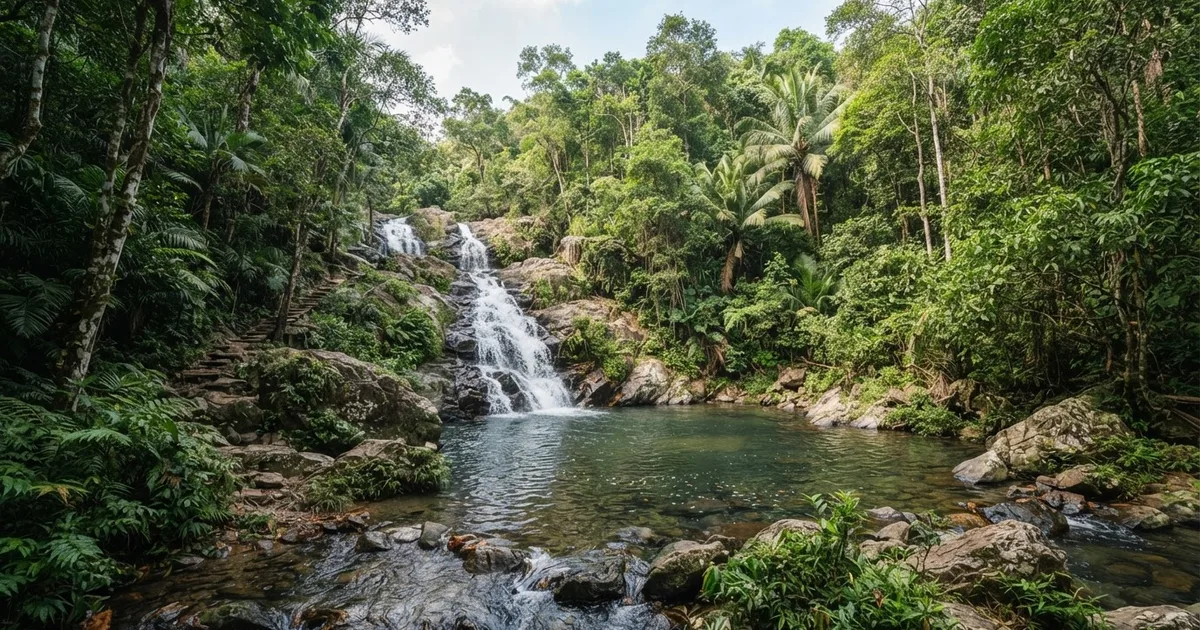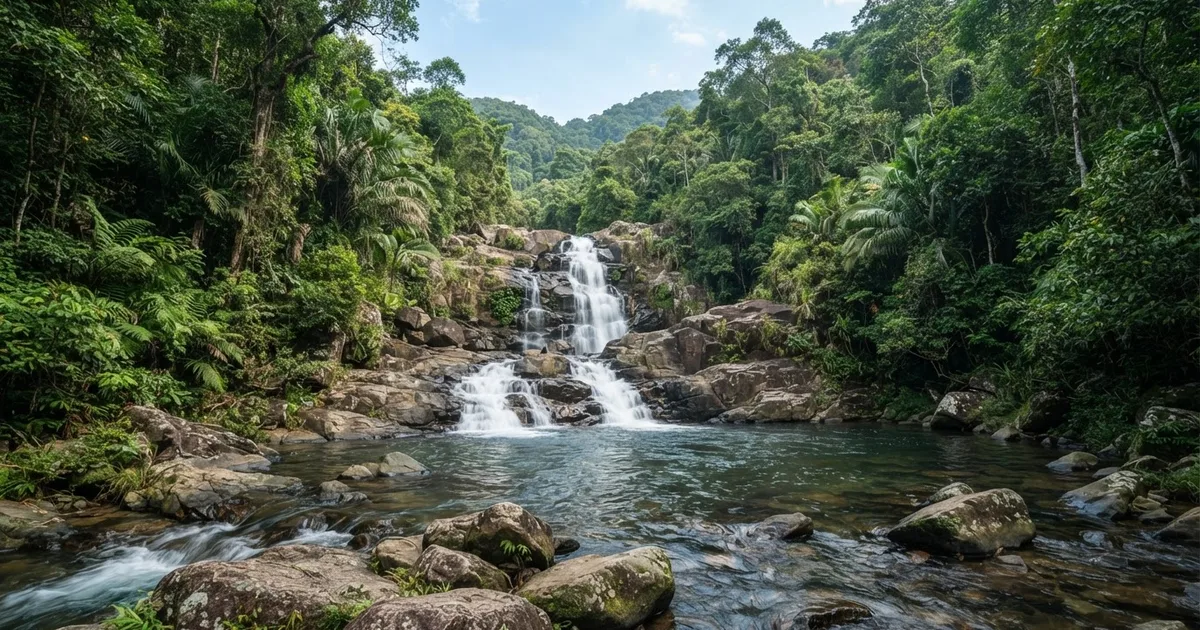
Yes, Da Ban Waterfall is worth visiting if you want a quiet, inexpensive nature stop near Duong Dong rather than a large and dramatic waterfall. The stream is about 6 km northeast of Duong Dong Town, and the entrance fee is reported as free or approximately 5,000 VND, with parking usually costing 10,000 VND. Visit from May to November for the fullest water flow, but choose the drier months if your priority is safer rock walking and easier access.
Is Da Ban Waterfall worth visiting?
Da Ban Waterfall is worth adding to a Phu Quoc itinerary when you value a quiet outdoor stop, especially if you are travelling by motorbike and can combine it with other northern or central-island sights. The setting is more natural and less developed than the island’s busiest attractions. A wooden suspension bridge, forest surroundings, broad granite slabs, and shallow stream pools make the site pleasant for a slow visit rather than a quick photograph.
The important qualification is that Da Ban is a small waterfall. It is not the most impressive waterfall on Phu Quoc, and several travel guides describe it as less attractive than Tranh Stream waterfall. During dry periods, the waterfall can lose much of its flow, leaving exposed rocks and a stream that may be better described as a boulder-filled creek. The visit is therefore about the whole landscape, not only the waterfall itself.
A good fit for
Travellers who want a low-cost nature break, families visiting in dry weather, photographers, picnic groups, and visitors who prefer relatively few tourists.
A poor fit for
Visitors expecting a tall, powerful waterfall, anyone unwilling to use a muddy 4 km approach road, or travellers with limited time during a dry spell.
Where is Da Ban Stream and how do you get there?
Da Ban Stream is located approximately 6 km northeast of Duong Dong Town. In normal conditions, the journey from town takes around 10 minutes, although the actual time depends on traffic, weather, and your vehicle. The short distance makes it practical as a half-day outing, particularly for people staying in Duong Dong or nearby areas.
After turning into Duong To Village, the route to the parking area continues for about 4 km on a dirt road. This final section is the main practical drawback. Guides describe it as muddy and full of potholes, especially after rain. A motorbike is convenient, but ride slowly, leave extra braking distance, and avoid taking a scooter that is difficult to control on loose or wet surfaces. A bicycle is possible for confident riders, although the dirt-road section makes the trip more demanding.
| Practical detail | What to expect |
|---|---|
| Location | About 6 km northeast of Duong Dong Town |
| Approximate travel time | About 10 minutes from Duong Dong in favourable conditions |
| Final road section | Approximately 4 km of dirt road after the turn into Duong To Village |
| Parking | Usually 5,000–10,000 VND; 10,000 VND is commonly quoted |
| Entrance | Some guides report free entry; another lists 5,000 VND |
Because local charges can change, carry small Vietnamese banknotes and confirm the current fee at the entrance. The low cost should not be the only reason to go, but it makes Da Ban an easy addition when you are already exploring the area.
When is the best time to visit Da Ban Waterfall?
The best time for a full waterfall and the best time for easy rock exploration are not exactly the same. May to November is the rainy season on Phu Quoc, and this is when Da Ban Stream usually has its most abundant water. The cascades become more visible, the surrounding vegetation is greener, and the atmosphere is more dramatic. Lonely Planet specifically recommends May to September, while broader local guidance recommends May to November.
The dry season, broadly November to April, is more comfortable for many families and casual visitors. The granite slabs are more likely to be dry, the water is clearer when the stream is flowing, and walking, photography, picnicking, and gentle rock climbing are easier. The disadvantage is that the stream can become very low or dry, so the waterfall may not meet expectations. November is a transition month and can offer either wet-season flow or increasingly dry conditions.
| Travel period | Advantages | Limitations |
|---|---|---|
| May–September | Strongest chance of full cascades, greener scenery, and the season recommended by Lonely Planet | Wet rocks, muddy access road, and higher slip risk |
| May–November | Best overall period for water volume and a more dramatic waterfall | Rain can make the road and rocks difficult |
| November–April | Drier weather, easier walking, and better conditions for families and picnics | Waterfall may be small or absent during a dry spell |
Planning rule: choose May to November if seeing flowing water is your priority. Choose the drier months if you mainly want a relaxed picnic and safer access, and check recent rainfall before travelling.
What can you do at Da Ban Stream?
Da Ban is best treated as a natural stream area with a small waterfall rather than as a dedicated waterfall viewpoint. During the wetter months, visitors can watch water move over the granite steps and take photographs from the banks. During drier weather, the exposed slabs become the main feature and provide places to sit, walk, and enjoy a picnic.
Swimming is possible in suitable pools, but conditions change with rainfall. Check the depth, current, and surface before entering, and do not swim close to a fast cascade after heavy rain. Rock climbing here means informal scrambling over natural granite, not a managed climbing facility. Wear shoes with reliable grip rather than smooth sandals, and never climb wet slabs simply to reach a higher viewpoint.
The wooden suspension bridge is one of the recognisable features of the site and provides a useful photo subject. The relatively low number of tourists can make the visit feel more peaceful than popular attractions on Phu Quoc. Arrive earlier in the day if you want cooler temperatures, softer light for photographs, and a better chance of having the main rocks to yourself.
- Walking: explore the stream and granite formations at an unhurried pace.
- Photography: photograph the bridge, forest, rocks, and seasonal cascades.
- Picnicking: bring food and water, but take all rubbish back out.
- Swimming: use only calm, visibly safe pools and avoid strong post-rain currents.
- Rock scrambling: attempt only dry, low-risk sections with proper footwear.
What should you know before visiting?
The road and weather are more important than the entrance fee. Rain can turn the 4 km dirt approach into a muddy, potholed track, while the same rain makes the granite rocks slippery. If you are riding a motorbike, inspect the weather before departure and consider postponing the trip if heavy rain is falling. Keep your phone and valuables protected from splashes, and carry drinking water because this is a nature stop rather than a fully serviced attraction.
Families can enjoy Da Ban in the dry season, when rocks are easier to walk across, but children should remain close to an adult around pools and sloping slabs. In the rainy season, do not stand underneath or immediately beside a cascade if the water level is rising. A stream that looks calm can become dangerous quickly after heavy upstream rainfall.
Useful packing checklist
- Grippy walking shoes with a secure fit
- Water and snacks for a half-day visit
- Light rain protection during May to November
- Small cash for the 5,000–10,000 VND parking or entrance charges
- Dry bag or waterproof phone protection
- Insect repellent and sun protection
- A rubbish bag for carrying waste away from the stream
Do not assume that a waterfall photograph represents current conditions. The flow can vary substantially between the rainy and dry seasons, so recent local information is more useful than an old image. Respect the forest, avoid leaving food waste, and keep music low so the site remains quiet for other visitors.
How does Da Ban compare with other Phu Quoc waterfall trips?
Da Ban is a convenient choice when you are near Duong Dong and want a calm nature break without paying for a major attraction. Its strongest advantages are the short distance from town, low reported cost, wooden bridge, broad rocks, and relatively few visitors. It works particularly well as a flexible stop on a motorbike day when you can decide according to rainfall and road conditions.
It is less suitable if your definition of a waterfall is a tall, powerful cascade that remains impressive throughout the year. The waterfall is small, and the stream can dry up during the dry season. Tranh Stream waterfall is commonly considered more attractive, so travellers with only one waterfall visit in mind may prefer to research that alternative first. Da Ban remains a better choice for picnicking, swimming, rock scenery, and relaxing in nature than for a single spectacular view.
| Choose Da Ban when you want | Consider another plan when you want |
|---|---|
| A location about 6 km from Duong Dong | A large waterfall with the strongest possible visual impact |
| A low-cost, quieter outdoor stop | A developed attraction with predictable facilities |
| Granite rocks, photos, a bridge, and a picnic setting | Easy access without a 4 km dirt-road approach |
| Fuller seasonal flow from May to November | A guaranteed waterfall during the driest months |
Frequently Asked Questions
Is Da Ban Waterfall worth visiting?
Yes, if you want a quiet and inexpensive nature stop near Duong Dong. It is better for picnics, swimming, photographs, and relaxing among granite rocks than for a large waterfall spectacle. Visitors expecting a powerful year-round cascade may be disappointed, especially during the dry season.
How far is Da Ban Waterfall from Duong Dong?
Da Ban Stream is approximately 6 km northeast of Duong Dong Town and can take about 10 minutes in favourable conditions. The final approach includes around 4 km of dirt road after turning into Duong To Village, so rain, potholes, and riding speed can make the journey longer.
What is the entrance fee for Da Ban Stream?
Reported prices are inconsistent. Some guides describe entrance as free, while Phu Quoc Island Guide lists 5,000 VND. Parking is commonly reported at 5,000–10,000 VND, with 10,000 VND frequently quoted. Carry small cash and confirm the current charge locally.
When is the best month to visit Da Ban Waterfall?
Visit between May and November for the best chance of abundant water, greener scenery, and stronger cascades. Lonely Planet recommends May to September. November to April is drier and safer for walking on rocks, but the stream can become low or dry during a prolonged dry spell.
Is Da Ban Waterfall safe for families?
It can suit families during drier weather, when the granite rocks are less slippery and the road is easier. Children still need close supervision around pools, sloping slabs, and the stream edge. During rainy weather, muddy access, slippery rocks, and rising water make the site less suitable for unsupervised children.
Can you swim at Da Ban Stream?
Swimming is possible in suitable calm pools, especially when water levels are moderate. Always check depth, current, and the condition of the rocks first. Avoid swimming near cascades after heavy rain, when water can rise quickly, and do not enter water that looks fast, muddy, or unusually deep.
Is the road to Da Ban Waterfall difficult?
The last approximately 4 km is an unpaved dirt road described as muddy and pothole-filled, particularly during the rainy season. A motorbike can reach the area, but riders should slow down and avoid heavy rain. A bicycle is possible for confident riders, although the approach is physically more demanding.
How long should you spend at Da Ban Stream?
Allow at least 1–2 hours at the stream for walking, photographs, a picnic, and a swim if conditions are safe. Add extra time for the dirt-road approach and weather-related delays. A half-day plan is comfortable if you want to relax rather than simply stop for a quick photograph.
Want current road, weather, or access advice before visiting Da Ban Waterfall? Contact Sabrina Rental for local help with transport, motorbike booking, and planning your Phu Quoc day.
Contact Sabrina Rental