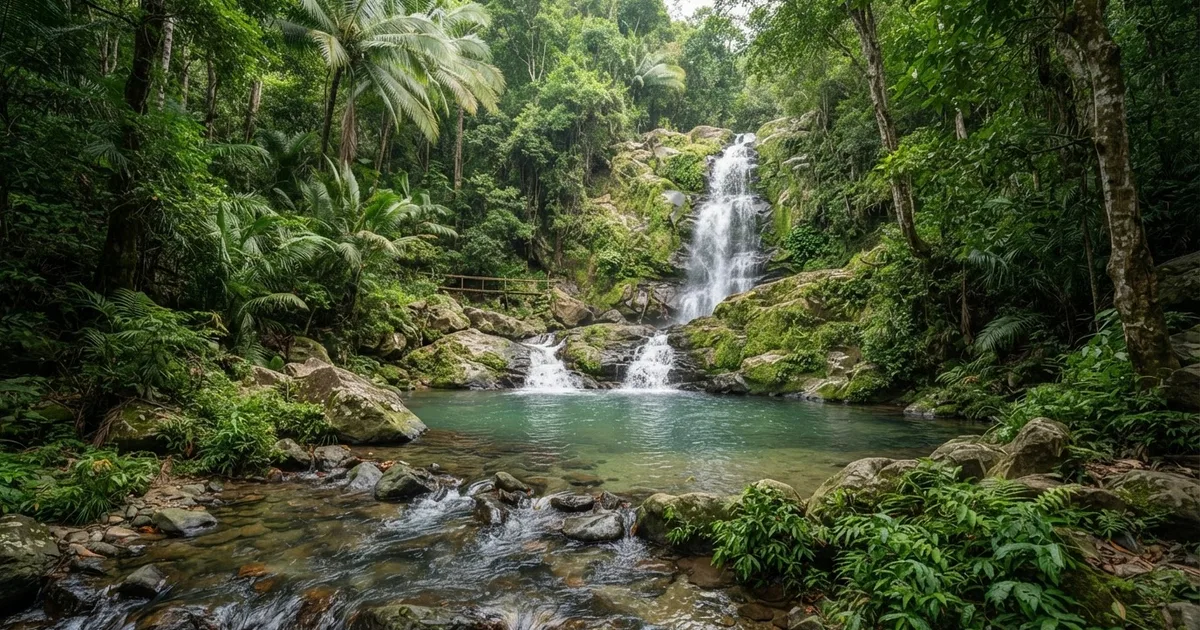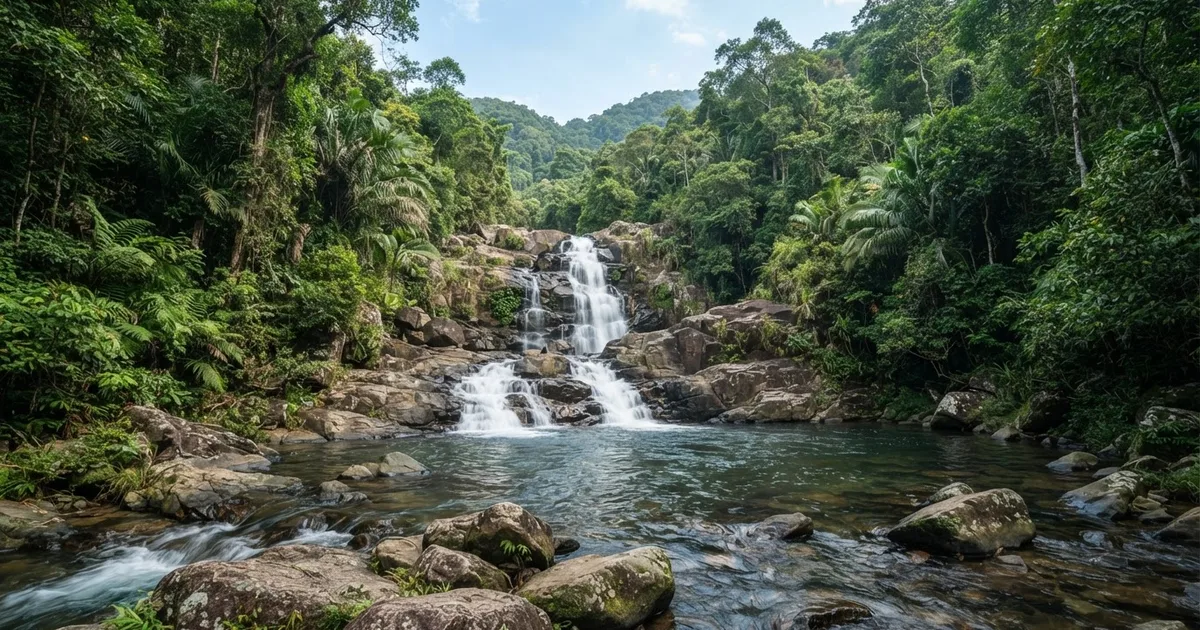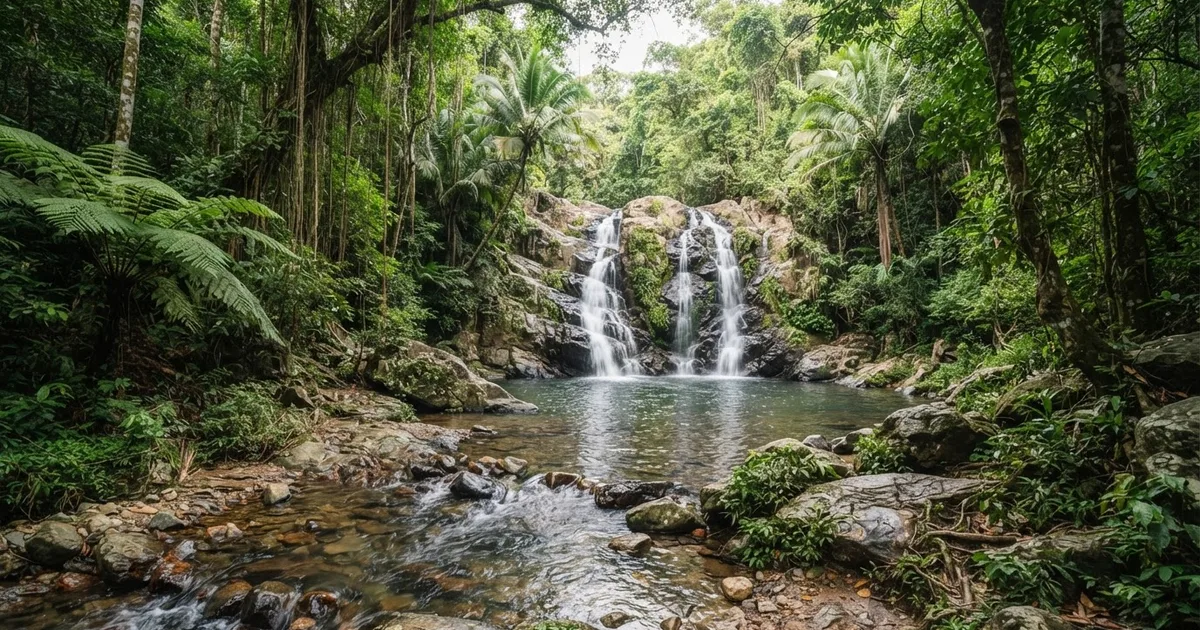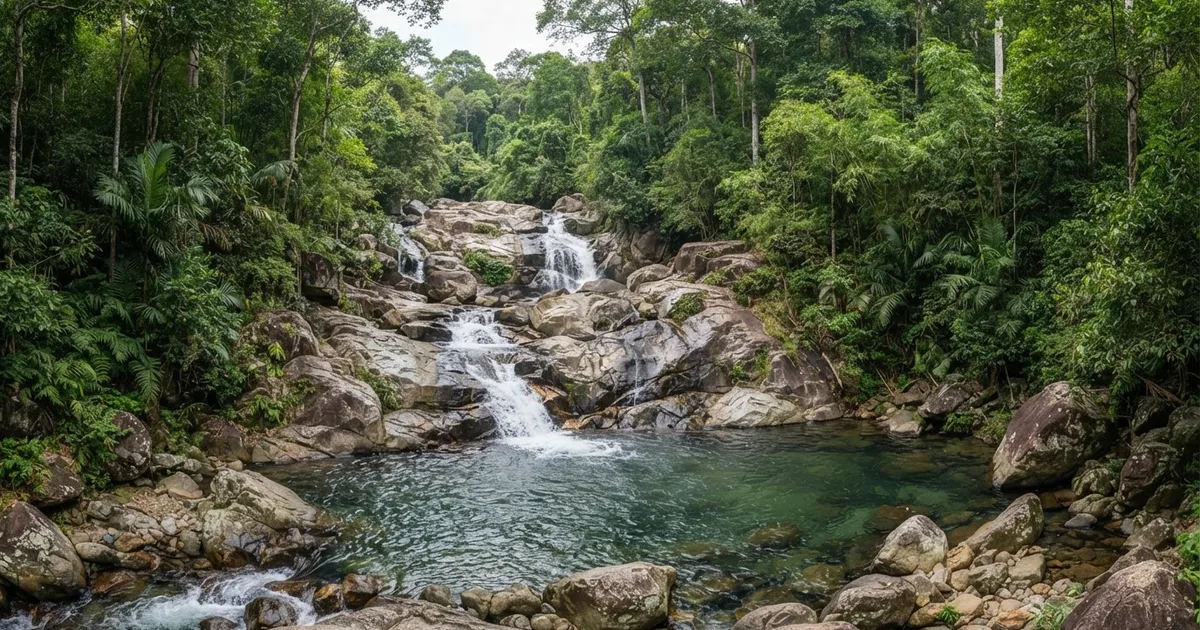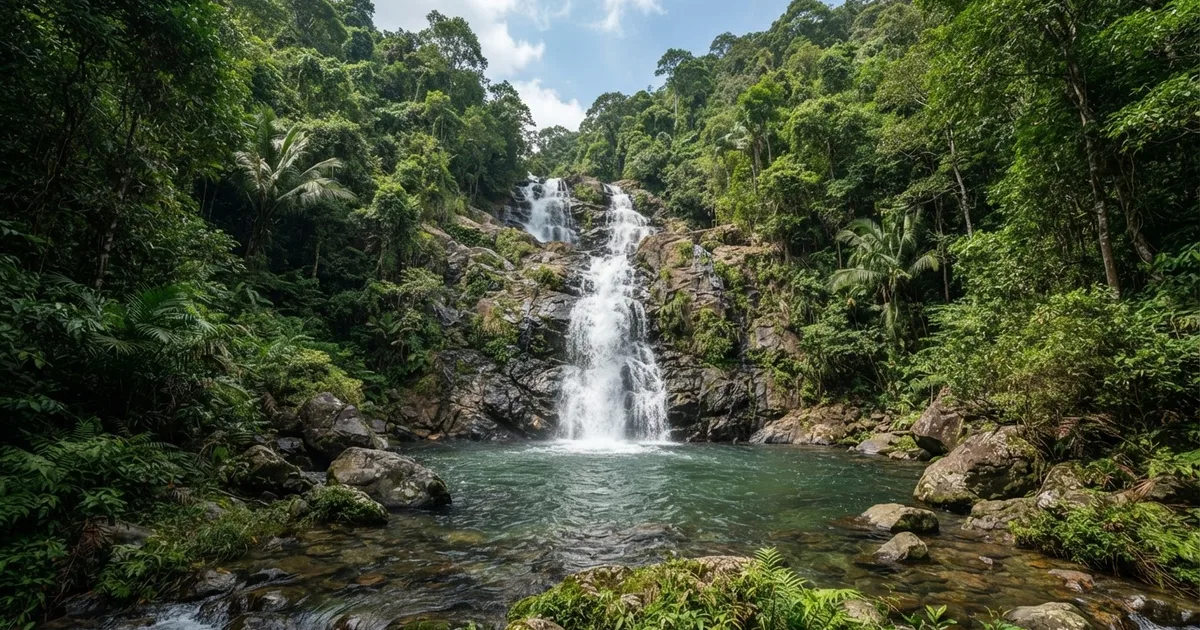
Da Ngon Waterfall is worth visiting only if you are an experienced hiker seeking a demanding nature trek, rather than an easy sightseeing stop. The seven-tier waterfall is in northeast Phu Quoc, and the safest general window is November to April, when trails are less slippery and the water is clearer. During the May-to-October rainy season, the falls are fuller and more dramatic, but wet rocks can become treacherous and the risk rises significantly.
Is Da Ngon Waterfall Worth Visiting?
Da Ngon Waterfall is worth visiting when the experience you want is a serious forest hike with several rocky waterfall levels, not a quick photo opportunity beside a road. Its main attraction is the journey through the stream and the chance to experience all seven tiers. The setting is more adventurous and physically demanding than the island’s easier waterfall stops.
The important qualification is difficulty. One guide describes Da Ngon as suitable for serious, experienced hikers only, and it should not be treated as a casual tourist attraction. Reaching the higher sections can involve uneven ground, wet rock, stream crossings, scrambling and careful route-finding. Conditions can change quickly after rain, so a route that feels manageable at the first level may become considerably more difficult farther upstream.
Da Ngon is a good choice for visitors who already enjoy hiking, are comfortable moving slowly over natural terrain and can accept that weather may cancel the outing. It is a poor fit for families with very young children, travelers wearing sandals, anyone with limited mobility, or visitors looking for a guaranteed half-day attraction with simple access and facilities.
Good fit
Experienced hikers, nature photographers, active travelers and visitors who prefer a quiet, challenging trek over a developed attraction.
Less suited to
Casual sightseeing, rainy-day improvisation, travelers uncomfortable with slippery rocks, and anyone expecting an easy waterfall walk.
When Is the Best Time to Visit Da Ngon Waterfall?
For the best combination of safety and access, plan a Da Ngon visit between November and April. This is the drier season on Phu Quoc, so the trail is generally less slippery and the water is often clearer. These conditions do not make the trek easy, but they reduce one of its main hazards: losing footing on wet rock.
The rainy season, from May to October, creates a genuine trade-off. The stream is fuller, the waterfall can look more powerful, and the surrounding vegetation is especially lush. An official Phu Quoc tourism page recommends May to October because the stream is full and nature is green. However, other travel guides recommend November to April because rainy-season rocks are slippery. Both recommendations describe real advantages, but safety should take priority over maximum water flow.
If you choose the rainy season, go only after checking the forecast and local trail conditions. A tour listing notes that Da Ngon trekking experiences require good weather. Do not start during heavy rain, immediately after a major downpour, or when thunder is nearby. Water levels can rise quickly, and wet rocks may remain dangerous even when the sky clears.
| Period | Advantages | Main concerns | Best for |
|---|---|---|---|
| November to April | Less slippery trails and clearer water | The stream may be less powerful than in the wet season | First-time visitors with strong fitness and hikers prioritizing manageable conditions |
| May to October | Fuller stream, stronger falls and greener forest | Treacherous rocks, muddy ground and higher weather-related risk | Experienced hikers who have checked the forecast and local conditions |
Practical rule: Choose the dry season for a planned first visit. Choose the rainy season only when the water level is important to you, the forecast is stable and a local guide confirms that the route is safe.
What Is the Da Ngon Trek Like?
Da Ngon is a seven-tier waterfall rather than a single roadside viewpoint. The trek follows the natural stream environment, with the character of the route changing as you progress between levels. You may need to walk on roots and uneven soil, cross shallow water, and use your hands for balance on sections of rock. The upper levels reward persistence, but each additional section also increases exposure to slippery surfaces and changing weather.
There is no dependable indication that the site has the developed infrastructure found at major Phu Quoc attractions. Visitors should not assume there will be marked paths, lifeguards, changing rooms, restaurants, toilets or reliable mobile coverage throughout the trek. Treat the waterfall as a natural backcountry site and prepare before leaving the main road.
Allow extra time rather than planning a tightly scheduled excursion. The correct pace is slow and deliberate: test each foothold, keep three points of contact where possible, and avoid climbing a tier simply because another person has done so. If a section looks unsafe, turning back is the sensible decision. The seven-tier description is an attraction, not a requirement to reach every level.
What to bring
- Proper hiking shoes with firm grip, rather than smooth sandals or flip-flops.
- At least 1.5 to 2 litres of drinking water per person for a longer trek, plus a little extra in hot weather.
- Quick-drying clothing, swimwear if you intend to enter calm water, and a lightweight rain layer.
- A dry bag or waterproof phone pouch, especially from May to October.
- Small snacks, insect repellent, sunscreen, a basic first-aid kit and a fully charged phone.
- Cash for transport or parking arrangements, because no reliable official entrance fee is published.
Da Ngon Waterfall Safety: What Should You Know?
The greatest danger at Da Ngon is not the distance; it is the combination of moving water, uneven terrain and slippery rock. Rain can make a manageable trail hazardous in a short time. Moss-covered surfaces, submerged stones and steep stream banks can be difficult to judge, particularly when the water is cloudy.
Never stand directly below a cascade during or soon after heavy rain. Avoid jumping from rocks, climbing under waterfalls, and swimming where the depth is unknown. A calm-looking pool can contain submerged rocks, strong current or sudden changes in depth. Keep children within arm’s reach near the stream, and do not rely on the presence of other visitors as a safety system.
Going with a local guide is especially sensible if you do not know the northeast Phu Quoc trail network or if you want to reach higher tiers. A guide can assess recent rainfall, identify safer crossings and turn the group around when conditions deteriorate. Even with a guide, good weather is essential; local knowledge cannot remove the risk of flash water or slick rock.
Before leaving
- Check the weather forecast for the entire trekking period, not just the departure hour.
- Ask locally whether the stream has risen or the approach has become impassable.
- Tell your accommodation or a trusted contact where you are going and when you expect to return.
- Carry enough water and food to cover delays.
- Use a waterproof bag for identification, money and electronics.
- Turn back if rain begins, thunder approaches or the current becomes noticeably stronger.
Because no reliable official entry fee is stated in the available sources, confirm current access arrangements before setting out. The absence of a published fee does not guarantee that parking, local access or guide services will be free.
How Does Da Ngon Compare with Da Ban and Other Waterfalls?
Da Ngon is not necessarily the best waterfall for every visitor. It is the stronger choice for a demanding trek and a multi-level stream experience. If you mainly want to relax beside water, take a short nature walk or enjoy a simple picnic, Da Ban Waterfall may suit you better.
Da Ban Stream is about 10 minutes north of Duong Dong Town and approximately 6 kilometres northeast of town. Guides commonly describe entrance as free, while parking is often reported at 5,000 to 10,000 Vietnamese dong, or around 10,000 Vietnamese dong. The access road can be muddy and full of potholes, but the attraction itself is generally easier to enjoy than Da Ngon. It is known for a wooden suspension bridge, relatively few tourists, swimming and picnicking.
Da Ban is a small waterfall and is not considered as dramatic as Tranh Stream waterfall. Its appeal is a quiet, natural stop rather than a major cascade. The best season is also disputed: May to November can provide fuller flow and greener scenery, while November to April offers drier weather and easier access. In the driest months, the stream may shrink considerably.
| Waterfall | Best reason to choose it | Difficulty and conditions | Less suitable for |
|---|---|---|---|
| Da Ngon | Seven-tier adventure trek and secluded stream scenery | Demanding; slippery and risky after rain | Casual visitors and travelers wanting facilities |
| Da Ban | Picnic, swimming, suspension bridge and a quieter nature stop | Generally easier, but the approach road can be muddy and potholed | Travelers seeking a large or highly dramatic waterfall |
| Tranh Stream waterfall | A more attractive waterfall experience according to comparative travel guides | Check current access and seasonal water levels before visiting | Visitors specifically seeking a remote, strenuous trek |
Choose Da Ngon when the hike itself is the priority. Choose Da Ban when you want a more relaxed outing near Duong Dong. If your main goal is a visually impressive waterfall and you do not need a challenging trail, compare current conditions at Tranh Stream waterfall before committing to Da Ngon.
Planning a Da Ngon Waterfall Day
Start early, particularly during the warmer months. An early departure gives you more daylight for a slow ascent and leaves time to return before afternoon storms become more likely. Avoid combining Da Ngon with several distant attractions unless a local guide confirms that the timing is realistic. A difficult trail should not be squeezed between fixed boat, airport or dinner reservations.
Use a motorbike only if you are already confident riding on Phu Quoc’s rural roads and have checked the final approach. A scooter is convenient for reaching remote areas, but muddy surfaces, potholes and wet weather make the journey harder. Ride slowly, wear a helmet, secure your phone and do not leave valuables unattended at the trailhead. A local rental provider can help check the route and current road conditions before you leave.
Bring a packed meal if you plan to stay for several hours, but carry all rubbish back out. Keep food sealed because forest insects are common, and avoid using soap or chemicals in the stream. The quieter the site feels, the more important it is to leave no trace and avoid loud music that disturbs wildlife and other hikers.
Suggested plan: Leave in the morning, confirm conditions locally, hike only as far as the group can safely manage, allow a generous return window, and keep the afternoon free in case rain delays the descent.
Da Ngon Waterfall Verdict
Da Ngon Waterfall is worth visiting for the right traveler: an experienced hiker who wants a seven-tier natural trek in northeast Phu Quoc and is prepared for limited facilities and changing conditions. Visit from November to April if you want clearer water and less slippery trails. Consider May to October only for the fuller waterfall and greener forest, and only after a good-weather check.
It is not the best choice for an easy day trip, a guaranteed swimming stop or a dramatic waterfall photo with minimal walking. For those needs, Da Ban can be a more comfortable alternative, while Tranh Stream waterfall may offer a more impressive waterfall view. Da Ngon’s value lies in its ruggedness, not in convenience.
Frequently Asked Questions
Is Da Ngon Waterfall worth visiting?
Da Ngon Waterfall is worth visiting if you are a fit, experienced hiker who enjoys rugged stream trekking and wants to explore a seven-tier waterfall. It is a poor fit for casual sightseeing because rocks can be slippery, trails may be difficult to follow and facilities are limited. Choose Da Ban instead for a more relaxed nature outing.
How many tiers does Da Ngon Waterfall have?
Da Ngon Waterfall has seven tiers. The site is experienced as a stream trek rather than a single viewpoint, so reaching higher levels requires additional walking and careful movement over uneven, potentially wet ground. You do not need to reach every tier if conditions become unsafe or the route exceeds your ability.
What is the best month to visit Da Ngon Waterfall?
The broadest safety recommendation is November to April, the dry season, because trails are generally less slippery and water is clearer. May to October can produce fuller flow and lush scenery, but rainy-season rocks become significantly more dangerous. Regardless of month, go only in good weather and confirm recent local conditions.
Can beginners hike to Da Ngon Waterfall?
Da Ngon is not recommended as a first independent hike. One guide describes it as suitable for serious, experienced hikers only. Beginners who still want to visit should arrange an experienced local guide, wear proper shoes, check the forecast and be willing to turn back. Sandals, poor fitness and heavy rain make the route especially unsuitable.
Is there an entrance fee for Da Ngon Waterfall?
No reliable official entrance fee is stated in the available visitor information. Access conditions may change, and parking or guide services may involve separate costs even if the natural site has no published admission charge. Carry Vietnamese dong and confirm the current arrangement locally before starting the trek.
Is Da Ngon Waterfall safe during the rainy season?
The rainy season can be visited only with considerable caution. From May to October, the stream is fuller and the forest greener, but wet rocks become treacherous and water levels can change quickly. Do not go during heavy rain or after a major downpour. Check the forecast, ask a local guide and turn back if the current rises.
How does Da Ngon compare with Da Ban Waterfall?
Da Ngon is the better choice for experienced hikers seeking a seven-tier adventure trek. Da Ban is generally better for picnics, swimming and relaxing in nature, and it is about 10 minutes north of Duong Dong Town, roughly 6 kilometres from town. Da Ban is smaller and less dramatic, but usually more accessible.
What should I wear to Da Ngon Waterfall?
Wear hiking shoes or other footwear with a strong, non-slip sole, plus quick-drying clothing. Avoid flip-flops and smooth sandals. Carry a waterproof phone pouch or dry bag, insect repellent, drinking water, snacks, sunscreen and a light rain layer. In the rainy season, spare dry clothes are useful because stream crossings and sudden showers are possible.
Contact Sabrina Rental for current route advice, transport planning, local conditions and help arranging a safer Phu Quoc waterfall day.
Contact Sabrina Rental