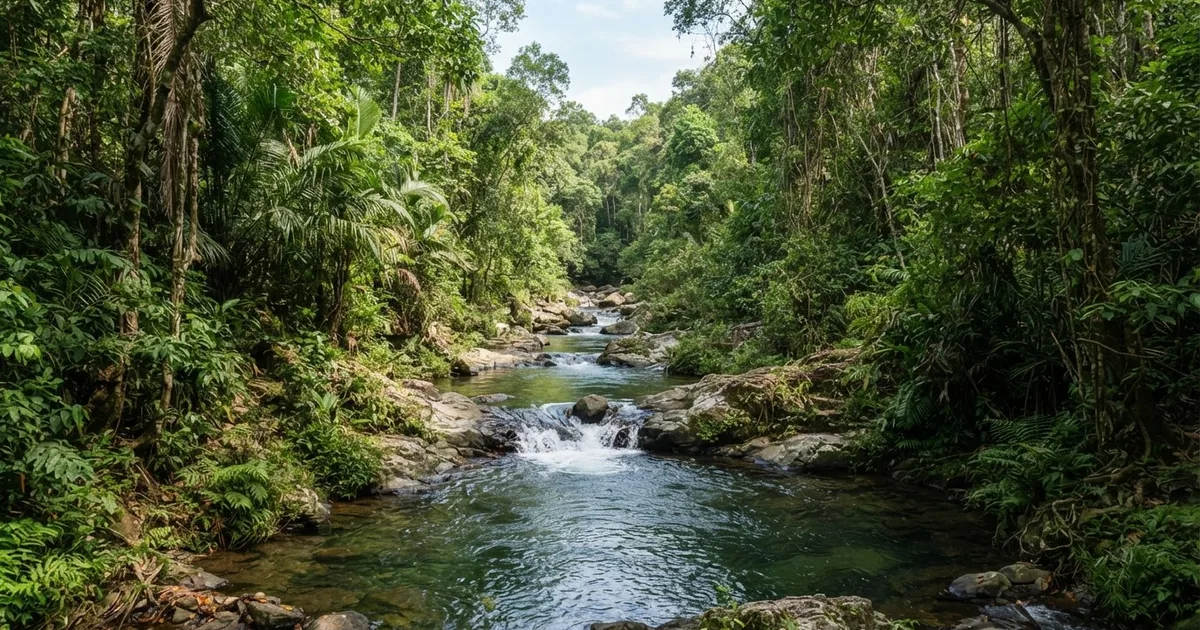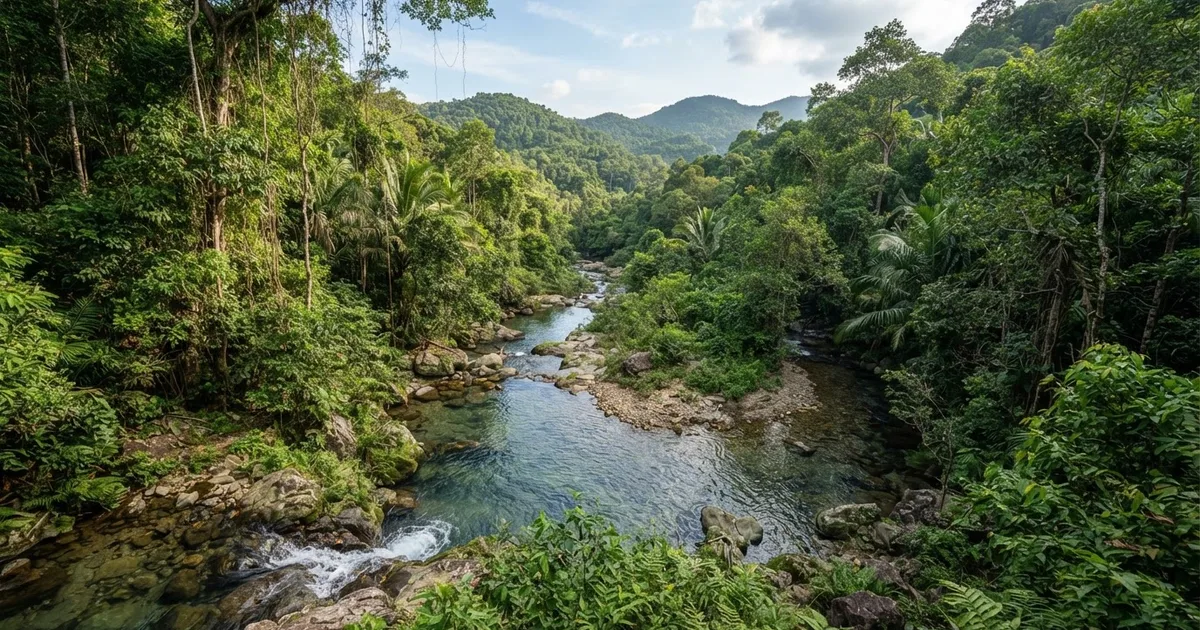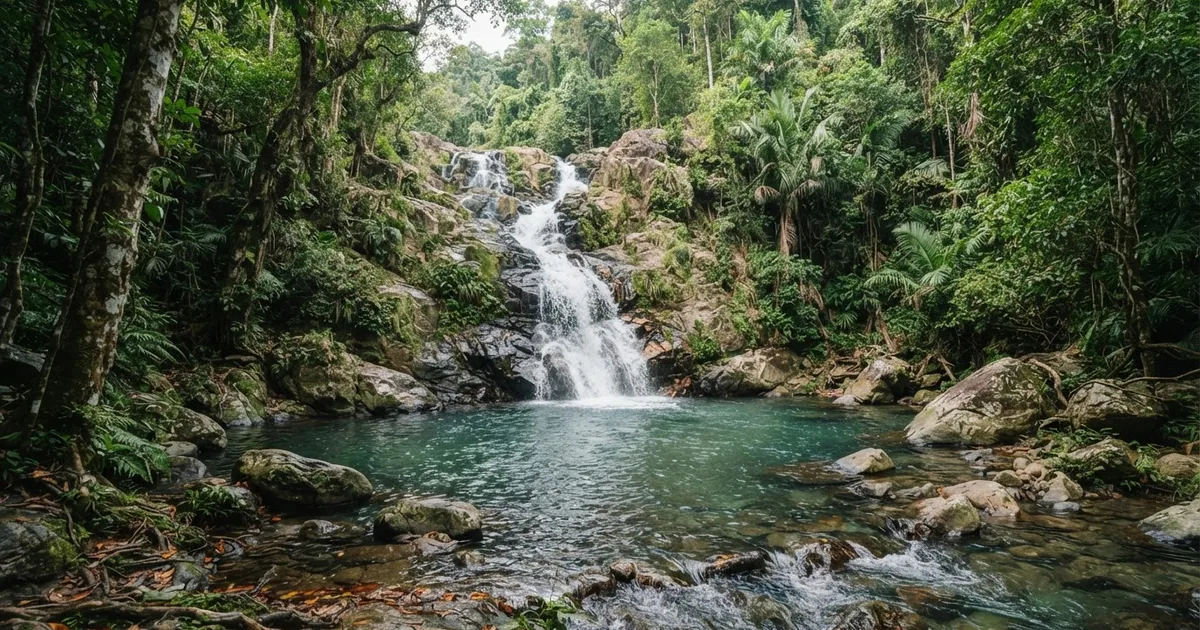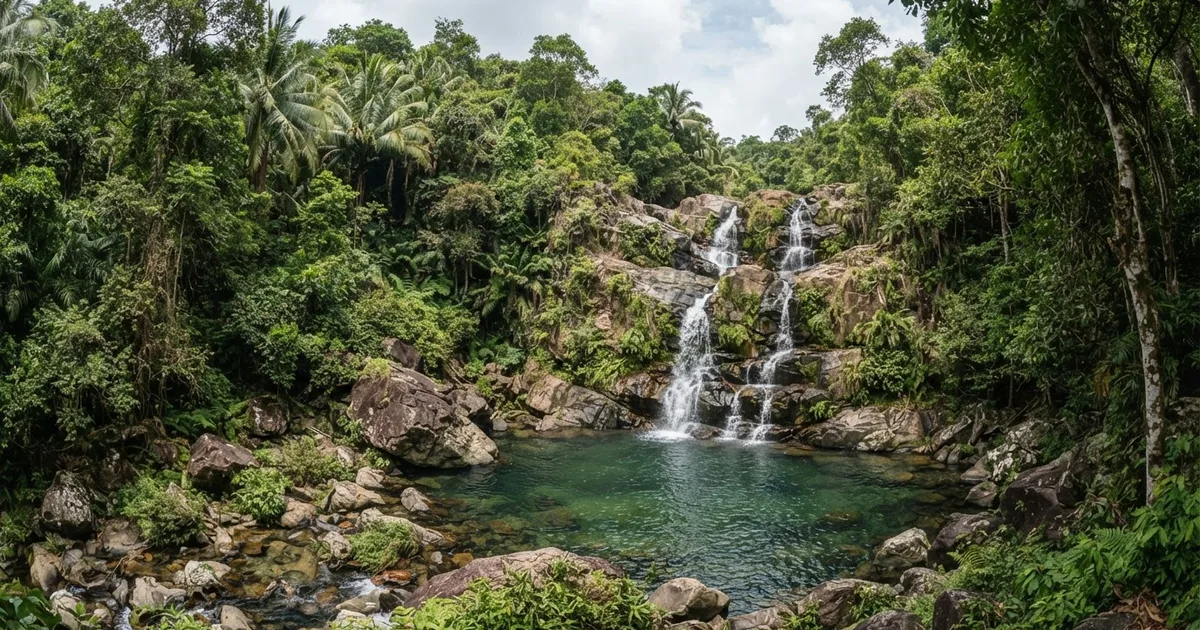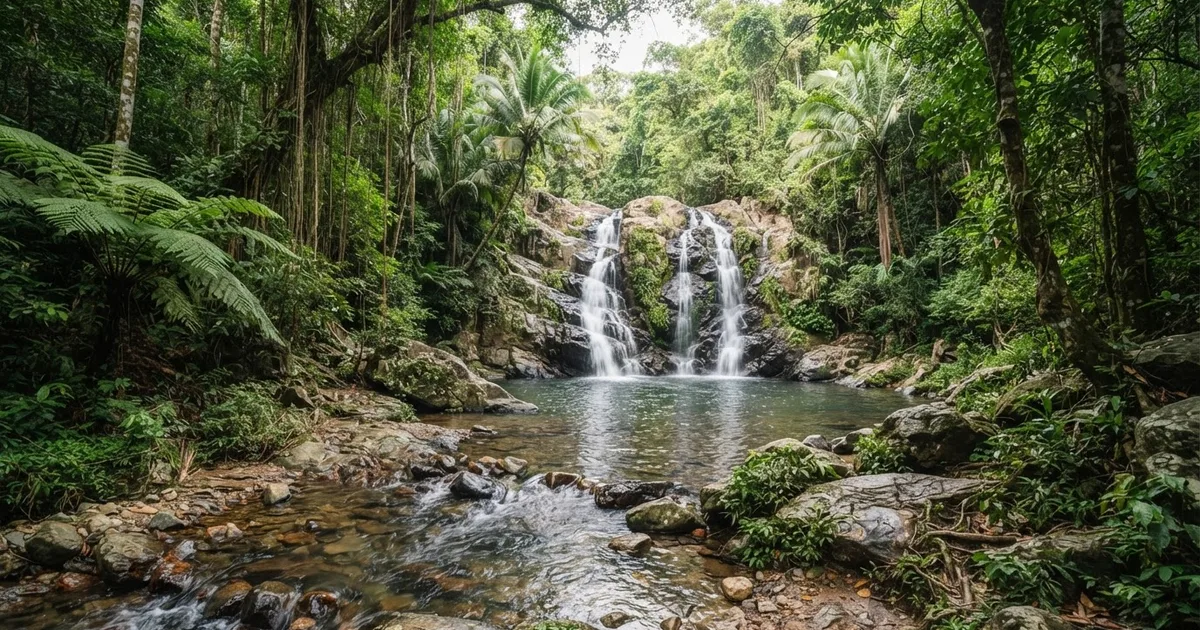
Suoi Tranh Waterfall is worth visiting between May and September, when rainy-season rain turns the stream into a wide cascade over dark rock. Adults pay 30,000 VND (about $1.20), and that ticket already includes parking for motorbikes and cars. The site sits roughly 7–9 km from Duong Dong town and the walk in is rated easy. Come between February and April and you may find a trickle or bare rock — that is when Suoi Tranh stops being worth the ride.
Is Suoi Tranh Waterfall Worth Visiting? The Honest Verdict
Short answer: yes in the rainy season, no in the dry season. Suoi Tranh — also written Suoi Tranh Stream or Tranh Stream — is the most accessible waterfall on Phu Quoc. It is about 7–9 km from Duong Dong town depending on where you start, ticketed at just 30,000 VND per adult, and parking is included in that price. The walk in is short and consistently rated easy. For the price of a Vietnamese coffee you get a couple of shaded hours in the forest with water running over dark boulders.
What Suoi Tranh is not is a towering jungle waterfall. It is a wide, shallow stream that tumbles over rocks through dense forest, ending in a modest drop that spreads across the rock face rather than plunging into a deep plunge pool. One guide describes it as small compared with what travellers picture when they hear the word waterfall, and it is fair to say it is not the most dramatic cascade on the island. The two most common complaints are "there was no water" from dry-season visitors and "it was smaller than I expected" from everyone else. Adjust your expectations and it is a genuinely pleasant half-day out; arrive expecting a movie set and you will leave disappointed.
Where Suoi Tranh wins is convenience. It is the only waterfall on Phu Quoc you can reach from Duong Dong in under half an hour, enter for roughly $1.20, and walk to in 20 minutes without a guide, a trekking guidebook or a 4WD transfer. If you have a spare morning, a motorbike and rain in the previous week, it is worth the ride. If you have three days on the island and a long list of beaches, boat trips and night markets, it is the first item you can reasonably cut.
Worth it if you...
- Visit between May and September, when the stream is full.
- Want a cheap, close, low-effort nature stop — 30,000 VND, 15–20 minutes from town.
- Are travelling with children who will enjoy the shallow pools and the short shaded walk.
- Have already done the beaches and want something green, cool and inland.
- Want to combine it with lunch in Duong Dong or a stop at a nearby pepper farm.
Skip it if you...
- Visit between February and April, when the fall may be dry or reduced to a trickle.
- Expect a tall, powerful waterfall — the drop here is modest.
- Have only one or two days on the island and want guaranteed wow-factor.
- Have limited mobility; the trail is uneven and the rocks are slippery after rain.
- Are chasing the best waterfall on Phu Quoc rather than the easiest.
Consider instead...
- Da Ban Stream — free entry, fewer tourists, about 6 km northeast of Duong Dong, better for picnics and swimming than for a waterfall spectacle.
- A beach day — Sao Beach or Ong Lang, if the stream is running dry and you want guaranteed scenery.
What Suoi Tranh Is Actually Like: The Falls, the Stream and the Trail
From the ticket gate you follow a shaded path alongside the stream, climbing gently through bamboo, wild banana and broadleaf forest. The walk takes most people 15 to 25 minutes at a relaxed pace. There are resting points, boulders to sit on and small pools along the way, and the canopy keeps the worst of the midday sun off you. The trail is not technical — no scrambling, no ropes, no ladders — which is exactly why it earns its easy rating, but the ground is uneven and the rocks near the water are polished smooth by the current.
At the end of the trail is the main cascade: a wide, low drop over a dark rock shelf into a shallow basin. In full flow it is photogenic and cool, with enough water for a paddle and plenty of flat rock to sit on. In low flow it is a series of small pools and wet stone, still pretty, but no longer a waterfall in any meaningful sense. Because the basin is shallow, this is a paddling spot rather than a swimming spot — think ankle-to-knee depth, not laps.
Facilities at the entrance are basic: a ticket booth, motorbike and car parking covered by your ticket, and a handful of small local stalls and drink sellers that appear when there are enough visitors. There are no lockers, no lifeguards and no formal changing rooms, so bring only what you can carry and keep valuables dry. The whole visit — ride in, walk, photos, paddle, walk back — comfortably fits into two to three hours.
Tip: Combine Suoi Tranh with an early start. Arriving before 9 am means cooler temperatures for the walk, softer light for photos, and far fewer people on the trail and in front of the cascade.
Best Time to Visit Suoi Tranh: Month-by-Month Water Flow
Everything about Suoi Tranh depends on rainfall. It is a stream-fed fall, not a lake-fed one, which means its volume tracks Phu Quoc's monsoon almost exactly. The rainy season runs roughly May to November, with the heaviest rain from June through September, and that is when the waterfall is at its most dramatic. One guide recommends June to November specifically because the rainy season produces the most abundant water; if you want a single safest window, aim for July, August or September.
October and November are arguably the sweet spot for comfort: the stream is still full from months of rain, the island is greener than at any other time, and visitor numbers are lower than in peak July. By December the flow starts dropping, and by late January you are into the dry season. From February to April the waterfall can slow to a trickle or dry up completely — travel guides are explicit that it is often not worth a long detour in those months if you want strong water flow.
| Period | Typical condition | Verdict |
|---|---|---|
| May–June | Rains arrive, stream rising and pools filling | Good — improving week by week |
| July–September | Peak flow, heaviest rain, most dramatic falls | Best — what you came for |
| October–November | Still strong flow, lush green scenery, fewer crowds | Very good — the comfortable choice |
| December–January | Flow dropping, shallow pools remain | Okay — manageable, less impressive |
| February–April | Trickle or completely dry rock | Skip — not worth the trip |
One practical warning that applies all year: paths can become slippery, so visitors should check the weather forecast before going. A heavy overnight storm can also make the stream rise fast and the rocks genuinely hazardous, so if it has poured for 24 hours straight, go the following morning rather than during the downpour.
Tickets, Fees and Getting to Suoi Tranh from Duong Dong
Suoi Tranh is one of the cheapest paid attractions on Phu Quoc. Entry is 30,000 VND per adult — under $1.20 — and the ticket includes parking for both motorbikes and cars, so you pay once at the gate and nothing again. Children between 1 m and 1.4 m tall pay 20,000 VND, and children under 1 m are free, which makes it an easy stop for families.
| Item | Price / detail |
|---|---|
| Adult entry | 30,000 VND (about $1.20) |
| Child entry (1 m–1.4 m tall) | 20,000 VND |
| Child entry (under 1 m) | Free |
| Motorbike parking | Included in the ticket |
| Car parking | Included in the ticket |
| Distance from Duong Dong | Approximately 7–9 km |
| Ride time | About 15–20 minutes by motorbike |
| Walking time at the site | 15–25 minutes each way, rated easy |
Getting there is simple. Head away from Duong Dong centre on the main road and follow the brown tourist signage for Suoi Tranh; most riders reach the gate in 15–20 minutes. The ride is on paved road all the way, which is another reason this is the most accessible waterfall on the island. Scooter riders should carry a helmet and a light rain poncho from May to November — Phu Quoc rain tends to arrive suddenly and hard.
Note the distance difference between sources: some guides place Suoi Tranh about 7 km from Duong Dong town, others about 9 km. The variation comes down to where in the Duong Dong area you start from, so plan for 15–20 minutes rather than a precise figure. If you are staying further south at Long Beach or further north at Ong Lang, add 10–15 minutes.
Budget note: A trip for two adults costs 60,000 VND in total — roughly $2.40 — including parking. That is less than a single iced coffee at many beach clubs on the island.
Suoi Tranh vs Da Ban Stream: Which Waterfall Should You Choose?
Phu Quoc has a second, quieter stream site that many visitors never hear about: Da Ban Stream, roughly 10 minutes north of Duong Dong town and about 6 km northeast of town. It is generally worth visiting if you want a quieter, more natural stop — one travel guide says it is definitely worth a visit — but the waterfall itself is small and, by most accounts, not as nice as the Tranh Stream waterfall. In other words, Da Ban wins on atmosphere and solitude; Suoi Tranh wins on the cascade itself and on facilities.
Da Ban is better for picnics, swimming and relaxing in nature than for a big waterfall spectacle. It has a wooden suspension bridge, relatively few tourists, and free entry according to some guides, with parking typically 5,000–10,000 VND (sometimes quoted at 10,000 VND). The best time to visit is the rainy season, roughly May to November, when the stream is fuller and the scenery greener; another guide argues for November to April because the weather is dry and the stream is easier to access. Since Da Ban can dry up in the dry season just like Suoi Tranh, the rainy-season advice is the safer bet for water. One practical downside: the approach to the parking area is a muddy, pothole-filled dirt road.
| Feature | Suoi Tranh | Da Ban Stream |
|---|---|---|
| Distance from Duong Dong | 7–9 km | About 6 km northeast; 10 minutes north |
| Entrance fee | 30,000 VND adults; 20,000 VND children 1–1.4 m | Free entry according to some guides |
| Parking | Included in the ticket | Typically 5,000–10,000 VND |
| Waterfall scale | Small but the better cascade of the two | Small; not as nice as Tranh Stream |
| Best season | May–September (stretches to November) | May–November for fuller flow |
| Best for | Photos, a short easy walk, first-time visitors | Picnics, swimming, relaxing in nature |
| Crowds | Busier, especially weekends and high season | Relatively few tourists |
| Access road | Paved the whole way | Muddy, potholed dirt road near parking |
Which suits you? Choose Suoi Tranh if it is your only waterfall stop, you are short on time, you want paved-road access and shaded facilities, or you are travelling with young children. Choose Da Ban if you have a scooter with decent tyres, you want a quieter picnic spot with a suspension bridge and swimming, and you are happy to trade the better cascade for fewer people. Neither is right for travellers who want a large, powerful waterfall — for that you would need to look off-island.
Safety, What to Bring and Practical Tips
Suoi Tranh is an easy walk, not a trek, but it is still wet rock in a jungle, and the most common injury reported is a simple slip. Travel guides specifically note that paths can become slippery, so check the weather forecast before setting out and wear shoes with grip rather than flip-flops.
- Check the forecast first. Heavy overnight rain means slippery trails and fast-rising water; go the next morning instead.
- Wear shoes with grip. Trainers or trekking sandals beat flip-flops on wet rock every time.
- Bring cash in small notes. 30,000 VND and 20,000 VND notes cover entry and any drinks stalls; card payment is not the norm here.
- Pack light and waterproof. A dry bag or zip pouch for your phone, plus a change of clothes if you plan to paddle.
- Take water and mosquito repellent. The forest is humid and shaded — ideal mosquito conditions.
- Go early. Before 9 am the trail is cooler, quieter and better lit for photos.
- Do not swim in fast water. The basin is shallow; after heavy rain the current can be stronger than it looks.
- Carry out your rubbish. There are limited bins along the trail.
Timing your visit matters as much as packing. Weekends and Vietnamese public holidays bring local families in numbers, so a weekday morning in July or August gives you the best combination of full water and empty trail. If you are visiting in the dry season anyway, treat Suoi Tranh as a short forest walk with rock pools rather than a waterfall trip, and you will still enjoy it.
How Suoi Tranh Fits Into a Phu Quoc Itinerary
Suoi Tranh works best as a half-day add-on rather than a headline attraction. Because it is only 7–9 km from Duong Dong and takes two to three hours including travel and the walk, it slots neatly into a morning before lunch in town or a late-afternoon stop on the way back from the island's northern beaches. It pairs naturally with the Duong Dong night market in the evening, and with a pepper farm or fish sauce stop on the same loop.
If you are on Phu Quoc for a week, give Suoi Tranh a rainy-season morning and keep your beach days for the sunny windows. If you are here for only two or three days in the dry season, prioritise the beaches, the cable car and an island boat trip, and save Suoi Tranh for a future wet-season visit — the waterfall you see in August is a completely different experience from the one you see in March.
Finally, transport matters. A rented motorbike gives you the flexibility to arrive early and leave when you like, and the road is paved the whole way, which makes it one of the easiest island rides for less confident riders. If you would rather not drive, arrange a car or driver for the morning and combine the waterfall with other stops nearby.
Frequently Asked Questions
Is Suoi Tranh Waterfall worth visiting?
Yes, if you go in the rainy season. Between May and September — stretching to November — the stream runs full and the cascade is at its most dramatic, and entry is only 30,000 VND per adult with parking included. In the dry season, especially February to April, it can dry to a trickle and is not worth a detour.
How much is the entrance fee to Suoi Tranh?
Adults pay 30,000 VND per person, roughly $1.20. Children between 1 m and 1.4 m tall pay 20,000 VND, and children under 1 m are free. The ticket includes parking for both motorbikes and cars, so there is no additional parking charge at the gate.
How far is Suoi Tranh from Duong Dong town?
Sources place it about 7 km to 9 km from Duong Dong, depending on where you start. In practice that is a 15–20 minute motorbike ride on paved road. If you are staying further south at Long Beach or north at Ong Lang, add 10–15 minutes to the journey.
What is the best month to see water at Suoi Tranh?
July, August and September give the strongest flow, with June and October close behind. One guide recommends the June to November window, with the rainy season producing the most abundant water. October and November are the most comfortable months — still full, but with fewer visitors than mid-summer.
Can you swim at Suoi Tranh Waterfall?
You can paddle rather than properly swim. The basin below the main drop is shallow, typically ankle to knee deep, so it works well for cooling off and for children. After heavy rain the current can be stronger than it looks, so avoid fast-moving water and never enter the stream alone.
Is the walk to Suoi Tranh difficult?
No — it is rated easy. The trail climbs gently alongside the stream for 15–25 minutes through shaded forest, with no scrambling or ladders. The main caution is that paths and rocks can be slippery, especially after rain, so wear shoes with grip and check the weather forecast before you set out.
Is Da Ban Stream better than Suoi Tranh?
It depends what you want. Da Ban is about 6 km northeast of Duong Dong, often free to enter with parking around 5,000–10,000 VND, and has a wooden suspension bridge with relatively few tourists. Its waterfall is small and considered not as nice as Tranh Stream, but it is better for picnics and swimming.
What should I bring to Suoi Tranh?
Small cash notes for the 30,000 VND adult ticket, shoes with grip, water, mosquito repellent and a dry bag for your phone. Bring a light rain poncho from May to November and a change of clothes if you plan to paddle in the pools. There are no lockers at the site, so travel light.
Planning your Phu Quoc waterfall day? Sabrina Rental can set you up with a reliable motorbike, arrange a car and driver for the morning, or simply tell you whether the stream is running this week — local advice from people who live here.
Contact Sabrina Rental