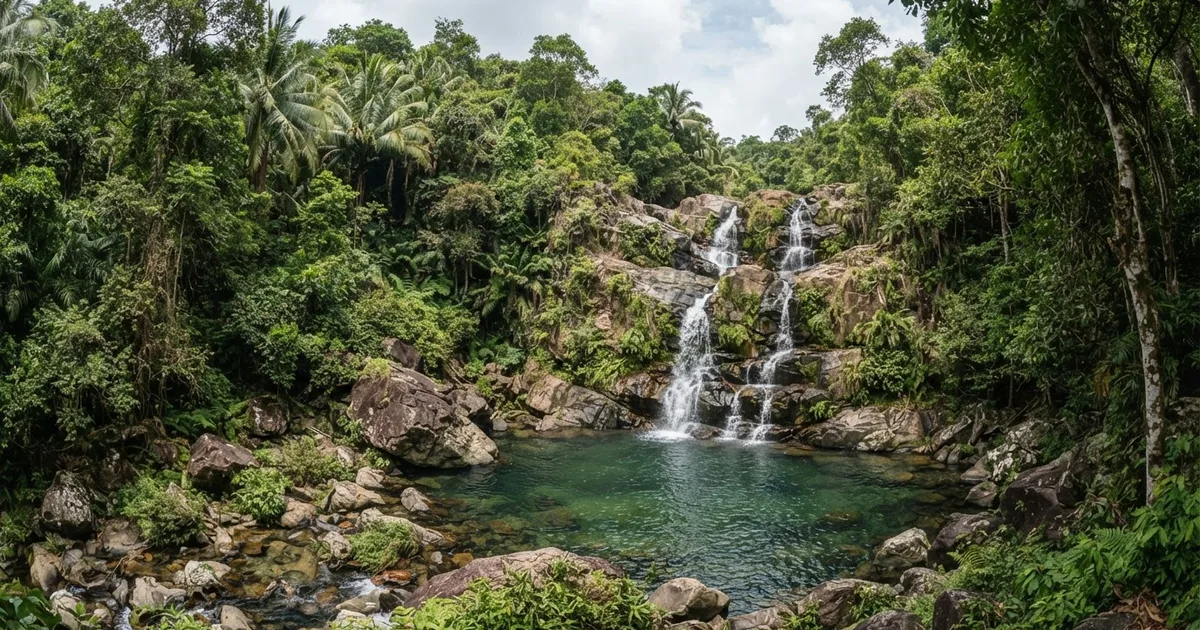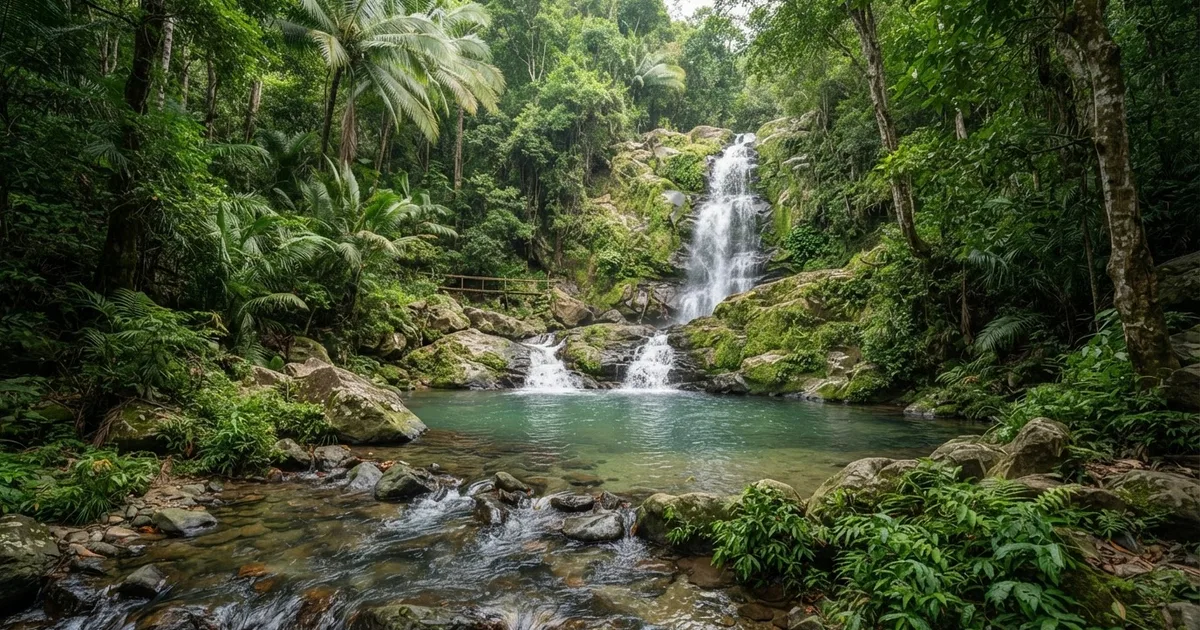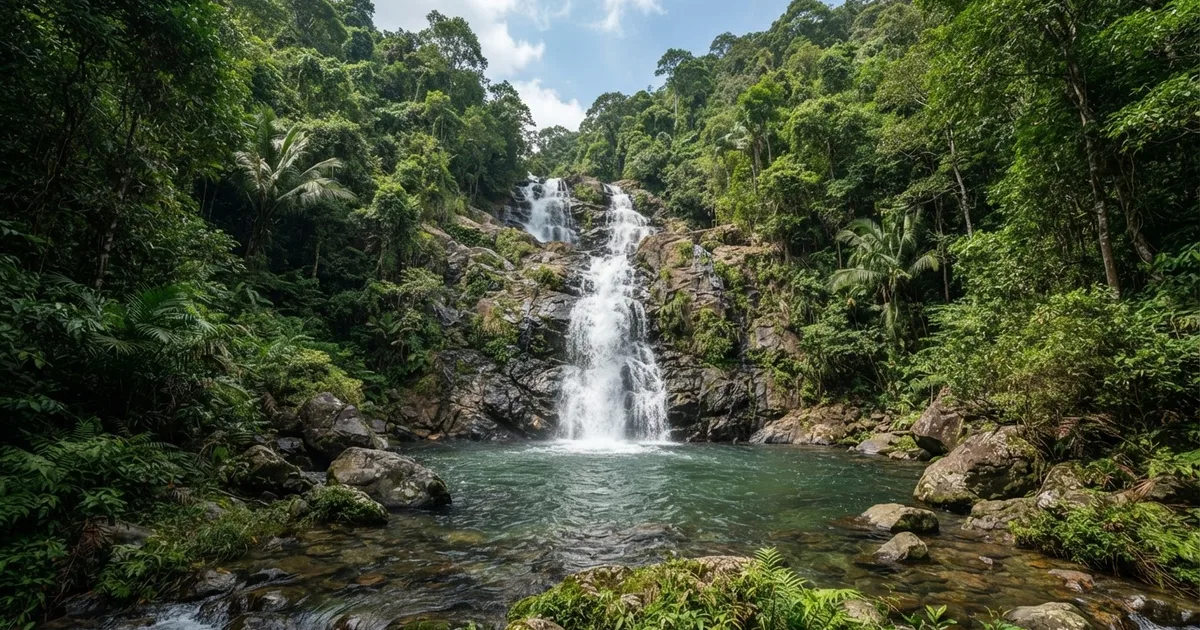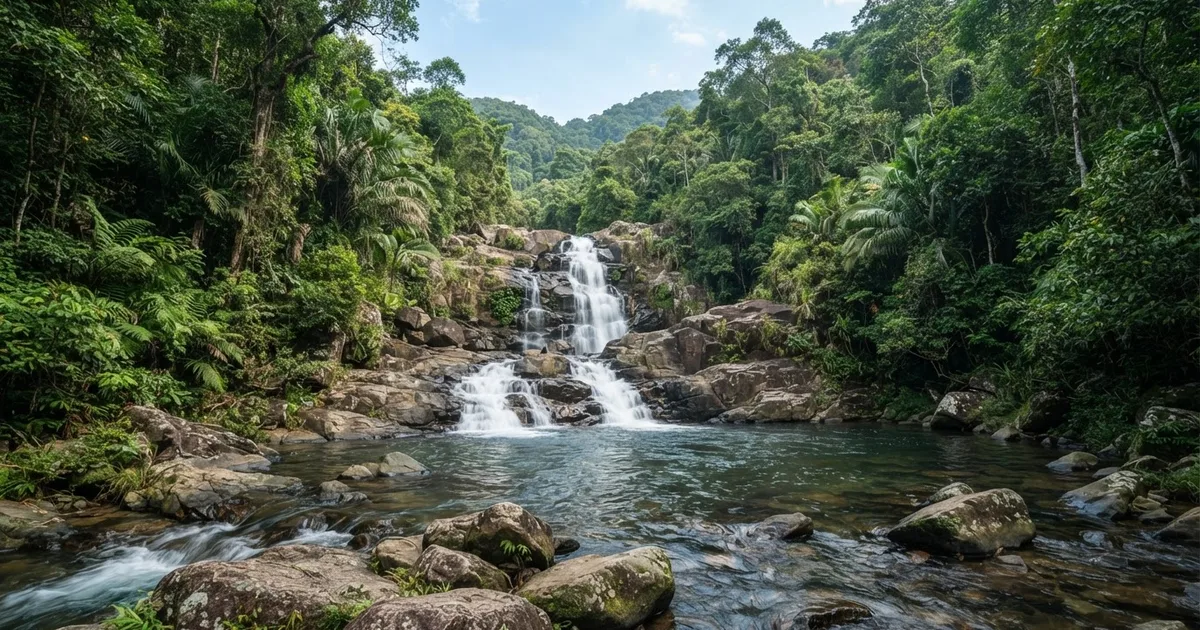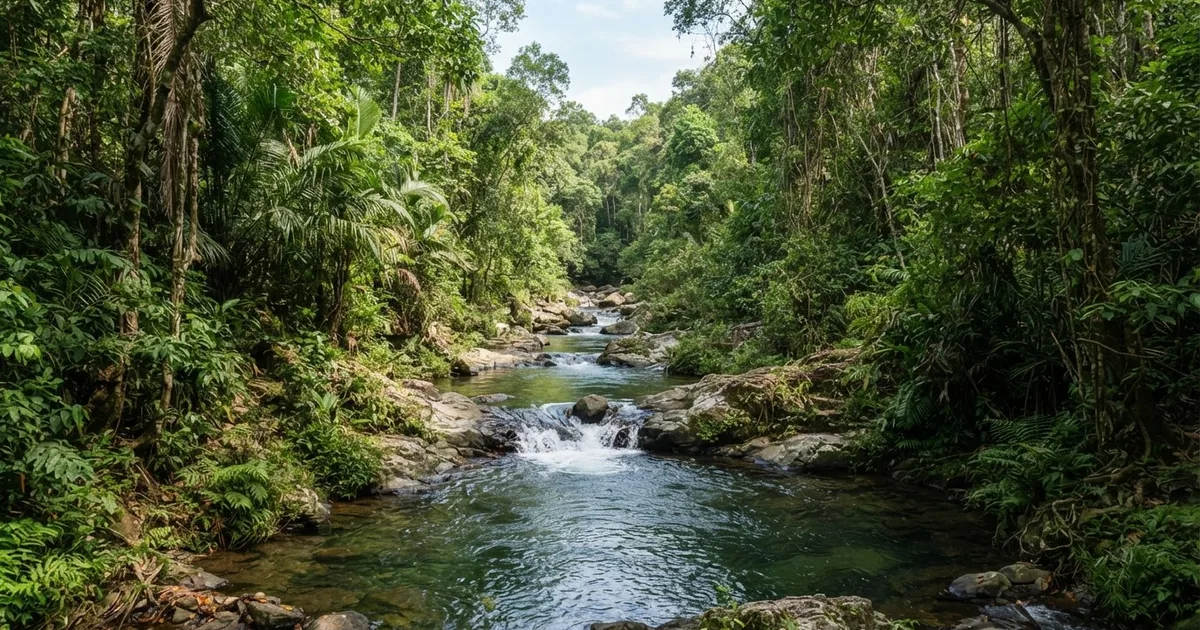
Yes, Suoi Tien is worth visiting if you want a quiet nature stop rather than a dramatic waterfall or a full-day attraction. Visit from July to October for the fullest stream and greenest scenery, or from December to February for wild myrtle berries and purple blossoms. The destination is a natural stream, not a demanding hike, so it suits travelers who want a short, relaxed outing in the countryside.
Is Suoi Tien Phu Quoc worth visiting?
Suoi Tien is worth visiting for the right reason: it offers a simple escape into Phu Quoc's greenery, with a seasonal stream, shaded vegetation and a slower atmosphere than the island's beaches and major attractions. It is particularly appealing if you have already seen the coast and want a few hours among trees and rocks.
The main qualification is scale. Suoi Tien is not a powerful, towering waterfall that rivals a major mainland trekking destination. Its appeal comes from the setting and the seasonal changes in the stream. During wetter months, water runs more generously through the forest and the landscape looks fresh and vivid. During drier weather, the stream may be less impressive, so expectations matter.
A good fit for
Visitors who enjoy quiet nature, short walks, photography, a cool stream environment and a flexible half-day outing.
A poor fit for
Travelers seeking a large waterfall, extensive hiking trails, guaranteed swimming depth or a major attraction with many facilities.
In practical terms, Suoi Tien works best as one stop in a wider day of exploring. Combine it with another countryside destination, a local meal or a nearby coastal stop rather than traveling across the island solely to see a large cascade. A motorbike gives you the most flexibility, but check the road and weather conditions before setting out.
What is Suoi Tien like?
Suoi Tien is described as a natural stream destination. The experience is based on reaching a forest stream, crossing uneven ground and spending time beside water and vegetation. This is different from a developed amusement park or a large, formally managed waterfall complex.
There is no reason to treat the visit as a serious mountain hike. The route is generally considered manageable for ordinary visitors, although natural stream areas can still include slippery rocks, exposed roots, mud and uneven surfaces. Shoes with reliable grip are more useful than sandals with smooth soles, especially after rain.
The scenery changes considerably with the season. Rain brings stronger flow, fuller pools and greener foliage, while drier conditions can reveal more rocks and reduce the stream to a much smaller flow. The quieter atmosphere is part of the attraction: you come for nature and a break from busy beach areas, not for a long list of rides or services.
Photography is strongest when the forest is green and the stream has enough water to create movement between the rocks. From December to February, wild myrtle berries and purple blossoms add a different visual character. This makes Suoi Tien more interesting for repeat visitors who want a seasonal landscape rather than one fixed viewpoint.
When is the best time to visit Suoi Tien?
The best time depends on whether you value flowing water or flower-filled scenery. July to October is the clearest recommendation for the stream itself. This is when the rainy season usually gives Suoi Tien its fullest flow and its surrounding nature reaches its most vivid green appearance.
December to February is better for visitors who want photogenic scenery, wild myrtle berries and purple blossoms. These months fall within Phu Quoc's generally drier period, so access and outdoor sightseeing can be more comfortable, but the stream may not be as full as it is during the wetter season.
| Travel period | What to expect | Best for |
|---|---|---|
| July to October | Fuller stream, greener forest and wetter ground | Water flow and lush scenery |
| December to February | Drier weather, wild myrtle berries and purple blossoms | Photography and comfortable exploring |
| March to June | Increasingly hot conditions and potentially lower water | A short stop if conditions are suitable |
| October to April | Phu Quoc's broader dry season, although conditions vary by month | Easier general island travel |
There is a genuine trade-off between weather and water. Phu Quoc's dry season is generally October to April, and November to April is commonly considered the best overall period for an island holiday because skies are sunnier and the sea is often calmer. However, a drier stream can mean less dramatic conditions at Suoi Tien.
If you visit during the rainy season, avoid arriving immediately after exceptionally heavy rain if the route looks unsafe. Water levels can rise quickly in natural streams, rocks become slippery and an access road may become muddy. A morning visit is useful in any season because it leaves time to change plans if conditions are poor.
How to plan a visit to Suoi Tien
Plan Suoi Tien as a flexible half-day nature outing. Wear light clothing that dries reasonably quickly, closed shoes with traction and sun protection for the exposed parts of the journey. Pack enough drinking water, snacks, insect repellent and a waterproof pouch for valuables. A change of clothes is sensible if you intend to sit beside or enter the stream.
Do not assume that the water will be deep enough for swimming. Natural stream levels vary sharply between wet and dry periods, and many visitors will enjoy the setting more by walking, taking photographs or sitting on the rocks. Test surfaces carefully before stepping into the water, since algae and rain can make stones unexpectedly slick.
A motorbike is often the most convenient way to explore Phu Quoc's countryside because it allows you to leave when the weather changes and add another stop. If you are not comfortable riding on unfamiliar roads, arrange a car or local driver instead. Navigation can be less straightforward away from the main tourist corridors, so download an offline map and confirm the route before departure.
- Start early to avoid the strongest midday heat.
- Check the forecast, especially from July to October.
- Carry cash for small local expenses and parking where applicable.
- Keep food wrappers and plastic out of the forest and stream.
- Never stand below an unstable bank or climb wet rocks for a photograph.
Allow extra time rather than treating the destination as a timed attraction. The best part of Suoi Tien is often the quiet pause beside the stream, not simply reaching one viewpoint, taking a photograph and leaving immediately.
Suoi Tien compared with Da Ban Waterfall
Da Ban Waterfall is one of the more useful alternatives if your priority is a nature stop near Duong Dong. Da Ban Stream is about 10 minutes north of Duong Dong Town and around 6 kilometers northeast of the town. It is generally considered worth visiting for a quieter, more natural experience, although the waterfall itself is small and is often described as less impressive than Tranh Stream waterfall.
Like Suoi Tien, Da Ban is strongly seasonal. The rainy season, commonly described as May to November, usually brings fuller water and greener scenery. Other guides recommend November to April because the weather is drier and rock hopping is easier, particularly for families. The most practical conclusion is to choose the season according to your priority: wetter months for water flow, drier months for easier access.
| Feature | Suoi Tien | Da Ban Waterfall |
|---|---|---|
| Main appeal | Natural stream, forest atmosphere and seasonal scenery | Picnics, swimming and relaxing beside a stream |
| Water flow | Best from July to October | Usually fuller during wetter months, including May to November |
| Access character | Natural and relatively low-key | Approach may include a muddy, pothole-filled dirt road |
| Distance reference | Check current map conditions before leaving | About 6 kilometers northeast of Duong Dong |
| Cost reference | Confirm locally before visiting | Some guides report free entry and parking of about 5,000-10,000 Vietnamese dong |
| Best suited to | Quiet exploration and photography | A relaxed picnic or swim when water levels allow |
Da Ban is a poor fit for anyone expecting a polished attraction with an easy, fully paved approach. The final dirt road can be muddy and filled with potholes, particularly after rain. It is also a poor choice if your only goal is a large waterfall: the cascade is small, and several travel guides say it is not as nice as Tranh Stream waterfall.
Choose Suoi Tien when you want a quieter, less structured stream experience and seasonal forest scenery. Choose Da Ban when you want a well-known countryside stop close to Duong Dong with picnic and swimming potential. If you have enough time, checking both conditions on the day can be worthwhile, but do not expect either destination to guarantee strong water flow in the driest months.
How long should you spend there, and who will enjoy it?
Most travelers should allow roughly two to four hours for Suoi Tien, including travel, walking, photographs and time beside the stream. The exact duration depends on the current access route and how much time you want to spend in nature. It does not usually need a full day unless you are combining it with several distant stops.
Couples and solo travelers may appreciate the calm atmosphere and photographic opportunities. Families can enjoy the destination if children are supervised closely around wet rocks and uneven ground. Older travelers or anyone with limited mobility should confirm the current approach first, because a natural stream is not the same as an accessible paved attraction.
Suoi Tien is less suited to visitors who have only one short day on Phu Quoc and want to prioritize the island's beaches, snorkeling, sunset views or major family attractions. It is also a poor fit during a prolonged dry spell if your expectations depend on a strong waterfall. In that situation, a beach or another attraction may provide a more reliable experience.
Quick decision checklist
- Choose Suoi Tien if the stream is flowing and you enjoy quiet forest scenery.
- Choose a different attraction if you need a large waterfall or extensive facilities.
- Visit in July to October for the strongest chance of lush conditions.
- Visit in December to February for wild myrtle berries and purple blossoms.
- Reconsider after heavy rain if the route or rocks look unsafe.
Responsible visiting and safety
Suoi Tien's value comes from its natural setting, so responsible behavior directly protects the experience. Take all rubbish with you, avoid soap or sunscreen in the stream, and do not damage plants or collect wild berries. Keep music low and give other visitors space, especially if the site is quiet.
Water safety is more important than the height of the waterfall. Do not enter fast-moving water after heavy rain, stand beneath unstable rocks or jump into a pool whose depth you have not checked. Children should remain within arm's reach around slippery surfaces. A basic first-aid kit, drinking water and a charged phone are sensible additions to your day bag.
Road conditions can change seasonally. Wet weather may make rural tracks muddy, while dry weather can create dust and loose gravel. Ride slowly, use a helmet, keep both hands available for steering and avoid returning after dark if you are unfamiliar with the route.
Frequently Asked Questions
Is Suoi Tien Phu Quoc worth visiting?
Suoi Tien is worth visiting if you want a quiet natural stream, green forest scenery and a short outdoor excursion. It is less suitable if you expect a large waterfall or a developed attraction. The experience is strongest from July to October, when seasonal rain usually produces fuller water and greener surroundings.
What is the best month to visit Suoi Tien?
July to October is generally the best period for stream flow and lush nature. If your priority is wild myrtle berries and purple blossoms rather than full water, December to February is better. Always check recent weather because a natural stream can change considerably after several dry or wet weeks.
Is Suoi Tien a difficult hike?
No. Suoi Tien is described as a natural stream destination rather than a difficult hike. You should still expect uneven ground, slippery rocks, roots and possible mud after rain. Wear shoes with grip and allow extra time rather than treating the visit as a paved, fully accessible attraction.
Can you swim at Suoi Tien?
Swimming conditions depend on the season and the current depth of the stream. Do not assume that pools will be deep or safe enough for swimming, particularly in the dry season. Check the water carefully, avoid fast flow after heavy rain and supervise children closely around wet rocks.
Is Suoi Tien better than Da Ban Waterfall?
Neither is universally better. Suoi Tien is a better choice for quiet forest scenery and a less structured stream visit. Da Ban is about 6 kilometers northeast of Duong Dong and is better suited to picnics and relaxing by the water. Da Ban's waterfall is small, and its approach can be muddy and uneven.
When is Da Ban Waterfall at its best?
Da Ban usually has fuller water and greener scenery during wetter months, commonly May to November. Some guides recommend November to April because dry weather makes access and rock hopping easier, especially for families. In practice, choose wetter months for flow and drier months for more predictable access.
How long do you need at Suoi Tien?
Allow approximately two to four hours for travel, exploring, photography and time beside the stream. Suoi Tien rarely requires a full day by itself. Add time if you are combining it with another countryside stop, a meal or a different natural attraction on Phu Quoc.
What should you bring to Suoi Tien?
Bring drinking water, insect repellent, sun protection, shoes with good grip, a waterproof phone pouch and a small towel. A change of clothes is useful if you enter the stream. Pack all rubbish out, and carry some cash because natural attractions and rural parking arrangements may not accept cards.
Want current road, weather and stream-condition advice before you go? Contact Sabrina Rental for local help with transport, motorbike rental and planning a practical Phu Quoc day trip.
Contact Sabrina Rental