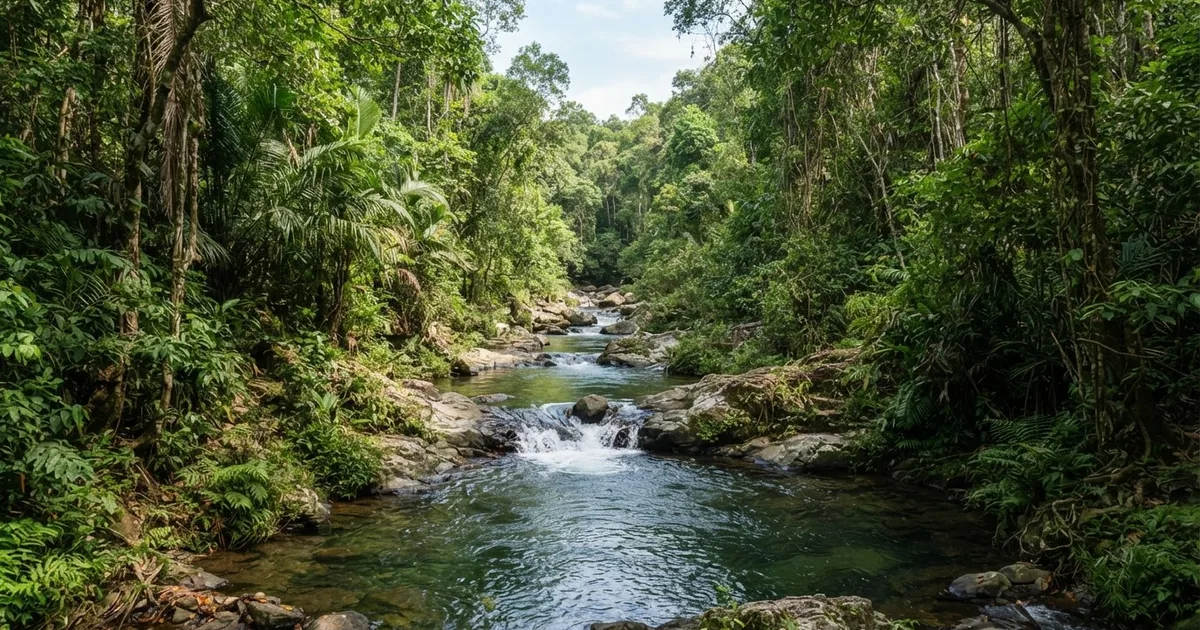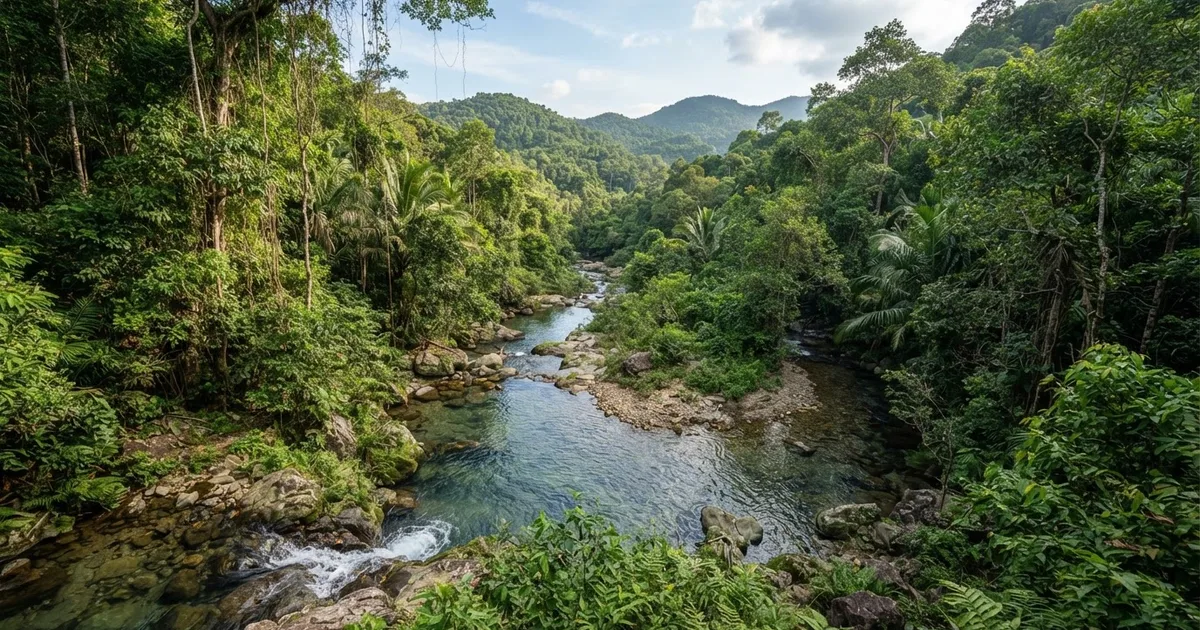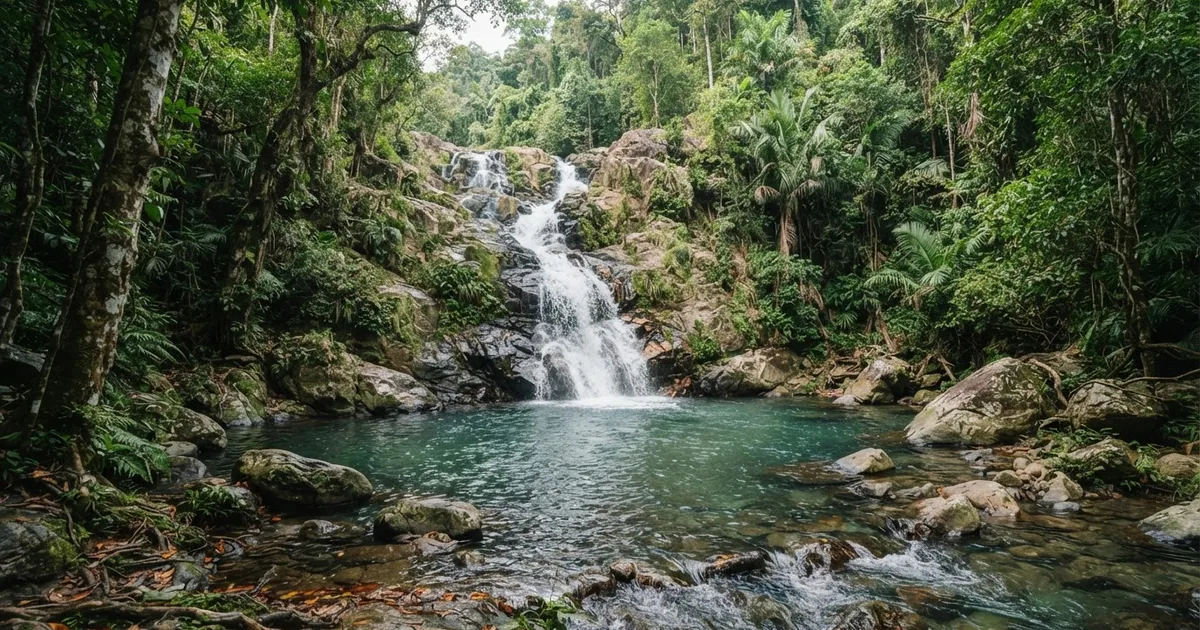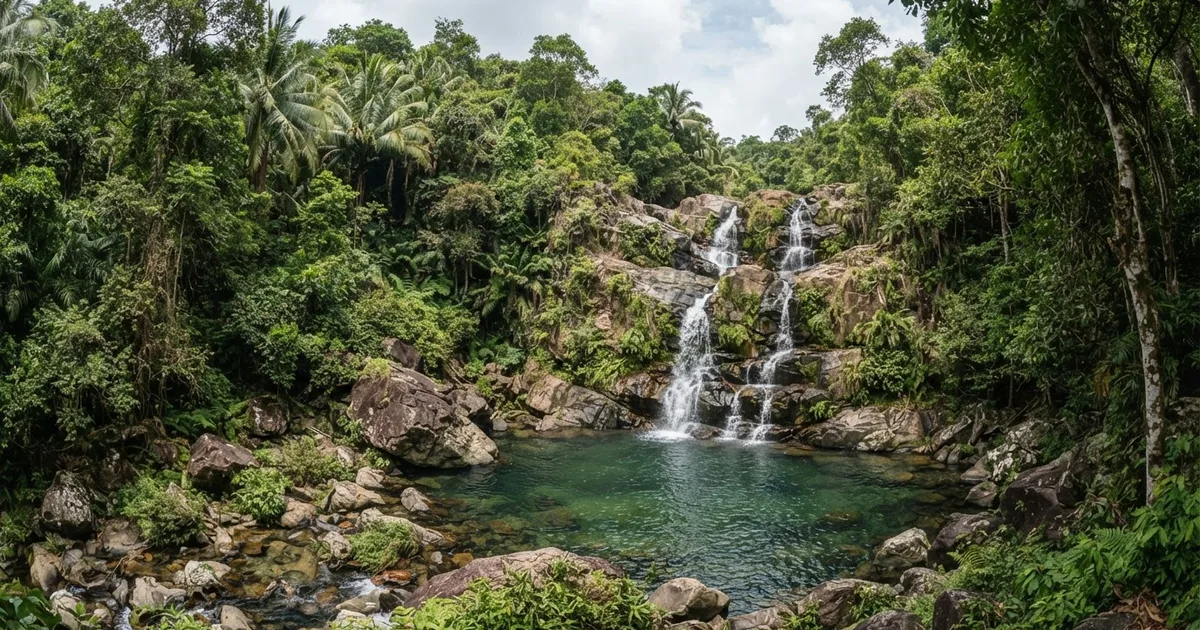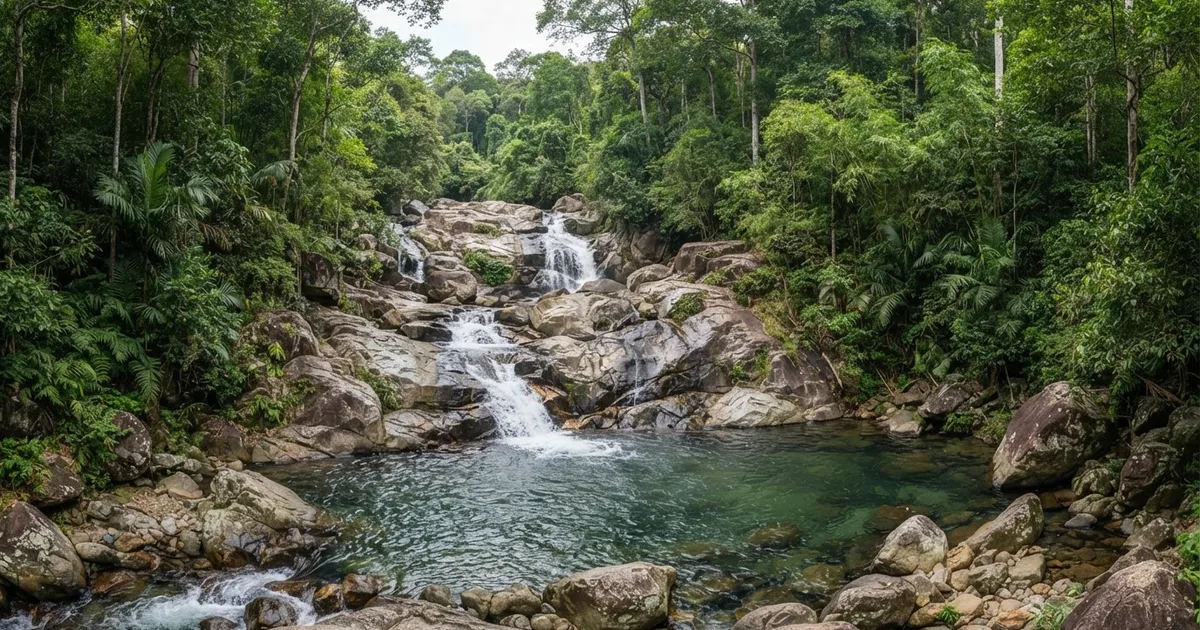
Suoi Da Ban (also called Da Ban Stream or Da Ban Waterfall) is a small, free-entry jungle waterfall about 15 km east of Duong Dong, reached via Ham Ninh and a final 4 km dirt road. It is at its best from May to November, when the rainy season fills the stream — from December to April the flow can shrink to a trickle or disappear entirely. Budget 1.5–2.5 hours including travel, bring 5,000–10,000 VND for parking, and go for a quiet swim and picnic rather than a dramatic waterfall spectacle.
Suoi Da Ban Waterfall: What You Actually Find There
Suoi Da Ban — usually translated as Da Ban Stream or Da Ban Waterfall — sits in the forested interior of Phu Quoc's eastern side, roughly 15 km east of Duong Dong and most easily reached through the fishing village of Ham Ninh. Guides measure it differently: some place Da Ban Stream about 6 km northeast of Duong Dong Town and around 10 minutes north of town, while the 15 km figure reflects the real riding distance once you include Ham Ninh and the final dirt section. Either way, it is a comfortable half-day trip from anywhere on the island's west coast.
The waterfall itself is small. It is not as impressive as the better-known Suoi Tranh waterfall, and any guide that tells you otherwise is overselling it. In strong rainy-season flow you get a modest cascade feeding a rocky stream bed with shallow pools, a wooden suspension bridge across the water, and very few other visitors. That last point is the real draw.
What Suoi Da Ban does well is atmosphere: shade, cool water, cicadas, and a jungle soundtrack with almost no vendors or tour groups. Locals treat it as a picnic and swimming spot, and travellers who arrive with the same expectation leave happy. Travellers who arrive expecting a 30-metre cascade leave disappointed.
One recent travel guide notes the stream is technically suitable for visitors year-round, but the character changes completely: the winter dry months bring clearer water and easier movement along the banks, while the rainy months bring a stronger flow and genuinely slippery paths. That seasonal swing is the single most important thing to plan around — see the month-by-month table below.
Best Time to Visit Suoi Da Ban (Month by Month)
If you want to see an actual waterfall, come in the rainy season. Lonely Planet states the best time to visit is between May and September, because the falls dry to a trickle later in the dry season. Several other sources go further and warn that the dry season from December to April can leave no waterfall at all, since the underground streams that feed Da Ban may effectively disappear.
| Period | Water flow | What to expect | Verdict |
|---|---|---|---|
| May – September | Peak flow | Fullest cascade, deepest pools, lush green forest, slick rocks and mud | Best |
| October – November | Still good, tapering | Swimmable, fewer visitors, forest still green | Very good |
| December – February | Low but clearing | Clear water, easier walking and riding, waterfall may be weak or absent | Conditional |
| March – April | Driest stretch | Often only a trickle, sometimes completely dry | Skip if you want a waterfall |
The rainy season on Phu Quoc runs roughly May to November. In those months the water is abundant and the forest is at its most lush, which is why the wet season consistently wins in every guide that covers Da Ban. The trade-off is real, though: the trail down to the stream gets muddy, the rocks are slippery, and afternoon downpours can arrive fast and hard.
Time of day matters almost as much as season. The falls are better for daytime visits — aim to arrive between 8:00 and 11:00, when light reaches into the stream bed and the ground has had a chance to drain. Late-afternoon storms in the wet season can raise the water quickly, and the 4 km dirt road back out becomes noticeably harder to ride once it is wet. Outside the rainy season you may only be able to relax beside the stream rather than see a strong waterfall, which is a perfectly good use of an afternoon — just not the one most people are picturing.
Local timing tip: If you are on Phu Quoc for only a few days between December and April and a waterfall is a priority, check the flow before you commit to the ride. A 15 km trip each way to look at dry rocks is the most common complaint about Da Ban.
How to Get to Suoi Da Ban: Route, Dirt Road and Costs
The standard approach is from Duong Dong, heading east toward Ham Ninh on the coastal road, then turning inland. From the main turnoff there is a 4 km dirt road to the parking area. That stretch is the part people remember: it can be muddy and pothole-filled, and after heavy rain it turns into a slow, slippery crawl. A scooter with decent tyres and working brakes handles it in dry conditions; in the wet season, ride slowly, keep both hands on the bars, and accept that you may have to walk the last few hundred metres.
Da Ban is also described as about 6 km northeast of Duong Dong Town and roughly 10 minutes north of town by motorbike, which reflects the shorter, more direct access rather than the Ham Ninh loop. Whichever route your map app picks, expect the final section to be unpaved.
| Item | Typical cost / detail |
|---|---|
| Entrance fee | Free (reported free by multiple guides) |
| Parking | 5,000–10,000 VND; one source reports 10,000 VND at the entrance |
| Distance from Duong Dong | About 15 km east via Ham Ninh; also described as ~6 km northeast of town |
| Unpaved section | 4 km dirt road from the main turnoff to the parking area |
| Time needed on site | 1–2 hours, plus travel |
| Fuel for a scooter round trip | Roughly 1–1.5 litres from Duong Dong |
There is no ticket booth culture here, no guided tour required, and no queue. That is exactly why the site stays quiet — it is slightly awkward to reach, and the awkwardness filters out the crowds. If you would rather not deal with the dirt road yourself, a local driver who knows the turnoff will save you a lot of guesswork, especially in the wet season when the surface changes week to week.
Before you ride out
- Check your scooter's brakes and tyre tread — the 4 km dirt section is the real test.
- Carry 10,000 VND in small notes for parking.
- Download an offline map: mobile signal gets patchy in the forested interior.
- Fill the tank in Duong Dong; there are no reliable pumps on the dirt road.
- Start before 10:00 so you are not riding back in an afternoon storm.
Swimming, Picnics and the Suspension Bridge: What to Do On Site
Da Ban is better for picnics, swimming and relaxing in nature than for a big waterfall spectacle. The water is shallow and cool, the banks are shaded, and the wooden suspension bridge gives you the classic photo without any climbing. Bring a mat, some fruit and drinks from the Ham Ninh market, and treat it as a slow morning rather than a sightseeing stop.
Swimming is best in the deeper pools during and just after the rainy season. In the dry months the pools shrink and some sections become little more than wet stones, so check the flow before you plan a swim. Never swim alone, and stay out of the water if it is running brown and fast after heavy rain — flash rises in small jungle streams happen quickly.
Footwear matters more than most people expect. Flip-flops are fine for the picnic area but poor on wet rock. A pair of trainers or strapped sandals with grip will make the difference between a pleasant scramble along the stream and an afternoon of slipping. Insect repellent is close to essential in the wet months, and leeches are occasionally reported on damp trails in the forest.
Because the site is small, an hour or two covers it comfortably. Most visitors combine Da Ban with Ham Ninh fishing village for seafood, or with the pepper farms and the eastern coast road, turning a single waterfall stop into a full half-day loop.
Suoi Da Ban vs Suoi Tranh: Which Waterfall Suits You?
Phu Quoc has more than one waterfall, and Da Ban is not the biggest. Suoi Tranh is the island's headline waterfall, with more infrastructure, more visitors and a stronger cascade. Da Ban is the quieter, rougher, more local alternative. Choosing between them is mostly about what you want from the day.
Suoi Da Ban is a good fit if you…
- Want a quiet, natural stop with few or no other tourists.
- Are travelling between May and November, when the stream actually flows.
- Enjoy picnics, shallow swimming and shaded jungle more than big scenery.
- Are comfortable riding a scooter on a 4 km dirt road.
- Want free entry and are happy to pay only 5,000–10,000 VND for parking.
Suoi Da Ban is a poor fit if you…
- Are visiting between December and April and specifically want to see a waterfall — it may be dry.
- Want the island's most dramatic cascade; Suoi Tranh is the better choice.
- Are travelling with anyone unsteady on their feet or unwilling to walk on uneven, muddy ground.
- Have limited time and no interest in a rough dirt-road detour.
- Expect facilities, cafés or organised tours at the site.
One travel guide sums Da Ban up as definitely worth a visit — with the caveat that it is small and not as nice as the Tranh Stream waterfall. That is a fair verdict. Come for the calm and the jungle, not for the drop.
Practical Tips, Safety and What to Bring
Da Ban rewards preparation more than most Phu Quoc stops because there is nothing on site to buy. There are no shops, no rental desks and no lifeguards. Everything you need for the visit travels with you.
Pack for Suoi Da Ban
- Water — at least 1 litre per person; the humidity is punishing even in the shade.
- Grippy shoes for wet rocks and muddy banks.
- Insect repellent and, in the wet season, long sleeves for the trail.
- A dry bag or plastic pouch for your phone and wallet.
- Small notes for the 5,000–10,000 VND parking fee.
- A change of clothes if you plan to swim.
- Your own picnic food and a bag to carry rubbish back out.
Safety is straightforward but worth stating plainly. Do not swim in fast, brown water. Do not dive into pools of unknown depth — the stream bed is rocky and uneven. Ride the dirt road at walking pace after rain, and if you are not a confident rider, arrange a driver instead. Phu Quoc's jungle trails are not patrolled, so tell someone where you are going and when you expect to be back.
Finally, treat the site with respect. It is free, uncommercial and largely maintained by the people who live nearby. Carry out everything you carry in, keep noise down, and leave the stream bed as you found it. That is what keeps a place like Da Ban worth visiting.
Frequently Asked Questions
Is there an entrance fee at Suoi Da Ban?
No. Multiple guides report that entrance to Da Ban Stream is free. You will normally pay a parking fee of 5,000–10,000 VND when you leave your scooter at the entrance, and one source specifically reports a 10,000 VND parking charge. Bring small notes, since change is not always available.
What is the best time of year to visit Suoi Da Ban?
The rainy season, roughly May to November, with May to September the strongest window. Lonely Planet names May to September as the best period because the falls dry to a trickle later in the dry season. From December to April the stream can shrink dramatically or disappear altogether, leaving only the picnic area.
Can I visit Suoi Da Ban in the dry season?
You can, but manage expectations. Between December and April some sources report no waterfall at all, because the underground streams feeding Da Ban may vanish. A travel guide notes the site can still be worth visiting in the dry season, and the clearer water makes walking easier — but you are going for the forest and the quiet, not the cascade.
How far is Suoi Da Ban from Duong Dong?
About 15 km east of Duong Dong, reached via Ham Ninh. Other guides describe Da Ban Stream as roughly 6 km northeast of Duong Dong Town, or about 10 minutes north by motorbike. The difference reflects the route chosen. Either way, allow 30–45 minutes each way once the dirt section is included.
Is the road to Suoi Da Ban difficult?
The last stretch is. From the main turnoff there is a 4 km dirt road to the parking area, and it can be muddy and pothole-filled. It is manageable on a scooter in dry conditions, but after heavy rain it becomes slippery and slow. Ride cautiously, or hire a local driver who knows the surface.
Is Suoi Da Ban better than Suoi Tranh?
For scenery, no. Da Ban's waterfall is small and described as not as nice as the Tranh Stream waterfall. For solitude, yes — Da Ban has a wooden suspension bridge and relatively few tourists. Choose Suoi Tranh for the biggest cascade and Da Ban for a quiet picnic and swim.
Can you swim at Suoi Da Ban?
Yes, in the shallow pools, and it is one of the main reasons locals come. Swimming is best during and just after the rainy season when the pools hold water. Avoid entering fast, brown water after heavy rain, never swim alone, and do not dive — the stream bed is rocky and the depth varies.
Planning a half-day loop to Suoi Da Ban, Ham Ninh and the eastern coast? Sabrina Rental can sort your scooter, a room, or a local driver who knows the dirt-road turnoff — and tell you honestly whether the stream is flowing before you set off.
Ask Sabrina about Suoi Da Ban