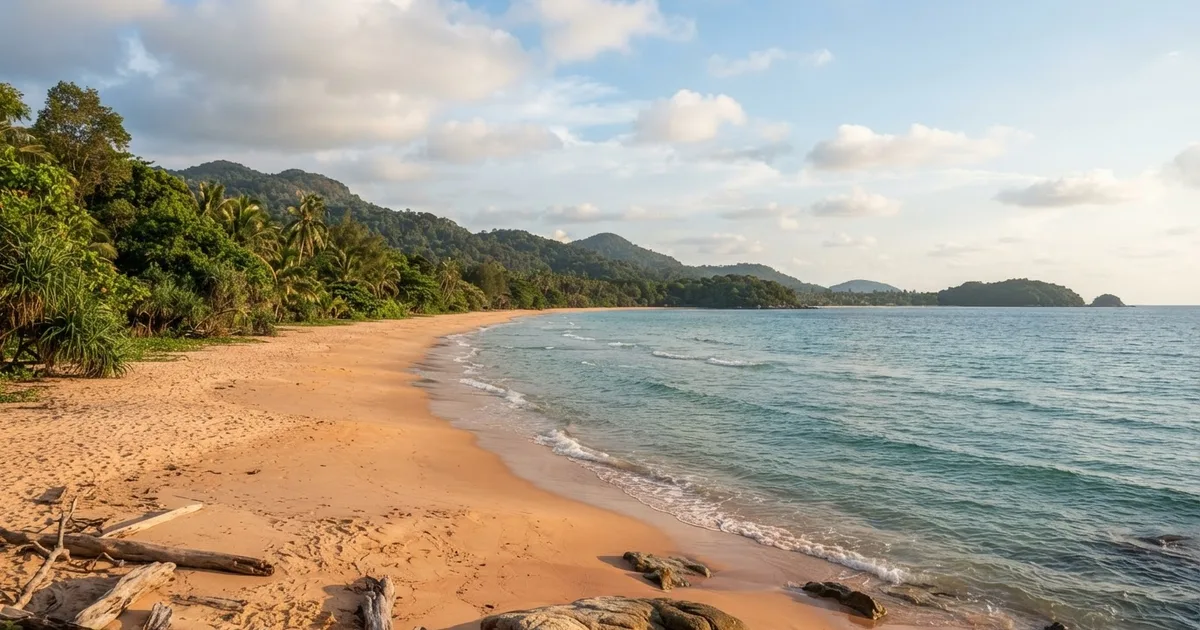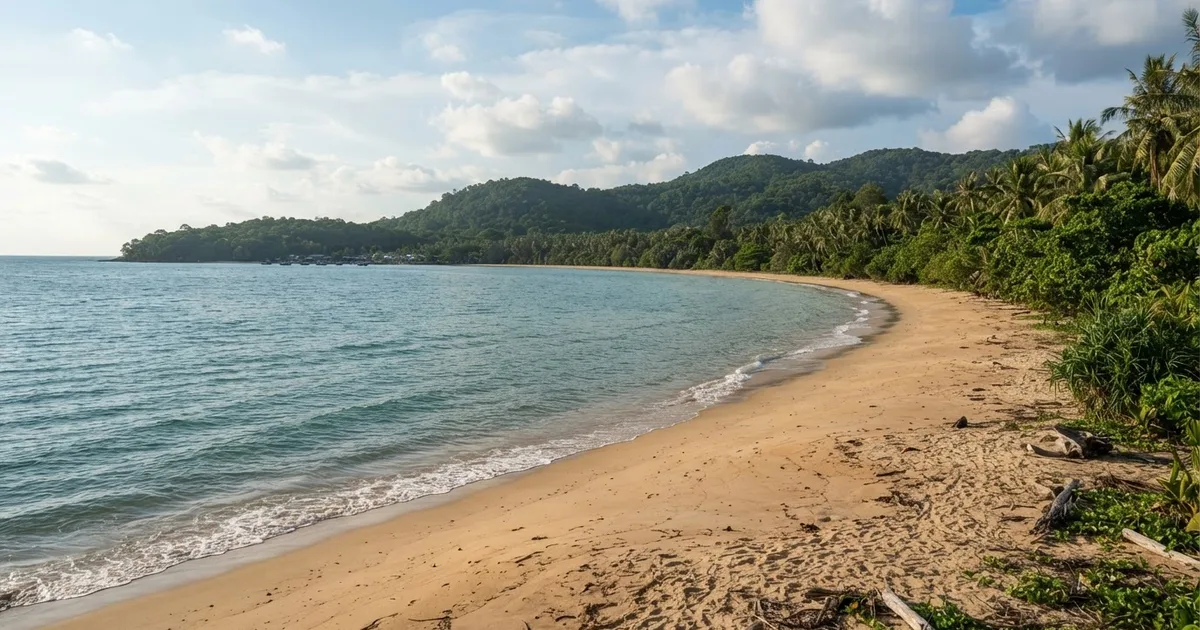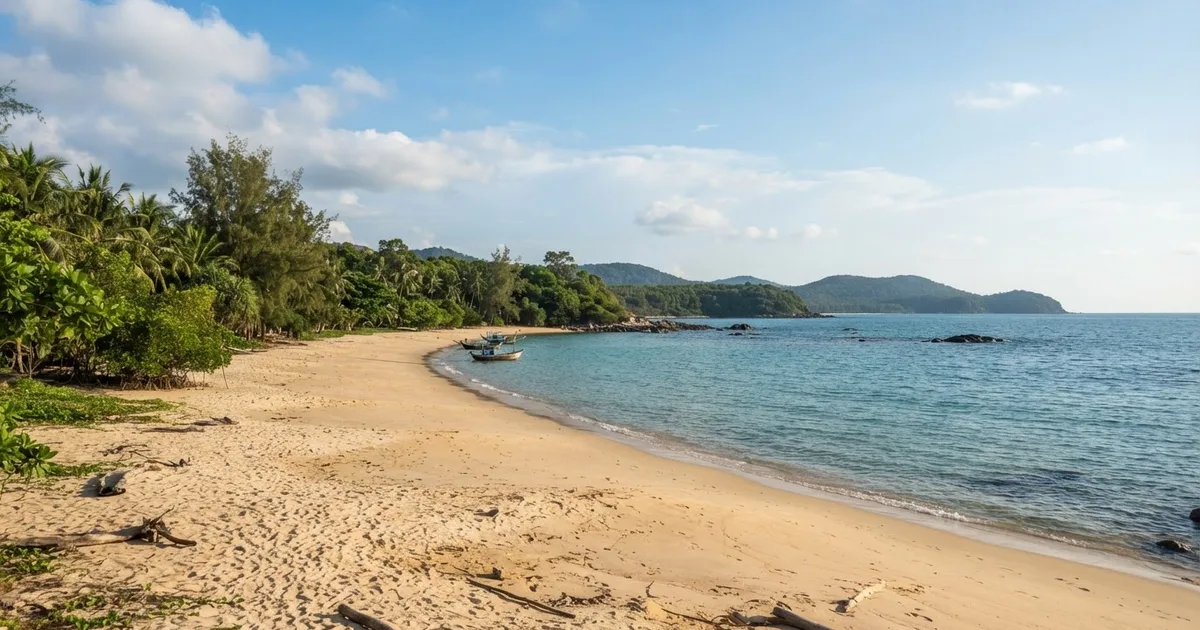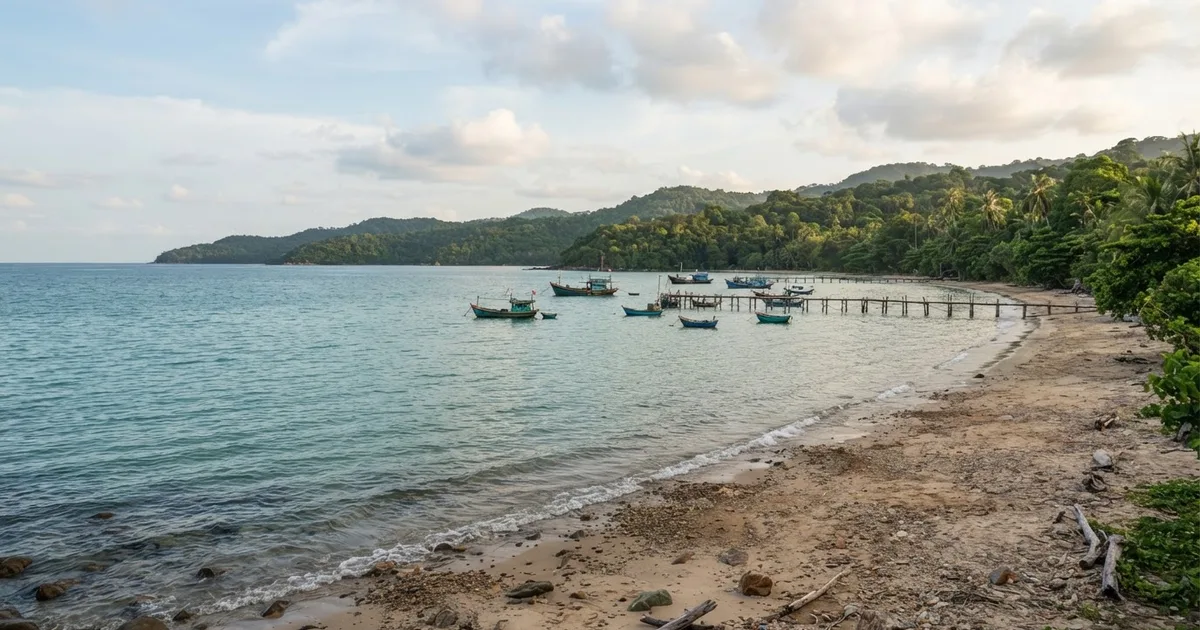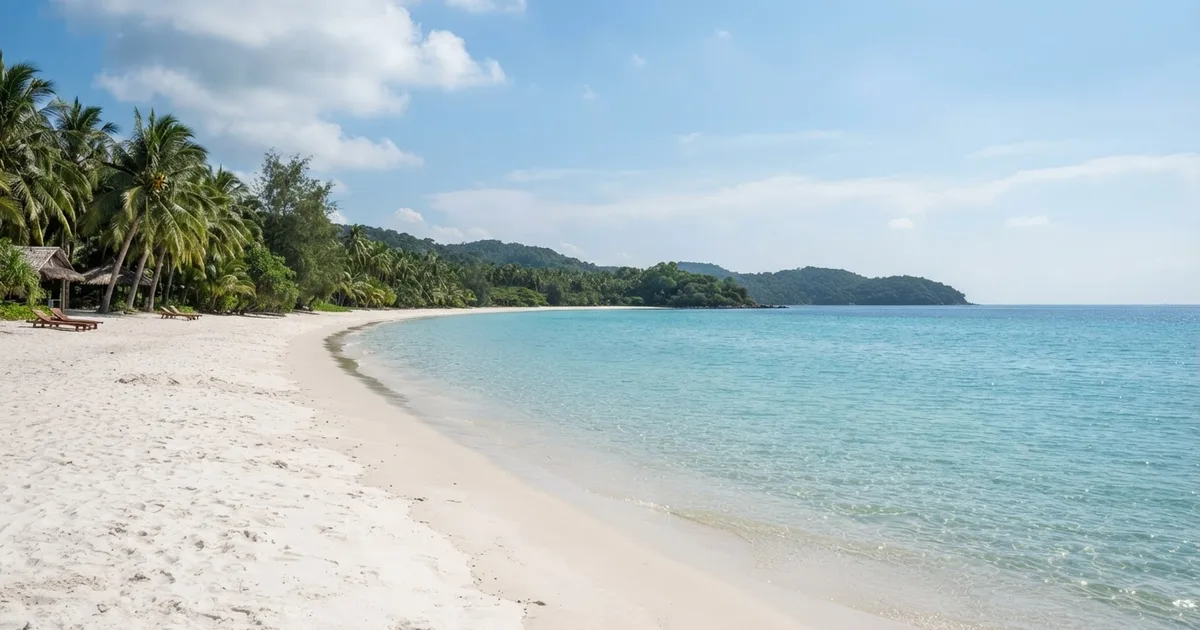
Sao Beach is Phu Quoc's most photogenic white-sand beach, and walking onto the sand costs nothing — there is no official entrance fee. It sits in a sheltered, southeast-facing bay roughly 25 km from Duong Dong, about a 30-minute drive, and it is at its clearest and calmest from November through April, with April to early June usually the single most reliable window. Arrive before 09:00 or after 16:00 to avoid the tour-group peak.
Where Is Sao Beach and How Do You Get There?
Sao Beach sits on Phu Quoc's southeast coast, tucked into a sheltered bay between An Thoi town and the island's southern tip. It is roughly 25 km from Duong Dong, the island's main town and night market area, which works out to about a 30-minute drive in normal traffic. From An Thoi town, the fishing harbour and the Hon Thom cable car station, it is only 10–15 minutes away — which is why many travellers pair Sao Beach with a cable car ride or a Sunset Town visit on the same day.
By motorbike, the standard route runs south from Duong Dong along Tran Hung Dao, through An Thoi, then onto the coastal road that curves east towards the beach. The road is paved the whole way and the final stretch is straightforward, though there are a few hills and some sandy patches near the car parks. A rented scooter costs roughly 150,000–250,000 VND per day (about $6–10) and motorbike parking at the beach runs 10,000–20,000 VND ($0.40–0.80).
Without your own transport, a metered taxi or ride-hailing car from Duong Dong to Sao Beach typically costs 400,000–600,000 VND ($16–24) each way, and many drivers will wait or arrange a return pickup for an extra fee. Organised minibus tours from the main hotel strips charge around $10–20 per person return, but they usually arrive mid-morning — exactly when the beach is busiest.
If you are riding yourself, fill the tank before you leave Duong Dong. There are petrol stations in An Thoi, but the small roadside fuel stands near the beach charge noticeably more per litre.
Best Time to Visit Sao Beach: Season, Month and Hour
Sao Beach is a dry-season beach. From roughly November to April, the northeast monsoon keeps the sea calm, the water clear and the sand bright, and the bay's southeast orientation shelters it from most of the wind. Several guides rate Sao Beach as having the calmest, clearest water on Phu Quoc during these months — it is one of the gentlest swims on the island.
The single best window is often quoted as April to early June. By then the dry season has done its work, the water is at its cleanest and most reliable, and the peak December–February crowds have thinned out. If you only have one chance to see Sao Beach at its best, aim for that stretch.
The southwest monsoon, from about May through October, changes the picture. The water turns murkier, the sand can be strewn with debris on some days, and swimming becomes a day-by-day judgement rather than a given. September and October are usually the least appealing months of all for the beach itself.
Time of day matters almost as much as season. Crowds build through the late morning as tour buses arrive, so arriving before 09:00 or after 16:00 gives you noticeably emptier sand. Morning is also the best time to swim, when the water is calmest and the beach is quietest.
| Period | Water clarity | Crowds | Verdict |
|---|---|---|---|
| November – March | Clear, calm, turquoise | High, peaking December–February | Excellent swimming |
| April – early June | Cleanest and most reliable | Moderate | Best all-round window |
| Late June – August | Variable, occasional chop | Moderate to high | Fine on calm days |
| September – October | Murkiest, debris possible | Low | Skip if swimming is the goal |
Swimming, Snorkeling and Water Safety at Sao Beach
Sao Beach is a genuinely good swimming beach. The bay faces southeast and is well sheltered, and the water stays shallow for a long way out, so you can wade in comfortably and still touch the bottom almost anywhere near the shore. Under normal conditions there is no heavy surf and no rip currents to worry about, which makes it one of the most family-friendly swims on Phu Quoc.
That said, treat it as a beach, not a swimming pool. Some guides advise watching for rip currents and swimming only in calm conditions, and the picture changes completely in the wet season. A 2026 news report noted drifting water hyacinth and household waste affecting parts of Sao Beach and discouraging swimming at the start of that year — a reminder that this is a working, weather-driven coastline, not a manicured resort lagoon. If the water looks murky or debris is washing in, swim elsewhere that day.
Snorkeling directly off the sand is possible on calm days, but be realistic about it. The reef here is not especially notable compared with Phu Quoc's offshore islands — the An Thoi archipelago, Hon Thom and the small islets south of the island have far better coral and visibility. If snorkeling is a priority, book a boat trip and keep Sao Beach for swimming and photographs.
Swim in the morning if you can. The water is usually calmest before the afternoon breeze builds, and the beach is far quieter before the tour buses arrive.
What Does a Day at Sao Beach Actually Cost?
Access to the sand is free. Sao Beach is a public beach with no official entrance fee, and nobody can legitimately charge you simply to walk on it. Everything else is optional and priced individually.
Expect to pay for the comfort items. A sun lounger with a shade umbrella typically runs 50,000–100,000 VND ($2–4) for the day, and hammocks in the palm groves are often free if you buy a drink from the owner. Freshwater showers and changing areas usually cost 20,000–50,000 VND ($1–2). Beach restaurants along the sand serve seafood, rice dishes, fruit shakes and cold beer, with mains generally 80,000–200,000 VND ($3–8) — noticeably more than in Duong Dong, but you are paying for the view.
Water sports are the biggest variable. Kayak hire is commonly 100,000–200,000 VND ($4–8) per hour, and jet ski or banana boat rides are negotiated on the spot, usually starting around 500,000 VND ($20) for a short session. Bring cash in small notes; card machines are rare and mobile signal can be patchy at the far ends of the beach.
| Item | Typical price | Notes |
|---|---|---|
| Beach access | Free | Public beach, no official entrance fee |
| Motorbike parking | 10,000–20,000 VND ($0.40–0.80) | Paid at the car park |
| Lounger and umbrella | 50,000–100,000 VND ($2–4) | Per day, negotiable in low season |
| Shower and changing | 20,000–50,000 VND ($1–2) | Freshwater |
| Restaurant main dish | 80,000–200,000 VND ($3–8) | Seafood at the higher end |
| Kayak hire | 100,000–200,000 VND ($4–8) | Per hour |
| Taxi from Duong Dong | 400,000–600,000 VND ($16–24) | Each way |
Who Sao Beach Suits — and Who Should Skip It
Sao Beach is at its best for travellers who want a classic tropical postcard: powder-white sand, shallow turquoise water, palm trees leaning over the tideline and a kayak or two drifting offshore. It is one of the most photographed spots on Phu Quoc for good reason.
Great fit for
- Families with young children — shallow, sheltered water and no heavy surf
- Casual swimmers and non-swimmers who want to wade and float
- Photographers chasing white sand and turquoise water in morning light
- Travellers pairing the beach with An Thoi, Sunset Town or the Hon Thom cable car
- Anyone on a budget — the beach itself is free
Less suited to
- Serious snorkelers and divers — the offshore islands beat this reef comfortably
- Sunset chasers — the sun leaves the sea after about 16:30, so this is not a sunset-facing beach
- Anyone wanting an empty, undiscovered beach — it is Phu Quoc's best-known white-sand beach and it gets busy
- Wet-season visitors (roughly May to October) hoping for glass-clear water
- People who dislike hawkers, tour groups and paying for extras
If you fall into the second group, consider Ong Lang or Ganh Dau in the northwest for quieter sunsets, or a boat trip into the An Thoi archipelago for snorkeling. Sao Beach remains the island's showpiece for sand and swimming — just go in with the right expectations.
Practical Tips for a Smooth Visit
Bring cash, sunscreen, a hat and a dry bag. There is little natural shade outside the paid lounger areas and the palm groves fill up first. Reef-safe sunscreen is a courtesy to the bay, and a dry bag keeps your phone and wallet safe if you hire a kayak.
Wear shoes you can slip off. The sand gets very hot by midday, and the walk from the car park down to the water can be longer than it looks. Flip-flops or sandals are fine; there is no need for hiking shoes.
Eat at the beach restaurants rather than carrying food in, and take your rubbish with you. The beach has had well-publicised litter problems, and the simplest way to keep it photogenic is to leave nothing behind. If you see debris washing in, it is usually a seasonal current issue rather than something the beach staff can fix in an afternoon.
Finally, plan your timing around the tours. Minibuses typically arrive between 10:00 and 14:00. Book a taxi for 07:30 and you will have the best light, the calmest water and most of the beach to yourself.
Frequently Asked Questions
Is there an entrance fee for Sao Beach?
No. Sao Beach is public and has no official entrance fee to access the sand. You only pay for optional extras: loungers and umbrellas around 50,000–100,000 VND ($2–4), showers 20,000–50,000 VND ($1–2), plus food, drinks, kayak hire and water sports. Motorbike parking is 10,000–20,000 VND ($0.40–0.80).
What is the best time of year to visit Sao Beach?
The dry season, roughly November to April, when the water is calm and turquoise. April to early June is widely rated the single best window for the cleanest, most reliable conditions. The southwest monsoon from May to October can leave the water murkier and the sand strewn with debris on some days.
What is the best time of day to go?
Arrive before 09:00 or after 16:00. Tour minibuses typically arrive between 10:00 and 14:00, and the sand is noticeably emptier at either end of the day. Mornings also have the calmest water, which makes them the best time to swim.
How far is Sao Beach from Duong Dong?
About 25 km, which is roughly a 30-minute drive in normal traffic. From An Thoi town it is only 10–15 minutes. A taxi from Duong Dong costs about 400,000–600,000 VND ($16–24) each way, while a rented scooter for the day runs 150,000–250,000 VND ($6–10).
Is Sao Beach good for swimming?
Yes. It is a sheltered southeast-facing bay with shallow water near shore and no heavy surf under normal conditions, which suits families and casual swimmers. Still, watch for rip currents and swim only in calm conditions, and avoid the water entirely after storms or when debris is washing in.
Can you snorkel at Sao Beach?
You can snorkel off the sand on calm days, but the reef is not especially notable compared with Phu Quoc's offshore islands. The An Thoi archipelago and Hon Thom offer far better coral and visibility. If snorkeling matters to you, book a boat trip and keep Sao Beach for swimming and photos.
Is Sao Beach a sunset beach?
No. Sao Beach faces southeast, and the sun leaves the sea after about 16:30, so you will not get a sunset over the water here. For sunsets, head to the west coast around Ong Lang, Duong Dong or Ganh Dau instead.
How do I get to Sao Beach without a motorbike?
Take a metered taxi or ride-hailing car from Duong Dong for 400,000–600,000 VND ($16–24) each way, or join a minibus tour for around $10–20 per person return. Tours usually arrive mid-morning, so a private taxi booked for 07:30 gives you a much quieter beach.
Planning a day at Sao Beach? Sabrina Rental can sort your motorbike, arrange a reliable taxi or private driver, and share live local advice on which beaches are clearest this week — plus rooms and boat trips if you want to build a full south-island day around it.
Contact Sabrina Rental