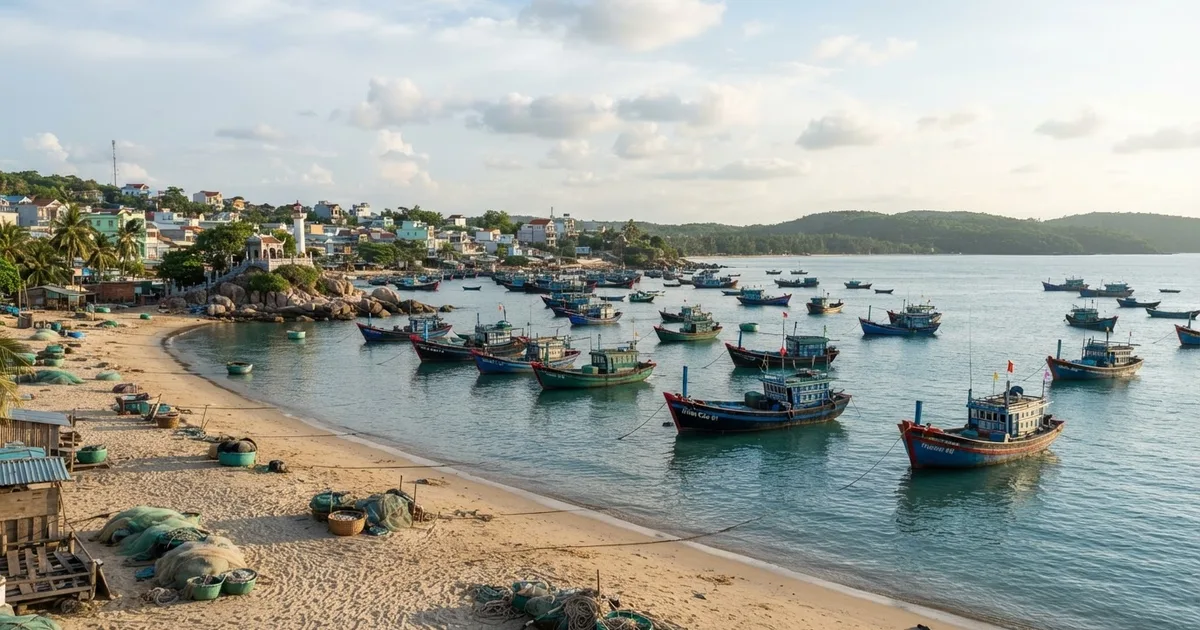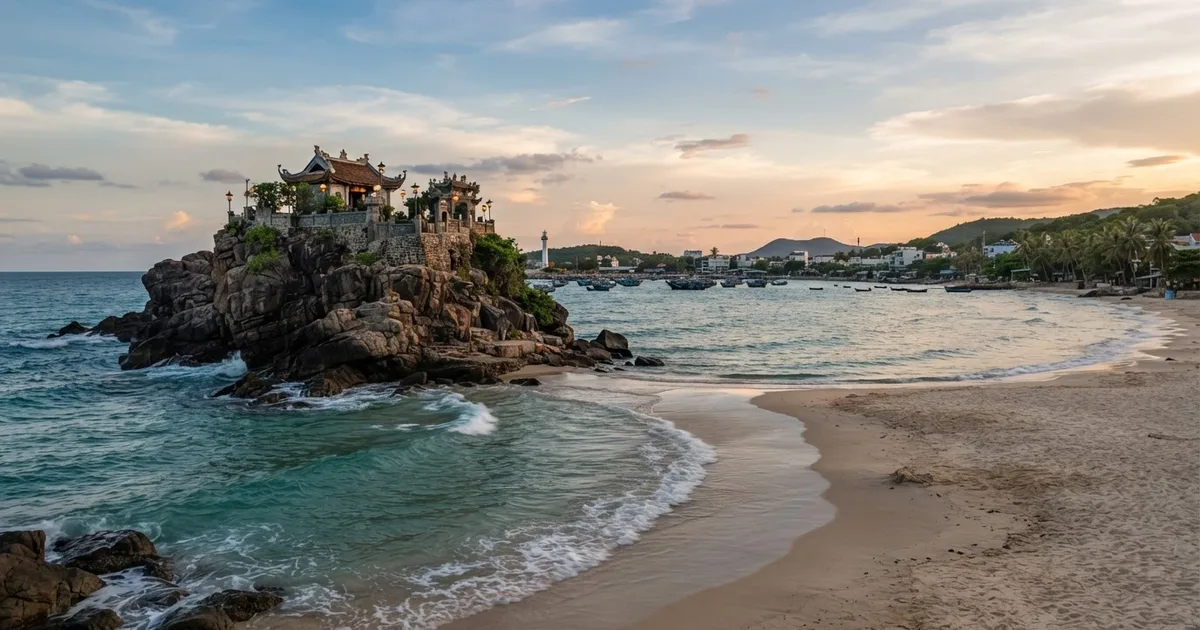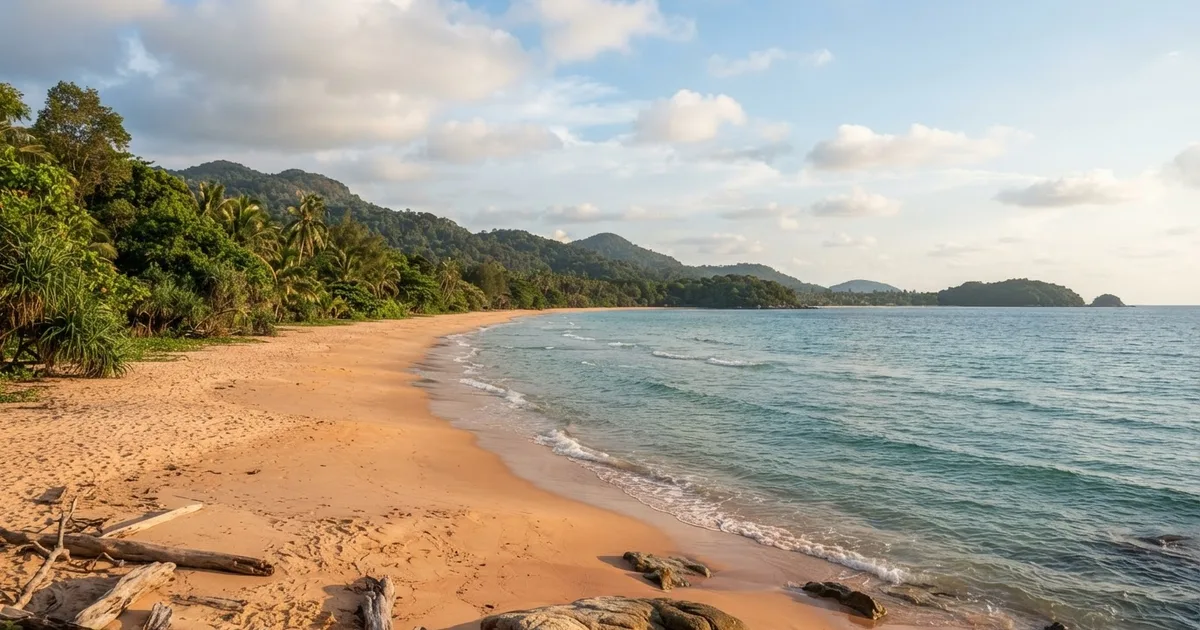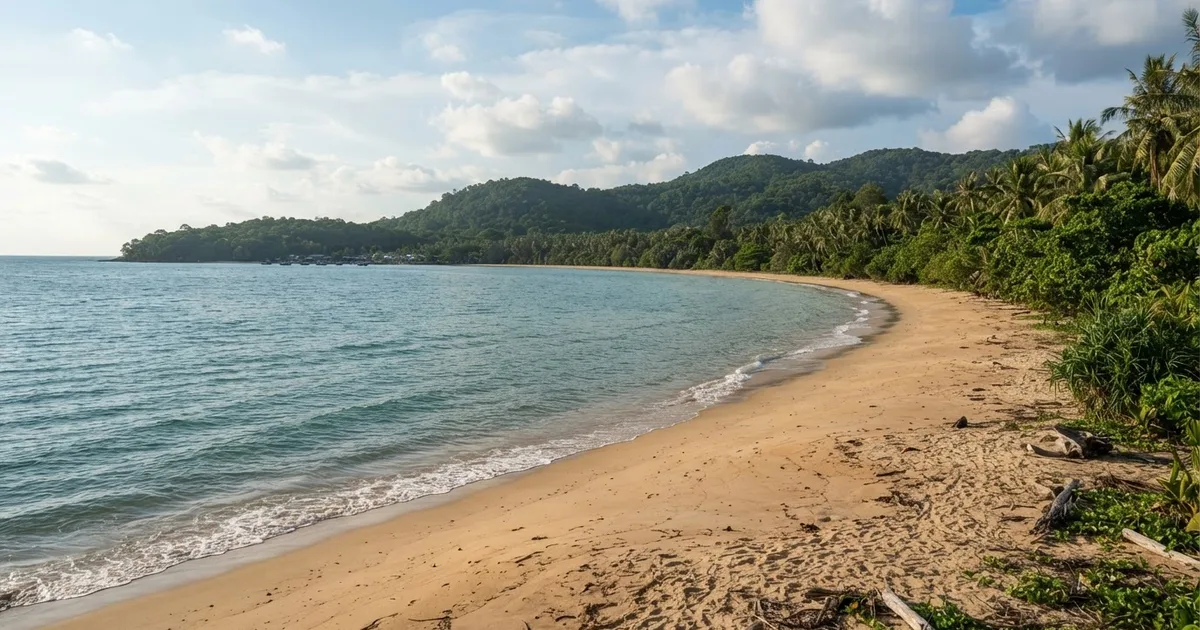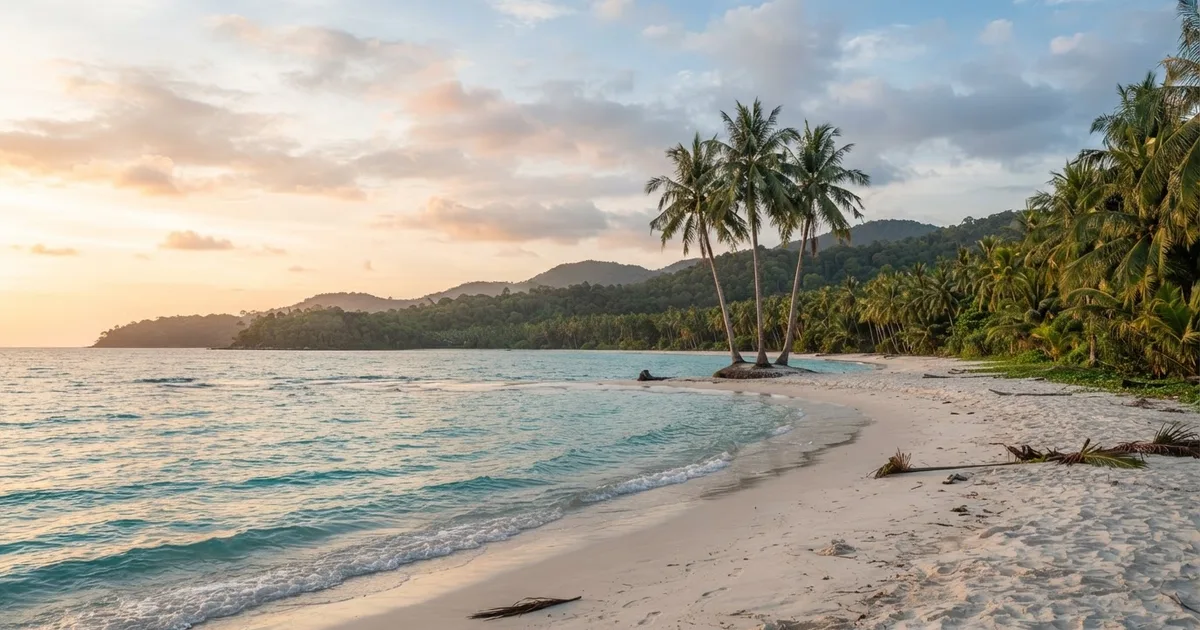
There is no verified public beach on Phu Quoc officially named "Three Tree Beach" — the name does not appear on island maps or in 2026 Phu Quoc beach rankings, and searching for it returns Three Tree Point in Washington State and Three Tables Beach in Hawaii instead. If what you actually want is the postcard beach, with fine white sand and calm, clear water, the beaches that deliver are Bai Sao, around 7 kilometres of powdery sand, and Bai Khem, both at their best from November to April.
Is There a "Three Tree Beach" on Phu Quoc?
Short answer: not verifiably. No Phu Quoc beach is mapped or ranked under that name, and there is no reliable island-specific information about swimming, snorkelling or sunset conditions at a place called Three Tree Beach. Search results for the phrase point instead to Three Tree Point in Washington State and Three Tables Beach in Hawaii — two completely different coastlines on the other side of the world.
That does not mean the name was invented. Across Vietnam, small beaches are usually known locally by a landmark rather than an official name — a banyan tree, a stream mouth, a particular rock, or three casuarinas leaning out over the sand. Those nicknames rarely make it onto maps, and they shift over time: a tree falls, a resort fences a stretch, and the name a local fisherman used five years ago stops matching the coastline.
So the practical move is to stop hunting for a pin and start matching the description. Decide what you actually want — white sand, shallow water for kids, sunset, or total emptiness — and there is a named Phu Quoc beach that does it, with parking, shade and a road home.
| What you are picturing | Beach that delivers | Why it fits |
|---|---|---|
| Bright white sand, clear water | Bai Sao | 7 km of powdery white sand, described as "snow-white" and "flour-like" in 2026 rankings |
| Shallow, calm water for small children | Bai Khem | Consistently described as calm and shallow, and among the island's clearest-water beaches |
| Long sunset walks near town | Long Beach (Bai Truong) | West coast, 0–15 km from Duong Dong; murky in the rainy season |
| An empty shoreline with no development | Bãi Bổn | Mostly undeveloped and uninhabited, with a long empty beach and very shallow, calm sea |
| Snorkelling and island hopping | An Thoi archipelago | Boat access from the south of the island; best clarity November to April |
| Loungers, food and drinks within a few steps | Bai Sao or Long Beach | Both have beachfront vendors and resort-run stretches; Bãi Bổn has essentially none |
Local tip: if someone on the island gives you directions to a "three tree" beach, ask which named beach it is closest to — Bai Sao, Bai Khem, or a stretch of Long Beach. That single question turns a fuzzy nickname into a reachable destination, and it also tells you whether the spot has parking, shade and a way back before dark.
Bai Sao and Bai Khem: The Beaches That Match the Postcard
Bai Sao is the beach most travelers are actually looking for. It runs about 7 kilometres along Phu Quoc's southern coast, and 2026 beach rankings describe its sand as "snow-white" and "fine, flour-like" — the finest powdery sand on the island. Water clarity here is exceptional from mid-December to early February, when the dry-season swell drops and the shallows turn glassy. Tripadvisor visitors note that by April the water is shallow, calm and clear, and that the beach is noticeably less crowded once peak season ends.
Bai Khem, a few kilometres further south near An Thoi, is the second of the two southern beaches consistently named as Phu Quoc's clearest. It is characterised as calm and shallow, which makes it the better fit for families with young children — the bottom stays within easy reach a long way out. The trade-off is that parts of Khem front resort land, so the open, publicly accessible stretch is narrower than at Bai Sao.
Both beaches share the same daily rhythm. Mornings are the best window: softer light, the clearest water, and no tour boats yet. Between roughly 10:00 and 15:00 in high season the sand fills with day-trippers, sunbeds and jetski operators. If you ride down on a motorbike, arrive before 9:00 and leave after lunch, or come late afternoon once the groups have gone.
Clarity is seasonal, and it pays to plan around it. Across Phu Quoc, beach water visibility in the dry season is reported at up to 15 metres, with the best clarity from November through April. In the rainy season these same southern beaches can still look good on a calm day, but runoff and chop cut visibility and push debris into the shallows.
Timing tip: the single best window for the classic white-sand-and-clear-water photograph on Phu Quoc is mid-December to early February. If your dates are fixed, aim for April instead — the water is still shallow, calm and clear, and the crowds have thinned out.
Long Beach and Bãi Bổn: Convenience Versus Emptiness
Long Beach — Bai Truong — is the island's workhorse beach. It runs along the west coast roughly 0 to 15 kilometres from Duong Dong, the main town, which means you can walk to it from a guesthouse, eat dinner facing the water, and watch the sun drop without arranging any transport at all. It is not the clearest water on Phu Quoc, and in the rainy season it turns murky. Its value is convenience and sunsets, not snorkelling.
Bãi Bổn sits at the opposite extreme. It is described as one of Phu Quoc's emptier stretches of coastline, mostly undeveloped and uninhabited, with a long empty shoreline and a sea that is very shallow and calm. If your idea of a beach day is a towel, a book and nobody within 200 metres, this is the closest thing on the island to the "Three Tree Beach" fantasy — a genuinely peaceful beach rather than a lively scene.
The catch is everything that comes with the word "undeveloped". No loungers, no beach bars, no shaded restaurants, and no easy fallback if the weather turns. You bring your own water, food, shade and rubbish bag, and you take everything away with you. Travelers who want music, cocktails and a printed menu will be bored within an hour — and should choose Bai Sao or Long Beach instead.
Which Phu Quoc Beach Suits You — And Which One Does Not
Bai Sao
Great for: first-time visitors, photographers, couples who want the classic white-sand shot, and anyone who wants food and shade within walking distance. Best November to April, with peak clarity mid-December to early February.
Poor fit for: travelers who dislike crowds — high-season afternoons bring tour buses and jetskis — and anyone expecting a deserted beach at noon in January.
Bai Khem
Great for: families with young children, cautious swimmers, and anyone combining a beach day with An Thoi town and the southern cable car. Poor fit for: strong swimmers chasing depth or surf, and travelers who want a long, open, unbuilt public beach — resort frontage narrows the free-access stretch.
Long Beach (Bai Truong)
Great for: short stays, sunset dinners, walking-distance beach access from Duong Dong hotels, and anyone travelling without a motorbike. Poor fit for: dry-season snorkellers, and anyone visiting between May and October, when the west-coast water is murky.
Bãi Bổn
Great for: peace-seekers, self-sufficient riders, picnic lunches, and shallow calm water for nervous swimmers. Poor fit for: anyone needing loungers, food service, shade or a quick ride back to town, and anyone who wants a lively beach scene.
Best Time to Visit: Month-by-Month Realism
The dry season from November through April is the best window for calm, clear water on Phu Quoc, and December to March is the peak of it. That is when the sea is at its most transparent, the sky is most reliably sunny, and the southern beaches look like the photographs. April still delivers — the water stays shallow, calm and clear and the crowds thin out once peak season ends — though the first rains of the season can arrive late in the month.
| Window | Water conditions | Crowds and prices | Best beaches |
|---|---|---|---|
| November | Seas settling, clarity improving week by week | Light; good value | Bai Sao, Bai Khem |
| December to March | Clearest and calmest of the year; visibility reported up to 15 m; standout mid-December to early February | Busiest, especially around Christmas, New Year and Tet | Bai Sao, Bai Khem, An Thoi islands |
| April | Shallow, calm and clear; still excellent for swimming | Noticeably quieter after the peak | Bai Sao, Bai Khem |
| May to October | Rainy season; murky water, particularly on the west coast; chop and runoff | Quietest and cheapest; some beach businesses scale back | Long Beach for sunsets; southern beaches on calm days |
One caution applies all year round: conditions can change quickly with wind, heat and rain, so check posted signs and inspect the water before you go in, whatever the forecast said that morning.
Getting There, What It Costs, and Staying Safe
There is no verified admission charge for a public Phu Quoc beach. In practice your costs are parking, a sunbed or umbrella if you want one, and food — so carry small notes in Vietnamese dong rather than relying on a card or bank transfer at a roadside shack.
Bai Sao and Bai Khem sit in the south of the island, roughly 25 to 30 kilometres from Duong Dong, which is about 45 minutes by motorbike on the main southern road. The final approach to some stretches is sand or packed dirt, so slow down and park where you are asked to. Long Beach needs no transport at all if you are staying in Duong Dong. Bãi Bổn rewards riders with a sense of direction and a full tank, because fuel, food and reliable signal are not guaranteed.
Beach-day checklist for Phu Quoc
- Cash in small notes for parking, sunbeds and drinks
- Reef-safe sunscreen, a hat and a rash guard — the sun is strong even under cloud
- Two litres of drinking water per person for the undeveloped stretches
- A dry bag for your phone and keys; sand and salt water ruin electronics
- Sandals or shoes for the walk back to the parking area — midday sand gets painfully hot
- A light rain jacket if you are travelling in a shoulder month
- A bag for your own rubbish at Bãi Bổn and any beach without bins
Before you swim: check posted signs and read the water itself — colour, chop, and whether local people are swimming. Conditions can change quickly with wind, heat and rain, and a beach that was flat at 8:00 can be churning by 14:00. Do not assume a lifeguard is on duty at every beach, keep children within arm's reach in the shallows, and never swim alone at an undeveloped stretch like Bãi Bổn.
Frequently Asked Questions
Is there a beach called Three Tree Beach on Phu Quoc?
No public Phu Quoc beach is mapped or ranked under that name, and searches mostly return Three Tree Point in Washington State and Three Tables Beach in Hawaii. It is most likely an informal local nickname for a small cove. Rather than hunting a pin, match your description to a named beach such as Bai Sao or Bai Khem.
What is the closest thing to Three Tree Beach on Phu Quoc?
Bai Sao. It runs about 7 kilometres along the southern coast, with sand described in 2026 rankings as "snow-white" and "flour-like". Water clarity peaks from mid-December to early February, and by April the water is still shallow, calm and clear with far fewer people on the sand.
Which Phu Quoc beach has the clearest water?
Bai Sao and Bai Khem, both on the southern coast, are the two most consistently named for clear water. Phu Quoc beach visibility is reported at up to 15 metres during the dry season, with the best clarity from November through April and the sharpest window between mid-December and early February.
What is the best time of year to visit Phu Quoc beaches?
November to April. December to March is the peak dry season with calm seas and sunny days, and April remains excellent for swimming while being noticeably quieter after the peak crowds leave. From May to October the rainy season brings murky water, especially on the west coast, and choppier conditions.
Do you have to pay to enter Phu Quoc beaches?
No verified admission fee applies to a public Phu Quoc beach. Budget instead for parking, and for a sunbed or umbrella if you use a resort-run stretch — typically a small cash charge. Carry dong in small notes, since roadside vendors and car parks rarely accept cards.
Which Phu Quoc beach is best for families with young children?
Bai Khem, which is described as calm and shallow — the bottom stays within easy reach a long way out. Bai Sao also works well in the dry season, but it gets busy between roughly 10:00 and 15:00, and the open public stretch at Khem is narrower because parts front resort land.
Which Phu Quoc beach is the quietest?
Bãi Bổn, described as one of the island's emptier stretches of coastline: mostly undeveloped and uninhabited, with a long empty shoreline and a very shallow, calm sea. There are no loungers, bars or restaurants, so bring your own water, food and shade — and take your rubbish away with you.
Is it safe to swim at Phu Quoc beaches?
Generally yes in the dry season, but conditions can change quickly with wind, heat and rain. Check posted signs, inspect the water before entering, and do not assume a lifeguard is on duty. In the rainy season, runoff reduces visibility and can push debris into the shallows, so stick to calm days and supervised spots.
Phu Quoc's beaches are easy to love and easy to get wrong — the wrong week in the rainy season and you spend the afternoon looking at brown water. Sabrina Rental is based on the island: we can match you with a reliable motorbike, rooms, or a boat trip, tell you which beach is clearest this week, and help you plan the southern loop so you see Bai Sao or Bai Khem at their best.
Ask Sabrina about beaches, bikes and island tips