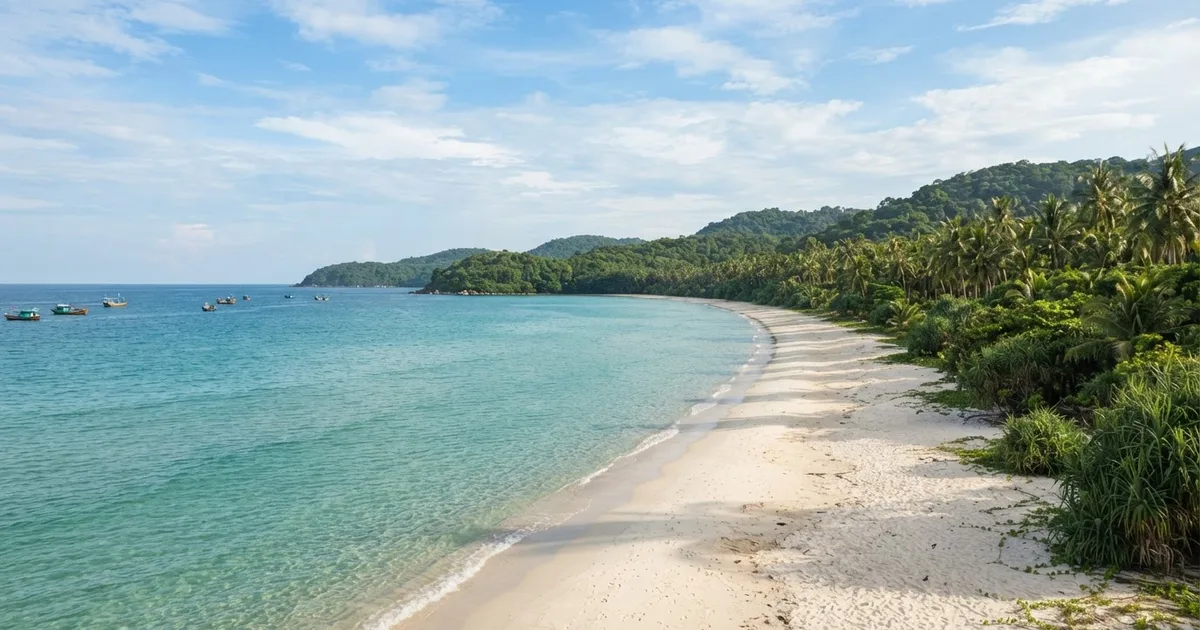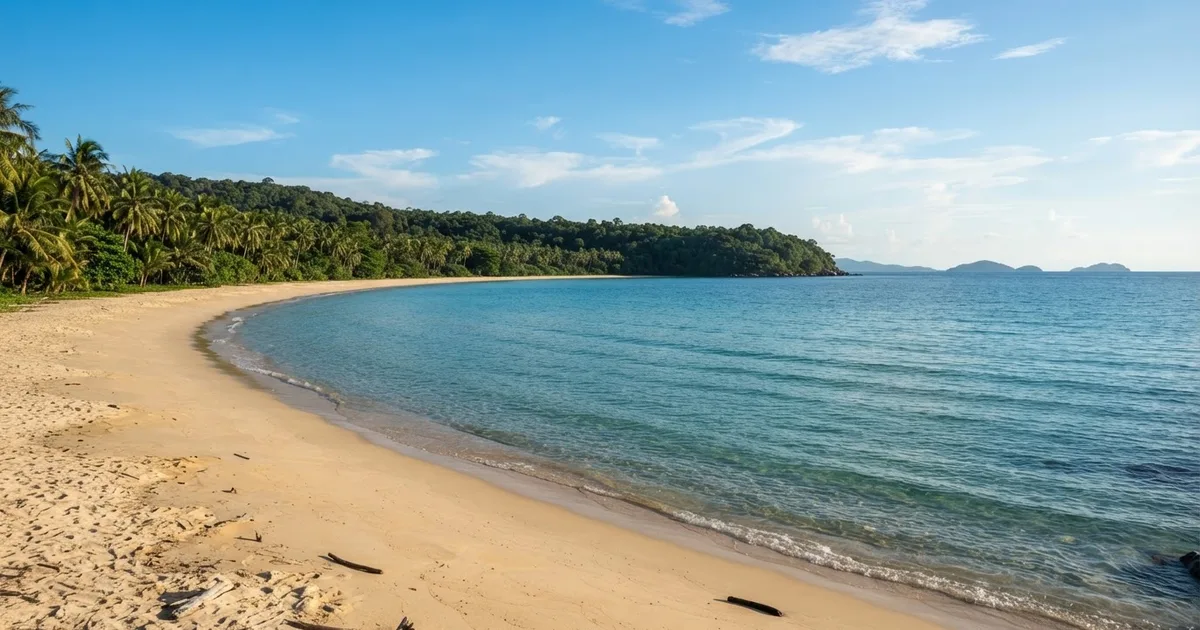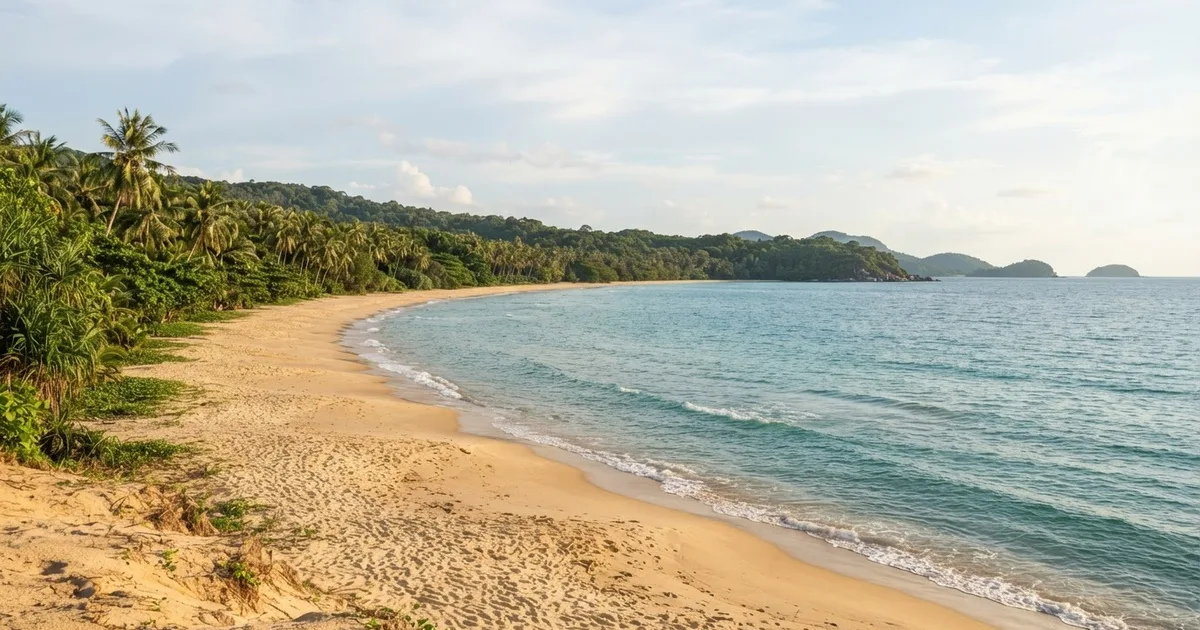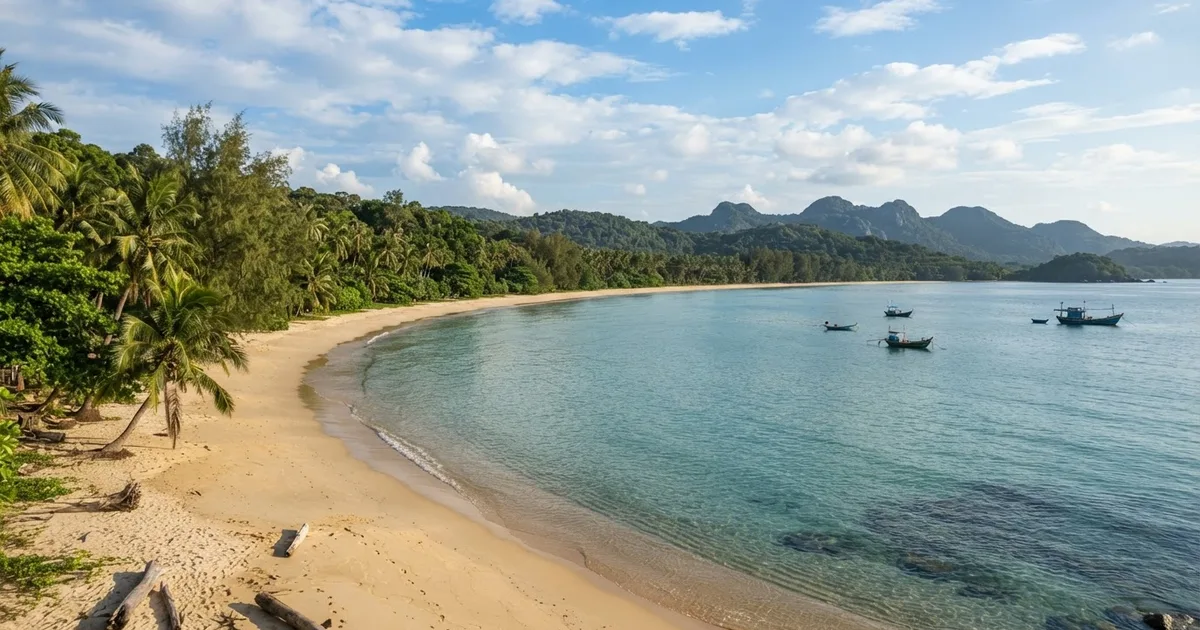
Thơm Beach (Bãi Thơm) is Phu Quoc's northernmost beach, roughly 30 km and 40-50 minutes by road from Duong Dong, with no entry fee and some of the lowest crowd levels of any beach on the island. In the dry season it delivers fine white sand and clear turquoise water; from May to October the sea turns rough, the water goes murky and litter washes onto the sand. Come for the emptiness and the scenery, and check the tide and the wind before you commit to a swim.
Where Is Thơm Beach on Phu Quoc?
Thơm Beach - Bãi Thơm in Vietnamese - runs along Phu Quoc's northeastern coastline beside the fishing village of the same name, near the island's northern tip. It faces the Gulf of Thailand, which is why it looks and behaves nothing like the west-coast beaches most visitors know. Duong Dong, Long Beach, Ong Lang and An Thoi are all on the other side of the island, so a trip to Bãi Thơm is a deliberate half-day excursion rather than a stroll from your hotel.
There is no public bus to Bãi Thơm. You ride there yourself, book a car or taxi, or arrange a transfer. A local guide puts the drive at about 30 minutes, which matches the experience of most riders starting from Ong Lang or the northern end of Long Beach. From Duong Dong town, add another 10-15 minutes for traffic and the slower coastal section.
| Starting point | Approx. distance | Typical driving time | Notes |
|---|---|---|---|
| Ong Lang | 18-20 km | 25-35 min | Shortest run, mostly sealed road |
| Long Beach, northern end | 20 km | 30-40 min | A local guide's 30-minute figure fits this start |
| Duong Dong town | approx. 30 km | 40-50 min | Allow extra in the late afternoon |
| Phu Quoc International Airport | approx. 35 km | 50-60 min | Easiest as a private transfer |
| Ganh Dau, northwest coast | approx. 35 km | 50-60 min | You must loop back inland; there is no direct coast road |
No entry fee is charged for Thơm Beach. It is a public beach with open access, and the only costs are transport plus an optional VND 10,000-20,000 (under USD 1) tip if a local family watches your motorbike. The drive is part of the attraction: the road climbs through the buffer zone of Phu Quoc National Park, past pepper plots and small fishing hamlets, before the sea reappears through the casuarina trees.
What Thơm Beach Is Actually Like: Sand, Water and Crowds
Travel guides consistently describe Bãi Thơm as a stretch of fine white sand with crystal-clear, turquoise water and a peaceful atmosphere. Independent crowd assessments rate it very low on visitors - even in peak season you may share the sand with only a handful of local fishing families. That mix of white sand, clear water and near-solitude is exactly why people make the drive.
The honest caveats matter just as much. A TripAdvisor review of the area notes rugged local tracks and very limited facilities, and reports that on that visit the sea was not very clear and there was a lot of rubbish. Both things can be true at once: water clarity at Thơm Beach varies strongly by season, and litter tends to concentrate near the village end and after heavy rain. A guide who visited in the dry season describes crystal-clear water with tropical fish visible in the shallows.
The beach is very shallow and tidal, with a low slope into the sea. At low tide you can wade out a long way over a flat shelf; at high tide you reach proper swimming depth close to shore. That tide range is the single most useful thing to check before you go, because it turns the bay from a paddling flat into a swim spot and back again twice a day.
What you get
Fine white sand, turquoise water in the dry season, very few people, working fishing boats, and a wide open view across the gulf. No entry fee, no beach club, no queue for a sunbed.
What you do not get
No lifeguards, no sunbed and umbrella service, no beach bars on the sand, few toilets and no ATM within easy reach. Sea urchins and rocky debris on the seabed mean barefoot wading is not recommended.
How to Get to Thơm Beach: Motorbike, Taxi or Boat
Riding yourself is the most popular option and the most flexible. A 110-125cc scooter rents for around USD 6-10 per day on the island, plus VND 60,000-80,000 of fuel for the round trip from Duong Dong. The route north is straightforward and partly shaded, but expect the final stretch to be narrower and occasionally sandy. Fuel stations thin out past Cua Can, so fill up before you leave the main road.
If you would rather not drive, a metered taxi or Grab from Duong Dong typically costs USD 15-20 one way, or USD 35-50 for a car and driver held for a half day. Agree the waiting time and the return price before you set off, because phone signal at the beach is patchy and there is no taxi rank at the village.
Boats are the other route, and the one most visitors overlook. From Bãi Thơm beach you can hire a local boat and reach nearby snorkelling and fishing spots in about 10-15 minutes. Expect to negotiate directly with boat owners at the village; a small group charter for a few hours commonly lands in the USD 30-60 range depending on boat size and how long you stay out.
Timing tip: leave Duong Dong by 8:00-8:30am. You arrive before the heat peaks, catch the calmest morning water, and you are back on the main road well before dark. Riding the northern coastal road after sunset is not something to plan on.
Swimming and Snorkelling at Bãi Thơm: Tides, Urchins and Safety
Swimming is possible at Thơm Beach and the shallow, gently sloping bottom makes it forgiving for weaker swimmers - but conditions change with the tide and the season, and a second source flags the swimming here as rough. Treat it as a calm-day beach, not an all-weather one. If the surface is choppy or the water is brown, swim close to shore or skip it.
The seabed is the bigger everyday hazard. The ocean floor at Thơm Beach has rocks and coral debris, and sea urchins are present year round, with jellyfish a seasonal problem. Wear water booties or snorkel fins even for a short paddle, shuffle rather than stomp when you enter, and never reach into a crevice. A sting from a sea urchin spine is painful and hard to remove without proper tweezers and hot water, and there is no clinic at the village.
Snorkelling works here, and clarity is best in the dry season, but the seabed is rugged rather than a coral garden. The realistic reward is tropical fish in the shallows plus 10-15 minutes by local boat to the better reef and rock patches off the northern coast.
- Check the tide table first - the beach is shallow and tidal; mid to high tide gives the best swimming depth.
- Bring water booties or fins - the bottom is rocky with coral debris and sea urchins.
- Shuffle, do not stomp - dragging your feet disturbs urchins and stingrays before you step on them.
- Carry vinegar or a sting-relief cream - jellyfish are seasonal but present in warmer months.
- Do not swim alone or after heavy rain - no lifeguards patrol Bãi Thơm at any time of year.
- Leave valuables at the hotel - there is no secure storage on the beach.
Best Time to Visit Thơm Beach: Seasons and Rainfall
The northern coast, including Bãi Thơm, receives higher rainfall than other parts of Phu Quoc. That single fact shapes the whole trip. Phu Quoc's dry season runs from roughly November to April, and that is when you get the calmest sea, the best visibility and the whitest-looking sand. The wet season from May to October, with the heaviest rain from July to September, brings rough surf, seasonally murky water and more debris on the shore.
| Period | Sea conditions | Water clarity | Verdict for Bãi Thơm |
|---|---|---|---|
| November - February | Mostly calm, occasional north wind chop | Good to very good | Excellent; comfortable daytime temperatures |
| March - April | Calmest of the year | Best of the year | The prime window for swimming and snorkelling |
| May - June | Building swell, afternoon showers | Variable | Good on calm mornings only |
| July - September | Rough, wet season peak | Frequently poor | Scenery only; swimming not advised |
| October | Still unsettled, easing | Improving late in the month | Check the forecast day by day |
Mosquitoes can be a genuine problem at Thơm Beach during the wet season, so bring repellent if you visit between May and October and plan to eat before dusk. In the dry season this is a non-issue for a daytime visit.
Facilities, Food and Practical Notes
Set your expectations low and you will enjoy Bãi Thơm far more. Reviews of the area describe rugged local tracks and limited facilities, and that is accurate: there is a small fishing village with a handful of simple eateries serving seafood and noodles, a few local shops, and very little else. Prices are local - a plate of rice with grilled fish or squid usually runs VND 60,000-120,000 (USD 2.50-5), and a beer or soft drink VND 20,000-35,000.
Bring cash in small notes, since no ATM operates in the village and card payment is not an option. Bring drinking water, sunscreen and a dry bag for your phone. Signal can drop along the northern road, so download an offline map before you leave. If you want a guaranteed meal or a shaded table, eat at a village restaurant rather than expecting a beach vendor to appear.
Pair it with: the northern half of Phu Quoc National Park, the pepper farms and the quieter Ganh Dau side of the island. Thơm Beach works best as the endpoint of a half-day northern loop rather than a single-destination trip from the south.
Who Thơm Beach Suits - and Who Should Skip It
Thơm Beach is a good fit for confident riders, travellers with their own transport, photographers, and anyone who values an empty beach over a serviced one. It suits budget travellers, small groups who can split a boat charter, and repeat visitors who have already ticked off Sao Beach and Long Beach.
It is a poor fit for several groups, and it is worth being blunt about that. Families with toddlers who need shallow, guaranteed-calm water, non-swimmers, and anyone who wants sunbeds, umbrellas, beach service and a lifeguard should choose a west-coast beach instead - Sao Beach or the Long Beach stretch near Duong Dong will serve them far better. Travellers visiting between July and September for a picture-perfect swimming day should also look elsewhere, because the northern coast is the wettest part of the island in those months. And anyone on a tight one-day itinerary with a fixed pickup time will spend more time on the road than in the water.
Book it if you are
A rider, a photographer, a repeat visitor, or part of a group happy to hire a local boat for 10-15 minutes to reach better snorkelling.
Skip it if you are
Travelling with toddlers, need guaranteed calm water, want facilities and lifeguards, or visiting in the July-September wet season for a swimming day.
Frequently Asked Questions
Is Thơm Beach worth visiting in Phu Quoc?
Yes, if you want an empty beach and are willing to drive. It is about 30 km from Duong Dong, has no entry fee, and crowd levels are among the lowest on the island. Go in the dry season between November and April for clear water; in the wet season it is scenery rather than swimming.
How do I get to Thơm Beach from Duong Dong?
Ride a scooter north for about 40-50 minutes, or take a taxi or Grab for roughly USD 15-20 one way. A local guide puts the drive at about 30 minutes from the closer northern resorts. There is no public bus to Bãi Thơm.
Is there an entrance fee for Thơm Beach?
No entry fee is charged. It is a public beach. Your only costs are transport, plus an optional VND 10,000-20,000 tip if someone watches your motorbike, and food or drinks at one of the small village restaurants.
Can you swim at Thơm Beach?
Yes, but with care. The water is very shallow and tidal with a low slope, so it is usable for swimming, yet conditions change with the tide and the beach can be quite rough. The seabed has rocks and coral debris, so wear water booties.
Are there sea urchins or jellyfish at Bãi Thơm?
Sea urchins are a year-round hazard at Thơm Beach, and jellyfish are seasonal, mainly in the warmer months. Wear booties or snorkel fins, shuffle your feet when entering the water, and avoid reaching into rocky crevices or under ledges.
Can you snorkel at Thơm Beach?
Snorkelling is possible, with tropical fish visible in the shallows, but the seabed is rugged and clarity varies by season. Many visitors hire a local boat for 10-15 minutes to reach better reef and rock patches off the northern coast.
What is the best time of year for Thơm Beach?
March and April usually offer the clearest water and calmest sea, with November to February a close second. Avoid July to September: the northern coast gets higher rainfall than the rest of Phu Quoc, the sea turns rough and the water is often murky.
Are there restaurants and toilets at Thơm Beach?
Facilities are very limited. The fishing village has a handful of simple seafood and noodle eateries, usually VND 60,000-120,000 for a plate, plus basic toilets. Bring cash in small notes, drinking water and your own supplies for the day.
Planning a northern Phu Quoc day trip? Sabrina Rental can sort your motorbike, a room near the beach, or a boat and driver for the Bãi Thơm coast - just tell us your dates and we will match the plan to the tide and the season.
Ask Sabrina About Thơm Beach Trips