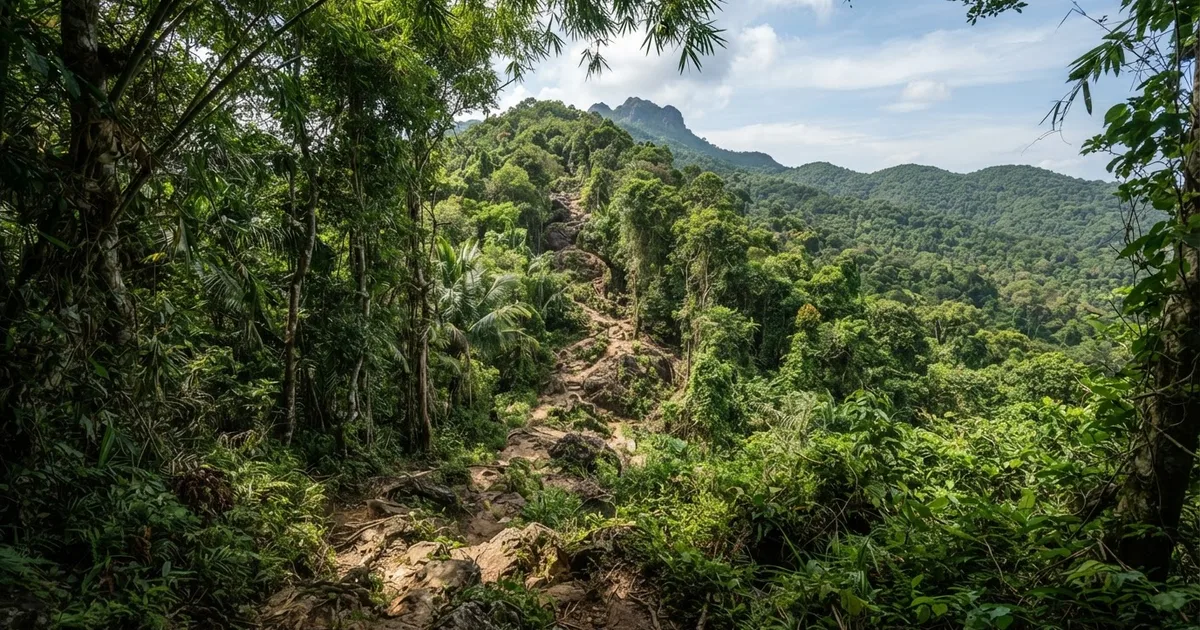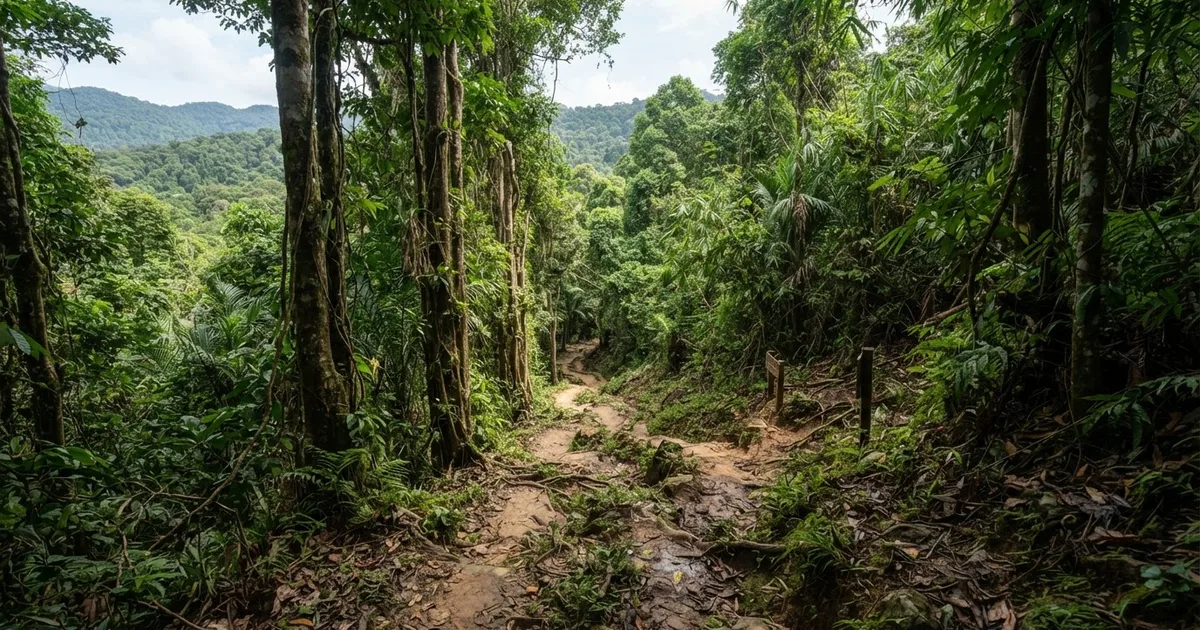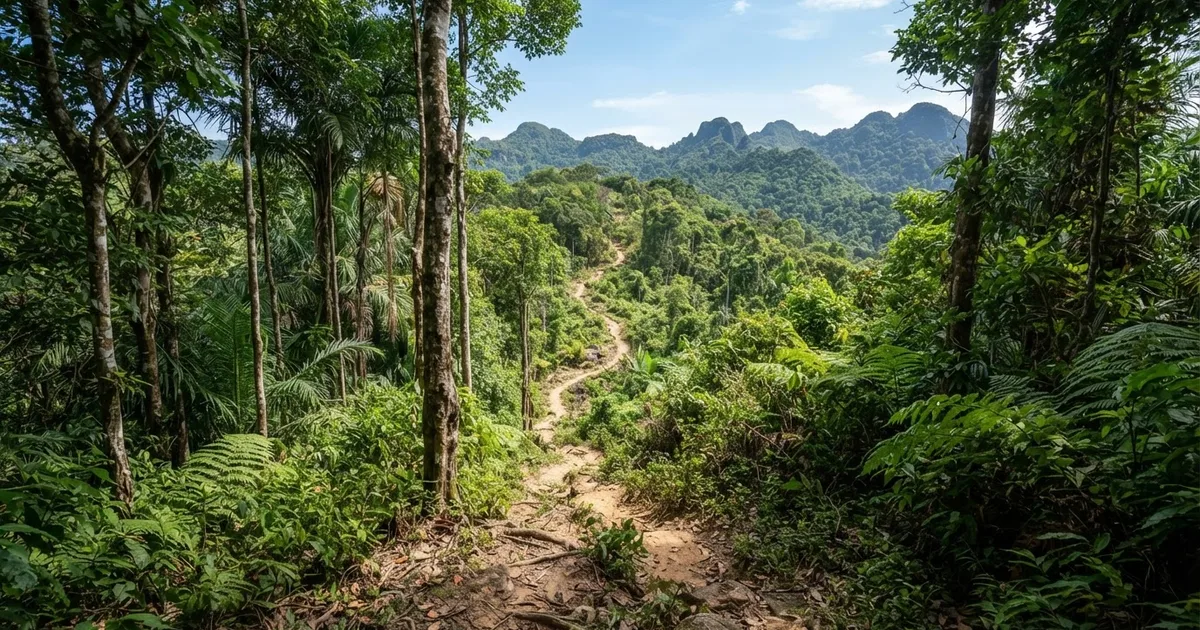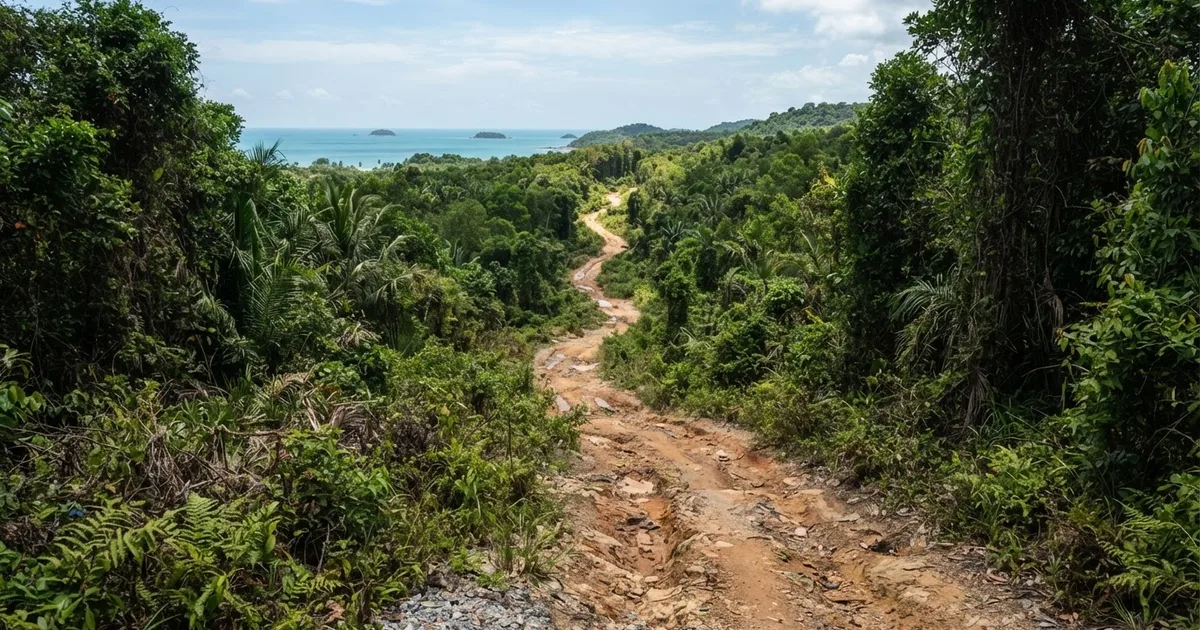
The Rach Tram Jeep Trails are an easy, approximately 1.5-hour forest and off-road outing in the far northeast of Phu Quoc. They suit travelers who want a short remote nature experience by 4x4 jeep, dirt bike or bicycle, rather than a technical hike or demanding jungle trek. Visit during the drier period from November to April, when tracks and stream crossings are generally more manageable.
What are the Rach Tram Jeep Trails like?
Rach Tram Jeep Trails are a network or route area rather than a single precisely measured hiking path. They run through the far northeast of Phu Quoc, where the landscape is considerably quieter and less developed than the island's main beach areas. The route is associated primarily with 4x4 jeep tours, dirt bikes and cyclists, so the experience is closer to a forest-road adventure than to a marked mountain hike.
The estimated outing takes about 1.5 hours. That figure should be treated as a practical guide, not a fixed timetable: the route length can vary, and a tour can take longer if the driver stops for photographs, explores side tracks or adjusts the route for weather and surface conditions. Its short duration also makes Rach Tram easy to combine with other northern sightseeing rather than treating it as a full-day expedition.
The main appeal is the contrast with busy resort districts. Expect vegetation, rougher tracks, a feeling of remoteness and occasional views of the natural landscape rather than shops, paved promenades or a continuous series of attractions. The trail is worth considering if you want to see a less developed side of Phu Quoc without committing to several hours of strenuous walking.
Important expectation: “Easy” does not mean identical to a paved road. A forest track can still contain loose soil, puddles, roots, ruts and slippery sections after rain. The difficulty rating describes the overall outing; it does not guarantee dry or smooth ground on every visit.
How difficult are the Rach Tram Jeep Trails?
Rach Tram is generally described as an easy forest and off-road route. Most visitors should think of it as a low-intensity nature excursion, especially when traveling in a jeep. You do not need specialist climbing ability, advanced trekking experience or exceptional fitness for the usual route. The short estimated duration also limits the amount of sustained physical effort compared with longer national park walks.
Difficulty changes according to how you travel. In a 4x4 jeep, the vehicle handles the rough surface and your main challenge is staying comfortable while moving over uneven ground. On a dirt bike, the route demands more active control, braking and balance. Cyclists must manage the surface themselves and may find wet soil, ruts or inclines more tiring than the easy label suggests. Walking the entire area is practical only where the current route and conditions make it suitable; Rach Tram should not automatically be treated as a formal, waymarked hiking trail.
The trail is a poor fit for anyone expecting a technical off-road course, a high-altitude trek or a clearly signed hiking circuit with fixed distances. It is also less suitable for visitors who dislike bouncing vehicle rides, muddy surfaces or uncertain route details. Families and beginners may enjoy it when conditions are dry and the vehicle operator chooses an appropriate track, but young children should remain supervised and follow the driver's safety instructions.
| Traveler or activity | Suitability | Why |
|---|---|---|
| First-time nature visitor | Good fit | Short, easy and accessible with a jeep |
| Experienced dirt-bike rider | Good fit with local guidance | Offers a rougher surface without being promoted as technical |
| Casual cyclist | Possible in dry conditions | Surface, heat and route changes can increase effort |
| Technical trekker | Poor fit | The route is rated easy and is not primarily a demanding hike |
| Traveler seeking a paved attraction | Poor fit | Expect natural tracks, uneven ground and limited facilities |
What should you expect on the route?
The first thing to expect is a transition from ordinary island roads into a more natural and less predictable setting. Track quality can change quickly. One section may feel like a broad dirt road, while another may be narrower, softer or marked by vehicle ruts. The experience depends on recent rainfall, the vehicle being used and the specific route selected on the day.
Do not plan Rach Tram around a large number of built attractions. This is primarily an environmental and off-road experience. The value lies in reaching a quiet northeastern landscape, traveling through forest surroundings and seeing a side of Phu Quoc that is less urbanized than the resort coast. Photographs may be possible at suitable stops, but the route should not be treated as a guaranteed viewpoint circuit.
Facilities can be limited once you leave developed areas. Carry drinking water, sun protection and any personal medication before entering the trail area. A small waterproof bag is useful for phones and cameras because tropical showers can arrive quickly, and mud or spray from a jeep can reach passengers even when the weather initially looks clear.
Useful items to bring
- At least one bottle of drinking water per person for a short outing
- Closed shoes with soles that grip wet or loose ground
- Light, breathable clothing that can get dusty or muddy
- Sun protection, including a hat and sunscreen
- Insect repellent for forest sections
- A waterproof pouch for phones, wallets and cameras
- A basic first-aid supply for minor scrapes
Clothing should be practical rather than fashionable. Flip-flops are a poor choice if you will walk beside the vehicle or inspect a track, because wet soil and uneven ground make slips more likely. If you ride a dirt bike, use a properly fitting helmet and ask about the condition of the bike, brakes and tires before departure.
When is the best time to visit Rach Tram?
The best broad season for trekking and off-road nature outings on Phu Quoc is the dry season from November to April. Another national park guide identifies November to March as the most reliably dry and sunny period. These months generally offer more comfortable conditions for forest tracks, easier photography and a lower chance that recent rain will turn a route into a deep muddy section.
October to April is also commonly used as the preferred window for other Phu Quoc forest trails. That does not make every day dry: tropical weather can still change, and a storm before your visit may affect the surface. Check local conditions on the morning of departure and confirm whether the selected track is open and suitable for your vehicle.
The rainy season can make Rach Tram less predictable. Mud, puddles and soft ground may slow a jeep, bicycle or dirt bike, while heavy rain can make walking beside the route uncomfortable. The trail is not automatically impossible in wet weather, but the experience becomes more dependent on local knowledge and the condition of the vehicle. Travelers who want the simplest version of the outing should prioritize November to March.
Best conditions
November to March usually offers the best chance of dry, sunny weather and firmer tracks.
Acceptable planning window
November to April covers the wider dry-season recommendation for Phu Quoc nature trips.
More caution needed
During the rainy season, ask locally about mud, standing water and the route selected that day.
How should you reach and organize the outing?
Because Rach Tram is in the far northeast and the route length can vary, organizing the transport matters more than following a standard urban itinerary. The trails are mainly used by 4x4 jeep tours, dirt bikes and cyclists. A local driver or guide can select a route that matches current ground conditions and your preferred level of activity.
A 4x4 jeep is the most straightforward choice for visitors who want to observe the landscape without riding themselves. It is also the more comfortable option for travelers with limited off-road experience. Dirt bikes offer more independence and a stronger sense of adventure, but they require confident handling on uneven surfaces. Cycling can work for fit visitors in dry conditions, although heat, distance and track quality should be confirmed before setting out.
There is no published information in the available trail description confirming a permit requirement for Rach Tram Jeep Trails. That should not be interpreted as permission to enter every forest track without checking. Access arrangements, local restrictions, weather closures and vehicle availability may change. Ask a local operator about the current route before departure, especially if you are traveling independently or plan to leave a main road.
Build flexibility into your schedule. The stated trail time is about 1.5 hours, but travel to the far northeast, loading a vehicle, photography stops and weather-related changes can extend the total outing. Avoid booking a tight airport transfer or another fixed-time attraction immediately afterward.
How does Rach Tram compare with other Phu Quoc trails?
Rach Tram is best understood by comparing it with the more established forest walks on the island. The Central National Park Trail, also called the Rung Giong Trail, is a 4-kilometer route that is more challenging in practical terms because it includes six stream crossings and slippery paths. It is often described as relatively flat and suitable for families and beginners, but it still requires better footing and more time than a short jeep outing.
The Central National Park Trail usually takes about 2 to 3 hours round trip. A hiking stick is recommended for support, particularly around wet or uneven sections. During the rainy season, rising streams and the lack of bridges increase the risk of accidents. Its overall grading varies between easy to moderate, but reasonably fit travelers without special experience can generally manage it when conditions are favorable.
Cua Can area trails are a more substantial option for visitors who want a longer walk. They are described as moderate, with loop options of up to 10 kilometers taking approximately 5 to 6 hours. That is a major increase in time and effort compared with the approximately 1.5-hour Rach Tram outing. Cua Can beach itself is much easier: the main beach walk takes about 15 minutes, and you do not need a motorbike once you reach the village.
Cua Can's forest and local tracks can also become muddy in the rainy season, making some sections less straightforward to ride or walk. Choose it for a longer, more active day; choose Rach Tram for a shorter remote experience with a vehicle.
| Route | Typical difficulty | Time or distance | Best for |
|---|---|---|---|
| Rach Tram Jeep Trails | Easy | About 1.5 hours; variable length | A short off-road nature outing |
| Central National Park Trail | Easy to moderate | 4 kilometers; about 2 to 3 hours round trip | A short forest walk with six stream crossings |
| Cua Can area trails | Moderate | Loops up to 10 kilometers; about 5 to 6 hours | Longer hiking and a more active day |
| Cua Can beach walk | Easy | About 15 minutes | A simple coastal stroll after reaching the village |
Rach Tram is therefore a poor fit for hikers who want a measured 4-kilometer route, repeated stream crossings or a half-day walking challenge. Conversely, the Central National Park Trail and the longer Cua Can loops may disappoint visitors who want almost all of their time spent riding or touring rather than walking.
Safety advice for a forest and jeep outing
Use a vehicle and route that match the conditions. A 4x4 jeep is generally preferable to a small road scooter on rough forest tracks, while dirt-bike riders should have suitable experience and protective equipment. Confirm that passengers have secure seating and that the driver knows the route. Do not pressure a driver to continue onto a flooded or badly eroded section simply to complete a planned loop.
Wear closed footwear and keep both hands free when walking on wet ground. Roots, loose stones and mud can be difficult to see beneath leaves or shallow water. If the route includes a stream or standing water, test the surface before stepping across and follow local instructions. The same principle is particularly important on the Central National Park Trail, where six stream crossings and slippery paths are part of the experience.
Heat and hydration remain relevant even during a short trip. The estimated 1.5-hour duration does not include travel to the trail, waiting time or stops, so carry enough water for the complete excursion. Keep your phone protected, but do not rely on a signal for navigation or emergencies in a remote forest area. Tell someone your approximate plan if you are traveling independently.
Respect the forest by staying on established tracks, taking rubbish back with you and avoiding damage to plants or wildlife. Do not enter closed areas or remove natural material. A quiet route is an opportunity to observe the environment, not a reason to drive aggressively or create unnecessary noise.
Is Rach Tram worth visiting?
Rach Tram is worth visiting if your priority is an easy, short and remote nature outing. The approximately 1.5-hour estimate makes it accessible to travelers who do not want a full-day trek, while the use of jeeps, dirt bikes and bicycles adds a practical off-road element. It can be a good choice for a northern itinerary that already includes other stops and for visitors who want scenery away from the main resort areas.
It is not the strongest choice for travelers seeking a technical challenge, a long marked hike or a destination with extensive facilities. The route length varies, there is no confirmed published permit information, and conditions can change after rain. Those limitations are part of why local confirmation is useful before setting out.
Simple verdict: Choose Rach Tram for a low-difficulty forest adventure in a remote corner of Phu Quoc. Choose the Central National Park Trail for more walking and stream crossings, or the Cua Can loops for a moderate half-day hike of up to 10 kilometers.
Frequently Asked Questions
How difficult are the Rach Tram Jeep Trails?
Rach Tram is generally rated easy. The route is mainly used by 4x4 jeeps, dirt bikes and cyclists, and the typical outing takes about 1.5 hours. Surface conditions can still include mud, ruts, roots and puddles, so easy does not mean paved or completely smooth.
How long do the Rach Tram Jeep Trails take?
The estimated trail outing takes about 1.5 hours, but the route length is variable. Driving time to the far northeast, photo stops, side tracks and weather-related changes can extend the overall excursion. Leave spare time rather than scheduling another fixed activity immediately afterward.
What is the best month or season for Rach Tram?
The recommended period is the dry season from November to April. November to March is often identified as the most reliably dry and sunny part of that window. Rain can still occur, so confirm local track conditions before departure, particularly if you plan to cycle or ride a dirt bike.
Do you need a permit for the Rach Tram Jeep Trails?
The available trail description does not mention a permit requirement for Rach Tram. However, that is not confirmation that every forest track is freely accessible. Ask a local operator about current access rules, closures and route conditions before entering remote areas independently.
Are the Rach Tram trails suitable for families and beginners?
They can suit families and beginners when conditions are dry and a suitable jeep route is selected. Passengers do not need advanced trekking experience, but children should be supervised and everyone should wear secure footwear. Travelers expecting a paved or highly developed attraction may find the uneven tracks uncomfortable.
Can you walk the Rach Tram Jeep Trails?
Rach Tram is primarily described as a route for jeeps, dirt bikes and cyclists, not as a fixed, waymarked hiking circuit. Some walking may be possible, but the practicality depends on the current track and access. Confirm the exact walking option locally rather than assuming that the full variable route is suitable on foot.
How does Rach Tram compare with the Central National Park Trail?
Rach Tram is shorter and more vehicle-focused, taking about 1.5 hours. The Central National Park Trail is a 4-kilometer forest walk that usually takes 2 to 3 hours round trip and includes six stream crossings with slippery paths. Choose the Central Trail if you want more walking and a greater footing challenge.
Is Rach Tram suitable during the rainy season?
It may be possible, but rain makes the experience less predictable. Mud, puddles and soft sections can affect jeeps, bicycles and dirt bikes, while heavy rain can make walking uncomfortable. The dry season from November to April is the safer planning choice, and local advice should guide any wet-season departure.
Want current trail conditions, a suitable vehicle or help combining Rach Tram with a northern Phu Quoc itinerary? Contact Sabrina Rental for local advice and booking assistance.
Contact Sabrina Rental