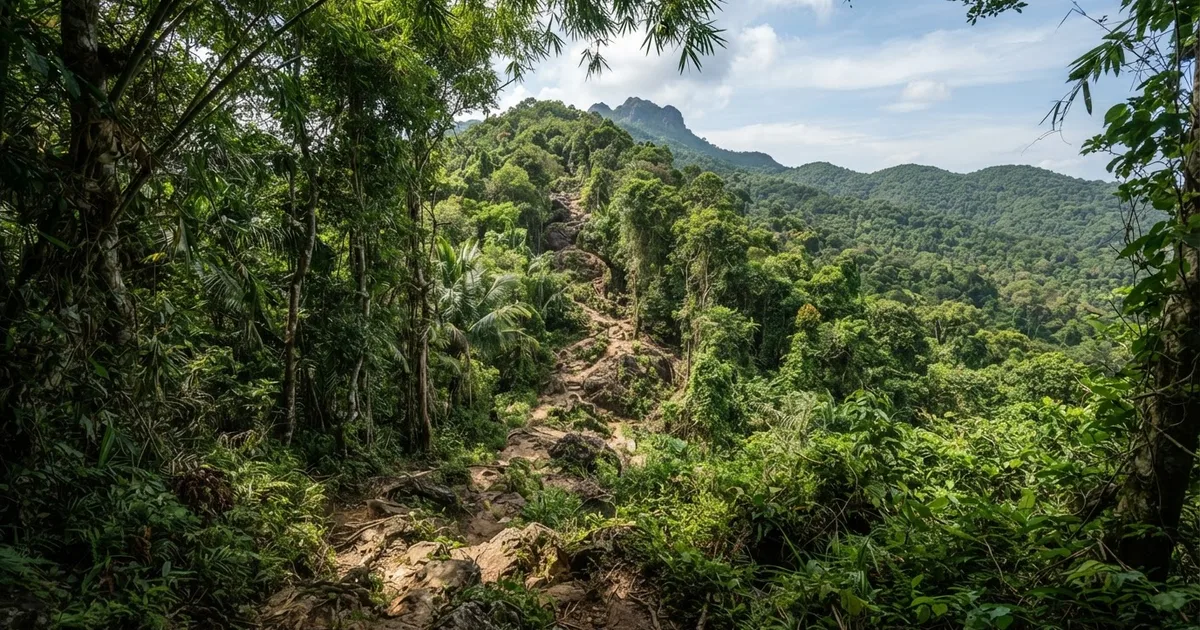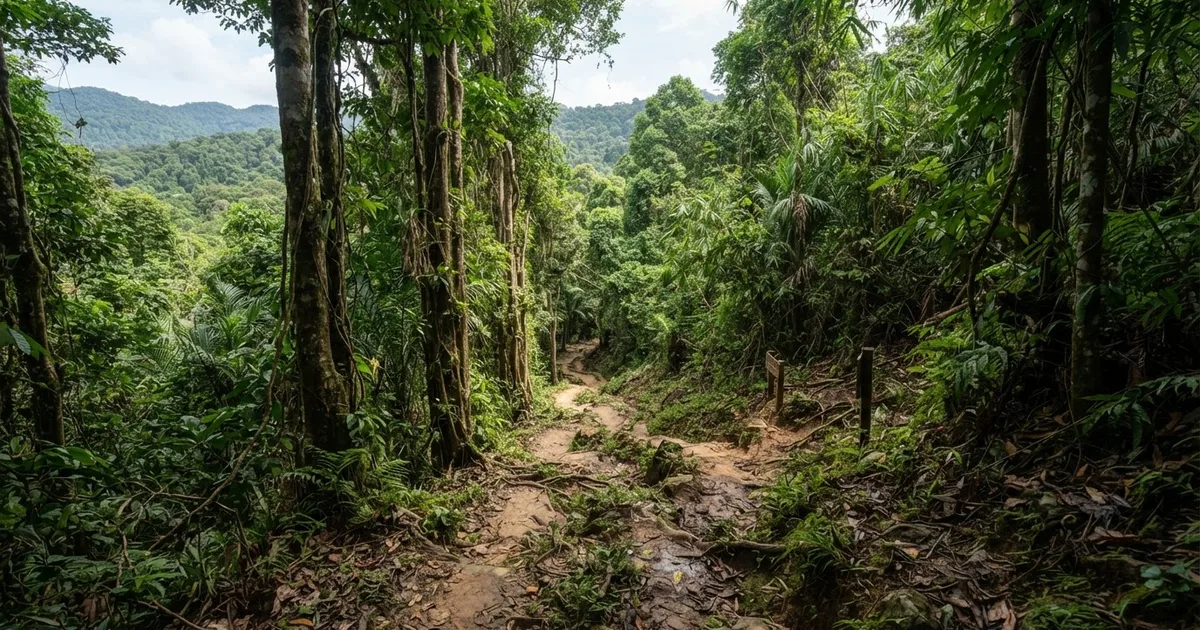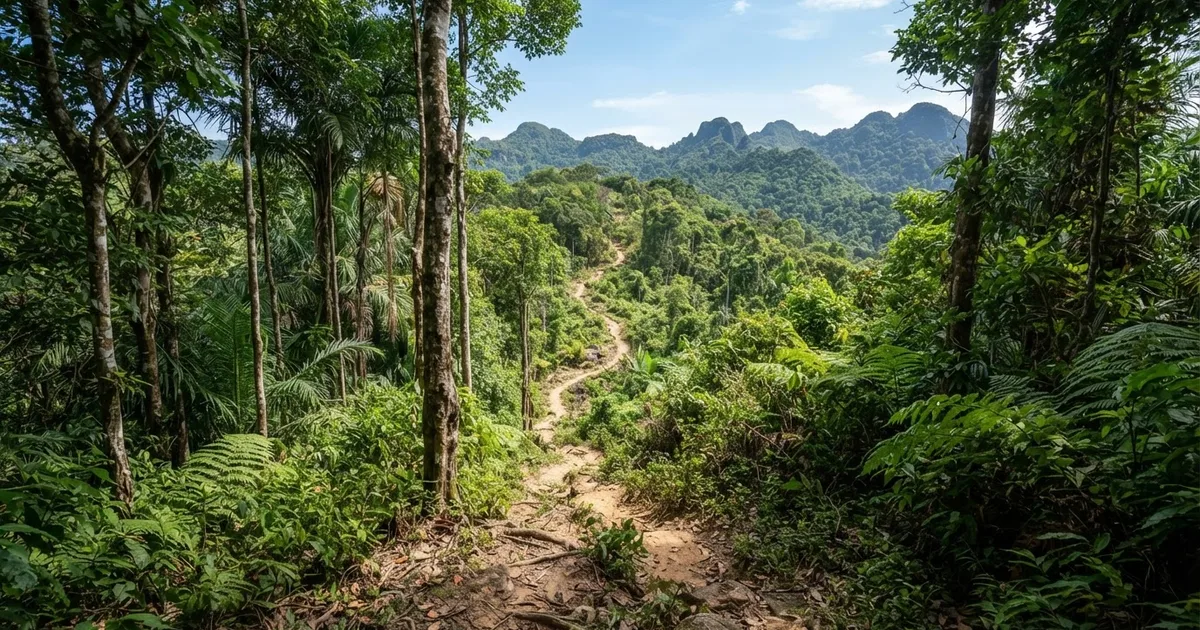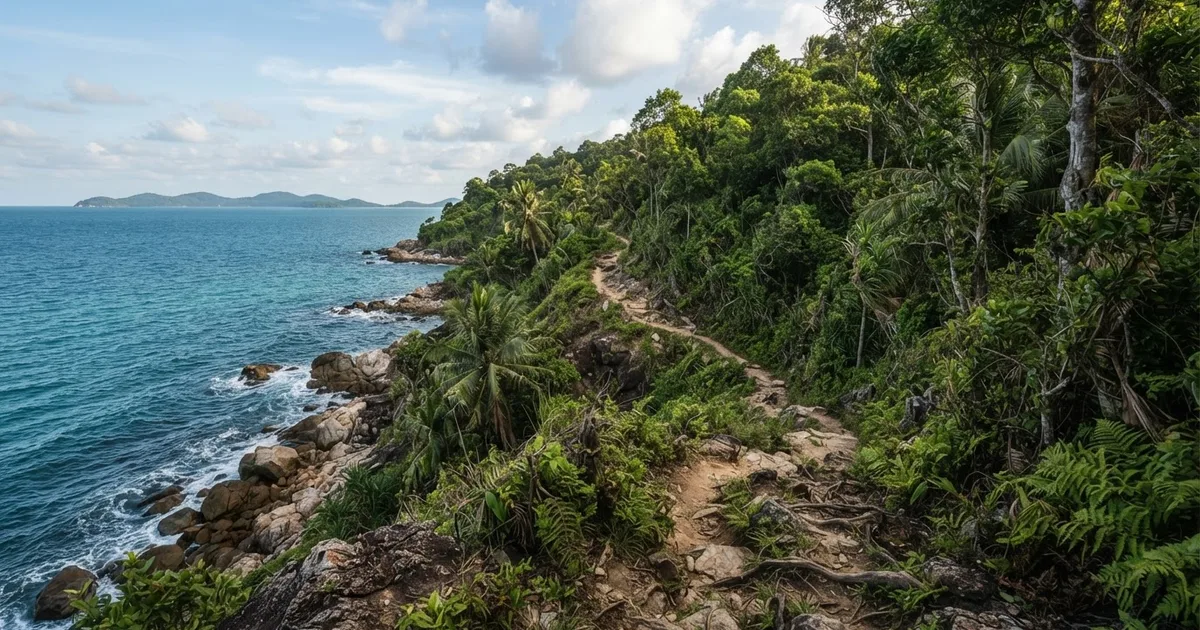
Ganh Dau Trail is an easy to easy-moderate forest walk in Phu Quoc National Park. Its short core section is approximately 500 metres, while the commonly described full route is about 5 kilometres and takes roughly 2–3 hours round trip. The safest and most comfortable period is the dry season, particularly November to April; October and May can also work, but conditions should be checked locally.
How difficult is Ganh Dau Trail?
For most visitors, Ganh Dau Trail is an easy hike rather than a demanding trek. The route is relatively accessible to independent walkers, and the walking itself does not require advanced experience, technical equipment or exceptional fitness. Families, first-time hikers and travelers who want a short introduction to Phu Quoc’s forest are generally the best match.
Some guides classify the route as easy-moderate instead of simply easy. That difference reflects conditions rather than a steep mountain profile. After rain, exposed roots, damp soil and slippery sections can slow the walk considerably. A visitor who is comfortable walking for three hours on uneven ground should normally find the route manageable, but the experience is less effortless when the forest floor is wet.
Ganh Dau Trail is a poor fit for travelers who need a fully paved, wheelchair-friendly route, anyone wearing smooth-soled sandals, or visitors expecting a strenuous summit hike. It is also not the right choice for a careless rainy-day walk: muddy footing and reduced visibility can turn an easy route into an uncomfortable or unsafe outing.
Good fit
Beginners, families with older children, independent walkers and travelers with 2–3 hours available.
Less suited to
People seeking a challenging trek, fully accessible paths or a guaranteed dry and quiet walk during peak visitor periods.
Distance, duration and what the route descriptions mean
The most useful way to understand Ganh Dau Trail is to separate its short core section from the longer walking itinerary. The core is approximately 500 metres, which explains why some descriptions present the trail as a very brief, accessible forest walk. Other guides refer to a full route of about 5 kilometres and a round-trip walking time of approximately three hours. These figures are not necessarily contradictory: they can describe different turnaround points, connecting paths or route interpretations within the wider forest area.
| Planning detail | Practical figure | What it means |
|---|---|---|
| Core section | About 500 metres | A short introduction to the forest and a realistic option when time is limited. |
| Full route | About 5 kilometres | A longer out-and-back walk, usually requiring more time and attention to footing. |
| Typical duration | 2–3 hours round trip | Allow extra time for photographs, rests, slow walking and route-finding. |
| Difficulty | Easy to easy-moderate | Low physical demand, but uneven and slippery ground can affect the pace. |
Do not plan the day around a precise pace. A strong walker may finish more quickly, while families, photographers and visitors walking after rain may need the full three hours or more. Start with enough daylight to return without rushing, and agree on a turnaround time before entering the longer section. If local signs or staff identify a different route length on the day, follow the current local information rather than relying on an online distance estimate.
What should you expect on the walk?
Ganh Dau Trail is primarily a forest experience rather than a viewpoint-focused climb. Expect a relatively low-effort walk through tropical vegetation, with stretches of shaded trail and a natural surface underfoot. The main interest is the change from developed coastal areas to the quieter landscape of Phu Quoc National Park. The route is suitable for observing forest textures, listening for birds and taking photographs, but wildlife sightings are never guaranteed.
The ground may include roots, stones, compacted earth and muddy patches. The route is widely described as relatively flat, so the challenge is usually balance and surface conditions rather than sustained uphill exertion. In the wet months, water can collect on the path and visibility may drop beneath heavy weather. Even in the dry season, tread carefully around roots and avoid stepping on unstable edges.
Because Ganh Dau is described as one of the island’s most popular and accessible trails, it may not feel remote. Crowding is possible, especially at convenient times of day and during busy travel periods. Visitors seeking solitude should go early, keep noise low and avoid assuming that an advertised forest trail will be empty. Those who prefer a more demanding experience may find Ganh Dau too gentle; the 4-kilometre Central National Park Trail, also called Rung Giong Trail, involves six stream crossings and slippery paths and is more challenging.
Useful expectation: Treat the 500-metre core as a short nature walk, but prepare for the full outing as a 5-kilometre uneven-surface hike. That approach prevents both under-preparation and unrealistic expectations about the route.
When is the best time to hike Ganh Dau Trail?
Recommendations generally place the best season between October and May, while more cautious guidance favors the dry season from November through April. For the most reliable combination of safer footing, lower mud levels and better visibility, plan for November, December, January, February, March or April. October and May can be pleasant shoulder-season months, but rainfall may still affect the surface.
Some 2026 trekking guidance says routes can close during the monsoon months of September and October because paths become slippery and visibility deteriorates. Other descriptions list October to April as the dry-season trekking period. Since seasonal boundaries vary from year to year, do not treat a calendar date as a guarantee that the trail is open. Check current conditions before departure, particularly after heavy rain.
| Period | Likely conditions | Planning advice |
|---|---|---|
| November–April | Generally the most dependable dry-season window. | Best choice for a first visit or a family walk. |
| October and May | Shoulder-season conditions can change quickly. | Check rainfall, access and trail advice on the day. |
| September–October during monsoon conditions | Slippery paths, poorer visibility and possible closures. | Do not enter if local authorities or guides advise against hiking. |
Begin in the morning when possible. Earlier hours usually give you more time to complete the route before afternoon weather changes, and an early start can reduce exposure to the busiest periods. Carry enough water regardless of the season: the 2–3-hour estimate includes walking time, not necessarily convenient refreshment stops inside the forest.
What to bring and how to stay safe
Wear closed walking shoes with a firm, textured sole. Lightweight trousers can provide more protection from vegetation and insects than shorts, while a breathable shirt and a compact rain layer are useful in a tropical forest. Bring drinking water, sun protection for exposed moments, insect repellent, a small first-aid kit and a phone in a waterproof pouch. Pack out every item you bring in.
Before leaving
- Check whether the route is open and whether recent rain has affected access.
- Save the meeting point or access details before entering areas with weak signal.
- Tell someone your intended route and expected return time.
- Wear grippy shoes rather than smooth sandals or fashion sneakers.
- Carry water for at least the planned 2–3-hour outing.
On the trail
- Walk slowly on roots, stones and muddy descents.
- Stay on the established path and do not cross swollen watercourses.
- Keep children within sight, particularly near slippery edges.
- Turn back if rain makes footing unstable or visibility falls sharply.
- Leave wildlife, plants and natural features undisturbed.
Ganh Dau does not demand the hiking stick recommended for the more difficult Central National Park Trail, but a compact walking pole can still help visitors who are less confident on wet ground. If you encounter rising water, a washed-out section or an unclear junction, safety is more important than completing the full 5-kilometre itinerary. The short core section may be the sensible turnaround point.
There is no listed fee for Ganh Dau Trail, and most recreational day walks in Phu Quoc National Park do not require a special permit. That does not mean every access arrangement is permanently free or unchanged. Entrance controls, temporary closures, conservation rules and local directions can vary, so confirm the current position before setting out.
How does Ganh Dau compare with other Phu Quoc forest walks?
Ganh Dau is a strong choice when accessibility and a manageable time commitment matter most. Its approximately 500-metre core makes it easier to sample the forest, while the longer route gives reasonably fit visitors a 5-kilometre option lasting around 2–3 hours. It is therefore more flexible than a route that requires committing to a long day in the forest.
| Route | Difficulty and length | Best for | Important limitation |
|---|---|---|---|
| Ganh Dau Trail | Easy to easy-moderate; 500-metre core or about 5 kilometres full route; 2–3 hours. | Beginners, families and independent walkers. | Can be crowded; surfaces become slippery after rain. |
| Central National Park Trail, or Rung Giong Trail | About 4 kilometres; easy-moderate to more challenging; around 2–3 hours in many descriptions. | Reasonably fit travelers wanting stream crossings and a more active walk. | Six streams, slippery paths and no bridges in some sections can raise accident risk during rain. |
| Cua Can area trails | Moderate; loops can reach 10 kilometres and take about 5–6 hours. | Experienced walkers wanting a longer forest outing. | Poor fit for visitors with only a short free window or limited endurance. |
Choose Ganh Dau if you want the most approachable independent route and are comfortable with the possibility of other visitors. Choose the Central National Park Trail if the appeal is a more physical walk with stream crossings, but avoid it during rising-water conditions. Choose a Cua Can loop only if you have the time, fitness and preparation for a moderate 5–6-hour outing. None of these options should be treated as interchangeable after heavy rain.
How to plan a half-day visit
Reserve at least half a day rather than squeezing Ganh Dau into a tightly timed transfer. The advertised 2–3 hours refers to the walk, and you may also need time for transport, finding the access point, preparing gear and taking breaks. An early start is practical for avoiding the hottest part of the day and for leaving a weather margin.
Before departure, decide whether you are aiming for the 500-metre core or the longer 5-kilometre route. This simple choice affects your water, footwear, turnaround time and expectations. Families with young children or travelers arriving after rain may prefer the core section. A reasonably fit adult group visiting in the dry season can consider the full route if current conditions and local directions support it.
Keep the itinerary flexible. If the trail is crowded, wet or temporarily restricted, a shorter walk is better than rushing. If you are renting a motorbike or arranging local transport, confirm parking, return timing and the latest access information in advance. Sabrina Rental can help with practical island planning, including local transport questions and checking the most suitable option for your available time.
Frequently Asked Questions
Is Ganh Dau Trail suitable for beginners?
Yes. Ganh Dau is generally rated easy, or easy-moderate when conditions are wet, and is one of Phu Quoc’s most accessible independent walks. Beginners should allow 2–3 hours for the longer route, wear shoes with good grip and avoid hiking if heavy rain has made roots, mud or slopes unstable.
How long is Ganh Dau Trail?
The core section is approximately 500 metres, while the full route is commonly described as about 5 kilometres. The difference reflects the route section or turnaround point being used. Ask locally which section is open and follow current signs rather than assuming every online description refers to exactly the same path.
How long does the hike take?
Plan on approximately 2–3 hours for a round trip on the commonly described full route. A short visit focused on the 500-metre core can take much less time, while slow walking, photographs, family breaks, muddy conditions or route checks can extend the outing beyond three hours.
What months are best for Ganh Dau Trail?
The broad recommended window is October to May, but November to April is usually the safer dry-season choice. Some 2026 guidance warns that trails may close during monsoon conditions in September and October. Check current weather and access information, especially in October and after heavy rain.
Does Ganh Dau Trail charge an entrance fee or require a permit?
No separate cost is listed for Ganh Dau Trail, and most recreational day walks in Phu Quoc National Park do not require a special permit. Access rules can change, however. Confirm current fees, closures and any local conservation instructions before beginning the walk.
Can children hike Ganh Dau Trail?
Many families can manage the relatively flat, easy route, especially the approximately 500-metre core section. Children still need close supervision because roots, stones and wet ground can be slippery. Choose dry conditions, closed shoes and a shorter turnaround if children become tired or the path becomes muddy.
Is Ganh Dau Trail crowded?
It can be. Ganh Dau is described as one of the island’s most popular and accessible trails, so visitor numbers may increase at convenient times and during busy travel periods. Start early, keep noise low and expect a shared nature experience rather than guaranteed solitude.
How does Ganh Dau compare with the Central National Park Trail?
Ganh Dau is generally easier and more flexible, with a 500-metre core or about 5 kilometres for the longer route. The Central National Park Trail is about 4 kilometres but involves six stream crossings and slippery paths, making it more challenging. A hiking stick is recommended there, particularly when conditions are wet.
Should I hike Ganh Dau Trail during the rainy season?
It is better to postpone if rain is heavy or recent rainfall has caused slippery paths, poor visibility or rising water. Monsoon guidance warns of possible closures during September and October. If the trail is officially open, check conditions locally, carry rain protection and turn back when footing or visibility becomes unsafe.
Want help choosing the right forest walk, arranging transport or checking current island conditions? Contact Sabrina Rental for practical local assistance before your Ganh Dau visit.
Contact Sabrina Rental