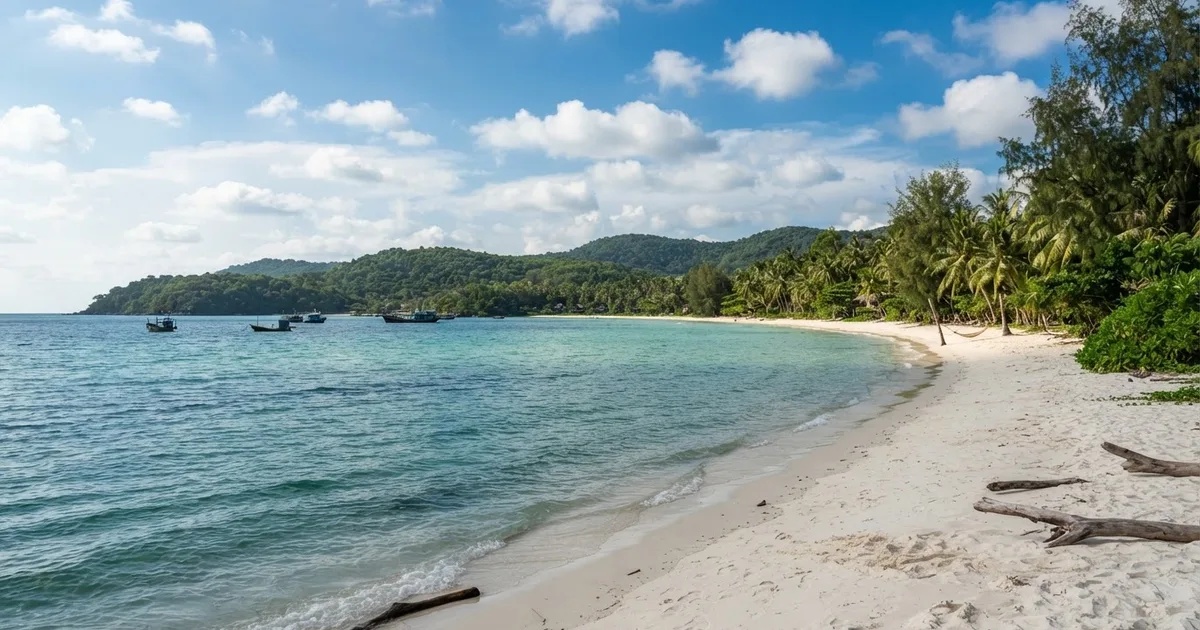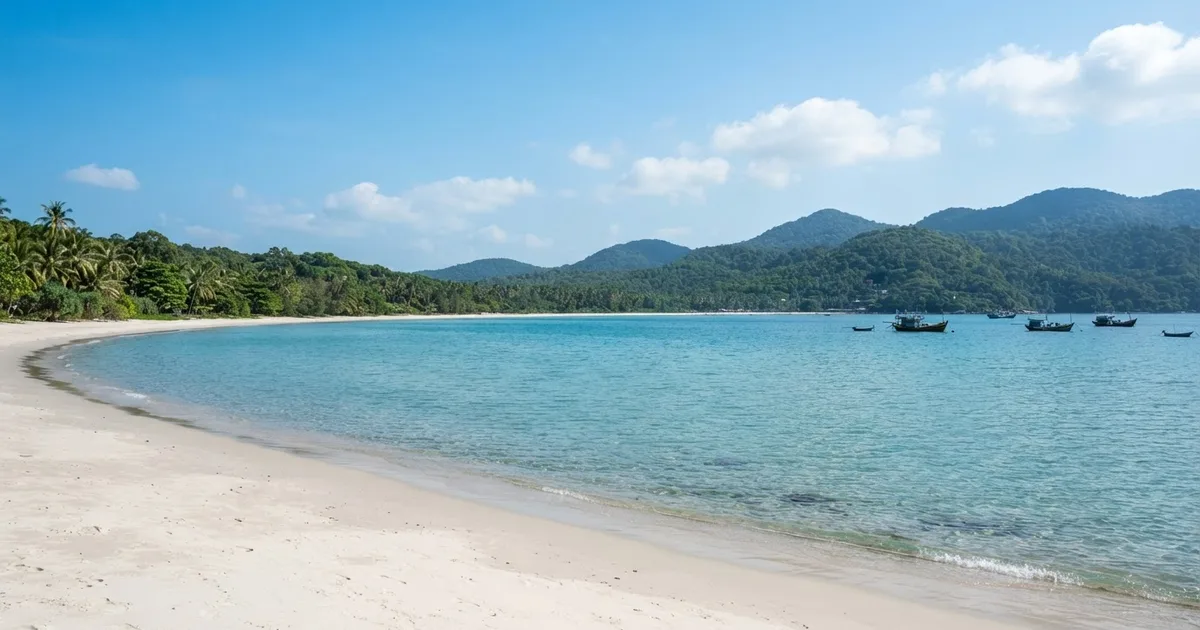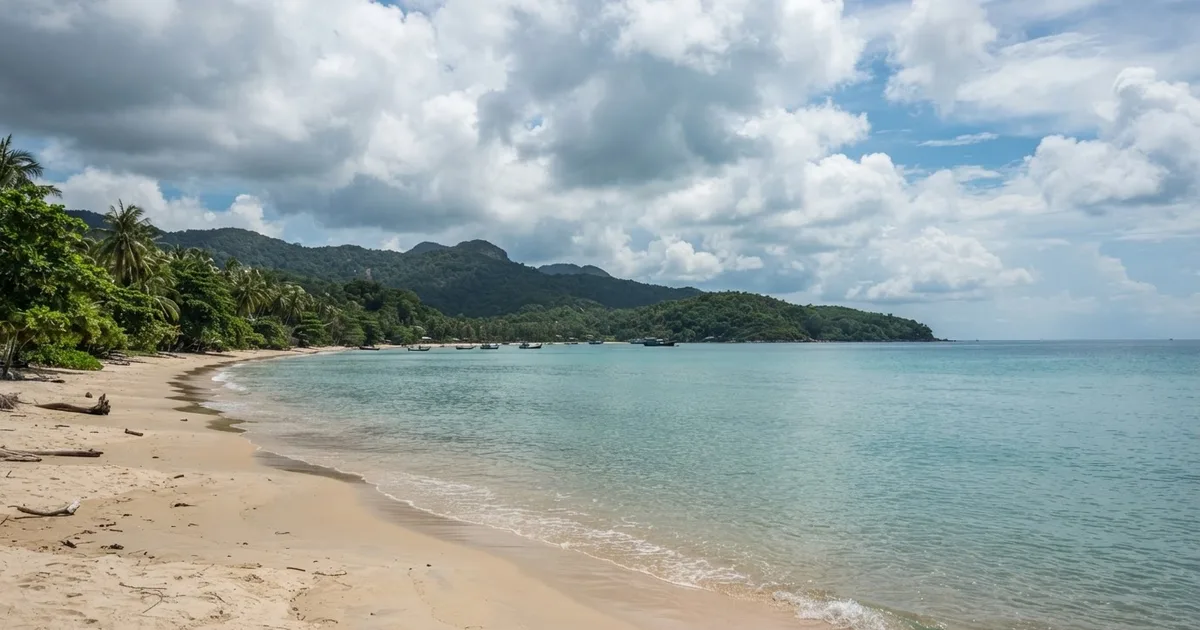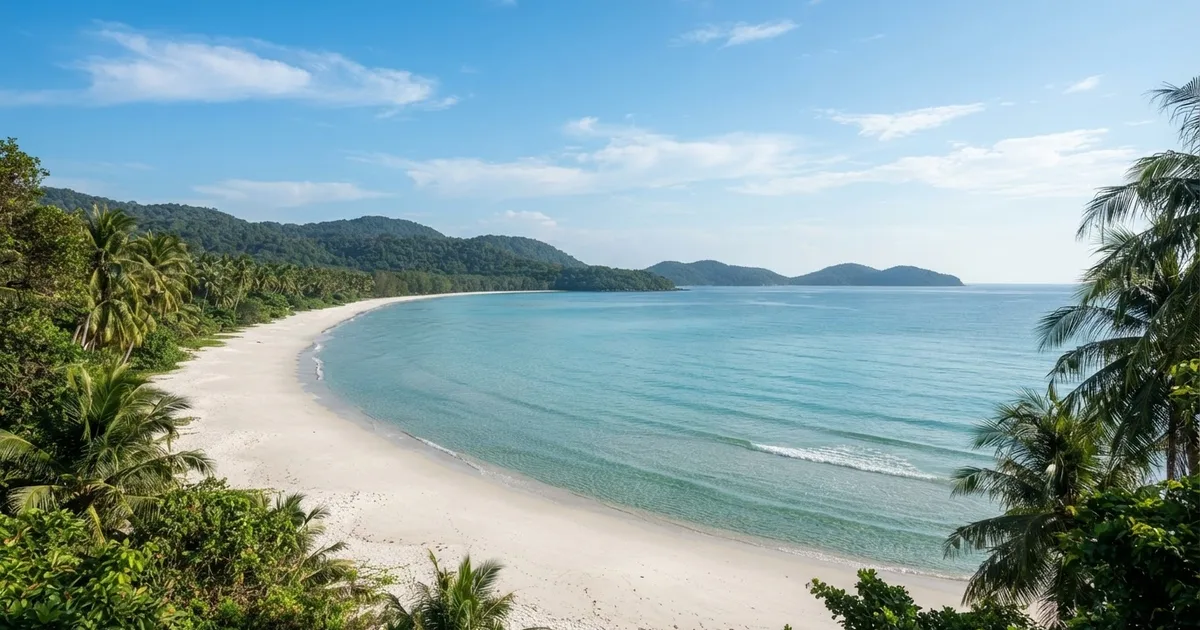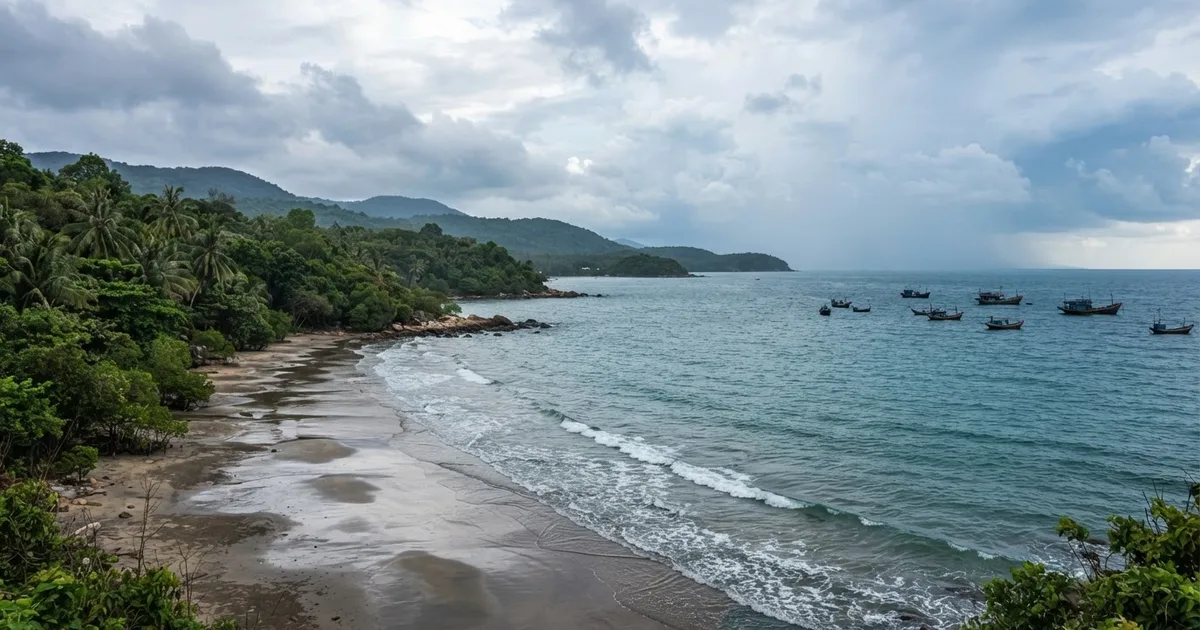
September is the wettest, quietest and cheapest month of the year on Phu Quoc. Expect highs near 86°F (30°C), lows around 80°F (27°C), 15-22 rainy days, roughly 5 hours of sunshine per day and humidity near 85%, with monthly rainfall reported anywhere from 257 mm to 557 mm depending on the source. In return you get the lowest hotel prices of the year, near-empty beaches, and rough seas that rule out most snorkelling and diving.
What September Weather on Phu Quoc Is Really Like
September sits at the tail end of Phu Quoc's southwest monsoon. The island is still firmly inside its wet season, but it is also a transition month: precipitation starts to ease and sunshine hours begin to climb again as the weeks pass. If you are choosing between September and October, September usually has the edge, because many climate datasets show October with the heavier rain.
Temperatures barely move all month. Expect average highs around 86°F (30°C) and average lows near 80°F (27°C), with most forecasts quoting a daily range of 25-31°C. Humidity hovers around 85%, which makes the air feel considerably heavier than the thermometer suggests, especially in the hour before a storm breaks.
Rainfall is where the numbers get genuinely wide, and it is worth knowing why. Weather2Travel puts September at 282 mm with about 20 days seeing some rainfall. VinWonders reports 257 mm spread over 17 rainy days. EaseWeather's dataset is far wetter, at 557.3 mm with more than 20 rainy days. The practical takeaway: budget for somewhere between 250 mm and 560 mm depending on the year and the measuring station, and expect 15-22 days in the month to see rain. Even the driest of those figures is roughly five times January's 51.2 mm.
Sunshine drops to about 5 hours per day, the lowest figure of the year and less than half of January's 10-11 hours. That does not mean five hours of uninterrupted blue sky. It means five hours of usable sun, usually stitched together in the morning and again in the late afternoon, with the middle of the day given over to cloud and rain.
How the Rain Actually Falls (and How to Plan a Day Around It)
September rain on Phu Quoc rarely means a solid grey week. It usually arrives as heavy, short-lived tropical downpours, often in the late afternoon or overnight, followed by clearing skies and steam rising off the roads. Some days are genuinely washed out. Most are not.
The rhythm most visitors settle into looks like this: beach or sightseeing early, back at the hotel or in a cafe by 2-3 pm, out again for dinner. Because the 5 hours of average sunshine are front-loaded, a 7 am start buys you far more usable weather than a 10 am one.
Timing within the month matters too. Vinpearl describes September as a transition month with decreasing precipitation and increasing sunshine hours, which means the last ten days of September are typically better than the first ten. If your dates are flexible, book late in the month.
One more practical habit: check a rain radar app such as Windy or RainViewer each morning. Phu Quoc's showers are localised. It can be pouring in Duong Dong while Bai Sao on the east coast stays completely dry, and the island is small enough to drive out of the rain in 20 minutes.
Tip: Book activities with free cancellation. In September, boat trips, diving and cable car packages are the bookings most likely to be cancelled by weather, and the operators who refund cleanly are worth paying a little more for.
Sea Conditions, Diving and Island Hopping in September
The sea is the biggest compromise of the month. PrivateTourAsia rates September as rough sea conditions, and diving visibility drops to just 3-5 m, against the 15-25 m that dry-season months can deliver. That is enough for a shallow discovery dive in sheltered water, but not for the underwater photography most people picture when they book a Phu Quoc dive.
What that means in practice:
- Island-hopping tours from An Thoi are frequently cancelled or rerouted when the swell picks up. The classic four-island snorkelling trip is the first casualty.
- The Hon Thom cable car, at roughly 7.9 km the longest over-sea cable car in the world, still runs in rain, but cabin views are limited and the water park at the far end is far less appealing in a downpour.
- Swimming is most comfortable on the west-coast beaches that face away from the southwest swell, such as Long Beach (Bai Truong) and Ong Lang. Watch for red flags and rip currents in the 24 hours after heavy rain.
- Kayaks, paddleboards and jet skis are hit and miss. Many rental operators simply close for the month.
There is one clear upside: the island's waterfalls are at their most dramatic. Suoi Tranh and the smaller Suoi Da Ban run strongest from July through September, when the dry-season trickle becomes a genuine cascade worth the short walk in.
Crowds, Prices and What Is Still Open
September is the cheapest month of the year to sleep on Phu Quoc. Sabrina Rental's own seasonal notes describe it as very low crowd season with rough sea conditions and the lowest hotel prices, and that matches what you see on booking sites: mid-range resorts that charge peak rates in January often drop into the $40-70 range, while budget guesthouses and homestays start at around $15-25 per night.
What those prices buy you:
- Beaches that are genuinely empty, especially Monday to Thursday.
- No queues at VinWonders, Vinpearl Safari or the Hon Thom cable car.
- Walk-in tables at the Duong Dong night market and the seafood restaurants along Tran Hung Dao.
- The best odds all year of negotiating a long-stay discount on a room or a monthly motorbike rental.
What slows down or closes:
- Some beach bars, dive shops and small tour operators shut for the low season, particularly around Ong Lang and on the quieter stretches of the east coast.
- Ferry and speedboat schedules to the An Thoi islands become more weather-dependent.
- Sunset cruises run less often, and some operators stop entirely.
Book accommodation with free cancellation, and if you plan to spend real time in your room, prioritise a covered balcony or a pool you can actually use in the rain over a sea view. In September, the room with the best view is not always the room with the best stay.
Riding a Motorbike in September Rain
A motorbike is still the best way to get around Phu Quoc in September. The main roads are paved and the distances are short, with the 50 km run from Duong Dong up to Ganh Dau taking about an hour. But the wet season changes the risk profile, and it is worth adjusting how you ride rather than skipping the bike altogether.
- Carry a rain poncho under the seat, not in your room. A clear sky can turn into a downpour in ten minutes.
- Slow down on curves and coastal roads. Wet asphalt plus sand washed across the surface equals very little grip, particularly between Ong Lang and Cua Can and on the red-earth stretches near Sao Beach.
- Avoid riding at night. Unlit stretches, standing water and local traffic make darkness the single biggest risk factor in September.
- Check brakes and tyres before you ride, and make sure the helmet you are given actually fits. A loose helmet in heavy rain is useless.
- If you are not a confident rider, take a Grab car instead. Fares within Duong Dong are typically 30,000-60,000 VND, about $1.20-2.40.
Rentals in the low season are cheaper and more negotiable than in January, and monthly rates for longer stays are often available. Ask about the condition of the tyres and whether the bike has been serviced recently, because September is the month when that question matters most.
Who September Suits - and Who It Does Not
A good fit if you are...
- A budget traveller. September has the lowest hotel prices of the year.
- Staying two weeks or more, so a few washed-out days do not ruin the trip.
- Happy with empty beaches, dramatic skies and storm photography.
- A remote worker or long-stay visitor who values quiet over guaranteed sun.
- Combining Phu Quoc with a city stop, so the island is not your only beach window.
Less suited to you if you are...
- A first-time visitor with only 3-5 days. With 15-22 rainy days, the odds of losing a full day are high.
- A diver or snorkeller. Visibility of 3-5 m is a fraction of dry-season conditions.
- Travelling with young children who need daily beach time.
- Planning a beach wedding, a boat charter or a proposal with a sunset backdrop.
- Someone who needs guaranteed sunshine to enjoy a holiday.
If you fall into the second group, January is the month you actually want. It is in the dry season, with average temperatures around 27.1°C, just 51.2 mm of rain over 8.7 rainy days, and 10-11 hours of sunshine daily - ideal for swimming, sightseeing, snorkelling and diving.
September vs January on Phu Quoc: The Numbers Side by Side
| Metric | September | January |
|---|---|---|
| Average high | 86°F / 30°C | 24-30°C, averaging 27.1°C |
| Average low | 80°F / 27°C | Around 24°C |
| Monthly rainfall | 257-557 mm depending on source | 51.2 mm |
| Rainy days | 15-22 | 8.7 |
| Daily sunshine | About 5 hours | 10-11 hours |
| Sea and diving | Rough, 3-5 m visibility | Calm, ideal for snorkelling and diving |
| Crowds | Very low | Peak season |
| Hotel prices | Lowest of the year | Highest of the year |
The trade-off is stark and easy to price. January gives you roughly twice the sunshine and about a fifth of the rain, and charges accordingly. September gives you an island at a fraction of its peak cost, with the weather risk built into the rate.
What to Pack and How to Prepare
- Dry bag or waterproof phone pouch - the single most useful item you can bring.
- Quick-dry clothing - cotton stays damp for hours at 85% humidity.
- Light rain jacket or poncho - one for walking, one for the motorbike.
- Sandals with grip - wet tiles and marble floors around pools are genuinely slippery.
- Mosquito repellent - standing water after rain means more mosquitoes, especially at dusk.
- Power bank - power cuts are uncommon but do happen during heavy storms.
- Reef-safe sunscreen - UV is strong even under cloud, and you will burn on the one clear afternoon you get.
Two more preparations are worth making before you fly. First, buy travel insurance that covers weather disruption, since boat trips and domestic flights off the island are the two things most likely to be affected. Second, keep your first and last day flexible: September is not the month to book a tight connection between a beach day and a flight home.
Frequently Asked Questions
Is September a good time to visit Phu Quoc?
Only if low prices and empty beaches matter more to you than sunshine. September brings 15-22 rainy days, about 5 hours of daily sun and humidity near 85%, but also the lowest hotel prices of the year. It suits long-stay and budget travellers far better than short first-time visits.
How much rain does Phu Quoc get in September?
Sources disagree because they use different datasets. VinWonders reports 257 mm over 17 rainy days, Weather2Travel lists 282 mm with about 20 wet days, and EaseWeather records 557.3 mm with more than 20 rainy days. Plan for 250-560 mm and 15-22 days with some rain.
What is the temperature in Phu Quoc in September?
Average highs are around 86°F (30°C) and average lows around 80°F (27°C), with most forecasts quoting a daily range of 25-31°C. Humidity of about 85% makes it feel hotter than the numbers suggest, particularly in the hour before a downpour.
Can you swim in the sea in Phu Quoc in September?
Yes, but choose your beach. West-coast beaches such as Long Beach and Ong Lang are the most sheltered from the southwest swell. Avoid swimming during and just after heavy rain, watch for red flags and rip currents, and expect the east coast and southern islands to be rough.
Is September or October better for Phu Quoc?
September generally edges it. It is already a transition month, with precipitation decreasing and sunshine hours increasing as the weeks pass, while many climate datasets show October with heavier rainfall. If you must pick between the two, aim for late September.
How busy is Phu Quoc in September?
It is the quietest month of the year. Crowds are very low, beaches are often near-empty on weekdays, and there are no queues at VinWonders, Vinpearl Safari or the Hon Thom cable car. Hotel prices are the lowest of the year as a direct result.
Can you go scuba diving or island hopping in September?
Diving is possible but limited, with visibility of just 3-5 m compared with 15-25 m in the dry season. Island-hopping and four-island snorkelling tours from An Thoi are frequently cancelled or rerouted when the sea is rough, so book with an operator that offers free weather cancellation.
What should I pack for Phu Quoc in September?
A dry bag, quick-dry clothing, a light rain jacket, grippy sandals, mosquito repellent and a power bank. Add reef-safe sunscreen, because UV is strong even under cloud. Cotton clothing is a poor choice at 85% humidity since it stays damp for hours.
Is it safe to ride a motorbike in Phu Quoc in September?
Yes, with care. Roads are paved and distances are short, but wet asphalt, sand washed across coastal curves and sudden downpours raise the risk. Carry a poncho, slow down on the Ong Lang to Cua Can stretch, avoid riding at night, and check brakes and tyres before you set off.
Planning a September trip to Phu Quoc and want straight answers about the weather, road conditions and what is actually open? Sabrina Rental can sort your motorbike, room or boat trip and tell you what the island is really like that week.
Get in touch with Sabrina Rental