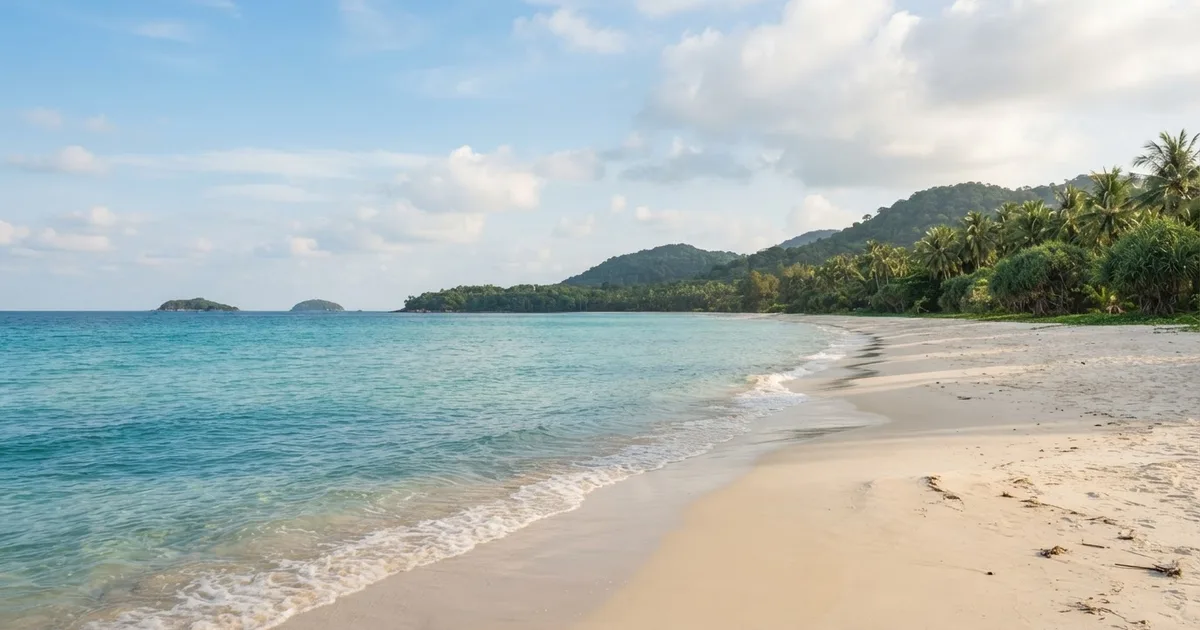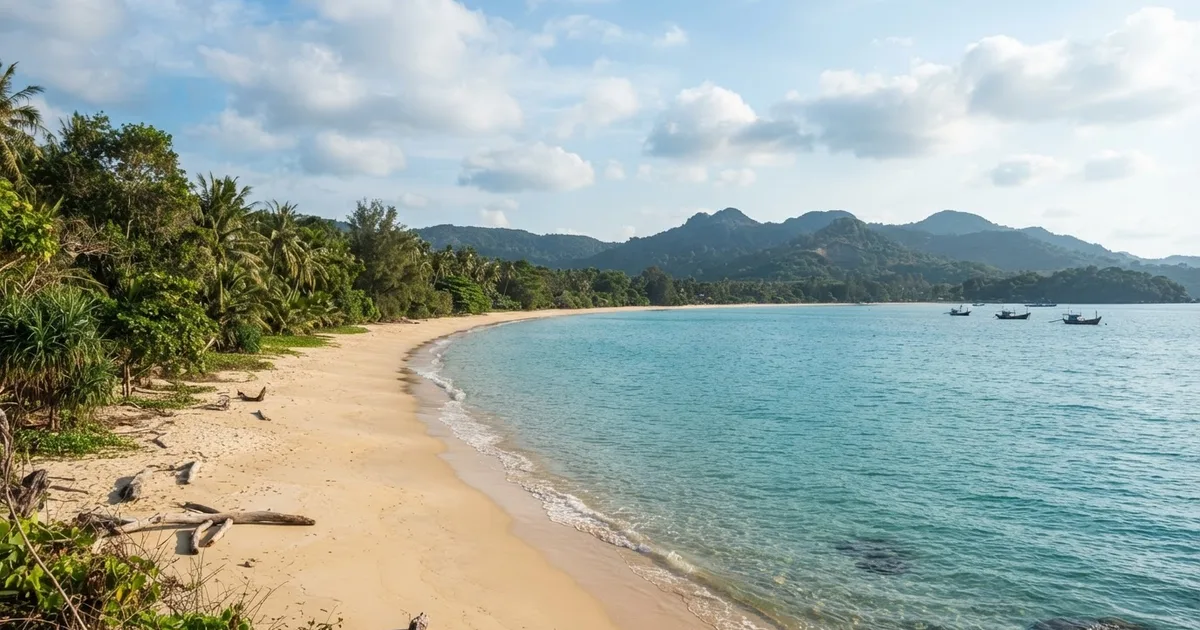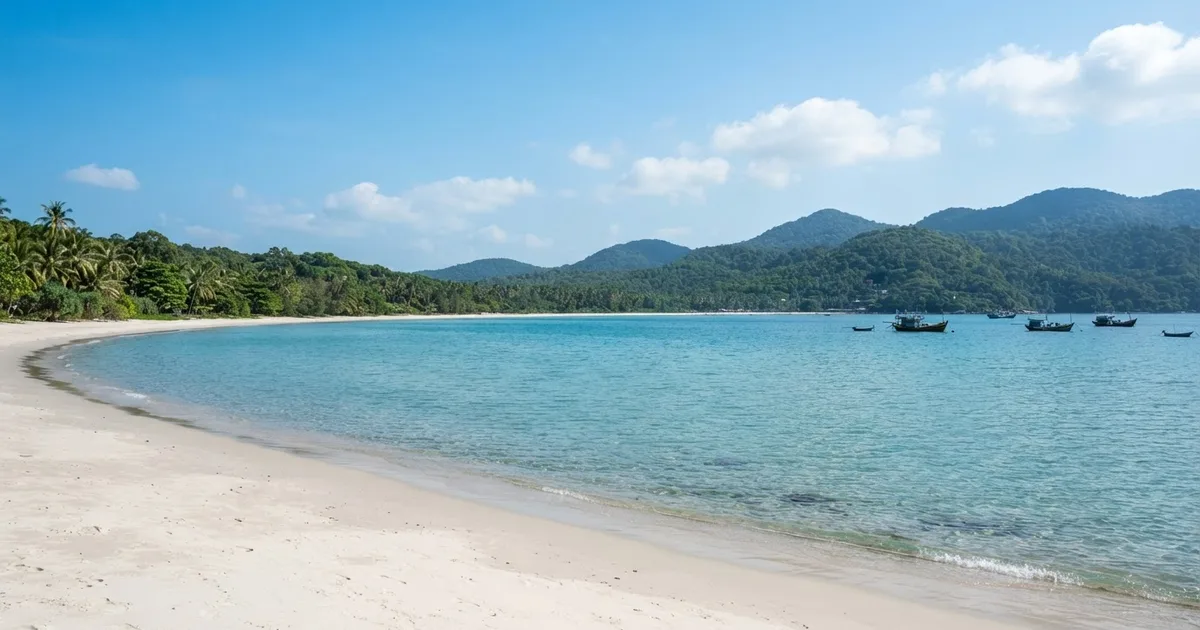
March is the last reliably dry month of Phu Quoc's high season, and for most travellers it is the best balance of weather, crowds and price all year. Expect daytime highs near 32°C, nighttime lows around 25°C, roughly 50–80 mm of rain spread over about five days, and around 8 hours of sunshine per day. The sea holds at about 29°C — warm enough for swimming, snorkelling and diving without a wetsuit — while crowds stay moderate and room rates sit in a mid-range sweet spot before April's heat and the May rains arrive.
What Is the Weather Like in Phu Quoc in March?
March sits at the tail end of Phu Quoc's dry season. The northeast monsoon that keeps the island sunny from November has largely faded, but the southwest monsoon that brings the rains from roughly May to October has not yet arrived. The result is a warm, mostly dry month with long sunny stretches, a calm west-coast sea and only occasional interruptions.
Daytime highs average around 32°C and nighttime lows around 25°C, so evenings on the beach or at an open-air restaurant stay pleasant rather than cool. Humidity is noticeable but manageable, and the island's sea breeze keeps the coast noticeably more comfortable than the interior. Sunshine averages about 8 hours per day — slightly less than January's 10–11 hours, but still plenty for a full day outdoors.
| Measure | Typical March figure |
|---|---|
| Average daytime high | About 32°C |
| Average nighttime low | About 25°C |
| Rainfall | About 50–80 mm (sources vary) |
| Rainy days | Roughly 5 days in the month |
| Daily sunshine | About 8 hours |
| Sea temperature | About 29°C |
| Crowd level | Moderate |
| Price level | Medium — the seasonal sweet spot |
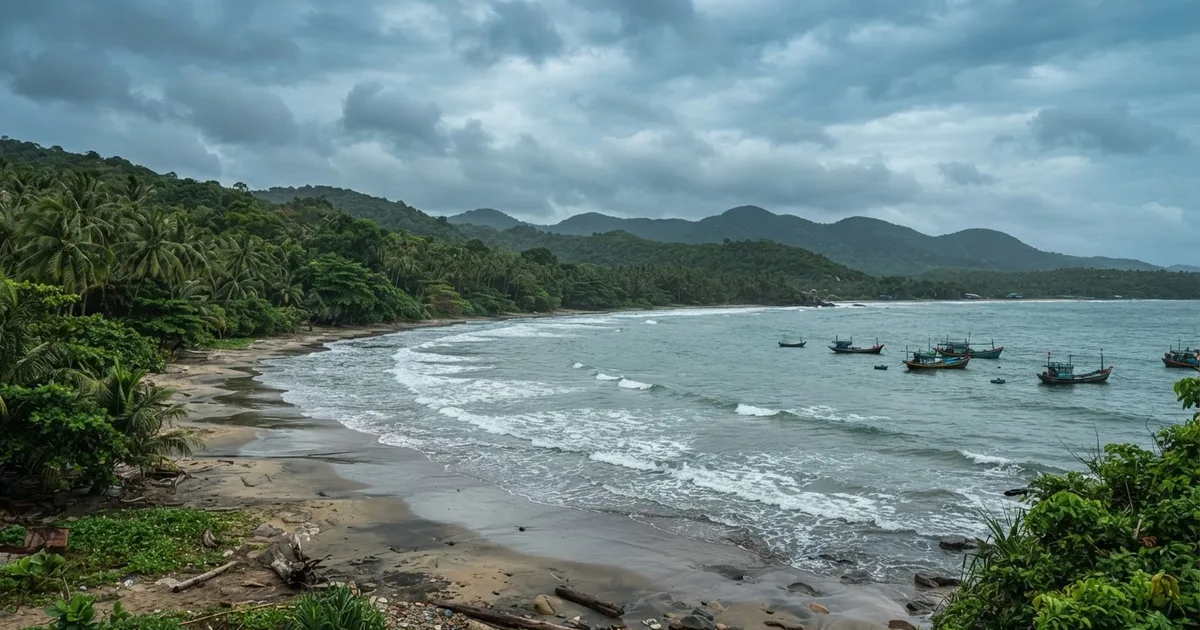
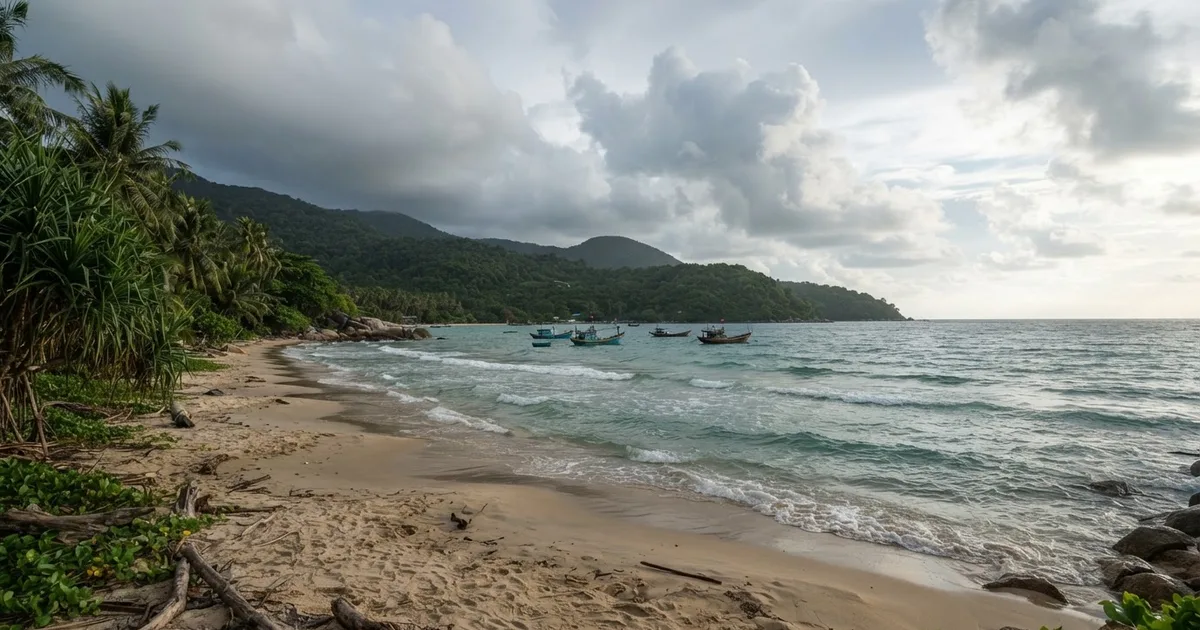
One honest caveat: March is not guaranteed blue sky every single day. Forecast records for the month show that mostly cloudy days and short passing showers still occur, particularly in the second half of March. In practice these are rarely trip-ruining — a shower typically lasts 20 to 60 minutes, the sun returns, and the sand dries within the hour.
March vs January, February and April: Which Month Should You Pick?
March rarely wins on a single metric — it is not the driest month, not the sunniest and not the cheapest. It wins on the combination. January and February are drier and sunnier but busier and more expensive; April is hotter and starts to see the first real build-up of rain; May onwards is genuinely wet.
| Month | Typical temperature | Rainfall | Sunshine | Crowds | Prices |
|---|---|---|---|---|---|
| January | About 27.1°C average (roughly 24–30°C) | About 51.2 mm over 8.7 rainy days | 10–11 hours/day | High | Peak |
| February | Similar to January, slightly warmer | Very low | High | High | Peak |
| March | About 32°C high / 25°C low | About 50–80 mm over roughly 5 days | About 8 hours/day | Moderate | Medium |
| April | Hotter, often 33–34°C highs | Rising through the month | Still good early on | Falling | Lower |
January is widely rated one of the best months to visit Phu Quoc: it is squarely in the dry season, averages about 27.1°C, receives only about 51.2 mm of rain across 8.7 rainy days, and offers around 10–11 hours of sunshine per day. That is genuinely excellent weather — but it is also the busiest and most expensive window of the year, with flights and hotels priced accordingly.
March trades a small amount of that certainty for a noticeably better deal. You lose roughly two to three hours of daily sunshine compared with January and you accept the chance of a couple of passing showers, but you gain moderate crowds, medium prices and sea conditions that are just as good, if not better, because the water has had two more months to warm up.
Tip: If your trip is date-flexible and your priority is guaranteed sunshine, aim for late January or February. If your priority is value without sacrificing beach weather, March is the stronger choice — and the second half of March is usually quieter than the first.
Sea Temperature and Water Activities in March
The sea around Phu Quoc averages about 29°C in March, which is close to ideal for swimming. You can walk in without the sharp intake of breath that comes with cooler months, and you can stay in for an hour or more without feeling cold. For snorkelling and diving, this is one of the most comfortable windows of the year.
Visibility in the dry season is generally at its best, and March usually still delivers clear water before the plankton blooms and runoff of the rainy season reduce clarity from roughly June onwards. The sheltered southern islands of the An Thoi archipelago — accessed from An Thoi port and, for Hon Thom, by the roughly 7.9 km cable car that is among the longest sea-crossing cable cars in the world — are the classic day-trip target. Boat trips, kayaking, stand-up paddleboarding and kite-surfing lessons all run normally in March.
Two practical notes. First, the west coast (Long Beach, Ong Lang, Cua Can) is the calm side in March, so if you are prone to seasickness, choose trips that stay on the west and south rather than heading far north. Second, UV exposure on the water is intense even under thin cloud — a high-factor reef-safe sunscreen and a rash guard are worth more than any other item in your bag.
Crowds, Prices and Booking Strategy for March
Month-by-month guides classify March crowd levels as moderate and price levels as medium, and describe the month as a sweet spot. In practice that means you will not be fighting for sun loungers the way you would over the December–February peak, but you also will not find the island empty. Popular sunset spots such as Dinh Cau in Duong Dong and the Sunset Town area in An Thoi still fill up in the evening.
The main reason March is calmer than January is timing. Vietnamese New Year (Tet) falls in late January or February depending on the lunar calendar, and that period drives a domestic travel surge that pushes up flight and hotel prices across the island. By March, that wave has passed, international high-season demand is tapering, and rates soften accordingly.
Practical booking advice for March:
- Book accommodation 3–6 weeks ahead for the first half of March, and 2–4 weeks ahead for the second half, when availability opens up.
- Reserve boat trips and diving 2–3 days in advance — operators fill up on clear-weather days, and March still has plenty of those.
- Rent a motorbike early in your stay rather than on your last day; the island is roughly 50 km from north to south, and having your own transport transforms how much you see.
- Keep one flexible day in your itinerary for the occasional cloudy or showery spell, and use it for the night market, a cooking class or a spa instead of a beach day.
- Pay in Vietnamese dong for local rentals, markets and small restaurants — card acceptance outside hotels and larger venues is still limited.
What to Pack and How to Plan Your Days in March
March packing is straightforward: light, breathable clothing, strong sun protection and one small concession to rain. The heat peaks between about 11:00 and 15:00, so the most comfortable structure for a March day is an early start, an indoor or shaded middle, and a late-afternoon return to the beach.
- Reef-safe sunscreen SPF 50 and after-sun lotion
- Light long-sleeved shirt or rash guard for boat days
- Wide-brimmed hat and polarised sunglasses
- Refillable water bottle (tap water is not drinkable; refill stations are common)
- Quick-dry towel and a dry bag for boat trips
- Packable rain shell or small umbrella for passing showers
- Mosquito repellent for evenings, especially near the interior and rivers
- Sandals plus one pair of closed shoes if you plan to ride a motorbike
- Cash in Vietnamese dong for markets, rentals and small eateries
A typical March day that works well: beach or snorkelling from 6:30 to 10:30 while the light is soft and the water is calm; lunch and air-conditioned downtime from 11:30 to 15:00; a market, pepper farm, fish sauce factory or cable car in the mid-afternoon; then sunset on the west coast around 18:00, followed by seafood at the night market in Duong Dong. Sunrise in March falls around 06:00 and sunset around 18:00, giving you a full twelve hours of daylight to work with.
The Honest Caveats: Clouds, Showers and Heat in March
It is worth being precise about what "dry season" means in March, because the marketing version and the forecast version differ slightly. Independent forecast records for the month show that March daytime conditions can still include mostly cloudy weather and occasional passing showers — particularly in the final third of the month as the transition toward the wet season begins.
Rainfall figures also vary by source: some climate data lists March rainfall at around 50 mm, while other summaries put it closer to 80 mm. Either way, that is spread over roughly five rainy days, and it is a fraction of what the island receives in July or August. The realistic expectation is not "no rain" but "rain that does not rearrange your day."
Heat is the other factor. A 32°C high in Phu Quoc feels hotter than the same number in a dry, temperate climate because humidity is high. Plan around it rather than through it: hydrate constantly, use the middle of the day for shade, and save physical activity for the morning and late afternoon. Travellers who try to sightsee on foot from noon to 15:00 in March usually regret it.
Tip: If a cloudy or showery day lands on your trip, do not cancel a boat trip automatically. Overcast conditions are often the best for snorkelling photographs and for spending hours in the water without overheating.
Who March Suits — and Who It Does Not
March is a strong month for most travellers, but it is not the right choice for everyone. Being clear about that saves a lot of disappointment.
March is a great fit if you...
- Want beach and boat weather without peak-season prices
- Are travelling as a couple, with friends, or with older children
- Plan to snorkel, dive, kayak or take island-hopping trips
- Prefer moderate crowds to full-capacity resorts and restaurants
- Can accept the small chance of a short afternoon shower
March is less suited to you if you...
- Need a near-guarantee of cloudless skies every single day — late January or February is safer
- Struggle with heat and humidity, since midday temperatures reach about 32°C
- Are chasing the absolute lowest prices of the year — September and October are cheaper, but wetter
- Are planning a wedding or a professional photo shoot where weather risk is unacceptable
- Want the island at its quietest — March is moderate, not empty
Frequently Asked Questions
What is the average temperature in Phu Quoc in March?
Daytime highs average around 32°C and nighttime lows around 25°C, giving a daily range of roughly seven degrees. Humidity makes the middle of the day feel hotter than the number suggests, so most visitors plan outdoor activity for the morning and late afternoon and stay in the shade between about 11:00 and 15:00.
How much does it rain in Phu Quoc in March?
Sources vary between roughly 50 mm and 80 mm of rain for the month, spread over about five rainy days. That is a fraction of the wet-season totals and is usually delivered as short, passing showers rather than sustained all-day rain. The second half of March is typically slightly wetter than the first.
Is the sea warm enough to swim in Phu Quoc in March?
Yes. The average sea temperature in March is about 29°C, which is comfortable for swimming, snorkelling and diving without a wetsuit. You can stay in the water for extended periods, and the west-coast beaches such as Long Beach and Ong Lang are usually calm and clear throughout the month.
Is March a good time to visit Phu Quoc overall?
March is widely rated an ideal time to visit, and is often described as the last truly comfortable month before the heat builds in April and the rains return from May. You get around 8 hours of sunshine per day, a 29°C sea, moderate crowds and medium prices — the best all-round balance of the dry season.
Is Phu Quoc crowded in March?
Crowd levels in March are classified as moderate. The Vietnamese New Year surge has passed, so flights and hotels are easier to secure than in January or February, but the island is far from empty. Popular sunset spots and the Duong Dong night market still get busy in the evening, especially at weekends.
Is March cheaper than January in Phu Quoc?
Generally yes. March price levels are rated medium compared with peak-season January, and month-by-month guides describe March as a pricing sweet spot. Accommodation, tours and transport all tend to cost less than in the December–February window while the beach weather remains strong.
What should I pack for Phu Quoc in March?
Pack light, breathable clothing, reef-safe SPF 50 sunscreen, a hat, sunglasses, a rash guard for boat days, a quick-dry towel, a dry bag, mosquito repellent for evenings and a small rain shell for passing showers. Bring cash in Vietnamese dong, since card acceptance outside hotels and larger restaurants is still limited.
When does the rainy season start in Phu Quoc?
The wet season generally runs from around May to October, with the heaviest rainfall in July and August. March is the tail end of the dry season, and April is the transition month — you will usually notice the first meaningful increase in rain and cloud during April rather than March.
Planning a March trip to Phu Quoc? Sabrina Rental can sort your motorbike, room and boat trip before you land, and give you straight local advice on which beaches and islands are best on the days you are here.
Get in touch with Sabrina Rental