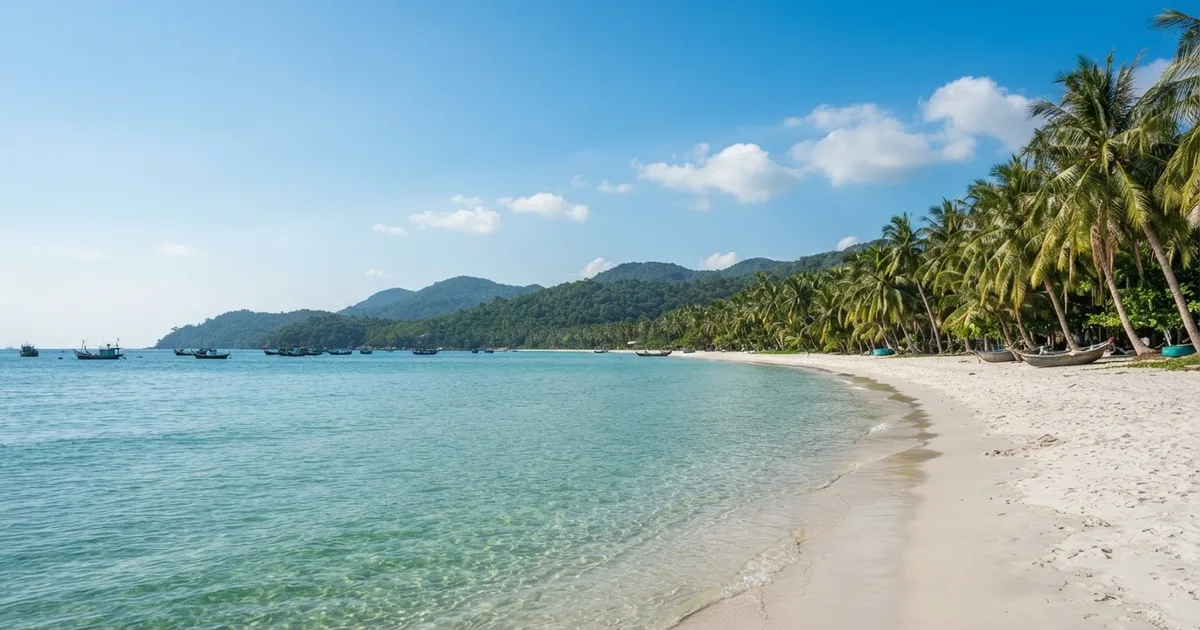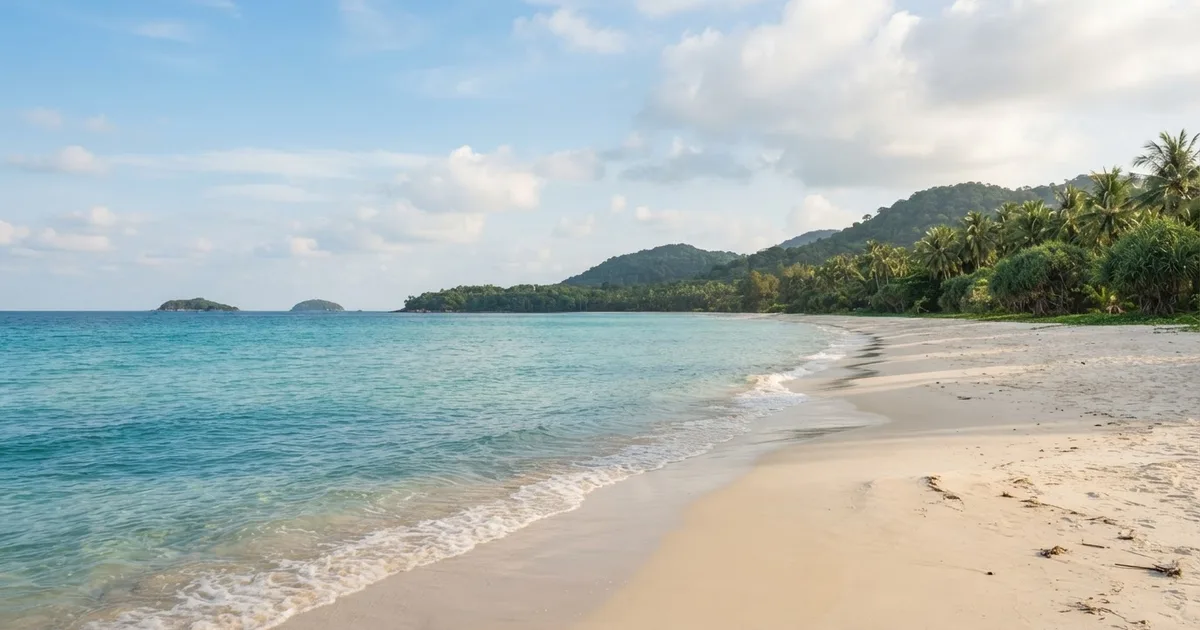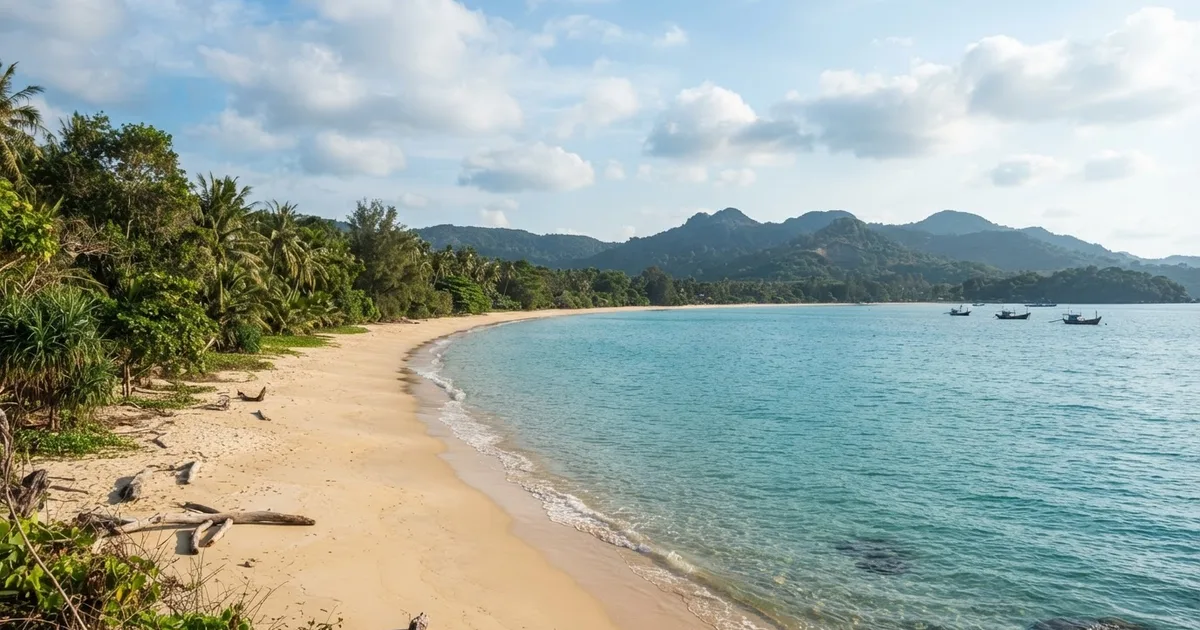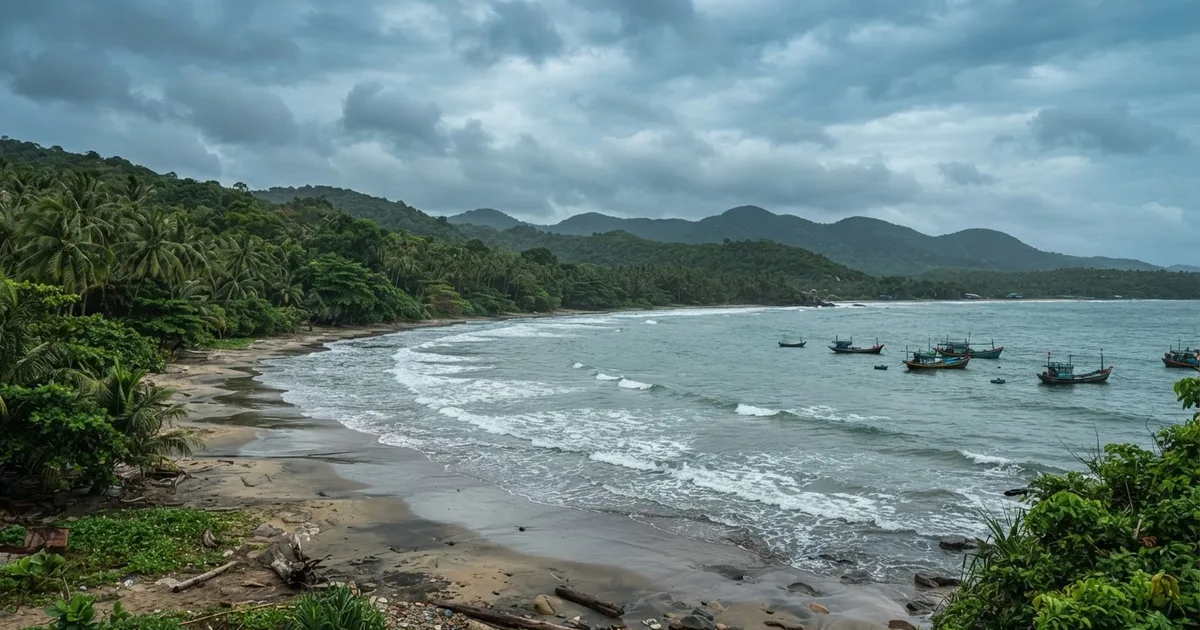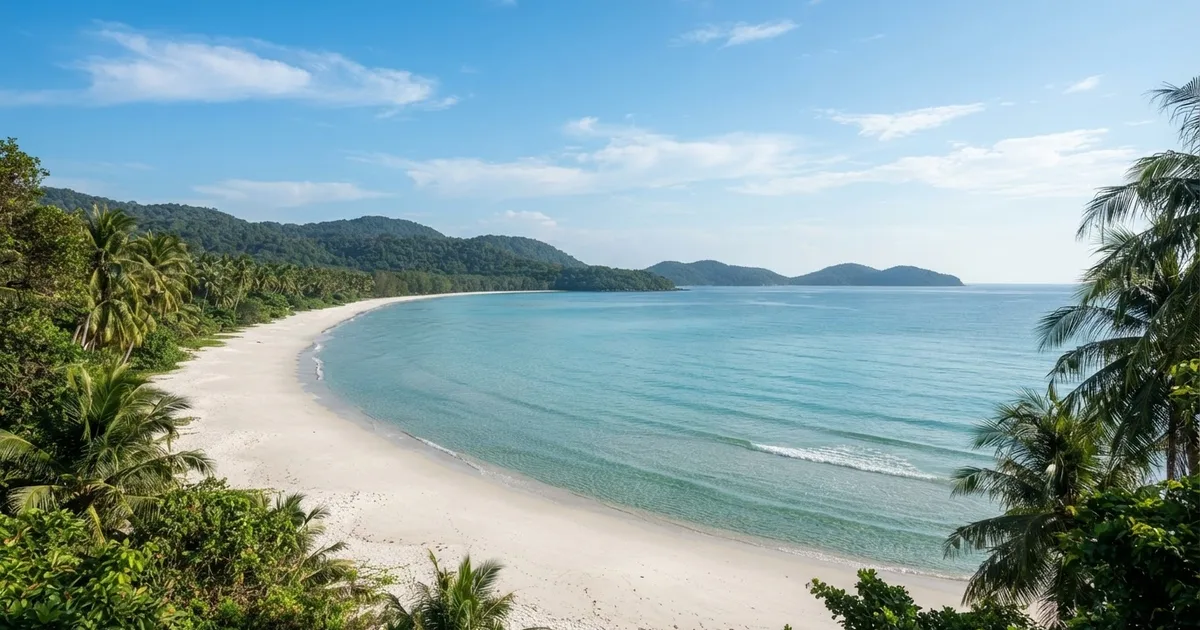
January is one of the best months of the year to visit Phu Quoc. Expect an average temperature of about 27.1°C (typical daily range 25.6°C to 28.4°C), just 30–51.2 mm of rain across 2–9 short showers, and 8–11 hours of sunshine per day. The trade-off is that January is peak season: crowds are rated "very high" and accommodation and flight prices run 30–50% above low-season rates.
What Is the Weather Like in Phu Quoc in January?
January sits squarely in Phu Quoc's dry season, which runs from roughly November through April. The northeast monsoon is blowing across the Gulf of Thailand, but on Phu Quoc that wind arrives dry and breezy rather than wet — the island's heavy rain is driven by the southwest monsoon from May to October. That is why January weather is consistently described as dry and sunny, and why it is a clear step up from December, which still carries the tail end of the wet season.
The average January temperature in Phu Quoc is 27.1°C, with typical daily highs and lows of 28.4°C and 25.6°C. Some climate summaries give a slightly wider 24°C to 30°C band, which says more about how little the temperature moves than about real variation: the island rarely drops below 23°C at night or climbs past 32°C in the afternoon. Humidity hovers around 70–75%, noticeably lower than the 85%+ you get in September and October.
Rainfall figures differ slightly between sources, but every one of them is low. You will see January quoted as 30 mm, 37 mm and 51.2 mm, over 2 to 9 rainy days. Take the wettest reading and it still works out to about 1.6 mm per day — a single 20-minute downpour that dries off the sand within the hour. Sunshine is quoted at 8 to 11 hours per day depending on the source, and the practical result is the same: long, bright beach days with very little interruption.
| January metric | What to expect |
|---|---|
| Average temperature | 27.1°C |
| Typical daily range | 25.6°C – 28.4°C (some sources 24°C – 30°C) |
| Rainfall | 30 mm – 51.2 mm for the month |
| Rainy days | 2 – 9, usually short afternoon or evening showers |
| Sunshine | 8 – 11 hours per day |
| Sea temperature | Approx. 27 – 28°C |
| Humidity | Around 70 – 75% |
| Crowd level | Very high (peak season) |
| Price level | Highest of the year, +30 – 50% vs low season |
Is January a Good Time to Visit Phu Quoc? Who It Suits — and Who It Doesn't
For weather alone, January is close to unbeatable. It is regularly listed among the best months to visit Phu Quoc because rainfall is minimal, sunshine is plentiful and every outdoor activity on the island — swimming, sightseeing, snorkelling, diving, motorbike day trips — works exactly as advertised. If your priority is guaranteed beach weather, this is the month to book.
The catch is that everyone else knows it too. One January climate guide rates crowds as "very high" and prices as the "highest" of the year; another labels it simply "high" season with rates 30–50% above the low-season baseline. That means the same bungalow that costs $35 in September can be $55–70 in January, and popular sunset restaurants on Long Beach fill up before 7 pm.
January is a great fit if you...
- Want reliable sun for a short trip and cannot afford a rained-out week
- Are travelling as a couple, family or group and want everything open and running
- Plan to snorkel, dive or take a boat trip to the An Thoi islands
- Are visiting from a cold-climate winter and want maximum contrast
January is a poor fit if you...
- Are on a tight budget — this is the most expensive month of the year on the island
- Want empty beaches and quiet roads; you will share them with peak-season crowds
- Are hoping for lush, deep-green jungle scenery — the dry season turns the landscape browner
- Have flexible dates and could shift to mid-November or late April for near-identical weather at 20–40% lower prices
- Dislike heat above 30°C with a high UV index; midday sun is genuinely strong
If you fall into the second group but January is your only option, the fix is simple: stay on the quieter west-coast stretches such as Ong Lang or Cua Can rather than the busy centre of Duong Dong, and do your sightseeing in the early morning before the tour buses move.
Rain, Wind and Sea Conditions: Snorkelling and Diving in January
This is the month when Phu Quoc's underwater side performs at its best. Because the dry season means almost no rainwater runoff and the northeast monsoon keeps the surface calm, snorkelling visibility in the An Thoi archipelago — the cluster of islands off the island's southern tip — can reach 15 to 20 metres in January. That is roughly double what you get in the wet season, and it is the reason dive shops run their fullest schedules between December and April.
Sea temperature sits around 27–28°C, so a rash guard or thin 1 mm top is plenty; most people snorkel in swimwear for 45 minutes without feeling cold. The classic day trip runs south from An Thoi port to Hon Thom, Hon Dua, Hon Roi and May Rut Island, often combined with the 7.9 km Hon Thom cable car — the longest over-sea cable car in the world — which gives you an aerial view of exactly how flat and blue the water is in January.
Wind direction matters for beach choice. The northeast monsoon blows from roughly November to March, which leaves the west-facing beaches — Long Beach (Bai Truong), Ong Lang, Cua Can and the sunset strip north of Duong Dong — noticeably calmer and clearer. The east-facing side, including parts of Sao Beach, can pick up more chop and occasional seaweed, though it is still perfectly swimmable on most January days.
Tip: Book southern island boat trips 1–2 days ahead in January. Boats fill up during peak season, and the calmest sea is usually in the morning before the afternoon breeze builds.
What a Typical January Day on Phu Quoc Looks Like
January days are remarkably consistent, which makes planning easy. Sunrise is around 6:15–6:25 am and sunset around 5:55–6:05 pm, giving you roughly 11.5 hours of daylight. Mornings are the calmest and coolest part of the day, typically 25–26°C with light wind — ideal for a motorbike ride north to the pepper farms, a walk through Duong Dong's night market area before it gets busy, or an early swim.
By 11 am the temperature climbs toward its 28–30°C peak, and the UV index reaches 10–11, which is extreme. This is the window for shade, a long lunch, or an air-conditioned break. The sea breeze picks up in the early afternoon, which is pleasant on the sand but makes open-water boat rides a little bumpier.
Evenings are the best-kept secret of January: temperatures settle around 25–26°C, humidity drops, and you can eat dinner outdoors at Dinh Cau night market or a beachfront grill in a T-shirt with no need for a jacket. If rain comes at all, it is most likely a brief evening shower — worth keeping a light poncho in your bag if you are on a motorbike.
| Time of day | Typical conditions | Best for |
|---|---|---|
| 6:15 – 9:00 am | 25–26°C, light wind, clear | Swimming, motorbike rides, sunrise photos |
| 9:00 am – 12:00 pm | 27–29°C, rising UV | Snorkelling trips, island hopping, sightseeing |
| 12:00 – 3:00 pm | 28–30°C, UV index 10–11 | Shade, lunch, spa, indoor attractions |
| 3:00 – 6:00 pm | 27–28°C, afternoon sea breeze | Beach time, cable car, sunset at Dinh Cau |
| 6:00 – 10:00 pm | 25–26°C, comfortable | Night market, seafood, beachfront dining |
Crowds, Prices and the Tet Factor
January is the most expensive month of the year on Phu Quoc, and the reason is a combination of international high season and Vietnamese Tet (Lunar New Year). Tet sometimes falls in late January — in 2025 it began on 29 January — and sometimes in early February, depending on the lunar calendar. When it lands in January, expect a second wave of domestic travellers on top of the foreign high season.
What that means in practice: flights from Hanoi and Ho Chi Minh City sell out and spike, ferries from Rach Gia and Ha Tien fill days in advance, and some small family-run businesses close for two to four days over Tet itself. Hotel rates commonly run 30–50% above low season, and last-minute bookings in the final week of December or first week of January are the most expensive of all.
Rough January price expectations on the island: budget guesthouses and homestays $18–30 per night, mid-range hotels and bungalows $45–90, and four- to five-star resorts $150–400+. Motorbike rental stays reasonable at roughly $6–10 per day (about 150,000–250,000 VND) for a 110–125cc scooter, and local seafood meals still cost $5–12 per person away from the resort strip.
Booking strategy: Reserve accommodation and any Tet-period travel 4–8 weeks ahead. If your dates are flexible, the first two weeks of January (before Tet) are usually calmer and slightly cheaper than the last week.
What to Pack for Phu Quoc in January
Packing for January is straightforward because the weather does not swing much — but the strong sun and the breeze catch people out.
- Light, breathable clothing - cotton and linen for 25–30°C days; you will rarely need long sleeves except for sun protection.
- Reef-safe SPF 50 sunscreen - the UV index hits 10–11 at midday, even when it feels breezy.
- Swimwear plus a rash guard - useful for snorkelling at 27–28°C water temperatures and for protecting your back on long boat days.
- Light rain jacket or poncho - for the 2–9 brief showers the month averages.
- Comfortable sandals and one pair of closed shoes - for scooters and the steep steps at some viewpoints.
- Refillable water bottle - you will drink far more than you expect in the dry-season heat.
- International Driving Permit - required alongside your licence if you plan to rent a motorbike.
- One smart-casual outfit - for beachfront restaurants and resort dining in the evening.
January vs December vs February: Which Dry-Season Month Is Best?
All three months sit inside the dry season and all three are good. The differences are marginal on temperature and meaningful on rain, crowds and price.
| Month | Typical temperature | Rainfall | Crowds and prices |
|---|---|---|---|
| December | Approx. 26–28°C | Wetter than January as the monsoon tail clears | Rising; Christmas and New Year are the peak spike |
| January | 27.1°C average (25.6–28.4°C) | 30–51.2 mm over 2–9 days | Very high; prices +30–50% |
| February | Approx. 27–29°C | Slightly drier than January | Still busy, easing after Tet |
If you want the single best combination of reliable weather and slightly softer prices, aim for the first half of January or the second half of February. If you want the absolute driest, brightest conditions and do not mind paying for them, January delivers.
Frequently Asked Questions
What is the average temperature in Phu Quoc in January?
The average January temperature in Phu Quoc is about 27.1°C, with typical daily highs and lows of 28.4°C and 25.6°C. Some sources quote a wider 24°C to 30°C range. Nights rarely drop below 23°C, so you can comfortably eat dinner outdoors in a T-shirt.
How much does it rain in Phu Quoc in January?
January rainfall is low, though sources vary: 30 mm, 37 mm and 51.2 mm are all quoted, spread over roughly 2 to 9 rainy days. Even the highest figure averages about 1.6 mm per day, which usually means a short shower rather than a washed-out afternoon.
Is January a good month for swimming and snorkelling in Phu Quoc?
Yes — it is one of the best. Sea temperatures sit around 27–28°C, and because the dry season means minimal runoff and calm surface conditions, snorkelling visibility in the An Thoi archipelago can reach 15 to 20 metres. Morning departures from An Thoi port give the calmest water.
Is January peak season in Phu Quoc?
Yes. January is rated as "very high" crowd season, and prices are the highest of the year — typically 30–50% above low-season rates. Budget guesthouses run $18–30 per night, mid-range hotels $45–90, and resorts $150–400+. Book 4–8 weeks ahead.
Is Phu Quoc windy in January?
The northeast monsoon blows from November to March, so there is a steady breeze. West-facing beaches such as Long Beach, Ong Lang and Cua Can are sheltered and calm; the east coast, including parts of Sao Beach, can see more chop and occasional seaweed but remains swimmable most days.
Does Tet affect travel to Phu Quoc in January?
Sometimes. Tet falls in late January in some years — in 2025 it began on 29 January — and in early February in others. When it lands in January, domestic flights and ferries sell out, some small businesses close for two to four days, and prices rise further. Check the lunar calendar for your travel year.
Can I rent a motorbike in Phu Quoc in January?
Yes, and January is ideal for it — dry roads and clear visibility. A 110–125cc scooter typically costs about $6–10 per day (150,000–250,000 VND). Bring an International Driving Permit plus your home licence, and always wear a helmet.
January or February: which is better for Phu Quoc?
Both are excellent. February is marginally drier and slightly warmer, and crowds ease after Tet, which can mean better value. January offers the most reliable sunshine of the two and the strongest snorkelling visibility, but at the highest prices of the year.
Planning a January trip to Phu Quoc? Sabrina Rental can sort your motorbike, room or boat trip before you land — and tell you exactly which beaches are calmest on the day you arrive. Message us with your dates and we will put together a plan.
Get in touch with Sabrina Rental