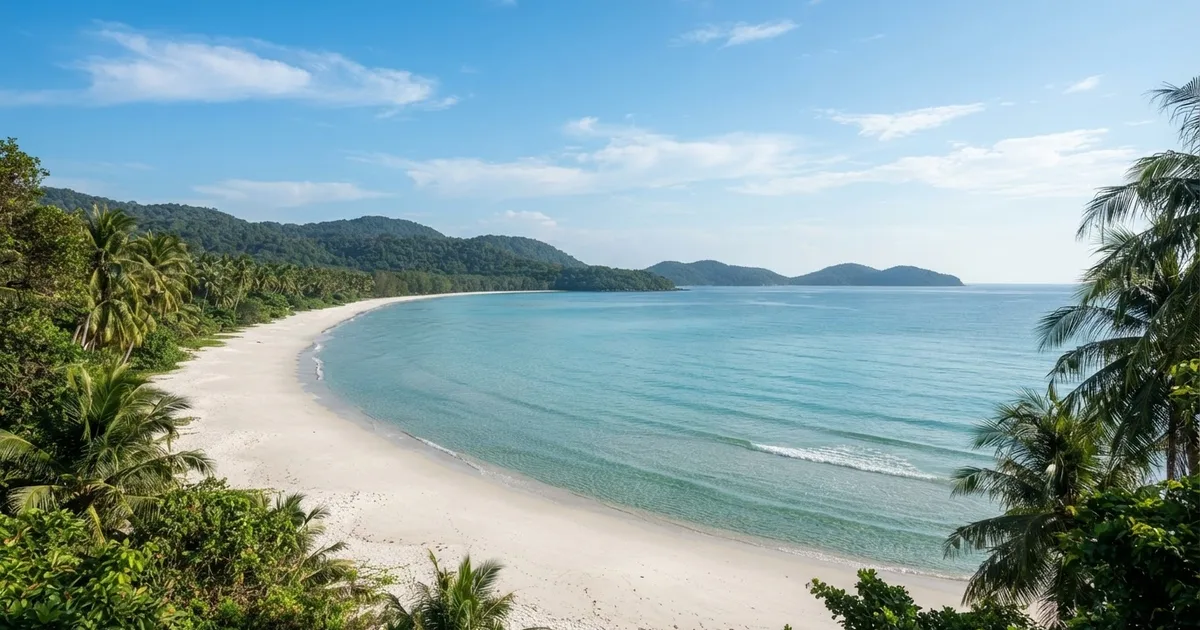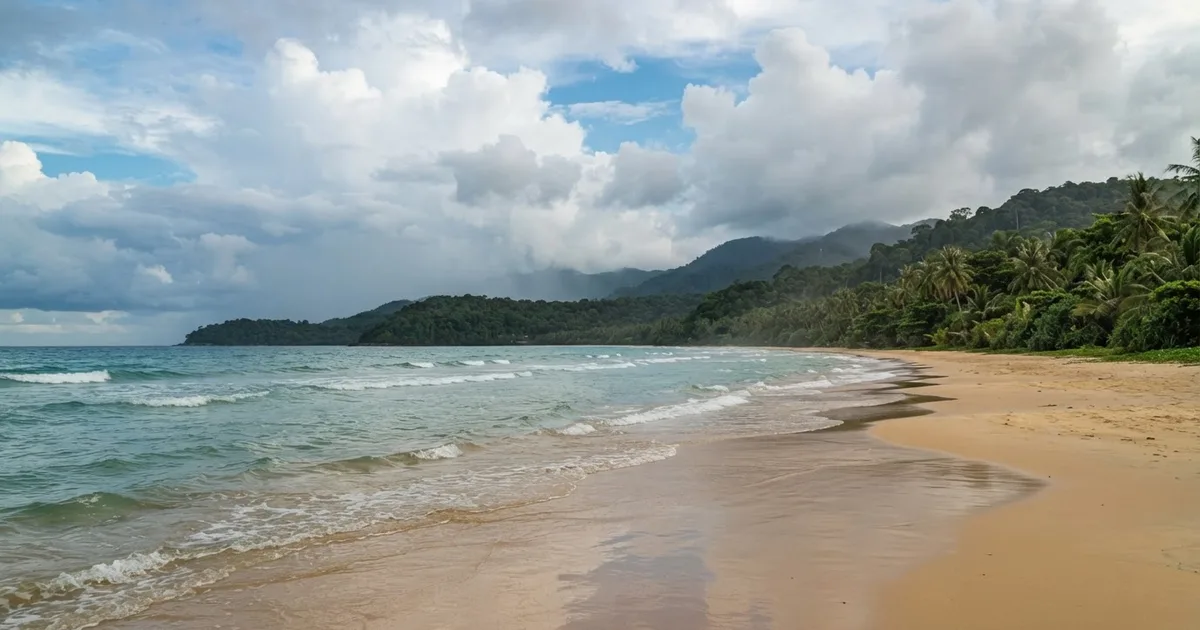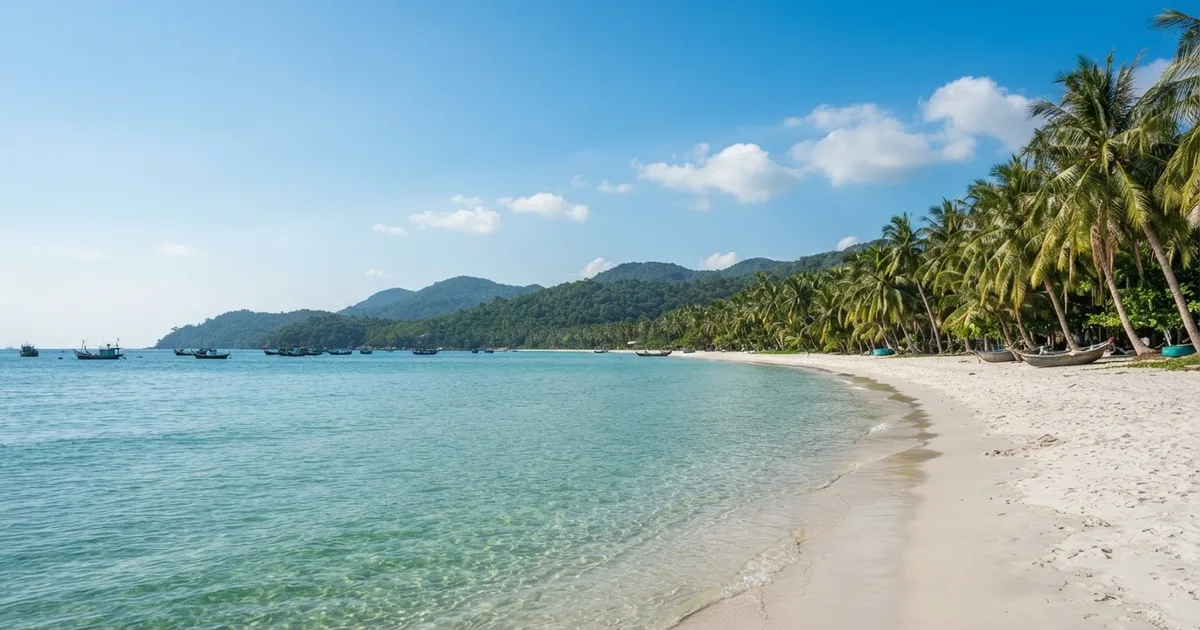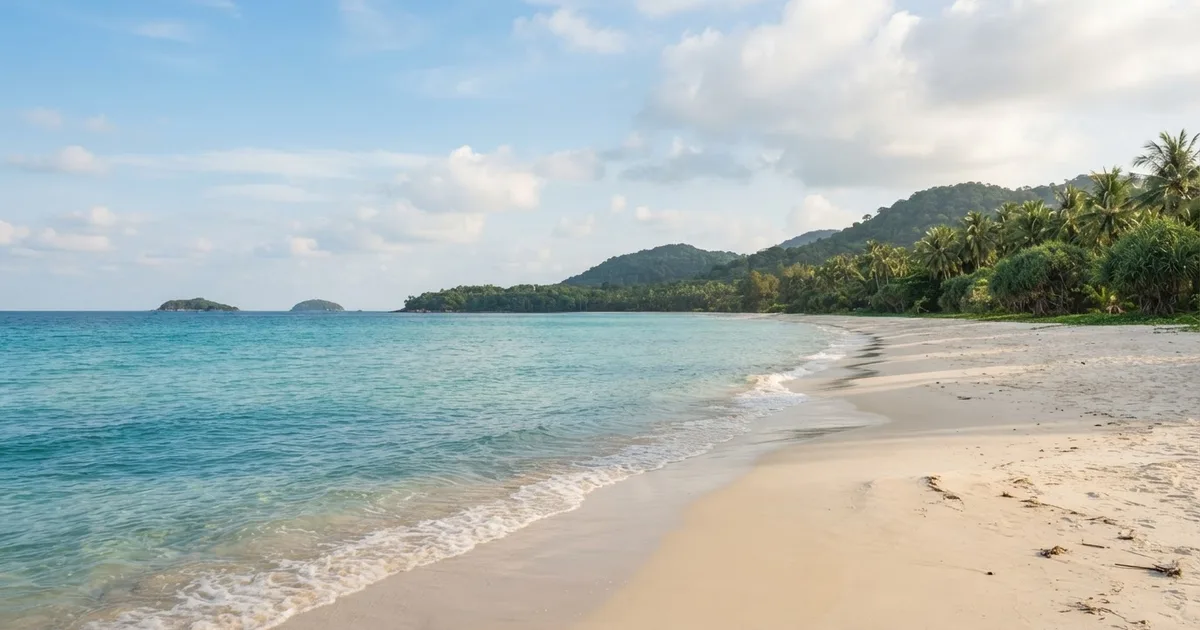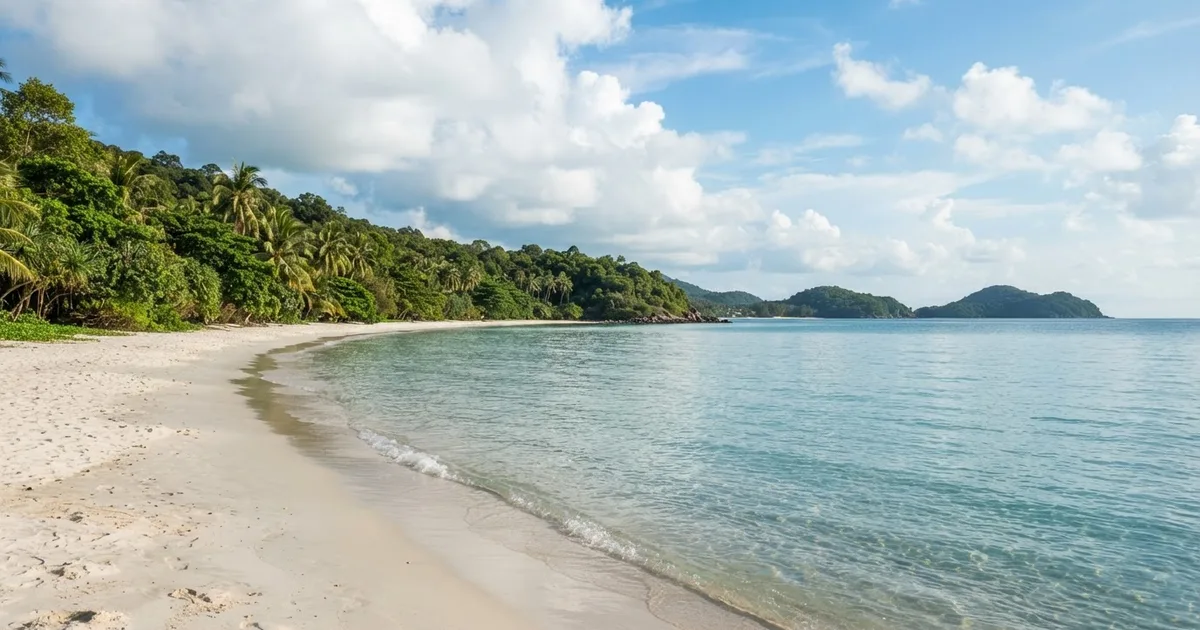
Phu Quoc in May is the handover month between the dry season and the southwest monsoon. Expect roughly 26–33°C air temperatures, 181–263 mm of rain across about 15 rain-affected days (some climate datasets count up to 30 once light drizzle is included), and mostly dry mornings. Rain usually arrives as a 1–2 hour late-afternoon burst. Crowds are thin and room rates run 20–50% below peak season.
Phu Quoc weather in May at a glance
May sits at the seam between Phu Quoc's dry season (roughly November to April) and its rainy season (roughly May to October). It is not a washout month and it is not a guaranteed-sunshine month — it is a mixed month that rewards travellers who plan around the clock rather than against it.
The single most useful thing to understand is that May rainfall comes in bursts. Humidity climbs through the morning, clouds stack up over the interior of the island after lunch, and the sky opens somewhere between mid-afternoon and early evening. An hour or two later the streets are steaming, the light turns gold, and the evening is dry again for the night market.
| Metric | May on Phu Quoc | What it means for you |
|---|---|---|
| Daytime temperature | 26–33°C (some forecasts sit at 25–28°C during rainy spells) | Hot and humid; midday sun is the real discomfort, not the heat itself |
| Sea temperature | Around 29°C | Comfortable for swimming even when it is raining |
| Rainfall | 181–263 mm for the month | Wide range because sources count rain differently; plan for one real shower most days |
| Rain-affected days | About 15 (up to 30 counting trace drizzle) | Showers are short, not all-day washouts |
| Sunshine | Roughly 6–7 hours per day | Enough for a full beach morning if you start early |
| Humidity | High, often above 80% | Clothes dry slowly; air-conditioned rooms are worth paying for |
| Crowds | Low | Empty stretches on Long Beach, easy restaurant tables |
| Prices | 20–50% below peak | Among the cheapest months of the year apart from the September–October wettest stretch |
Sunrise in mid-May is around 05:45 and sunset around 18:15, so the usable daylight window is long. The practical rule for May: front-load the day, and treat anything after 15:00 as a bonus rather than a plan.
How much rain does Phu Quoc get in May — and when does it fall?
Published figures for May genuinely disagree, and it is worth knowing why. One widely quoted travel guide puts May at about 15 rainy days and roughly 181 mm of average monthly rainfall. A second, more statistical source lists about 262.9 mm spread across roughly 30 days with measurable precipitation. The gap comes down to methodology: one counts days with meaningful rain, the other counts any day on which a measurable trace falls, including a ten-minute overnight sprinkle.
For planning purposes, the honest answer is in the middle: expect a proper shower on most days of the second half of May, and expect roughly half of those showers to be short enough that you barely change your plans. Multi-day washouts are uncommon in May, though they become more likely as you move into June and July.
Timing follows a fairly predictable rhythm. Mornings from about 06:00 to 12:00 are usually dry, often with clear skies and light wind. Cloud builds from early afternoon, and the heaviest rain typically falls between 14:00 and 17:00, lasting one to two hours. By 18:30 the sky often clears again. Some days bring a second, lighter shower overnight or just before dawn.
Local tip: schedule anything you would be gutted to miss — a boat trip to the An Thoi islands, the Hon Thom cable car, a snorkelling session — in the first half of May or, at minimum, before 11:00 on any given day. Afternoon bookings in the second half of the month are a coin flip.
May vs January: how far does the weather really drop off?
January is the benchmark most travellers compare against, and it deserves that reputation. It sits squarely in the dry season, with warm, pleasant conditions, average temperatures around 27.1°C (typically ranging from 24°C to 30°C), only about 51.2 mm of rain across 8.7 rainy days, and around 10–11 hours of sunshine per day. It is the month when swimming, sightseeing, snorkelling and diving all work reliably.
May trades that reliability for value. You get roughly three to five times January's rainfall and a third less sunshine — but you also get 20–50% lower prices and beaches that are not competing for space.
| Metric | January (dry season) | May (transition month) |
|---|---|---|
| Average temperature | 27.1°C (24–30°C range) | 26–33°C |
| Rainfall | 51.2 mm | 181–263 mm |
| Rainy days | 8.7 | About 15 (up to 30 including trace rain) |
| Daily sunshine | 10–11 hours | Roughly 6–7 hours |
| Sea state | Calm on the west coast | Building swell; rough west coast late in the month |
| Crowds | Peak season | Low |
| Prices | Peak rates | 20–50% lower |
If your absolute priority is sunshine and glassy water, book January. If your priority is a quiet island at half the price and you are comfortable flexing your plans around a short afternoon storm, May is the better value trade. The month that follows, June, adds more rain again; July and August are the wettest stretch of the year.
West coast vs east coast: where the sea stays swimmable in May
Phu Quoc runs roughly 50 km from north to south, and the southwest monsoon hits its two coastlines differently. From mid-May onward, the west coast — the long, sunset-facing strip that includes Long Beach (Bai Truong), Ong Lang and the beaches north of Duong Dong — starts to pick up swell. By the last week of May you can see stronger shore break, more debris in the water and occasional red flags. Sunsets there are still spectacular, and the storm clouds often make them better.
The east and southeast side of the island is the leeward option. Sao Beach and Khem Beach on the southeastern peninsula, plus the sheltered bays around the An Thoi archipelago, generally stay calmer and clearer through May. If you want reliable swimming in the second half of the month, base yourself on that side or take day trips there.
Boat departures to the southern islands still run through May, but expect choppier crossings and a greater chance of schedule adjustments on windy days. If you are prone to seasickness, pick a morning departure and take medication before you board, not after.
What to do on Phu Quoc in May, by time of day
May rewards a split-shift itinerary rather than a full day in the sun.
05:45–11:00 — the golden window. Beach time, island-hopping boat trips from An Thoi, snorkelling, the Hon Thom cable car (a 7.9 km over-sea crossing, one of the longest in the world), kayaking in the southern bays, or a motorbike loop up the quiet northern roads. Fishing villages such as Ham Ninh are best visited before the heat builds.
11:00–15:00 — the heat and UV peak. This is when to be indoors or in shade: the pearl farms, the fish sauce factories around Duong Dong, VinWonders and the safari park in the north, a long lunch, a spa, or simply a nap. UV levels are high even under cloud.
15:00–17:30 — the shower slot. Assume rain. Keep a dry bag with you, stay near your accommodation or a cafe, and do not book anything non-refundable in this window.
17:30 onward — the reward. Skies often clear for sunset at Dinh Cau, Ong Lang or anywhere along Long Beach, followed by the Duong Dong night market for seafood and street food. The rain has usually cooled the island by a few degrees, which makes evening exploring genuinely pleasant.
Crowds, prices and booking strategy in May
May is one of the quietest months of the year on Phu Quoc. International charter traffic thins out, Vietnamese domestic travel is between holidays, and the island feels noticeably calmer than in January or during the December–March peak.
Prices follow the crowds. Accommodation typically runs 20–50% below peak-season rates depending on the property and how late in the month you travel, with some sources putting the average discount at around 20%. Mid-range resorts that charge peak rates in January often have genuine availability in May.
Booking strategy is simple: you do not need to reserve months ahead as you would for January or the Tet period. One to three weeks of lead time is usually enough for hotels and guesthouses, and same-day walk-ins are realistic in Duong Dong and Ong Lang. Flights are cheaper too, though schedules to Phu Quoc International Airport (about 10 km, or 15–20 minutes, from Duong Dong town) can be less frequent outside peak season.
One caveat: a handful of beach bars, restaurants and tour operators close or reduce hours during the low season. If a specific venue is on your list, message ahead rather than assuming it is open.
Who May suits — and who it does not
May is a strong month for a specific kind of traveller and a poor fit for another. Being honest about that up front saves a lot of disappointment.
A good fit if you...
- Are travelling on a budget and want 20–50% off peak rates
- Have a flexible itinerary and can move plans when a storm rolls in
- Prefer empty beaches to busy ones, even with a bit of cloud
- Are staying a week or longer, so a rainy afternoon costs you little
- Want dramatic monsoon skies and green, lush landscapes for photography
- Plan to travel in the first two weeks of the month, when it is still mostly sunny
Less suited if you...
- Only have three or four days and want guaranteed sunshine on every one
- Are planning a honeymoon, wedding or photo shoot with fixed dates
- Are diving or snorkelling with rigid expectations — visibility drops versus January to April
- Want calm west-coast water for daily swimming late in the month
- Are travelling with very young children and cannot easily reshuffle around afternoon storms
- Have a non-refundable boat trip or cable car slot booked for an afternoon
If you fall into the second group, April or January will serve you far better. If you fall into the first, May is arguably the best value month on the island calendar.
What to pack for Phu Quoc in May
May packing is about humidity and short, intense rain rather than cold weather. Everything should dry fast and nothing important should be water-soluble.
- A light rain shell or compact poncho — small enough to live in your day bag
- A dry bag or waterproof phone pouch for boat trips and beach days
- Quick-dry clothing; cotton stays damp for hours in 80%+ humidity
- Reef-safe sunscreen, SPF 50, plus a hat and sunglasses — UV is high even under cloud
- Mosquito repellent; the island is greener and buggier in the wet season
- Sandals or trainers with grip for wet tiles and slick red-dirt paths
- A power bank — afternoon downtime is a good time to top up your phone
- Motion-sickness tablets if you plan any island-hopping or ferry crossings
- A light long-sleeve layer for air-conditioned buses, ferries and restaurants
Riding a motorbike on Phu Quoc in May
May is still a good month for two wheels, but the roads demand more respect than in the dry season. Asphalt that has been dry for months becomes slick within minutes of the first heavy shower, and the island's red-dirt side roads turn soft and greasy.
Before you set off, check brake response, tyre tread and lights — not just the fuel gauge. Ride the main coastal road between Duong Dong and An Thoi rather than interior tracks after rain, slow down through standing water, and avoid riding during the heaviest part of an afternoon storm when visibility drops and other drivers behave unpredictably. Carry your rain gear on the bike, not in your room, and never leave documents or electronics in an underseat compartment that can fill with water.
Frequently Asked Questions
How much rain does Phu Quoc get in May?
Published figures range from about 181 mm across roughly 15 rainy days to 262.9 mm across about 30 days with measurable rain. The difference is how trace drizzle is counted. In practice, plan for one significant shower on most days, usually lasting one to two hours in the afternoon.
Is May a good time to visit Phu Quoc?
It depends on your priorities. May offers low crowds and accommodation 20–50% below peak rates, with dry mornings and short afternoon showers. It is a poor choice if you need guaranteed sunshine every day, have a fixed wedding or photo shoot date, or want reliably calm west-coast water late in the month.
How hot is Phu Quoc in May?
Expect 26–33°C during the day, with humidity often above 80% and sea temperatures around 29°C. Some forecasts sit closer to 25–28°C during rainy spells. The humid heat makes midday feel hotter than the number suggests, so plan outdoor activity before 11:00.
Does it rain all day in May on Phu Quoc?
Rarely. May rain typically arrives as a short, intense burst between 14:00 and 17:00 lasting one to two hours, after which the sky often clears for sunset. Mornings are usually dry. Multi-day washouts are uncommon in May but become more likely in June and July.
What is the best time of day for activities in May?
Between 06:00 and 11:00. Sunrise is around 05:45, so an early start gives you five solid hours of dry weather for beaches, boat trips to the An Thoi islands, snorkelling or the Hon Thom cable car. Anything scheduled after 15:00 should be flexible and refundable.
Is the sea calm enough for swimming in May?
Early May usually is. From mid-month the southwest monsoon builds and the west coast — Long Beach, Ong Lang — gets rougher shore break. The east and southeast coasts, including Sao Beach and Khem Beach, plus sheltered southern bays, generally stay calmer and are the better swimming choice late in the month.
How crowded is Phu Quoc in May?
It is one of the quietest months of the year. International charter traffic drops off and Vietnamese domestic travel sits between holidays, so beaches, restaurants and tour boats are uncrowded. Hotels typically run 20–50% below peak-season rates, and walk-in availability is realistic.
Is May or January better for Phu Quoc?
January is the weather winner: about 27.1°C average, only 51.2 mm of rain over 8.7 rainy days, and 10–11 hours of sunshine daily. May offers roughly three to five times the rain and a third less sunshine, but 20–50% lower prices and far fewer people. Choose based on whether you value certainty or value.
What should I pack for Phu Quoc in May?
A light rain shell, a dry bag or waterproof phone pouch, quick-dry clothing, reef-safe SPF 50 sunscreen, mosquito repellent, grippy footwear and a power bank. Cotton clothing stays damp for hours in the humidity, and UV levels stay high even under heavy cloud.
Is May still a good month for a motorbike rental?
Yes, and it is one of the cheapest months to rent. The trade-off is road conditions: wet asphalt gets slick fast and red-dirt side roads turn greasy. Check brakes, tyres and lights before you ride, stay on the main coastal road after rain, and carry rain gear with you rather than leaving it at your hotel.
Planning a trip to Phu Quoc in May and want honest, on-the-ground advice on weather, roads, boats and where to stay? Sabrina Rental is based on the island and can sort your motorbike, room or boat trip, and tell you what the sky is actually doing this week.
Contact Sabrina Rental