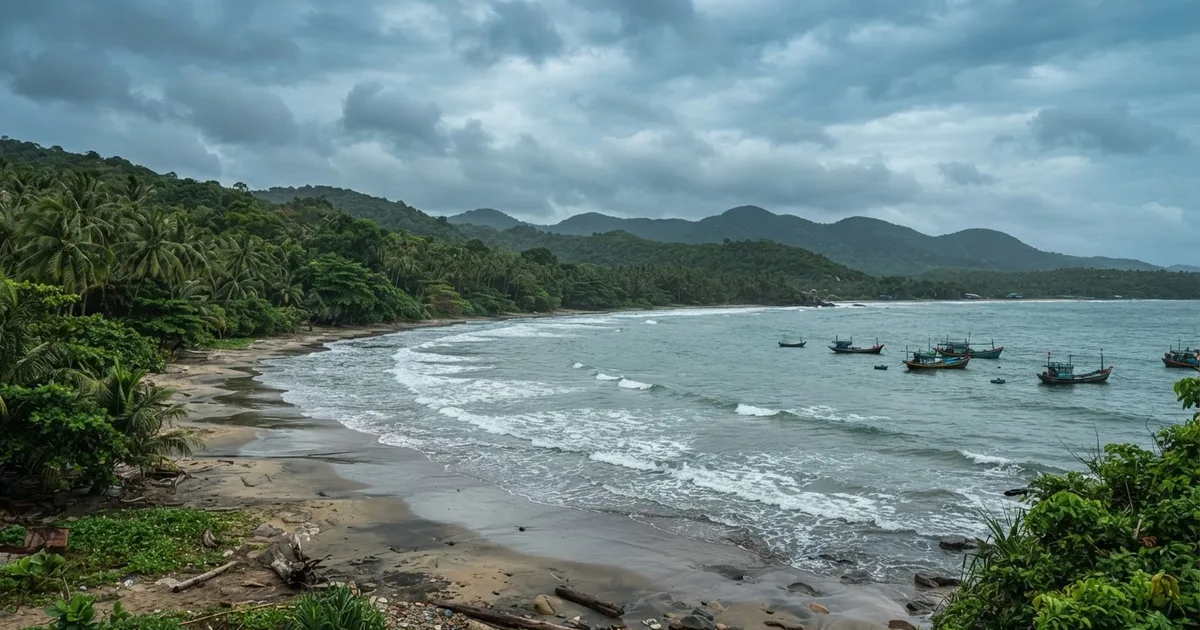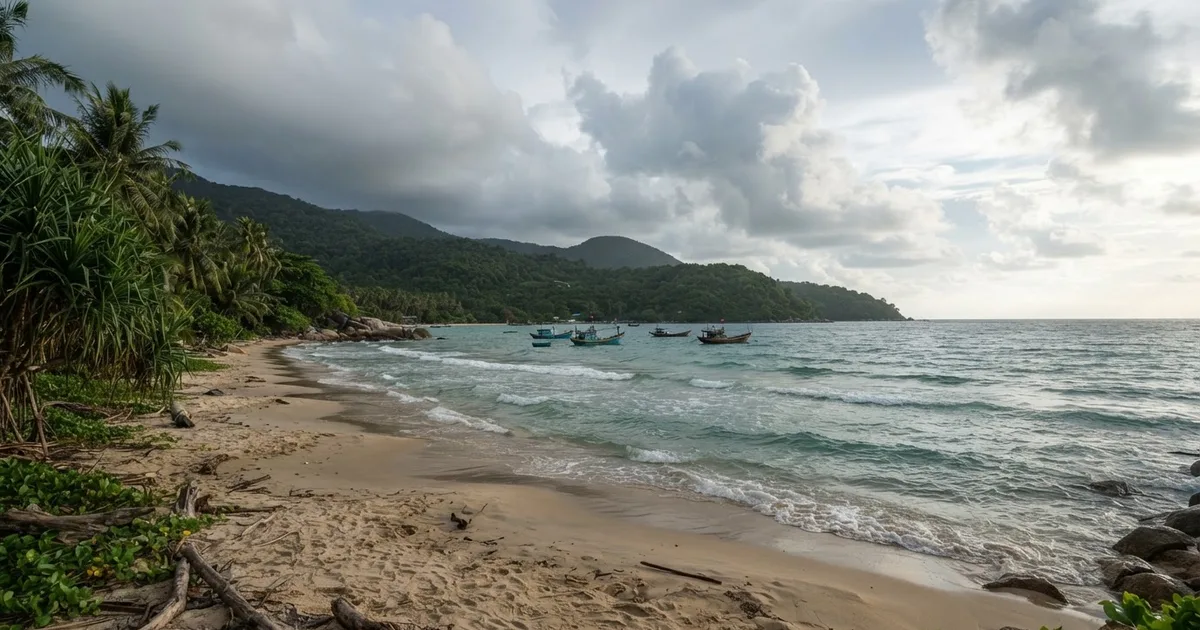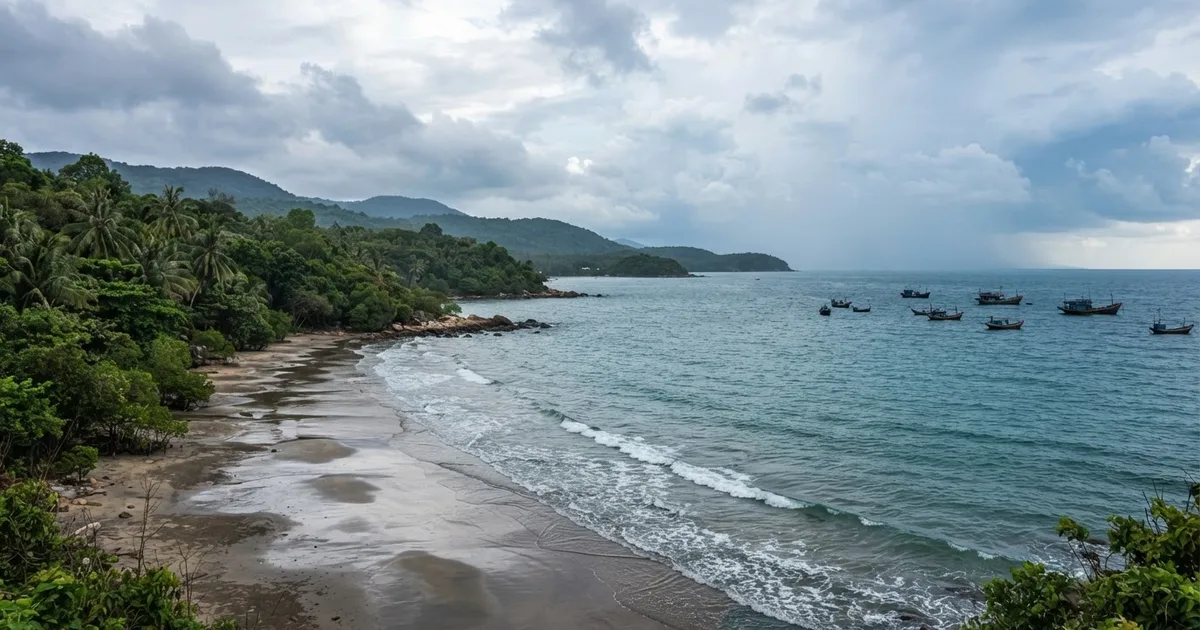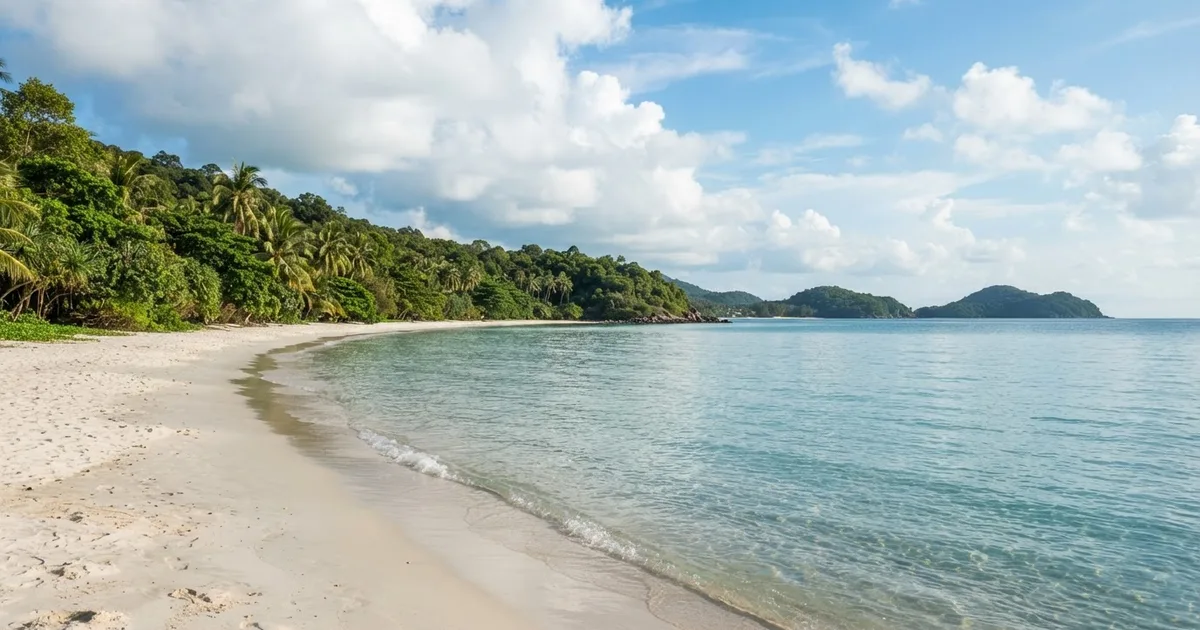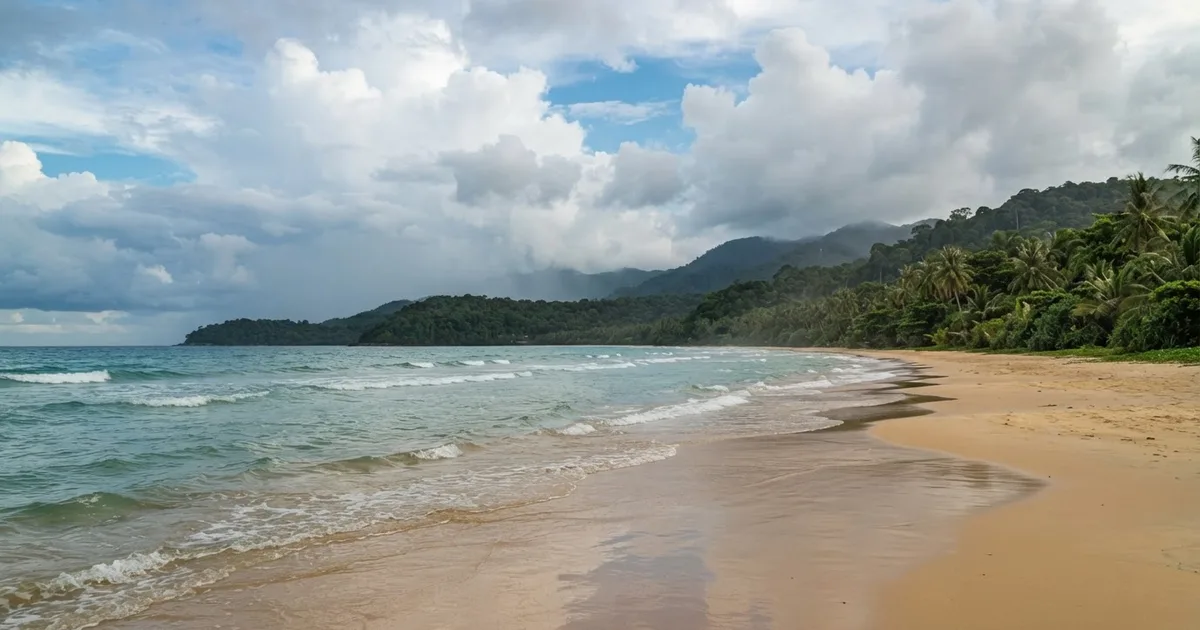
July is peak rainy season on Phu Quoc: expect roughly 18 to 21 days with rain and 240–300 mm of rainfall across the month, air temperatures of 25–31°C, and only about 6 hours of sunshine per day. The compensation is that July is also the island's quietest and cheapest month, and most of the rain falls in short, heavy afternoon bursts rather than continuous all-day drizzle — mornings are often dry enough for the beach.
How Much Rain Does Phu Quoc Get in July?
July sits in the middle of the southwest monsoon, which runs from roughly May to November on Phu Quoc. Every major climate source agrees it is one of the two wettest months of the year, alongside August. The exact numbers differ slightly because agencies count a "rainy day" differently — some count any measurable drop, others only significant rainfall — but the range is consistent.
| Source | Days with rain in July | July rainfall |
|---|---|---|
| TUI | Not specified | About 300 mm |
| Weather2Travel (July guide) | Around 16 days | 258 mm |
| Weather2Travel (climate averages) | Around 18 days | 270 mm |
| EaseWeather | More than 20 days | About 290.4 mm |
| Vietnamonline | 20.8 days | 178.0 mm |
Taking those figures together, the realistic planning number for a July trip is 240–300 mm of rain spread over 16–21 days. For context, that is roughly five to six times the 51.2 mm that falls in January, the island's driest and most popular month. It is also worth remembering that 300 mm in a tropical climate does not arrive as gentle all-day drizzle — it lands in a series of short, intense downpours.
Tip: When you read "18 rainy days" in a July forecast, that usually means 18 days with some measurable rain somewhere on the island — often a 45-minute squall in the late afternoon. It does not mean 18 washed-out days.
What July Weather Actually Feels Like, Day by Day
Phu Quoc in July is hot, humid and heavy. TUI lists the month at 25°C to 31°C, while Vietnamonline puts the monthly average at 28.4°C — barely two degrees cooler than the island's dry-season average. The difference is not the heat but the moisture: humidity often sits above 80 percent, so 31°C feels considerably warmer than the same temperature in January's drier air.
The rain has a rhythm. Mornings are frequently bright, calm and dry, with the sea flat and the light clean — this is the window locals use for beach time, swimming and photography. Cloud builds through late morning, and between roughly 1pm and 6pm a dark wall of cloud rolls in off the Gulf of Thailand, dumps heavy rain for 30 to 90 minutes, and then clears. Evenings are often warm and rain-free again, which is good news for night markets and dinners outdoors.
Not every day follows that pattern. Tropical depressions do form in the region during July and can bring two or three consecutive days of sustained grey weather and steady rain — one July guide specifically flags these depressions and the rough sea conditions that come with them. Occasional days are simply overcast from dawn to dusk. Budget for one or two genuinely lost beach days across a week-long stay.
Two things surprise first-time July visitors. First, the UV index stays high even under cloud, so sunburn is still a real risk on a grey day. Second, the sea temperature barely moves — around 29°C — so swimming in the rain is genuinely pleasant, provided there is no lightning, which is the one condition that should send you straight out of the water.
July Versus January: The Two Opposite Ends of Phu Quoc's Year
If July is Phu Quoc at its wettest, January is Phu Quoc at its best. January sits in the dry season with warm temperatures, minimal rainfall and long sunny days, and weather guides consistently rate it as one of the best months to visit — ideal for swimming, sightseeing, snorkelling and diving. Comparing the two months side by side is the fastest way to decide which one fits your trip.
| Metric | January | July |
|---|---|---|
| Season | Dry season | Peak rainy season |
| Monthly rainfall | 51.2 mm | 240–300 mm |
| Days with rain | 8.7 | 16–21 |
| Average temperature | 27.1°C (roughly 24–30°C) | 28.4°C (roughly 25–31°C) |
| Daily sunshine | 10–11 hours | About 6 hours |
| Sea and beaches | Calm and clear; ideal for swimming, snorkelling and diving | Choppy west coast; reduced underwater visibility |
| Crowds and prices | Busiest and most expensive | Very low crowds; lowest prices of the year |
The practical read: if your holiday is built around water — diving, snorkelling, island-hopping, long beach days — January wins easily and is worth the higher room rate. If your priority is spending a week at a good resort for the least money possible, with the pool and the spa doing most of the work, July delivers the same island at a fraction of the crowd level.
Which Beaches and Coastlines Work in July?
Phu Quoc's geography matters enormously in the monsoon. The southwest wind blows directly onto the island's western shoreline, so the beaches that look like postcards in January are the ones taking the weather in July.
West coast — exposed. Long Beach (Bai Truong) running through Duong Dong, plus Ong Lang and Cua Can further north, face straight into the onshore wind. Expect choppy water, bigger shore break, floating debris after heavy rain and red flags on the more organised stretches. Rip currents are the real danger here, and unsupervised swimming is not advisable on the worst days. Sunsets, which are Long Beach's signature in the dry season, are frequently hidden behind cloud.
South and east coast — sheltered. Sao Beach (Bai Sao) and Khem Beach on the south-east, and the long shallow bay at Ham Ninh on the east, sit in the lee of the island during the southwest monsoon. The water is flatter, the sand is more usable and swimming is far more comfortable. This is where to head on a July beach day.
The An Thoi archipelago — still sailable. Boat trips to the southern islands leave from An Thoi port and generally keep running in July, because the southern islets shelter the crossing. What changes is the underwater visibility: runoff and plankton reduce clarity, so snorkelling and diving in July rarely match the 20–30 metre visibility of the dry season. Dive operators still run trips, but check conditions before paying for a premium dive package.
One important caveat: the shelter on the south-east coast is about wind and waves, not rain. When a monsoon downpour arrives, it arrives everywhere on the island.
Best Things to Do in Phu Quoc in July
Travel guides tend to describe July as a month for indoor attractions and resort stays, and that is fair advice — but Phu Quoc has enough of both to fill a week comfortably even if the sky never fully clears.
VinWonders and Vinpearl Safari, in the north. VinWonders Phu Quoc combines a theme park with a large water park, and Vinpearl Safari next door is one of Vietnam's biggest semi-wild animal parks, spread across hundreds of hectares. Both are built to function in wet weather — you will get soaked at the water park anyway — and both sit near Grand World in Ganh Dau, the canal-side entertainment complex that stays lively into the night.
Hon Thom cable car. The cable car from An Thoi to Hon Thom is just under 8 km long and holds the record as the world's longest over-sea cable car. It offers spectacular views when it runs, but operations are suspended in high winds, which happen more often in July than in any other month. Treat it as a bonus rather than a fixed plan, and buy tickets on the day.
Duong Dong town and the night market. The island's main town is the reliable wet-weather base: the night market runs every evening under cover, and the seafood, noodle stalls and bars do not stop for rain. Nearby you will find fish sauce factories, pearl showrooms and cafés that make a genuinely interesting half-day when the beach is off.
Pepper farms, temples and the prison museum. The island's pepper farms in the centre and north, the Cao Dai temple, and Coconut Tree Prison — a preserved historic site with substantial indoor sections — all work in drizzle and are rarely crowded in July.
Spas, cooking classes and long lunches. July is the month to slow down. A Vietnamese cooking class, a fish sauce tasting, a two-hour massage and a long lunch with a view of the rain are the activities that make a wet-season trip feel luxurious rather than unlucky.
Riding in July: wet-season roads are the biggest practical hazard for scooter riders. Sealed roads are fine with care, but the dirt tracks in the north and the interior turn slick and rutted after rain. If you are renting a motorbike, ask for a bike with good tyres and working brakes, carry a poncho, and consider a car with a driver for longer day trips.
Who July Suits — and Who Should Book Another Month
July is not a bad month for Phu Quoc; it is a bad month for one specific kind of trip. Being honest about which is which saves a lot of disappointment.
July works well if you are...
- A budget traveller. July is rated the lowest-price month of the year on Phu Quoc, with very low crowds — walk-up availability is high and resort rates are at their annual floor.
- A resort, spa or pool person. If your plan is a good hotel, a pool, a massage and long meals, 6 hours of daily sunshine is plenty.
- A family with theme-park plans. VinWonders, the water park and Vinpearl Safari are rain-friendly and much quieter in July.
- Flexible about timings. If you can shift a beach morning to a beach afternoon, July rewards you with the emptiest beaches of the year.
- A photographer. Monsoon skies over the Gulf of Thailand produce the island's most dramatic light.
July is a poor fit if you are...
- A dedicated diver or snorkeller. Reduced visibility and bumpy crossings make July the weakest month for underwater Phu Quoc.
- On a honeymoon or a short 2–3 day trip. With 16–21 wet days, a short trip carries a real risk of losing a full day.
- Chasing guaranteed sun. Six sunshine hours a day is a forecast average, not a promise; some July days deliver none.
- Planning an island-hopping itinerary. Rough west-coast seas and tropical depressions can cancel boat trips and ferry services at short notice.
- Bothered by humidity. Above 80 percent humidity, even 28°C feels sticky, and clothes and towels rarely dry fully.
July Crowds, Prices and Practical Booking Tips
July is the strongest buyer's market of the Phu Quoc year. One July guide rates the island as "very low" for crowds during the month; another lists both crowds and prices at their lowest. That means no queues at the cable car on a good day, no scramble for restaurant tables, and hotel rates well below what the same room costs between December and March.
The trade-off is uncertainty, so build your plan around flexibility rather than fixed commitments. Phu Quoc International Airport (PQC) receives plenty of flights year-round, and in low season you can generally book domestic connections and rooms with only a few days' notice.
July planning checklist
- Book accommodation with free cancellation — low season means you can also rebook into a better room on arrival.
- Leave boat trips and the Hon Thom cable car until you are on the island and can see the forecast.
- Pack quick-dry clothing, a dry bag for your phone, water shoes and a light rain poncho (widely sold locally for around 20,000–50,000 VND).
- Bring mosquito repellent — standing water after rain means more mosquitoes at dusk.
- Choose travel insurance that covers weather-related cancellations and delays, particularly if you plan to take ferries.
- Plan one indoor or covered activity for every two beach days, so a washout never ruins the itinerary.
- If you are renting a scooter, test the brakes and tyres in the dry before riding in rain, and always wear a helmet.
Frequently Asked Questions
How much rain does Phu Quoc get in July?
July is one of the two wettest months of the year. Depending on the source, Phu Quoc receives 240–300 mm of rain across roughly 16–21 days with rain. TUI lists about 300 mm, Weather2Travel around 258–270 mm over 16–18 days, and EaseWeather about 290 mm over more than 20 days. Plan on a fifth of the month being genuinely wet.
Is July a good time to visit Phu Quoc?
It is a good time for a specific kind of trip: budget travel, resort and spa stays, and indoor attractions such as VinWonders, Vinpearl Safari and the Duong Dong night market. It is a poor time for diving, snorkelling, island-hopping and honeymoons, because July has the island's roughest seas and lowest underwater visibility.
What is the temperature in Phu Quoc in July?
TUI lists July at 25°C to 31°C, and Vietnamonline gives a monthly average of 28.4°C. The sea stays around 29°C, so swimming is comfortable even in the rain. Humidity often exceeds 80 percent, which makes the heat feel stronger than the numbers suggest.
Does it rain all day in July on Phu Quoc?
Usually not. July rain typically arrives as heavy afternoon or early-evening showers lasting 30 to 90 minutes, with bright mornings before and often clear evenings after. Tropical depressions can produce two or three consecutive grey, wet days, so allow one or two lost beach days across a week-long stay.
Can you swim in the sea in Phu Quoc in July?
Yes, but choose your beach. The west coast — Long Beach, Ong Lang, Cua Can — takes the onshore monsoon wind and often has strong surf, rip currents and red flags. Sao Beach, Khem Beach and the Ham Ninh area on the south-east coast are sheltered and much calmer. Never swim during lightning.
Is Phu Quoc cheaper in July?
Yes. July is rated the lowest-price month of the year for Phu Quoc, with very low crowd levels, so resort rates, tours and even restaurant specials are at their annual floor. If cost matters more than guaranteed sunshine, July is the most economical month to visit the island.
Is July or January better for Phu Quoc?
January is objectively the better weather month: about 27.1°C on average, only 51.2 mm of rain over 8.7 rainy days, and 10–11 hours of daily sunshine, making it ideal for swimming, snorkelling and diving. July is far wetter but far cheaper and emptier. Pick January for water activities, July for value and quiet.
Are boat trips and ferries cancelled in July?
Sometimes. Rough west-coast sea conditions and tropical depressions — both common in July — can suspend ferry services and boat tours at short notice, and the Hon Thom cable car stops running in high winds. Book water-based activities on the day rather than weeks in advance, and keep your plans flexible.
What should I pack for Phu Quoc in July?
Quick-dry clothing, a light rain poncho (about 20,000–50,000 VND locally), water shoes, a dry bag for electronics and cash, reef-safe sunscreen, insect repellent for the post-rain evenings, and one warmer layer for air-conditioned transport. Two pairs of footwear is wise, since nothing dries quickly in July's humidity.
Planning a July trip to Phu Quoc and want to know what the weather will actually do while you are here? Sabrina Rental can arrange reliable motorbike and car rental, rain-ready transport, room bookings and boat trips, and give you honest local advice on which side of the island to head for on any given day. Get in touch before you arrive and we will help you build an itinerary that works with the monsoon, not against it.
Contact Sabrina Rental