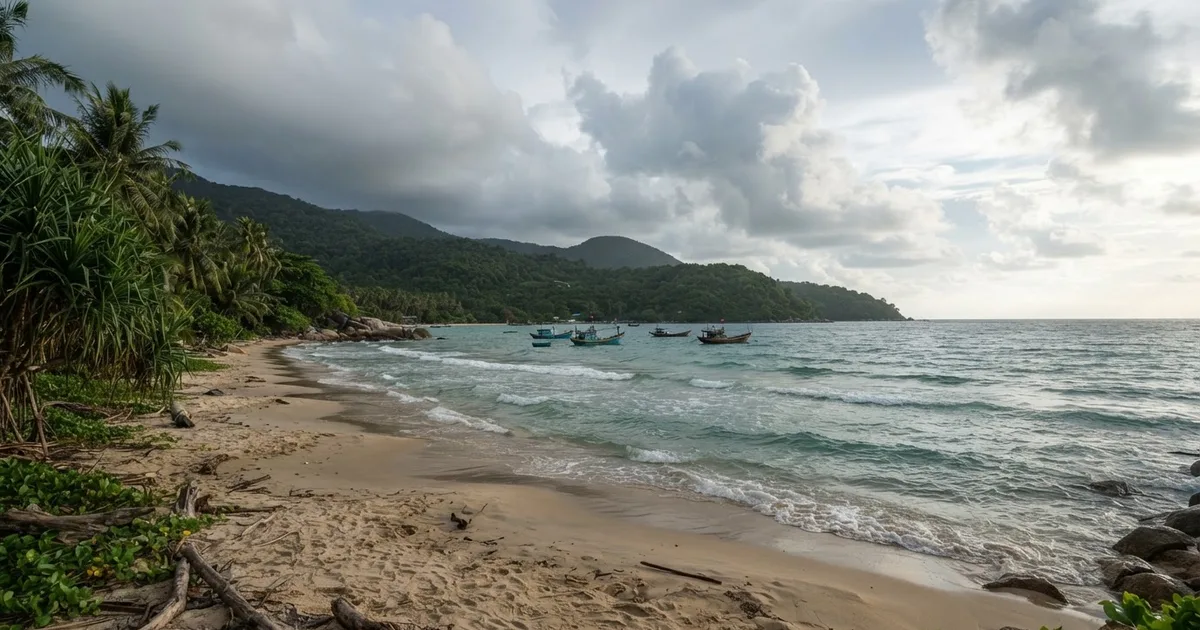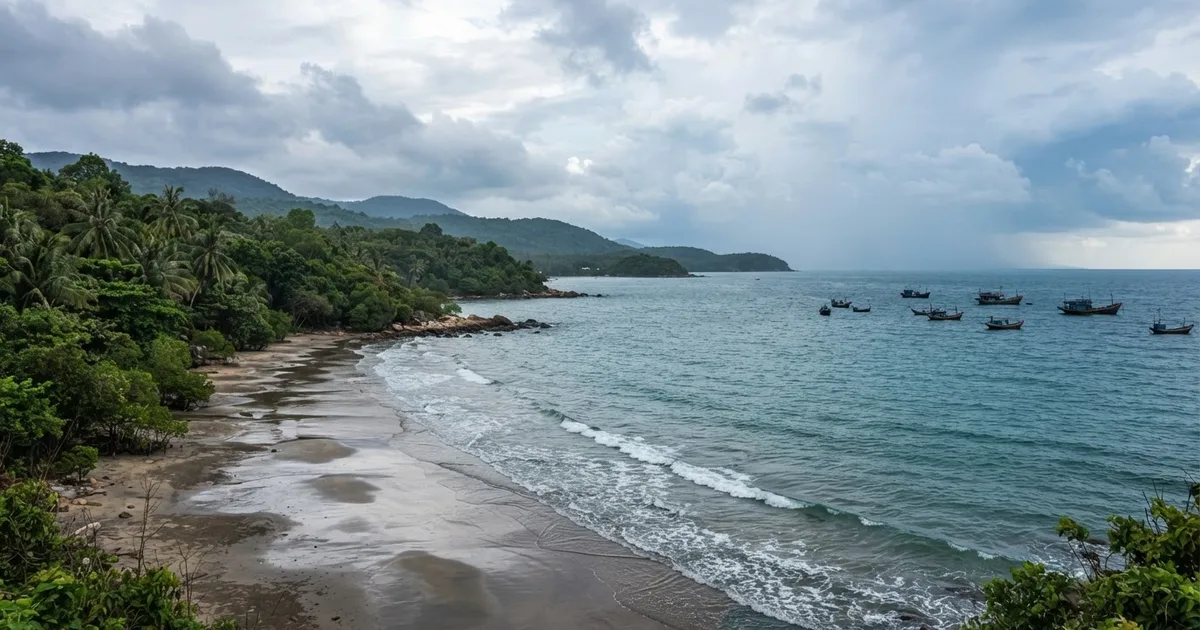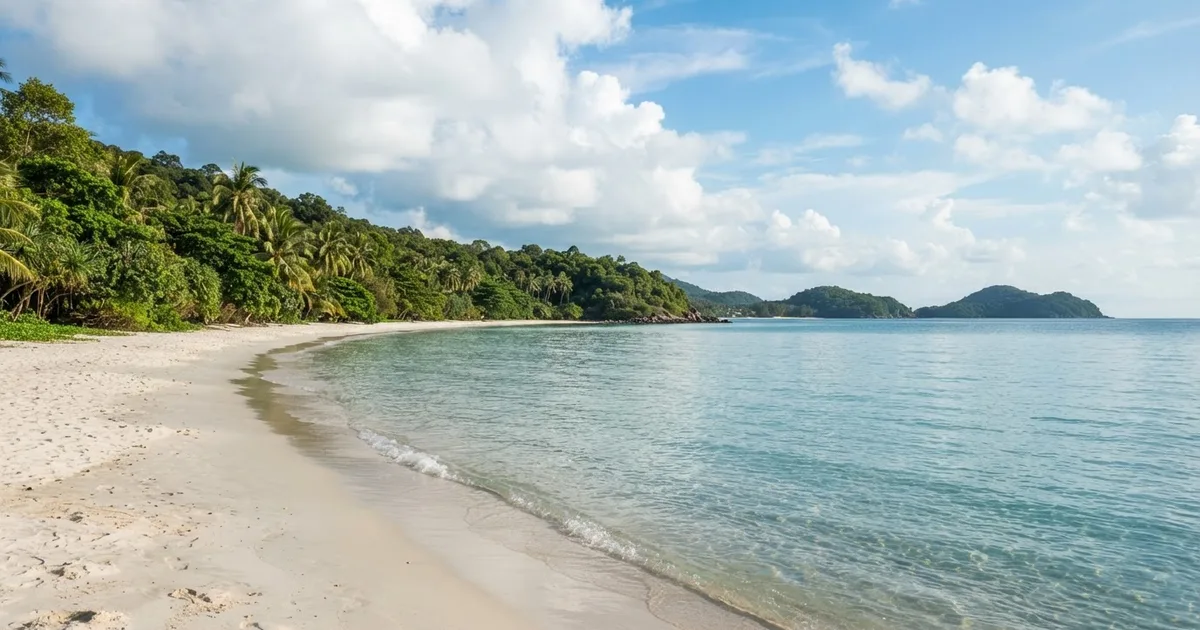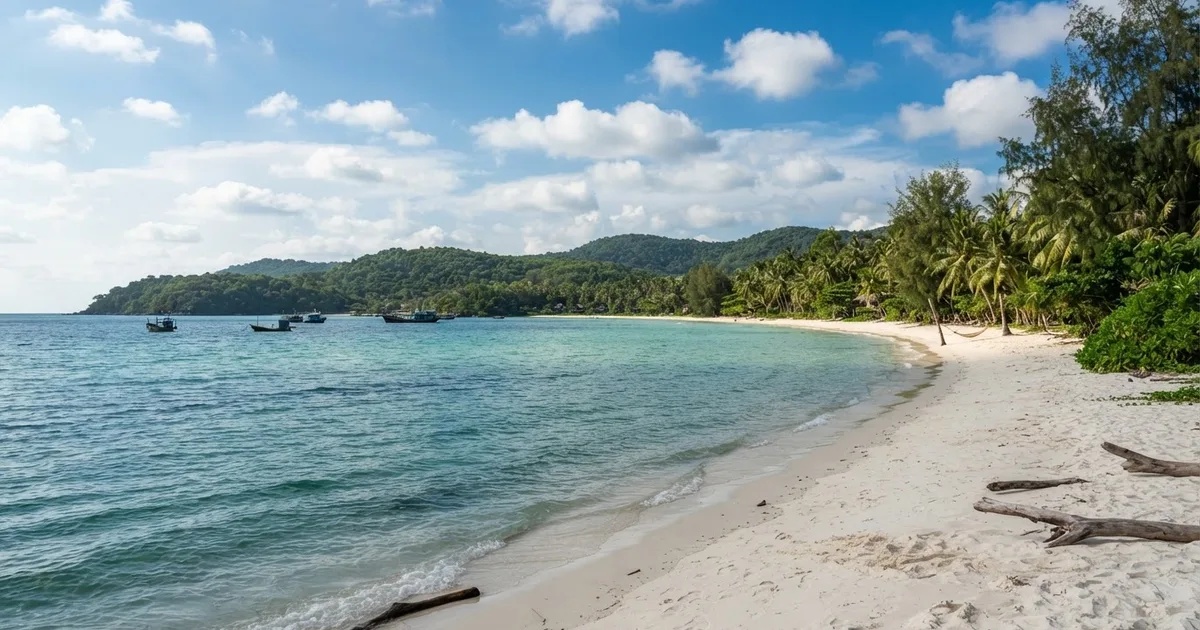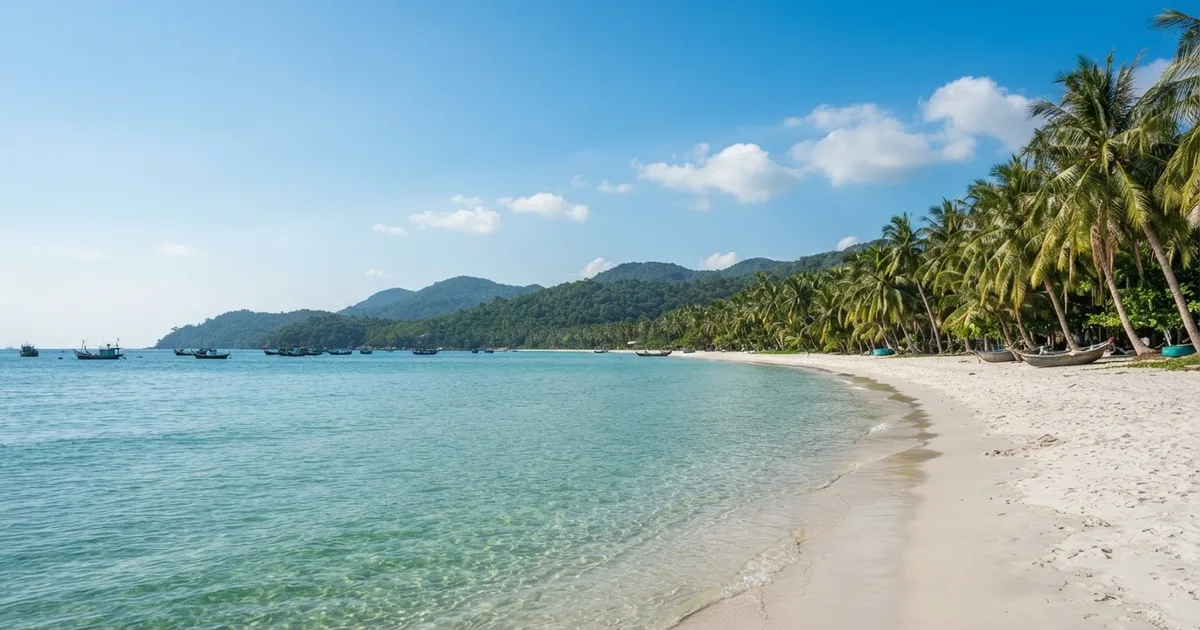
February is statistically the strongest weather month of Phu Quoc's dry season: roughly 35 mm of rain spread across about 5 days, around 8 hours of sunshine per day, daytime highs near 31°C and overnight lows around 22°C. The west coast is at its calmest, so seas stay flat for swimming, snorkeling and boat trips out to the An Thoi islands. The one catch is Tet, Vietnam's Lunar New Year, which lands in late January or February — that is when hotel rates hit their annual peak and domestic flights sell out weeks in advance.
Phu Quoc Weather in February at a Glance
February sits in the middle of the northeast monsoon's tail end. The trade winds that bring rain and chop to Vietnam's central coast have weakened, and on Phu Quoc they mostly blow from the northeast — which means the island's long western shoreline is sheltered while the eastern-facing beaches pick up a little breeze. That is why local guides describe February on the west coast as very calm, with brilliant golden sunshine from morning to late afternoon.
Rain in February is not the steady drizzle of the wet season. When it does fall, it is usually a short, heavy afternoon or evening shower that clears within an hour, followed by steam rising off the road and a bright sunset. Five rainy days out of 28 does not mean five washed-out days.
| February metric | Typical value on Phu Quoc |
|---|---|
| Average daytime high | ~31°C (88°F) |
| Average nighttime low | ~22°C (72°F) |
| Total monthly rainfall | ~35 mm (some sources report 20–30 mm) |
| Rainy days | ~5 |
| Daily sunshine | ~8 hours |
| Sea temperature | ~27–28°C (81–82°F) |
| Humidity | ~70–75%, highest in the early morning |
| UV index at midday | 10–12 (extreme) |
| Sunrise / sunset | ~06:20 / ~18:20 |
| Dominant wind | Light northeast trades; west coast sheltered |
The practical takeaway: February is hot but not brutal. The 31°C peak arrives around 1–3 pm and drops quickly after 4 pm, which is why the standard island rhythm in February is beach early, shade or air-conditioning at midday, activity in the late afternoon, and dinner outdoors after 7 pm when it settles to a comfortable 24–25°C.
February vs January: Which Dry-Season Month Should You Pick?
January and February are usually presented as the two best months to visit Phu Quoc, and for good reason — both are dry, sunny and warm. But they are not identical, and the differences matter depending on what you plan to do.
| Metric | January | February |
|---|---|---|
| Average temperature | ~27.1°C (range roughly 25.6–28.4°C) | ~31°C day / ~22°C night |
| Total rainfall | ~51.2 mm | ~35 mm |
| Rainy days | ~8.7 | ~5 |
| Daily sunshine | ~10–11 hours | ~8 hours |
| Sea state on the west coast | Calm, occasionally breezy | Calmest of the year |
| Best for | Long sightseeing days, national park walks, island touring | Beach and water days, snorkeling, diving, boat trips |
January gives you longer daylight hours and slightly cooler daytime temperatures, which makes it the better month for covering ground: the national park trails, the pepper farms and fish sauce houses around Duong Dong, Ham Ninh fishing village, and long motorbike loops. February gives you fewer rainy days, warmer water and flatter seas — the better month if the beach and the underwater world are the point of the trip.
Where February is a poor fit: travellers on a tight budget who cannot absorb Lunar New Year pricing, anyone who hates planning ahead (flights and rooms genuinely do sell out), and people who dislike humid heat — 31°C with 70–75% humidity feels closer to 36°C at midday, and the national park's shaded trails get sticky by 10 am. If any of those describe you, aim for the second half of March or the first half of December instead.
Local timing tip: if you want February's weather without February's prices, book the first 7–10 days of the month. Tet travel demand builds in the week before the holiday itself and collapses in the days immediately after, when rates can drop by more than half.
Beaches, Sea Conditions and Water Activities in February
This is where February earns its reputation. The northeast trades that still rough up the Gulf of Thailand in December and early January have largely eased, and the island's west-facing shoreline sits in the lee of the land. Long Beach (Bai Truong), the 20 km stretch that runs from Duong Dong town south toward An Thoi and past most of the island's resorts, stays almost flat in February. So do Ong Lang and the string of small coves at Sunset Beach to the north — the classic places for an evening swim as the sun drops at around 6:15–6:30 pm.
On the south and southeast coasts, Sao Beach (Bai Sao) and Khem Beach still fish-bowl their way through February, but they can pick up a modest afternoon chop from the northeast wind. If you want guaranteed glassy water, head south to the An Thoi archipelago: Hon Thom, Hon Dua, Hon Roi and Gam Ghi. Visibility for snorkeling and diving typically peaks in the February–April window, and the shallow reefs around those islands are where beginners get their clearest first look at the Gulf of Thailand.
Water-based things that work well in February
- Four-island snorkeling day trips — departing from An Thoi harbour, typically $25–45 per person including lunch and pickup.
- The Hon Thom cable car — a 7.9 km over-sea cable car from An Thoi to Hon Thom, roughly 15 minutes each way, with the clearest views of the year in February.
- Kayaking and stand-up paddleboarding — best in the early morning on Long Beach or at Rach Vem, where the water is shallow and the wind has not yet picked up.
- Sunset boat cruises — February's low cloud cover produces the island's most reliable golden-hour conditions.
- Diving — the dry season gives the best visibility window; a two-tank boat dive around the An Thoi islets generally runs $60–90.
One caution for February: with 10–12 UV index at midday and almost no cloud cover, the burn time for unprotected skin can be under 20 minutes. Reef-safe sunscreen, a rash guard and a hat are not optional if you plan a full day in the water.
Tet, Crowds and Prices: What February Really Costs
February's one genuine downside is Tet, Vietnam's Lunar New Year. Crowd ratings for the month vary because of it: one Phu Quoc travel guide marks February as "medium-high" overall, while another rates it simply "high (Tet)" — and "highest" for prices. Both are correct, because February is a month of two halves.
Tet falls on a different date each year depending on the lunar calendar, landing in late January or February — in 2026 it begins on 17 February. The official public holiday runs about five days, but Vietnamese domestic travel stretches across two to three weeks either side as families head to the coast. Phu Quoc, an island reachable by a one-hour flight from Ho Chi Minh City and a two-hour flight from Hanoi, is one of the country's most popular Tet destinations.
February works well for you if…
- You want the driest, calmest seas of the year for snorkeling, diving and beach days.
- You book flights and accommodation 6–8 weeks ahead, or you are flexible on dates.
- You are happy to pay peak-season rates for a resort with a pool and beach access.
- You enjoy a lively island — night markets, fire shows, beach bars and Tet decorations.
- You are travelling as a couple or family with a set holiday window in the Northern Hemisphere winter.
February is a poor fit if…
- You are on a backpacker budget — rooms that cost $18 in September can be $60+ during Tet week.
- You leave booking to the last minute; domestic flights to Phu Quoc sell out completely in Tet week.
- You want empty beaches and quiet restaurants.
- You need small local eateries, tailors or laundry shops that close while staff return to the mainland.
- You dislike midday heat and humidity and want to hike the national park comfortably.
If your dates are flexible, the sweet spot is the first week of February and the week after Tet ends. You get the same 35 mm of rain and the same flat west-coast water, but accommodation drops back toward normal high-season rates and the island breathes again. Several airlines also add extra Phu Quoc frequencies around Tet, so check schedules rather than assuming the usual timetable.
What to Pack and How to Plan a February Day on Phu Quoc
February packing is simple, but a few items genuinely change the trip. The heat is dry-ish rather than monsoon-humid, the sun is fierce, and the evenings are cool enough for a light layer if you are on a motorbike after dark.
- Reef-safe sunscreen SPF 50 and a rash guard — midday UV hits 10–12.
- Light, loose long sleeves and a wide-brim hat for motorbike days.
- A compact rain shell — you may only use it once, but the showers are heavy when they come.
- Mosquito repellent for evenings near the national park and rivers.
- Cash in Vietnamese dong, including small notes — useful at markets and small rental counters, especially during Tet.
- An IDP or your home driving licence plus your passport if you plan to rent a scooter; helmets are mandatory.
- Refillable water bottle — you will drink 3+ litres a day in this heat.
A sensible February day on the island runs like this: swim or snorkel from 7 to 10:30 am while the water is calmest and the light is soft; retreat to air-conditioning, a spa or an indoor attraction like Vinpearl Safari or Grand World between 11 am and 3 pm; head back out for the Hon Thom cable car, a kayak trip or a pepper-farm and fish-sauce-factory loop in the late afternoon; then catch sunset on the west coast around 6:20 pm and eat at the Dinh Cau night market in Duong Dong once it cools down.
Because the roads are dry and daylight is reliable, February is also one of the best months for a self-guided motorbike day. Scooter rentals on the island generally run about $6–10 per day including a helmet, with delivery to your hotel. A classic February loop is Duong Dong to Ganh Dau in the northwest, stopping at Ong Lang, Cua Can and the national park entrance, and returning down the west coast for sunset — roughly 70–80 km, comfortably done between 2 pm and 6:30 pm.
Book the boat trips early. February is peak snorkeling season, and the best four-island and sunset-cruise departures fill up several days in advance during Tet week. Reserve before you arrive rather than the morning of.
Frequently Asked Questions
Is February a good time to visit Phu Quoc?
Yes — most guides rate February as one of the best months of the year, alongside January. You get around 35 mm of rain over roughly 5 days, about 8 hours of daily sunshine, 31°C days and 22°C nights. The main trade-off is Tet, when crowds and hotel prices peak.
How much rain does Phu Quoc get in February?
About 35 mm across roughly 5 rainy days, and some climate guides put it lower at 20–30 mm, making February the driest month of the year on some charts. The rain usually arrives as short, heavy afternoon showers rather than all-day drizzle, so you rarely lose a full day.
What is the temperature in Phu Quoc in February?
Daytime highs average around 31°C (88°F) and nights drop to about 22°C (72°F). Sea temperature sits at roughly 27–28°C, warm enough for long swims without a wetsuit. Humidity of 70–75% makes midday feel several degrees hotter than the number suggests.
Is the sea calm enough for swimming and snorkeling in February?
Yes. The west coast — Long Beach, Ong Lang and Sunset Beach — is at its calmest of the year, and the southern An Thoi islands offer the clearest water of the year for snorkeling. Only the southeast-facing beaches such as Sao Beach can pick up a light afternoon chop from the northeast trade winds.
Is February more expensive in Phu Quoc?
During Tet week, yes — one guide rates February prices as the highest of the year, with rooms that cost $18 elsewhere climbing past $60 and premium resorts rising further. Outside the Tet window, particularly the first week of the month and the days right after the holiday, prices fall back to normal high-season levels.
How far ahead should I book Phu Quoc for February?
Book flights and accommodation 6–8 weeks ahead for the Tet period, and earlier if you want specific resorts or a beachfront room. Domestic flights from Hanoi and Ho Chi Minh City genuinely sell out during Tet week, so do not leave it to the last fortnight.
What should I pack for Phu Quoc in February?
Reef-safe SPF 50 sunscreen, a rash guard, light long sleeves, a wide-brim hat, mosquito repellent, a compact rain shell and a refillable water bottle. Bring cash in Vietnamese dong with small notes, plus an IDP or driving licence if you plan to rent a scooter — helmets are mandatory on the island.
Planning a February trip to Phu Quoc? Sabrina Rental can sort your scooter, your room and your island boat trips before you land — so you skip the Tet scramble entirely.
Ask Sabrina About February Bookings