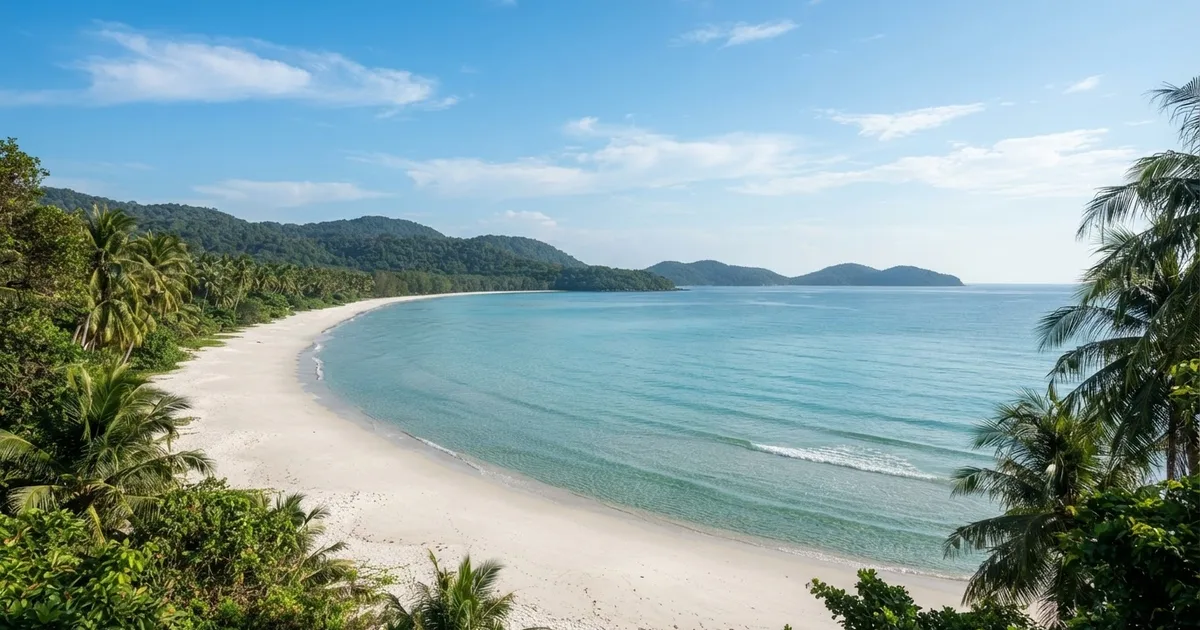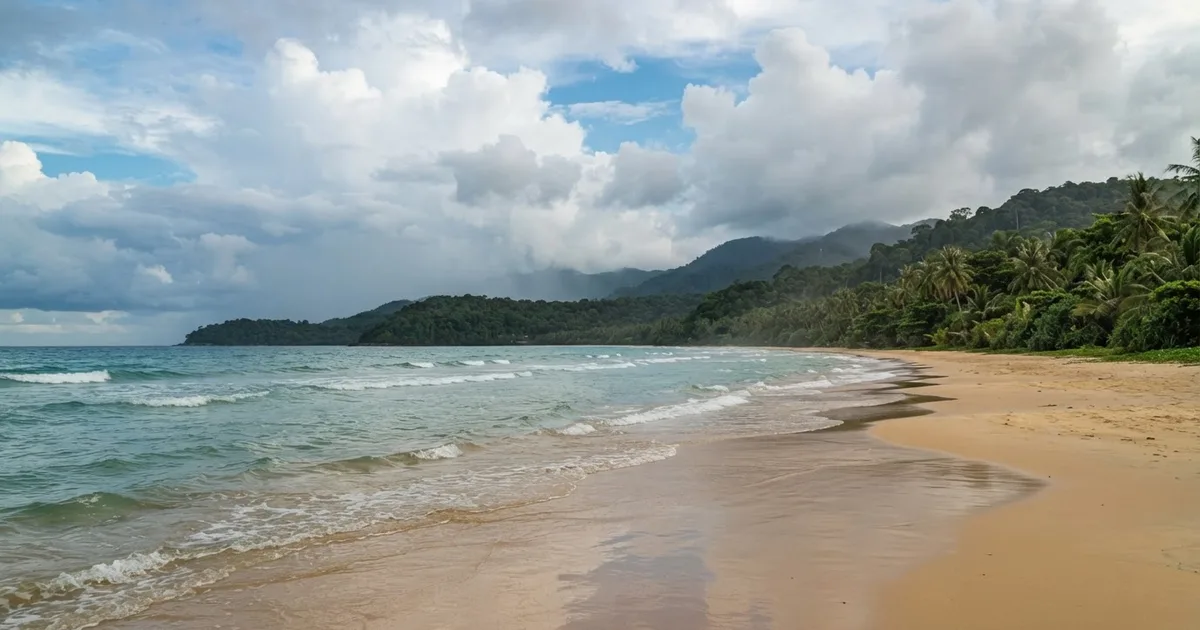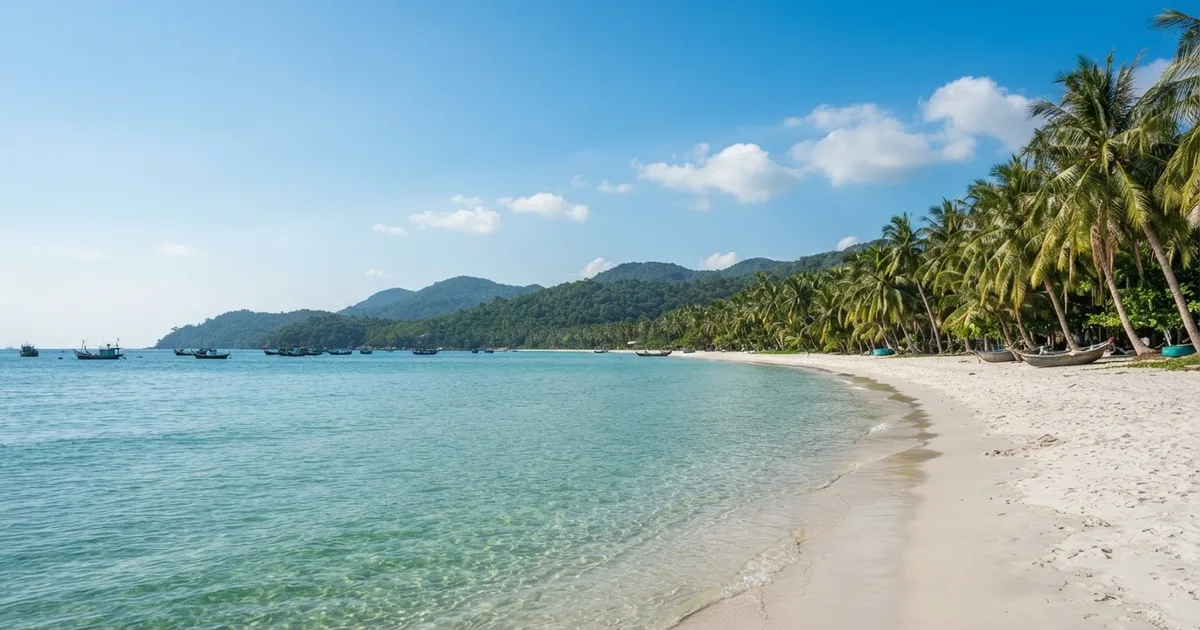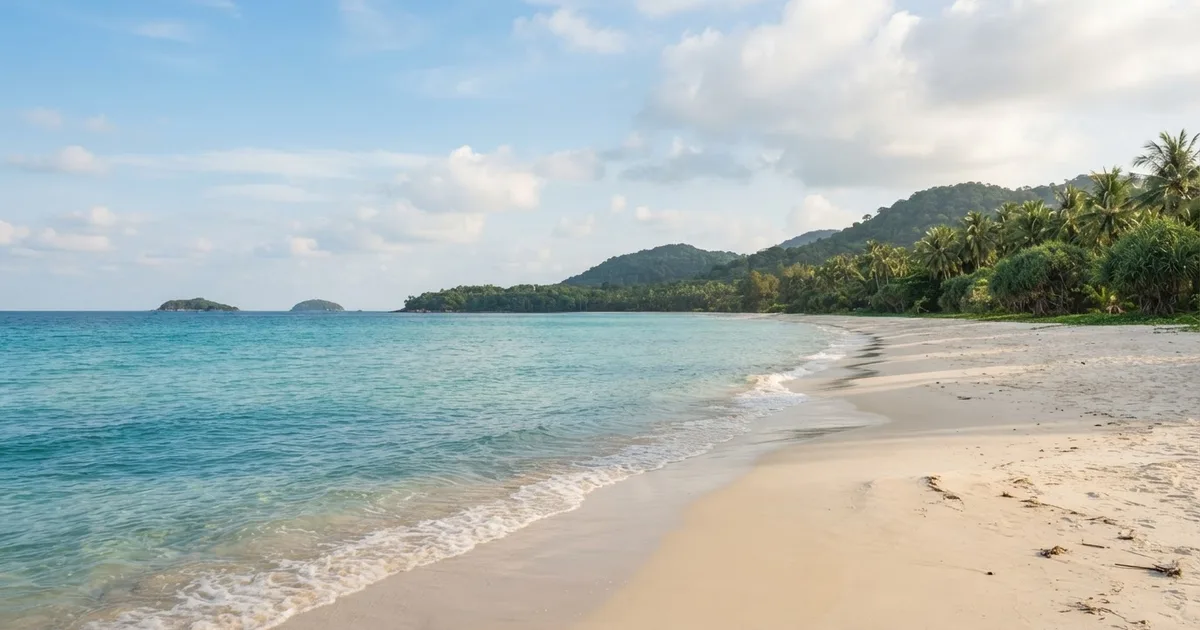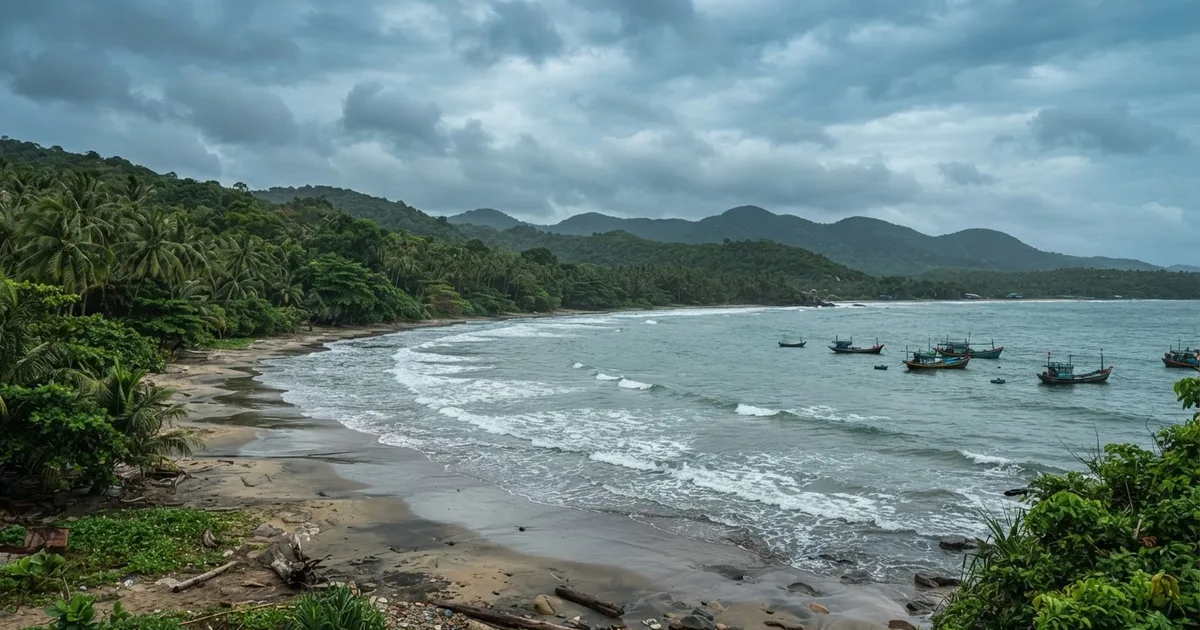
August is the wettest month of the year in Phu Quoc, Vietnam. Expect daytime highs of 87–89°F (31°C), overnight lows around 82–83°F, humidity of 84–86%, and 238–400 mm of rain spread across roughly 18–26 rainy days. In exchange you get the smallest crowds and the lowest accommodation prices of the year — and most of that rain falls in short, intense showers of one to two hours rather than all-day downpours.
How Hot and Humid Is Phu Quoc in August?
August is not a cool month on Phu Quoc. The 2026 forecast puts daytime highs at 87–89°F (30.5–31.7°C) with overnight lows of 82–83°F, while other month-by-month data for the island lists August nights closer to 25°C and days near 31°C. Either way, you are dealing with a genuinely tropical, sticky month — VietnamOnline records an August average of 27.5°C to 29.0°C for Phu Quoc.
The number that really shapes your day is humidity. August humidity runs at roughly 84–86%, and when you combine that with a 31°C air temperature the heat index regularly pushes into the mid-90s°F. That matters for planning: a 30-minute walk along Long Beach at noon in August feels considerably harder than the same walk in January, when the island averages a comfortable 27.1°C.
Practically, this means shifting your outdoor hours. Early mornings from 6am to 10am and the hour right after a rain shower are the most comfortable windows for sightseeing, motorbike rides and beach time. Midday is for air conditioning, a shaded pool, a spa treatment or a long lunch. Because the island sits close to the equator, the sun still burns through thin cloud — sunscreen is not optional just because it looks grey outside.
| Metric | August on Phu Quoc |
|---|---|
| Daytime high | 87–89°F (30.5–31.7°C) |
| Overnight low | 82–83°F (about 28°C); some sources put it nearer 25°C |
| Monthly average temperature | 27.5°C to 29.0°C |
| Humidity | 84–86% |
| Rainfall | 237.9 mm to 400 mm |
| Rainy days | 17 to 26, depending on the source |
| Sea conditions | Very rough |
| Crowds | Minimal |
| Prices | Lowest of the year |
How Much Rain Does Phu Quoc Actually Get in August?
The honest answer is that published August rainfall figures for Phu Quoc disagree quite a lot, and it pays to know the range before you book. VietnamOnline records about 21 rainy days and 238 mm of precipitation. A separate August 2026 forecast gives more than 20 rainy days with 237.9 mm. One travel guide describes August as the second-wettest month, with 280–340 mm across 17–19 rainy days. Another 2026 forecast pushes higher still, to over 320.9 mm across more than 26 days. Premier Residences Phu Quoc, writing from the island itself, reports 370–400 mm over about 18–20 days. A 2026 month-by-month guide simply calls August the wettest month, with very low crowds and the lowest prices.
So the realistic planning figure is 240–400 mm of rain over roughly 18–26 rainy days. That is five to eight times the volume of a dry-season month — January, by comparison, sees only 51.2 mm over 8.7 rainy days. If you are comparing months on rainfall alone, August is the clear outlier at the wet end of the year.
What those millimetres do not tell you is how the rain behaves. According to Premier Residences Phu Quoc, August rain usually arrives as short, intense showers lasting one to two hours, most often in the late afternoon or evening. That is the classic southwest monsoon pattern: mornings frequently start bright and humid, cloud builds through the afternoon, and a heavy squall rolls through between roughly 3pm and 8pm. Some days bring two or three shorter bursts. Occasionally you get a genuinely grey, wet day where it rains on and off for twelve hours.
Traveloka notes that August rainfall may start decreasing toward the end of the month, so travellers with flexible dates should look at the final 7–10 days of August rather than the first week.
Tip: Build your August itinerary around mornings. Book boat trips, cable car rides, waterfall walks and beach time before 11am, and keep the afternoon for indoor attractions, spas or a long lunch. A cheap local rain poncho costs a couple of dollars and is far more useful than an umbrella in monsoon gusts.
What Does August Weather Mean for Beaches, Swimming and Boat Trips?
A month-by-month beach guide rates August seas around Phu Quoc as very rough, with very high rainfall and minimal crowds. That combination has direct consequences for what you can actually do.
Swimming is still possible — the water stays warm at roughly 28–29°C — but the west-coast beaches that are calm and glassy in January can carry real surf, rip currents and stirred-up sand in August. Long Beach and Ong Lang are the most sheltered options on the west side, while Sao Beach and the southern beaches are generally calmer than the exposed northwest. Red and yellow flag warnings should be taken seriously; August is not the month for casual swimming far from shore.
The bigger disruption is on the water. Snorkeling and diving trips to the An Thoi archipelago are frequently cancelled or rescheduled in August because of swell and reduced underwater visibility. The Hon Thom cable car may suspend operations in high winds. Boat tours to the northern islets, kayaking in the mangroves and sunset cruises all become weather-dependent rather than guaranteed.
August works well for
- Travellers chasing the lowest room rates of the year
- People who want empty beaches and quiet restaurants
- Indoor-focused trips: spas, cooking classes, night markets, cafés
- Photographers who want dramatic monsoon skies and lush green landscapes
- Long-stay visitors who can simply wait out a wet afternoon
August is a poor fit for
- Divers and snorkelers with fixed dates — visibility and sea state are at their worst
- Anyone planning multiple island-hopping or boat-tour days
- Families with small children who need reliable beach time every day
- Weddings, proposals and photo shoots that depend on dry, clear light
- Short two- or three-night trips where one washed-out day ruins the whole plan
If your trip is short and beach-and-boat activities are the whole point, August is genuinely the wrong month. If your trip is longer, flexible, or you simply want a cheap, uncrowded tropical island, it can work very well.
What to Pack for Phu Quoc in August
Packing for August is about managing wet, humid and hot conditions simultaneously. Laundry dries slowly at 84–86% humidity, so bring more changes of clothing than you would for a dry-season trip of the same length.
- Lightweight, quick-drying clothing — cotton stays damp for hours in August humidity
- A packable rain poncho or lightweight shell; umbrellas struggle in monsoon gusts
- Two pairs of footwear: sandals for wet streets and closed shoes for motorbike riding
- Dry bag or waterproof phone pouch — essential for boat trips and motorbike rides
- Reef-safe sunscreen SPF 50, plus after-sun or aloe gel
- Insect repellent — standing water in August means more mosquitoes at dusk
- Spare power bank, since power flickers are more common during heavy storms
- A light long-sleeve layer for strong air conditioning in cafés and ferries
For motorbike riders, August adds one more item: a proper rain jacket rather than a poncho, plus the discipline to slow down. Wet asphalt on the island's red-dirt side roads, especially around the fish sauce factories and the northern routes, becomes genuinely slippery within minutes of a downpour.
August vs January: Phu Quoc's Two Extremes
The clearest way to judge August is against January, which is widely considered one of the best months to visit Phu Quoc. January sits squarely in the dry season with warm temperatures, minimal rainfall and roughly 10–11 hours of sunshine per day — conditions described as ideal for swimming, sightseeing, snorkeling and diving.
| Factor | August | January |
|---|---|---|
| Rainfall | 238–400 mm | 51.2 mm |
| Rainy days | 18–26 | 8.7 |
| Average temperature | 27.5–29.0°C | About 27.1°C |
| Daily temperature range | 25–31°C | 24–30°C |
| Humidity | 84–86% | Noticeably lower |
| Sea state | Very rough | Calm, ideal for diving |
| Sunshine | Limited by cloud | 10–11 hours per day |
| Crowds | Minimal | Peak season |
| Prices | Lowest of the year | Highest of the year |
Notice that the temperature difference is small — August is only marginally warmer than January. What changes dramatically is water: August delivers five to eight times January's rainfall, and January delivers calm seas that August simply cannot match. If your priority is diving, snorkeling or reliable sunshine, January wins on every metric. If your priority is price and solitude, August wins just as clearly.
Getting Around Phu Quoc in August: Roads, Motorbikes and Ferries
August affects transport more than most visitors expect. The island's main north–south road is paved and generally fine in rain, but the smaller side roads and red-dirt tracks — particularly around the pepper farms, the fish sauce factories and some northern beaches — turn slick and, in places, genuinely impassable after heavy downpours.
Motorbike rental remains the most flexible way to move around in August, precisely because you can wait out a shower under a shop awning and then continue. Rentals are at their cheapest of the year in August, and the reduced traffic makes the island noticeably easier to ride than during peak season. Riders should plan shorter loops, avoid long northern routes late in the day, and never ride through flooded sections where you cannot see the road surface.
Ferries and speedboats to the mainland and between islands are more prone to cancellation or delay in August due to rough seas. If you are connecting to a flight from Rach Gia or Ha Tien, leave a buffer day rather than travelling on the same day. Domestic flights to Phu Quoc International Airport are less affected by rain than by wind, but afternoon storm cells can still cause delays.
Frequently Asked Questions
Is August a good time to visit Phu Quoc?
It depends entirely on your priorities. August is the wettest month, with 238–400 mm of rain over 18–26 rainy days and very rough seas, so it is a poor choice for diving or boat-heavy itineraries. But it also brings the lowest prices of the year and minimal crowds, which makes it excellent value for flexible, long-stay or indoor-focused travellers.
How many days does it rain in Phu Quoc in August?
Published figures range from 17 to 26 rainy days. VietnamOnline records about 21 rainy days, a 2026 forecast gives more than 20, and Premier Residences Phu Quoc reports roughly 18–20 days. The most useful planning number is 18–26 wet days — but most of those days include long dry spells rather than continuous rain.
Does it rain all day in Phu Quoc in August?
Usually not. According to Premier Residences Phu Quoc, August rain typically comes as short, intense showers lasting one to two hours, often in the late afternoon or evening. Mornings are frequently bright and humid. That said, occasional monsoon days do bring on-and-off rain for most of the day, so build slack into your itinerary.
Can you swim in the sea in Phu Quoc in August?
Yes, but with care. Water temperatures stay warm at around 28–29°C, yet August seas are rated very rough, with stronger surf and rip currents on exposed west-coast beaches. Sheltered spots like Ong Lang and Long Beach are safer, and Sao Beach in the south is often calmer. Always follow red and yellow flag warnings.
Can you still go island hopping or snorkeling in August?
It is hit and miss. Snorkeling and diving trips to the An Thoi archipelago are frequently cancelled or rescheduled in August because of swell and poor underwater visibility, and the Hon Thom cable car can suspend in high winds. Book boat trips with free cancellation, and schedule them early in your stay so you have room to reschedule.
Is August cheaper than January in Phu Quoc?
Considerably. August is rated the lowest-price month of the year with minimal crowds, while January is peak dry-season travel with the island's highest room rates. You are trading 51.2 mm of January rain and calm diving seas for 238–400 mm in August — and paying far less for the trade-off.
When does the rain ease in Phu Quoc?
Traveloka notes that August rainfall may start decreasing toward the end of the month. If your dates are flexible, aim for the final 7–10 days of August rather than the first week. Conditions continue improving through September and October before the dry season proper arrives around November to December.
What should I pack for Phu Quoc in August?
Quick-drying clothing, a rain poncho rather than an umbrella, two pairs of footwear, a dry bag for boat trips and motorbike rides, SPF 50 sunscreen, and insect repellent for dusk mosquitoes. At 84–86% humidity, laundry dries slowly, so bring more changes of clothes than you would for a dry-season trip of the same length.
Planning a trip to Phu Quoc in August? Sabrina Rental is based on the island and can help you with motorbike rental, rooms and local advice on which beaches and boat trips actually work in monsoon conditions.
Get in touch with Sabrina Rental