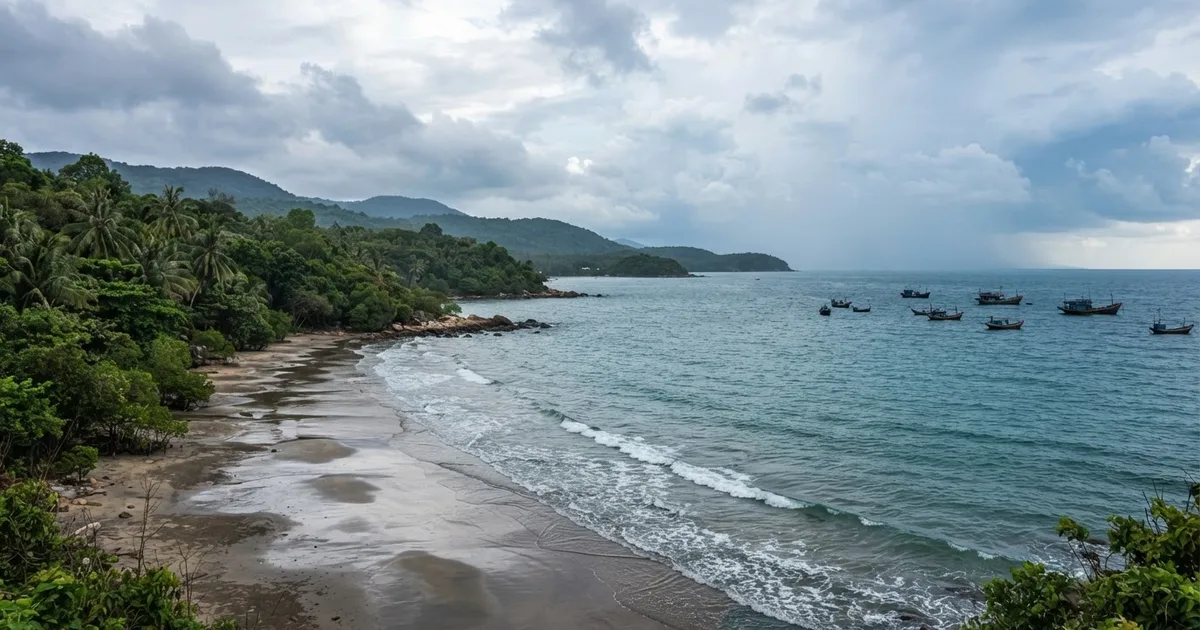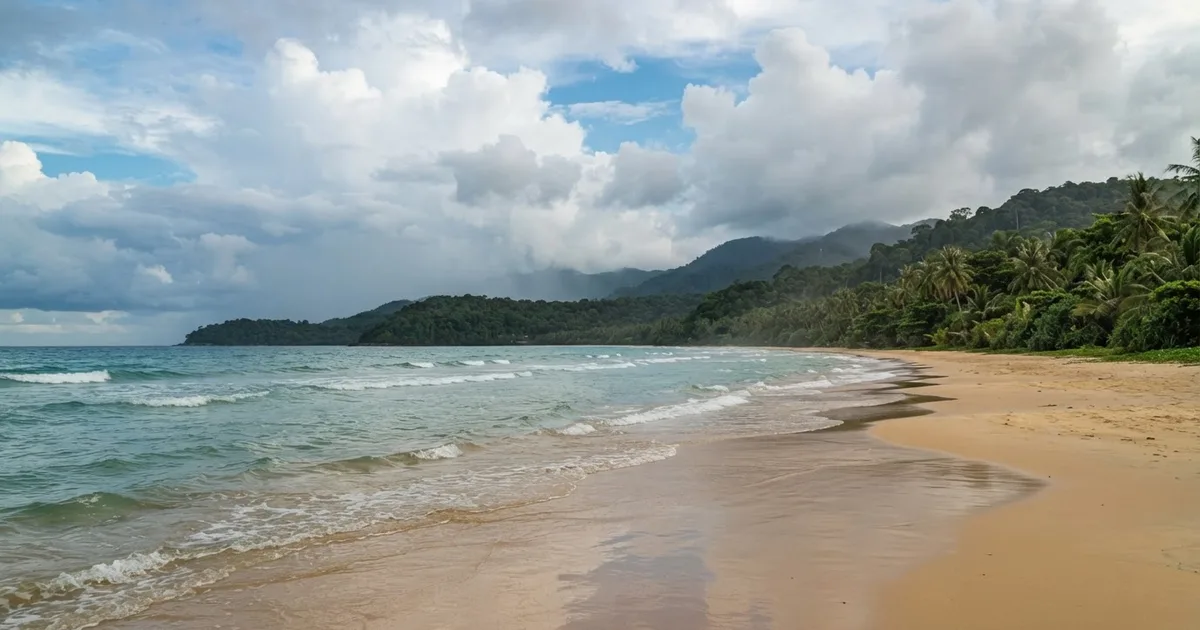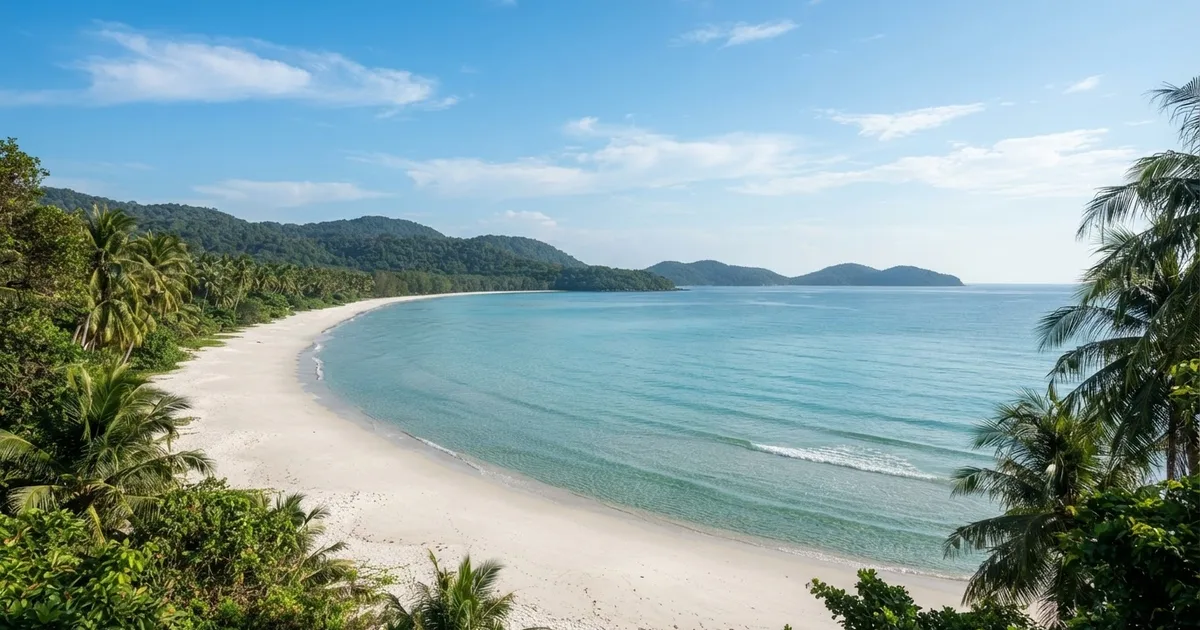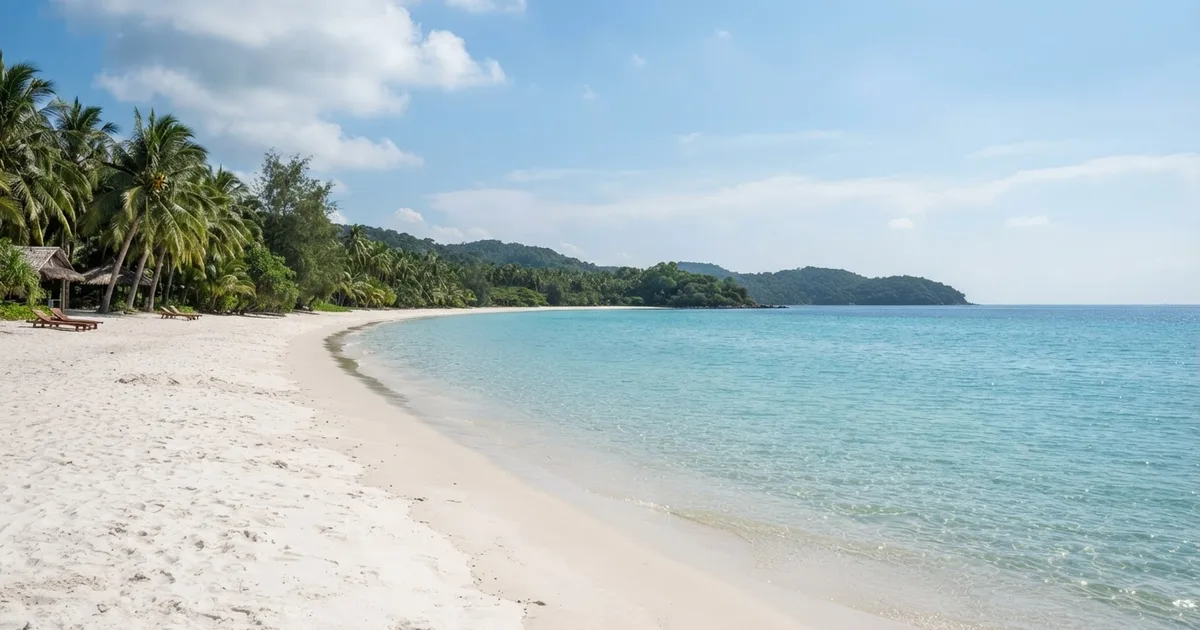
Phu Quoc's sea is at its best from November to April, when the west coast is flat, calm and can be clear to 10-15 meters on good days - with December through March delivering the most reliable swimming of the year. From May to October, the southwest monsoon turns the main west-coast beaches rough, grey and frequently unswimmable, and swimmers need to move to sheltered southeast-facing bays such as Bai Sao.
How Phu Quoc's Two Seasons Shape the Sea
Phu Quoc has just two seasons, and they dictate everything about the water. The dry season runs from November to April; the rainy season runs from May to October. Because the island sits in the Gulf of Thailand with its main resort strip - Long Beach, Ong Lang, Cua Can, Vung Bau - facing west and southwest, the seasonal wind hits exactly where most visitors swim.
From May to October, the southwest monsoon pushes wind, rain and swell straight onto those west-facing beaches. From roughly June to September, the west and southwest coasts turn choppy, grey and cloudy, while the same wind is largely blocked on the island's southern and southeastern bays such as Bai Sao and Bai Khem. In the dry season the pattern flips: the weather system that roughs up mainland Vietnam barely reaches Phu Quoc, so the west coast settles into calm, clear water with minimal wave action.
This is why the familiar advice that "the dry season is the best time to visit Phu Quoc" is really a statement about the sea, not just the sky. From November to April, west-coast beaches are at their flattest and clearest and the southern bays are calm and clear as well - the whole island is effectively swimmable. From May to October, you have to be selective about which beach you enter the water at, and on some days the honest answer is none of them on the open coast.
Month-by-Month Sea Conditions in Phu Quoc
The table below summarizes typical conditions. Treat it as a pattern, not a guarantee - a single stormy week can bend any month - but this is the reliable shape of the season on the island.
| Month | Typical sea conditions | Swimming quality | Notes |
|---|---|---|---|
| January | Flat | Excellent | Calmest water of the year; peak season |
| February | Flat | Excellent | Best single month to visit; book ahead |
| March | Calm | Excellent | Reliably glassy mornings on Long Beach |
| April | Calm, season turning | Excellent to good | Shoulder month; fewer crowds, rising heat |
| May | Building swell | Fair | Monsoon begins; swim in the mornings |
| June | Large waves on the west coast | Poor on west coast | Move to Bai Sao for calmer water |
| July | Rough sea at peak rainy season | Poor on west coast | Rainfall and wind at their strongest |
| August | Still unsettled | Poor to fair | Sheltered southeast bays are the option |
| September | Choppy; murky near river mouths | Poor to fair | Runoff clouds the nearshore water |
| October | Monsoon easing | Fair to good | Transition month; improvement late month |
| November | Seas calming | Good to excellent | Start of the reliable swimming season |
| December | Calm | Excellent | Peak season begins; southern bays calm and clear |
Two things worth flagging. First, May and October are transition months - the sea is swimmable on many days, which makes them attractive if you want dry-season water at lower prices and thinner crowds. Second, June to September is not a write-off for the whole island: it is a write-off for the open west coast, and that distinction is what the rest of this guide is about.
The Calm Season (November-April): Flat, Clear and Swimmable
From around October to April, waves on Phu Quoc shrink and the water settles, which is exactly why so many travelers choose these months for a beach trip - waves are smaller, the water is calm, and conditions are easy to plan around. By December, the west coast beaches typically have calm, clear water with minimal wave action, and the southern bays are described the same way: calm and clear. In January and February the sea is routinely flat, and swimming quality is as good as it gets all year.
Clarity follows the calm. On good days in the dry season, water visibility reaches 10-15 meters - enough to see coral and fish clearly while snorkeling around the An Thoi archipelago in the south. Sea temperatures stay bath-warm year-round, roughly 27-29°C, so your comfort in the water depends almost entirely on waves and clarity rather than cold.
The practical implications are significant. From November to April, island-hopping boat trips to Hon May Rut, Hon Gam Ghi and Hon Mong Tay run on near-daily schedules, kayaks and paddleboards are usable straight off the beach, and children can play in the Long Beach shallows without constant wave knock-downs. December to February is the peak season - expect full hotels and higher prices - and February is generally considered the single best month on the island. If you want the same sea with fewer people, November and April are the smart compromises: the water is already, or still, in excellent swimming condition, but rates and crowds drop noticeably.
The Monsoon Season (May-October): Rough Seas and Where They Hit Hardest
From May to October, Phu Quoc's rainfall increases and winds strengthen - and the wind is what wrecks the swimming. May marks the transition: the sea shows building swell and swimming quality drops to fair, still usable especially in the morning, but no longer the millpond of February. By June, the west coast sees large waves, and the standard local advice is blunt: swimmers should move to Bai Sao on the sheltered southeastern side. July sits at the peak of the rainy season, with the west coast described simply as a rough sea - and not suitable for swimming.
From roughly June to September, the southwest monsoon keeps the west and southwest coasts choppy, grey and cloudy. September adds a second problem: freshwater runoff turns the seawater murky near river mouths, spoiling both the swimming and the views along nearby stretches of coast. The rainy season does not usually mean wall-to-wall rain - many days bring a bright morning and a heavy afternoon shower - but wind and swell persist regardless of whether it is raining at that moment.
October is the turn of the tide, figuratively and literally. The monsoon eases, swell subsides, and by late October conditions often rival the early dry season. This is also why the November-to-April dry season is recommended so consistently for beach- and island-hopping travelers: it is the only stretch where the entire coastline, not just the sheltered pockets, is reliably in swimming condition.
Where to Swim When the West Coast Is Blown Out
The fix for monsoon-season waves is orientation. Bai Sao, on the southeastern coast roughly 45-60 minutes' drive from Duong Dong, sits in a bay shielded from the southwest wind - which is why it is the go-to recommendation in June when the west coast has large waves. Bai Khem, just south of it near An Thoi, offers similar shelter on a quieter stretch of sand. On the northeastern side, the beaches around Bai Thom can be remarkably calm in the mornings even at the height of the wet season.
A few honest caveats. In the strongest monsoon spells, even sheltered bays pick up swell, so judge the water on the day rather than trusting a month-by-month chart. There are no lifeguards on most Phu Quoc beaches, and red flags or local warnings should be taken seriously - shore break and currents on an open west-coast beach in July are not a matter of swimming skill. Finally, avoid entering the sea near river mouths in September, when the water is murky with runoff; that poor visibility signals reduced water quality as much as reduced views.
This geography is also why boat trips keep running, with schedule changes, through parts of the wet season: captains simply route through the lee of the southern islands. But if swimming is the point of your trip, the calmer and far more predictable formula remains November to April, when the choice of beach matters far less than the choice of beach bar.
Water Clarity, Snorkeling and Diving by Season
Visibility is the dry season's quiet advantage. From November to April, 10-15-meter visibility on good days makes the reefs around the An Thoi archipelago genuinely rewarding for snorkelers, and it is the window when Phu Quoc's dive centers run their most reliable trips. Flat January and February seas also mean boats can anchor comfortably at the best sites instead of making weather calls each morning.
In the rainy season, nearshore clarity drops. Waves stir up sand, rain swells the island's streams, and by September the water near river mouths can be distinctly murky. Offshore sites recover faster than beach-swim spots, which is another argument for a boat-based snorkeling day rather than finning out from shore between June and September. If crystal water is non-negotiable for you, plan Phu Quoc between December and March - and keep September off the shortlist entirely.
Who This Guide Suits - and Who It Doesn't
Great fit
Beach swimmers, families with kids, snorkelers and island-hoppers visiting between November and April. This is the easiest period to visit Phu Quoc: calm seas, small waves and 10-15-meter visibility days. February delivers the best version of all of it, at the cost of peak-season prices and fuller beaches.
Workable with planning
Travelers fixed to May or October, who can still find fair-to-good swimming by choosing mornings and sheltered bays. Wet-season visitors from June to August can have a great trip overall - provided they accept that beach time happens at Bai Sao, Bai Khem or Bai Thom, not on Long Beach.
Poor fit
Surfers - Phu Quoc has no consistent rideable surf, just messy monsoon shore break. Also a poor fit: July-August travelers who require glassy swimming every single day (central Vietnam's coast around Da Nang follows the opposite monsoon pattern and is calmer then), and anyone counting on clear nearshore water at river-mouth beaches in September.
Frequently Asked Questions
When is the sea calmest in Phu Quoc?
November to April is the calm season, and January and February are the flattest months of all, with sea conditions typically rated flat and swimming quality excellent. March stays nearly as good, and by December the west coast has already settled into calm, clear water with minimal wave action.
Can you swim in Phu Quoc during the rainy season?
Yes, but choose the beach carefully. From May to October the open west coast is frequently rough - especially in June and July - so swimmers should head to sheltered southeast-facing bays like Bai Sao. Expect fair rather than excellent conditions, swim in the morning, and skip river-mouth areas in September when runoff makes the water murky.
How clear is the water in Phu Quoc?
In the dry season, visibility can reach 10-15 meters on good days, which is excellent for snorkeling around the southern islands. In the rainy season, waves and runoff reduce clarity, and September is the worst month near river mouths, where the water can turn distinctly murky.
Is February really the best month to visit Phu Quoc?
For most beach travelers, yes. February combines flat seas, excellent swimming quality and the least rainfall, which is why December to February is peak season and February is generally considered the single best month. The trade-offs are higher prices and busier beaches - book accommodation well ahead.
What are sea conditions like in June?
June is one of the hardest months for the west coast, with large waves pushed in by the building southwest monsoon. The standard advice is to move to Bai Sao on the southeastern coast, roughly 45-60 minutes' drive from Duong Dong, where the bay's orientation keeps the water noticeably calmer.
Is Long Beach safe for swimming in July?
Often not. July sits at the peak of the rainy season, and Long Beach and the other west-coast beaches are described as rough and not suitable for swimming. With few lifeguards on the island, if flags are red or locals say stay out, take the open coast off your plan and use the sheltered bays instead.
Does it rain all day in Phu Quoc's rainy season?
Usually not. From May to October, a common pattern is a dry or bright morning followed by a heavy afternoon shower, and many days pass with only a few downpours. The persistent problem for swimmers is not the rain itself but the stronger winds and resulting waves, which last all day regardless of sunshine.
Where should I avoid swimming in September?
Near river mouths. September's heavy runoff turns the seawater murky close to where streams and canals meet the sea, reducing both visibility and water quality. Pick beaches away from these outlets, or wait until October and November, when the monsoon eases and conditions rebound toward dry-season standards.
Chasing calm water? Sabrina Rental is on Phu Quoc year-round and can tell you which beach is flat today, arrange a motorbike to reach Bai Sao, or set up a dry-season boat trip to the southern islands. Send us a message and we'll match your dates to the right side of the island.
Contact Sabrina Rental