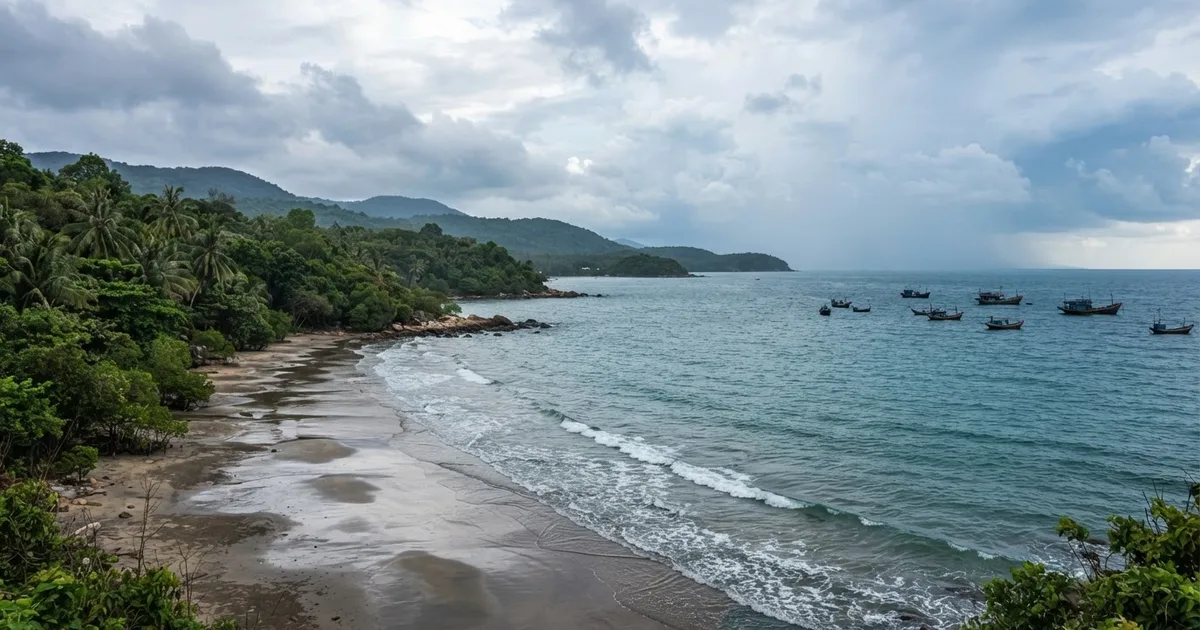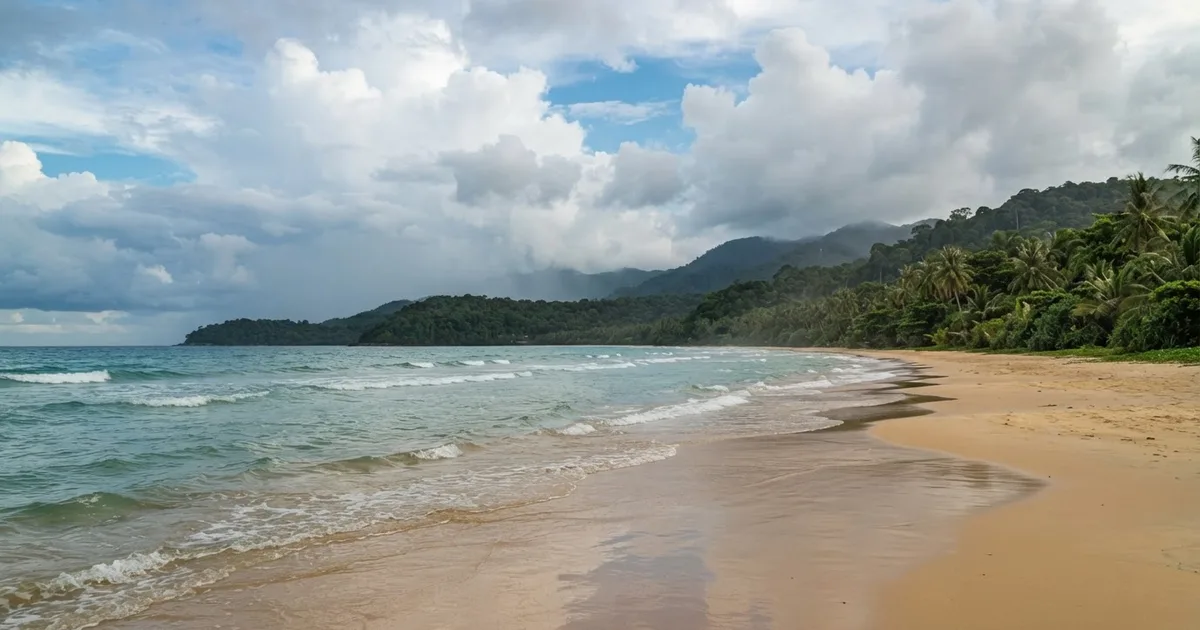
Phu Quoc's rainy season runs from May to October, with the heaviest rain between July and September, when monthly rainfall peaks at 300–400 mm and August alone averages around 21 rainy days. But the season rarely looks like a washout: rain usually arrives as a heavy 1–2 hour afternoon downpour, often between 3 and 5 pm, leaving 5–8 usable dry hours most days — and room rates drop 40–60% below peak-season prices.
When Is Rainy Season in Phu Quoc?
Phu Quoc has two monsoon-driven seasons: the dry season from November to April, and the rainy season from May to October. The wettest period falls between July and September, when peak monthly rainfall reaches 300–400 mm. August is statistically the rainiest month, averaging roughly 350–400 mm of rainfall across about 21 rainy days, and September runs close behind at around 340–400 mm over 18–20 rainy days.
The pattern has a simple geographic cause. From May to October the southwest monsoon blows directly onto Phu Quoc's west-facing shores in the Gulf of Thailand — which is exactly why the west coast gets the rough seas in these months while the sheltered east and south coasts stay comparatively calm. That single fact should shape both where you stay and which beaches you swim on (more on that below).
| Month | Rainfall (approx.) | Rainy days (approx.) | What it feels like |
|---|---|---|---|
| May | ~200 mm | 15–17 | Season begins; short afternoon showers, the island turns lush green |
| June | ~250 mm | 16–18 | Humidity climbs, west-coast seas grow choppier |
| July | ~300 mm | 18–20 | Wettest stretch begins; swells and debris on west-facing beaches |
| August | 350–400 mm | ~21 | Peak rain month — yet most days still have a long dry window |
| September | 340–400 mm | 18–20 | Very wet, but also the island's quietest and cheapest month |
| October | ~250 mm | 15–17 | Rain tapers off; shoulder month bridging toward the dry season |
For contrast, the dry season from November to April brings calmer seas and the least rainfall of the year, which is why it is considered the best time to visit Phu Quoc overall. December to February is the peak season, and February is widely regarded as the single best month. "Best," though, comes with peak prices and peak crowds — which is precisely the trade-off the rainy season reverses.
What a Rainy-Season Day Actually Looks Like
The biggest misconception about this season is that it rains all day. In reality, Phu Quoc's rain usually falls in short afternoon bursts. The most common pattern through the wet months is a heavy 1–2 hour downpour in the afternoon — guides and long-term visitors consistently point to showers arriving between 3 and 5 pm and clearing within 1 to 2 hours.
In practice, a typical August day looks like this: a bright or lightly overcast morning, ideal for the beach or a motorbike loop; a long lunch under a covered terrace; the downpour rolls in mid-to-late afternoon and empties the sky; then the streets steam dry by early evening and the sky often cracks open into one of the island's famous sunsets. On many days you get 5–8 usable dry hours — enough for a full morning itinerary plus a normal evening out.
Two caveats are worth knowing. First, humidity runs around 85–90% in these months, so even the dry hours feel heavy — quick-dry clothing and a guesthouse pool earn their keep. Second, while the afternoon-burst pattern is the norm, the wettest weeks of August and September can occasionally produce a full grey day of on-and-off rain. Those days are the exception rather than the rule, but they happen — so hold one or two indoor fallbacks in reserve instead of booking every day around the water.
Which Beaches Stay Calm (and Which Get Rough) in the Rainy Season
This is the single most useful thing a rainy-season visitor needs to know. The southwest monsoon hits Phu Quoc's west coast head-on, so between July and September the famous west-facing beaches around Duong Dong and Long Beach can have rolling swells, choppy water, and debris and seaweed washed up along the tide line. Swimming there is often not advisable, and beachfront bars look out at a sea that bears little resemblance to the calm turquoise of February photos.
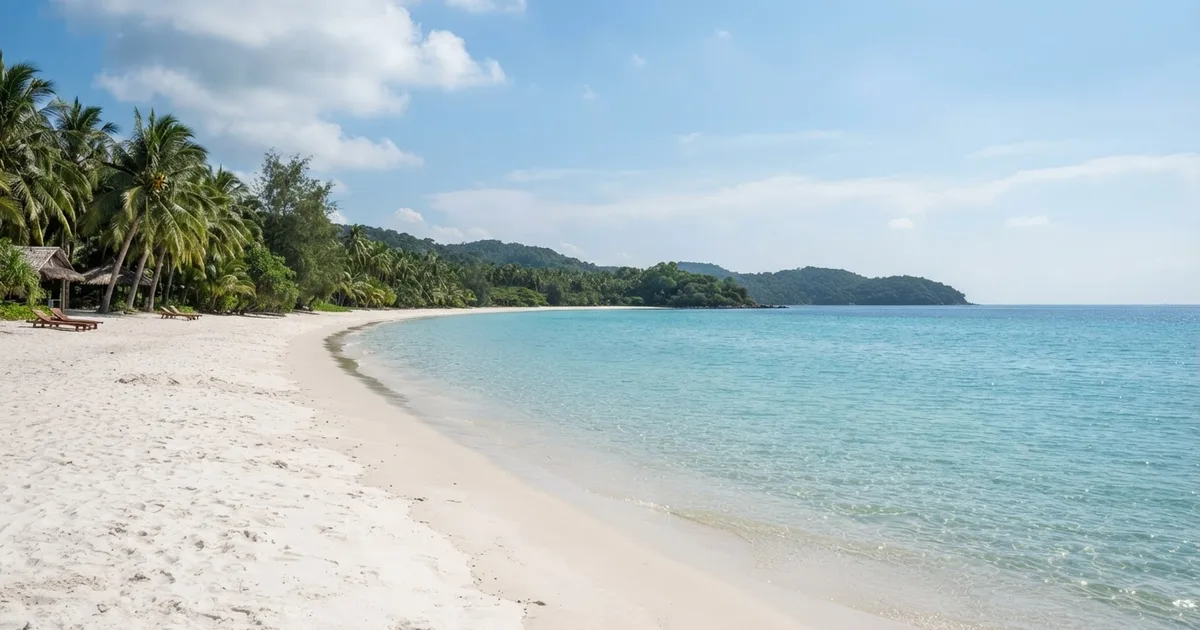
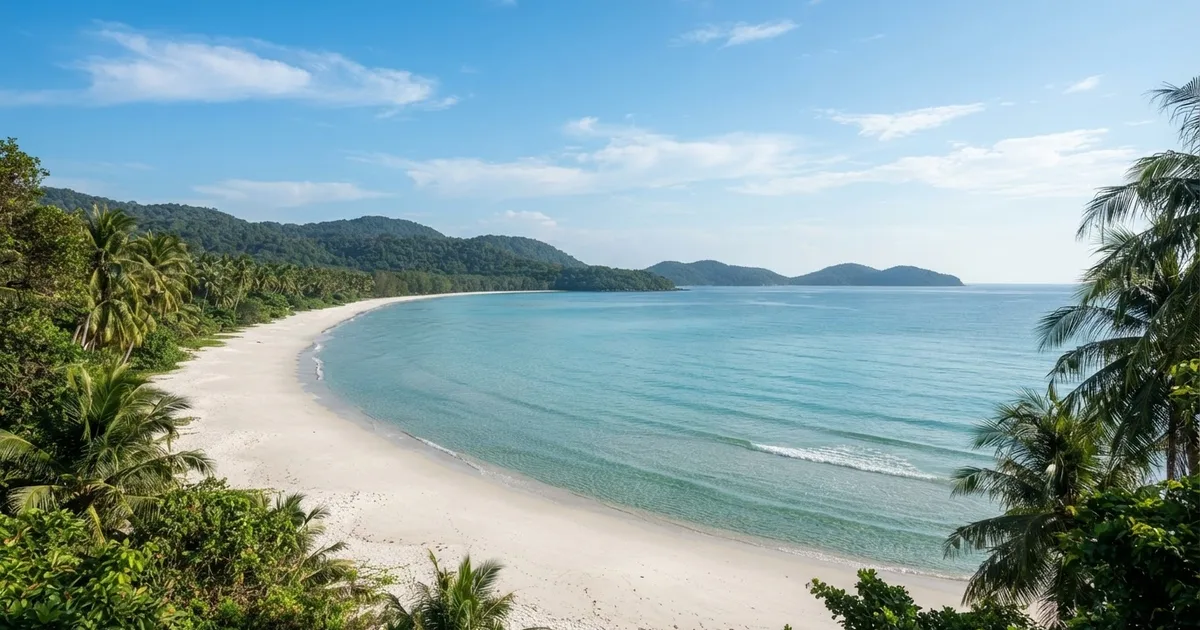
The east and south coasts, sheltered from the monsoon, are a different story. Sao Beach on the southeast and Khem Beach on the south are often calm and glassy in the rainy season, with the same white sand and far fewer people on it. The southern tip near An Thoi is also the departure point for island-hopping trips to the small islets of the southern archipelago, and these runs are typically the most reliable in wet months precisely because the south is the sheltered side of the island.
The practical takeaway: if you are visiting between July and September, either choose accommodation on the south or east side of the island, or stay near Duong Dong and treat the west coast as your sunset-and-dining zone while doing your actual swimming at Sao or Khem, roughly a 30–45 minute motorbike ride away. A rented motorbike makes this coast-swapping strategy easy and cheap.
Prices, Crowds, and Why September Is the Insider's Month
Rainy-season travel to Phu Quoc is often 40–60% cheaper than peak season. Accommodation deals are typically best in September — described by many operators as the island's quietest and cheapest month — even though it averages 340–400 mm of rain over 18–20 rainy days. A mid-range beachfront room that might run $60–90 a night in February frequently drops to $25–40 in September, and tours, motorbike rentals, and restaurant prices all soften with the crowds.
October is arguably the best value-to-weather ratio in the wet season: rainfall is tapering off, the island is still emerald green, and prices have not yet climbed toward the November dry-season rates. If you want the rainy-season discount with the lowest risk of a soaked week, aim for May, early June, or October rather than the August peak.
| Factor | Peak season (Dec–Feb) | Rainy season (May–Oct) |
|---|---|---|
| Room rates | Highest of the year | 40–60% lower; September cheapest |
| Crowds | Heaviest, especially around Christmas and Tet | Quiet; September is the emptiest month |
| Rain | Minimal, most reliable sunshine | 300–400 mm in peak months, mostly afternoon bursts |
| Seas | Calm on nearly all coasts | Rough on the west; calm on the east and south |
| Landscape | Drier, browner vegetation | Jungle at its greenest; waterfalls at full flow |
| Best for | Guaranteed beach weather | Budget travelers, long stays, photographers |
What To Do in the Dry Hours (and During the Downpour)
Plan the water-dependent activities early. Boat trips to the southern islands, snorkeling stops, and fishing charters run throughout the rainy season, but mornings offer the calmest seas and the lowest chance of interruption — the 3–5 pm shower window is the classic time for storms to build. The Hon Thom cable car, which runs nearly 8 km over the sea to the south, operates year-round but suspends service during strong winds, so ride it on a morning with decent visibility.
Several Phu Quoc highlights actually improve in the wet months. Suoi Tranh waterfall near Ham Ninh flows far more impressively after rains than in the dry season, and the jungle roads toward the national park in the island's north are at their most photogenic, with streams running and every hillside deep green. Pepper farms around Khu Tuong and the fish-sauce houses near An Thoi run tours regardless of weather, since most of the visit is under cover.
For the afternoon downpour itself, Duong Dong works in your favor: the night market's aisles are tightly packed under roofs, so browsing grilled seafood, souvenirs, and street food during a shower is completely normal — arguably better, since locals take shelter there too. Add a spa or massage session, a Vietnamese coffee somewhere covered, and a long dinner, and the rainiest hour of the day becomes one of the most pleasant.
Who the Rainy Season Suits — and Who It Doesn't
Honest framing saves bad trips, so here is the direct assessment.
A great fit if you...
- Are value-driven: 40–60% savings on rooms, tours, and rentals is the biggest discount Phu Quoc offers all year.
- Are staying a week or more — with 5–8 dry hours a day, a long stay absorbs the occasional wet afternoon easily.
- Love green landscapes, dramatic skies, and flowing waterfalls rather than postcard-perfect beach weather.
- Have visited tropical destinations before and know how to work around a daily shower.
Less suited if you...
- Have only 2–3 days and your heart is set on guaranteed blue-sky island-hopping — in August even 21 rainy days usually leave good windows, but you are gambling a short trip on them.
- Want daily swimming on west-coast beaches near Duong Dong; the monsoon makes those seas rough and debris-strewn for months.
- Need top-visibility diving or snorkeling conditions every day; after heavy rain, inshore water can cloud up.
- Struggle with 85–90% humidity, or cannot tolerate plans changing when boats or the cable car pause in high wind.
If any of the "less suited" points describes you, the honest answer is to wait for the dry season — November to April, ideally February. If the "great fit" list sounds like you, the rainy season is not a compromise at all; it is a cheaper, emptier, greener version of the same island.
Practical Rainy-Season Checklist
A little preparation converts the monsoon from a nuisance into a non-event. Locals and repeat visitors pack and plan like this:
Frequently Asked Questions
Does it rain all day in Phu Quoc during the rainy season?
No. Rain usually falls in short afternoon bursts — a heavy 1–2 hour downpour, most often between 3 and 5 pm. Most days still deliver 5–8 usable dry hours, which is enough for a full morning at the beach plus a normal evening out. Only in the wettest weeks of August and September do occasional all-day grey spells appear.
Which month has the most rain in Phu Quoc?
August is typically the rainiest month, with about 350–400 mm of rainfall spread over roughly 21 rainy days. September is nearly as wet, averaging 340–400 mm across 18–20 rainy days, and together with July they form the island's wettest three-month stretch.
Is it worth visiting Phu Quoc in the rainy season?
Yes, if value matters to you. Rainy-season travel runs 40–60% cheaper than peak season, the island is at its greenest, and most days still offer 5–8 dry hours. Plan outdoor activities for mornings and keep flexible afternoon fallbacks like spas, the night market, and museums.
Where can you swim in Phu Quoc in the rainy season?
Head to the sheltered east and south coasts. Sao Beach and Khem Beach are often calm and glassy even when the west coast is rough. Avoid swimming on the west-facing beaches around Duong Dong and Long Beach from July to September — the southwest monsoon brings swells and washed-up debris.
What is the weather like in September?
September averages 340–400 mm of rain over 18–20 rainy days, with humidity around 85–90%. It is also Phu Quoc's quietest and cheapest month, with the year's best accommodation deals — a trade that long-stay travelers and digital nomads routinely consider worth it.
Do boat trips and the cable car run in the rainy season?
They run most days, but strong winds and swells can pause the Hon Thom cable car or delay southern island-hopping trips. Book water activities for the morning, when seas are calmest, and keep one flexible day in your itinerary as a buffer for weather cancellations.
When is the absolute best time to visit Phu Quoc?
February is generally considered the single best month — it sits inside the dry season from November to April, when seas are calm and rainfall is lowest. December to February is the peak season, so expect the highest prices and crowds; May–October trades reliability for 40–60% savings.
How humid is Phu Quoc in the rainy season?
Humidity typically sits around 85–90%, so even rain-free hours feel heavy. Quick-dry fabrics, frequent cold drinks, and scheduling a pool or café break during the afternoon shower window make the humidity manageable for most visitors.
Visiting Phu Quoc in the green season? Sabrina Rental can set you up with a well-maintained motorbike, dry-season-worthy rooms on the sheltered south coast, and honest daily weather advice from locals who live through the monsoon every year.
Contact Sabrina Rental