Phu Quoc National Park has no official entry fee in 2026, and none of its marked forest walks require a guide — the 1 km, 2 km and 5 km routes are easy to moderate, while the 4 km Central National Park Trail (Rung Giong) crosses six streams on slippery paths and is genuinely challenging. Hike between November and April, when the dry season keeps streams low and trails firm (October to April for the Central trail specifically). Budget about $1–$2 for small waterfall stops, or VND 1.2 million per person for a full-day guided trek that includes transport, guiding and meals.
Phu Quoc National Park hiking trails at a glance
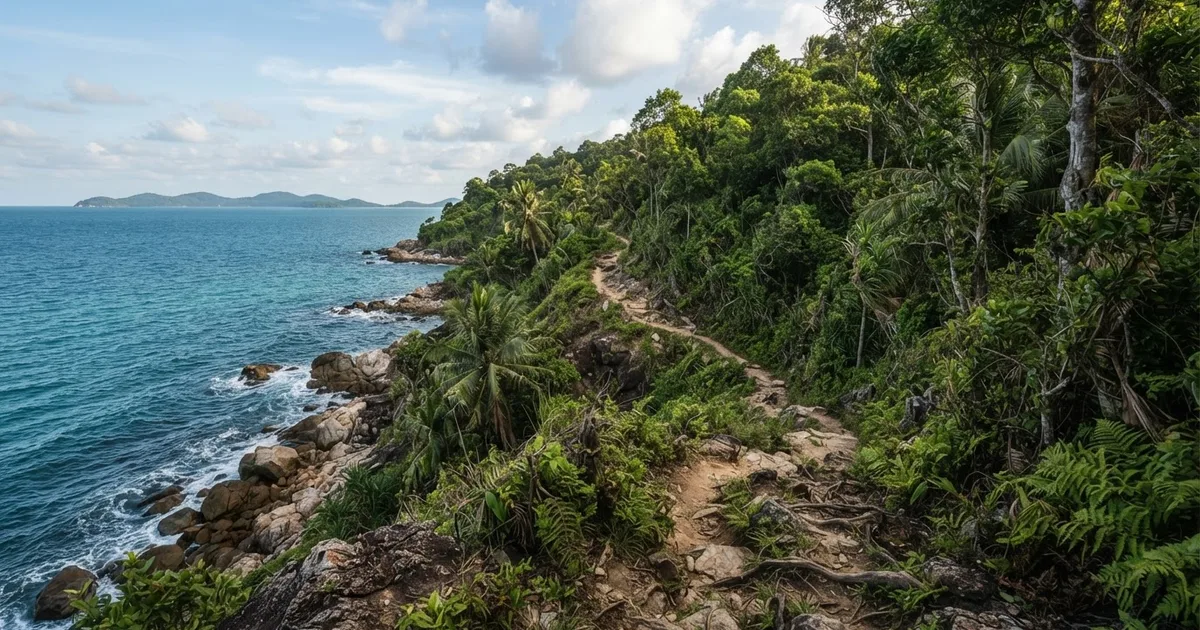
Phu Quoc National Park was established in 2001 and covers roughly 31,000 hectares across the northern half of the island, plus a marine buffer zone off the north coast. Almost every hike worth doing on Phu Quoc sits inside that northern sector, reached by the road that loops up from Duong Dong past Ganh Dau and back down the east coast. The park is protected forest, not a manicured theme park: expect red earth, tree roots, stream beds and very little signage in English.
The practical verdict is simple. Entry is free in 2026, the short walks need no guide, and how hard your day feels depends almost entirely on which of the following routes you choose.
| Trail | Length | Difficulty | Best season | Guide needed? | Best for |
|---|---|---|---|---|---|
| Short forest walk | 1 km | Easy | Nov–Apr | No | Families, a 30-minute leg-stretch |
| Mid-length forest walk | 2 km | Easy to moderate | Nov–Apr | No | First-time hikers, hot afternoons |
| Longer forest walk | 5 km | Easy to moderate | Nov–Apr | No | Half-day hikers, photography |
| Central National Park Trail (Rung Giong) | 4 km | Challenging | Oct–Apr | Recommended | Moderate to experienced hikers |
| Suoi Da Ngon trail | About 10 km | Beginner-friendly | Nov–Apr | Recommended for wildlife spotting | Beginners, children over 8 |
| Ham Ninh Mountain trail | Varies by route | Most challenging option | Nov–Apr | Strongly recommended | Fit, experienced hikers |
Length is a poor guide to difficulty in this park. The 4 km Central National Park Trail crosses six streams and takes most people longer than the flatter 5 km walk, while the roughly 10 km Suoi Da Ngon route stays gentle enough for beginners and children over 8. Read the distance, then read the terrain note next to it.
The easy walks: the 1 km, 2 km and 5 km forest trails
These three marked walks are the park's accessible core, described as easy to moderate and open to anyone reasonably mobile. They are also the routes you can walk without paying a guide or booking anything in advance, which makes them the default choice for a self-guided morning out of Duong Dong.
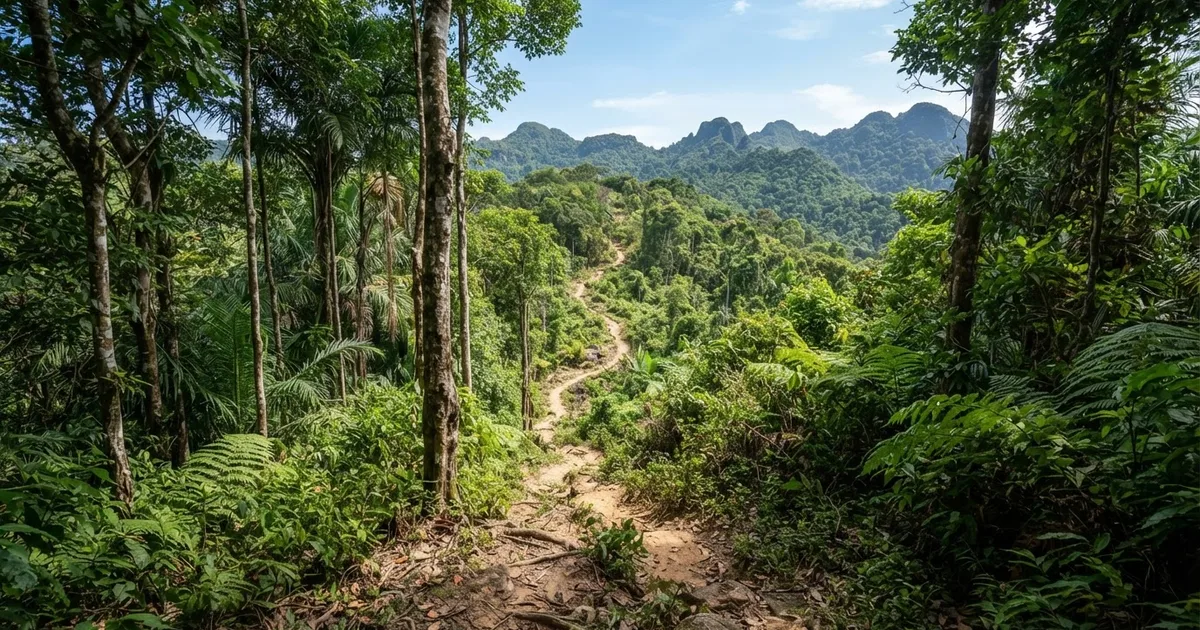
Rough timings on foot: the 1 km trail takes about 20–30 minutes at an unhurried pace, the 2 km trail about 45–60 minutes, and the 5 km trail about two to two and a half hours including photo stops and water breaks. None of them demand technical gear, but all of them are shaded jungle paths with roots, loose earth and the occasional muddy patch after rain.
Heat, not distance, is the real constraint. Phu Quoc sits at roughly 10 degrees north, and even in the dry season the humidity makes midday walking unpleasant. Start before 8:30am or leave it until after 3pm. Take more water than you think you need — there are no shops once you leave the road.
Tip: Wear shoes with real grip rather than flip-flops. The clay-rich red earth on Phu Quoc's forest trails turns slick quickly, and a sprained ankle 3 km from the road is a genuinely bad afternoon.
Because entry to the park is free and no guide is required for these routes, the 1 km and 2 km walks cost nothing at all. Occasional waterfall stops or small side trails inside the park may charge around $1–$2, so carry a few small notes.
The Central National Park Trail (Rung Giong): 4 km, six streams, slippery when wet
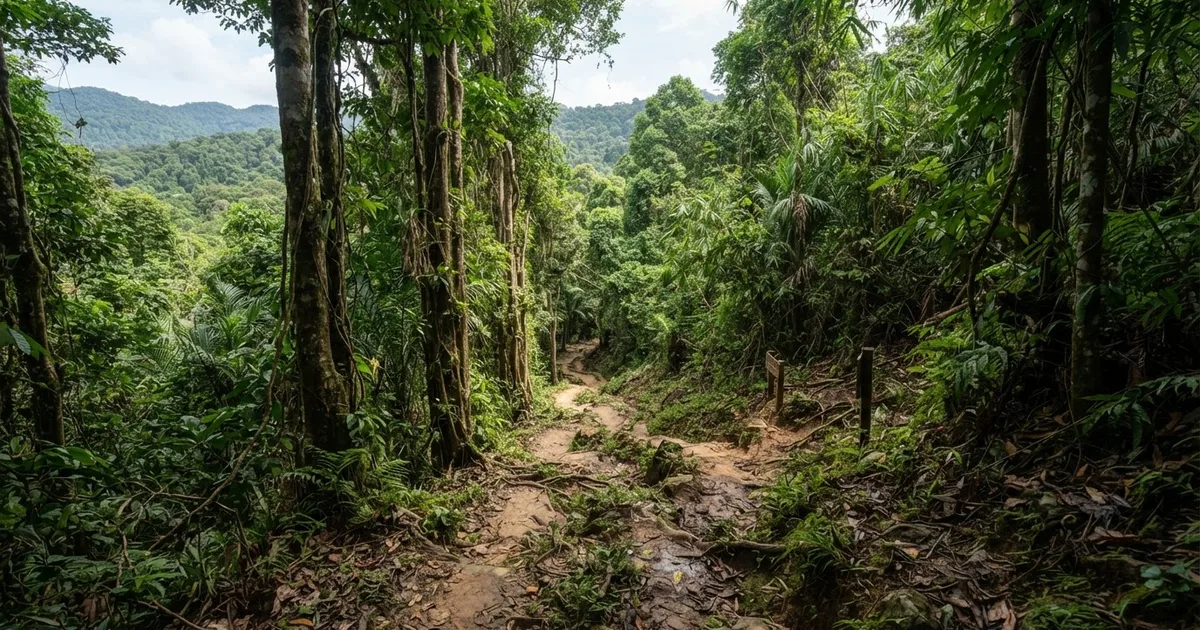
The Central National Park Trail — often called the Rung Giong Trail — is the route that surprises people. At 4 km it sounds short, but it is described as more challenging than the easier park routes: you cross six streams and walk long stretches of slippery forest path. It is challenging yet rewarding, and it is best treated as a half-day outing rather than a quick detour.
Allow roughly three to four hours for the 4 km, more if the streams are running high or if your group is stopping to photograph birds, butterflies and the occasional reptile. The route suits moderate to experienced hikers. It is a poor fit for young children, for anyone with knee or balance problems, and for anyone who is uncomfortable wading through moving water.
A hiking stick is strongly recommended for added support on this trail — the stream beds are uneven, and the banks are often the slickest part of the whole walk. Trekking poles or a cut bamboo staff both work.
The best time for this route is the dry season, from October to April. In the rainy season, rising streams combined with the lack of bridges increase the risk of accidents considerably, and what is a knee-deep crossing in February can be a fast, waist-deep current in August. If you only have one wet-season day on the island, choose a shorter, drier trail instead.
Suoi Da Ngon: the 10 km beginner trek
Suoi Da Ngon is the longest walk on this list and, counter-intuitively, one of the most forgiving. At roughly 10 km it is described as suitable for beginner trekkers and for children over 8 — a genuine family option rather than a hardcore route. Expect four to six hours of walking at a relaxed pace, with stream scenery and plenty of shade.
Because it is long and gentle, it rewards an early start more than any other trail here. Leaving at 7am means you finish before the afternoon heat peaks; leaving at 10am means the last two hours are a grind. Take 1.5–2 litres of water per person, plus real food rather than a single snack bar.
A guide is not compulsory, but local operators in Duong Dong run half-day and full-day guided treks and guides are strongly recommended for wildlife spotting. On a 10 km route through primary forest, a guide is the difference between walking through green scenery and actually seeing what lives in it — hornbills, langurs, and the park's impressive insect life.
Families should note that "children over 8" is the guidance, not a hard rule. If your child hikes regularly at home, 10 km is fine; if they have never walked more than 3 km, start with the 2 km forest trail first and see how the day goes.
Ham Ninh Mountain: the most challenging option in the park
The Ham Ninh Mountain trail is described as the most challenging option in Phu Quoc National Park. Unlike the fairly level forest walks, this is a climb, with sustained elevation gain, exposed sections and rougher footing. It suits fit, experienced hikers, and it is the one route on this page where we would push hardest for a local guide rather than a solo attempt.
Go early — a 6:30–7am start is the norm in the dry season — and go between November and April. Carry at least two litres of water per person, wear proper shoes, and tell someone where you are going, since mobile coverage in the northern forest is patchy at best.
This is also the trail to skip if you have limited mobility, a fear of heights or exposed ridges, or if you are hiking with very young children. There is no shame in choosing the 5 km forest walk instead; the views from the lower trails are excellent and the wildlife is the same.
When to hike: dry season timing, stream levels and heat
The headline rule: the best time for trekking Phu Quoc National Park is the dry season, from November to April. For the trickier Central National Park Trail, the recommended window is October to April. Outside those months, the park is still open and still free, but conditions change fast.
During the rainy season from roughly May to October, streams rise, the trails hold water, and the lack of bridges on the stream crossings increases accident risk. Leeches become a factor on the longer routes, and the red-earth paths that are merely slick in February become genuinely treacherous. Guided treks often still run in the wet season, but operators will reroute or shorten them based on the day's rainfall.
| Period | Trail conditions | Verdict |
|---|---|---|
| November – February | Dry, firm paths, low streams, cooler mornings | Best overall window for every trail |
| March – April | Dry but noticeably hotter and more humid | Good; start at first light |
| October | End of the rains; Central trail often runnable | Good for the 4 km Rung Giong route |
| May – September | High streams, mud, no bridges, leeches | Avoid the stream-crossing routes |
Tip: Ask locally on the morning you plan to hike. Rainfall in northern Phu Quoc can differ sharply from Duong Dong or Long Beach, and a dry town morning does not guarantee a dry forest trail 25 km north.
What it costs: free park entry, $1–$2 stops and VND 1.2 million guided treks
Phu Quoc National Park currently has no official entry fee in 2026. Walking the 1 km, 2 km and 5 km trails, or tackling the 4 km Central National Park Trail on your own, costs nothing beyond your transport to the trailhead and whatever you carry in.
Small charges do exist in places. Some trails or waterfalls inside the park may charge about $1–$2 per person, typically collected at a small booth or by a local caretaker. Keep VND 20,000–50,000 notes handy rather than relying on card or QR payment.
If you would rather not think about logistics, a one-day trekking tour costs VND 1.2 million per person — roughly US$47 — and includes transportation, guiding services and meals. That price is worth comparing against the cost of getting yourself to a remote trailhead and back, especially if you do not have your own motorbike. Local tour operators in Duong Dong organise both half-day and full-day guided treks, and guides are strongly recommended for wildlife spotting on any route where seeing animals matters to you.
Self-guided works if…
You are sticking to the 1 km, 2 km or 5 km marked walks, you have your own transport, and you are comfortable reading a downloaded offline map with patchy signal.
Pay for a guide if…
You want the 4 km Central National Park Trail, the Suoi Da Ngon route or Ham Ninh Mountain — and especially if wildlife spotting or stream crossings are part of the plan.
Skip the paid trek if…
You only have half a day, you are hiking in peak rainy season, or you mainly want a short shaded walk — you would be paying VND 1.2 million for something you can do free.
Who each trail suits — and who should skip it
Choosing well matters more than choosing ambitiously. These are the honest fits and misfits for Phu Quoc National Park's main hiking options.
1 km and 2 km forest walks
Great for: families with small children, travellers with limited time, anyone testing their tolerance for jungle heat. Less suited to: hikers chasing a real workout or a full-day escape — you will be back at the road within an hour.
5 km forest walk
Great for: a self-guided half-day with photography stops and no guide costs. Less suited to: anyone with unstable ankles or knee problems, since roots and clay dominate the surface.
Central National Park Trail (4 km)
Great for: moderate to experienced hikers who want stream crossings and a challenging but rewarding day out. Less suited to: young children, nervous waders, and anyone visiting between May and September when the six streams run high with no bridges.
Suoi Da Ngon (about 10 km)
Great for: beginners and families with children over 8 who want distance without technical difficulty. Less suited to: travellers with only one free morning, and anyone hoping for total solitude on a route popular with guided groups.
Ham Ninh Mountain
Great for: fit, experienced hikers who train regularly and start at dawn. Less suited to: anyone with limited mobility, a fear of exposed terrain, or no local guide on a first visit.
Getting there and what to pack
Phu Quoc National Park's main access points sit in the north of the island. From Duong Dong, the drive is roughly 25–30 km to the northern trailheads, about 40–50 minutes by motorbike on the island's main roads. Guided treks include transport, which is a large part of why the VND 1.2 million day-tour price makes sense if you are not renting a bike.
- Hiking stick or trekking poles — explicitly recommended for the 4 km Central National Park Trail's stream banks
- 1.5–2 litres of water per person for the 5 km, 10 km and Ham Ninh routes; no shops inside the park
- Shoes with grip — clay paths turn slick fast, and flip-flops are a genuine injury risk
- Insect repellent and long socks — mosquitoes year-round, leeches mainly in the wet season
- Small cash — VND 20,000–50,000 notes for the occasional $1–$2 waterfall or side-trail charge
- Offline map and a charged phone — signal is patchy deep in the forest; tell someone your route and expected return time
Start early, walk within your ability, and treat stream levels as the deciding factor rather than the calendar. A dry-season 4 km crossing is a fun morning; the same crossing after three days of rain is a different proposition entirely.
Frequently Asked Questions
Is there an entry fee for Phu Quoc National Park?
No. Phu Quoc National Park has no official entry fee in 2026, and the 1 km, 2 km, 4 km and 5 km trails can be walked for free. Some individual waterfalls or side trails inside the park may charge around $1–$2, so carry small notes in cash.
Do I need a guide to hike in Phu Quoc National Park?
Not for the marked 1 km, 2 km and 5 km walks, which are easy to moderate and require no guide. Guides are strongly recommended for wildlife spotting and for the 4 km Central National Park Trail, the roughly 10 km Suoi Da Ngon route and Ham Ninh Mountain.
What is the best time of year to trek in Phu Quoc National Park?
The dry season from November to April is best overall. The challenging 4 km Central National Park Trail is recommended from October to April. From roughly May to September, streams rise and there are no bridges, which significantly increases accident risk on stream-crossing routes.
What is the hardest trail in Phu Quoc National Park?
The Ham Ninh Mountain trail is described as the most challenging option in the park. Among the marked forest routes, the 4 km Central National Park Trail (Rung Giong) is the toughest, since it crosses six streams and includes long sections of slippery forest path suitable for moderate to experienced hikers.
How long does the 4 km Central National Park Trail take?
Allow roughly three to four hours for the 4 km, including six stream crossings and photo stops. Bring a hiking stick for added support, start early, and only attempt it between October and April when water levels are lower and the paths are less slick.
Which Phu Quoc hiking trail is best for families with children?
The Suoi Da Ngon trail, at roughly 10 km, is described as suitable for beginner trekkers and children over 8. Families with younger children should stick to the free 1 km or 2 km forest walks, which take 20–60 minutes and need no guide or booking.
How much does a guided trekking tour cost on Phu Quoc?
A one-day trekking tour costs VND 1.2 million per person, roughly US$47, and includes transportation, guiding services and meals. Operators in Duong Dong run both half-day and full-day treks, and the package is good value if you do not have your own transport.
Can I hike Phu Quoc National Park in the rainy season?
Yes, but choose carefully. Rising streams combined with no bridges on the crossings increase the risk of accidents between roughly May and September. Stick to the shorter shaded forest walks in the wet months and save the 4 km Central trail, Suoi Da Ngon and Ham Ninh Mountain for the dry season.
Not sure which trail fits your fitness, your kids or your travel dates? Sabrina Rental is based on Phu Quoc and can match you to the right route, arrange transport to the northern trailheads, or connect you with a local guide for the 4 km Central National Park Trail and Suoi Da Ngon. Ask us anything about hiking the island — we will tell you honestly if a trail is wrong for you.
Contact Sabrina Rental