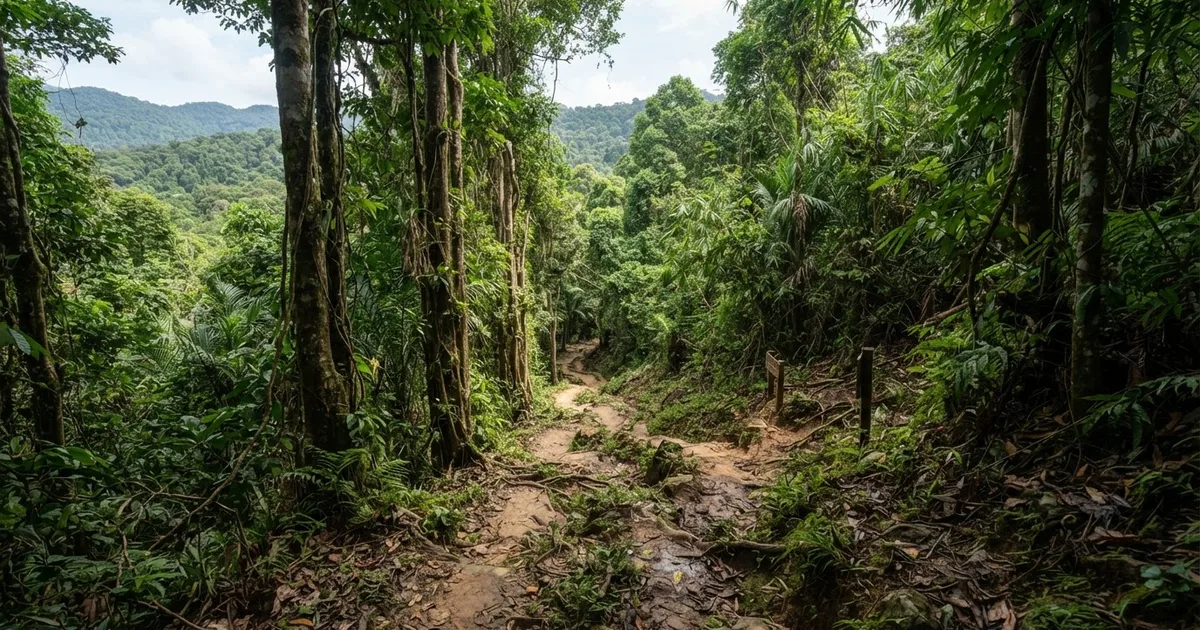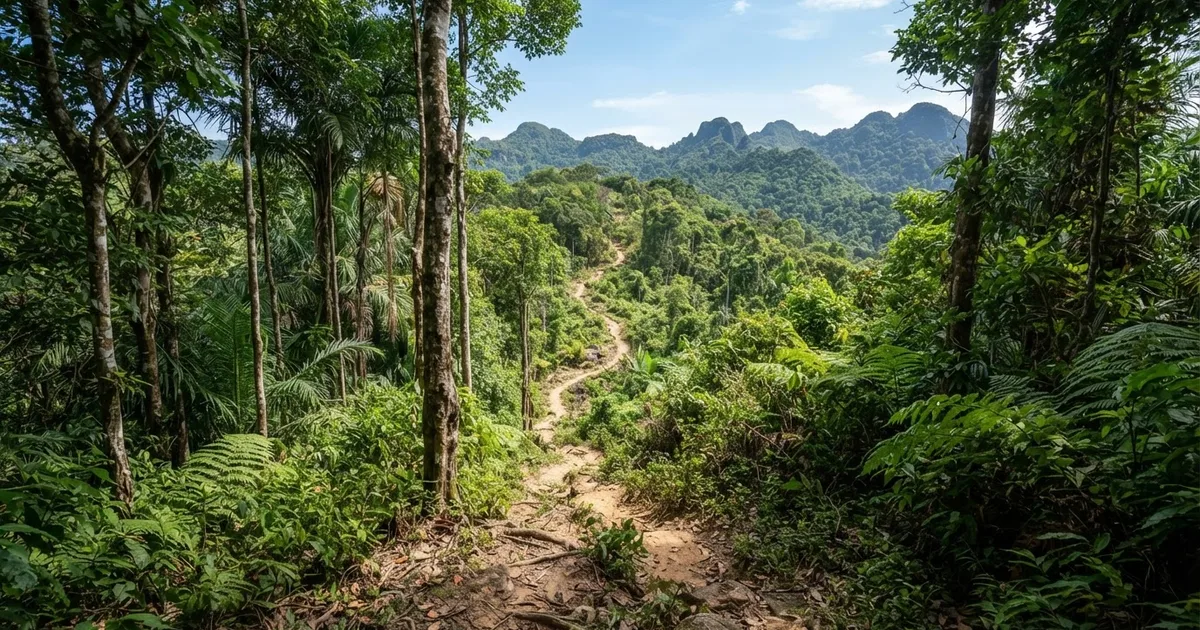
Da Ban Stream is a moderate, roughly 2 km stream hike about 6-10 km north/northeast of Duong Dong town, and most visitors finish it in 1 to 2 hours including the 15-minute walk from the parking area to the water. The lower stream is shallow and safe for children and non-swimmers, while the upstream section adds optional boulder scrambling to viewpoints that most guides agree are worth the medium effort. Entry is free to 5,000 VND, motorbike parking runs about 10,000 VND, and the trail is at its best from late March to September.
How Difficult Is Da Ban Stream, Really?
Da Ban Stream sits firmly in the moderate category, and the numbers back that up: about 2 km of trail that takes most people 1 to 2 hours to hike. That makes it one of the most approachable half-day adventures on the northwest of the island - long enough to feel like a proper jungle hike, short enough to fit around a beach afternoon in Duong Dong.
In practice, the difficulty depends on how far upstream you go. Several guides describe the stream as easy to moderate, with the scrambling entirely optional: the downstream section is flat, shallow and manageable in sturdy sandals, while the upper section requires boulder hopping, occasional hand-on-rock moves and short steep pitches beside small cascades.
| Trail segment | Difficulty | What it is like |
|---|---|---|
| Parking area to stream | Easy | A flat 15-minute walk on a dirt, leaf-littered path under forest cover |
| Lower stream | Easy | Ankle-deep water over smooth stone; shallow and safe for children and non-swimmers |
| Upper stream | Moderate | Steeper ground, larger boulders, deeper and stronger pools, optional scrambling |
| Top viewpoints | Moderate | The section one guide says is worth the medium difficulty for the views alone |
You need no technical gear and no climbing experience, but you do need sure footing. Wet rock is the single biggest hazard, so slow down on the smooth sections and use your hands freely rather than trying to walk upright over polished stone. If you turn around at the first wide pool, you have still had a genuinely pleasant, easy walk; the moderate rating really applies to the full climb.
What to Expect on the Trail, Step by Step
Your visit starts at the small parking area, where you pay any parking fee and set off on foot. The walk from the parking area to the stream itself takes about 15 minutes on a flat, shaded dirt path - easy warm-up territory, and a good place to apply mosquito repellent before you enter the denser vegetation.
Once you reach the water, the downstream section is where most families settle. It is described as shallow and safe for children and non-swimmers: gentle riffles, smooth stone shelves and calm edges where kids can wade under supervision. There are no lifeguards or facilities, so keep an eye on little ones and set your base camp on one of the flat rock slabs.
Heading upstream, the character changes. The stream narrows, the pools get deeper and the current strengthens slightly, and you will find yourself clambering over boulders and beside small cascades. This scrambling is optional - many visitors simply pick a scenic pool, swim, and head back - but those who push on are rewarded: the trail's views at the top are the reason one guide calls Da Ban worth the medium difficulty. Allow the full 1 to 2 hours if you want the complete route.
One genuine warning: the route is described as not always obvious. Side paths split off along the banks, and after rain the main line beside the water can be hard to pick out. Multiple sources advise taking a local guide or using good navigation to avoid getting lost. Download an offline map before you leave Duong Dong, save the parking coordinates, and remember that phone signal under the canopy is patchy at best.
The Best Time to Visit Da Ban Stream
There are two honest answers to this question, depending on what you want from the stream. The general recommendation from most guides is late March to September, which pairs reliable water flow with a lower chance of getting caught in a downpour or riding a soaked road.
If your priority is the strongest, most photogenic flow, another guide recommends the rainy season, May to November, when the stream runs at full force. The trade-offs are real: rocks become slippery, the dirt approach road deteriorates, and you should aim for a day or two after heavy rain rather than during it. Never scramble upstream while it is actively raining - water levels in jungle streams can rise quickly.
On the other end of the calendar, the dry season is the one window we would genuinely steer you away from. From roughly December to early March, Da Ban Stream can practically dry up or carry only a trickle, turning your cascade hike into a scenic but waterless rock walk.
| Period | Water level | Conditions |
|---|---|---|
| December to early March | Low to none | Stream can practically dry up; pleasant forest walk but few cascades |
| Late March to May | Rising | Good balance of flow and lower rain risk; the best all-round window |
| May to September | Strong | Peak recommendation; full cascades, warm water, busier on weekends |
| October to November | Strong but variable | Rainy-season flow at its best, but slippery rock and a muddier access road |
Getting There: the Road Is Half the Challenge
Da Ban Stream sits in Cua Duong commune, about 6-10 km north/northeast of Duong Dong town. From central Duong Dong it is a 15 to 25 minute ride by motorbike, heading inland and uphill away from the coast road - close enough for a spontaneous morning trip, far enough that you will want your own transport rather than relying on taxis both ways.
The honest caveat is the final stretch. The paved road gives way to a dirt section that is muddy and pothole-filled, especially after rain. Ride slowly, keep your weight back on the sandy bits, and avoid hard braking on the wet clay. In practice this is exactly the kind of road where a well-maintained semi-automatic bike makes the day easier - if you are renting a scooter for the trip, tell the shop you are headed to Da Ban and ask them to check the tires and brakes before you set off.
Cars and taxis can manage the paved part of the route and drop you at the entrance path, though the driver may prefer to wait rather than attempt the dirt section in wet weather. However you arrive, park at the signed area: parking is charged (see below), and leaving the bike at the official spot both supports the local community and keeps your bike off the softest ground.
Entrance Fees, Parking and Facilities
Money-wise, Da Ban Stream is about as cheap as attractions get. Some sources list it as free to enter, though parking may still be charged. A published attraction page quotes an entrance fee of 5,000 VND and motorbike or bicycle parking of 10,000 VND. Either way, your total cost for a family of four with one bike comes to well under one US dollar - just bring small notes, because nobody at a jungle stream kiosk has change for a 500,000 VND bill.
Facilities, on the other hand, are minimal, and that is part of the plan for your day. There are no changing rooms, no lifeguards and no reliable food stalls at the stream, so bring your own drinking water (at least 1 liter per person), snacks, a small towel, and a bag to carry your rubbish back out. Treat it like the wild swimming spot it is: everything you need goes in your backpack, and everything you bring should leave with you.
Da Ban Stream vs the Central National Park Trail (Rung Giong)
Visitors with one free morning often ask us whether to choose Da Ban Stream or the Central National Park Trail, also known as the Rung Giong Trail. The two experiences complement each other, and the deciding factor is usually the weather. Rung Giong is a 4 km trek that is more challenging than the island's easier park routes: it requires crossing six streams and walking on slippery paths, and a hiking stick is recommended for added support.
The seasons flip between them. Rung Giong is best trekked in the dry season, October to April - during the rainy season, rising streams and the lack of bridges increase the risk of accidents. Da Ban Stream wants the opposite: water. One 2026 guide also describes Rung Giong as relatively flat and suitable for families and beginners, which is fair in settled conditions but worth qualifying - with six crossings and slippery stone, its real difficulty swings sharply with the weather.
| Da Ban Stream | Rung Giong Trail | |
|---|---|---|
| Distance | About 2 km | 4 km |
| Difficulty | Moderate; easy lower stream, optional upstream scrambling | More challenging; six stream crossings and slippery paths |
| Best season | Late March to September (needs water) | October to April (dry season) |
| Key risk | Potholed access road; faint trail after rain | Rising streams and no bridges in the rainy season |
| Helpful gear | Grippy water shoes, offline map | Hiking stick for support |
To frame it plainly: Da Ban Stream is less suited to travelers visiting in December-February who are set on seeing powerful cascades, and Rung Giong is less suited to anyone traveling in the wettest months or uncomfortable with repeated, unbridged stream crossings. Pick according to the forecast, not the itinerary, and you will enjoy either one.
Who Da Ban Stream Suits - and Who Should Skip It
Great fit for
Families with children, who can happily spend half a day at the shallow, safe downstream section; first-time jungle hikers who want a real trail without technical exposure; and budget travelers - with entry of 0-5,000 VND and 10,000 VND parking, it is one of the cheapest full-morning adventures on the island.
Workable with preparation
Moderately fit hikers chasing the top viewpoints in May-September, and photographers who time their visit a day or two after rain for full flow. Both groups should bring offline navigation, since the route is not always obvious, and shoes with genuine grip for the upper scrambling.
Poor fit for
Visitors with limited mobility - there is no boardwalk and the terrain is uneven rock from the moment you reach the water. Also a poor match for dry-season waterfall hunters (the stream can practically dry up) and for anyone unwilling to ride or be driven down a muddy, pothole-filled dirt road.
What to Pack and How to Stay Safe
- Grippy water shoes or strapped sandals - flip-flops are the number one cause of slips on smooth rock
- Quick-dry clothes and a spare shirt for the ride home
- At least 1 liter of drinking water per person, plus snacks
- Mosquito repellent, applied before the 15-minute walk in
- Dry bag or ziplock for your phone and cash
- Offline map downloaded before leaving Duong Dong
- 20,000-50,000 VND in small notes for the 5,000 VND entry and 10,000 VND parking
- A small first-aid kit with plasters for scraped shins
On safety, follow three simple rules. First, do not scramble upstream alone or immediately after a heavy downpour - pools get deeper and stronger higher up, and wet rock does not forgive. Second, tell your hotel or rental shop where you are going and when you expect to be back, given the patchy phone signal under the canopy. Third, respect the turn-around point: the lower two-thirds of the stream already delivers the experience, and the top views will still be there on your next visit.
Frequently Asked Questions
How long does the Da Ban Stream hike take?
Most visitors spend 1 to 2 hours on the roughly 2 km trail, plus a 15-minute walk each way between the parking area and the stream. Budget half a day door to door from Duong Dong once you add the 15-25 minute ride, swimming stops, and a slow lunch on the way back.
Is Da Ban Stream suitable for children and non-swimmers?
Yes, with limits. The downstream section is shallow and described as safe for children and non-swimmers, which makes it a popular family spot. Upstream pools become deeper and stronger, so keep kids in the lower section and only continue up if everyone in your group is confident on wet rock.
How much does Da Ban Stream cost to visit?
Some sources list the stream as free to enter, while a published attraction page quotes a 5,000 VND entrance fee and 10,000 VND for motorbike or bicycle parking. Even at the top of that range you pay under 20,000 VND in total - less than one US dollar - so bring small notes.
When is the best time to visit Da Ban Stream?
Late March to September is the general sweet spot, combining reliable flow with lower rain risk. One guide recommends the rainy season, May to November, for the strongest flow. In the dry season the stream can practically dry up, leaving a scenic but largely waterless rock walk.
Do I need a guide for Da Ban Stream?
Not mandatory, but genuinely useful. The route is described as not always obvious, and several sources warn that a local guide or good navigation helps you avoid getting lost. If you hike independently, download an offline map, save the parking coordinates, and keep to the worn path beside the water.
How do I get to Da Ban Stream from Duong Dong?
The trailhead sits in Cua Duong commune, about 6-10 km north/northeast of Duong Dong town - 15 to 25 minutes by motorbike. The paved road gives way to a dirt section that is muddy and pothole-filled, especially after rain, so ride slowly and park at the signed area for around 10,000 VND.
Can you swim at Da Ban Stream?
Yes. The lower stream is shallow enough for wading and safe for non-swimmers, while upstream you will find deeper pools popular for a cool dip. Never swim directly beneath a cascade after heavy rain, when the current strengthens and submerged rocks become much harder to judge from the surface.
Is Da Ban Stream harder than the Rung Giong Trail?
No. The 4 km Central National Park Trail (Rung Giong) is more challenging: it requires crossing six streams and walking slippery paths, and a hiking stick is recommended. Da Ban Stream is shorter at about 2 km and moderate, with its scrambling entirely optional on the upstream section.
Planning a morning at Da Ban Stream? Sabrina Rental in Duong Dong can set you up with a well-maintained motorbike for the dirt-road approach, brief you on today's road and water conditions, or help arrange a local guide. Message us and we will tell you honestly whether the stream is running.
Ask us about Da Ban Stream