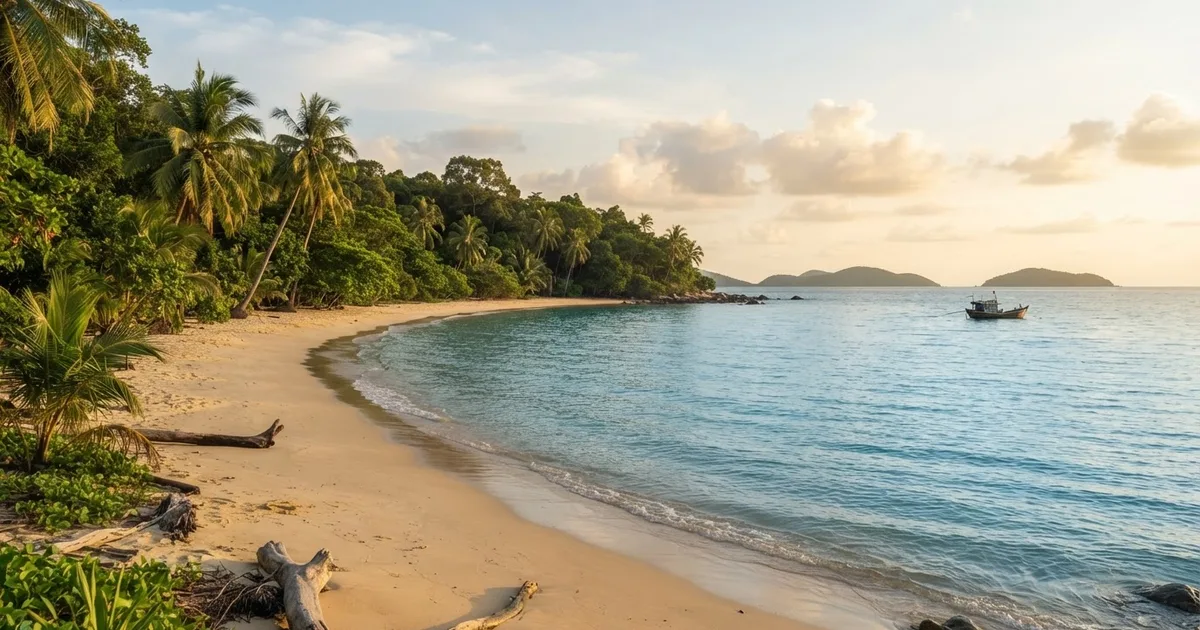
For a beach-first holiday, Phu Quoc wins on value and sand quality: mid-range travellers spend roughly $40-60 per day here in 2026 versus about $80 per day in Sri Lanka. Sri Lanka only undercuts Phu Quoc in one specific case, a short flight-inclusive beach package from India, at about Rs.48,000 per person for 5 nights on the south coast versus roughly Rs.55,000 for 5-6 nights on Phu Quoc. Pick Phu Quoc if calm water, clean beaches and a cheap 5-night escape are the point; pick Sri Lanka if you want culture, tea country, wildlife, trains and surf inside the same trip.
Phu Quoc or Sri Lanka: the 30-second verdict
These two destinations are not really competing for the same trip. Phu Quoc is a 574 square kilometre Vietnamese island with one airport, a 30-day visa exemption for direct arrivals, and an economy built almost entirely around resorts, seafood night markets and scooter roads. Sri Lanka is a 65,610 square kilometre country, roughly 114 times larger, with eight UNESCO World Heritage Sites, about 1,340 km of coastline, tea estates sitting at 1,800 metres, and two monsoon seasons that guarantee somewhere on the island is in season at any time of year.
That size gap explains the price gap at the top end. Sri Lanka's mid-range daily spend of about $80 buys a whole country: a car and driver typically runs $50-70 per day, and moving between Kandy, Ella, Yala and the coast adds internal transport costs that Phu Quoc simply never charges, because everything on the island sits within a 50 km drive of the airport.
The honest summary: Phu Quoc is the better pure beach holiday and the cheaper one for anyone spending $40 or more per day, while Sri Lanka is the better trip if you want depth, variety and a reason to travel beyond the sand.
Choose Phu Quoc if you want...
- 5-6 nights, one base, no internal flights or long drives
- Calm, swimmable water and white sand at Bai Sao
- A mid-range budget of $40-60 per day instead of $80
- Sunsets on a 20 km west-coast beach with bars and restaurants behind it
- A visa-free 30-day entry when you fly directly into Phu Quoc
Choose Sri Lanka if you want...
- 10-14 days and a route, not a single resort base
- Sigiriya, Kandy, Galle Fort, tea country and the Kandy-Ella train
- Leopard safaris in Yala and elephant gatherings at Minneriya
- Real surf at Weligama, Hiriketiya or Arugam Bay
- More nonstop flights home, especially from Indian metros
Who each one is a poor fit for matters just as much. Phu Quoc is a bad choice if you want temples, hill country, wildlife safaris or a surfing holiday - it has none of those in any serious form. Sri Lanka is a bad choice if you have only four or five nights and want to lie on a beach: you will spend a chunk of a short trip in transit, and the beach you finally reach will not beat Bai Sao.
What a day actually costs in 2026: Phu Quoc vs Sri Lanka
| Traveller style | Phu Quoc (2026) | Sri Lanka (2026) |
|---|---|---|
| Backpacker - hostel dorm, local food, shared scooter or bus | ~$25 per day | ~$30 per day |
| Mid-range - 3-star hotel, mixed dining, one paid activity per day | $40-60 per day | ~$80 per day |
| Comfort - 4-star beachfront, restaurants, daily activities, massages | $80-120 per day | $130-180 per day (estimate) |
Phu Quoc's numbers are pulled down by cheap local infrastructure. A budget guesthouse costs about $10-15 per night here, and a homestay about $15-25, against $20-35 for a Bali guesthouse and $25-45 for a homestay in Canggu. Food follows the same pattern: a banh mi is around 25,000 VND (about $1), a bowl of pho 40,000-60,000 VND ($1.60-2.40), and a seafood dinner for two at the Dinh Cau night market usually lands between 200,000 and 350,000 VND ($8-14).
Sri Lanka is not expensive, but it is less cheap than its reputation suggests. A rice and curry lunch runs 400-800 LKR ($1.30-2.70) and a kottu roti 500-1,000 LKR, but a mid-range restaurant main course is typically 2,500-4,000 LKR ($8-13) - noticeably above Phu Quoc's $5-8 equivalent. Transport is the bigger gap: a tuk-tuk hired with a driver for a full day costs $20-27 in Sri Lanka, while a scooter rental on Phu Quoc is around 150,000-250,000 VND ($6-10) per day including fuel for most riders.
One caveat in Phu Quoc's favour: the island runs 10-20% above mainland Vietnam prices. A coffee in Duong Dong costs more than the same coffee in Ho Chi Minh City. Even so, it stays far below comparable island destinations such as Phuket or Bali, which is exactly why it keeps appearing at the top of Southeast Asia value lists.
Budget tip: the single biggest cost lever on Phu Quoc is your scooter. Renting locally at 150,000-250,000 VND per day instead of booking taxis for every beach trip typically saves $10-15 per day, which is 25-40% of a backpacker's entire daily budget.
Beaches and water: sand quality versus surf
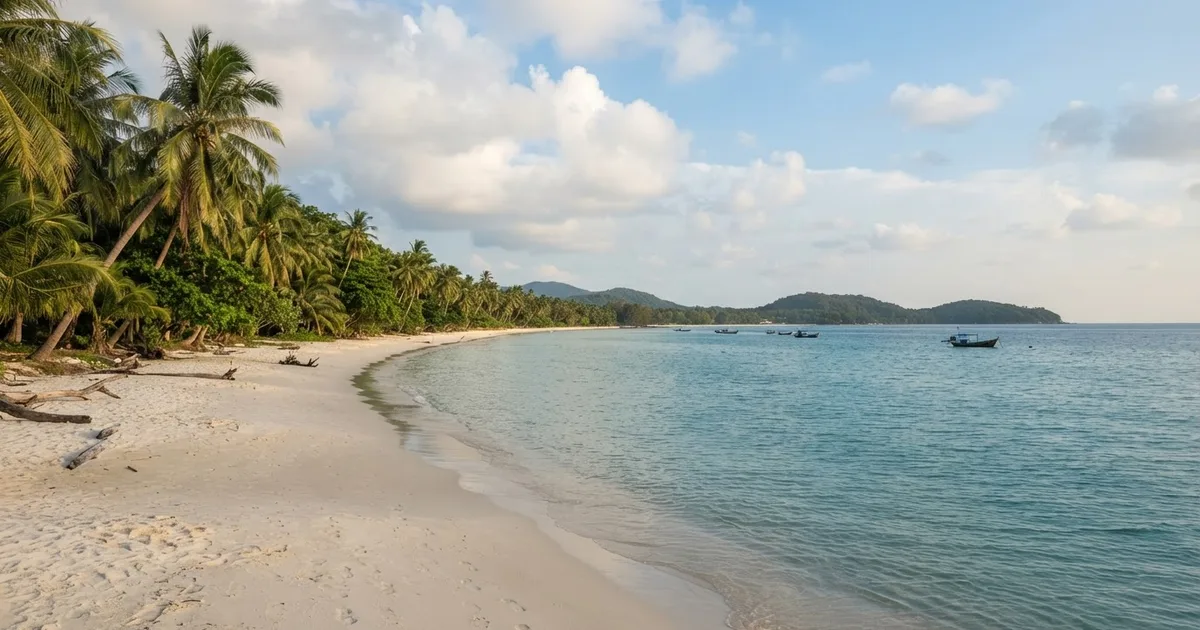
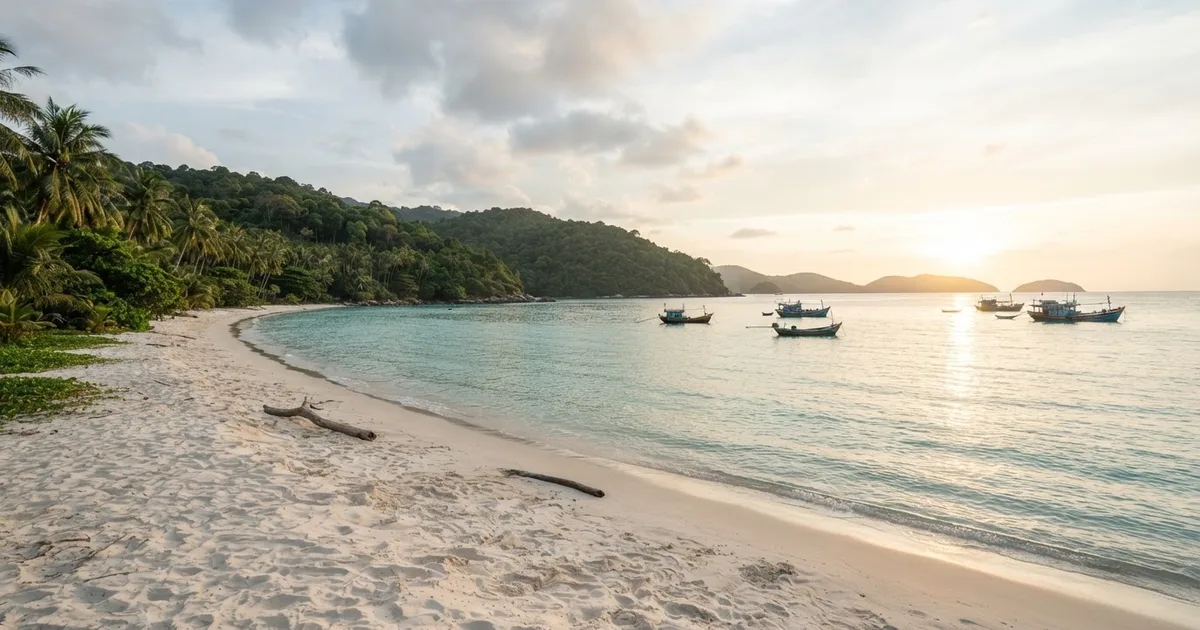
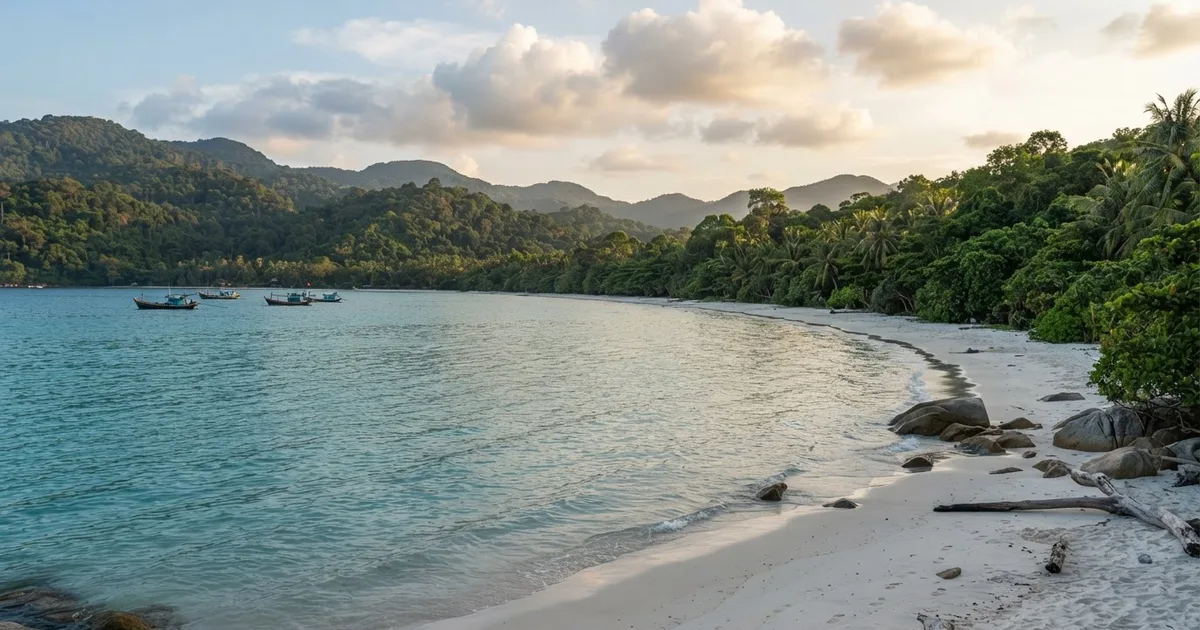
This is the clearest split between the two destinations. Phu Quoc's beaches are the reason people come, and Bai Sao is the standout - a curved bay of fine white sand and shallow, calm, translucent water on the island's south-east coast, roughly 25 km from Duong Dong town. Long Beach, known locally as Bai Truong, runs about 20 km down the west coast and is the best base for first-timers because it combines direct beach access, sunset views, restaurants and nightlife in one strip. Ong Lang and Ganh Dau to the north are quieter and cheaper; Rach Vem has the starfish shallows.
Sri Lanka's beaches are more varied and more weather-dependent. The south-west coast - Unawatuna, Mirissa, Weligama, Hiriketiya - is at its best from December to March, while the east coast around Trincomalee and Nilaveli peaks from May to September. That split is genuinely useful: Sri Lanka has a beach season somewhere on the island all year, whereas Phu Quoc's dry season runs roughly November to April and the summer months bring afternoon rain and choppier water.
On surf, there is no contest. Weligama is one of Asia's best learn-to-surf beaches, with gentle sand-bottom waves and board rental plus lessons from around $10-15 for a two-hour session. Hiriketiya offers a sheltered bay break, and Arugam Bay on the east coast is a world-class right-hand point break that draws serious surfers from May to September. Phu Quoc sits in the sheltered Gulf of Thailand, has no meaningful swell, and is a poor choice if surfing is on your list.
Phu Quoc also wins on cleanliness and crowding. Bai Sao and the northern beaches are noticeably less developed than Sri Lanka's main south-coast strips, where Unawatuna and Mirissa have built up heavily since 2010. If you want a quiet stretch of sand with a sunbed and a fresh coconut, Phu Quoc delivers it more reliably.
Getting there: flights, visas and the India factor
Flight access is where Sri Lanka pulls back the cost advantage for Indian travellers. Colombo's Bandaranaike International Airport (CMB) has nonstop services from Delhi, Mumbai, Chennai, Bengaluru and Hyderabad, with flight times of roughly 3.5-4.5 hours. Phu Quoc International Airport (PQC) has far fewer long-haul connections; most travellers from India connect through Ho Chi Minh City (about one hour onward) or Hanoi, which adds both hours and fare.
That is the entire explanation for the headline package numbers. A 5-night south-coast Sri Lanka beach trip is estimated at about Rs.48,000 per person all-in, while a 5-6 night Phu Quoc beach trip for an Indian traveller is estimated at about Rs.55,000 per person all-in. On the ground, Phu Quoc is cheaper; in the air, Sri Lanka is cheaper. For a short trip, the flight wins.
Visas are simpler on the Vietnamese side. Phu Quoc grants a 30-day visa exemption for travellers arriving on direct international flights to the island, which is one of the most generous entry policies in Southeast Asia. Sri Lanka requires an online ETA for most nationalities before departure, so factor in the application and a small fee.
Before you book either one
- Check whether your Phu Quoc routing arrives direct (visa exemption applies) or via Ho Chi Minh City (standard e-visa needed).
- Compare total airfare, not just the daily budget - a $150 fare difference erases a week of $20-per-day savings.
- If you are going to Sri Lanka, apply for the ETA at least a week before departure.
- Match your travel month to the right coast: south-west Sri Lanka December-March, east coast May-September, Phu Quoc November-April.
How many nights each one actually needs
Phu Quoc is a short-trip destination and works well at 4-6 nights. The island is small enough that you can land, settle into Long Beach, spend two days on beach and boat trips, do one day at VinWonders or the Hon Thom cable car, and still leave relaxed. A 5-night Phu Quoc trip has almost no wasted transit time because the airport is about 10 km from Duong Dong and 15-20 minutes from most west-coast hotels.
Sri Lanka is the opposite. The classic loop - Colombo, Sigiriya, Kandy, the Kandy-Ella train, Ella, Yala, Mirissa or Galle - takes 10-14 days minimum. Attempting it in 7 days means spending four to five hours in a vehicle most days. If you only have a week, the sensible Sri Lanka trip is a single-base beach stay on the south coast, which is exactly the trip where Phu Quoc competes directly and often wins on beach quality.
There is also a cost-of-attrition point. Every internal transfer in Sri Lanka adds a paid day of transport, and a car with driver at $50-70 per day is the single largest line item in most Sri Lankan budgets. Phu Quoc's equivalent is a $6-10 scooter. Over a 10-day trip, that difference alone is several hundred dollars.
Culture, food and things to do beyond the beach
Sri Lanka is dramatically stronger here, and it is not close. Sigiriya's 5th-century rock fortress, the Temple of the Tooth in Kandy, the Dutch-built ramparts of Galle Fort, the Dambulla cave temples, leopard safaris in Yala National Park and the hill-country tea estates around Nuwara Eliya give a 10-day trip genuine variety every single day.
Phu Quoc's cultural offering is modest: the Dinh Cau night market and temple, a few pepper farms, fish sauce factories, the Cao Dai temple and the Phu Quoc Prison museum. That is a half-day of sightseeing, not a reason to fly. Food is a different story - Phu Quoc's seafood, herring salad, and night-market grilling are excellent and cheap, and Vietnamese food is generally more accessible to first-time visitors than Sri Lankan rice and curry, which is spicier and more repetitive over a two-week trip.
If you are travelling with children, Phu Quoc also has the edge on ease: VinWonders theme park, the Vinpearl Safari, the Hon Thom cable car and calm shallow water at Bai Sao and Long Beach make it a low-stress family destination. Sri Lanka's family highlights are more about wildlife parks and trains, which are wonderful but involve long drives.
Who should not pick each destination
Do not pick Phu Quoc if...
- You want to surf - there is no swell worth the flight
- You want temples, ruins, hill country or safaris
- You have 12+ days and want a multi-stop route
- You want big-city nightlife or a strong cafe and arts scene
- You are travelling in July-August and expect guaranteed sunshine
Do not pick Sri Lanka if...
- You only have 4-6 nights and want a beach holiday
- You want the cheapest possible daily spend under $40
- You want one base and zero long drives
- You want reliable, calm, swimmable water every day of your trip
- You dislike spicy food and repetitive rice-and-curry menus
There is also a middle path worth naming. If you have 12-14 days and a flexible budget, you can do both: a 5-night Phu Quoc beach reset followed by a 7-8 night Sri Lankan cultural loop, connecting through Ho Chi Minh City and Colombo. It is not cheap, but it solves the core trade-off - Phu Quoc for the beach, Sri Lanka for everything else.
Frequently Asked Questions
Is Phu Quoc cheaper than Sri Lanka?
Yes, on the ground. Phu Quoc runs about $25 per day for backpackers and $40-60 mid-range in 2026, against roughly $30 and $80 in Sri Lanka. The gap widens with comfort level, because Sri Lanka's car-and-driver transport adds $50-70 per travel day while Phu Quoc's scooter costs $6-10.
Which is better for a 5-night beach trip from India?
Sri Lanka is usually cheaper in total because Colombo has nonstop flights from Delhi, Mumbai, Chennai, Bengaluru and Hyderabad - about Rs.48,000 per person all-in for 5 nights on the south coast, versus roughly Rs.55,000 for 5-6 nights on Phu Quoc, where most routings connect through Ho Chi Minh City.
Can you surf in Phu Quoc?
No, not seriously. Phu Quoc sits in the sheltered Gulf of Thailand with calm, shallow water and no consistent swell. Sri Lanka is the clear choice for surfing, with beginner-friendly Weligama and Hiriketiya, plus the world-class Arugam Bay point break on the east coast from May to September.
Do I need a visa for Phu Quoc?
If you arrive on a direct international flight into Phu Quoc, you get a 30-day visa exemption - one of the most generous policies in Southeast Asia. If you fly in via Ho Chi Minh City or Hanoi, standard Vietnamese entry rules apply and you will need an e-visa arranged in advance.
Which has better beaches, Phu Quoc or Sri Lanka?
Phu Quoc wins on sand quality, water clarity and lack of crowding. Bai Sao is the standout, and Long Beach (Bai Truong) is best for first-timers thanks to its 20 km of beach access, restaurants and nightlife. Sri Lanka's beaches are more varied and more weather-dependent, split between the south-west coast in December-March and the east coast in May-September.
How many days do you need in each?
Phu Quoc works well at 4-6 nights with one base and no internal flights. Sri Lanka needs 10-14 days for the classic Colombo-Sigiriya-Kandy-Ella-Yala-coast loop. Trying to do Sri Lanka in 7 days means four to five hours in a vehicle on most days.
Is Phu Quoc better than Bali?
For pure beach quality and cost, yes - Phu Quoc is about 30-40% cheaper than Bali across accommodation, food, transport and activities, with guesthouses at $10-15 per night versus $20-35 in Bali. Bali wins on variety, culture, temples, rice terraces, nightlife and surf, and is the better pick for most travellers who want more than a beach.
When is the best time to visit each?
Phu Quoc's dry season runs roughly November to April, with the calmest water and clearest skies. Sri Lanka is split: the south-west coast (Mirissa, Weligama, Galle) is best December to March, while the east coast (Trincomalee, Arugam Bay) peaks May to September. Somewhere on the island is always in season.
Planning a Phu Quoc beach trip and want the local numbers before you book? Sabrina Rental can sort your scooter, room and boat trips on the island, and tell you honestly which beaches are worth your days.
Ask Sabrina Rental