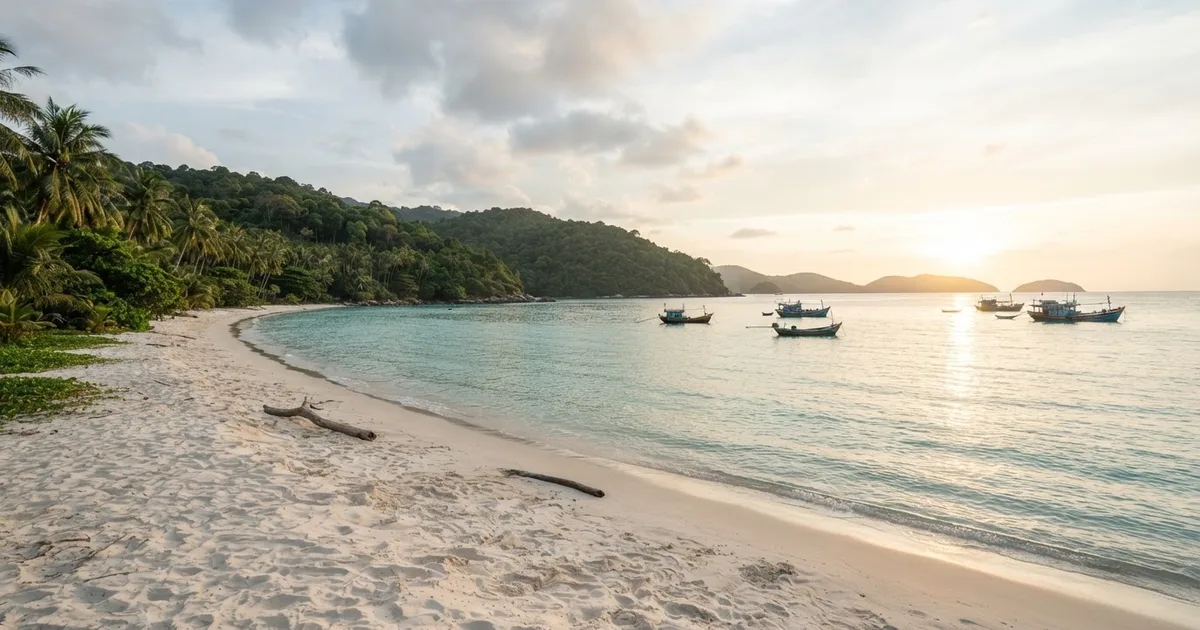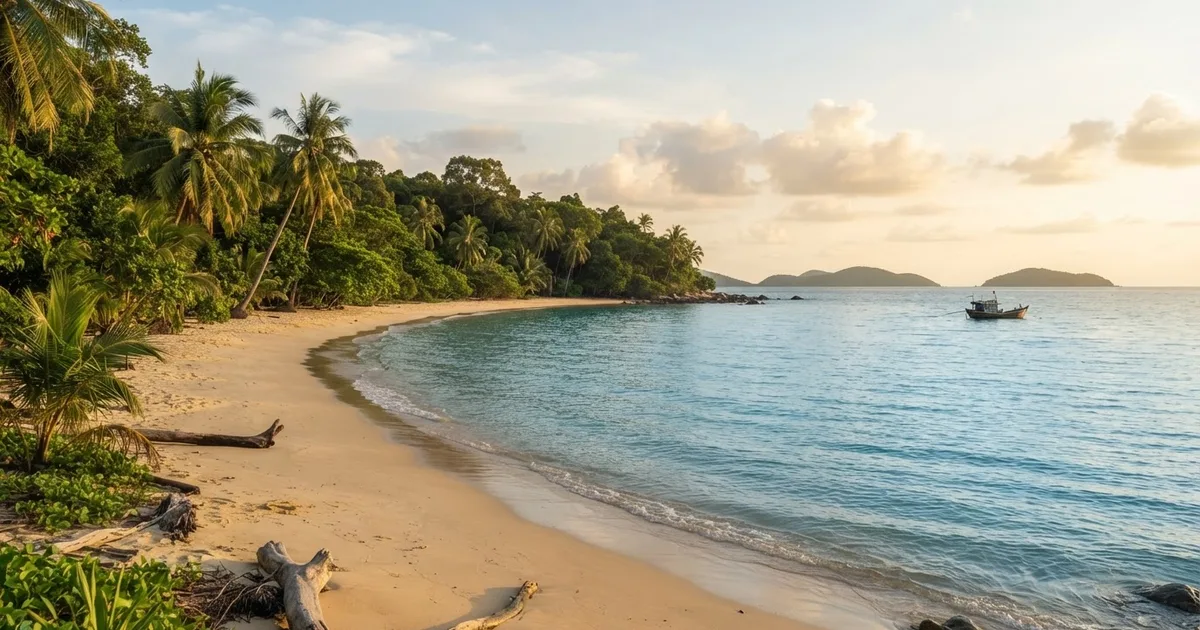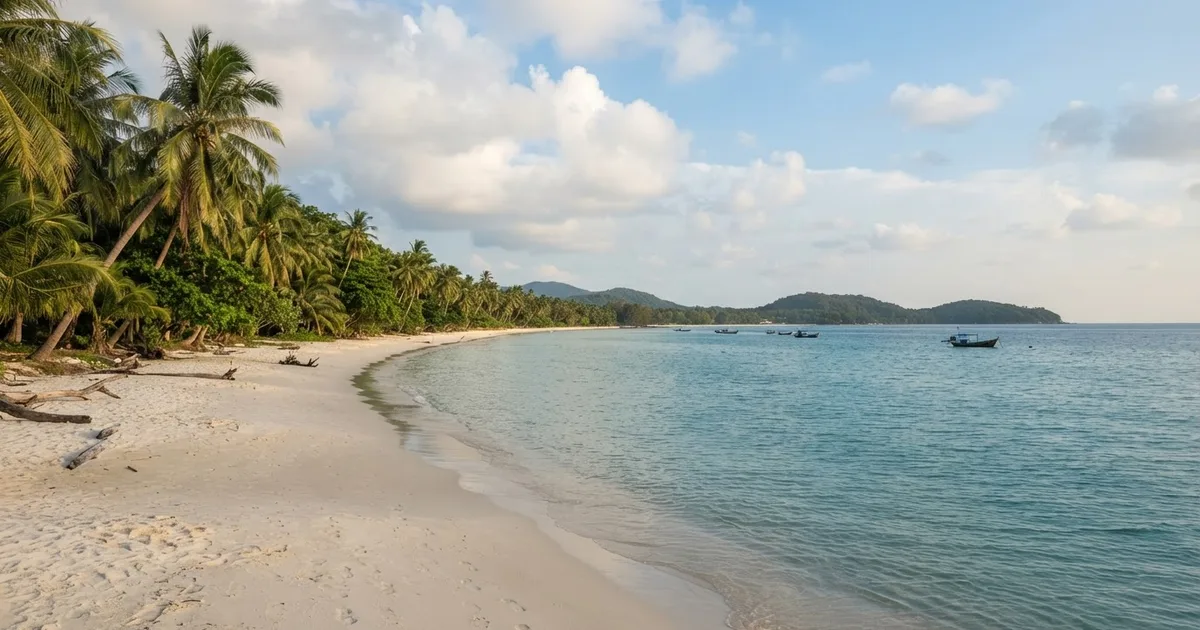
Choose Phu Quoc if value, calm swimmable water and short travel times matter most — a comfortable mid-range trip costs about US$40–60 per person per day, and budget travellers get by on roughly US$25. Choose Zanzibar if you want a resort-heavy Indian Ocean beach holiday with Swahili and Arab culture attached, but budget US$120–250 per day mid-range and US$300–600+ for luxury. Across a 7-night stay for two, the difference is typically US$700–900.
The Short Answer: Two Islands That Look Alike in Photos and Nothing Alike on the Ground
Both are tropical islands with white sand, warm water and palm trees, which is why they end up on the same shortlist. In practice they sit at opposite ends of the beach-holiday market. Phu Quoc is Vietnam's largest island, a 574 km² destination off the Gulf of Thailand that has been developed fast over the last decade into a mid-market and upper-mid resort island. Zanzibar is a semi-autonomous region of Tanzania in the Indian Ocean, roughly 1,666 km² on the main island of Unguja, with a tourism economy built around high-end resorts and a Swahili-Arabic cultural core in Stone Town.
The practical difference is money and purpose. Phu Quoc is one of the better-value beach destinations in Southeast Asia, and a comfortable mid-range trip there is still far cheaper than an equivalent-quality trip to Phuket or Bali. Zanzibar is priced for the Indian Ocean resort market: the useful tier for most travellers is the top of budget or bottom of mid-range, roughly US$90–140 a night for two, and full luxury runs US$300–600+ per day.
So the honest verdict: pick Phu Quoc for a cheaper, shorter, calmer beach trip that slots into a Vietnam itinerary. Pick Zanzibar if the beach is the whole point, you want resort infrastructure and Swahili culture in the same trip, and your budget starts at around US$150 a day.
Daily Budget: The Gap Is Two to Four Times
These are realistic all-in daily figures per person, covering accommodation, food, local transport and one activity every few days. They are not shoestring extremes on either side.
| Travel style | Phu Quoc (per person/day) | Zanzibar (per person/day) |
|---|---|---|
| Budget / backpacker | about US$25 | US$40–90 |
| Mid-range | US$40–60 | US$120–250 |
| Comfort / luxury | US$80–120 | US$300–600+ |
Two caveats worth knowing before you use those numbers. First, Phu Quoc runs about 20–30% pricier than Vietnamese mainland destinations such as Da Nang or Nha Trang, because it is an island with imported supply chains — but most travellers still find it more varied, with a wider mix of beach, resort, theme park and food options in one place. Second, at the very top end Zanzibar has no real ceiling: a mid-range couple's daily spend often lands between US$150 and US$250 once tours, tips and transfers are added, while a luxury resort day for two can pass US$1,500.
What Your Money Actually Buys: Rooms, Food and Transport
The daily averages hide the detail. Line by line, the two islands are not competing in the same bracket.
| Item | Phu Quoc | Zanzibar |
|---|---|---|
| Budget guesthouse / homestay (double) | US$10–15 guesthouse; US$15–25 homestay | US$25–50 |
| Good mid-range hotel or beach bungalow | US$35–70 | US$90–140 for two |
| Luxury resort | US$120–400 | US$300–600+ |
| Local meal | US$1–3 | US$3–8 |
| Restaurant dinner | US$8–15 | US$15–35 |
| Beer | US$1–2 | US$3–5 |
| Airport transfer | US$4–8 to Long Beach | US$40–50 to Nungwi (fixed rate) |
| Local transport | Scooter US$5–7/day; Grab taxis | Car with driver US$60–90/day |
| Signature day tour | Snorkel / island boat trip US$25–45 | Spice tour US$25–35; Mnemba snorkelling US$40–70; Jozani forest US$30–50 |
The currency mechanics matter too. Phu Quoc uses the Vietnamese dong, roughly 25,000 VND to US$1, and almost everything is paid in dong — cards work at hotels and larger restaurants, cash everywhere else. Zanzibar uses the Tanzanian shilling at roughly 2,600 TZS to US$1, but US dollars are accepted for hotels, tours and park fees, and you will usually get a better rate paying tours in dollars. Expect a mandatory Zanzibar infrastructure levy of a few dollars per person per night to appear on your hotel bill.
One structural difference: in Phu Quoc you can rent a scooter for US$5–7 a day and move around the island independently, which collapses your transport costs. In Zanzibar, self-driving is impractical for most visitors and you rely on private drivers or arranged transfers, which is a large part of why daily costs run so much higher.
Beaches and Water: Bai Sao vs Nungwi and the East Coast Tide Problem
This is the category where the two islands are closest — and where the single most misunderstood fact about Zanzibar lives.
Phu Quoc wins on beach quality. Bai Sao, on the southeast coast, is the island's flagship: fine white sand, shallow gradient, calm water, and a shoreline that stays usable all day. Long Beach (Bai Dai) runs about 20 km down the west coast and delivers the sunsets; Ong Lang and Ganh Dau are quieter, more local options. The water is Gulf of Thailand calm — genuinely flat for most of the year, which makes it excellent for families and weak swimmers, and useless for surfing. Phu Quoc has effectively no surf.
Zanzibar wins on marine life, and loses on tides. The north coast around Nungwi and Kendwa has deep water and stays swimmable at every tide, with the bonus of sunset views. The east coast — Paje, Jambiani, Kiwengwa, Matemwe — has a tidal range of roughly 3–4 metres, meaning at low tide the sea can retreat several hundred metres and you walk out over sand and seaweed flats before reaching water. That same tidal flat is what makes Paje one of the world's better kitesurfing spots during the Kusi winds (June–September) and the Kaskazi (December–February).
For snorkelling and diving, Zanzibar is clearly ahead: Mnemba Atoll off the northeast coast is the main draw, and Kizimkazi in the south runs dolphin trips. Phu Quoc's An Thoi archipelago in the south offers decent shallow snorkelling and the 7.9 km Hon Thom cable car over the water, but it is not a serious dive destination. If you snorkel or dive, bring reef shoes to Zanzibar — sea urchins on the tidal flats are common.
Beach reality check
- Want to swim off the sand at any hour? Phu Quoc or Zanzibar's north coast (Nungwi, Kendwa).
- Want kitesurfing? Paje, Zanzibar, June–September.
- Want the whitest, cleanest sand with the least crowding? Bai Sao, Phu Quoc.
- Want surfing? Neither. Book Bali — Uluwatu or Canggu.
Beyond the Beach: Culture, Food, Nightlife and Dress Codes
Zanzibar is the far stronger cultural destination. Stone Town is a UNESCO World Heritage Site, listed in 2000, and it is genuinely worth two nights: the Old Fort, the Sultan's Palace, the carved doors of the old merchant houses, the Forodhani Gardens night market, and the house where Freddie Mercury was born in 1946. Spice tours into the island's interior explain why Zanzibar was once one of the world's leading clove producers — you will see cloves, nutmeg, cinnamon and vanilla growing. Jozani Chwaka Bay National Park protects the endemic Zanzibar red colobus monkey, and dhow sunset cruises run from most coastal villages.
Phu Quoc's culture is thinner but real. The island is one of Vietnam's major fish sauce producers, with factories you can visit, plus pepper farms, the Ham Ninh fishing village on the east coast, the Dinh Cau night market and the hillside Ho Quoc Pagoda. Beyond that, the island's attractions are modern: VinWonders, Vinpearl Safari, and Sunset Town in the south with its Kiss Bridge and nightly entertainment. If temples, rice terraces and history are your priority, Phu Quoc will disappoint — Bali beats it easily on that front.
The cultural rules differ sharply. Zanzibar is roughly 99% Muslim. Away from resort beaches, dress modestly — covered shoulders and knees in Stone Town and villages — and expect alcohol to be available only at licensed hotels, resorts and bars rather than everywhere. During Ramadan, daytime opening hours change. Phu Quoc has no such constraints: beachwear on the beach, alcohol sold freely, and a relaxed, low-friction tourist scene. Nightlife on both islands is modest — Phu Quoc has beach bars and a handful of late venues, Zanzibar's scene is mostly resort-based, so neither competes with Bali or Phuket for nightlife.
Who Each Island Is a Poor Fit For
Most comparisons only sell. Here is the honest filter.
Zanzibar is a poor fit if you...
- Are travelling on under US$100 per day — the value tier starts around US$90–140 per night for two.
- Want to swim off the beach whenever you like from the east coast (Paje, Jambiani, Kiwengwa).
- Expect a party scene, late bars or cheap street food at every corner.
- Want to drink casually wherever you go, outside licensed venues.
- Have only four or five days — long-haul flights from Europe, North America or East Asia make short trips wasteful.
Phu Quoc is a poor fit if you...
- Surf. The water is calm year-round and there is no swell.
- Want UNESCO-level history, temples or rice terraces in the same trip.
- Need world-class diving or snorkelling — Zanzibar's Mnemba Atoll is in a different league.
- Want a big-city nightlife or food scene; Phu Quoc is resort-and-beach oriented.
- Dislike riding a scooter or relying on taxis to reach beaches — the island is about 50 km long.
The cleanest way to decide: Phu Quoc is a better pick if you want pristine beaches at lower cost and less crowding, with a short flight from Ho Chi Minh City. Zanzibar is a better pick if the beach holiday is the entire trip and you want resort polish plus culture on the same island.
Getting There, Visas and Seasons
Phu Quoc (PQC) is easy to reach. Domestic flights run about 1 hour from Ho Chi Minh City and just over 2 hours from Hanoi, and there are direct international services from Seoul (about 5 hours), Bangkok (about 3.5 hours), Kuala Lumpur and Singapore. Vietnam's e-visa covers 90 days and costs about US$25 for single entry or US$50 for multiple entry. Phu Quoc has historically offered a 30-day visa exemption for visitors arriving directly on the island — check current rules before booking, as policy has changed more than once.
Zanzibar (ZNZ) takes longer to reach. There are seasonal direct flights from Europe, including Amsterdam (about 9 hours), plus connections via Doha, Dubai, Istanbul, Addis Ababa and Nairobi. From Dar es Salaam it is a 1 hour 20 minute flight or a 2-hour ferry. Tanzania requires an e-visa: about US$50 for a single-entry visa for most nationalities, and US$100 for US citizens who need a multiple-entry visa. Many travellers pair Zanzibar with a Tanzania safari, which is a strong argument in its favour.
| Season | Phu Quoc | Zanzibar |
|---|---|---|
| Best months | December–March | June–October and January–February |
| Dry season | November–April | June–October (Kusi), January–February (Kaskazi) |
| Wet season | May–October, wettest September | Long rains March–May; short rains November–December |
| Typical temperatures | 27–32°C year-round | 25–28°C June–August; 30–33°C January–February |
Both islands sit in the tropics — Phu Quoc at about 10°N, Zanzibar at about 6°S — so neither has a cold season. Zanzibar's long rains (March–May) push resort rates down by 30–50%, which is the single biggest saving available on that island, at the cost of afternoon downpours and choppy water.
The Third Option: How Bali and Phuket Change the Calculation
If you are weighing Phu Quoc against Zanzibar, Bali belongs in the same conversation — and for most travellers it wins on variety, infrastructure and nightlife. But it loses to Phu Quoc on price and beach quality.
Phu Quoc is roughly 30–40% cheaper than Bali across accommodation, food, transport and activities. A budget guesthouse costs US$10–15 per night in Phu Quoc versus US$20–35 in Bali; a budget homestay is US$15–25 versus US$25–45 in Canggu; a local meal is US$1–3 versus US$2–5. Phu Quoc also wins on pure beach beauty and cleanliness — Bai Sao against Bali's highly variable beaches. Bali is stronger for surf (Uluwatu, Canggu), culture, temples and rice terraces.
Zanzibar does not really have a Southeast Asian equivalent at its price point. The closest comparison is the Maldives: you are paying for Indian Ocean water, resort service and Swahili culture rather than for nightlife, cheap food or easy independent travel.
Sample 7-Night Cost for Two People
| Line item (7 nights, 2 people, mid-range) | Phu Quoc | Zanzibar |
|---|---|---|
| Accommodation | US$315 (US$45/night) | US$770 (US$110/night) |
| Food and drinks | US$210 | US$420 |
| Local transport | US$45 (scooter + transfers) | US$180 (drivers and transfers) |
| Two signature tours | US$70 | US$160 |
| Tips, levies, extras | US$20 | US$60 |
| Total for two, 7 nights | about US$660 | about US$1,590 |
Roughly US$930 separates the two holidays at the same mid-range standard. If you are deciding on cost alone, Phu Quoc wins without much argument — and for a beach holiday in Southeast Asia it is one of the better-value options in the region.
Frequently Asked Questions
Is Phu Quoc cheaper than Zanzibar?
Yes, substantially. Phu Quoc mid-range runs about US$40–60 per person per day against US$120–250 in Zanzibar, and budget travellers spend around US$25 a day in Phu Quoc versus US$40–90 in Zanzibar. Over 7 nights for two people at a similar mid-range standard, expect roughly US$660 in Phu Quoc and US$1,590 in Zanzibar.
How much money do I need per day in Zanzibar?
Budget travellers spend US$40–90 per day, mid-range US$120–250, and luxury US$300–600+. For most visitors the sweet spot is the top of budget or bottom of mid-range, about US$90–140 per night for two people. Add US$40–50 for an airport transfer to Nungwi and US$25–70 per organised tour.
Which has better beaches, Phu Quoc or Zanzibar?
Phu Quoc wins on sand quality and cleanliness, with Bai Sao the standout — fine white sand, shallow calm water and no tidal disruption. Zanzibar's north coast at Nungwi and Kendwa is excellent and swimmable at all tides, but the east coast around Paje and Jambiani loses its beach twice a day to a 3–4 m tide.
Can you swim in Zanzibar at low tide?
On the east coast, no — the sea retreats several hundred metres over sand and seaweed flats, so you walk rather than swim. Nungwi and Kendwa on the north coast have deep water and remain swimmable at every tide, which is why they are the safest base for swimming-focused trips. Bring reef shoes for the tidal flats.
Is Phu Quoc good for surfing?
No. Phu Quoc sits in the calm Gulf of Thailand and has effectively no surf at any time of year, which makes it great for families and weak swimmers. If surfing is a priority, Bali is the better pick, with established breaks at Uluwatu and Canggu. Zanzibar's east coast is for kitesurfing, not wave surfing.
When is the best time to visit each island?
Phu Quoc is best from December to March, with a dry season from November to April and rain from May to October. Zanzibar is best from June to October and January to February. Zanzibar's long rains from March to May cut resort rates by 30–50%, but bring afternoon downpours and rougher water.
Do I need a visa for Phu Quoc or Zanzibar?
Vietnam's e-visa covers 90 days at about US$25 single entry or US$50 multiple entry, and Phu Quoc has historically offered a 30-day exemption for direct arrivals — verify current rules. Tanzania requires an e-visa costing about US$50 single entry for most nationalities, or US$100 multiple entry for US citizens.
What should I know about dress and alcohol in Zanzibar?
Zanzibar is about 99% Muslim, so dress modestly away from resort beaches — covered shoulders and knees in Stone Town and villages. Alcohol is served at licensed hotels, resorts and bars but is not available everywhere, and daytime opening hours change during Ramadan. Phu Quoc has no comparable restrictions.
Planning the Phu Quoc half of your decision? Sabrina Rental on Phu Quoc handles motorbike and scooter rental, rooms, boat trips and island advice from people who live here — including where to find Bai Sao without the tour buses and which beaches stay calm in the wet season.
Ask Sabrina About Phu Quoc