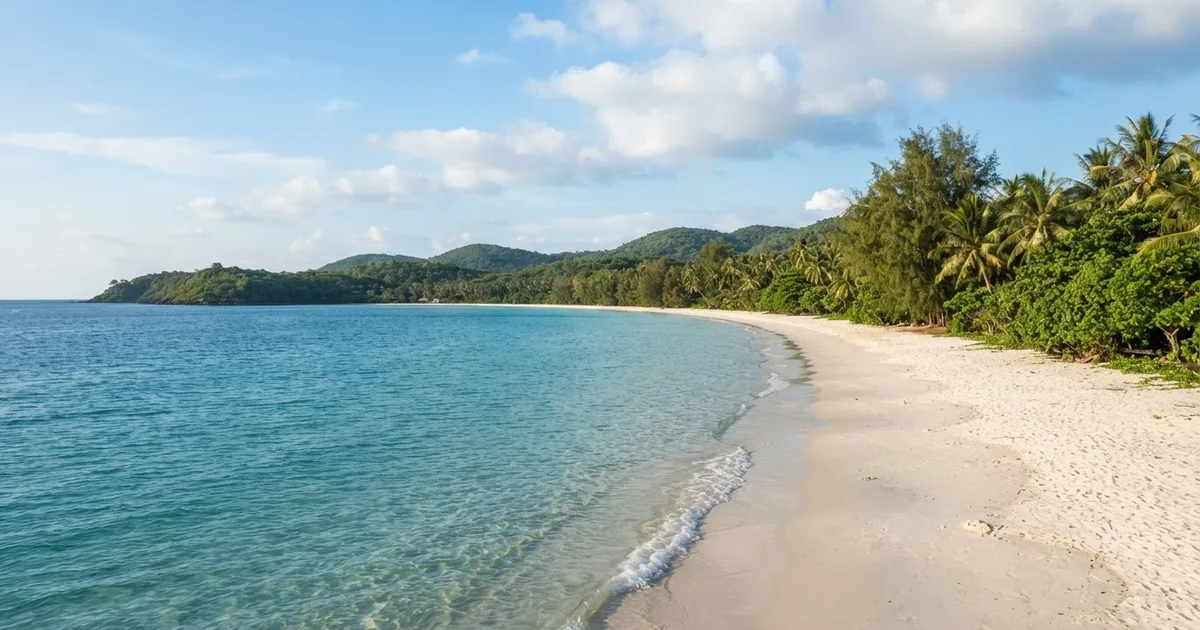
Phu Quoc is the cheaper island, with typical daily budgets of about $28 (backpacker), $80 (mid-range) and $350 (luxury) versus Boracay's $35, $100 and $300. Phu Quoc also wins on beach variety, space and nature across 574 km2 of island. Boracay wins clearly on water sports and nightlife, with kiteboarding at Bulabog Beach and White Beach bars pouring until 2-4am. Pick Phu Quoc for value, quiet and modern resorts; pick Boracay for kitesurfing, beach bars and a compact 4 km beachfront you can walk end to end.
Phu Quoc vs Boracay at a Glance
These two islands sit roughly 2,000 km apart in different seas, and that distance shows up in almost everything: size, cost, pace and what you actually do once you arrive. Phu Quoc is Vietnam's largest island at about 574 km2, roughly 55 times the size of Boracay's 10.3 km2, and more than half of it is protected national park and forest. Boracay is a 4 km ribbon of white sand divided into three stations, plus the wind-blown east coast at Bulabog.
The practical consequence is transport. On Phu Quoc the beach you want is usually 10-25 km from your hotel, so most travellers rent a motorbike for about $5-7 a day or use Grab cars for $3-8 per trip. On Boracay you walk, or take a shared e-trike for about $1-3; the island is small enough that a 20-minute stroll crosses it.
| Factor | Phu Quoc | Boracay |
|---|---|---|
| Island size | About 574 km2, over half national park | About 10.3 km2, 4 km main beach |
| Typical daily budget | $28 backpacker / $80 mid-range / $350 luxury | $35 backpacker / $100 mid-range / $300 luxury |
| Local meal | $1-3 | $3-6 |
| Beach style | Several long, spread-out beaches; often near-empty on weekdays | One world-class 4 km beach; busy and walkable |
| Best for | Beach quality, nature, value, quiet resorts | Water sports, nightlife, convenience |
| Surf | Calm water, minimal surf | Kite and windsurfing at Bulabog, no real surf break |
| Cultural sights | A few temples, fish sauce and pepper farms, night market | Very limited |
| Entry formalities | 30-day visa exemption when arriving direct to Phu Quoc | Philippine visa rules plus island and terminal fees of roughly $6-10 |
| Best months | November to April, dry season | November to May (Amihan); kitesurf winds peak December to February |
Who this table disqualifies early: Phu Quoc is a poor fit if your main reason for travelling is kiteboarding or a proper nightclub scene, because it has neither at scale. Boracay is a poor fit if you want solitude, a long empty beach to yourself, or a cheap month-long stay, because everyone is funnelled onto the same sand and the same 2 km of shops around D'Mall.
What a Day Actually Costs: Phu Quoc vs Boracay
Phu Quoc is cheaper across the board: about $28 per day for backpackers, $80 mid-range and $350 luxury, against Boracay's $35, $100 and $300. In practice a mid-range day on Phu Quoc usually lands at $40-60 per person, and a disciplined backpacker can manage around $25 using guesthouses, street food and a rented motorbike. On Boracay the realistic daily range is $35-60 per person before alcohol and activities.
| Cost line | Phu Quoc | Boracay |
|---|---|---|
| Budget guesthouse or hostel | $10-15 per night | $15-25 per night |
| Homestay or simple double room | $15-25 per night | $25-45 per night (Station 1 higher) |
| Local meal | $1-3 (pho, banh mi, rice plates) | $3-6 (grilled seafood, Filipino plates) |
| Beer at a beach bar | $0.80-1.50 | $1.50-3 |
| Motorbike rental | $5-7 per day | Not applicable; walk or e-trike $1-3 per ride |
| Mandatory island fees | None at arrival | Environmental and terminal fees, roughly $6-10 |
| Day trip or boat tour | $20-40 (An Thoi snorkelling, cable car, island hopping) | $25-50 (island hopping, paraw sail, parasail) |
One important nuance: Phu Quoc is not mainland Vietnam cheap. Local prices run roughly 10-20% above the mainland, so a bowl of pho that costs $1.20 in Ho Chi Minh City is more like $1.50-2 here. It is still far below comparable island destinations. Against Bali, Phu Quoc comes out about 30-40% cheaper across accommodation, food, transport and activities, with budget guesthouses at $10-15 a night versus $20-35 in Bali, homestays around $15-25 versus $25-45 in Canggu, and local meals at $1-3 versus $2-5.
Money tip: Phu Quoc runs mostly on cash for small vendors. Carry 500,000 VND and 200,000 VND notes for markets, beach parking (usually 5,000-10,000 VND) and roadside food; cards work at hotels, Vinpearl attractions and larger restaurants. On Boracay the reverse is true, and the peso price tag is usually 20-40% higher for the same category of thing.
Beaches and Water: Bai Sao vs White Beach
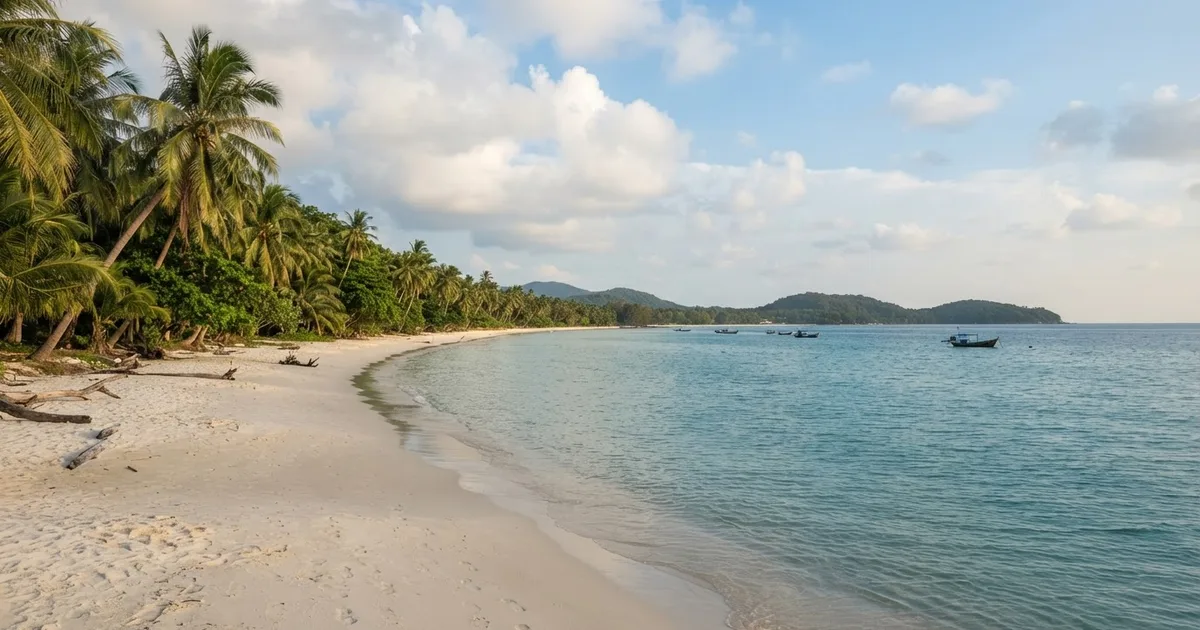
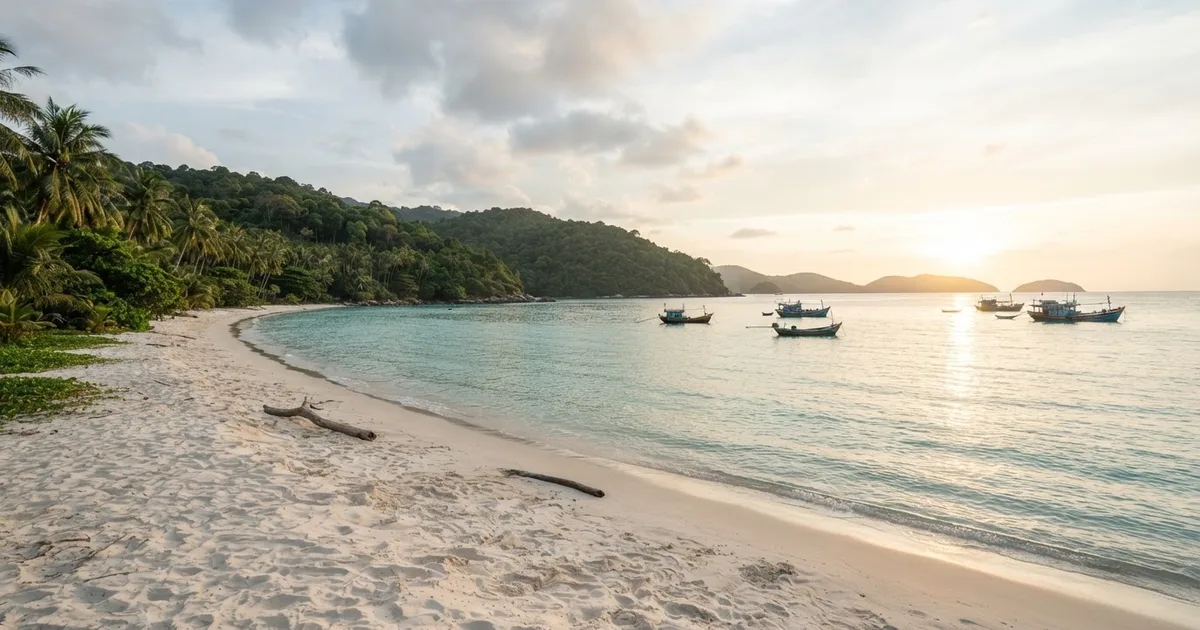
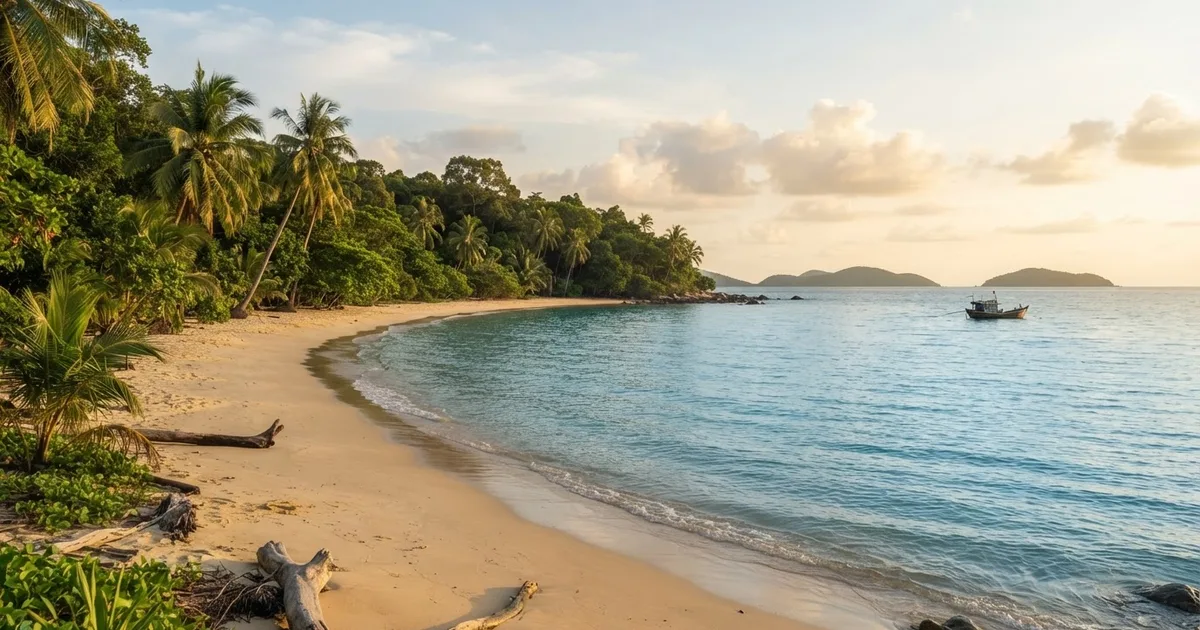
If the question is simply which island has better sand and cleaner water, Phu Quoc wins on quality and quantity. Bai Sao (Sao Beach) on the southeast coast is the postcard: fine white sand, shallow turquoise water, leaning palms and a few simple seafood shacks. It is about 25 km from Duong Dong, and because day tours arrive between 10am and 3pm, the sand is calmest before 9am and after 4pm. Bai Dai on the northwest runs for more than 20 km and is where the big resorts and the best sunsets are. Ong Lang and Cua Can are quieter, with swimming best at mid to high tide.
Boracay counters with a single, genuinely exceptional beach. White Beach's sand is famously fine and stays cool underfoot, and because the island is tiny you never need transport to reach it. The trade-offs are crowds and rules. Station 2 is the busiest stretch in front of D'Mall, Station 1 is quieter and pricier, Station 3 is the backpacker end. Since the 2018 six-month closure, bonfires, sandcastles, single-use plastics, and eating or drinking on the sand are banned, so the classic sunset beer with your toes in the water is not part of the experience here.
For surfers and kitesurfers, the comparison flips. Phu Quoc's water is calm and its surf is effectively non-existent. Boracay has no real surf break either, but Bulabog Beach on the east side is one of Asia's better kiteboarding venues, with reliable winds from November to February and a dense cluster of schools. If surfing specifically is your priority, neither island is the answer: Bali's Uluwatu and Canggu are.
Snorkelling and diving are modest on both. Phu Quoc's An Thoi archipelago in the south has the clearer water and the day boats, with trips typically $25-40 including lunch; visibility is best from December to April. Boracay's reefs around Crocodile Island are shallow and heavily visited, so most people treat the water as a playground rather than a dive destination.
Water Sports and Nightlife: Where Boracay Clearly Wins
This is the deciding category for a lot of travellers, and Boracay takes it. The island built its reputation on activities: kitesurfing and windsurfing at Bulabog, parasailing, jet skis, banana boats, helmet diving, stand-up paddleboarding, and the traditional paraw outrigger sail at sunset. Kite schools on Bulabog run beginner lessons in the $60-90 range for a half-day, with three-day courses in the low hundreds of dollars, and December to February delivers the strongest, steadiest wind of the season.
After dark, Boracay keeps going. Station 2 and the D'Mall lanes hold the density of bars and clubs, with live music, fire dancing on the sand, happy-hour promos from late afternoon, and venues that stay loud until 2-4am. There is a pub crawl most nights in high season and a crowd that is social by default because everyone is staying within a few hundred metres of each other.
Phu Quoc's nightlife is thinner and earlier. The Duong Dong night market is the main evening event, busy from about 6pm to 11pm, with grilled seafood, pearl stalls and beer for around $1. Beach bars along Long Beach and Ong Lang are relaxed rather than loud, and resorts run sunset happy hours. Big-venue entertainment exists in the north at Grand World and VinWonders, which run evening shows and a night market of their own, but the island generally goes quiet by midnight.
Best water sports by island:
- Kitesurfing and windsurfing: Boracay (Bulabog Beach, November to February).
- Parasailing, jet ski, banana boat: Boracay, $40-70 for 15-30 minutes.
- Sunset paraw sailing: Boracay, $15-25 per person.
- Snorkelling and island-hopping by boat: Phu Quoc (An Thoi, $25-40).
- Kayaking and SUP: both, often free at Phu Quoc resorts or $5-10 per hour to rent.
- Scuba diving: neither is world class; Phu Quoc's southern islets are the better of the two.
Beyond the Beach: Nature, Culture and Things to Do
Phu Quoc has far more to fill a week. The national park covers more than half the island and hides walking trails, the Rach Vem floating village and the starfish shallows nearby. The Hon Thom cable car crosses about 7.9 km of sea to Sun World's water park and beaches in the south, Vinpearl Safari and VinWonders sit in the north, and the island produces its own fish sauce and pepper, with factories and farms you can visit for free or a token fee. Duong Dong town adds Dinh Cau temple, the night market and the harbour. A realistic five to seven day itinerary fits all of this without rushing.
Boracay has almost no culture in the sightseeing sense: no temples, no rice terraces, no historic quarter. Its non-beach attractions are the beach itself, the cliff-diving platforms and viewpoints, Puka Beach and Diniwid Beach for quieter sand, and the January Ati-Atihan festival over in Kalibo, which is 1.5-2 hours away by road. Four or five days is enough for most people.
Set against Bali, both islands look thin on culture. Bali has the temples, the rice terraces around Ubud and the artistic traditions, which is why it remains the better pick for travellers whose priority is variety and a mix of beach and inland days. Phu Quoc simply answers a narrower question very well: modern entertainment, high-end resorts and excellent beaches at a lower price with far fewer crowds.
Getting There, Visas and Timing
Phu Quoc is the easier arrival. Phu Quoc International Airport (PQC) receives direct flights from Seoul, Bangkok, Kuala Lumpur, Singapore, Hong Kong and several mainland Vietnamese cities, and the island has its own immigration regime: travellers arriving directly on Phu Quoc, without transiting the Vietnamese mainland, can enter visa-free for up to 30 days regardless of nationality. Confirm the current rules with your airline before booking, because the exemption depends on routing, not on the destination alone.
Boracay takes more steps. Fly to Catican (MPH), which is 10 minutes from the jetty port, or to Kalibo (KLO) followed by a 1.5-2 hour road transfer. From either port it is a 10-15 minute boat to Cagban, then a tricycle or e-trike to your hotel. Budget roughly $6-10 per person for the environmental and terminal fees collected on the way in and out. The upside of the extra effort is that Boracay's infrastructure is polished: paved walkways, reliable power, Western-standard restaurants and English spoken almost everywhere.
Seasonality matters more than most people expect. Phu Quoc's dry season runs November to April, with the calmest sea and clearest water from December to March; May to October brings afternoon downpours and choppier crossings. Boracay's Amihan season from November to May is dry and breezy, with peak kitesurf winds in December to February; the Habagat months from June to October bring rain, seaweed on the sand and some business closures. A December to March trip can comfortably include either island at its best.
Who Should Not Pick Each Island
Honest fit matters more than rankings. Here is where each destination actively disappoints.
Choose Phu Quoc if you want
- Pristine beaches at 10-40% lower cost than the alternatives
- Space, quiet weekdays on Bai Sao and Bai Dai, and less crowding
- Nature, a national park, island-hopping and modern theme parks
- High-end resorts at mid-range prices, and a short, easy flight
Phu Quoc is a poor fit if you want
- Kiteboarding, windsurfing or any serious surf
- Club nights running past 2am, or a hostel party scene
- Temples, historic towns and cultural sightseeing
- A walkable island where you never need transport
Choose Boracay if you want
- Water sports: kitesurfing, parasailing, jet skis, paraw sailing
- Nightlife concentrated in one safe, walkable strip
- A genuinely world-class 4 km beach with fine, cool sand
- English-speaking, polished tourist infrastructure and short transfers
Boracay is a poor fit if you want
- Solitude, empty beaches or a sense of discovery
- Low prices: roughly 25-40% more per day than Phu Quoc
- Long stays of a month or more on a budget
- Beach drinking, bonfires and sandcastle photos, all now banned
The Verdict: Which Island Should You Pick?
On the numbers, Phu Quoc is the value and beach-quality winner: $28 versus $35 per day at the backpacker end, $80 versus $100 mid-range, cheaper food and drink, no island entry fees, and several beaches instead of one. Boracay is the activity and atmosphere winner: kiteboarding at Bulabog, a compact walkable beachfront, and a nightlife strip that outclasses anything on Phu Quoc by a wide margin.
If your trip is a beach holiday with nature, resorts and a modest budget, book Phu Quoc. If your trip is about doing things and going out, book Boracay. If you have two weeks and want both, the pairing is straightforward: Boracay for four to five days of water sports and bars, then Phu Quoc for five to seven days of beach time and recovery, with cheap connections through Ho Chi Minh City or Manila depending on the direction. And if culture, temples, rice terraces or surfing rank above both beach and nightlife on your list, neither of these islands is the right answer, and Bali is.
Frequently Asked Questions
Is Phu Quoc cheaper than Boracay?
Yes. Typical daily budgets are $28 backpacker, $80 mid-range and $350 luxury on Phu Quoc, versus $35, $100 and $300 on Boracay. In practice, most travellers spend $25-40 a day on Phu Quoc and $35-60 per person on Boracay, with the gap driven mostly by accommodation, food and mandatory island fees of roughly $6-10 on Boracay.
Which island has better beaches, Phu Quoc or Boracay?
Phu Quoc wins on variety and cleanliness, with Bai Sao, Bai Dai, Ong Lang and Cua Can offering several distinct stretches of white sand, often near-empty on weekdays. Boracay's White Beach is a single outstanding 4 km stretch, but it is crowded around Station 2 and subject to rules banning beach drinking, bonfires and sandcastles.
Is Boracay better than Phu Quoc for nightlife?
Clearly yes. Boracay's Station 2 and D'Mall area keeps bars, clubs and fire shows going until 2-4am with a dense, sociable crowd. Phu Quoc's Duong Dong night market shuts around 11pm, beach bars are relaxed rather than loud, and the island generally goes quiet well before midnight.
Can you kitesurf on Phu Quoc?
There is no real kiteboarding scene on Phu Quoc, and the water is usually too calm. Boracay's Bulabog Beach is the regional venue, with beginner lessons around $60-90 for a half day and the strongest winds from December to February. If kitesurfing is your priority, Boracay is the only sensible choice of the two.
Do I need a visa for Phu Quoc?
Travellers arriving directly on Phu Quoc by air or sea, without transiting mainland Vietnam, can be admitted visa-free for up to 30 days regardless of nationality. If you fly into Hanoi or Ho Chi Minh City first, normal Vietnamese visa or e-visa rules apply. Always confirm current requirements before booking your flights.
How many days do you need on each island?
Allow five to seven days on Phu Quoc if you want beaches, a boat trip to the An Thoi islets, the Hon Thom cable car and the northern theme parks. Boracay needs only four to five days, since the island is 10.3 km2 and you can cover White Beach, Bulabog, Puka Beach and the viewpoints quickly.
Which is better for families, Phu Quoc or Boracay?
Phu Quoc suits families better overall: bigger resorts, Vinpearl Safari and VinWonders, shallower calm water at Bai Sao, and lower costs of around $10-15 for a budget guesthouse. Boracay is easier to navigate with children because everything is walkable, but the beach rules and busier sand make it less relaxing.
Is Phu Quoc better than Bali?
Phu Quoc is roughly 30-40% cheaper than Bali across accommodation, food, transport and activities, with budget guesthouses at $10-15 versus $20-35 and local meals at $1-3 versus $2-5. It also has better, cleaner beaches and fewer crowds. Bali wins on variety, culture, temples, rice terraces, nightlife and surfing at Uluwatu and Canggu.
When is the best time to visit each island?
Phu Quoc is best from November to April, with the calmest sea and clearest water from December to March. Boracay is best from November to May during the dry Amihan season, with peak kitesurfing winds from December to February. The rainy seasons run May to October on Phu Quoc and June to October on Boracay.
Planning Phu Quoc? Sabrina Rental is based on the island and arranges motorbike and scooter rental, rooms and bungalows, boat trips to the An Thoi islets and Hon Thom, plus airport pickups and local advice on the best beach for the day. Tell us your dates and we will build the practical side of your trip around your budget.
Contact Sabrina Rental