For most travelers in 2026, Bali is still the better all-round choice: more variety, stronger infrastructure, better nightlife, and the only one of the three with real surf. Phu Quoc is the pick if cost, beach quality and quiet matter more than variety — it runs roughly 30–40% cheaper than Bali across accommodation, food, transport and activities, with budget guesthouses at about $10–15 a night versus $20–35 in Bali. The Gili Islands are a specialist trip: car-free, snorkel-first, and the priciest of the three per day for what you actually get.
The short answer: Phu Quoc, Bali or the Gili Islands?
These three destinations get compared because they all promise tropical beaches within a few hours of each other, but they are not substitutes. Bali is a 5,780 km² island with an international airport, a genuine city economy, cliff temples, volcano treks and one of the deepest wellness scenes in Asia. Phu Quoc is a 574 km² island in the Gulf of Thailand whose appeal is narrower and simpler: white sand, calm water, low prices, and beaches that are still spacious because the island is in a still-discovering phase. The Gili Islands are three tiny car-free specks off Lombok — Trawangan, Meno and Air — where the point is snorkeling, diving and doing very little.
The researched verdict for 2026 is that Phu Quoc matches Bali on water quality at roughly 20–30% lower daily cost, and that Bali remains the better choice for most travelers because of its variety, infrastructure and nightlife. That is a fair summary. Phu Quoc wins on price, beach quality, tranquility and ease of long stays. Bali wins on nightlife, yoga and wellness, and dramatic landscapes.
Pick Phu Quoc if you want…
- The lowest daily spend of the three — 30–40% below Bali across the board
- Quiet, white-sand beaches that are not shoulder-to-shoulder in high season
- Calm water for swimming rather than waves for riding
- A base for a month or more without traffic, noise or visa hassle
Less suited to: surfers, travelers who want a different activity every day, anyone chasing big-city dining, beach clubs or a serious party scene. If your holiday is built around nightlife, Phu Quoc will bore you by day four.
Pick Bali if you want…
- Variety — rice terraces, volcanoes, waterfalls, cliff temples and 20+ surf breaks
- Nightlife, beach clubs and a wellness scene with hundreds of studios and retreats
- Infrastructure that works: hospitals, fast wifi, imported food, direct flights from everywhere
- Dramatic landscapes rather than a flat beach island
Less suited to: travelers who want calm and empty sand. Southern Bali is very crowded and traffic congestion is significant — Canggu to Ubud can take well over an hour for 30 km. If crowds and scooters stress you out, Bali's south will wear you down.
Pick the Gili Islands if you want…
- No motorized vehicles at all — bicycles and horse carts only
- The best snorkeling and diving of the three: turtles at Gili Meno, the Meno wall, the underwater statues
- A tiny-island rhythm — you can walk around Gili Trawangan in about 90 minutes
- Sunset swings, beach bars and a compact party scene on Gili T
Less suited to: anyone on a tight budget or a short trip. The Gilis are the most expensive of the three day-to-day, boats get cancelled in rough weather, and there is no airport, no hospital and patchy wifi. Not the place for a two-night stopover squeezed between flights.
How much does each destination actually cost per day?
This is where the gap opens up. Phu Quoc is about 30–40% cheaper than Bali across accommodation, food, transport and activities, and around 20–30% cheaper specifically for comparable accommodation. A budget guesthouse in Phu Quoc costs roughly $10–15 per night; the equivalent room in Bali runs $20–35. That single line item is the clearest illustration of the whole comparison.
The Gili Islands sit at the other end. They are modestly more expensive than Bali for food, beverages and everyday goods, because everything except fish and coconuts arrives by boat from Lombok or Bali. A budget traveler can still manage on about $40–50 a day, but that is the highest budget floor of the three.
| Spending category | Phu Quoc | Bali | Gili Islands |
|---|---|---|---|
| Budget guesthouse / night | $10–15 | $20–35 | $25–40 |
| Mid-range hotel / night | $30–60 | $50–90 | $60–110 |
| Luxury resort / night | $120–350 | $180–500 | $150–400 |
| Budget daily total (per person) | ~$25–40 | ~$35–45 | ~$40–50 |
| Mid-range daily total | ~$60–100 | ~$90–150 | ~$80–150 |
| Premium daily total | ~$160–300 | ~$250–450 | ~$250–500+ |
Two nuances are worth knowing before you budget. First, the Gilis look competitive at mid-range on paper — $80–150 a day — but only because there is very little to spend money on. Unit prices for food and drinks are higher than Bali; the total stays similar because you are not paying for day tours, scooter rental or long transfers. Second, Phu Quoc's cost advantage compounds on longer stays: monthly rentals are cheap, and the island is small enough that transport costs stay flat.
Tip: In Phu Quoc the biggest controllable cost is transport. The island is roughly 50 km long end to end, so a rented scooter covers the entire place on a single tank — far cheaper than paying for taxis or day tours to reach Bai Sao, Ong Lang or the night market. Arrange one on arrival rather than booking a different transfer for every beach.
Beaches and water: where Phu Quoc genuinely wins
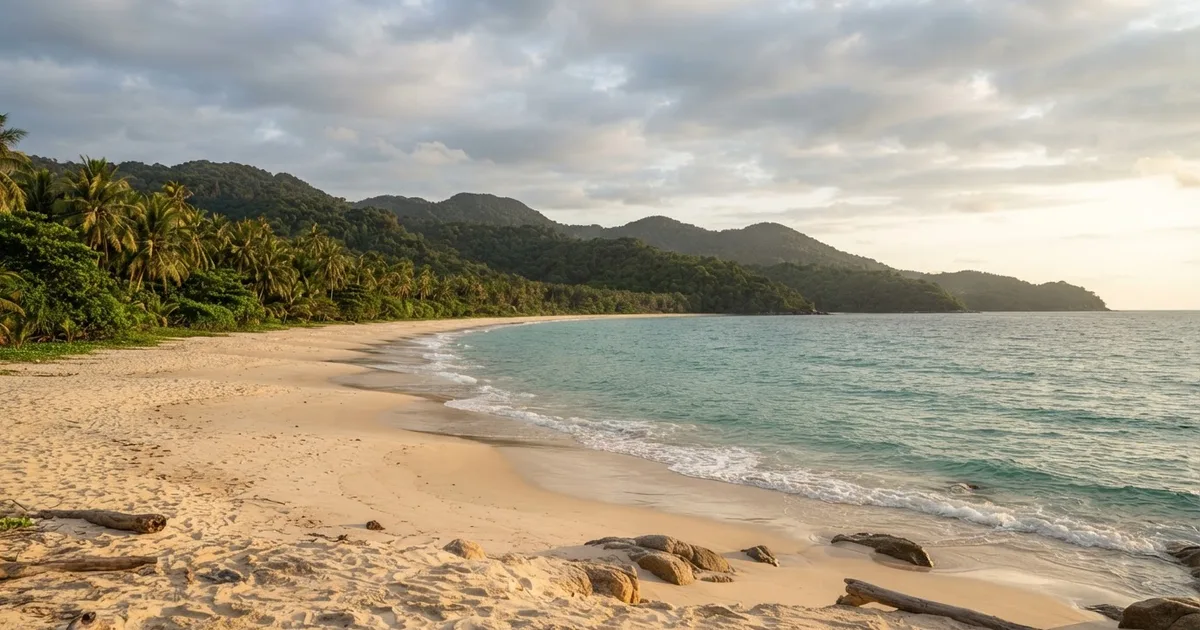
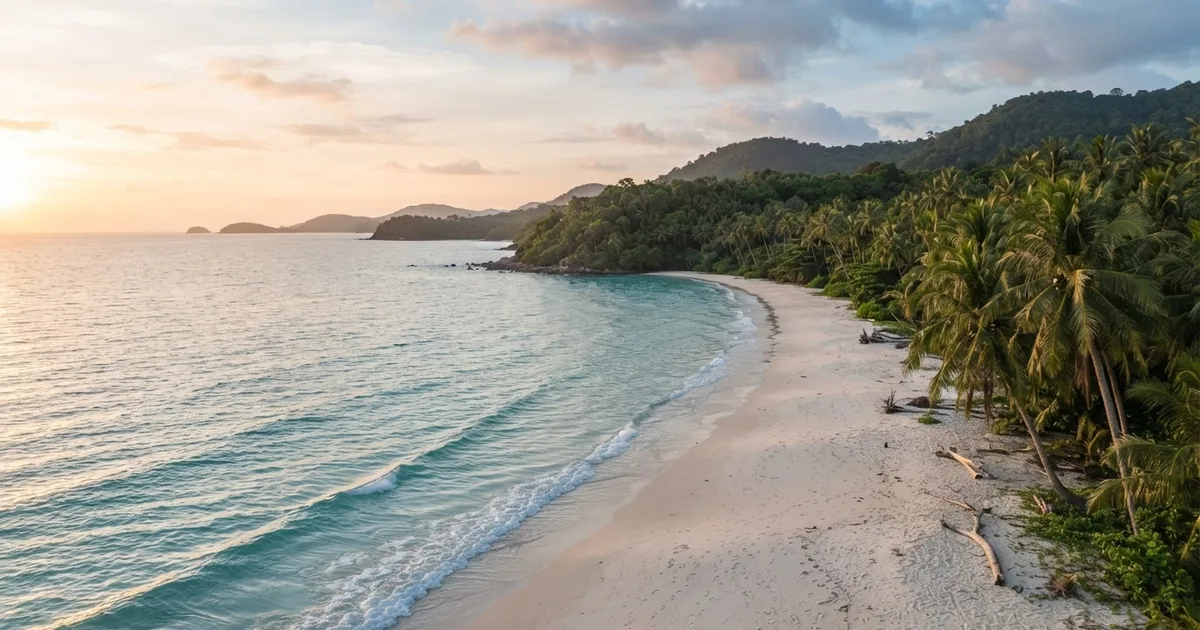
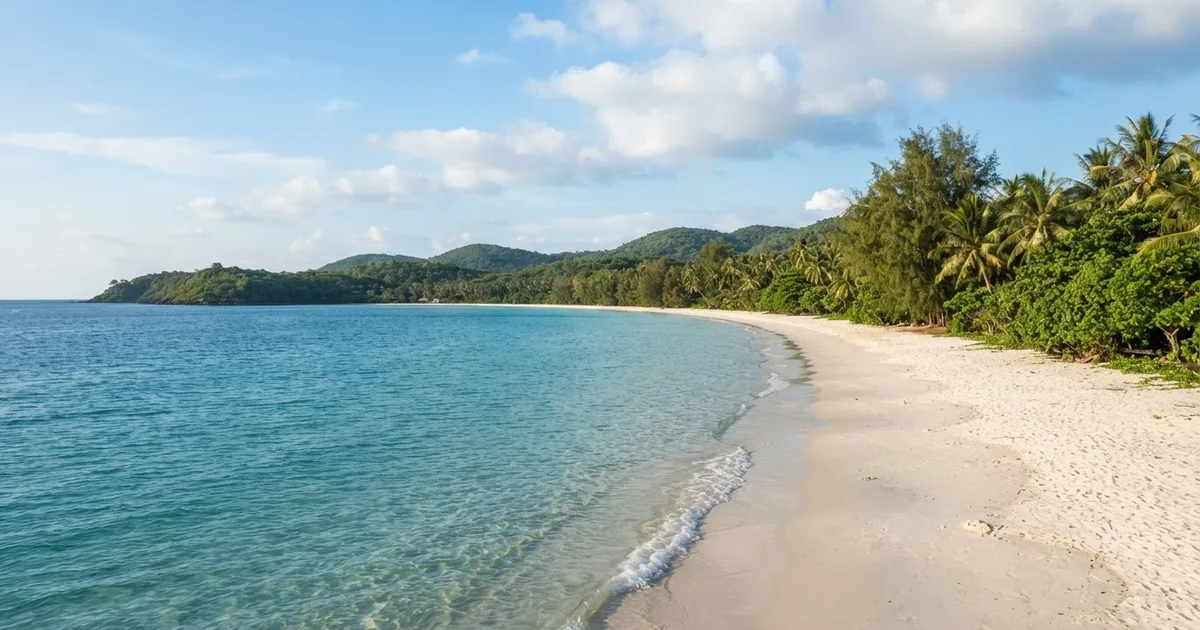
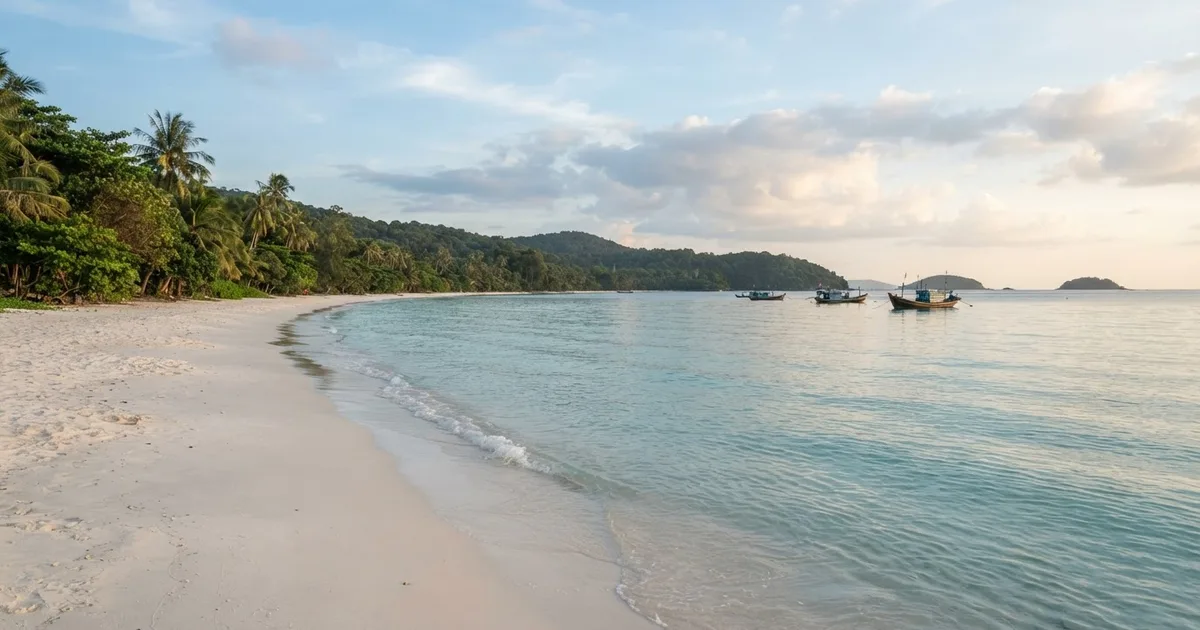
Phu Quoc's beaches are its strongest argument. They are described as pristine, less crowded and white-sanded, and the major ones are still spacious rather than packed. Bai Sao (Sao Beach) on the southeast coast, about 25 km from Duong Dong and 20–30 minutes by scooter, is the island's flagship: fine white sand, shallow calm water, and enough length that you can walk away from the busiest section. Bai Khem, a few minutes further south near An Thoi, is quieter and used mainly by guests at the resorts behind it. On the west coast, Long Beach (Bai Truong) runs for roughly 20 km along the sunset side, and Ong Lang to the northwest is the relaxed, mid-range option with restaurants on the sand.
Bali's beaches vary enormously by area, and that is the honest problem. Nusa Dua has clean, calm, resort-managed sand. Sanur is reef-protected and swimmable at most tides. But Kuta, Legian and Seminyak are grey-sand, current-heavy and can collect seasonal debris during the wet months. Uluwatu's beaches are spectacular clifftop views with a steep staircase down. If you judge Bali by a single beach, you may love it or hate it depending on which one you picked.
The Gili Islands have excellent white sand and the clearest water of the three for snorkeling, but the beaches are short and the islands are tiny — Gili Trawangan is about 2 km across. You are not going there for long beach walks. You are going for what is under the surface.
Crowds, traffic and the still-discovering factor
Bali's south is genuinely crowded, and traffic congestion is a real, daily constraint on your holiday. Getting from Canggu to Seminyak can take 40 minutes for 8 km in the evening. Ubud's centre is a queue of vans and scooters by mid-morning. This is not a reason to skip Bali — it is a reason to plan around it, base yourself in one area rather than three, and treat distances as double what a map suggests.
Phu Quoc is the opposite experience right now. The island's main beaches are still spacious and the place reads as being in a still-discovering phase: the road network is simple, Duong Dong is walkable in the evening, and you can cross the island in under an hour. The trade-off is fewer restaurants, fewer international-standard services and a thinner high season calendar. If you want a beach holiday where the beach is the main event and nothing gets in the way, this is the strongest of the three.
The Gili Islands solve the traffic problem by banning it — there are no motorized vehicles on Trawangan, Meno or Air, only bicycles and cidomo horse carts. That is genuinely lovely for three days. It becomes limiting after a week, when you want a proper supermarket, a hospital or a road out.
Nightlife, wellness and landscapes: Bali's clear win
Bali is recommended for travelers prioritizing nightlife, yoga and wellness, and dramatic landscapes — and it wins all three by a distance. The wellness infrastructure is unmatched in Southeast Asia: hundreds of studios and retreats in Canggu and Ubud, teacher-training courses, sound-healing sessions, and a decade-long head start on the rest of the region. Nightlife runs from beach clubs in Seminyak and Canggu to late venues in Kuta, plus a live-music scene that Phu Quoc simply does not have.
The landscapes are the other category Phu Quoc cannot compete with. Mount Batur's sunrise trek (1,717 m), the Tegallalang rice terraces, Tegenungan and Munduk waterfalls, the cliff temple at Uluwatu, and Nusa Penida's Kelingking viewpoint are all within a day trip of each other. Phu Quoc is flat, green and pleasant, but it is not dramatic.
Phu Quoc's evening economy is modest and centred on Duong Dong: the Dinh Cau night market for seafood and grilled skewers, a handful of sunset bars on Long Beach, and VinWonders plus the 7.9 km Hon Thom cable car for families. The Gili Islands sit between the two — Gili Trawangan has a compact bar and party scene with regular full-moon events, while Gili Meno and Gili Air go quiet by 10 pm.
Surfing: the one category Phu Quoc cannot enter
Bali is stronger for surf, and it is not close. Uluwatu and Padang Padang on the Bukit Peninsula serve experienced riders; Canggu's Batu Bolong and Echo Beach are the beginner-friendly mainstays; Medewi on the west coast is a long, soft left-hander. The dry-season swell window runs roughly May to September on the west coast, and you can rent a board on the beach for a few dollars.
Phu Quoc has calm water and poor surf. The island sits in the sheltered Gulf of Thailand on a shallow shelf, so there is effectively no swell to ride for most of the year. Kitesurfing fills part of that gap during the dry season on the west coast, but if surfing is the reason for your trip, Phu Quoc is the wrong island.
The Gilis have no surf either — they are a snorkel-and-dive destination. The compensation is real: Turtle Point off Gili Meno, the Meno wall, and the underwater statue installation are among the easiest, most rewarding snorkeling in Indonesia, and dive shops on all three islands run open-water courses at competitive prices.
Getting there, visas and transfers
Phu Quoc has its own international airport (PQC), with domestic flights of about one hour from Ho Chi Minh City and roughly two hours from Hanoi, plus direct international services from Seoul, Bangkok, Kuala Lumpur, Singapore, Hong Kong and Taipei. A taxi from the airport to Duong Dong takes about 15 minutes and costs around $6. Vietnam's e-visa covers 90 days for around $25 single-entry or $50 multiple-entry, and Phu Quoc has long offered a 30-day visa exemption for travelers arriving directly at the island's airport — always confirm the current rule with your airline before booking.
Bali is the easiest of the three to reach. Ngurah Rai (DPS) is a major hub with direct flights across Asia, Australia and Europe. Indonesia's visa on arrival costs IDR 500,000 (about $31) for 30 days and can be extended once for another 30, and it can be applied for online before you fly.
The Gili Islands have no airport at all. You reach them by fast boat — roughly 1.5–2 hours from Padang Bai, 2–2.5 hours from Serangan near Sanur, about an hour from Amed, or 20–30 minutes from Bangsal on Lombok. Boats are frequently cancelled in rough weather, so never book a Gili crossing on the same day as an international flight.
Best time to visit each destination
| Destination | Dry / best season | Wet / avoid | Notes |
|---|---|---|---|
| Phu Quoc | November – April | May – October | Peak is December–March; September is the wettest month |
| Bali | April – October | November – March | Peak crowds in July–August and late December |
| Gili Islands | April – October | November – March | July–August can be windy; crossings get bumpy |
The calendars do not overlap perfectly, which matters if you are trying to combine two of them. Phu Quoc's dry season runs through the northern winter, while Bali and the Gilis are at their best in the northern summer. A trip that includes both would ideally run in April or October — shoulder months that work reasonably well on all three.
Long stays, remote work and month-long budgets
Phu Quoc wins on ease of long stays, and the mechanics are straightforward: a 90-day Vietnam e-visa removes the monthly visa-run problem, monthly studio rentals in Duong Dong or Ong Lang commonly run $250–450, and the island is small enough that you never lose an hour to commuting. Wifi in the main towns and most mid-range accommodation is reliable.
Bali has the best co-working infrastructure in the region — dedicated spaces in Canggu and Ubud, plus Indonesia's remote-worker visa for longer stays — but monthly rents for a comparable standard are typically $400–800, and you will spend more on food and transport. The Gili Islands are a poor fit for remote work: slow connections, limited power reliability, no cars, and a food supply that depends on the daily boat.
Quick decision checklist:
- Surfing on the itinerary? Bali.
- Cheapest month-long beach base? Phu Quoc.
- Yoga, retreats or a wellness focus? Bali.
- Best snorkeling and diving? Gili Islands.
- Traveling with young children and want calm, shallow water? Phu Quoc.
- Two weeks, first time in Southeast Asia, want variety? Bali.
- Four days, want nothing but beach and no traffic? Phu Quoc or Gili Air.
Frequently Asked Questions
Is Phu Quoc cheaper than Bali?
Yes, by a wide margin. Phu Quoc runs roughly 30–40% cheaper than Bali across accommodation, food, transport and activities, and about 20–30% cheaper for comparable accommodation specifically. A budget guesthouse in Phu Quoc costs $10–15 per night versus $20–35 in Bali, and a budget daily total lands near $25–40 per person.
Are the Gili Islands more expensive than Bali?
Slightly, for everyday spending. The Gilis are modestly more expensive than Bali for food, beverages and everyday goods because nearly everything is shipped in from Lombok or Bali. Budget travelers manage on about $40–50 a day, mid-range travelers spend $80–150, and premium travelers can spend $250–500 or more per day.
Which has better beaches, Phu Quoc or Bali?
Phu Quoc, for consistency. Its beaches are pristine, white-sanded and still spacious, with Bai Sao the standout. Bali's beaches vary sharply by area — Nusa Dua and Sanur are clean and calm, while Kuta and Seminyak are grey-sand with stronger currents. You can find a great Bali beach, but you have to choose the right coast.
Can you surf in Phu Quoc or the Gili Islands?
No, not meaningfully. Phu Quoc sits in the sheltered Gulf of Thailand with calm water and poor surf for most of the year, and the Gili Islands have no surf at all. Bali is the only one of the three with real waves — Uluwatu, Padang Padang, Bingin and Canggu are the main breaks, best from roughly May to September.
Is Bali or Phu Quoc better for nightlife?
Bali, easily. It has beach clubs in Seminyak and Canggu, late venues in Kuta, live music and a wellness scene that runs into the evening. Phu Quoc's nightlife is limited to the Dinh Cau night market, a few sunset bars on Long Beach and hotel entertainment. The Gilis sit in between, with a compact bar scene on Gili Trawangan.
How do you get to the Gili Islands?
By fast boat only — there is no airport. Crossings take about 1.5–2 hours from Padang Bai, 2–2.5 hours from Serangan near Sanur, roughly an hour from Amed, or 20–30 minutes from Bangsal on Lombok. Boats are often cancelled in rough weather, so allow a buffer day before any international flight.
Which is best for a month-long stay?
Phu Quoc, for most people. A 90-day Vietnam e-visa removes the visa-run problem, monthly studio rentals commonly run $250–450, and the island is small enough to avoid commuting entirely. Bali offers better co-working infrastructure but higher rents, typically $400–800 a month for comparable standard.
Is Phu Quoc good for families with young children?
Yes. The west and southeast beaches are shallow and calm, there are no strong currents on the main swimming beaches, and the island is easy to navigate by car or scooter. Costs are low — a family can eat well at the night market for a fraction of Bali prices — and there is no traffic congestion to manage.
Still deciding, or already booked and need transport on Phu Quoc? Sabrina Rental is based on the island and can sort out a scooter, a room or a boat trip, plus honest local advice on which beaches are worth the ride and which are not.
Get in touch with Sabrina Rental