Yes — a Phu Quoc pepper garden is worth visiting, as long as you treat it as a rewarding short stop rather than a full-day attraction. Entry to most farms is completely free, tasting is usually complimentary, and paid hands-on activities cost only 20,000–50,000 VND (about $1–2) per person. Time your visit for the November–February harvest and budget 45–60 minutes on the farm itself.
What Is the Phu Quoc Pepper Garden — and Why Is Phu Quoc Pepper Famous?
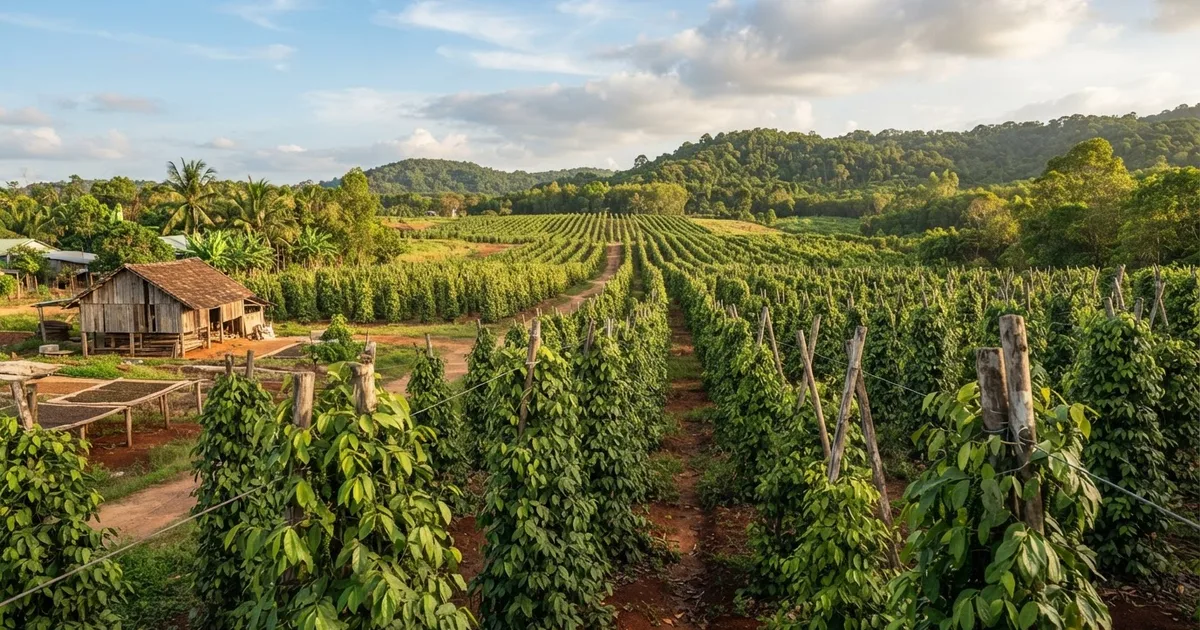
Phu Quoc pepper is the island's most celebrated agricultural product, grown by small family farms concentrated in the north-west of the island — around Cua Duong commune and the Khu Tuong area, roughly 30 minutes' drive from Duong Dong town. "Phu Quoc Pepper Garden" is the catch-all name travelers use for these plots, which are working farms first and attractions second. The vines climb living trees and thick wooden or brick posts in dense green rows, and each plant needs about three years before it produces its first worthwhile harvest — one reason genuine island pepper is treated with such respect.
The reason the crop commands a premium is quality. Phu Quoc peppercorns are known for an unusually strong, sharp pungency and a lingering aroma, the result of the island's mineral-rich red soil and humid microclimate. The pepper holds Protected Geographical Indication status, meaning only pepper actually grown on the island can be sold under the Phu Quoc name. From the same plant, farmers produce three distinct products: black pepper (young green berries dried in the sun), white pepper (ripe berries soaked and stripped of their outer skin), and red pepper — the rarest and most expensive, made from fully ripe berries that are preserved rather than dried black.
None of this is staged for tourists. Phu Quoc pepper farms are generally open throughout the day as working farms and shops, which is precisely the charm: you walk between productive rows while somebody's actual livelihood carries on around you — berries being picked, sorted and spread out to dry in the sun.
So, Is It Worth Visiting? The Honest Verdict
Scan visitor reviews and one verdict repeats again and again: a Phu Quoc pepper garden is worth a short stop, not a major attraction. Set your expectations there and you will almost certainly leave happy. Many gardens have no entrance ticket and no guide — you simply arrive, wander the rows at your own pace, and taste fresh pepper directly from the farm, often straight off the vine.
The human element is what turns a 45-minute stop into a memorable one. Reviewers repeatedly single out the owners as friendly and the hospitality as genuine — you are usually being hosted by the very family that planted and picked the vines around you. On TripAdvisor, the best-known countryside operator shows 432 "excellent" ratings with only a small handful of poor reviews, which is remarkable consistency for a farm stop. Even travelers who note that it takes about 30 minutes to reach the farms typically conclude the visit is worth the trip.
The honest downsides deserve equal space. First, you are driving roughly an hour round-trip for an experience you'll complete in under an hour — on a short beach holiday, that trade-off matters. Second, there is one recurring complaint: prices in the farm shops are high and clearly aimed at tourists, sometimes above what the same pepper costs in Duong Dong. Third, this is a low-key, rural experience — no shows, no rides, no restaurants. If any of those things are deal-breakers for your travel style, skip it without guilt; if you like food, farming and quiet countryside, it will likely be one of the most authentic hours you spend on the island.
Which Pepper Garden Should You Visit? The Main Options Compared
There is no single fenced-off "Phu Quoc Pepper Garden" — you are choosing between a handful of family farms in and around Cua Duong. Here is how the main options stack up:
| Option | Entry & cost | Hours | Best for |
|---|---|---|---|
| Khu Tuong Pepper Garden (Cua Duong) | Free to enter | 8:00–17:00 daily | Self-guided wander, complimentary tasting, pairing with north-island sights |
| Phu Quoc Countryside farm | Free to enter; paid activities usually 20,000–50,000 VND | 9:00–17:00 | Hands-on harvesting experience and photo spots — 432 "excellent" TripAdvisor ratings |
| Guided pepper farm tour | Around 110,000 VND per person, tasting included | By arrangement | First-time visitors who want context while they walk the rows |
| Farm visit + Vietnamese cooking class | From about USD 55 per person | Half-day | Food lovers turning the pepper story into a full culinary morning |
The free-entry model is the norm across the island, and most farms happily welcome walk-in visitors with no booking and no guide. If a garden does charge for anything, it is the hands-on stuff — picking berries or a structured tasting — and even then the fee is usually just 20,000–50,000 VND per person. If you would rather have someone explain the growing cycle as you go, the roughly 110,000 VND guided tour hits the sweet spot: it includes hands-on activities and complimentary tasting sessions, which is what makes the fee feel worthwhile. The USD 55 cooking-and-farm package only makes sense if cooking Vietnamese food is genuinely on your wish list — otherwise it is far more than a pepper stop requires.
What You'll Actually See and Do (45–60 Minutes)
A visit follows a simple, pleasant arc. You start between the rows — long lines of glossy-leaved vines climbing their support poles, heavy with clusters of green berries that ripen to red. Your host will usually explain the three-year wait for the first harvest, how the vines are layered and tended, and how the family can tell when a cluster is ready for picking. It is informal, unhurried and genuinely educational in a way no museum plaque quite manages.
The tasting is the centerpiece. Biting a fresh green peppercorn straight from the vine surprises almost everyone: the heat is bright and almost citrusy rather than the dull burn of the dried stuff. You'll then compare it with cracked dried black pepper and, if the farm has any, the prized red pepper — sweeter, fruitier and far more delicate. Most visitors say this chance to taste fresh pepper directly from the farm is the single best part of the visit.
You'll finish in the drying and sorting area — bamboo mats and concrete courtyards where berries are sun-dried and graded by hand — which also happens to be the best photo spot on the farm. Expect a small shop at the end selling black, white and red pepper, plus pepper sauces, pepper salt and souvenirs. Browse by all means, but read the costs section below before committing to a full kilo.
The Best Time to Visit a Phu Quoc Pepper Farm
The pepper harvest season on Phu Quoc runs roughly November to February, which conveniently overlaps with the island's dry season. In those months the vines are at their most photogenic — dense with green and red berry clusters — and some farms are known specifically for a hands-on harvesting experience and great photo spots, since there is something actually being picked. If your dates are flexible, this is the window to aim for.
Outside harvest season, a visit still works: the vines are evergreen, tasting sessions and drying continue year-round, and entry stays free. You simply miss the dramatic berry-laden rows and the picking itself.
As for the time of day, aim for 8:00–10:00 in the morning, when the air is coolest and the light is soft. Khu Tuong Pepper Farm opens 8:00–17:00 daily and Phu Quoc Countryside runs 9:00–17:00, and because these are working farms and shops they stay open through the daylight hours — but everything winds down by late afternoon, and midday sun between the rows is punishing. Morning visits also leave your afternoon free for a beach.
How to Get to the Pepper Gardens
The farm belt lies in Cua Duong commune in the island's north-west. From Duong Dong it is about a 30-minute ride north on well-surfaced, mostly flat roads — an easy, scenic scooter trip even for first-time riders in Vietnam, passing countryside, small homestays and hints of national park greenery. A scooter is by far the most practical choice: ride-hailing cars exist in Duong Dong but thin out dramatically in the rural north, and taxis for a countryside loop quickly cost more than a full day's rental.
Smart itineraries fold the farm into a northern loop. Vinpearl Safari and VinWonders sit roughly on the way; beyond the farms you can continue into Phu Quoc National Park, kayak the Cua Can River, or push on to Rach Vem on the north coast, famous for starfish visible at low tide and stilt-house seafood restaurants. A classic half-day: leave Duong Dong around 8:30, spend 45–60 minutes at the farm mid-morning, then roll on to the national park or a north-coast beach for lunch.
What It Costs — and How Not to Overpay
The visit itself is close to free. Most gardens charge nothing to walk in, and if any fee applies it is for hands-on activities — typically 20,000–50,000 VND per person, or $1–2. A structured guided tour with activities and tasting runs around 110,000 VND, and even the premium cooking-and-farm package starts from about USD 55. Compared with island activities like snorkeling trips or cable-car excursions, a pepper farm is one of the cheapest cultural experiences on Phu Quoc.
The one genuinely pricey element is buying the pepper itself. The recurring reviewer complaint is that farm-shop prices are high and aimed at tourists — sometimes above what comparable packs cost back in Duong Dong. That does not mean you shouldn't buy; it means you should compare. Check the per-kilo price at two or three farms if you can, and remember that red pepper always commands a premium over black and white. Vacuum-sealed packs travel well in a suitcase and make genuinely good gifts — just know your price before you fall in love with the packaging.
Who a Pepper Garden Visit Suits — and Who Should Skip It
After weighing the reviews, the costs and the logistics, here is the clearest way to decide whether the detour is for you:
Great fit if you...
- Care about food and want to taste peppercorns straight from the vine
- Enjoy slow, rural, working-farm travel over staged attractions
- Are visiting between November and February and want the harvest photo spots
- Travel with kids aged roughly 5 and up — it is a genuinely educational hour
- Are already heading north for the Safari, national park or starfish beach
Less suited if you...
- Have only 2–3 beach-focused days and a packed itinerary — an hour-plus of round-trip riding is a real cost
- Expect shows, rides or restaurant facilities — this is a farm, not a park
- Disagree with tourist-priced shopping or feel pressured to buy at the end
- Have limited mobility — the rows are uneven dirt paths without ramps
- Only have evenings free — farms close by 17:00
Frequently Asked Questions
How much does it cost to visit a pepper garden in Phu Quoc?
Most Phu Quoc pepper gardens are free to enter, and Khu Tuong Pepper Garden is listed as free to enter with no ticket required. If a farm charges for anything, it is for hands-on activities such as picking or structured tastings, usually 20,000–50,000 VND per person. A guided tour with tasting included runs about 110,000 VND.
When is the pepper harvest season on Phu Quoc?
The harvest runs roughly November to February, which is also the island's dry season. In those months the vines are heavy with green and red berry clusters, some farms offer hands-on harvesting, and photo opportunities are at their best. Visits outside harvest are still possible — tasting and drying continue year-round.
What are the opening hours of Phu Quoc pepper farms?
Khu Tuong Pepper Farm opens 8:00–17:00 daily, and Phu Quoc Countryside operates 9:00 AM–5:00 PM. Because pepper farms are working farms and shops, most stay open throughout the daylight hours, but they wind down by late afternoon — a morning visit between 8:00 and 10:00 is ideal.
How far is the pepper garden from Duong Dong?
The main farms sit in Cua Duong commune in the north-west, about 30 minutes by scooter from Duong Dong town. Visitors regularly say the farm visit is worth the trip despite that ride, especially if you continue on to Vinpearl Safari, Phu Quoc National Park or a north-coast beach afterward.
Can I visit a pepper farm without a guide or tour?
Yes. Many visitors describe the experience as a small stop with no entrance ticket and no guide — you arrive, wander the rows yourself and taste what is offered. A guide simply adds context; if you want one, tours with hands-on activities and complimentary tasting cost around 110,000 VND per person.
What is the difference between black, white and red Phu Quoc pepper?
All three come from the same plant and differ only in processing. Black pepper is dried young green berries; white pepper is ripe berries soaked and stripped of their skin; red pepper is fully ripe berries preserved whole. Red is the rarest and most expensive, with a sweeter, fruitier flavor than the sharp black.
Is the guided pepper farm tour worth 110,000 VND?
For most first-time visitors, yes — a 2026 guide notes the tour includes hands-on activities and complimentary tasting sessions, which makes the fee feel worthwhile. If you are happy wandering on your own and tasting whatever the hosts offer, the free self-guided option at gardens like Khu Tuong covers the essentials.
Is a pepper farm visit good for kids?
Yes — it is an open-air, hands-on hour where children can see exactly where pepper comes from, touch the vines and watch berries being dried. Keep children close around the drying courtyards and irrigation lines, bring sun protection, and go in the morning before the heat. Entry for kids is typically free when the garden itself is free.
How long should I plan for a pepper garden visit?
Plan 45–60 minutes on the farm itself, plus about 30 minutes of riding each way from Duong Dong. That makes it a perfect two-to-three-hour slot, or a full half-day if you chain it with the national park, Cua Can River or a starfish beach on the north coast.
Fancy tasting fresh peppercorns straight off the vine? Sabrina Rental can set you up with a reliable scooter for the easy 30-minute ride north to Cua Duong — and help you map the pepper farm, Safari and north-coast beaches into one smooth loop. Message us and we'll plan the route with you.
Plan My Pepper Farm Ride