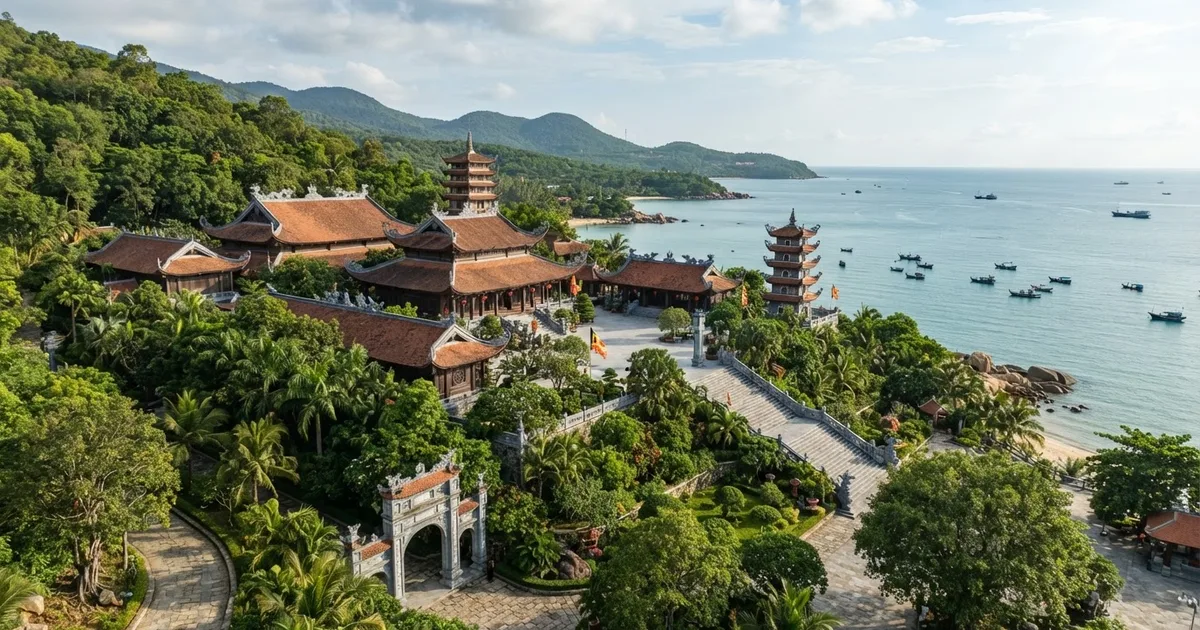
Yes — but only as a short stop. Ba Pagoda at 44 Vo Thi Sau Street in Duong Dong town is free to enter, genuinely atmospheric, and takes about 30–45 minutes to see properly. It is a worthwhile detour if you are already in central Duong Dong, but it is not a place to plan half a day around; for a bigger temple experience, pair it with Ho Quoc Pagoda, the island's largest Buddhist temple with a panoramic sea view.
What Is Ba Pagoda — and Why Do Locals Revere It?
Ba Pagoda is one of the oldest and most sacred temples in Duong Dong, the main town on Phu Quoc Island. It is dedicated to the goddess Thuy Long Thanh Mau, whose legend the pagoda preserves: a sea deity associated with protecting fishermen and islanders. That connection explains why generations of local fishing families have come here to pray for luck, peace, and safe voyages before heading out to sea — and why the temple still feels like a living place of worship rather than a museum piece.
Unlike the grand, purpose-built temple complexes that have appeared around the island in recent years, Ba Pagoda is a genuine neighborhood shrine. Phu Quoc temple guides consistently point out that the island's temples are generally small, local places of worship rather than major national cultural landmarks — and that is exactly Ba Pagoda's appeal. On an ordinary morning you will likely share the courtyard with local grandmothers lighting incense sticks, not tour groups with selfie sticks.
The pagoda is also a living festival venue. During the full moon of the first lunar month (usually falling in February), a grand worship ceremony and traditional festival draw worshippers from across the island. If your trip lines up with those dates, this small temple becomes one of the most atmospheric cultural experiences on Phu Quoc.
Is Ba Pagoda Worth Visiting? The Honest Verdict
For most travelers: yes, with realistic expectations. The pattern you see in visitor feedback across Phu Quoc's sacred sites applies here too — travelers who arrive expecting a major monument leave underwhelmed, while those who come for quiet atmosphere and local culture are pleasantly surprised. Ba Pagoda is small, simple, and sincere.
Visit if you…
Are staying in or passing through Duong Dong, want an authentic glimpse of local spiritual life away from resort zones, enjoy photographing incense, lanterns, and traditional roofwork, or can time your visit to the first-lunar-month festival.
Skip it if you…
Expect grand architecture, sweeping views, or a full program of activities; dislike small and simple temples; or are unwilling to make even a short detour. A dedicated trip across the island just for Ba Pagoda will disappoint — it rewards proximity, not pilgrimage.
The fairest framing is this: Ba Pagoda is an easy and worthwhile stop if you are already nearby — before or after the Duong Dong night market, the Dinh Cau rock temple, or a coffee on the waterfront — but it is not a place to plan a full day around. Budget 30–45 minutes, combine it with two or three other central Duong Dong sights, and it delivers solid value for a free attraction.
Ba Pagoda vs. Ho Quoc Pagoda: Which One Should You Visit?
Travelers often mix these two up, but they are completely different experiences. Ho Quoc Pagoda, roughly 20 km southeast of Duong Dong near Suoi Lon village on the road toward Sao Beach, is the biggest Buddhist temple on Phu Quoc Island, built into a forested hillside in the early 2010s with a panoramic sea view from its terraces. Ba Pagoda is older, smaller, and sits right in the middle of town.
| Ba Pagoda | Ho Quoc Pagoda | |
|---|---|---|
| Location | 44 Vo Thi Sau, Duong Dong town | Suoi Lon village, southeast coast, ~20 km from Duong Dong |
| Scale | Small neighborhood temple | Largest Buddhist temple on Phu Quoc Island |
| Setting | Urban, near the night market | Hillside above the sea, panoramic ocean view |
| Entry fee | Free | Free |
| Hours | Daytime; liveliest during festivals | Typically 6:00 AM–6:00 PM daily (some guides list 7:00–17:00 or 7:00 AM–7:00 PM) |
| Time needed | 30–45 minutes | About 1 hour |
| Known for | Legend of Thuy Long Thanh Mau; praying for luck and peace | Sunrise visits, full-moon evenings, serene atmosphere, sea views |
Visitor sentiment differs sharply between the two. Ho Quoc Pagoda draws the strongest praise of any temple on the island — reviewers repeatedly highlight its peace, scenery, and elevated sea views, and some call it a must-visit with stunning views from up high. Lonely Planet notes that admirers come for sunrise and full-moon evenings. But it has critics too: a vocal minority of reviewers call it a tourist trap, crowded and noisy at peak times, and not worth a special trip. Ba Pagoda rarely draws that criticism precisely because it never markets itself as a headline attraction.
Our advice: if you only have time for one temple, choose Ho Quoc for scenery and Ba for authenticity. If you have a scooter for a couple of days, do both — they cost nothing and take under two hours combined.
Visiting Ba Pagoda: Hours, Entry, and What to Expect
Entry to Ba Pagoda is free, in line with essentially every temple on Phu Quoc. Opening hours are not posted as strictly as at ticketed attractions; the site is active through the daytime, with published temple hours on the island generally falling in the 7:00 AM–5:00 PM range, and some guides listing sites like Ho Quoc as late as 7:00 PM. Visit in daylight and you will not have a problem.
- Bring nothing but respect - entry is free; a small donation to the donation box is appreciated but optional.
- Dress modestly - cover shoulders and knees, as you would at any Vietnamese temple.
- Remove your shoes before stepping into the main worship hall.
- Keep your voice low - this is an active place of worship, especially in the morning.
- Ask before photographing worshippers - the altars and architecture are fair game; people are not.
- Allow 30–45 minutes - long enough to absorb the place, short enough to slot between other stops.
Expect a modest but evocative scene: an altar to Thuy Long Thanh Mau, coils of incense, offerings of fruit and flowers, and red-and-gold detailing typical of southern Vietnamese temples. There is no ticket booth, no guide service, and no gift shop — which is precisely why it feels real.
Best Time to Visit: Mornings, Full Moons, and Festival Days
For everyday visits, go early. Between roughly 7:00 and 9:00 AM the temple is at its calmest, the air is cool, and you may see locals making offerings before work. Midday heat in Duong Dong can be punishing, and the small courtyard offers limited shade. Late afternoon works too, especially if you are chaining together stops before the night market opens around 5:00–6:00 PM.
Insider tip: If your dates align with the full moon of the first lunar month (usually February), rearrange your itinerary. The grand worship ceremony and traditional festival at Ba Pagoda — with processions, offerings, and community gatherings — transform this quiet temple into one of the most memorable cultural scenes on the island. Full-moon evenings are also when Ho Quoc Pagoda is at its most beautiful, per Lonely Planet, so festival season rewards temple-lovers twice over.
One caution applies to any temple visit on Phu Quoc: hours listed in guides vary between 7:00–17:00, 6:00–18:00, and 7:00 AM–7:00 PM depending on the source and the season. Treat all of them as approximate, and plan temple stops for daylight hours rather than last thing at night.
Building a Half-Day Around Duong Dong: What to Pair It With
Ba Pagoda works best as one link in a central Duong Dong walking or riding loop. A realistic half-day: rent a scooter in the morning, visit Ba Pagoda on Vo Thi Sau Street, ride five minutes to Dinh Cau — the small temple perched on ocean rocks at the mouth of the Duong Dong River — then wander the night market on Bach Dang Street as stalls open in the late afternoon. Total cost of attractions: zero dong.
If you would rather build the day around the island's biggest temple, drive the roughly 20 km southeast to Ho Quoc Pagoda in the morning (arrive before the mid-morning crowds to keep the serenity reviewers rave about), then return via Sao Beach for an afternoon of white sand before ending in Duong Dong. That route — Ho Quoc, Sao Beach, night market, with Ba Pagoda slotted in — is the single best temple-plus-beach day you can assemble on Phu Quoc without a tour.
However you structure it, remember what the guides say about Phu Quoc's temples: they are small, local, and woven into daily life. None of them will consume your whole day, and none of them should. Their value is as texture — the incense smoke, the sea-deity legends, the grandmother whispering a prayer — layered over the beaches and seafood that bring most visitors here in the first place.
Frequently Asked Questions
Where exactly is Ba Pagoda in Phu Quoc?
Ba Pagoda is at 44 Vo Thi Sau Street in Duong Dong town, Phu Quoc's main settlement. It sits a short walk or 2–3 minute scooter ride from the night market area and Dinh Cau, making it one of the easiest temples on the island to reach without a tour.
How much does it cost to enter Ba Pagoda?
Entry is completely free, like virtually all temples and pagodas on Phu Quoc. A small donation in the box is appreciated if you enjoy the visit, but nobody will ask you for money, and there are no ticket booths or guide fees.
What are Ba Pagoda's opening hours?
Published hours vary by source — island temple guides list anywhere from 7:00–17:00 to 7:00 AM–7:00 PM, and Ho Quoc Pagoda is variously listed at 6:00–18:00. Treat hours as approximate and visit during daylight, ideally 7:00–9:00 AM for the calmest atmosphere.
How long should I spend at Ba Pagoda?
Plan for 30–45 minutes. Visitors consistently describe it as a quick, worthwhile stop rather than a half-day attraction — enough time to explore the courtyard, pay respects at the altar, and absorb the atmosphere before moving on to your next stop.
Is Ba Pagoda the same as Ho Quoc Pagoda?
No — they are different sites. Ba Pagoda is a small, historic neighborhood temple at 44 Vo Thi Sau in Duong Dong. Ho Quoc Pagoda, about 20 km southeast, is the biggest Buddhist temple on Phu Quoc Island, built on a hillside with a panoramic sea view and typically open 6:00 AM–6:00 PM.
When is the Ba Pagoda festival held?
The grand worship ceremony and traditional festival take place during the full moon of the first lunar month, usually in February. Worshippers from across the island attend, and the temple is at its most vibrant — the single best date to see local religious culture in action.
Can I visit Ho Quoc Pagoda at sunrise?
Yes. Lonely Planet notes that admirers of Ho Quoc Pagoda come for sunrise and full-moon evenings, when the hillside terraces catch the first light over the sea. With typical hours of 6:00 AM–6:00 PM, arriving at opening time lets you enjoy the views before the crowds arrive.
Want to explore Ba Pagoda, Ho Quoc Pagoda, and the rest of Phu Quoc at your own pace? Sabrina Rental offers scooters, rooms, and local concierge help right in Duong Dong — tell us your dates and we'll set you up.
Contact Sabrina Rental