Yes - for most travelers, the Cao Dai Temple in Phu Quoc is worth visiting, as long as you treat it as a 30-60 minute cultural stop rather than a full-day attraction. Entry is free, the temple sits at 40 Nguyen Trai Street in central Duong Dong just a few minutes from the night market, and visitors rate it 4.1/5 across 122 Tripadvisor reviews, praising the beautiful main prayer room and the authentic, atmospheric feel of the place.
What Is the Cao Dai Temple in Phu Quoc?
The Cao Dai Temple in Duong Dong belongs to Caodaism, a religion founded in 1926 in Tay Ninh province, southern Vietnam. Caodaism is deliberately syncretic: it combines Buddhism, Taoism and Confucianism with elements of Christianity and other faiths, teaching that all religions receive messages from the same divine source. Its most recognizable symbol is the Divine Eye - a single left eye gazing out from above the altar - which you will see painted and sculpted throughout the temple.
The Phu Quoc temple is a provincial house of worship, not the vast Holy See at Tay Ninh, so keep your expectations calibrated: this is a modest, working neighborhood temple rather than a monumental religious complex. That said, local guides count it among the holiest places on Phu Quoc Island, and reviewers consistently single out the main prayer room as beautiful, with the colorful exterior also described as quite nice. Inside, look for the three sacred colors of Caodaism - yellow for Buddhism, blue for Taoism and red for Confucianism - woven into the decor and the robes of worshippers.
Most importantly, this is a living temple, not a museum. The local congregation gathers for worship ceremonies at 6:00 AM and 12:00 noon every day, and outside those hours you can expect a quiet spiritual visit: incense, an ornate altar, and a calm that contrasts sharply with the traffic of Duong Dong a few streets away.
Is the Cao Dai Temple Worth Visiting? An Honest Verdict
Let's put numbers on it. The temple scores 4.1/5 from 122 reviews on Tripadvisor and 4/5 on Phu Quoc Island Guide, which recommends budgeting about 1 hour for a visit. Reviewer language is telling: one calls it "well worth a visit" and describes the buildings as authentic, atmospheric and respectful; another says it is "worth a quick visit" while you are in Duong Dong town; a third notes it is located near the night market, making it easy to reach. In other words, nobody flies to Phu Quoc for this temple - but almost nobody who passes through town regrets stopping in.
Visit if...
You are staying in or near Duong Dong, you enjoy Vietnamese religious culture and architecture, you want a genuinely free activity, or you can time your visit to catch the 12:00 noon ceremony. Photographers will find the Divine Eye motif and pastel exterior rewarding subjects.
Skip it if...
You only have one or two days on the island and want to spend them entirely on beaches, snorkeling boats and sunsets. Also skip it if you expect the grand scale of Tay Ninh's Great Temple, or if you are unwilling to cover your shoulders and knees - modest dress is required.
The verdict
Worth 30-60 minutes for most itineraries, ideally paired with the Duong Dong night market or the town market. It is a quick, free, atmospheric cultural stop - not a destination in itself.
One honest caveat: if you are based in the far south of the island around An Thoi or Bai Khem, the temple is a 30-40 minute ride each way, and on a short trip you may get more value from Ho Quoc Pagoda, which is closer to that side of the island. For everyone staying in Duong Dong, Long Beach or Ong Lang, the Cao Dai Temple is close enough that skipping it is harder than visiting it.
Opening Hours, Ceremony Times and the Best Time to Visit
The temple is open every day of the week. Most Phu Quoc guides list the hours as 7:00 AM to 6:00 PM daily, with some sources showing the doors opening as early as 6:00 AM. A 2025-2026 Phu Quoc visa guide lists slightly shorter hours of 7:00 AM to 5:00 PM, so as a practical rule: arrive before 5:00 PM and you will not be locked out. Entry is free at all times.
The times that really matter are the worship ceremonies, held at 6:00 AM and 12:00 noon. For most travelers the noon ceremony is the realistic option, and it is the single best reason to choose this temple over other quick sights in town: robed congregants seated in ordered rows, chanted liturgy, and the sense that you are watching a faith practiced exactly as it has been for nearly a century. Stand or sit quietly at the back, keep your voice low, and ask before photographing worshippers.
As for season: local guides recommend visiting during the dry season from November to April, when skies are clear and the temple's pastel exterior photographs beautifully. The rainy months from May to October bring short but heavy downpours - the prayer hall stays dry, but getting there on a motorbike becomes less pleasant. Midday is the steamiest part of the day on Phu Quoc, though the temple interior is cool, shaded and calm.
Where Is the Cao Dai Temple and How Do You Get There?
The temple stands at 40 Nguyen Trai Street in Duong Dong town, the administrative and cultural heart of Phu Quoc Island. Its location is arguably its biggest selling point: it sits within walking distance of the night market and the harbor area around Dinh Cau, which is exactly why reviewers describe it as easy to reach. From Phu Quoc International Airport, roughly 6-7 km away, the ride takes about 15 minutes by taxi or car. From the Long Beach resort strip, count on 5-15 minutes depending on where you are staying.
The easiest way to reach it is by motorbike - the standard way to explore Duong Dong - and street parking near the temple is free. Taxis and ride-hailing cars work fine too, and if you are staying anywhere in central Duong Dong, walking is entirely realistic. There is no entrance gate or ticket booth to worry about: you walk in, and the only money involved is an optional donation.
Because the temple needs only 30-60 minutes, it slots neatly into a Duong Dong day: browse the morning market around 9:00-10:00 AM, arrive at the temple by 11:45 AM for the noon ceremony, have lunch in town, spend the afternoon on Long Beach or Ong Lang, then return to the night market in the evening - which, remember, is only a few minutes' walk from where you started.
Dress Code and Temple Etiquette: What You Need to Know
Visitors are advised to wear long clothes when visiting the temple, and guides also note that you should remove your shoes and dress modestly. None of this is complicated, but a little preparation will make the visit smoother and more respectful. This is first and foremost a place where local people worship - the "authentic, atmospheric and respectful" atmosphere reviewers praise only stays that way if visitors play their part.
- Cover your shoulders and knees - long pants, a long skirt or a sarong all work; keep a light scarf in your daypack for temple stops.
- Remove your shoes before stepping into the prayer hall and leave them at the entrance.
- Keep your voice low and set your phone to silent, especially if a ceremony is underway.
- Do not touch the altar, offerings or ceremonial instruments.
- Ask before photographing worshippers, and avoid flash during ceremonies; photos of the architecture are generally fine.
- If you want to contribute, place a small donation of $0.20-$1 in the donation box - appreciated but never required.
- If you arrive during a ceremony, enter quietly and stand or sit at the rear rather than walking across the hall.
Follow those seven points and you will have exactly the experience the temple's rating reflects: a quiet, beautiful, slightly otherworldly half-hour in the middle of a beach holiday.
Cao Dai Temple vs Ba Pagoda vs Ho Quoc Pagoda: Which Should You Choose?
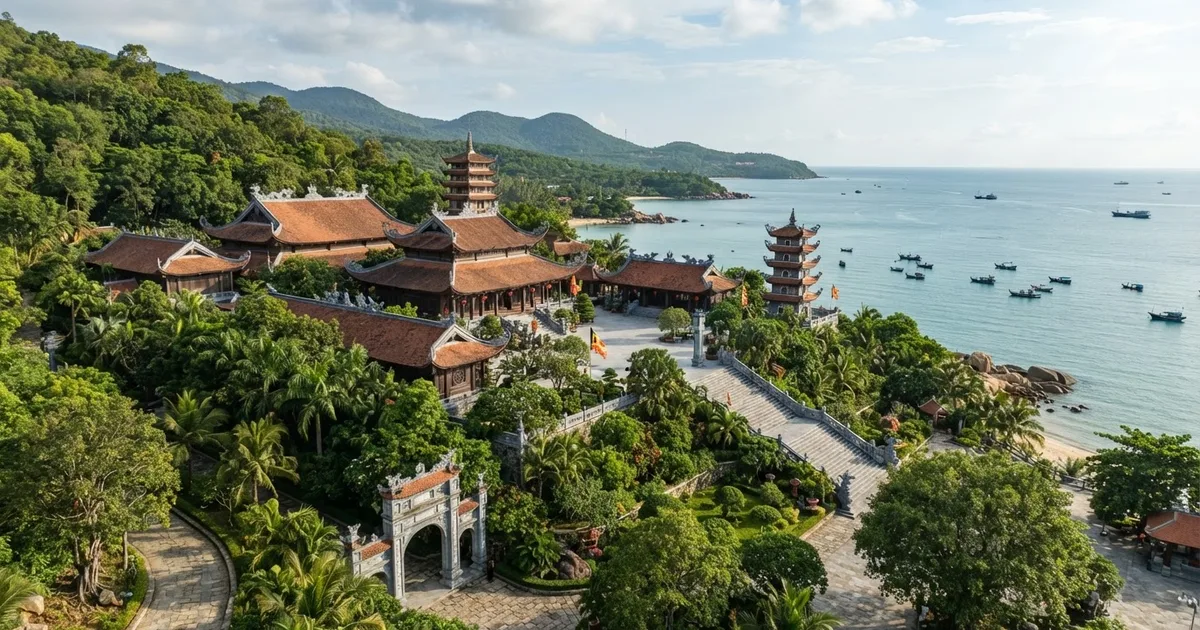
Phu Quoc has several notable religious sites, and they are different enough that choosing between them comes down to your itinerary. The Cao Dai Temple is the island's main center of Caodaism and the only place here where you can watch that faith's distinctive ceremonies. Ba Pagoda, at 44 Vo Thi Sau in Duong Dong, is a famous and sacred temple where locals pray for peace and good fortune, built in the Chinese-influenced style common across southern Vietnam. Ho Quoc Pagoda, on the southeast coast, is the grandest of the three, set dramatically between forest and sea.
| Site | Location | Entry | Time needed | Best for |
|---|---|---|---|---|
| Cao Dai Temple | 40 Nguyen Trai St, Duong Dong | Free | 30-60 min | Unique religion, noon ceremony, easy town-center stop |
| Ba Pagoda | 44 Vo Thi Sau, Duong Dong | Free | 20-30 min | Chinese-style worship, praying for peace and good fortune |
| Ho Quoc Pagoda | Southeast coast, roughly 30 km from Duong Dong | Free | 1-2 hours | Seafront setting, grand architecture, photo stops |
If you are staying in Duong Dong, the honest answer is that you do not have to choose: the Cao Dai Temple and Ba Pagoda are both in town and can be combined in a single morning. Ho Quoc Pagoda is a poorer fit for travelers with no transport or very limited time, because of the distance - but for anyone riding a motorbike down the island's east or south coast, it pairs naturally with a beach day near Bai Khem. If you only visit one site in Duong Dong itself, pick the Cao Dai Temple for the ceremonies and the architecture you will not see anywhere else on the island.
Frequently Asked Questions
How much does it cost to visit the Cao Dai Temple in Phu Quoc?
Nothing - admission is free, and every major Phu Quoc guide lists the ticket price as free. If you wish to support the temple, small donations of around $0.20-$1 placed in the donation box are appreciated. There is no ticket booth, no gate fee and no charge for attending the ceremonies.
What are the opening hours of the Cao Dai Temple?
The temple is open daily from 7:00 AM to 6:00 PM, though some sources list opening as early as 6:00 AM and one 2025-2026 guide lists closing at 5:00 PM. To be safe, plan your visit between 7:00 AM and 5:00 PM. Worship ceremonies take place at 6:00 AM and 12:00 noon every day.
How much time should I set aside for a visit?
Most visitors spend between 30 and 60 minutes at the temple. Phu Quoc Island Guide recommends allowing about 1 hour, which is enough to see the prayer hall, the exterior and, if your timing is right, part of a ceremony. It is a short stop that pairs easily with the nearby night market.
What should I wear to the temple?
Wear long clothes that cover your shoulders and knees - long pants, a long skirt or a sarong are all appropriate. You must also remove your shoes before entering the prayer hall, so slip-on footwear makes life easier. Visitors who arrive in beachwear may feel out of place, so pack a cover-up.
Can tourists attend the worship ceremonies?
Yes. Ceremonies are held at 6:00 AM and 12:00 noon daily, and respectful visitors are welcome to observe from the back of the prayer hall. Keep silent, do not walk in front of the altar, and ask before photographing worshippers. The noon ceremony is the most practical option for most travelers.
Where exactly is the temple and how far is it from the night market?
The temple is at 40 Nguyen Trai Street in Duong Dong town, just a few minutes' walk from the Phu Quoc night market, which is why reviewers describe it as easy to reach. From Phu Quoc International Airport it is roughly 6-7 km, about a 15-minute drive, and 5-15 minutes by motorbike from most Long Beach hotels.
When is the best time of year to visit?
The dry season from November to April is best, when skies are clear and the temple's colorful exterior looks its best in photos. The temple itself is open and free year-round, and the prayer hall offers cool shelter during the hotter or wetter months from May to October.
How does the Cao Dai Temple compare with Ba Pagoda?
They are very different experiences just a short ride apart. The Cao Dai Temple represents Caodaism, a 20th-century Vietnamese religion with its Divine Eye symbolism and noon ceremonies. Ba Pagoda, at 44 Vo Thi Sau in Duong Dong, is a Chinese-style temple famous as a sacred place for praying for peace and good fortune. Many visitors comfortably see both in one morning.
Planning to explore Duong Dong's temples, markets and beaches at your own pace? Sabrina Rental can set you up with a reliable motorbike and local tips for timing your visit to the Cao Dai Temple's noon ceremony - just get in touch.
Contact Sabrina Rental