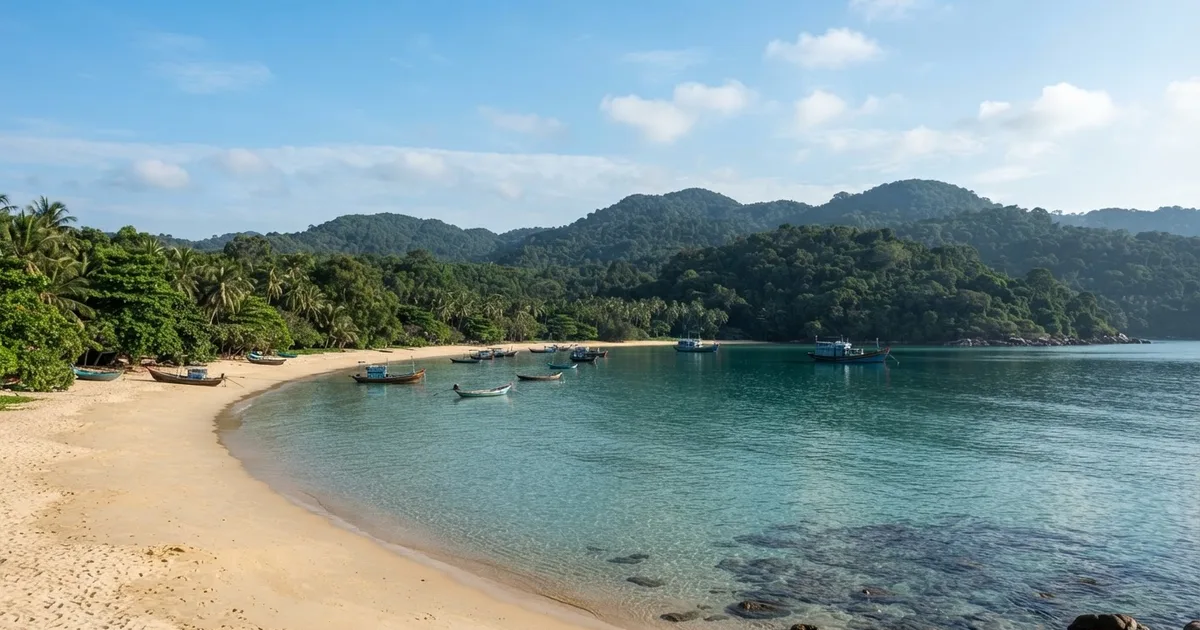
For most visitors, Phu Quoc is a low-risk tropical island: the jellyfish you are most likely to meet are mild-stinging moon jellyfish, malaria is not a practical concern here, and there is a proper international hospital on the island - Vinmec Phu Quoc, with 24/24 emergency resuscitation and a hotline on 0297 3985 588. The three risks genuinely worth preparing for are jellyfish stings in the April-August peak, mosquito-borne dengue during the May-October rains, and a tropical sun that can burn unprotected fair skin in roughly 15-20 minutes.
Are There Dangerous Jellyfish in Phu Quoc?
Yes, but the honest picture is reassuring. The jellyfish visitors encounter most often in Phu Quoc waters are moon jellyfish, which have a mild sting that most people describe as a faint prickling or nettle-like irritation - diving guides on the island go as far as calling them harmless. The species that cause real trouble are far less common: the fire jellyfish, which delivers a genuinely painful, burning sting, and the box jellyfish, which is life-threatening if not treated promptly.
Vietnamese health guidance adds useful context: the highest appearance rates of venomous Nomura's jellyfish and moon jellyfish are recorded in August, and the Ministry of the Interior and Safety specifically advises beachgoers to be extra cautious during that month. In practical terms, August is the single month to be most alert, especially on the less-patrolled northern and eastern shores.
For snorkellers and divers, local dive operators are blunt about it: the main hazard in Phu Quoc waters is not currents, not boats, but jellyfish. That does not mean the water is dangerous - it means jellyfish awareness belongs on your pre-swim checklist the same way it does in Thailand or Australia.
| Species | How common | Sting | Risk level |
|---|---|---|---|
| Moon jellyfish | Most common - what you will usually see | Mild, often barely felt | Low |
| Fire jellyfish | Present in season | Painful, burning sensation | Moderate - painful but rarely dangerous |
| Box jellyfish | Rare, mainly June-August | Severe, potentially systemic | High - life-threatening without prompt treatment |
| Nomura's jellyfish | Peaks in August | Venomous, can be significant | Moderate - avoid and give wide berth |
When and Where Are Jellyfish Worst in Phu Quoc?
Phu Quoc's highest jellyfish season runs from April to August, with the southern coast and the island as a whole seeing peak activity in that window. Even outside the peak, guides note that stings can occur from June to October, because the rainy season (May to October) brings rougher seas, stronger currents and jellyfish pushed inshore. If you are visiting in the dry season from November to March, your jellyfish risk drops sharply - though it never reaches zero.
Location matters as much as season. The beaches with a track record of jellyfish activity are concentrated away from the main resort strip:
- Ganh Dau - far northwest, near the Cambodian maritime border
- Cua Can - northwest coast, river mouth and quiet beach
- Bai Thom - northeast coast, facing the open sea
- Ham Ninh - east coast fishing village, shallow tidal waters
- An Thoi - southern archipelago, where many boat and snorkelling tours operate
By contrast, the two most-swum beaches on the island - Long Beach (Bai Truong) and Sao Beach (Bai Sao) - are regularly cleared and monitored during jellyfish season. Swimming between the flags at either of those in daylight is a very different risk profile from a dawn swim off a quiet east-coast jetty in July.
What To Do If You Get Stung: Step-by-Step First Aid
Jellyfish stings are frightening precisely because people react instinctively - and the instinct to rub or rinse with fresh water is exactly wrong. Stinging cells still stuck to the skin can keep firing, and rubbing or fresh water can trigger more of them. Here is the sequence that local and Vietnamese health guidance agrees on:
- Get out of the water calmly. A sting is not a reason to panic-swim; tell whoever is with you and walk out.
- Do not rub the area. Rubbing fires any remaining stinging cells and drives venom deeper into the skin.
- Pour vinegar over the sting. Vinegar neutralises unfired stinging cells - this is the single most important step, and the reason boat crews carry a bottle.
- Gently scrape off any remaining tentacle fragments. Use the edge of a card, a shell or a blunt knife; never your bare fingers.
- Rinse with seawater, not fresh water. Fresh water can cause remaining cells to fire; seawater will not.
- Watch the person for 30-60 minutes. Mild redness that fades is normal; systemic symptoms are not.
One practical habit from long-term residents: buy a small bottle of white vinegar at any market or convenience store (a few thousand dong) and keep it in your beach bag or day pack. It costs almost nothing and it is the one item that actually changes outcomes in the first minutes after a sting.
Mosquitoes and Dengue: The Risk That Outlasts Your Holiday
If jellyfish are the dramatic risk, mosquitoes are the statistically bigger one. Phu Quoc's rainy season from May to October turns every uncollected coconut shell and roadside puddle into a breeding site, and the disease that matters is dengue fever - a viral illness spread by day-biting Aedes mosquitoes that causes high fever, severe headache, pain behind the eyes and intense body aches. There is no vaccine routinely given to short-term visitors, so prevention is entirely on you.
Malaria, by contrast, is not a practical concern on Phu Quoc: the island's risk level is considered so low that most travel-health advisories do not recommend anti-malarial tablets for a stay here. That is genuinely good news, but it sometimes makes travelers complacent about the mosquitoes that do exist. Do not be.
A sensible mosquito routine for a Phu Quoc trip:
- Apply a repellent containing 30-50% DEET (or 20% picaridin) every morning and again in the late afternoon - Aedes mosquitoes bite most at dawn and dusk.
- Wear long, loose sleeves and trousers for evening meals, especially near the water in Duong Dong or at beach bars.
- Choose rooms with air conditioning or intact screens; most mid-range and up resorts on Long Beach fog the gardens and treat water features regularly.
- If you develop a high fever within 4-10 days of mosquito exposure, get a dengue test - Vinmec Phu Quoc runs them daily - and avoid aspirin or ibuprofen, which increase bleeding risk; use paracetamol for fever instead.
Dengue is worth taking seriously not because treatment is unavailable, but because the fever and exhaustion typically last a week or more - which for a traveler usually means cancelling flights, boat trips and the rest of the holiday.
Sun and Heat: The Risk That Catches Nearly Everyone
Phu Quoc sits about 10 degrees north of the equator, and between roughly 10:00 and 15:00 the UV index regularly reaches 11 or higher - the extreme category. Fair-skinned visitors can pick up a painful burn in 15-20 minutes of unprotected midday sun, and it happens faster on boat trips, where sunlight reflects off the water and the sea breeze masks how hot you actually are.
The protection hierarchy is simple and worth following in order: shade and clothing first, sunscreen second. A rash guard with UPF 50+ does more for your shoulders than any amount of sunscreen, and as noted above it also protects against jellyfish stings in the rainy season - the single most versatile garment you can pack for this island. For exposed skin, use a waterproof SPF 50 sunscreen, reapply every two hours, and again after every swim.
Heat illness is the quieter companion risk. Signs of heat exhaustion - dizziness, headache, nausea, cramps - are your cue to get into shade, sip water and cool the skin. Drink 2-3 litres of water per day in the hot months, more on boat days, and go easy on midday alcohol: it accelerates both dehydration and sunburn. Coconut water, sold fresh on every beach for around 30,000-50,000 VND, is a cheap and effective electrolyte top-up.
Medical Care on the Island: Where To Go If Something Goes Wrong
Phu Quoc is well covered for a holiday island. Vinmec International Hospital is widely considered the best medical facility in Phu Quoc for tourists, and it is built to international standards rather than being a converted clinic:
- Location: Bai Dai Area, Phu Quoc Special Zone, An Giang Province - on the northwest coast near the Long Beach and Bai Dai resort corridor, roughly 20-30 minutes by car from Duong Dong town.
- Emergency service: 24/24 emergency resuscitation, including weekends and public holidays.
- Hotline: 0297 3985 588 - call ahead in an emergency so the team is ready when you arrive.
- Ambulance: the national emergency number 115 works island-wide.
Vinmec handles the realistic tourist scenarios - jellyfish sting reactions, dengue testing, coral cuts, motorbike accident injuries, dehydration - and works with major international travel insurers, so photograph your policy details before you travel. For minor needs, pharmacies along the main road in Duong Dong stock antihistamine tablets and creams (useful for mild stings and insect bites), paracetamol and oral rehydration salts, usually without a prescription and at low cost. Smaller public clinics exist in An Thoi and the eastern villages, but for anything beyond a basic complaint, Vinmec is the right call.
Two insurance notes worth knowing: check whether your policy covers scooter accidents specifically (many exclude them if you were not licensed), and keep the emergency assistance number from your insurer saved offline. A hospital visit here with proper insurance is painless; without it, expect to pay a few hundred US dollars for treatment and observation.
Who Should Take Extra Care - and Who Can Relax
Honest risk advice means saying who these warnings are really for. Take the jellyfish and sea hazards especially seriously if you are travelling with small children (their smaller body mass makes any venomous sting proportionally more serious), if you have a severe allergy history and carry an adrenaline auto-injector, if you are snorkelling or diving on north and east coast trips between June and August, or if you habitually swim at dawn or dusk. Older travelers and pregnant women should also be stricter about mosquito protection, since dengue hits harder in both groups.
On the other hand, this page should not scare off travelers it does not apply to. If you are visiting in the dry season from November to March, swimming in daylight at Long Beach or Sao Beach - both regularly cleared and monitored - and staying in an air-conditioned resort room, your jellyfish exposure is close to minimal and your mosquito exposure is modest. A couple staying ten nights at a Long Beach hotel faces a very different (and much smaller) set of risks than a family camping near Bai Thom in July. Match your precautions to your actual itinerary rather than to the worst-case list.
Frequently Asked Questions
When is jellyfish season in Phu Quoc?
The highest jellyfish activity runs from April to August, and stings can still occur from June to October during the rainy season. Vietnamese health data shows appearance rates of Nomura's and moon jellyfish peak in August, so that single month deserves the most caution. November to March, in the dry season, carries by far the lowest risk.
Are box jellyfish in Phu Quoc deadly?
Box jellyfish are genuinely life-threatening if not treated promptly, but they are rare in Phu Quoc waters and mainly reported between June and August. If stung, pour vinegar on immediately, do not rub, and get to the nearest medical facility at once - Vinmec Phu Quoc Hospital runs 24/24 emergency resuscitation and can be reached on 0297 3985 588, or call ambulance number 115.
What should I do immediately after a jellyfish sting?
Do not rub the area. Pour vinegar over the sting to neutralise stinging cells, then gently scrape off any remaining tentacle fragments with a card or shell and rinse with seawater - never fresh water. Monitor for 30-60 minutes: difficulty breathing, dizziness or widespread sharp pain mean you should go to the nearest medical facility immediately.
Do I need malaria tablets for Phu Quoc?
Almost certainly not: Phu Quoc's malaria risk is considered very low and most travel-health advisories do not recommend prophylaxis for the island. The mosquito-borne disease that actually occurs here is dengue fever, which peaks with the May-October rains. Use a 30-50% DEET repellent, cover up at dawn and dusk, and get tested at Vinmec if you develop a high fever.
Which beaches are safest for swimming during jellyfish season?
Long Beach (Bai Truong) and Sao Beach (Bai Sao) are regularly cleared and monitored during jellyfish season, making them the safest choices between April and August. Be more cautious at the known hotspots - Ganh Dau, Cua Can, Bai Thom, Ham Ninh and An Thoi - and avoid dawn or dusk swims anywhere on the north and east coasts in peak months.
Where is the best hospital in Phu Quoc for tourists?
Vinmec International Hospital, located in the Bai Dai Area of Phu Quoc Special Zone, An Giang Province, is widely considered the best facility for tourists. It operates 24/24 emergency resuscitation including weekends and public holidays, and its hotline is 0297 3985 588. For a life-threatening emergency anywhere on the island, call 115 for an ambulance.
Does a rash guard really protect against jellyfish?
Yes - local Phu Quoc guides specifically recommend wearing a rash guard during the rainy season from May to October, when rougher seas push jellyfish inshore. A fitted lycra or UPF 50+ rash guard physically blocks most stinging cells from reaching the skin on your torso, shoulders and arms, and it doubles as your strongest defence against the equatorial sun.
Is the tap water in Phu Quoc safe to drink?
No - treat tap water as unsafe for drinking anywhere on the island, including in good resorts. Stick to sealed bottled water (around 10,000-15,000 VND per litre in shops) or filtered water dispensers, and use bottled water for brushing your teeth if you have a sensitive stomach. Ice in established restaurants and hotels is generally machine-made from purified water and considered safe.
Planning boat trips, snorkelling days or off-the-beaten-track rides to Ganh Dau or An Thoi? The Sabrina Rental team lives here year-round - we will tell you which beaches are being monitored this week, where to buy vinegar and repellent, and how to reach Vinmec fast from wherever you are staying. Message us any time for honest, local advice or to book a well-maintained motorbike for getting around the island safely.
Contact Sabrina Rental