Travel insurance is not mandatory to enter Vietnam — immigration will never ask for a policy — but for Phu Quoc it should be treated as essential. The practical minimum is USD 100,000 in emergency medical cover plus USD 100,000–250,000 for evacuation and repatriation, with motorbike cover added explicitly before you arrive. Expect to pay roughly $30–60 for two weeks of basic cover, $50–100 with motorbike protection, and $80–150 for a high-end policy with $100k+ medical limits.
Do You Actually Need Travel Insurance for Phu Quoc?
No — Vietnam does not require travel insurance for entry. Immigration officers at Duong Dong International Airport or at the ferry piers will not ask to see a policy, and neither the e-visa nor the visa-exemption process asks for one. Legally, you can land on Phu Quoc with no coverage at all.
Practically, Phu Quoc changes the calculation. This is an island: roughly a 45-minute flight from Ho Chi Minh City and 2.5–4 hours by fast ferry from the mainland ports of Rach Gia or Ha Tien. For serious problems — a high-speed scooter crash, a diving incident, a cardiac event — local facilities are good for stabilization, but complex cases are typically transferred to Ho Chi Minh City or Bangkok. That transfer is a medical evacuation, and it is the single most expensive thing that can happen to you here. This is why evacuation coverage is described as essential for Phu Quoc specifically, not merely nice to have.
The arithmetic is lopsided. A decent policy costs $30–150 for a typical trip, while a single air ambulance flight can cost tens of thousands of dollars. And although an uninsured walk-in consultation at Vinmec Phu Quoc starts at only around 500,000 VND (~$20), that figure buys you a doctor's consultation — not surgery, not an ICU bed, not a medevac flight.
Who genuinely can skip it: a traveler who changes nothing risky — no scooter, no boat trips, no swimming at night — and whose credit card already includes travel medical protection. That is a narrow slice of visitors here, and most people reading this guide will not be in it.
The Coverage Numbers That Actually Matter
Skip the brochure features about delayed luggage for a moment. Three numbers decide whether a Phu Quoc policy is worth having: medical cover, evacuation cover, and whether motorbike accidents are included at all.
| Coverage | Practical minimum for Phu Quoc | Why this number |
|---|---|---|
| Emergency medical | USD 100,000+ | Covers surgery, intensive care and private hospital treatment after an accident or illness |
| Emergency evacuation & repatriation | USD 100,000–250,000 | Air ambulance or medically escorted flight to Ho Chi Minh City, Bangkok or home |
| Motorbike / scooter accidents | Explicit motorbike cover | Standard policies often exclude scooters — the most common tourist injury on the island |
| Water activities | Named cover for snorkeling, diving and boat tours | Some policies exclude diving or cap depth and require certification |
| Trip cancellation & baggage | Optional | Useful extras, but not the reason to buy a policy for an island trip |
The classic mistake is a policy with $100,000 of medical cover and no evacuation benefit at all. On the mainland that can be an acceptable compromise; on Phu Quoc, where the definitive treatment for major trauma may be a flight away, evacuation and repatriation cover of USD 100,000–250,000 is the number to insist on.
The Motorbike Exclusion: Read This Before You Rent a Scooter
Scooters are how Phu Quoc works. Duong Dong town to the southern beaches of the An Thoi archipelago is around 25 kilometers, the north-coast beach strip sprawls for kilometers, and there is no useful public transport. You will almost certainly ride a scooter — or ride on the back of one — so this is the clause that matters most.
Standard policies may exclude scooter and motorbike accidents by default, which means a broken collarbone from a sandy corner on the road to Starfish Beach could be entirely on you. Insurers treat two wheels as a higher risk, so motorbike protection usually has to be added as a named option. For Vietnam, the market splits roughly like this: $30–60 for two weeks of basic comprehensive travel insurance, $50–100 for mid-range cover that includes motorbike use, and $80–150 for a high-end policy with $100k+ medical limits.
Check these four things before you ride
- Your policy names motorbike or scooter accidents as covered — not excluded under a "hazardous activities" clause.
- The engine limit covers what you will actually rent — most rentals in Phu Quoc are 110–160cc, but a few larger bikes go higher.
- You have a valid license for a motorbike — many policies void motorbike cover without one; check whether your home license plus an International Driving Permit (1968 convention) is accepted.
- You wear a helmet every time — riding without one is both a fineable offense in Vietnam and a standard reason for claim denial.
Practical tip: If your current policy will not add motorbike cover, buy a separate activity add-on from a specialist provider before you leave home. Getting it after a crash in Duong Dong is not possible, and an insurer will know the treatment date.
Less suited to riding here: complete beginner riders. Phu Quoc's roads mix highway traffic, sandy tracks and unlit stretches at night. If you have never ridden a scooter, take your first days of riding somewhere quieter than a foreign island, or use taxis and car charters instead.
Water Activities: Snorkeling, Diving and Boat Tours
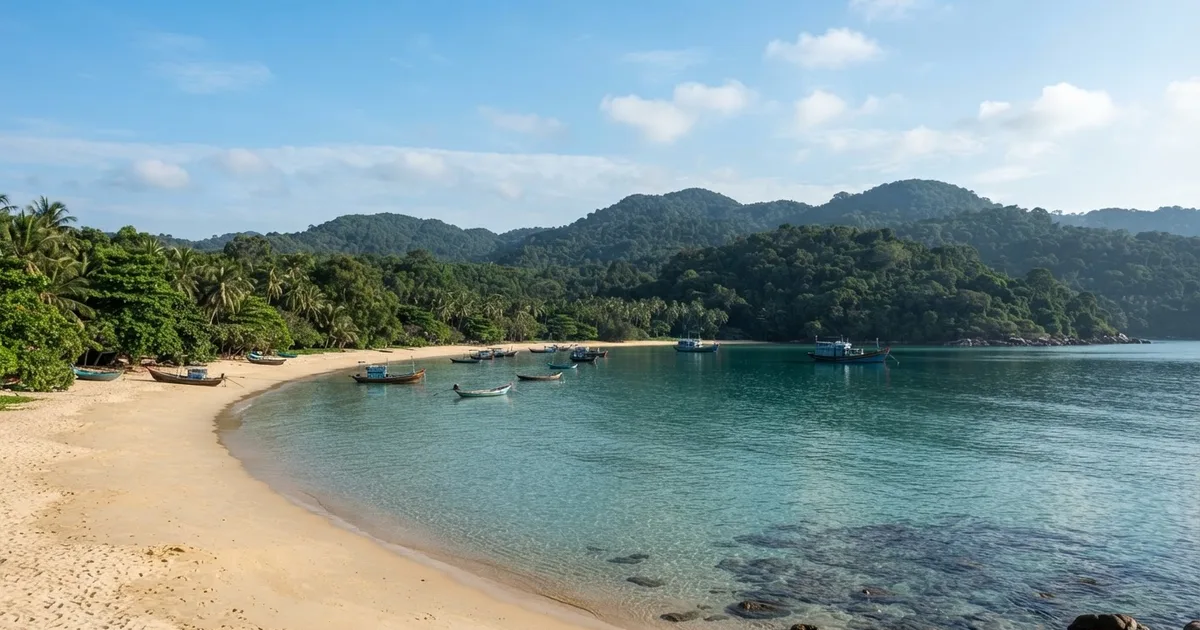
Most itineraries on Phu Quoc include a day boat trip — snorkeling around the An Thoi islands in the south, coral viewing off Hon Thom, or a fishing charter from Duong Dong. Any of these means time on open water, and insurance should be checked carefully for activity-related accidents before you book the tour, not after.
Three specifics to verify in your policy text:
First, snorkeling is usually covered but some cheap policies exclude anything in or under water beyond swimming. Second, scuba diving is frequently excluded or capped at a depth — a common limit is 18 or 30 meters — and some insurers require you to hold an open-water certification or dive with a licensed operator for the cover to apply. The An Thoi archipelago's best sites sit in the 5–20 meter range, which is usually fine, but you need the wording to say so. Third, confirm that boat accidents, not just water activities, are included: transfers by speedboat, ferries and jet ski rentals all fall into this gap.
If you are traveling in the November–April dry season, sea conditions are calm and most operators run standard tours. In the May–October rainy season, seas on the south and west coasts get rougher, tours cancel more often, and the case for solid activity cover gets stronger, not weaker.
What Phu Quoc Travel Insurance Actually Costs
Quotes vary by age, trip length and where you buy, but the Vietnam market prices out into three realistic tiers.
| Policy tier | Typical price | What you get |
|---|---|---|
| Basic comprehensive (2 weeks) | $30–60 | Medical cover, some evacuation, standard activities — often without motorbike protection |
| Mid-range with motorbike (2 weeks) | $50–100 | The practical sweet spot for a Phu Quoc holiday: scooter cover plus solid medical limits |
| High-end ($100k+ medical) | $80–150 | Top medical limits, strong evacuation cover, wider activity list |
| Long-stay / nomad plans (per 4 weeks) | ~$45–60 | Open-ended medical-focused cover; SafetyWing Nomad Insurance sits in this range |
For perspective: the cheapest tier costs about the same as three or four taxi rides across the island. The high-end tier costs about the same as one dinner and a snorkeling tour. Set against a possible evacuation bill, the price gap is noise.
Match Your Insurance to Your Trip Length
Standard travel insurance is the minimum for short visits, but it becomes the wrong tool the longer you stay. A useful rule of thumb for Phu Quoc and Vietnam generally:
Under 4 weeks
Standard travel insurance is fine. Buy it before you fly, make sure medical limits are USD 100,000+ and motorbike cover is included if you will ride.
1–3 months
Basic travel insurance becomes inadequate past 30 days. Use travel insurance with a medical rider or extension if your provider offers one, or switch to a long-stay plan such as SafetyWing at roughly $45–60 per 4 weeks.
Over 3 months
Use dedicated expat or international health insurance. Travel policies are designed for trips, not residence, and will usually expire or stop renewing on Vietnam soil.
One trap to check: many travel policies cover a maximum single trip of 30, 45 or 60 days. If your Phu Quoc stay is one leg of a longer open-ended journey, confirm the per-trip limit, not just the overall policy period.
If Something Happens: Medical Care on Phu Quoc
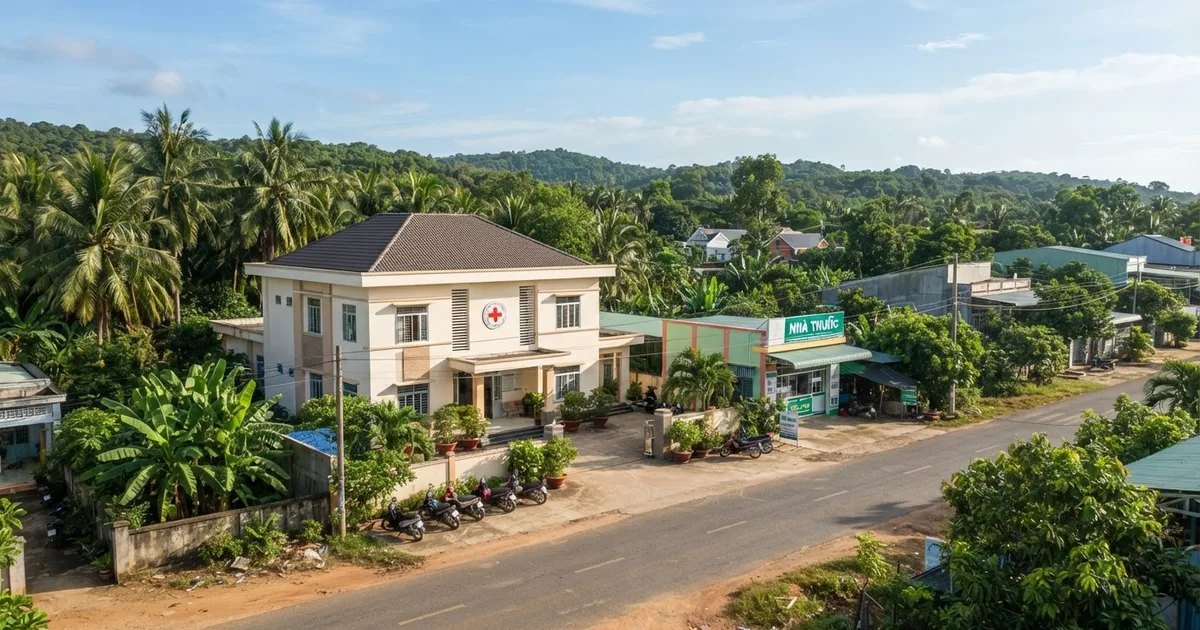
It helps to know where you would actually be treated. Vinmec Phu Quoc International Hospital, in the Bai Dai Area of Phu Quoc Special Zone, An Giang Province, is widely considered the best medical facility on the island for tourists. VietNamNet describes it as the first international-standard hospital on Phu Quoc, and Vinpearl lists it among the best hospitals on the island for visitors — English-speaking staff and modern equipment set it apart from local district clinics.
The hospital runs 24/24 emergency resuscitation service, including weekends and public holidays. The hospital hotline is 0297 3985 588; the national medical emergency and ambulance number across Vietnam is 115. If you call an ambulance, get to Vinmec if at all possible, then contact your insurer's 24-hour assistance line immediately — most policies require insurer notification within 24–48 hours, and a delay can complicate your claim.
The cost picture without insurance: a consultation at Vinmec starts around 500,000 VND (~$20), which is why minor issues — an ear infection after diving, a stomach bug — can be handled cheaply even if you are uninsured. It is the major events, surgery and evacuation, where a policy earns its $50. Facilities on the island can stabilize accidents and handle routine care; transfers to Ho Chi Minh City's larger hospitals such as FV Hospital or Vinmec Central Park are arranged for complex cases, which is exactly where evacuation cover applies.
Pre-Departure Checklist: Check Your Policy Before You Fly
- Medical limit of USD 100,000+ per person — confirm it is per person, not shared across the group.
- Evacuation and repatriation cover of USD 100,000–250,000, valid on Phu Quoc specifically, not only mainland Vietnam.
- Motorbike and scooter accidents explicitly covered, with any engine-size and license conditions noted.
- Snorkeling, diving and boat tours included; check depth limits and certification requirements for diving.
- A 24-hour emergency assistance hotline with collect-call or WhatsApp access from Vietnam.
- Direct billing or easy reimbursement: Vietnamese hospitals usually ask you to pay first and claim back, so keep every receipt and report.
- Pre-existing condition wording: standard policies exclude known conditions unless declared; declare them at purchase, not at claim time.
- Cover starts the day you fly, not the day you arrive — flight cancellation and delay cover should begin at your departure gate.
Save a copy of your policy and the insurer's emergency number offline on your phone, and leave a copy with someone at home. Hospital admissions are a bad moment to be hunting through email for a PDF.
Frequently Asked Questions
Is travel insurance mandatory for Vietnam or Phu Quoc?
No. Vietnam does not require travel insurance for entry, and immigration officers on Phu Quoc will not ask for a policy. However, it is strongly recommended for medical emergencies — a policy with USD 100,000+ medical cover and evacuation protection costs $30–150 for a typical trip, while an air ambulance to Ho Chi Minh City can cost tens of thousands of dollars.
How much medical coverage do I need for Phu Quoc?
USD 100,000+ in emergency medical cover is the practical minimum for Vietnam. On top of that, carry USD 100,000–250,000 in emergency evacuation and repatriation coverage — this is the component that matters most on Phu Quoc, because serious cases are transferred by air to Ho Chi Minh City or Bangkok.
Does travel insurance cover scooter accidents in Phu Quoc?
Not automatically. Standard policies may exclude scooter and motorbike accidents, so motorbike cover must be checked and added explicitly before you travel. Mid-range policies with motorbike protection cost roughly $50–100 for two weeks. Also confirm license and helmet conditions — many insurers void the cover if you were riding unlicensed or without a helmet.
How much does travel insurance for Phu Quoc cost?
Basic comprehensive travel insurance for Vietnam runs about $30–60 for two weeks, mid-range cover with motorbike protection is $50–100, and a high-end policy with $100k+ medical limits is $80–150. For long or open-ended trips, dedicated plans such as SafetyWing Nomad Insurance cost around $45–60 per 4 weeks.
What is the best hospital for tourists on Phu Quoc?
Vinmec Phu Quoc International Hospital, in the Bai Dai Area of Phu Quoc Special Zone, is widely considered the best facility for tourists and was the island's first international-standard hospital. It offers 24/7 emergency resuscitation including weekends and holidays. Hotline: 0297 3985 588. An uninsured consultation starts around 500,000 VND (~$20).
What number do I call in a medical emergency in Phu Quoc?
Call 115 for an ambulance anywhere in Vietnam, then call your insurer's 24-hour assistance line — most policies require notification within 24–48 hours. If you can reach the hospital directly, Vinmec Phu Quoc's hotline is 0297 3985 588, and the emergency department operates 24/24 including public holidays.
Is my travel insurance enough for a long stay in Phu Quoc?
Only up to a point. Travel insurance is the minimum for short visits but becomes inadequate for stays over 30 days. A common approach: under 4 weeks use standard travel insurance, 1–3 months use travel insurance with a medical rider or a long-stay plan (~$45–60 per 4 weeks), and beyond 3 months switch to dedicated expat health insurance.
Are snorkeling and diving covered on Phu Quoc boat tours?
Snorkeling is usually covered, but scuba diving is often excluded or depth-capped — commonly at 18–30 meters — and some insurers require an open-water certification or a licensed dive operator. Since most Phu Quoc trips include an An Thoi snorkeling or boat tour, check the activity clauses in your policy before booking.
Planning your Phu Quoc route by scooter or boat? Sabrina Rental is based on the island — message us for honest advice on safe riding areas, current road conditions, and reliable scooter, room and boat tour bookings before you set off.
Contact Sabrina Rental