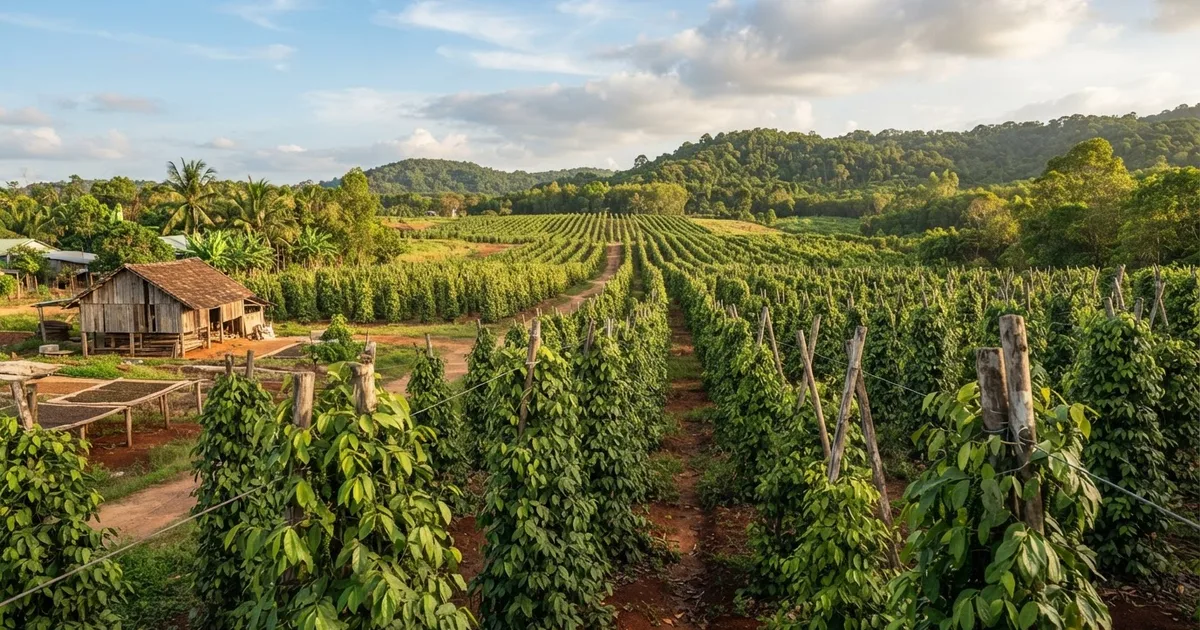
Yes — Khu Tuong Pepper Farm is worth visiting, but as a short, free stop rather than a full-day destination. Entry costs nothing, the gardens open 8:00 AM–5:00 PM daily, and most travelers spend 45–90 minutes tasting black, white, red, and brine-cured green pepper straight from the vine. It earns its place on a south-island itinerary; it does not justify a dedicated trip across the island on its own.
What Is Khu Tuong Pepper Farm?
Pepper has been grown on Phu Quoc for well over a century, and the island's peppercorns are distinctive enough that Phu Quoc pepper carries protected geographical-indication status in Vietnam — meaning only pepper grown in this soil and climate can legally bear the island's name. The crop is concentrated in the farmland south of Duong Dong, and Khu Tuong, in Ap Khu Tuong, Cua Duong Commune, is the largest and most famous garden in that cluster.
Unlike some agricultural attractions, Khu Tuong is a working farm first and a tourist stop second. The vines climb tall brick or concrete pillars in neat rows, and the farm holds GlobalGAP certification — an international standard covering food safety, traceability, and environmental protection. In practical terms, that means the pepper you taste and buy here has been grown to a documented standard, which is not true of every roadside garden on the island.
A visit is informal by design. There is no ticket office, no turnstile, and typically no formal guided tour — one recent reviewer described it as a small stop with no entrance ticket and no guide. A family member or farm worker usually walks you through the rows, explains how the vines are planted and harvested, and then leads you to a tasting table. If you come during harvest season, you can join the actual process of growing and harvesting pepper rather than just hearing about it.
Is Khu Tuong Pepper Farm Worth Visiting? An Honest Verdict
The aggregated traveler score sits at about 3.7/5 from 572 reviews, which tells you this is a genuinely pleasant stop with realistic limits. On the positive side, visitors consistently praise the genuine hospitality of the farming families and the chance to taste fresh Phu Quoc pepper directly at the source — one Tripadvisor reviewer called the pepper tasting a highlight of the trip and the farm a must-see. On the critical side, some visitors note that pepper prices skew tourist-oriented and that the stop is only worth a short visit, not a special trip.
Worth it if you...
cook at home, buy food souvenirs, or want a cheap, authentic 60–90 minutes between bigger stops. Free entry plus a real tasting of four pepper varieties is hard to beat for the price of a motorbike ride.
Manage expectations if you...
expect a botanical garden with signage, exhibits, and structured tours. This is a working farm — the experience is conversational, weather-dependent, and usually over in about an hour.
Skip it if you...
have zero interest in food or shopping, are racing to a same-day flight, or dislike any sales pressure. Staff will offer pepper for sale after the tasting, and prices run above local-market rates.
The fairest summary: Khu Tuong is an excellent hour, not an excellent day. Travelers who arrive expecting a quick, warm, tasty stop leave delighted; travelers who build half a day around it alone often leave underwhelmed. Pair it with the south coast and it becomes one of the better-value experiences on the island.
What You Can Actually Do There
The tasting is the core of the visit, and it covers all four forms Phu Quoc pepper takes. Black pepper is the unripe berry, sun-dried until wrinkled and dark — the sharpest and most familiar. White pepper is soaked and hulled, giving a milder, earthier heat favored in Vietnamese soups. Red pepper is left to fully ripen on the vine, producing a sweeter, fruitier corn that many visitors try for the first time here. The rarest of the four is green pepper preserved in brine — soft, salty, and tangy, and a specialty you rarely see outside Phu Quoc. Tasting is free, and the contrast between the four varieties side by side is genuinely educational if you cook.
Beyond the tasting table, Khu Tuong offers a hands-on harvesting experience. Depending on the season, you can walk between the vine rows, learn how workers pick the pepper spikes, and try picking or processing a few yourself. During the main harvest window of roughly February to March, much of the crop turns red on the vine, which is both the most photogenic and the most interactive time to visit. Outside harvest season you will still see the full growing operation, but the picking demonstrations are smaller.
Expect the visit to take 45 to 90 minutes in total. The farm is compact — you are not hiking — and most of the time goes to the walkthrough and tasting rather than covering distance. Bring water and sun protection: Cua Duong is hot, and the open rows offer limited shade between pillars.
Opening Hours, Tickets, and the Best Time to Go
The official Phu Quoc tourism page and the most widely cited 2026 guide agree on the essentials: entry is free and the farm opens daily. The fine print varies slightly between sources, which matters mainly if you are arriving early or mid-week.
| Detail | Info |
|---|---|
| Entry fee | Free (2026, official Phu Quoc tourism page) |
| Opening hours | 8:00 AM–5:00 PM daily (some guides list 9:00 AM–5:00 PM) |
| Closure note | One 2026 guide reports farms here historically close on Wednesdays — call or confirm before a mid-week visit |
| Address | Ap Khu Tuong, Cua Duong Commune, Phu Quoc, Kien Giang |
| Recommended time | 45–90 minutes |
| Best season | Dry season (November–March); harvest peak roughly February–March |
Tip: Go in the morning between 8:00 and 10:00 AM. You will beat the midday heat, the light is best for photos of the vine rows, and the farm families are usually busiest with picking work, which makes the hands-on side of the visit more interesting.
How to Get to Khu Tuong Pepper Farm
The farm sits in Ap Khu Tuong, Cua Duong Commune, about 10 km south of Duong Dong town — roughly 15–20 minutes by motorbike on the coastal road toward Bai Khem and An Thoi. The road is flat, paved, and scenic the whole way, making this one of the easiest self-guided rides on the island.
By motorbike, follow the coastal road south out of Duong Dong toward Cua Duong; pepper garden signs appear on the inland side of the road. Rentals start from around 120,000–150,000 VND (about 5–6 USD) per day for an automatic scooter, plus fuel of roughly 20,000–30,000 VND for the round trip. Taxis and ride-hailing cars from Duong Dong cost approximately 100,000–150,000 VND each way. If you join an organized south-island or farm tour, Khu Tuong or a neighboring pepper garden is almost always included as a stop.
This is the key to making the visit worth your time: do not treat the farm as the destination. Combine it with the rest of the Cua Duong and south-coast stretch — Su Muon Pagoda and Ho Quoc Pagoda sit on or near the same route, and the beaches around Bai Truong and Bai Khem complete a relaxed half-day loop. A typical itinerary looks like this:
- 8:00 AM — Leave Duong Dong by motorbike; arrive at Khu Tuong around 8:20 AM.
- 8:20–9:30 AM — Farm walkthrough, tasting, and pepper shopping.
- 10:00–11:00 AM — Su Muon Pagoda, a 10-minute ride back toward town.
- 12:00 PM — Seafood lunch in Duong Dong or on Bai Truong beach.
- 2:00 PM onward — Beach time, or continue south to Ho Quoc Pagoda and Bai Khem.
Buying Pepper at the Farm: Prices and What to Check
Every visit ends at the shop table, and this is where traveler reviews divide. The pepper itself is excellent — fresh, fragrant, and grown to GlobalGAP standard — but several visitors describe the prices as tourist-oriented, meaning noticeably higher than what you would pay for the same product at Duong Dong market or a local specialty shop. A 500-gram bag of quality black pepper typically ranges from about 150,000 to 250,000 VND (6–10 USD) at farm gates on the island, with red and white pepper and brined green pepper costing more.
Three things to check before you buy. First, packaging: vacuum-sealed or well-sealed bags keep pepper fresh for a year or more, while loosely tied bags lose aroma within months — important if it is a gift for the flight home. Second, the variety: red pepper and brined green pepper are the hardest to find elsewhere, so they are the best farm purchases even at a premium. Third, weight: check the printed weight and do a quick mental conversion so you know your price per 100 grams before comparing with the market later. Nothing is wrong with paying a small premium at the farm — the tasting and the family's time are free, and buying is a fair way to thank them — just know the market price so the premium stays small.
Less suited to buying here: travelers on a strict souvenir budget should simply enjoy the free tasting and buy pepper in town instead, where haggling is easier and prices often come in 20–30% lower.
Practical Tips for Visiting
- Confirm Wednesday opening. One 2026 guide reports the area's farms historically close on Wednesdays despite the daily 8:00–17:00 schedule — a quick check saves a wasted ride.
- Bring cash. The farm shop is cash-only in practice; there are no card terminals in the village.
- Watch your footing. Irrigation channels and loose soil run between the vine rows — closed shoes beat sandals.
- Ask about the harvest. If workers are picking when you arrive, ask to watch or join; the hands-on experience is the part visitors remember most.
- Check sealed bags. Press the packaging; anything not vacuum-sealed or tightly sealed will fade before you get home.
- Plan around the sun. Between 11:00 AM and 2:00 PM the open rows are hot and glare-heavy; mornings are better.
Frequently Asked Questions
How much does it cost to visit Khu Tuong Pepper Farm?
Nothing — entry is free in 2026, as listed on the official Phu Quoc tourism page. The tasting of black, white, red, and brined green pepper is also free. You only pay if you buy pepper, with 500-gram bags typically running 150,000–250,000 VND (6–10 USD) depending on variety.
What are the opening hours?
The farm opens 8:00 AM–5:00 PM daily according to the official tourism page and most 2026 guides; a few list 9:00 AM–5:00 PM. One guide notes farms in this area historically close on Wednesdays, so if you are visiting mid-week, confirm the garden is open before riding out from Duong Dong.
Where is the farm and how far is it from Duong Dong?
The address is Ap Khu Tuong, Cua Duong Commune, Phu Quoc, Kien Giang. It sits about 10 km south of Duong Dong on the coastal road — roughly 15–20 minutes by motorbike or taxi. Several pepper gardens share the same small village, and Khu Tuong is the largest and best known of them.
When is the best time of year to visit?
The dry season from November to March offers the most reliable weather, and the harvest peak falls around February to March when vines heavy with red corn make the rows photogenic and the hands-on picking experience possible. Rainy-season visits still work, but pick mornings and expect shorter, muddier walkthroughs between showers.
Can I visit without a tour?
Yes, and most visitors do. The farm has no entrance ticket and no formal guide — you simply arrive, and a family member shows you around. Renting a scooter for about 5–6 USD per day is the easiest way, since the coastal ride from Duong Dong takes under 20 minutes and passes other sights on the way.
How long should I plan for the visit?
Budget 45–90 minutes. The garden is compact, so the time goes into the walkthrough, the four-variety tasting, and shopping rather than walking. Reviewers consistently describe it as a short stop — worth building into a south-island day trip rather than planning an entire morning or afternoon around it.
Is the pepper really better than what I can buy at home?
Yes, for two reasons. Phu Quoc pepper holds protected geographical-indication status in Vietnam, so only island-grown corn carries the name, and the volcanic soil gives it a stronger, more aromatic bite. Fresh red and brined green pepper are especially hard to source abroad — most export markets only see dried black and white.
Heading south from Duong Dong? Sabrina Rental can set you up with a well-maintained scooter for the pepper-farm loop, suggest the best tasting gardens, and help book the rest of your south-island day. Message us and we will map out the route for you.
Contact Sabrina Rental