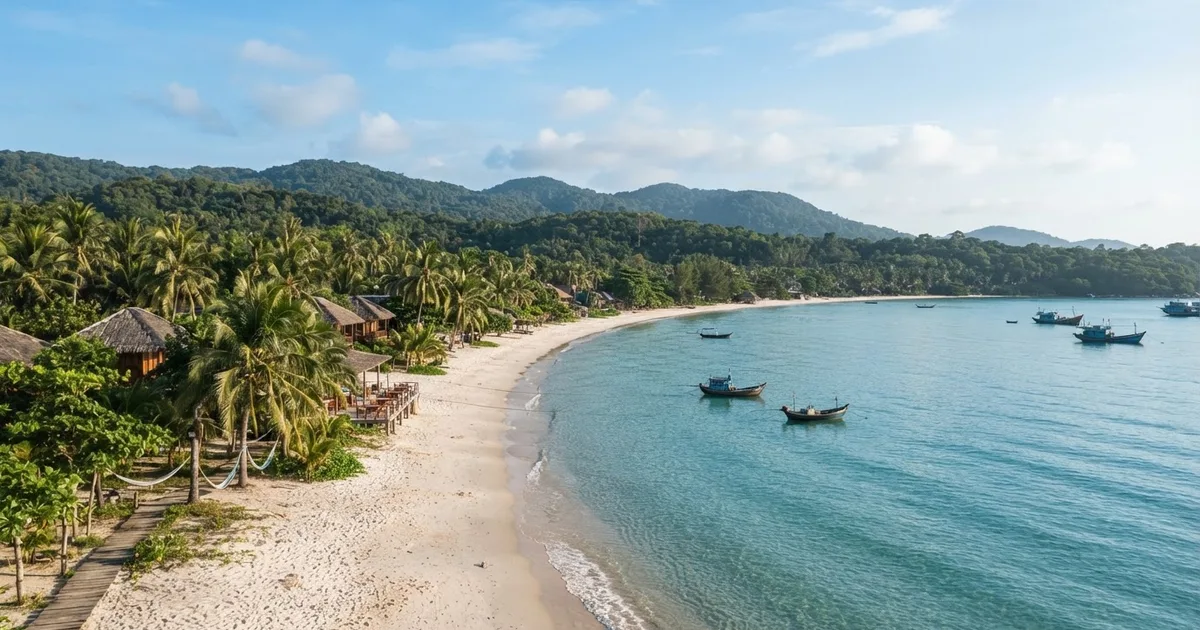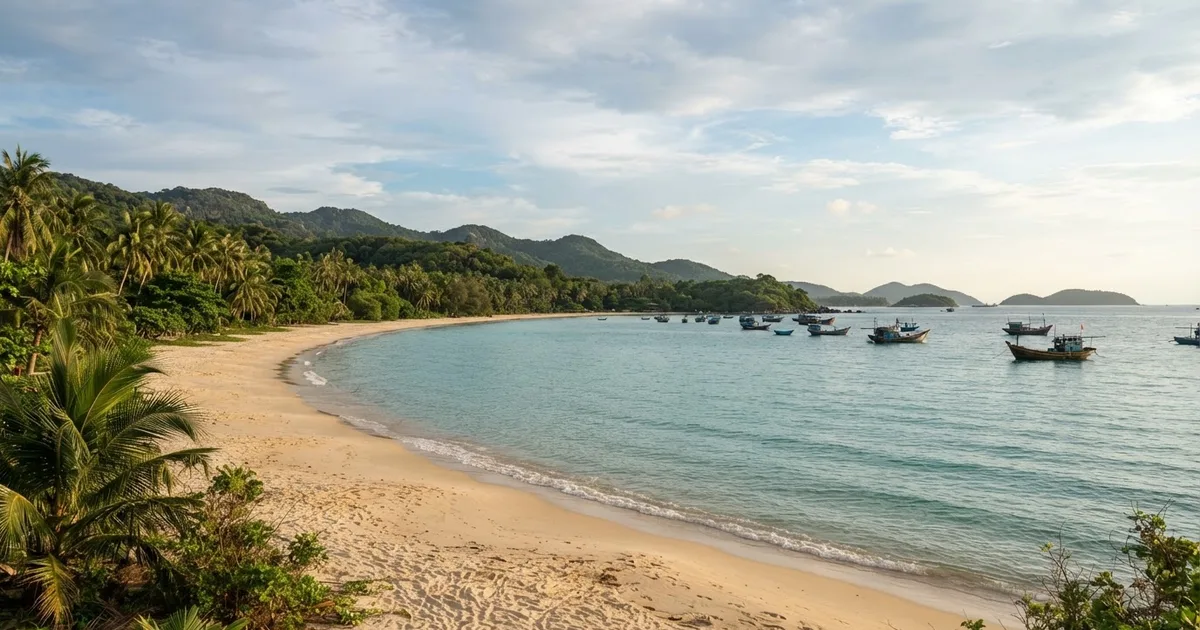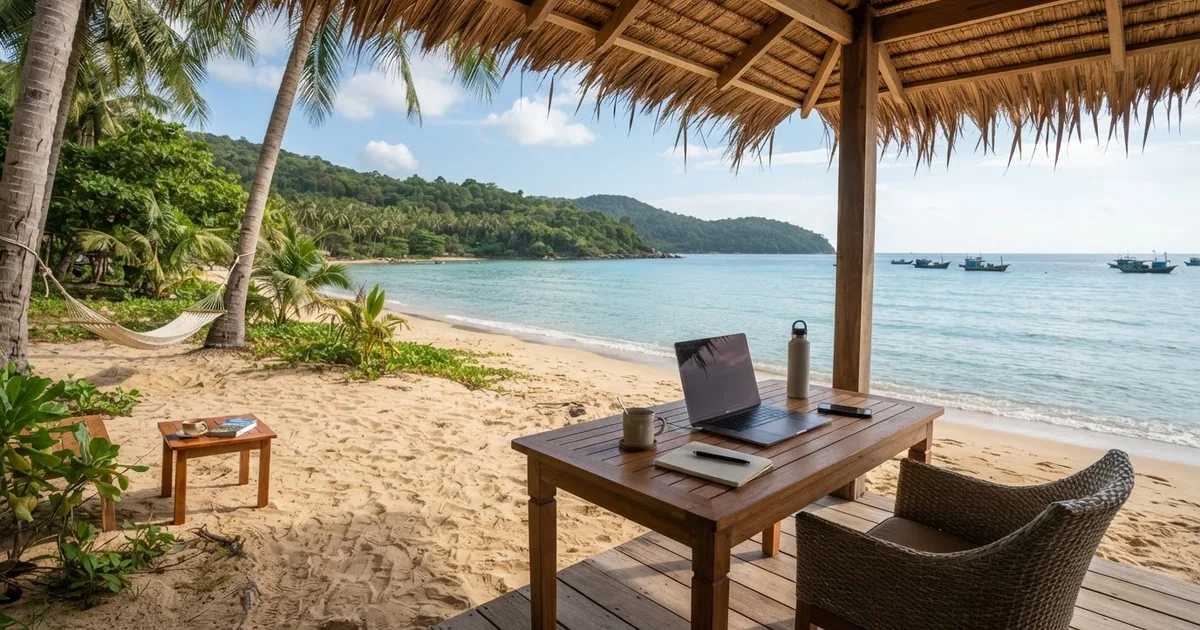
Yes, you can seriously work remotely from Phu Quoc. Apartments with dedicated fiber connections deliver 50–100 Mbps down and 20–50 Mbps up — comfortably enough for daily video calls — and a Viettel SIM at about $10/month works as a reliable backup connection. Expect a comfortable remote-work lifestyle to cost roughly $595–$950 per month, all in.
Can You Really Work Remotely From Phu Quoc? The Short Answer
If you've been circling Phu Quoc as a potential work-from-anywhere base, here's the direct answer: the island's internet is better than its "pure beach holiday" reputation suggests, and thinner than a proper nomad hub's. A 2026 remote-work guide rates the island "Very Good" for digital nomads, and the numbers back that up — dedicated fiber lines in Duong Dong and along Long Beach routinely push 50–150 Mbps down with 20–50 Mbps up, and Wi-Fi is widely available across the island, so remote work is genuinely possible in many places, not just one expat street.
What Phu Quoc is not — yet — is a structured nomad hub. There is no Canggu-style coworking campus, no weekly networking calendar, no district of shared offices. It's a "live and work quietly" destination: you rent a fiber-connected apartment, find two or three cafes you like, and settle into a rhythm of morning calls and afternoons by the sea. Quality coworking exists in Duong Dong (30–80 Mbps over fiber during business hours), but the scene is small.
That suits a specific kind of remote worker very well. If your priorities are low cost, fast internet, beach access and a peaceful environment — and you can generate your own routine rather than absorbing one from a community — Phu Quoc delivers. If you need the social infrastructure of Chiang Mai or Da Nang, you will feel the gap within a week. The rest of this guide breaks down exactly what the connections, workspaces and costs look like, so you can decide which camp you're in before you book a flight.
The Internet Reality: What Each Connection Type Actually Delivers
The single most important distinction on this island is between "Wi-Fi included" and dedicated fiber. They are not the same product. A long-stay apartment with its own fiber line typically delivers 50–100 Mbps down and 20–40 Mbps up with good reliability, while a hotel network shared between a few dozen guests often limps along at 15–50 Mbps down with only 5–15 Mbps up. That upload number is what separates a professional call from a pixelated one.
| Connection type | Typical download | Typical upload | Reliability for work |
|---|---|---|---|
| Long-stay apartment with dedicated fiber | 50–100 Mbps | 20–40 Mbps | Good — dependable for daily video calls |
| Wi-Fi in Duong Dong town and along Long Beach | 50–150 Mbps | 20–50 Mbps | Normal fiber performance in cafes and rentals |
| Quality coworking space, Duong Dong | 30–80 Mbps | Fiber-backed | Reliable during business hours |
| Hotel / resort Wi-Fi | 15–50 Mbps | 5–15 Mbps | Variable — fine for email, risky for calls |
| 4G/5G mobile data (west coast) | 120–230 Mbps on 5G | 28–45 Mbps | Strong — the go-to backup connection |
Notice the upload column. Fiber apartments and town Wi-Fi upload at 20–50 Mbps, which handles screen sharing, large file transfers and group video calls without drama. Hotel networks upload at 5–15 Mbps, which means soft video and dropped frames the moment the resort fills up. Mobile 5G uploads at 28–45 Mbps in covered areas — often better than the fixed Wi-Fi around it. When you're apartment hunting, the question to ask is not "do you have Wi-Fi?" but "what is your fiber package, and can I run a speed test on my own device?"
Where the Fast Connections Are: 5G Speed Tests Around the Island
Mobile data on Phu Quoc is not a compromise — in measured spots it beats fixed lines back home. At Duong Dong Night Market, Viettel 5G has been clocked at roughly 230 Mbps down and 45 Mbps up. On Bai Truong (Long Beach), Mobifone 5G measured about 150 Mbps down and 30 Mbps up. Down south at the Hon Thom cable car station, Vinaphone 5G delivered around 120 Mbps down and 28 Mbps up. All three major Vietnamese carriers — Viettel, Vinaphone and Mobifone — deliver work-grade 5G in the island's developed zones.
Coverage is strongest along the west coast: Duong Dong town, the full sweep of Long Beach, and the road south toward An Thoi and the cable car. This is also where nearly all long-stay apartments, cafes and coworking spaces sit, so the coverage map and the practical working map largely overlap. Coverage thins noticeably on the quiet east coast and the far north, where beaches are empty precisely because infrastructure is — if you're dreaming of a secluded cabin with ocean-view calls, verify the signal on-site first.
Practically, this means the night market area doubles as an emergency office with some of the fastest public connectivity on the island, and a strong phone hotspot can rescue any meeting if your building's router misbehaves. Viettel has the best reputation for island-wide coverage, which is why it's the default recommendation for a backup SIM.
The Setup That Actually Works on Phu Quoc
Ask long-term remote workers on the island what they'd recommend and the answer converges fast: an apartment with dedicated fiber as your base, morning cafe sessions as your change of scenery, and a Vietnamese data SIM as your safety net. Three layers, no single point of failure, and your total connectivity bill stays under $20 a month.
- Book a long-stay apartment with dedicated fiber — expect 50–100 Mbps down and 20–40 Mbps up, not just "Wi-Fi included"
- Run a speed test on your own device before paying any deposit, ideally at peak evening hours
- Buy a Viettel SIM on day one — about $10/month for generous data, and your instant backup when fixed Wi-Fi dips
- Front-load deep work into morning cafe sessions, when the island's cafes are quiet and bandwidth is all yours
- Treat hotel Wi-Fi as browsing-only — 5–15 Mbps upload will not carry a professional video call
- Keep a power bank charged; brief outages happen occasionally in high season
Insider tip: when viewing apartments, use the phrase "fiber optic internet" (cáp quang in Vietnamese). Landlords who answer with a specific package and let you run a live speed test are the ones whose listings actually deliver the 50–100 Mbps they advertise. Test at 7–9 pm, when everyone on the network is streaming — that's the number you'll live with.
The morning-cafe half of the formula matters more than it sounds. Domestic tourist crowds arrive mid-afternoon, so before noon the beachfront cafes along Long Beach are calm, tables are easy to get, and connection quality is at its peak. Working from your apartment for focused blocks and decamping to a cafe for lighter tasks gives you the island lifestyle without ever gambling a client call on public Wi-Fi.
Coworking and Cafes: Working Outside Your Apartment
Duong Dong, the island's main town, has a small number of quality coworking spaces that deliver 30–80 Mbps over fiber during business hours — enough for any kind of remote work, including calls-heavy roles. What they lack is the surrounding ecosystem: there's no schedule of events, no dozens of spaces to hop between, and no guarantee of finding a full room of fellow nomads. A day pass or short membership works well as an occasional change of pace rather than a daily base for most people here.
The real workday infrastructure, in practice, is the cafe scene. The strip along Long Beach and the lanes of Duong Dong town are lined with places that offer the town's normal fiber range of 50–150 Mbps down and 20–50 Mbps up, a coffee typically in the $1.50–$3 range, and sea air instead of fluorescent lighting. Order something, settle in for two or three hours, and you're a welcome guest rather than an annoyance.
Two timing rules keep the cafe strategy reliable. First, go in the morning — before noon you'll have your pick of tables and the cleanest bandwidth of the day. Second, be aware of weekends and Vietnamese public holidays, when domestic tourists flood the west-coast strip and both noise and network load spike. On those days, your fiber apartment is exactly where you want to be.
What a Month on Phu Quoc Actually Costs a Remote Worker
The published numbers line up neatly with what long-stayers report. One nomad guide estimates a comfortable lifestyle on Phu Quoc at about $595 per month; another puts a comfortable setup at roughly $650–$950; a long-stay guide says the island offers monthly living under $600 including 100 Mbps Wi-Fi at the budget end. In other words: a fiber connection fast enough for professional work is included at every budget tier — this is not an island where connectivity is a luxury line item.
| Monthly line item | Typical cost (USD) | Notes |
|---|---|---|
| Long-stay apartment with fiber | $250–$450 | 50–100 Mbps down, 20–40 Mbps up |
| Utilities / air-con | $0–$50 | Often included in monthly rates |
| Food | $200–$350 | Mix of local eateries and western meals |
| Viettel data SIM | ~$10 | Generous data, island-wide backup |
| Motorbike rental | $50–$70 | Essential for island life |
| Cafes and coworking | $30–$60 | Morning sessions, occasional day passes |
| Total | ~$570–$950 | Matches the $595–$950 guide estimates |
Seasonality moves these numbers. High season (roughly December to March) pushes apartment rates toward the top of each range and empties availability quickly, so book a month or more ahead for a January arrival. Shoulder months offer the same internet at friendlier prices — and often a quieter island, which remote workers tend to prefer anyway.
Who Phu Quoc Suits — and Who Should Look Elsewhere
Phu Quoc is a good fit for digital nomads who want a slower pace, beach access and a simple routine rather than a highly social coworking scene. It rewards people who value low cost, fast internet and a peaceful work environment over a large social scene. Here's the honest three-way split:
Great fit
Developers, writers, designers and consultants who need reliable calls and long focus blocks, plus anyone who'd rather end the workday on a beach than at a meetup. Couples and solo quiet-workers thrive here: fiber at 50–100 Mbps, living costs from ~$595/month, and a routine that stays simple.
Workable with planning
First-time nomads and hybrid travelers mixing work with a family holiday can make it work — but choose accommodation for its fiber line, not its pool, and accept that your social calendar is self-generated. If community matters to you, plan longer stays so routines have time to form.
Poor fit
Nomads whose main goal is a big, buzzing coworking community with weekly events — Da Nang, Chiang Mai or Canggu serve that far better. Also a poor match if you need late-night city services, extensive western food delivery, or you're someone who outgrows a small-island rhythm within a few weeks.
Being clear about the mismatch is the kindest thing this guide can do: Phu Quoc is more of a "live and work quietly" destination than a structured nomad hub. People who arrive expecting Bali-style networking leave disappointed; people who arrive wanting exactly what the island offers rarely want to leave.
Practical Realities: Weather, Power, Visas and Time Zones
The dry season from November to April is the prime remote-work window: blue skies, calm seas, and the island at its most pleasant. The rainy season from roughly May to October brings short, heavy afternoon downpours rather than all-day washouts — plan client calls for the morning and you'll rarely be affected. High season brings occasional brief power cuts; this is precisely why the $10/month mobile SIM is not optional. When the building's router dies, your hotspot keeps the call alive.
Time zones work surprisingly well. Phu Quoc runs on GMT+7, which means afternoon in Europe is your evening, morning in East Asia is your morning, and US East Coast mornings land in your early evening. A Europe- or Asia-facing client base is effortless here; a US-West-Coast-heavy schedule means late nights, the same as anywhere in Southeast Asia.
On visas, most nationalities can obtain a 90-day e-visa online before arrival, which can typically be extended while you're in Vietnam — enough for a proper multi-month working season without constant border runs. Rules change periodically, so confirm current requirements before booking. Between a 90-day stay, fiber internet and a sub-$1,000 monthly budget, Phu Quoc quietly assembles one of the better-value remote-work packages in Asia.
Frequently Asked Questions
Is Phu Quoc actually good for remote work?
Yes — a 2026 remote-work guide rates the island "Very Good." Dedicated fiber in apartments runs 50–100 Mbps down, town and beach Wi-Fi averages 50–150 Mbps down with 20–50 Mbps up, and 4G/5G backup is strong along the west coast. It suits quiet, routine-driven workers better than nomads chasing a large social coworking scene.
How fast is the internet in Phu Quoc apartments?
Long-stay apartments with dedicated fiber typically deliver 50–100 Mbps down and 20–40 Mbps up with good reliability. Always confirm the line is fiber specifically — a generic "Wi-Fi included" listing can mean a shared hotel-grade connection of just 15–50 Mbps down and 5–15 Mbps up.
Do I need a Vietnamese SIM card as a backup?
Strongly recommended. A Viettel SIM with generous data costs about $10 per month and works island-wide, and 4G/5G is strong along the west coast. For perspective, Viettel 5G has measured roughly 230 Mbps down and 45 Mbps up at Duong Dong Night Market — often faster than the fixed Wi-Fi around it.
Is hotel Wi-Fi good enough for video calls?
Usually not reliably. Resort and hotel networks run 15–50 Mbps down but only 5–15 Mbps up, and reliability varies with occupancy. That upload ceiling means soft, pixelated video whenever the property is busy. Hotel Wi-Fi is fine for email and streaming; risky for anything client-facing.
Are there coworking spaces on Phu Quoc?
A small number of quality options in Duong Dong deliver 30–80 Mbps over fiber during business hours — plenty for any remote role. The surrounding scene is modest compared to Da Nang or Chiang Mai, so most remote workers pair a fiber apartment with morning cafe sessions instead of a full-time membership.
How much does a month in Phu Quoc cost as a remote worker?
Guides put a comfortable lifestyle at $595–$950 per month all-in: roughly $250–$450 for a fiber apartment, $200–$350 for food, about $10 for a data SIM, and $50–$70 for motorbike rental. Budget long-stay setups with 100 Mbps Wi-Fi come in under $600 per month.
What about mobile coverage outside Duong Dong?
4G/5G is strong along the developed west coast — Duong Dong, the full length of Long Beach, and down toward An Thoi, where Vinaphone 5G measured about 120 Mbps down and 28 Mbps up at the Hon Thom cable car station. Coverage thins on the quiet east coast and far north, so test the signal before renting anywhere remote.
How long can I stay in Vietnam as a remote worker?
Most nationalities can get a 90-day e-visa online, which can typically be extended once in the country — enough for a full working season. The dry season from November to April is the most popular window; verify current visa rules before you book, as requirements are updated periodically.
Planning a working month on Phu Quoc? Sabrina Rental can set you up with a long-stay room with fiber internet, a motorbike for exploring the island, and honest local advice on where the connections are strongest — just ask.
Ask Us About Long-Stay Setups