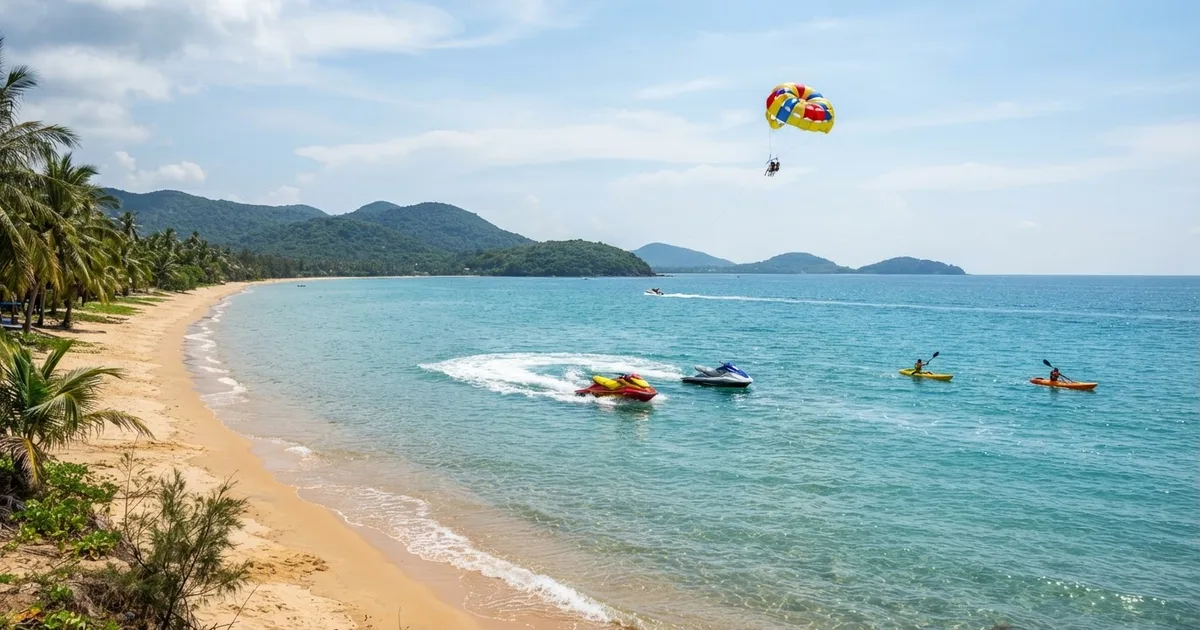
Phu Quoc is one of the easiest islands in Vietnam to paddle: sheltered mangrove rivers and shallow sandy bays give calm, flat water almost year-round. The best single spot for beginners is Cua Can River, where a traditional kayak costs about 100,000 VND (roughly $3.0-3.8 per person) per hour, while Bai Sao is the calmest sea launch for families at an estimated $3.8-5.7 per hour. Aim for the dry season, November through April, and paddle early - the 6:30-8:30 AM window is the sweet spot on the river.
Is Phu Quoc Good for Kayaking and SUP?
Yes - and for a specific reason. Phu Quoc sits in the Gulf of Thailand, and nearly all of its paddling happens in two kinds of sheltered water: mangrove rivers in the north, led by Cua Can, and shallow sandy bays such as Bai Sao, Bai Dai and Rach Vem. There is essentially no surf, no strong current inside the bays and no long crossings required, which makes the island one of the lowest-effort places in Southeast Asia to try a kayak or stand-up paddleboard for the first time.
The flip side is that Phu Quoc is a flat-water destination. If you are chasing surf SUP, river rapids or open-ocean downwind runs, you will be disappointed - swell inside the sheltered bays is minimal, and there is no whitewater on the island. Less suited to: experienced paddlers who want waves or current, and anyone hoping for multi-day expedition touring; day trips by the hour are the format here.
For everyone else the logistics are simple: rent by the hour at the beach or river, or join a guided mangrove trip. Self-rental is realistic at Starfish Beach (Rach Vem), Long Beach, Bai Sao, Ong Lang and Ham Ninh, where beach bars and small vendors keep kayaks and boards for guests without any tour booking.
Cua Can River: the Best Kayaking Spot in Phu Quoc for Beginners
Cua Can, in the island's far north about 30-40 minutes' drive from Duong Dong, is the spot almost every local names first. The river slides quietly through thick mangrove forest, the water is protected from wind on both banks, and the wildlife - herons, kingfishers, mudskippers and the occasional monitor lizard - comes far closer than it ever would on foot. It is the classic beginner paddle: no waves, almost no boat traffic, and an easy turnaround wherever your arms give out.
Pricing is equally beginner-friendly. A traditional kayak costs about 100,000 VND per hour, and vendors at the river list rentals at roughly $3.0-3.8 per person per boat. A SUP at Cua Can runs about $5-8 per hour. If you want to cover the full upstream stretch without working for it, a motorized kayak is available for around 200,000 VND per hour including gear - roughly double the price of a paddle kayak, but it roughly doubles the distance you can cover in the same window.
Tip: paddle Cua Can either 6:30-8:30 AM or 3:30-5:30 PM. Early morning gives you glassy water, cool air and the most bird activity; the late-afternoon slot gives softer light for photos. Midday is hot, bright and noticeably less pleasant on the open stretches of the river.
Guides are easy to arrange on site, but the river is straightforward enough that confident first-timers rent solo. Wear the provided life jacket, keep to the deeper channel and give the tangled root systems a little space - they are the nursery for everything you came to see.
Bai Sao, Bai Dai and Rach Vem: the Best Beach Launches
Bai Sao (Sao Beach), the postcard beach on the southeast coast, is the top choice for beginners and families on the open sea, because its summer waves are extremely calm. When the wind pattern flips to the summer setup, the bay turns into a shallow, glassy lagoon over white sand, and kayaks rent for an estimated $3.8-5.7 per hour. One caveat: the kayak launch gets more crowded in the late afternoon, so arrive before mid-morning if you want clear water and an easy exit through the swimmers.
Bai Dai Beach, just north of Bai Sao on the same coast, is considered a good starting point for exactly the reasons paddlers care about: soft white sand underfoot for an easy launch and crystal-clear water to paddle over. It is noticeably quieter than Bai Sao, which makes it a favorite for first-time SUP sessions and unhurried drifting.
Rach Vem, the fishing village on the north coast better known as Starfish Beach, is the pick if clear water and starfish views are the goal. Paddle the shallow nearshore strip and you will see red and orange starfish on the sand below you; local vendors keep kayaks for self-rental. Please view them from the board - lifting starfish out of the water can kill them within minutes.
Three more self-rental options round out the list: Long Beach near Duong Dong for convenience and sunset paddling right off the hotel strip; Ong Lang just north of it for a quieter version of the same; and Ham Ninh on the east coast, where the calm summer sea and the old pier make a scenic, low-key morning paddle.
Sunset Town: a Paddle for Experienced Kayakers
Sunset Town, the Mediterranean-style complex on the island's far southern tip near An Thoi, is the odd one out: it is recommended specifically for experienced paddlers who want sunset and live-show views from the water. Heading out on the open southern coast as the town lights come on and evening performances start is one of the more memorable things you can do from a kayak anywhere in Vietnam.
Be honest about your level here, though. This is open sea, not a bay: there is real boat traffic around the harbor, the afternoon wind can push you offshore, and there is no shallow bottom to stand up on. Less suited to: first-timers, children and anyone paddling alone at dusk. If that is you, watch the sunset from the town itself and save the kayak for Cua Can or Bai Sao.
Experienced paddlers should launch well before golden hour, stay within easy swimming distance of shore, carry a light or reflector once it dims and go with a partner. Operators around An Thoi can arrange guided sunset sessions - take one if you do not already know this coastline.
Kayak and SUP Spots at a Glance
| Spot | Water | Level | Typical price | Best time |
|---|---|---|---|---|
| Cua Can River | Mangrove river, glassy, no waves | Beginner | ~100,000 VND/hr (about $3.0-3.8 per person); SUP $5-8/hr | 6:30-8:30 AM or 3:30-5:30 PM |
| Bai Sao | Shallow sandy bay, extremely calm in summer | Beginner / families | ~$3.8-5.7 per hour | Morning (launch crowds build late afternoon) |
| Bai Dai | Clear-water sandy bay, soft white sand | Beginner | Self-rental, negotiated on site | Morning |
| Rach Vem (Starfish Beach) | Shallow, clear north-coast water | Beginner | Self-rental from beach vendors | Morning; best visibility in the dry season |
| Long Beach / Ong Lang | West-coast beach, sunset side | Beginner | Self-rental at beach bars | Sunset |
| Ham Ninh | East-coast village shore | Beginner+ | Self-rental, negotiated on site | Summer mornings, around high tide |
| Sunset Town | Open southern sea | Experienced | Arranged via operators | Golden hour |
How Much Does Kayaking and SUP Cost in Phu Quoc?
Phu Quoc paddling is cheap by regional standards. The two anchor prices to know: a traditional kayak at Cua Can River runs about 100,000 VND per hour (vendors quote roughly $3.0-3.8 per person per boat), and at Bai Sao expect an estimated $3.8-5.7 per hour. A SUP board at Cua Can is listed at $5-8 per hour - boards always cost a little more than sit-in kayaks because they are lighter and easier to damage.
The one upgrade worth considering is the motorized kayak at about 200,000 VND per hour including gear. On the river it lets you reach the deep upstream sections and get back inside a single hour - paddling that route would realistically take two. On flat bays it is less necessary, because the whole point there is drifting quietly over sand and starfish.
Before you pay, check:
- Is a life jacket included, and does it fit every paddler in your group?
- Is the price per boat or per person? (Cua Can's $3.0-3.8 quote is per person.)
- Is gear included in the motorized-kayak price? (At ~200,000 VND per hour, it should be.)
- Cash or card? Small vendors on Bai Sao and Rach Vem are usually cash only.
- Is the rental a full hour on the water, or clocked from when you pick up the boat?
Best Time to Go: Season and Time of Day
The best kayaking season in Phu Quoc is the dry season, especially November through April. In these months the prevailing winds flatten the west and north coasts, which is ideal for Long Beach, Ong Lang, Cua Can and Rach Vem. From roughly May to September the wind pattern flips and the east and south coasts calm down - which is exactly why Bai Sao's summer waves are extremely calm, and why Ham Ninh works as a summer-morning spot.
Time of day matters as much as season. On the river, the proven windows are 6:30-8:30 AM and 3:30-5:30 PM - before the heat and after the harshest sun. On Bai Sao, launch earlier rather than later, because the kayak launch gets more crowded in the late afternoon as day-trippers pour in. On the west coast, the 5:30-6:30 PM slot trades warm light for Phu Quoc's famous sunset, and it is the one time of day Long Beach paddling feels genuinely special.
In the rainy season, paddle in the morning: squalls usually build from early afternoon, and the sea can stay choppy for a day after a big storm. If the flag is up at your beach and locals are not swimming, do not launch either.
Safety and Practical Tips on the Water
Phu Quoc paddling is low-risk, but a few habits make it safer. Wear the life jacket for the whole session, not just the first minutes - it is standard at reputable vendors and non-negotiable on motorized craft. Carry water: an hour of paddling in tropical sun costs more fluid than most people expect. Bring reef shoes or old sneakers at Cua Can, where the banks are muddy, and a dry bag for phones on any beach launch.
Two local specifics. First, at Rach Vem, starfish survive only underwater - photograph them where they lie. Second, around Sunset Town and the An Thoi islands, respect boat lanes and stay close to shore, especially near dusk when other captains expect less small craft on the water. Tell your rental vendor roughly where you are heading and when you plan to be back; on an island this size, someone always knows the water you are on.
Beyond the Paddle: Jet Ski Prices in Phu Quoc
If part of your group wants speed instead of silence, jet ski rides are widely available at Long Beach, Bai Dai, Sao Beach and around the An Thoi islands, with Long Beach near Duong Dong acting as the island's main hub for jet skis and parasailing. Current prices run about $30.4-34.3 for 10 minutes, $38.1-45.7 for 15 minutes and $68.5-76.1 for 30 minutes, and a jet ski carries up to 2 people.
The rules are simple: no license is needed to ride within designated beach zones, but a heavy-duty life jacket must be worn at all times. A popular combination day is a 6:30 AM paddle through the Cua Can mangroves, lunch in Duong Dong, then a 15-minute jet ski session off Long Beach before sunset - both sides of the island, and both ends of the speed spectrum, in one day.
Frequently Asked Questions
How much does it cost to kayak in Phu Quoc?
Expect roughly 100,000 VND per hour (about $3.0-3.8 per person per boat) for a traditional kayak at Cua Can River, and an estimated $3.8-5.7 per hour at Bai Sao. A motorized kayak costs around 200,000 VND per hour including gear, and SUP boards at Cua Can rent for about $5-8 per hour.
Do I need experience to kayak or paddleboard in Phu Quoc?
No. Cua Can River and the sheltered bays at Bai Sao and Bai Dai are flat, shallow and wave-free, which is why they are recommended for beginners and families. Start kneeling on a SUP if standing feels unstable - most first-timers are standing comfortably within 15-20 minutes in calm water.
When is the best season for kayaking in Phu Quoc?
The dry season, especially November through April, offers the most reliable conditions and calm water on the west and north coasts, including Cua Can and Rach Vem. For the east and south coasts - Bai Sao, Ham Ninh, An Thoi - the calmer window is the summer months, when Bai Sao's waves are extremely calm.
What time of day should I paddle Cua Can River?
The two proven windows are 6:30-8:30 AM and 3:30-5:30 PM. Early morning brings glassy water, cooler temperatures and the most wildlife activity along the mangroves; the late-afternoon slot gives softer light for photos. Midday is hot and bright, with far fewer animals moving.
Can I see starfish while kayaking in Phu Quoc?
Yes - that is exactly what Rach Vem, better known as Starfish Beach, is famous for. Paddle or drift over the shallow sand and you will see red and orange starfish clearly through the clear water. Look but do not lift: starfish removed from the water can die within minutes.
Is a motorized kayak worth the extra cost?
At about 200,000 VND per hour including gear - roughly double a paddle kayak - it is worth it on Cua Can River if you want to reach the deep upstream sections and return within an hour. On flat bays like Bai Sao or Rach Vem, a regular kayak is usually more enjoyable, since drifting quietly is the whole point.
Where can I rent a kayak without joining a tour?
Self-rental is common at Starfish Beach (Rach Vem), Long Beach, Bai Sao, Ong Lang and Ham Ninh, where beach bars and small vendors rent by the hour. Cua Can River also rents directly on site for about $3.0-3.8 per person. Prices are low enough that a guided tour is optional, not required.
Are there jet skis in Phu Quoc, and how much do they cost?
Yes - at Long Beach, Bai Dai, Sao Beach and the An Thoi islands, with Long Beach the main hub. Prices run about $30.4-34.3 for 10 minutes and $68.5-76.1 for 30 minutes, a ski carries up to 2 people, no license is required within designated beach zones, and a heavy-duty life jacket must be worn at all times.
Want a kayak or SUP sorted for your beach, or a local's route map for Cua Can River? Sabrina Rental can arrange boards, gear and honest on-island advice - just tell us where you are staying and what time you want to paddle.
Contact Sabrina Rental