Phu Quoc is one of the easiest international beach trips a South Korean can book: about 28 direct flights per week connect Seoul Incheon (ICN) with Phu Quoc (PQC) as of September 2026, flown by 7 airlines, and the fastest nonstop takes just 5 hours 50 minutes. Fares have dipped as low as $74 one-way, Korean passport holders can stay up to 45 days visa-free, and a mid-range week on the island runs roughly $80–120 per person per day once you land.
Flights from Seoul to Phu Quoc: 28 weekly nonstops and falling fares
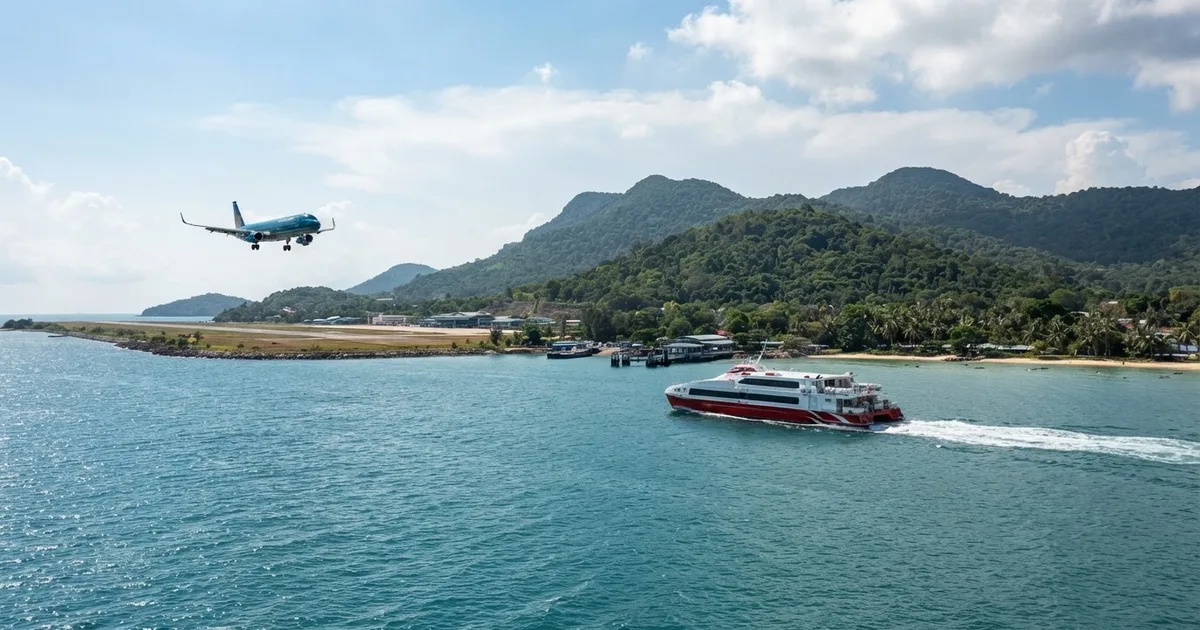
The Seoul–Phu Quoc corridor has become one of the busiest Korean leisure routes in Southeast Asia. As of September 2026 there are roughly 28 nonstop flights per week from Seoul Incheon (ICN) to Phu Quoc International Airport (PQC), with the fastest services taking about 5 hours 50 minutes. That frequency means you can realistically build a 3-night long weekend or a full two-week break without any connection through Hanoi or Ho Chi Minh City.
Seven airlines operate the route nonstop: Korean Air, Jeju Air, Jin Air, Tway Air, Eastar Jet, VietJet Air and Sun PhuQuoc Airways. The newest entrant matters most for price competition — Sun PhuQuoc Airways launched direct Seoul–Phu Quoc service on April 17, 2026 with one flight per day, and has planned Busan–Phu Quoc service from June 2026. If you live in the southeast of Korea, that Busan route removes the need to position through Incheon at all.
| Airline | Model | What to expect |
|---|---|---|
| Korean Air | Full service | Fares from KRW 466,900; checked bag and meal included |
| Jeju Air | Low-cost | Frequent departures; bags and seat selection cost extra |
| Jin Air | Low-cost | Budget base fares; watch baggage add-ons |
| Tway Air | Low-cost | Competitive midweek pricing |
| Eastar Jet | Low-cost | Promotional fares outside Korean holiday peaks |
| VietJet Air | Low-cost | Often the cheapest base fare; strict baggage rules |
| Sun PhuQuoc Airways | New carrier | Daily Seoul service since April 17, 2026; Busan planned from June 2026 |
On price, the spread is wide. Skyscanner's cheapest recorded one-way fare from Incheon to Phu Quoc is $74, and its best return price sits around $140 — both typically on low-cost carriers outside Korean school holidays. Vinpearl, the island's biggest resort group, markets direct Incheon–Phu Quoc flights starting from $118 as part of its package deals. Korean Air's own fares start from KRW 466,900 one-way. A practical rule: book 6–10 weeks ahead, avoid Seollal, Chuseok and the late-July/August vacation peak, and always compare a full-service fare against a low-cost fare plus paid baggage before deciding — a KRW 40,000 fare difference can vanish once you add a 23 kg checked bag on a budget carrier.
Visa and entry: 45 days visa-free for Korean passports
South Korean passport holders do not need a visa for Vietnam for stays of up to 45 days — a unilateral exemption Vietnam extends to Korean citizens. For any normal holiday there is no paperwork to arrange in advance: you present your passport at Phu Quoc International Airport and receive an entry stamp covering your stay. Your passport must be valid for at least 6 months beyond your arrival date, so renew early if yours is close to expiring.
Two details still matter. First, have the address of your first night's accommodation ready, since the arrival form asks for it — a hotel booking confirmation on your phone is enough. Second, if you want to stay longer than 45 days, the standard solution is Vietnam's e-visa, applied for online before departure, which allows stays of up to 90 days. Separately, Phu Quoc also runs its own island-level rule: any foreigner arriving directly on the island by international flight or cruise can visit visa-free for up to 30 days, but Koreans rarely need to rely on it given the more generous national 45-day exemption.
What a Phu Quoc trip actually costs in USD
No official full-trip budget exists for the Korean market, so the honest way to plan is to build one from real line items. Return flights from Incheon typically land between $140 (best Skyscanner return) and $350 (peak-season full service). On the ground, Phu Quoc spans every budget: a fan-cooled guesthouse room starts around $20–30 per night, mid-range beach resorts run $60–120, and the big-name five-star properties around Bai Dai and Long Beach charge $150–300 or more. Street food and local restaurants cost $3–7 per meal, while resort dining and Korean restaurants run $10–25 per person.
| Budget line | Budget trip | Mid-range trip |
|---|---|---|
| Return flight from Seoul | $140–200 | $200–350 |
| Accommodation per night | $20–35 | $60–120 |
| Food and drink per day | $15–25 | $30–60 |
| Scooter rental per day | $6–8 | $6–8 (or taxis $5–20 per ride) |
| Activities (boat trip, cable car, snorkeling) | $15–30 total | $50–120 total |
| Daily total on the ground | about $45–70 | about $80–120 |
Put together, a realistic 5-day mid-range trip per person — flights, a $80/night resort, food, a boat day and a scooter — comes to roughly $650–950. Vietnam's currency is the dong (VND), trading around 25,000–26,000 to the US dollar; cards are accepted in resorts and larger shops, but the night market, beach shacks and scooter rentals are cash territory, so withdraw VND in Duong Dong town rather than relying on card payments.
When to go: the dry-season window and the rainy-season reality
Phu Quoc's dry season runs from November to April, and this is when the island looks like the brochure: calm, transparent water, blue skies and sea temperatures around 28°C. The shoulder months of November and April are the sweet spot — dry weather with fewer crowds and lower resort rates than the December–February peak. Temperatures sit between 27°C and 32°C year-round, so there is no cold season to avoid.
The rainy season, roughly May to October, changes the character of the trip. This is the period when travelers most often complain about jellyfish and murky, churned-up water, plus short but heavy afternoon downpours. It is also when Korean fares are cheapest and resorts discount heavily, so it can still make sense for pool-and-spa-focused trips — just do not expect postcard snorkeling. Whenever you come, note that Korean holiday calendars (Seollal in late January or February, and the July–August summer break) push both fares and hotel rates sharply higher; shifting your dates by a week around those windows can save 30–50%.
What surprises Korean travelers — the honest list
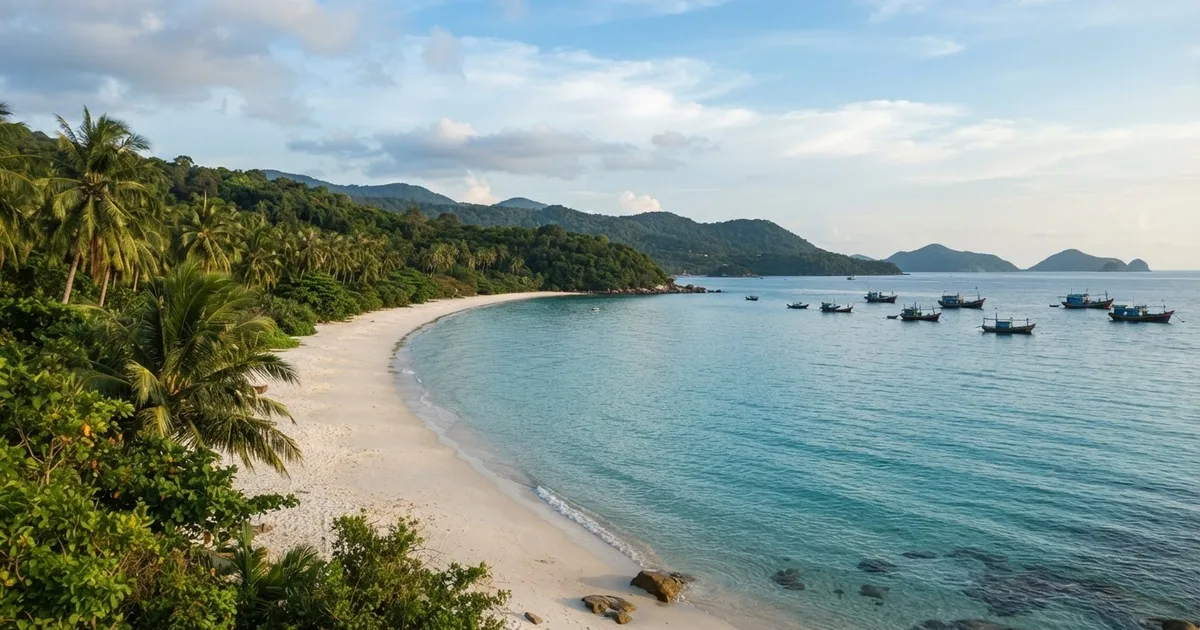
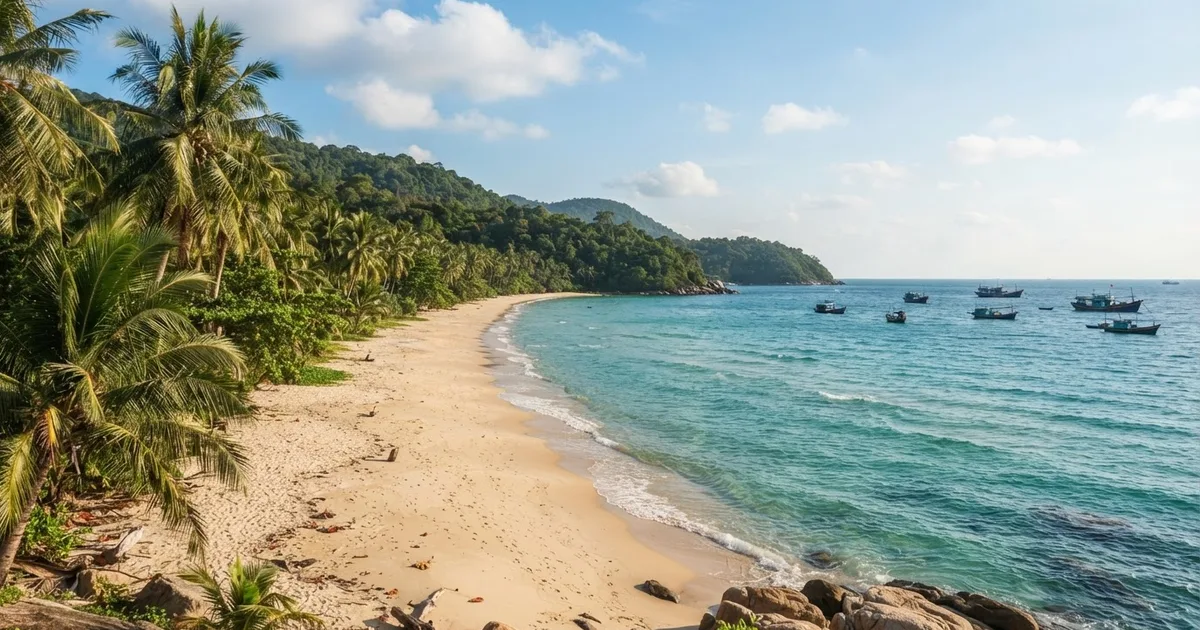
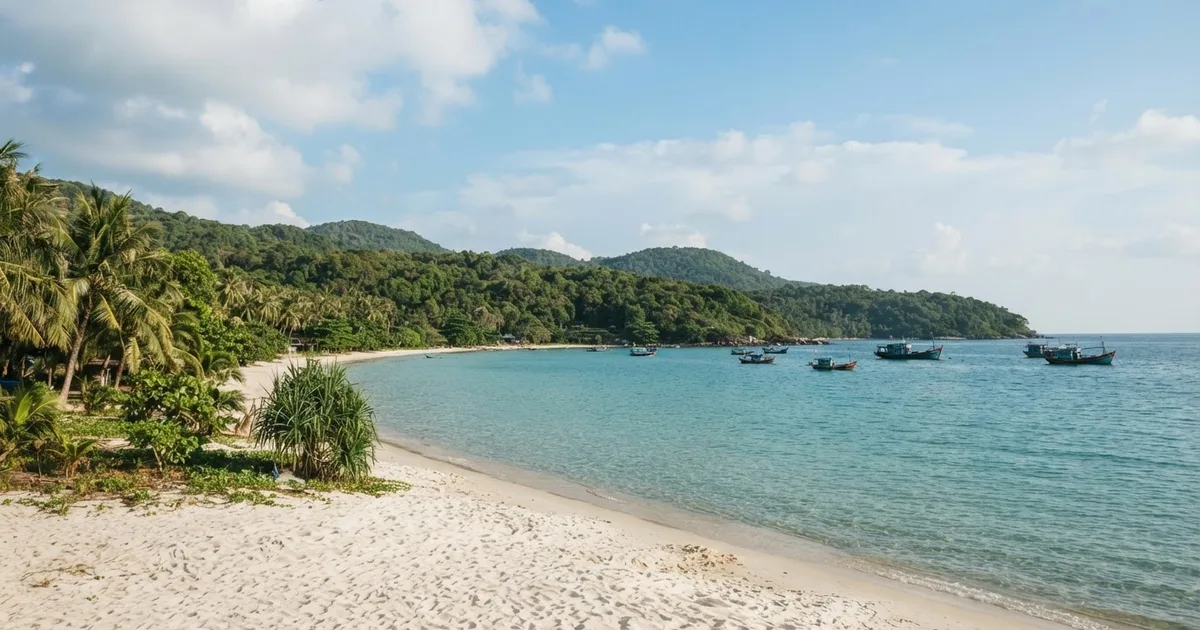
The first surprise is usually a pleasant one: the beaches themselves. Vietnamese travel coverage describes a South Korean visitor in Phu Quoc being genuinely overwhelmed and stunned by the beaches — long, undeveloped stretches of pale sand that feel a world away from Busan's city beaches or even Jeju's. Sao Beach in the south-east and the northern sands near Ong Lang are the ones that produce that reaction most often.
The second surprise is how Korean Phu Quoc already is. A large share of visitors come on organized package tours built around Korean restaurants, Korean-owned stores and Korean-speaking guides, with minimal interaction with local culture — and some travel coverage notes the island can feel full of Russian and South Korean visitors. If you want Korean food, Korean signage and tour operators who speak your language, they are everywhere. If you were hoping for deep local immersion, you will need to seek it out deliberately: eat at Vietnamese family-run com tam and bun quay spots, visit the fish-sauce factories and pepper farms, and book local-run boat trips rather than hotel desk packages.
The honest complaints repeat across reviews, and it is better to know them in advance. Vendors at the night market commonly mark prices up 2–3 times for foreigners, so ask the price before ordering and bargain politely. Internet can be weak in remote parts of the island, especially around Ong Lang and the far north — fine for messaging, frustrating for streaming or video calls. Rubbish outside the resort zones, particularly on the roadside after rain, disappoints many first-time visitors. And construction near hotels is a common gripe, as the island builds fast; ask your hotel directly whether any works are ongoing next door before booking.
Great fit for
Resort-based beach holidays, families with kids, golfers, couples wanting a 5-star week at half the Maldives price, and first-time overseas travelers who value Korean restaurants and Korean-speaking tour support.
Poor fit for
Travelers seeking deep cultural immersion without effort, nightlife on a Bali or Pattaya scale, flawless Wi-Fi in remote north-coast stays, or anyone who will be upset by roadside litter or nearby construction cranes.
Getting around: why a scooter beats the tour bus
Phu Quoc International Airport sits only about 10–15 minutes from Duong Dong town, and taxis or ride-hailing cars cost roughly $5–10 for the transfer. Beyond that, the island is long — about 50 km from the north-west tip to the southern An Thoi archipelago — so distances add up: Sao Beach is around 30–45 minutes from town, and the Hon Thom cable car in the far south is closer to an hour. Package tours solve this with buses, but they lock you into fixed schedules.
A rented scooter, typically $6–8 per day, is how independent travelers and long-stay visitors actually explore — chasing sunset points on the west coast, ducking into pepper farms, and finding beach shacks the tour buses skip. Legally you need a valid international driving permit alongside your Korean license; police checks do happen on the main roads. If you would rather not ride, metered taxis and daily car-with-driver hire (around $40–60 per day split between four people) cover the same ground. Local operators such as Sabrina Rental on Phu Quoc arrange motorbikes, rooms and boat trips with English support, which is useful when your Korean tour package ends and you want a few independent days.
Frequently Asked Questions
Do South Korean citizens need a visa for Phu Quoc?
No. Korean passport holders enter Vietnam visa-free for up to 45 days, and this applies nationwide including Phu Quoc. Your passport must be valid for at least 6 months from arrival, and you should know the address of your first night's accommodation. For stays beyond 45 days, apply online for Vietnam's e-visa, which allows up to 90 days.
How long is the flight from Seoul to Phu Quoc?
The fastest direct flights take about 5 hours 50 minutes from Seoul Incheon to Phu Quoc. With roughly 28 nonstop flights per week as of September 2026, most itineraries avoid connections entirely; flying via Ho Chi Minh City instead typically adds 4–6 hours of total travel time.
How much do flights from Seoul to Phu Quoc cost?
The cheapest one-way fare recorded on Skyscanner is $74, with best return prices around $140 on low-cost carriers. Vinpearl markets package flights from $118, and Korean Air fares start from KRW 466,900. Expect to pay noticeably more during Seollal, Chuseok and the July–August Korean vacation peak.
Which airlines fly direct from Seoul to Phu Quoc?
Seven airlines fly the route nonstop: Korean Air, Jeju Air, Jin Air, Tway Air, Eastar Jet, VietJet Air and Sun PhuQuoc Airways. Sun PhuQuoc Airways is the newest, launching daily Seoul service on April 17, 2026, with Busan–Phu Quoc flights planned from June 2026.
When is the best time to visit Phu Quoc?
November to April is the dry season, with clear water and calm seas — November and April offer the best balance of weather and price. May to October is the rainy season, when travelers most often report jellyfish and murky water, though hotel rates drop significantly during these months.
How much does a Phu Quoc trip cost per day?
Budget travelers spend about $45–70 per day on the ground (guesthouse, street food, scooter), while mid-range travelers spend $80–120 per day including a $60–120 resort. A realistic 5-day mid-range trip per person from Seoul, including flights, totals roughly $650–950.
Can Korean travelers get by without speaking Vietnamese?
Yes. Phu Quoc receives many South Korean visitors, so Korean restaurants, Korean-owned stores and Korean-speaking tour guides are concentrated in the main tourist zones. Staff at resorts and larger shops usually speak basic English or Korean; carrying your hotel's address in Vietnamese on your phone solves most taxi conversations.
Is the Wi-Fi and mobile internet reliable on Phu Quoc?
Resorts and cafes in Duong Dong and the main beach strips have dependable Wi-Fi, but travelers frequently complain about weak internet in remote areas, especially Ong Lang and the island's north. A local SIM or eSIM with data (around $5–10) is the reliable backup for maps and messaging.
Flying in from Seoul and want a local team on the ground? Sabrina Rental helps Korean visitors with motorbike rental, rooms and boat trips across Phu Quoc — with honest advice on prices, seasons and getting around.
Contact Sabrina Rental