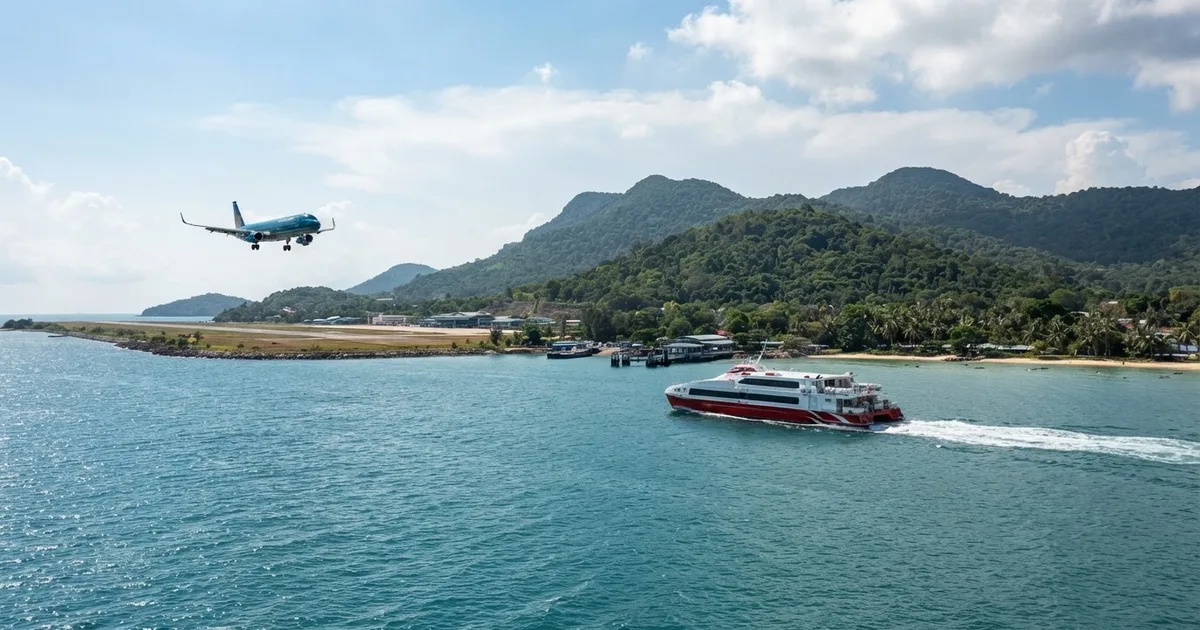
Australians can reach Phu Quoc in as little as 7h 10m of flight time, with one-way fares recently listed from AU$229 (Perth) and AU$303 (Melbourne) — and once there, you can stay up to 30 days without a visa, provided you land directly on the island. The catches: there are no nonstop flights from Melbourne or Canberra, nearly every itinerary connects through Ho Chi Minh City, and Phu Quoc is a fast-developing resort island rather than the untouched paradise some brochures suggest. This guide covers the flights, the visa fine print, real daily costs and the surprises Australians report most often.
Flights From Australia to Phu Quoc: Routes, Days and Real Fares
Start with the honest headline: Expedia currently lists no nonstop flights from Melbourne (MEL) or Canberra to Phu Quoc, and direct international services to Phu Quoc are listed as operating on Thursday and Saturday only. In practice, most Australians fly to Ho Chi Minh City (SGN), Singapore (SIN) or Kuala Lumpur (KUL) and connect to Phu Quoc International Airport (PQC) — the hop from SGN takes around 45 minutes.
Ignore aggregator noise about route volume: Kiwi.com lists 387 direct flights per week between Melbourne and Phu Quoc, but that figure bundles airline combinations and same-day connections, not true nonstops. What matters is the fare data below — and the fact that the fastest Australia-to-Phu Quoc journey currently listed by momondo takes 7h 10m, though 9–12 hours with one connection is more typical.
| Departure city | Cheapest one-way | Cheapest return | Source |
|---|---|---|---|
| Perth | AU$229 | AU$417 | Trip.com from-fares |
| Melbourne | AU$303 | AU$557 | Expedia from-fares |
| Sydney | US$277 | US$491 | Skyscanner lowest listed |
| Australia-wide | US$284 | US$429 | momondo best in last 72 hours |
Treat these as floors, not bookings. Traveloka has shown headline fares as low as AU$32.51 one-way and AU$64.34 return to Phu Quoc — teaser prices that assume the leanest conditions and fluctuate wildly. For a realistic December–January trip from the east coast, budget AU$900–1,300 return per person; in the May–October low season, AU$550–800 is achievable if you book 6–10 weeks out.
Visa for Australians: The 30-Day Phu Quoc Exemption — and the Catch
Phu Quoc has its own visa policy, separate from mainland Vietnam. Australian passport holders who arrive directly on an international flight (or cruise) at Phu Quoc International Airport and stay only on the island receive 30 days visa-free — no application, no fee, no photos. That comfortably covers a typical two-week resort holiday.
Now the catch, and it matters more for Australians than for almost anyone else. Because there are no nonstops from Melbourne or Canberra, the overwhelming majority of Australians transit through Ho Chi Minh City. If your connection requires clearing Vietnamese immigration at SGN — which it will if you booked separate tickets, must collect and re-check bags, or are staying a night in Saigon — you have technically entered mainland Vietnam, and the island exemption no longer covers you.
You have two safe paths. First, apply for a Vietnamese e-visa before departure: US$25 for single entry or US$50 for multiple entries, applied for online, usually approved within three working days, and valid for up to 90 days. Second, book a single through-ticket with baggage checked all the way to PQC and use the airport's airside transit — then the 30-day island exemption applies. One rule that always applies: your passport must be valid for at least six months beyond your entry date, and you may be asked to show an onward or return ticket.
What Phu Quoc Costs Australian Travellers: Realistic Daily Budgets
The most frequent Australian complaint about Phu Quoc is not that it is expensive in absolute terms — it is that it is more expensive than they expected for Vietnam. Prices on the island run noticeably above Ho Chi Minh City or Hanoi, and in the resort zones they sit closer to Bali than to Southeast Asia's backpacker trail. A cappuccino in a beachfront cafe can cost what it would in Melbourne, and a Western breakfast can run AU$12–15.
| Item | Typical price | Notes |
|---|---|---|
| Guesthouse room | US$20–35 | Simple double in Duong Dong |
| Mid-range resort room | US$60–120 | Pool, breakfast, near Long Beach |
| Beachfront 4–5 star | US$150–350 | Higher Nov–Mar peak |
| Motorbike rental | US$6–10/day | Automatic scooter, helmet included |
| Street-food meal | US$2–4 | Bun quay, banh mi, noodle bowls |
| Local beer | US$1–2 | More in hotel bars |
| Hon Thom cable car return | ~US$15–20 | World's longest over-sea cable car |
| Snorkelling/island-hop tour | US$25–45 | An Thoi archipelago, south end |
Adding it up: a shoestring traveller manages on US$40–55 per day; a comfortable mid-range couple spends US$70–120 per day including a scooter, dinners out and one paid activity; a resort-holiday couple should plan US$180–350 per day in peak season. Change money at gold shops or bank counters for rates within 1–2% of the mid-market rate, and remember AU$1 buys roughly 15,000–16,500 VND depending on the day.
The Honest Part: What Surprises (and Disappoints) Australians
Most Australian disappointment with Phu Quoc is not about the island being bad — it is about a mismatch of expectations. Australians arrive imagining a pristine Bali-of-20-years-ago and find a place building fast. The recurring themes in traveller reviews are consistent: overdevelopment and construction, beaches that can disappoint, occasional access restrictions, a communication gap, and prices above mainland Vietnam.
Overdevelopment. Phu Quoc has been on a decade-long building spree — casino complexes, resort megaprojects, a cable car, a safari park. Visitors commonly complain that parts of the island feel overdeveloped, with construction and a "plastic" or contrived tourist-trap atmosphere, and construction noise is a real factor near the southern resorts. The antidote is location research: the north and the Duong Dong side remain far more Vietnamese in character than the An Thoi end.
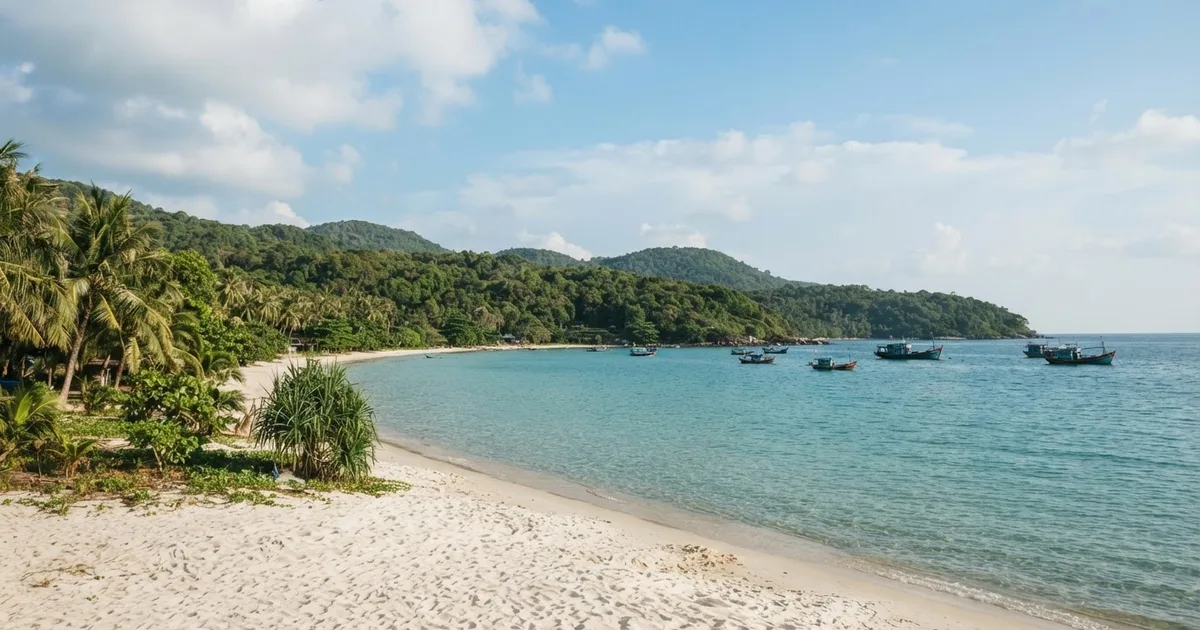
Beaches. This is the big one. Australian tourists frequently report disappointment because of rubbish after rain, murky water and overcrowding at the famous beaches. Two things help enormously: travel in the November–March dry season, when the west coast is calm and clear, and go to east-coast beaches like Bai Sao or Bai Khem early in the morning, before the tour boats arrive around 10am.
Access restrictions. Some stretches of the island's beachfront sit in front of private resort complexes, and visitors report that guards can be strict toward non-Vietnamese tourists at certain spots, particularly around Hon Thom. Do not assume every pretty stretch of sand has public access — check before you ride 30 minutes for a swim.
Communication gap. Reviews from Australian visitors often mention that English is patchy outside the main tourist strips, especially among older locals and in rural areas. A translation app and some patience solve most of it; a locally run rental or tour company with English-speaking staff solves the rest.
Phu Quoc suits you if…
- You want resort-level comfort — pool villas, beach clubs, spa — at 40–60% of equivalent Australian prices.
- Visa simplicity matters: 30 days, no paperwork, no fee when you arrive direct.
- You are travelling with kids: VinWonders theme park and Vinpearl Safari are genuinely strong for families.
- You plan to combine the island with Ho Chi Minh City or the Mekong Delta.
It's less suited to…
- Backpackers chasing a Bali-style social scene — nightlife is thin outside a few strips.
- Surfers and divers expecting world-class water — there is no surf, and snorkelling, while pleasant, is not the Great Barrier Reef.
- Travellers who price-check against mainland Vietnam and resent paying 20–40% more.
- Anyone unwilling to research which beaches are public and which are resort-fronted.
Best Time to Visit and Where to Base Yourself
Phu Quoc has two seasons. November to March is the dry, high season: calm seas, clear water on the west coast, sunset weather at its best — and peak prices. April to May and October are shoulder months with lower fares and mostly good weather. June to September is the southwest monsoon: afternoon downpours, rough water on the west coast, and exactly the conditions that generate the "murky, rubbish-strewn beach" complaints in reviews. If your dates are fixed to the southern winter — which most Australians' are — you are simply visiting at the right time.
Where to stay: Long Beach (Bai Truong) is the 20 km strip closest to Duong Dong and the airport — the most convenient and the most developed. Duong Dong town itself offers the best value, night markets and the most local food. Ong Lang, just north, is quieter and boutique. The An Thoi far south has the newest megaresorts, the Hon Thom cable car and the archipelago boat trips — 25–30 km from the airport, so budget an extra 45–60 minutes of transfer. East-coast beaches like Bai Sao and Bai Khem are the prettiest but are best reached early or with your own transport.
Getting Around: Why a Motorbike Beats Taxis on Phu Quoc
The island is bigger than it looks — roughly 50 km north to south — and attractions are spread out: the airport is about 10 km from Duong Dong, the night market and Long Beach are minutes apart, and the An Thoi south coast is a 45–60 minute ride. Taxis and ride-hailing work, but they add up fast — AU$10–20 each way between Duong Dong and the south coast is real money over a week.
A rented automatic scooter at US$6–10 per day is how most long-stay visitors do it. Fuel costs about 15,000–25,000 VND (AU$1–1.50) per litre, and the main arteries are in good condition. The legal bit Australians must not skip: ride only if your Australian licence is recognised in Vietnam — in practice that means an International Driving Permit with a motorbike endorsement carried together with your licence. Police checks on the main roads are routine, and your travel insurance will not pay out on a scooter without valid licensing.
This is where a local operator earns its fee. Sabrina Rental delivers bikes to your hotel, includes helmets and rain ponchos, and — just as useful — answers the daily questions no guidebook covers: which beach access is public, where to eat tonight, whether the boat trips are running in the weather. The same team can arrange rooms and boat trips, so one message sorts your week.
Frequently Asked Questions
Do Australians need a visa for Phu Quoc?
No, not if you arrive on a direct international flight and stay only on the island: you get 30 days visa-free on arrival. If you transit through Ho Chi Minh City and clear immigration there, or plan to visit the mainland, apply for an e-visa — US$25 single entry, usually approved within about three working days.
Are there direct flights from Australia to Phu Quoc?
Direct international services to Phu Quoc are currently listed as operating on Thursday and Saturday. There are no nonstops from Melbourne or Canberra, so most Australians connect via Ho Chi Minh City, Singapore or Kuala Lumpur. The fastest listed routing takes 7h 10m.
How much is a return flight from Australia to Phu Quoc?
Recent best-listed return fares start around AU$417 from Perth, AU$557 from Melbourne and US$491 from Sydney. Add roughly 30–60% for December–January peak dates. One-way fares start as low as AU$229 from Perth.
When is the best time for Australians to visit Phu Quoc?
November to March — conveniently the Australian summer and school-holiday window. Expect dry, sunny weather, calm west-coast water and peak prices. Avoid June to September if beach quality matters: monsoon rain turns the water murky.
Is Phu Quoc expensive compared to the rest of Vietnam?
Yes, noticeably. Mid-range couples spend about US$70–120 per day, versus US$40–60 on the mainland. Resort-area restaurants charge near-Australian prices for Western food, though local street food remains US$2–4 per meal.
Do I need a licence to rent a motorbike in Phu Quoc?
Yes. Carry your Australian licence plus an International Driving Permit with a motorbike endorsement. Police checks are routine on main roads, and travel insurance is void without valid licensing — so the paperwork is not optional.
Which Phu Quoc beaches are actually worth it?
In the dry season: Long Beach for sunsets, Bai Khem and Bai Sao on the east coast for sand and clear water — go before 10am to beat the crowds. Starfish Beach in the far north is pleasant but shallow. Do not judge the island's water after heavy rain.
Can I do a day trip to mainland Vietnam from Phu Quoc?
Not on the visa exemption alone — the 30-day Phu Quoc stamp covers the island only. Fast ferries connect to Ha Tien and Rach Gia, but you need an e-visa (US$25) to step onto the mainland legally.
Flying in soon? Message Sabrina Rental for motorbike hire delivered to your hotel, rooms and boat trips — and straight answers about the island from people who live here year-round.
Plan My Phu Quoc Trip