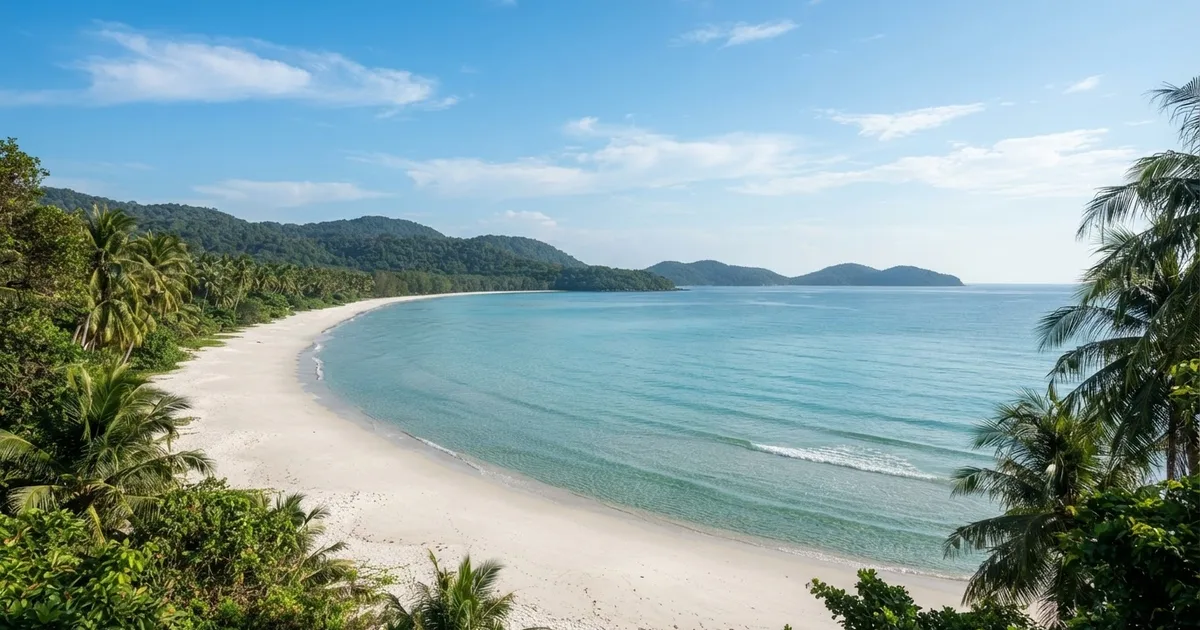
September is the cheapest month to visit Phu Quoc. It sits at the tail of the southwest monsoon — the wettest month of the year — and that single fact collapses demand: 4-star resorts that charge USD 200-400 per night in December and January fall to USD 48-80, with island-wide prices running 40-60% below peak. If you can accept afternoon showers instead of guaranteed blue skies, the July-to-September window delivers the same island for 30-50% less.
Why September Is the Cheapest Month on Phu Quoc
Phu Quoc has only two real seasons: a dry season from roughly November to April, and a rainy season from May to October driven by the southwest monsoon. September sits at the tail of that monsoon and is statistically the wettest month of the year, with rainfall often exceeding 500 mm. It is also the month with the fewest visitors — the European summer holidays are over and the November-March high season has not yet begun. Empty rooms force prices down.
The numbers are dramatic. Four-star resorts that command USD 200-400 per night in December and January routinely fall to USD 48-80 in September, and island-wide prices across July, August and September drop 30-50% below peak. September and October are the lowest-demand months on the island, and some properties offer rates 40-50% below high-season levels simply to fill rooms.
The reason is simple economics: a resort's staff, pool and air conditioning cost the same whether rooms are full or empty, so selling a room at half price beats leaving it dark. Airlines and tour operators follow the same logic with flash sales. The catch, of course, is that the discount exists precisely because the weather is at its worst — which is why the smart move is to book refundable rates and make the final call two to three weeks out.
Month by Month: What a Night in Phu Quoc Actually Costs
The table below shows indicative nightly rates for a mid-range to 4-star double room. Budget guesthouses and hostels run far lower (Ong Lang rooms start around USD 10-18), while five-star resorts stay above these ranges even in the low season.
| Month | Season | Typical double (USD/night) | What to expect |
|---|---|---|---|
| January | Peak | 150-400 | Best weather; Tet (Vietnamese New Year) can spike prices further |
| February | Peak | 180-400 | Tet crowds; book months ahead |
| March | High | 120-250 | Dry, hot and still busy |
| April | Shoulder | 90-180 | Hot and mostly dry; monsoon arrives late April or May |
| May | Shoulder | 70-150 | Early monsoon; the budget window opens with 40-60% discounts |
| June | Low | 60-120 | Regular afternoon showers |
| July | Low | 50-120 | 40-50% below December-January rates |
| August | Low | 50-110 | Same discount depth; seas getting choppier |
| September | Lowest | 48-80 | Cheapest month; 40-60% below peak; also the wettest |
| October | Low | 80-160 | Sweet spot: 25-35% below peak, rain tapering off |
| November | Shoulder | 100-200 | Weather improves fast; prices climb with it |
| December | Peak | 200-400 | High season begins; book early |
Read it this way: July and August run 40-50% below December and January, September pushes that to 40-60% and is the single cheapest month, and October retreats to a still-generous 25-35% discount as conditions improve. If your dates are flexible, target the edges of the cheap window — late May, June or late October — rather than gambling entirely on September.
The October Sweet Spot: 25-35% Off With Better Weather
If September sounds too soggy but you still want a deal, October is the compromise. Prices sit 25-35% below peak — a USD 200 high-season room lands around USD 130-150 — while the monsoon is visibly weakening. Showers shorten, the sea starts to calm, and by late October many days look and feel like dry-season days.
October shares the lowest-demand label with September, so some properties still offer rates 40-50% below peak to fill rooms. The difference is variance: in September you are almost guaranteed some rain; in October you are flipping a coin that increasingly lands dry side up as the month goes on.
For a first visit, the practical play is late October into early November: you catch the last of the low-season pricing while the island transitions toward its best weather. Just avoid the final two weeks of December, when peak rates snap back — often doubling overnight.
Where to Stay Cheap: Ong Lang and the Best-Value Pockets
Ong Lang, a quiet stretch of northwest coast about 10-15 minutes north of Duong Dong, is the island's best-value area. Budget rooms there run USD 10-18 per night, and even beachfront bungalows and small boutique stays undercut the big Long Beach resorts by a wide margin in the low season. You trade walkable nightlife for a calm, palm-lined beach and sunsets over the same water.
Duong Dong town itself is the second budget base: guesthouses from roughly USD 15-25, the night market for USD 2-5 meals, and every tour operator and motorbike rental shop within a five-minute walk. The southern resort zones around Bai Sao and An Thoi, plus the Vinpearl-Grand World complex in the north, discount in the rainy season too — but their base prices are higher, so the absolute savings favor the northwest of the island.
One honest caveat: Ong Lang is a poor fit if your trip revolves around nightlife or you want everything walkable. There are a handful of beach bars, but after dark you will be riding 15 minutes back to Duong Dong — fine on a rented motorbike, less fun in the rain.
Who the Low Season Suits — and Who It Doesn't
The cheap months are not for everyone, and pretending otherwise is how travelers end up disappointed. Here is the honest breakdown.
Long-stay travelers and remote workers — low base rates plus monthly discounts can put a comfortable room at USD 300-500 for an entire month. Also: spa-and-pool resort loungers, food-focused travelers, and photographers chasing moody monsoon skies.
Couples with flexible dates and families who can shift trips to May-June or October. You save 25-60%, but you should build indoor backup plans — VinWonders, the safari park, cooking classes — for rainy afternoons.
Divers and snorkelers (visibility drops and south-island boat trips get cancelled in rough monsoon seas), travelers locked into 2-3 day windows who need guaranteed beach days, and anyone chasing a flawless dry-season tan in late December.
What September Rain Is Actually Like (and How to Plan Around It)
September's reputation for rain is deserved — it is the wettest month, often with more than 500 mm — but wettest rarely means raining from dawn to dusk. The typical low-season day starts bright or hazy, stays workable through the morning, then delivers a heavy shower of one to three hours in the afternoon or evening before easing off. Genuinely washed-out days happen, especially in September, but they are the exception rather than the rule.
The sea matters as much as the sky. The southwest monsoon kicks up waves on west-facing beaches, so Long Beach can be too rough for comfortable swimming and seaweed washes ashore. Calmer water moves to the east and northeast coasts — the Ham Ninh and Bai Thom sides of the island — while northern spots like Rach Vem depend on the day's wind. Ask locally before committing a day to a specific beach.
Structure your days around it: beaches and pools in the morning, indoor Phu Quoc in the afternoon — VinWonders and the safari park, the cable car to Hon Thom (it runs in rain and pauses in storms), pepper farms, fish-sauce workshops, a massage, and the Duong Dong night market after dark.
Six Ways to Pay Even Less in the Low Season
Timing gets you the 30-50% headline discount. These habits stack additional savings on top:
- Book direct or walk in — low-season desk rates at Ong Lang and Duong Dong guesthouses often beat booking-site prices by 10-20%.
- Negotiate for 7+ nights: with rooms sitting empty, weekly and monthly discounts of 10-30% on already-low rates are common.
- Sleep in Ong Lang (USD 10-18 rooms) and eat in Duong Dong: banh mi for USD 1-2, pho for USD 2-3, night-market seafood plates for USD 5-10.
- Rent a motorbike (USD 5-7 per day) instead of relying on taxis — a single cross-island ride can cost more than a full day's rental.
- Time your flights: the one-hour hop from Ho Chi Minh City drops to roughly USD 25-45 one-way in low-season promotions.
- Avoid Tet (late January or February) even though it falls near the dry season — prices spike and rooms sell out nationwide.
Frequently Asked Questions
What is the cheapest month to visit Phu Quoc?
September. It is the wettest month of the southwest monsoon and the lowest-demand period of the year, so rooms fall 40-60% below peak rates. Four-star resorts that charge USD 200-400 per night in December and January drop to around USD 48-80. July and August are nearly as cheap, at 40-50% below December-January levels.
Is Phu Quoc worth visiting in the rainy season?
Yes, if you value money over guaranteed sunshine. From July to September, prices island-wide drop 30-50%, and showers typically come in one-to-three-hour bursts rather than all-day washouts. Plan beach time for mornings and keep indoor options for afternoons. If you need flawless beach weather every single day, wait for the November-April dry season.
How much cheaper are hotels in July and August?
Roughly 40-50% cheaper than December and January. A room that costs USD 140 at peak falls to about USD 70-85, and 4-star resorts in September go as low as USD 48-80. Because July and August are rainy months, they are the cheapest time to visit by a significant margin — just book flexible rates in case a storm disrupts plans.
Which cheap month offers the best weather?
October. Prices run 25-35% below peak while the monsoon tapers off, so you keep most of the discount with noticeably better conditions than September. If you want even deeper discounts and can tolerate more rain, May to July delivers 40-60% hotel discounts at the start of the rainy season.
Where are the cheapest places to stay on Phu Quoc?
Ong Lang on the northwest coast is the best-value area, with budget rooms at USD 10-18 per night and low-season bungalow deals on top. Duong Dong town is the second choice, with guesthouses from about USD 15-25 and the island's cheapest food. The southern beach zones and northern mega-resorts discount too, but from higher base prices.
Does it rain all day in September?
Usually not. September is the wettest month — often over 500 mm of rain — but the typical pattern is a usable morning followed by a one-to-three-hour downpour in the afternoon or evening. All-day washouts do happen, especially in September, so keep one flexible buffer day and schedule boat trips for mornings when seas are calmer.
How cheap are flights and getting around in low season?
Flights from Ho Chi Minh City take about an hour and fall to roughly USD 25-45 one-way in low-season promotions. High-speed ferries from Rach Gia or Ha Tien cost around USD 10-13 but can be cancelled in rough monsoon seas. On the island, motorbike rental runs USD 5-7 per day — far cheaper than taxis at USD 10-20 per cross-island ride.
When is the most expensive time to visit Phu Quoc?
December and January, when 4-star rooms hit USD 200-400 per night, plus the Tet (Vietnamese New Year) period in late January or February, when prices spike further and rooms sell out. If you must travel then, book two to three months ahead; if your dates are flexible, shifting even two weeks can save 25-40%.
Visiting in the cheap months? Sabrina Rental lives on Phu Quoc year-round — we can tell you honestly which weeks are worth it, meet you at the airport, and set you up with a motorbike, a room or a boat trip at low-season rates. Send us a message and we will help you plan around the rain.
Get Local Advice & Low-Season Rates