Yes — US$30 a day is genuinely possible on Phu Quoc for a solo traveler who sleeps in a guesthouse, rents a scooter and eats local food. A strict shoestring day works out to roughly 750,000–900,000 VND per person (about US$30–36), and backpackers sharing a hostel dorm and a scooter report days closer to US$25. Step up to mid-range hotels, tours and restaurant dinners, however, and the honest number jumps to US$40–60 a day.
Is $30 a Day Actually Possible? The Honest Numbers
Independent budget sources converge on the same answer. Slow Vietnam pegs a backpacker day on Phu Quoc at about US$25, covering a hostel dorm, local food, a shared scooter and the island's free beaches. VietnamSpot's backpacker estimate lands at US$30–40 per day for a dorm or cheap guesthouse, street food, a shared scooter and beach time. Between the two sits the stricter shoestring figure many long-term travelers quote: 750,000–900,000 VND per person per day, or roughly US$30–36.
What all of these budgets assume is important: you are traveling solo or splitting costs, your room is a fan-cooled guesthouse or dorm rather than a resort, you eat at local quăn (eateries) rather than western cafes, you get around on a rented motorbike, and your entertainment is beaches, sunsets and street-wandering rather than ticketed attractions. The underlying cost base on the island is low — CityCost estimates a single person's everyday expenses in Phu Quoc at about US$405 per month, or just US$13–14 per day once rent is excluded. Accommodation and tourist extras are what decide whether you land at $25 or $60.
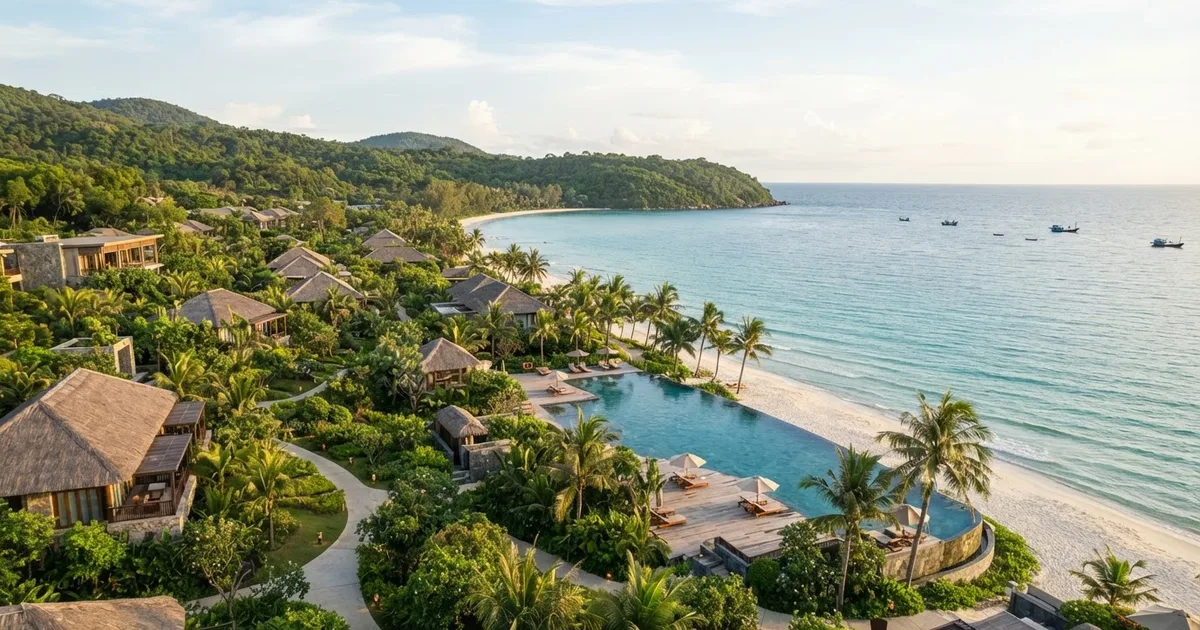
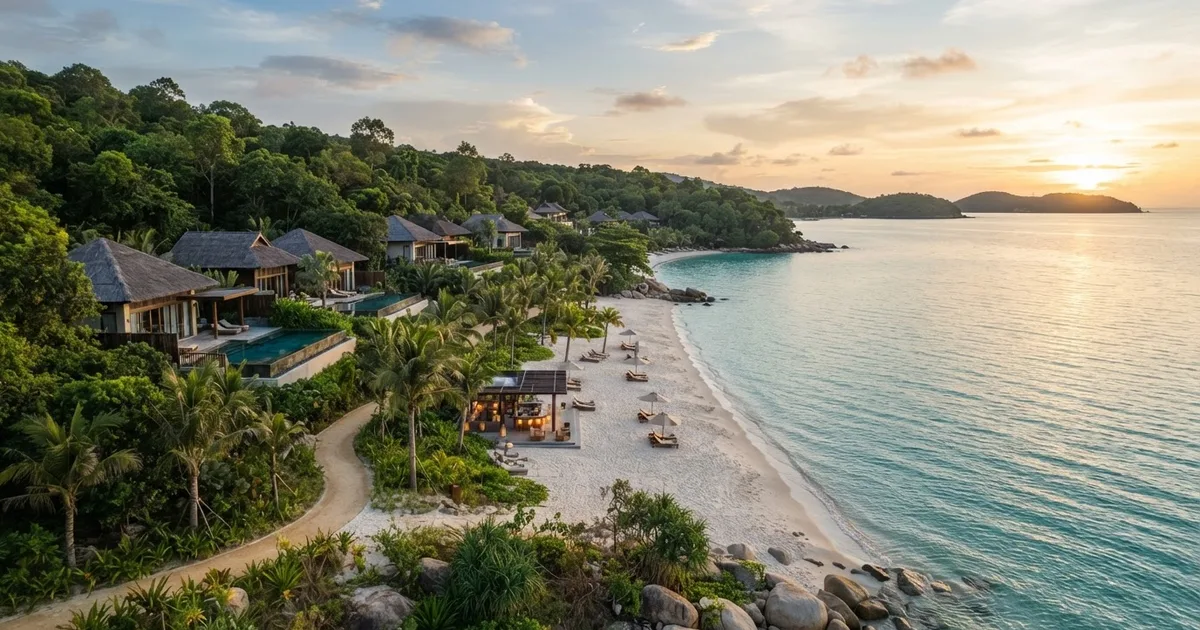
And to be equally honest about who this budget is not for: if you picture a pool resort, sunset cocktails every evening, spa treatments and organized tours, you are firmly in mid-range territory at US$40–60 per day per Slow Vietnam's figures, and comfort-level travel pushes well past US$80.
| Travel style | Daily budget (US$) | What it looks like |
|---|---|---|
| Extreme shoestring | US$25 or less | Hostel dorm, scooter shared with a travel partner, street food only, free beaches |
| Backpacker comfort | US$30–40 | Private guesthouse room, own scooter, mostly local food with occasional treats |
| Mid-range | US$40–60 | 3-star hotel or boutique bungalow, restaurant meals, one or two paid tours |
| Comfort / resort | US$80+ | Resort stay, seafood dinners, spa days, private tours and transfers |
The $30/Day Budget, Line by Line
Here is what a realistic shoestring day on Phu Quoc actually looks like when you break it into its components. Prices below use a conversion of roughly 25,000 VND to the US dollar and reflect typical 2024–2025 island prices.
| Expense | Cost (VND) | Cost (US$) | Notes |
|---|---|---|---|
| Guesthouse room | 250,000–300,000 | US$10–12 | Private fan room or budget AC room near Duong Dong or Long Beach |
| Three local meals | 180,000–250,000 | US$7–10 | Pho at 40,000–75,000 VND, rice plates and noodle bowls in between |
| Scooter rental | 120,000–150,000 | US$5–6 | Automatic or semi-automatic bike, daily rate |
| Fuel | 40,000–60,000 | US$1.60–2.40 | Enough for a full day of island riding, including the 90 km loop |
| Coffee or juice | 50,000–80,000 | US$2–3.20 | Local cafe, not a beach club |
| Sundries and buffer | 30,000–60,000 | US$1.20–2.40 | Water, fruit, snacks, small entry fees |
| Total | 670,000–900,000 | US$27–36 | Comfortably inside the 750,000–900,000 VND shoestring range on most days |
Notice what the table implies: at US$30 a day you are not suffering. You have your own room, your own bike, three solid meals and a iced coffee overlooking the sea. The discipline required is not deprivation — it is simply saying no to the resort-priced extras that dot the island.
Food: How to Eat Well for Under $10 a Day
Food is where Phu Quoc quietly rewards budget travelers. A bowl of street pho costs 40,000–75,000 VND (about US$1.60–3), and VietnamSpot's figures for a bowl of phở or cơm land in the same range at 40,000–70,000 VND (US$1.50–2.70). A Vietnamese baguette (banh mi) stuffed with pate and herbs from a street cart runs 20,000–30,000 VND, and local canteens serve rice plates with grilled pork or chicken for similar money.
A realistic day of eating looks like this: banh mi and a cà phê sữa đá for breakfast (about 60,000 VND), a cơm gà or bún quay lunch — bún quay is the island's own peppery pork noodle dish — for around 50,000 VND, and a steaming bowl of pho or a seafood noodle soup for dinner at 60,000–75,000 VND. Add a fresh fruit shake for 30,000 VND and you have eaten generously for about 200,000 VND, or US$8.
Beer barely registers on the budget if you drink it the local way: fresh bia hoi or bottled Saigon beer at a street-side corner table costs 10,000–20,000 VND a bottle, while the same beer at a beach bar becomes 40,000–60,000 VND. The night market in Duong Dong is a budget gray zone — grilled skewers and seafood pancakes at 20,000–50,000 VND each are fair value if you share dishes, but whole lobsters and platters aimed at tour groups start around 500,000 VND and will vaporize a shoestring day instantly.
The single most effective food rule on the island: eat where the motorbikes are parked. A restaurant full of helmeted locals is almost always half the price of one full of English menus and air conditioning, with better food.
Where to Sleep: The Biggest Lever in Your Budget
Accommodation is the line item that decides whether US$30 a day is easy or impossible. Nomad List puts Phu Quoc's median hotel price at US$28 per night, which alone would consume almost an entire shoestring budget — so budget travelers simply skip the hotels that statistic describes.
The real budget tiers sit well below the median. Hostel dorm beds in Duong Dong and near Long Beach rent for roughly US$6–10 a night, and simple guesthouses with private rooms run US$12–20 for a fan room or a basic air-conditioned double. That means a solo backpacker sharing a dorm spends almost nothing on lodging, while a traveler who wants a private room and door that locks can still hold the line at around US$12–14 per night.
For stays of a month or more the math changes dramatically in your favor. According to Phu Quoc Apartment listings, a studio in Duong Dong costs US$300–380 per month, studios in the quieter Ong Lang area run US$330–450, and a long-term studio lease anywhere on the island generally falls between US$300–500 per month. At US$350 per month you are paying the equivalent of about US$11.70 per night — leaving nearly US$18 per day for everything else inside a $30 budget.
| Accommodation type | Typical price | Per-night equivalent |
|---|---|---|
| Hostel dorm bed | US$6–10 / night | US$6–10 |
| Budget guesthouse private room | US$12–20 / night | US$12–20 |
| Median hotel (Nomad List) | US$28 / night | US$28 |
| Monthly studio, Duong Dong | US$300–380 / month | about US$10–13 |
| Monthly studio, Ong Lang | US$330–450 / month | about US$11–15 |
| Long-term studio lease, island-wide | US$300–500 / month | about US$10–17 |
Stack those numbers together and long stays look remarkable: CityCost's estimate of US$741 per month for a single person including rent works out to roughly US$25 per day, all-in — food, rent, transport and everyday spending combined. Remote workers and slow travelers routinely live cheaper on Phu Quoc than short-term backpackers pass through it.
Getting Around for Pennies: Scooters, Grabs and Airport Transfers
Phu Quoc has minimal public transport, so your transport budget is really a choice between a rented motorbike and ride-hailing apps — and the motorbike wins decisively on price. A scooter rents for about 120,000–150,000 VND (US$5–6) per day, with weekly and monthly deals dropping the effective rate further. Fuel is roughly 20,000–25,000 VND per liter; a full tank costs around US$3 and is enough to complete the island's roughly 90 km loop with room to spare for detours to Starfish Beach or the pepper farms.
Arriving by air does not have to hurt, either. A Grab from Phu Quoc International Airport to Duong Dong costs 120,000–200,000 VND (about US$5–8) — a figure Slow Vietnam also lists as the standard airport transfer range — and the ride takes only 10–15 minutes because the airport sits just around 10 km from town. Metered taxis and hotel-arranged transfers typically cost noticeably more, with resort pickups sometimes quoted at US$15 and up.
For a shoestring traveler, the airport Grab is a one-off expense, but the scooter is a daily one — so the weekly rental discount is worth asking for every single time. Most rental shops will trim 10–20% off the daily rate for seven days or more, and monthly rates frequently land under US$50.
Free and Nearly Free: What to Actually Do All Day
The reassuring truth about Phu Quoc is that its headline attractions — the beaches and the sunsets — cost nothing. A $30/day itinerary is not an itinerary of sacrifice; it is mostly an itinerary of sand, water and street life. Free or nearly free ways to fill your days include:
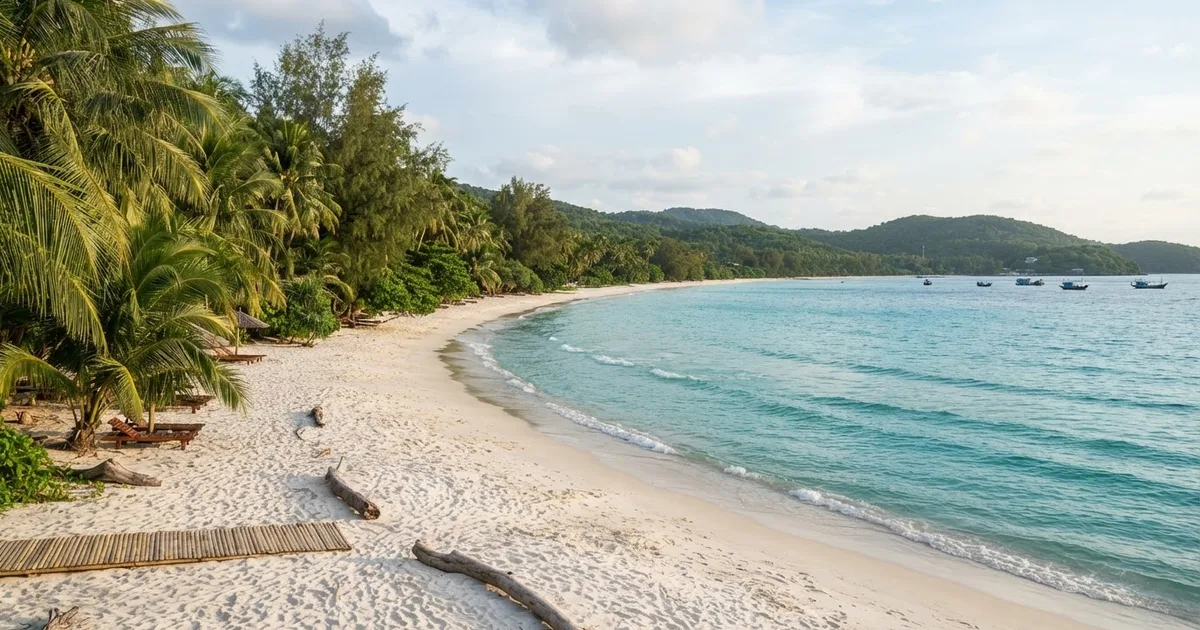
- Long Beach (Bai Truong) – 20 km of free public sand running along the island's west coast, with the island's best sunsets at zero cost.
- Ong Lang Beach – Quieter, shaded by palms, free to access, and just a short ride north of Duong Dong.
- Starfish Beach (Rach Vem) – Shallow turquoise water literally dotted with starfish; free entry, with cheap seafood shacks on stilts for lunch.
- Sao Beach day trip – The island's famous white-sand beach is about 25 km south; entry is free or token, though you may pay a small fee for a rented sun lounger.
- Dinh Cau Rock and the night market – Browsing the Duong Dong night market and watching the fishing boats at the temple rock costs nothing (just resist the lobster stalls).
- Pepper farms and fish-sauce workshops – Small family operations around the island welcome visitors for free or the price of a small tasting purchase.
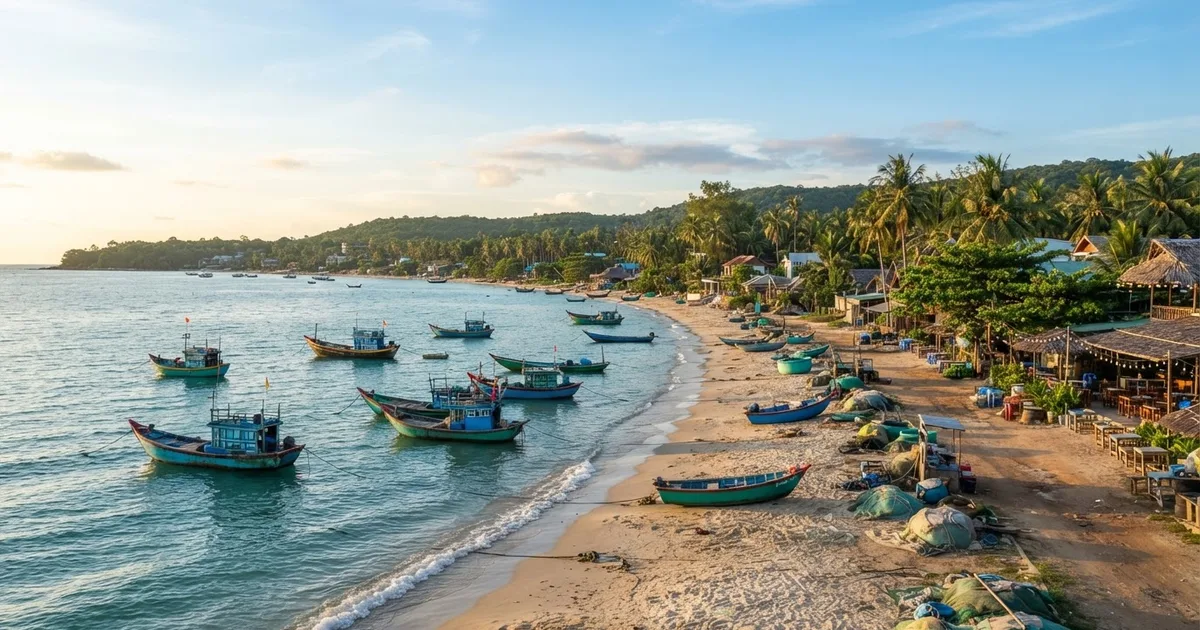
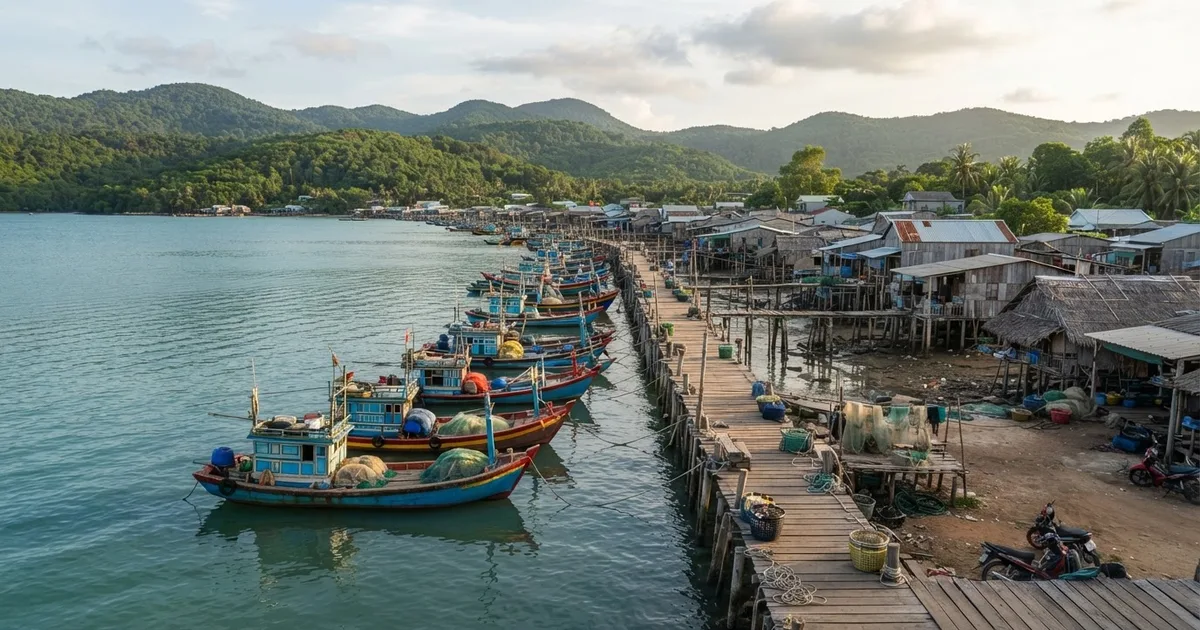
- Ham Ninh fishing village – A stilted old pier, wooden houses and cheap fresh crab on the island's east coast.
- Ho Quoc and Sung Hung pagodas – Beautiful, active temples, free to enter.
Keep the ticketed giants out of your daily budget and treat them as separate splurges instead: VinWonders theme park, Vinpearl Safari and the Hon Thom cable car each cost roughly US$20–30, which is a full day's shoestring allowance in a single ticket. Paying for one means cooking your own day of rice plates afterward — which, on this island, is a perfectly enjoyable way to travel anyway.
When $30 a Day Stops Working
Every budget guide reads better if it admits its limits, so here is the honest counter-case. US$30 a day becomes unrealistic the moment several common travel styles enter the picture:
- Resort and honeymoon travelers – Beachfront resorts with pools start around US$60–100 per night and up, torpedoing the budget before breakfast.
- Families with young children – Once you need space, air conditioning, safe transport for kids and flexible meals, comfort costs and US$40–60 per person per day is the more realistic floor.
- Cocktail-first travelers – Beach bar cocktails run US$6–8 each; three per evening plus bar food erases your entire daily food budget.
- Tour collectors – A shared island-hopping snorkel boat costs roughly US$20–28 and the premium southern-island tours run higher; two tours in three days means your average day is no longer $30.
- Mid-range couples – At Slow Vietnam's US$40–60 mid-range figure per person, a couple should plan US$80–120 per day jointly for comfort-level hotels and restaurant dining.
$30/day works well for
Solo backpackers, couples splitting a US$15 guesthouse room, long-stay remote workers on monthly studio leases, scooter-happy beach bums, and anyone visiting in the cheaper May–October season who is happy to trade an afternoon shower for lower prices.
Less suited to
Honeymooners wanting resort luxury, families needing space and convenience, travelers who want nightly cocktails and spa days, and visitors who would rather hand everything to organized tours than ride a scooter themselves. For these styles, plan on US$40–60 per person per day at minimum — and relax about it, because even mid-range Phu Quoc is excellent value by international resort-island standards.
A Realistic $30 Day on Phu Quoc, Hour by Hour
To prove the numbers in practice, here is an actual day, priced out as you would live it:
7:00 – Banh mi from a street cart and iced coffee at a local cafe: 60,000 VND. 8:30 – Ride south 25 km on your rented scooter toward Sao Beach, watching pepper farms and fishing villages slide past. 10:00 – Swim at Sao Beach; skip the lounger, use your own towel on the free sand. 12:30 – Lunch of cơm tấm or a seafood noodle bowl at a local eatery in An Thoi: 50,000 VND. 14:00 – Detour to the east coast and Ham Ninh pier before riding back north. 17:30 – Park the bike at Dinh Cau, wander the night market stalls and watch the sunset over the fishing boats: free. 19:00 – Dinner of bún quay or pho: 60,000 VND, plus one cold Saigon beer at a corner table for 15,000 VND.
The day's spending: about 185,000 VND in food and drink, 60,000 VND in fuel, plus your standing costs of a 300,000 VND room and a 130,000 VND scooter. Total: roughly 675,000 VND — about US$27, with room left under the 900,000 VND shoestring ceiling for a fruit shake, sunscreen or a small temple donation. No one who spent this day would describe it as deprivation.
How to Shave Costs Even Lower
Once the basics are handled, a handful of habits reliably push a Phu Quoc day toward the US$25 bottom of the range:
- Rent by the week or month – Negotiate the scooter rate down 10–20% for multi-day rentals instead of paying the walk-in daily price.
- Eat breakfast like a local – A 20,000 VND banh mi replaces a US$5–8 western hotel or cafe breakfast and is arguably better.
- Share dishes at the night market – Two people ordering three skewer plates eat better and cheaper than two people ordering separately.
- Travel in the green season – Rooms from May to October drop by a third or more; plan beach time for mornings and pool-free afternoons.
- Book tours as shared group trips – A group snorkeling boat at roughly US$20–28 per person costs a fraction of a private charter.
- Withdraw cash sparingly – Vietnamese ATM fees are typically around 50,000–70,000 VND per withdrawal, so take out larger amounts less often.
- Buy water at corner shops – A 10,000–15,000 VND bottle from a market beats double the price at a beachfront fridge.
Frequently Asked Questions
Is US$30 a day really enough for Phu Quoc?
Yes, for a solo traveler using the shoestring formula: a guesthouse room, a rented scooter and local food. That works out to roughly 750,000–900,000 VND (US$30–36) per day, and backpackers sharing a hostel dorm and a scooter get closer to US$25. What it does not cover is resorts, cocktails every night or ticketed theme parks.
How much does food cost per day on Phu Quoc?
A bowl of street pho or cơm costs 40,000–75,000 VND (about US$1.60–3), and banh mi runs 20,000–30,000 VND. Three solid local meals plus a coffee land at around 180,000–250,000 VND, or US$7–10 per day. Western cafes and night-market seafood platters are where the food budget doubles or triples.
What does a scooter cost in Phu Quoc?
Expect 120,000–150,000 VND (US$5–6) per day for an automatic scooter, less on weekly or monthly deals — monthly rates often fall under US$50. Fuel adds roughly 40,000–60,000 VND (US$1.60–2.40) per day; a full tank costs about US$3 and covers the island's ~90 km loop.
How much is the transfer from Phu Quoc airport to Duong Dong?
A Grab from the airport to Duong Dong costs 120,000–200,000 VND, about US$5–8, and takes 10–15 minutes since the airport sits roughly 10 km from town. Metered taxis and hotel-arranged transfers cost noticeably more, with some resort pickups quoted from US$15.
Can I live on Phu Quoc for a month on a small budget?
Yes — monthly studio apartments cost US$300–380 in Duong Dong and US$330–450 in Ong Lang, with general long-term leases between US$300–500 per month. Add everyday spending of about US$405 per month (CityCost's estimate) and a full month lands near US$741, or roughly US$25 per day all-in.
What is the biggest budget trap on Phu Quoc?
Single-ticket attractions and tourist-priced meals. VinWonders, Vinpearl Safari and the Hon Thom cable car each cost roughly US$20–30 — a full shoestring day in one swipe — and whole-lobster night-market platters start around 500,000 VND. Budget them as separate splurges, not daily expenses.
Is $30 a day still possible in high season?
It is harder. From December to March, guesthouse and hotel rates commonly rise 30–50%, which can add US$5–8 to your daily room cost. Book accommodation well in advance, lock in weekly scooter rates early, and keep food and transport local — those prices barely move between seasons.
Do I need cash on Phu Quoc?
For a budget trip, mostly yes. Street food carts, fuel stations, scooter rental shops and small guesthouses are cash-first, and ATM withdrawal fees run about 50,000–70,000 VND per transaction. Cards work at hotels, larger restaurants and tour operators, but a shoestring traveler should carry VND daily.
Planning your own Phu Quoc budget trip? Sabrina Rental is based right on the island — we rent well-maintained scooters from around US$5 per day, share honest local price lists, and can point you to the guesthouses, beaches and street-food stalls that keep a day under US$30. Message us before you arrive and we will have everything ready.
Contact Sabrina Rental