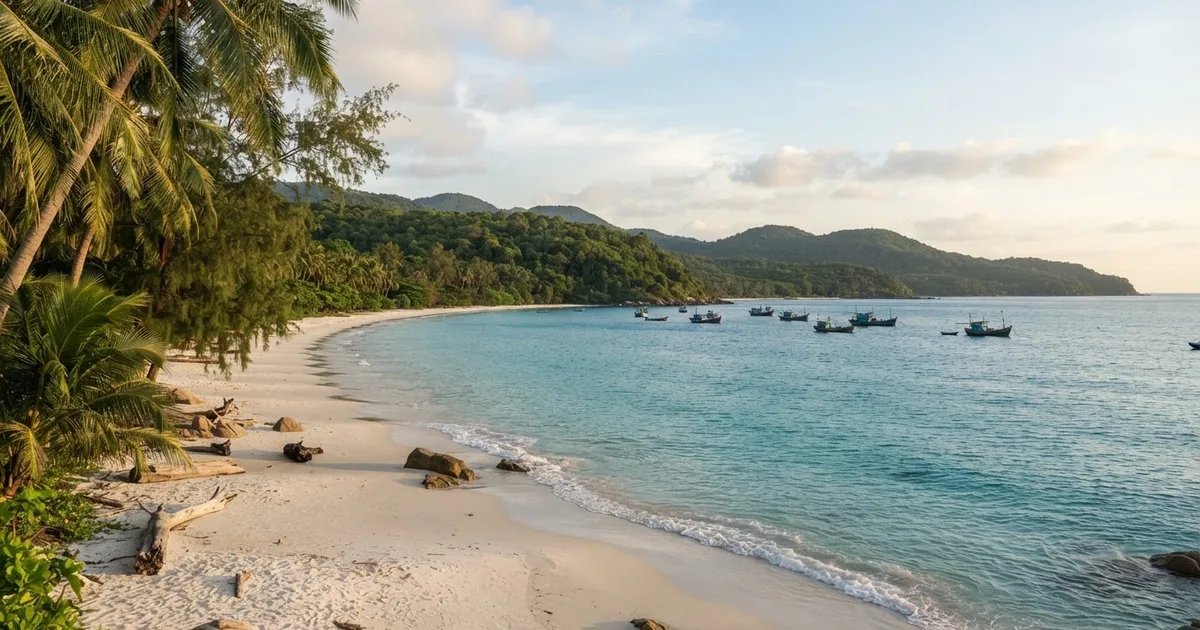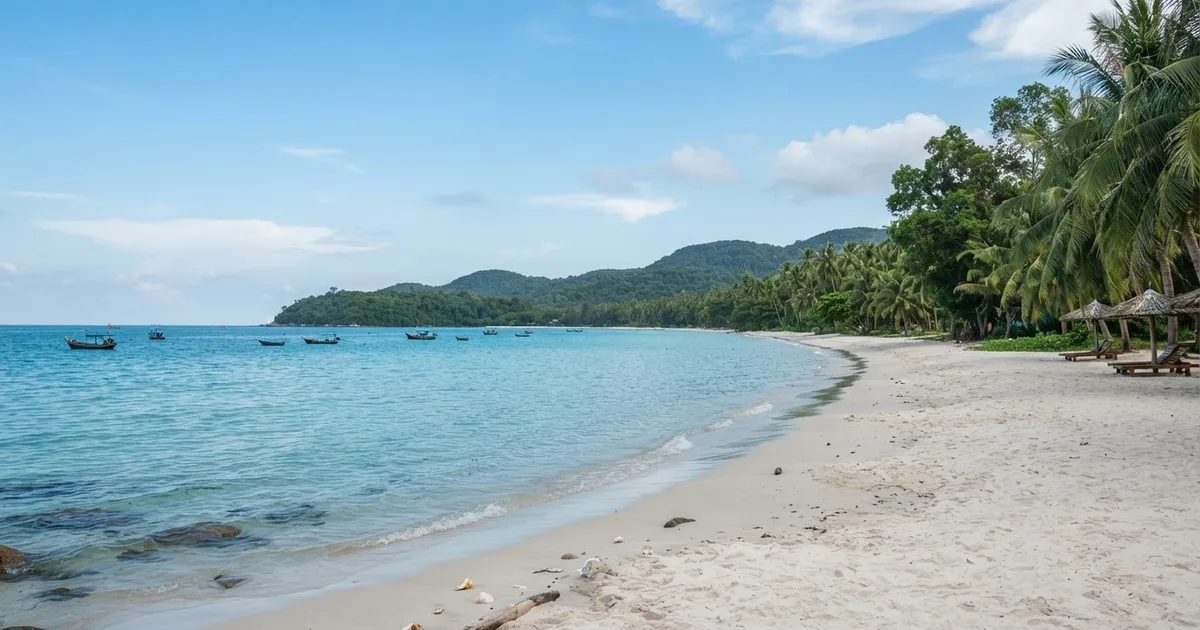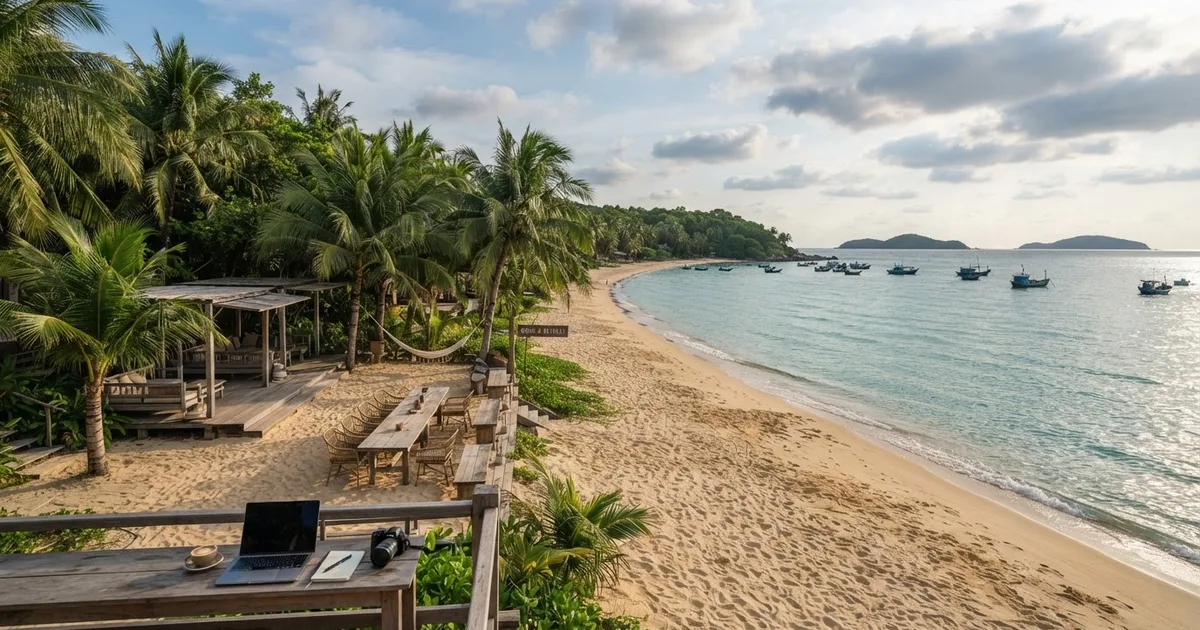
A realistic 7-day Phu Quoc itinerary for a digital nomad should not be seven consecutive sightseeing days: reserve one arrival day, one work and Wi-Fi test day, one banking and administration day, and one health or personal administration day. The remaining time is enough for southern beaches and Hon Thom, a northern nature day, and a flexible beach or coworking day. Excluding flights, plan on approximately $245–340 for a backpacker-style week, with a motorbike costing about $5 per day.
How to use this seven-day plan as a digital nomad
This itinerary is designed for someone who needs to work during a one-week stay rather than rush between every famous attraction. It begins in Duong Dong, with check-in at Sabrina Homestay at 16 Nguyen Du as one practical starting point. Duong Dong keeps you close to restaurants, local markets, banks, pharmacies and the main roads leading north and south.
The schedule puts demanding work and administration early in the week. That gives you time to discover whether your accommodation Wi-Fi, mobile data, virtual private network and video-call setup are dependable before you plan a full working day. It also prevents an avoidable problem, such as discovering on day five that your bank card does not work or that your preferred work space has no backup connection.
Do not treat the order as fixed. Boat trips depend on sea conditions, the Hon Thom cable car and water park deserve a full block of time, and northern beaches take longer to reach from Duong Dong than the map may suggest. If you need more than four hours of focused work each day, reduce the number of attractions rather than trying to see the whole island at speed.
Planning rule: Use mornings for work or administration, reserve the middle of the day for transport and sightseeing, and keep at least one afternoon open. A slower four- or five-night stay is often more realistic than forcing VinWonders, Hon Thom, Rach Vem and Suoi Tranh into one rushed week.
Days 1 and 2: arrive, connect and test your working routine
Day 1 - Airport arrival and a gentle Duong Dong evening
After landing at Phu Quoc International Airport, buy a Viettel SIM at the kiosk in the arrivals hall if your phone is unlocked. Ask for enough data for hotspot use, because mobile data is valuable backup when accommodation Wi-Fi becomes slow or unreliable. A taxi to Duong Dong costs approximately 80,000–120,000 VND. Confirm the destination and price before leaving the airport, then check in at 16 Nguyen Du if you are staying at Sabrina Homestay.
Keep the first afternoon deliberately light. Walk around Duong Dong, buy water and basic snacks, and identify a nearby café where you could work for two or three hours. Test your room’s Wi-Fi with a video call, a large file download and the websites or services you use professionally. If you use a virtual private network, test it before sunset rather than assuming it will behave the same way as at home.
For dinner, choose a simple local restaurant or the night-market area rather than travelling across the island. This is also a good time to check your route to a bank, pharmacy and food shop. Sleep early if your arrival involved a long journey; the value of day one is preparation, not collecting the maximum number of photographs.
Day 2 - Work-test day, Ong Lang and a sunset reset
Work a normal half-day from your accommodation or a tested café. Make one video call, upload your normal files and check your phone hotspot. Record the actual download and upload performance at the time you expect to work, since a connection that is acceptable early in the morning may feel different later. Keep the Viettel SIM active even if the Wi-Fi looks strong.
After work, ride or take a taxi to Ong Lang Beach for a quieter coastal break. Ong Lang is a better fit for a relaxed afternoon than for packing in multiple attractions. Add a massage or spa treatment if your body needs recovery after travel. In the evening, continue toward Sunset Sanato for cocktails around sunset, checking opening arrangements and transport before you set out.
This day is intentionally less ambitious than a standard tourist itinerary. It gives you a practical answer to the most important question: can you work comfortably from this base without spending the rest of the week troubleshooting your connection?
Day 3: banking, administration and the southern island
Use the morning for practical tasks instead of making this your longest excursion. Check cash, card access, travel insurance details, accommodation payment and any work deadlines. Vietcombank and BIDV are commonly listed as banks that accept international cards with relatively low fees, although card acceptance, withdrawal limits and charges can change. Carry a small amount of cash because smaller restaurants, roadside stalls and local transport may not accept cards.
Once your administration is complete, ride south to Bai Sao. This is one of Phu Quoc’s most recognisable beaches and works well as a half-day stop, especially if you arrive before the busiest part of the day. Wear sun protection, keep valuables supervised and allow time for the return journey rather than scheduling a late video call immediately after leaving the beach.
On the way back, choose one or two short cultural stops: a fish sauce factory and a pepper farm are practical additions to a southern-island route. The pepper farm shows a distinctly local agricultural side of the island, while fish sauce production explains one of Phu Quoc’s best-known food traditions. Check whether a site is open to visitors before relying on it as a fixed appointment.
If you would rather dedicate the entire day to work, swap this outing with day six. A digital nomad itinerary should protect income and commitments first; Bai Sao is enjoyable, but it is not worth missing a client deadline.
Day 4: island hopping, snorkeling and a boat-day work boundary
Make day four your marine excursion day if the forecast and sea conditions are favourable. Island-hopping tours generally leave from the south and combine boat travel with snorkeling stops. Confirm the meeting point, departure time, return time and what is included before booking. Bring reef-safe sun protection, dry clothes, water and a waterproof pouch for your phone.
Do not plan important work during the boat trip. Mobile coverage can be inconsistent offshore, and the timetable may shift because of weather or sea conditions. Finish urgent work the previous evening or schedule a short, low-risk task for after your return. If you have a fixed afternoon meeting, choose a shorter excursion or move the snorkeling day to your flexible day.
Snorkeling conditions are usually most comfortable when the sea is calm, but visibility is not guaranteed every day. Treat the experience as a weather-dependent activity rather than a promise. A local operator can advise which stops are suitable on the day and whether the route should be adjusted.
Good fit
Nomads with flexible hours, a spare data connection and enough energy for an early start will get the most from a full island-hopping day.
Poor fit
This is a poor fit if you have essential video calls, motion sickness, a very tight deadline or a strong preference for independent travel on land.
Day 5: Hon Thom cable car and Aquatopia Water Park
Start with breakfast or French-style pastries before travelling to the cable car station. A common South Island plan begins the Hon Thom sea-crossing cable car ride at about 9:30 AM. The route is described as the world’s longest oversea cable car, and the crossing itself is an attraction as well as transport to Hon Thom.
Allow most of the day for Hon Thom and Aquatopia Water Park rather than adding several unrelated stops. The water park suits travellers who want an active break, while the cable car provides broad views across the sea and islands. Bring swimwear, a change of clothes and a secure way to store your phone. Confirm ticket details, operating hours and return times before travelling, since schedules can change.
Families and active travellers may find this the highlight of the week. A solo nomad who has already spent several days in the sun may prefer to return to Duong Dong earlier and work in the evening. That is a valid choice: the cable car is worth visiting, but a full water-park day can be tiring and is not the best plan before an early client meeting.
For a shorter South Island alternative, combine the cable car with Bai Sao, Kiss Bridge or VUIFest Night Market only if the timetable allows. Trying to include every one of these attractions in one day can turn a relaxed excursion into a sequence of transfers.
Day 6: northern nature, a waterfall and flexible recovery time
Use day six as the itinerary’s flexible explore day. If the weather cancelled snorkeling, repeat the marine excursion here. Otherwise, head north for a nature-focused route that can include Starfish Beach, Phu Quoc National Park and a waterfall such as Suoi Tranh, depending on the season and road conditions.
Starfish Beach is known for its shallow water and marine life, but visitors should not lift or handle starfish. Conditions, access and the appearance of the beach can vary, so leave enough time for the drive and check local advice before entering the water. Phu Quoc National Park offers a greener contrast to the resort coast; paths, wet surfaces and heat make suitable footwear and drinking water important.
A waterfall visit is most rewarding after recent rain, while dry periods may produce a much smaller flow. Do not build the entire day around a waterfall without checking current conditions. If the roads or weather are poor, replace the route with a long lunch, beach time and a final work block in Duong Dong.
This is the day to protect your energy. A motorbike makes the north easier to explore, but long rides in tropical heat are tiring. A local rental is listed at about $5 per day, while monthly rates are often around $70–90. Wear a helmet, carry your licence and insurance information, and avoid riding after drinking.
Day 7: prison history, old Duong Dong and a calm departure evening
For a slower final day, visit Phu Quoc Prison in the morning. The historical site provides a serious counterpoint to the island’s beaches and resorts, so allow time to read the displays rather than treating it as a quick photograph stop. Check opening arrangements before travelling, particularly around public holidays.
Return to Duong Dong Old Quarter for a final walk and lunch. Bun quay is a local noodle dish associated with Phu Quoc and makes a practical midday meal before your departure preparations. Eat early enough to leave time for packing, returning a motorbike, settling accommodation charges and checking airport transport.
End the week with sunset cocktails if your flight schedule allows. Keep this final evening close to your base rather than travelling to the opposite side of the island. If your flight is early the next morning, prepare luggage and confirm a taxi the night before. A calm final day is more useful than adding one last distant attraction.
Travellers with a late departure can substitute this plan with a final swim at Ong Lang or a short Duong Dong café work session. Travellers with an early flight should shorten the day to the prison, lunch and airport preparation.
Budget, transport and practical setup
| Item | Useful planning figure | Digital-nomad note |
|---|---|---|
| Seven-day backpacker budget | $245–340, excluding flights | Allow more for boat trips, cable-car tickets, private taxis and frequent café work. |
| Airport to Duong Dong taxi | 80,000–120,000 VND | Confirm the destination and fare before departure. |
| Motorbike rental | About $5 per day | Useful for flexible beach and nature days; inspect the bike before leaving. |
| Longer motorbike rental | About $70–90 per month | More economical for a longer stay, but check insurance, documents and maintenance. |
| Mobile backup | Viettel SIM at airport arrivals | Use hotspot data for urgent calls if Wi-Fi fails. |
| Medical facility | Vinmec International Hospital | Save the location and your insurance details before exploring remote areas. |
The $245–340 estimate is a backpacker baseline, not a guaranteed total. It can cover basic accommodation, food and ordinary transport, but paid attractions, island-hopping, spa treatments and frequent taxis can raise the final cost quickly. Keep a separate allowance for the Hon Thom cable car, Aquatopia, snorkeling and emergency transport.
For most nomads, renting a motorbike for selected days is more efficient than hiring a car for the whole week. Use taxis on arrival, after drinking and when weather makes riding unsafe. Before accepting a motorbike, photograph existing damage, confirm the fuel policy and ask what happens if the bike develops a mechanical problem.
Who this itinerary suits, and who should change it
This plan suits a remote worker with flexible hours who wants a working base, reliable administrative access and several high-quality excursions. It also suits first-time visitors who prefer to see both the southern attractions and the northern natural landscape without changing hotels every night.
It is a poor fit for someone who wants a completely work-free holiday, because days two and three deliberately reserve time for testing and administration. It is also a poor fit for a traveller determined to visit every major attraction, including VinWonders, Hon Thom, Rach Vem and Suoi Tranh, in only seven days. Choose fewer destinations or stay longer.
Before leaving your accommodation
- Confirm the next day’s weather and boat or cable-car schedule.
- Charge your phone, power bank and laptop.
- Download maps and save your accommodation address offline.
- Carry cash, water, sun protection and a waterproof phone pouch.
- Tell a colleague when you will be offline during a boat trip.
- Keep your Viettel SIM active as a Wi-Fi backup.
Frequently Asked Questions
Is seven days enough for a digital nomad trip to Phu Quoc?
Seven days is enough for a balanced first visit if you protect work time and accept that you cannot see everything. Include arrival, Wi-Fi testing, banking, health administration, two major excursions and one flexible day. Four or five nights is more realistic for a slower trip focused on either the north or south.
Where should a digital nomad stay in Phu Quoc?
Duong Dong is the most practical base for a short working stay because it offers food, banks, pharmacies, transport and access to both island directions. Sabrina Homestay’s seven-day plan begins with check-in at 16 Nguyen Du. Ong Lang is quieter, but may require more transport for daily errands.
How much does a seven-day Phu Quoc trip cost?
A backpacker-style budget is approximately $245–340 for seven days, excluding flights. This should be treated as a baseline: island-hopping, Hon Thom tickets, Aquatopia, private taxis, spa visits and frequent café work can increase the total. Keep an extra emergency and transport allowance.
Can I work reliably from Phu Quoc?
Many travellers work successfully from the island, but test your accommodation Wi-Fi on day two before scheduling important calls. Buy a Viettel SIM at the airport arrivals hall and test hotspot data, VPN access, uploads and video calls. Keep one flexible work location and avoid relying on offshore mobile coverage during boat trips.
How much is a taxi from Phu Quoc airport to Duong Dong?
A taxi from Phu Quoc International Airport to Duong Dong costs about 80,000–120,000 VND. Confirm the destination and expected fare before leaving the airport. A taxi is especially useful on arrival when you have luggage, a laptop and no local transport arranged.
Should a digital nomad rent a motorbike in Phu Quoc?
A motorbike is useful for independent beach and nature days and costs about $5 per day, with longer rentals often around $70–90 per month. It is a poor choice if you lack riding experience, documents or insurance. Inspect the bike, photograph damage, wear a helmet and never ride after drinking.
Which bank is useful for international cards in Phu Quoc?
Vietcombank and BIDV are commonly listed as accepting international cards with relatively low fees. Fees, limits and machine availability can change, so test your card during the administration day rather than waiting until you are out of cash. Carry a modest cash reserve for smaller businesses.
What should I do if I need medical care in Phu Quoc?
Vinmec International Hospital is generally regarded as the island’s best medical facility. Save its location, carry travel-insurance details and keep emergency funds available before exploring remote areas. For serious symptoms, seek professional care promptly instead of relying on self-treatment or delaying travel back to town.
Can I combine Hon Thom and Bai Sao in one day?
It is possible, but a full Hon Thom cable-car and Aquatopia visit can already fill most of a day. A common South Island plan begins the cable-car ride around 9:30 AM. Add Bai Sao, Kiss Bridge or VUIFest Night Market only if ticket times, transport and energy allow.
Need help choosing a motorbike, room, boat trip or practical island route for your working week? Contact Sabrina Rental for local advice and booking assistance on Phu Quoc.
Contact Sabrina Rental