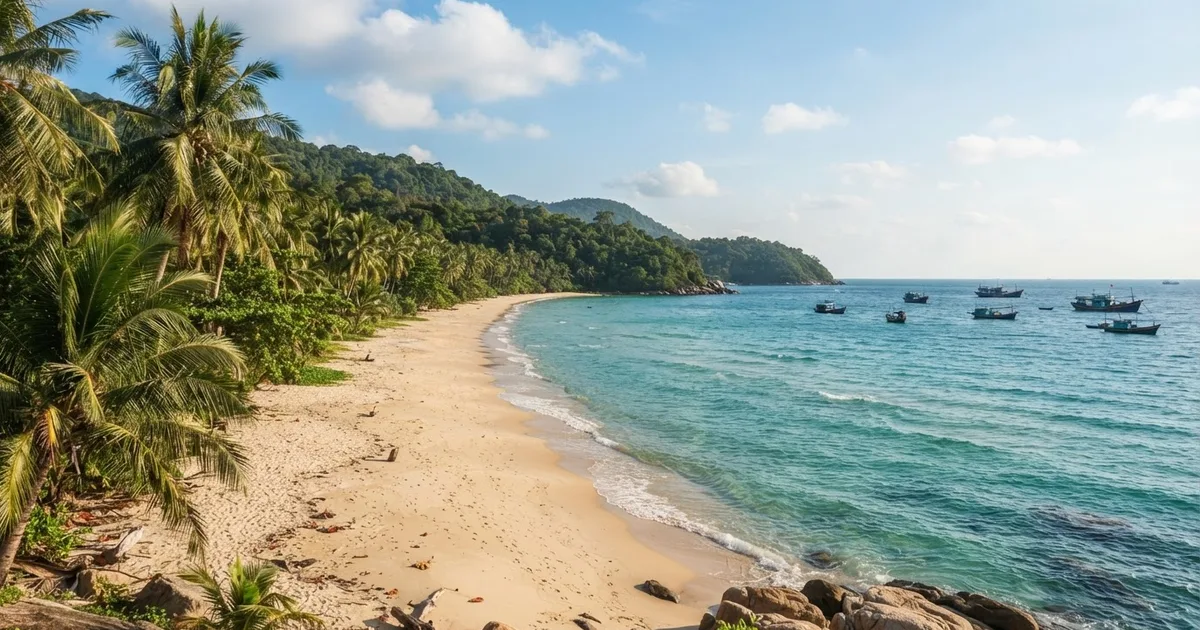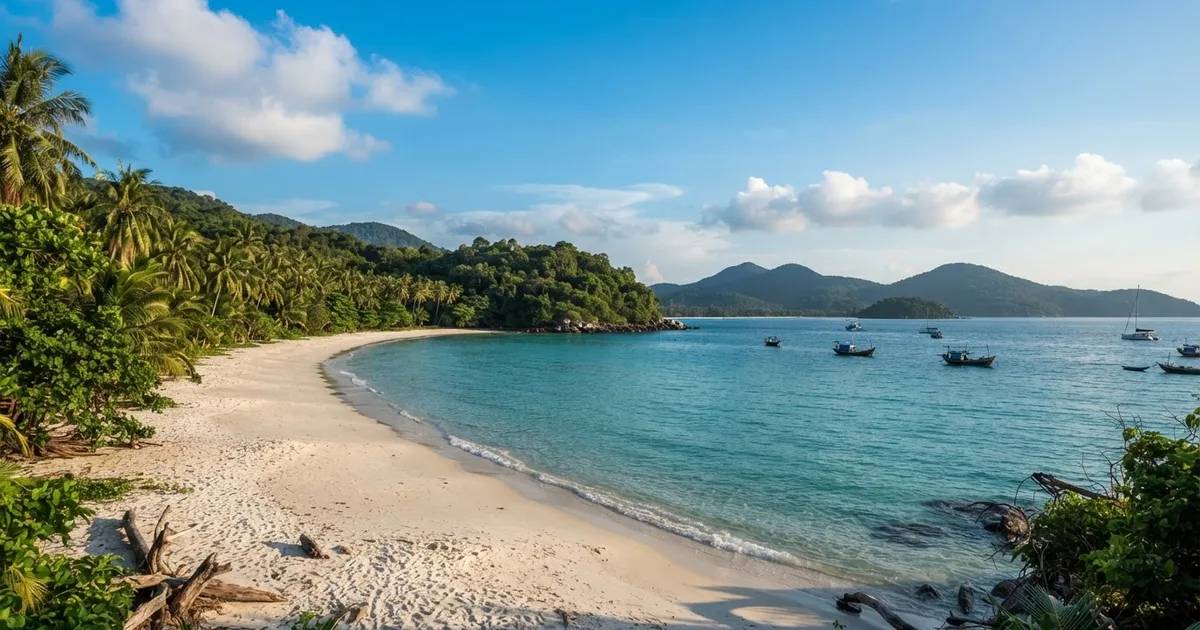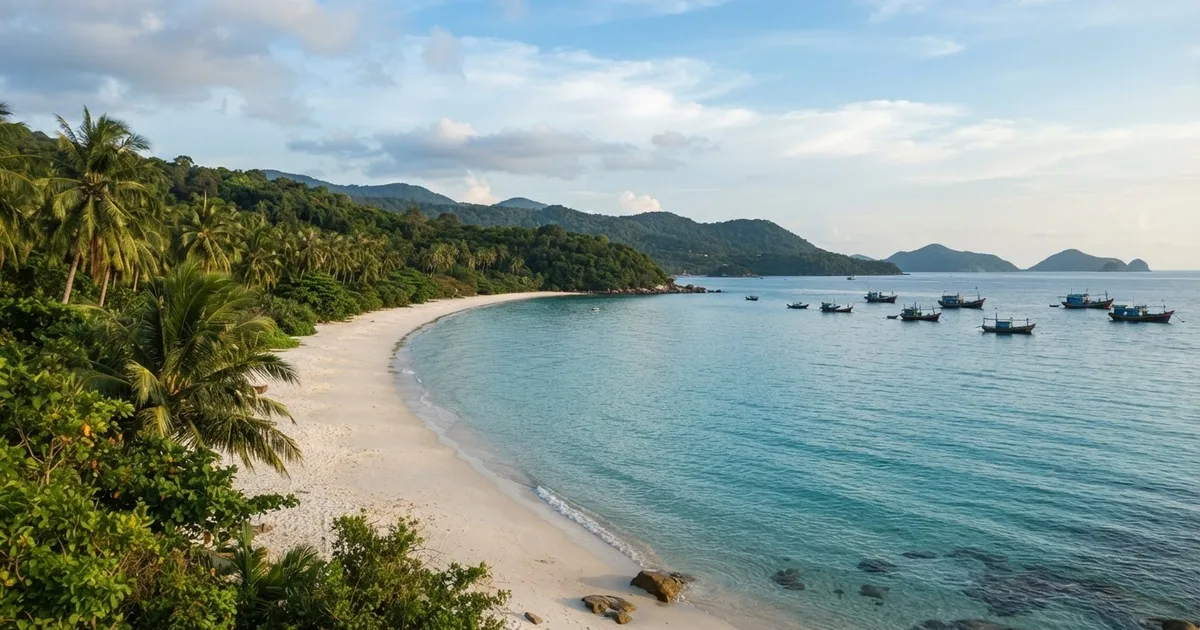
Phu Quoc has its own visa exemption: any foreign passport holder who arrives directly on the island by air or sea can stay up to 30 days without a visa, and that includes US citizens, who need a visa for every other part of Vietnam. UK passport holders get more room still, with 45 days visa-free anywhere in Vietnam under the 2025-2028 exemption policy. If you want longer than that, or you plan to add Hanoi, Ho Chi Minh City or Hoi An to the same trip, you need a Vietnam e-visa: US$25 for single entry or US$50 for multiple entry, valid for up to 90 days.
Phu Quoc Visa Rules at a Glance: 30, 45 or 90 Days?
Vietnam runs two separate systems that matter for a Phu Quoc trip. The first is the national visa exemption list, which grants 45 days visa-free to citizens of 13 countries, including the United Kingdom, Germany, France, Italy, Spain, Japan, South Korea and Russia. The second is Phu Quoc's own island exemption, which is far broader: every foreign nationality, the United States included, gets 30 days visa-free if they arrive directly on the island from abroad.
Which one applies to you depends on two things only: your passport and your route.
| Passport | Phu Quoc (direct arrival) | Rest of Vietnam | Best option to stay longer |
|---|---|---|---|
| United States | 30 days, visa-free | Visa required | 90-day e-visa (US$25 single / US$50 multiple) |
| United Kingdom | 45 days, visa-free | 45 days, visa-free | 90-day e-visa (US$25 / US$50) |
| Germany, France, Italy, Spain | 45 days, visa-free | 45 days, visa-free | 90-day e-visa (US$25 / US$50) |
| Japan, South Korea, Russia, Denmark, Sweden, Norway, Finland, Belarus | 45 days, visa-free | 45 days, visa-free | 90-day e-visa (US$25 / US$50) |
| Other EU states (Netherlands, Belgium, Poland, Portugal, Ireland, Austria, Greece and others) | 30 days, visa-free | Visa required | 90-day e-visa (US$25 / US$50) |
The practical upshot is simple. A British traveller can fly into Ho Chi Minh City, spend a week in the Mekong Delta, then fly down to Phu Quoc for three weeks, all on the same visa-free entry of up to 45 days. An American doing exactly the same itinerary cannot, because the 30-day Phu Quoc exemption is broken the moment they land on the mainland first. An American who flies non-stop from Seoul, Bangkok, Singapore, Kuala Lumpur or Hong Kong into Phu Quoc International Airport and stays on the island needs no visa, no fee and no paperwork at all.
How the Phu Quoc 30-Day Visa Exemption Actually Works
Phu Quoc is a special economic zone, and Vietnamese law treats it differently from the mainland for immigration purposes. According to Phu Quoc's official travel site, foreign nationals holding foreign passports are exempt from visa requirements for entering, staying in or exiting Phu Quoc for up to 30 days. Vietnam Airlines states the same rule for non-Vietnamese nationals arriving on the island from overseas. In practice, that means an American, Canadian, Australian, Dutch or Irish traveller can land at Phu Quoc International Airport with no visa in the passport and no advance application.
Four conditions control whether you can actually use it:
- Arrive directly from abroad. Your flight or boat must originate outside Vietnam. Landing in Hanoi or Ho Chi Minh City first and then taking a domestic flight to Phu Quoc breaks the exemption entirely, because you entered Vietnam at that first airport, where a visa or a valid visa exemption is required.
- Passport valid at least 6 months. Immigration officers count from your arrival date, and the same 6-month rule applies to e-visa applicants.
- Proof of onward travel within 30 days. A return or onward ticket leaving Phu Quoc, by air or by boat, is the document officers most often ask to see. Airlines check for it too.
- Stay on Phu Quoc. The exemption covers the island only. Travel to the mainland, even a day trip to Ha Tien or Rach Gia, is not permitted under it.
Tip: If your trip touches both the island and the mainland, buy the e-visa instead of gambling on the exemption. A US$25 single-entry e-visa costs far less than re-booking a domestic flight after being refused boarding, and it removes any doubt at the check-in desk.
The 45-Day Visa-Free List: What UK and EU Travellers Get
Vietnam's expanded visa exemption, in force for 2025-2028, grants 45 days visa-free to citizens of 13 countries. The list includes the United Kingdom, Germany, France, Italy, Spain, Russia, Japan, South Korea, Denmark, Sweden, Norway, Finland and Belarus. British travellers have it especially easy: 45 days on arrival, no paperwork, no fee, and the clock starts the day you enter, whether that is at Phu Quoc International Airport or at Ho Chi Minh City's Tan Son Nhat airport.
Two things trip people up. First, 45 days is a hard ceiling, not a guideline. If your plan is six weeks of island time followed by a week in Da Nang, you have to leave and re-enter Vietnam, or apply for the 90-day e-visa before you fly. Second, the exemption is a fixed entry stamp, not a status you can casually extend at a local immigration office once it runs out.
EU passport holders who are not on the 45-day list, including the Netherlands, Belgium, Poland, Portugal, Ireland, Austria and Greece, fall back on the same rule as Americans: 30 days visa-free on Phu Quoc if they arrive directly from abroad, or an e-visa for anything longer. A few of these countries have separate bilateral arrangements with Vietnam that allow a shorter visa-free visit, so check your own government's travel advice against the list before booking rather than assuming that EU membership means 45 days.
Tip: The 45-day exemption and the 30-day Phu Quoc exemption do not stack. You get whichever applies to your passport and route, counted from your date of entry, not a combined total.
The 90-Day Vietnam E-Visa: Cost, Documents and Timing
For US citizens, and for anyone else who wants more than 30 days on the island or plans to travel the mainland, the Vietnam e-visa is the standard route. It costs US$25 for a single-entry visa and US$50 for multiple entries, and both are valid for up to 90 days. The application is handled entirely online through Vietnam's official immigration portal; you pay by international card and receive the visa as a PDF by email, which you print and present on arrival.
You need three things to apply:
- A scan or clear photograph of your passport data page, with the passport valid at least 6 months beyond your intended departure from Vietnam.
- A passport-style photograph taken within the last six months, plain background, no glasses.
- A credit or debit card for the US$25 or US$50 fee, plus your intended entry and exit dates and your port of entry.
Processing is normally around three working days, but the portal gets busy around Tet in late January and February and during the December to March high season, when approvals can take a week or longer. Apply at least two weeks before departure and keep a printed copy as well as the PDF on your phone.
The e-visa is issued for designated ports of entry, so nominate the airport you are genuinely flying into. Most international gateways are on the list, including Phu Quoc International Airport, Tan Son Nhat in Ho Chi Minh City and Noi Bai in Hanoi. Once you are legally inside Vietnam, domestic flights between the mainland and Phu Quoc are unrestricted: Phu Quoc to Hanoi and back is an internal trip and needs no extra permission.
Tip: Apply only on the official Vietnamese government portal with a .gov.vn address. Third-party visa services routinely charge US$80 to US$150 for exactly the same approval that costs US$25 directly from the government.
Which Option Fits Your Trip, and Who Should Look Elsewhere
The Phu Quoc 30-day exemption fits you if...
- You are flying or sailing directly to Phu Quoc from outside Vietnam, for example from Seoul, Bangkok, Singapore, Kuala Lumpur or Hong Kong.
- Your entire Vietnam trip is 30 days or fewer, with two to three weeks on the island being the sweet spot.
- You hold a US, Canadian, Australian or non-exempt EU passport and want zero paperwork and zero fees.
- You already have a return or onward ticket dated inside 30 days and a passport with 6 months of validity left.
The 45-day national exemption fits you if...
- You hold a UK, German, French, Italian, Spanish, Japanese, South Korean or other listed passport.
- You want to combine Phu Quoc with Hanoi, Ho Chi Minh City or Da Nang on one ticket without applying for anything.
- Your total stay is 45 days or less and you enter and exit once.
Both are a poor fit if...
- You want Phu Quoc plus a mainland itinerary and hold a passport that is not on the 45-day list.
- You are arriving on a domestic flight from within Vietnam, such as Ho Chi Minh City to Phu Quoc.
- You plan to stay 31 to 90 days, or to leave and re-enter Vietnam more than once.
- You are a long-stay visitor or remote worker looking at three to six months; no tourist exemption in Vietnam covers that, and a different visa category is required.
For anyone in the third box, the answer is nearly always the same: get the 90-day e-visa before you fly. At US$25 for a single entry or US$50 for multiple entries, it is a small price for the freedom to cross the whole country and to leave and re-enter without starting a new application each time.
Overstays, Extensions and What Airlines Check at the Gate
The most common failure point is not immigration, it is the check-in counter. Airlines flying to Vietnam are penalised if they carry a passenger without the correct entry permission, so staff routinely ask for a visa, an onward ticket or proof of your arrival route. If you are relying on the Phu Quoc exemption, be ready to show a boarding pass or itinerary proving that your flight into Phu Quoc originates outside Vietnam.
Overstaying is expensive in every sense. Vietnamese immigration fines overstays on a sliding scale that starts in the region of 500,000 to 1,500,000 VND, roughly US$20 to US$60, for a short overstay, but the penalty escalates quickly with the number of days, and a serious overstay can mean detention, deportation at your own cost and a re-entry ban lasting several years. If your plans change, do not simply stay an extra week and hope the stamp is not noticed.
Extensions on the island are possible but not guaranteed. The realistic options are applying for an extension through the immigration office in Duong Dong, or leaving Vietnam and re-entering on a fresh e-visa. Be careful with the geography here: the ferry from Phu Quoc to Ha Tien lands you on the mainland, which the island exemption does not cover. If you entered visa-free under the Phu Quoc rule, the clean exit is an international flight from Phu Quoc International Airport, or a mainland departure arranged with the correct visa in hand.
Arriving on the Island: Practical Notes After You Clear Immigration
Phu Quoc International Airport sits on the northwest coast, roughly 10 kilometres and 25 minutes by road from Duong Dong, the island's main town and the hub for Long Beach, night markets and most guesthouses. Metered taxis and ride-hailing apps meet every arrival, and the fare into Duong Dong is typically in the region of 150,000 to 250,000 VND (about US$6 to US$10).
Because the island is 574 square kilometres with limited public transport, most visitors rent a scooter or a car for the length of their stay. A scooter typically runs about US$6 to US$10 per day for a weekly rental, and a small car with driver rather more. Have a photo of your passport data page and your entry stamp saved on your phone, since rental desks, hotels and some ferry operators ask to see proof of legal entry, and keep the physical passport somewhere dry rather than under the scooter seat.
Note also that the 30-day exemption clock starts on the day you arrive, not the day after. Count carefully if you are booking a departure right at the limit, and remember that the exemption allows you to exit from Phu Quoc only.
Frequently Asked Questions
Do US citizens need a visa for Phu Quoc?
No, provided you arrive directly by air or sea from outside Vietnam and stay no more than 30 days. You need a passport valid for at least 6 months and proof of onward travel within 30 days. Anything longer, or any travel to mainland Vietnam, requires a 90-day e-visa costing US$25 single entry or US$50 multiple entry.
Do UK citizens need a visa for Vietnam?
No. UK passport holders can enter Vietnam visa-free for up to 45 days for tourism or business under the expanded exemption policy running through 2028, and that applies to Phu Quoc and the mainland alike. If you want to stay longer than 45 days, apply for the 90-day e-visa before you travel.
How much does the Vietnam e-visa cost?
The official fee is US$25 for a single-entry e-visa and US$50 for a multiple-entry e-visa, both valid for up to 90 days. You pay online by card on the government portal. Anything substantially above US$50 is a third-party markup, not a government fee.
Can I use the Phu Quoc visa exemption to visit Hanoi or Ho Chi Minh City?
No. The island exemption is strictly for Phu Quoc and does not permit travel to mainland Vietnam, including a short internal flight. If your itinerary includes both the island and the mainland, you need a Vietnam e-visa or a valid national visa exemption covering the whole stay.
What happens if I fly to Phu Quoc from Ho Chi Minh City?
You entered Vietnam at Ho Chi Minh City, so the Phu Quoc exemption does not apply. You need a valid visa or national visa exemption for your entire stay in Vietnam. The domestic flight from Ho Chi Minh City to Phu Quoc is then just an internal connection.
How long does the Vietnam e-visa take to process?
Standard processing is usually about three working days, but expect a week or more around Tet in late January and February and during the December to March high season. Applying at least two weeks before departure is the safe rule, and carry a printed copy of the approval alongside the PDF.
How long must my passport be valid?
At least 6 months beyond your date of departure from Vietnam, for both the Phu Quoc exemption and e-visa applications. Immigration officers and airline check-in staff both check this, and a passport with less than 6 months remaining can result in denied boarding.
Can I extend a 30-day Phu Quoc stay?
Not automatically. Options include applying for an extension at the immigration office in Duong Dong, or leaving Vietnam and re-entering on a new e-visa. Note that the ferry to Ha Tien lands on the mainland, so a clean international exit from Phu Quoc International Airport is usually the simplest route.
Planning a Phu Quoc trip and unsure which entry rule applies to your passport and route? Sabrina Rental lives and works on the island and can talk you through the paperwork, arrange airport pickup, and set up a scooter, room or boat trip for the days you are here.
Ask Sabrina Rental