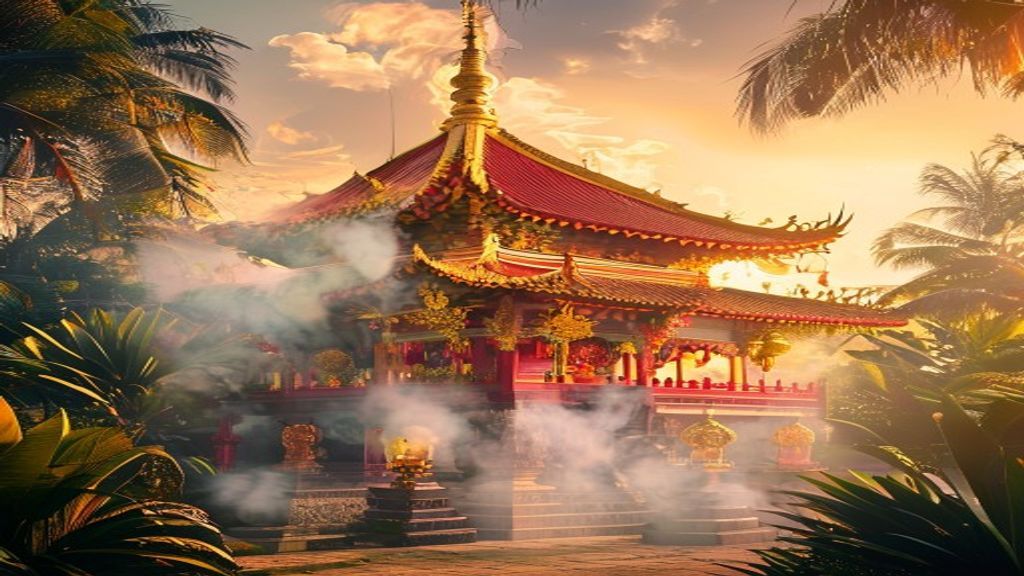
Phu Quoc Temples & Pagodas: Cultural Sites Worth Visiting (2026)
Phu Quoc's temples and pagodas offer a welcome cultural counterpoint to the island's beaches and theme parks — and Ho Quoc Pagoda alone, perched on a cliff above the sea, is one of the most stunning religious sites in all of Vietnam. Most visitors to Phu Quoc never visit a single temple, which means those who do get quiet, uncrowded experiences at genuinely beautiful places.
I'll cover the temples actually worth your time, what makes each one significant, the dress code and etiquette you need to know, and how to combine temple visits into your broader Phu Quoc itinerary without turning your vacation into a cultural obligation.
Must-visit: Ho Quoc Pagoda (stunning, free, east coast), Dinh Cau Temple (iconic, central, 15 minutes)
Worth adding: Sung Hung Pagoda (oldest, peaceful), Nguyen Trung Truc Temple (historical)
Dress code: Shoulders and knees covered at all temples. Remove shoes before entering prayer halls.
Cost: All temples are free. Donations optional.
Ho Quoc Pagoda (Truc Lam Ho Quoc Zen Monastery)
Location: East coast, between Sao Beach and the An Thoi cable car station
GPS: 10.0618, 104.0403
Time needed: 45-90 minutes
Best time to visit: Early morning (7-9 AM) for soft light and fewer visitors, or late afternoon (4-5:30 PM) for golden light on the ocean-facing facade
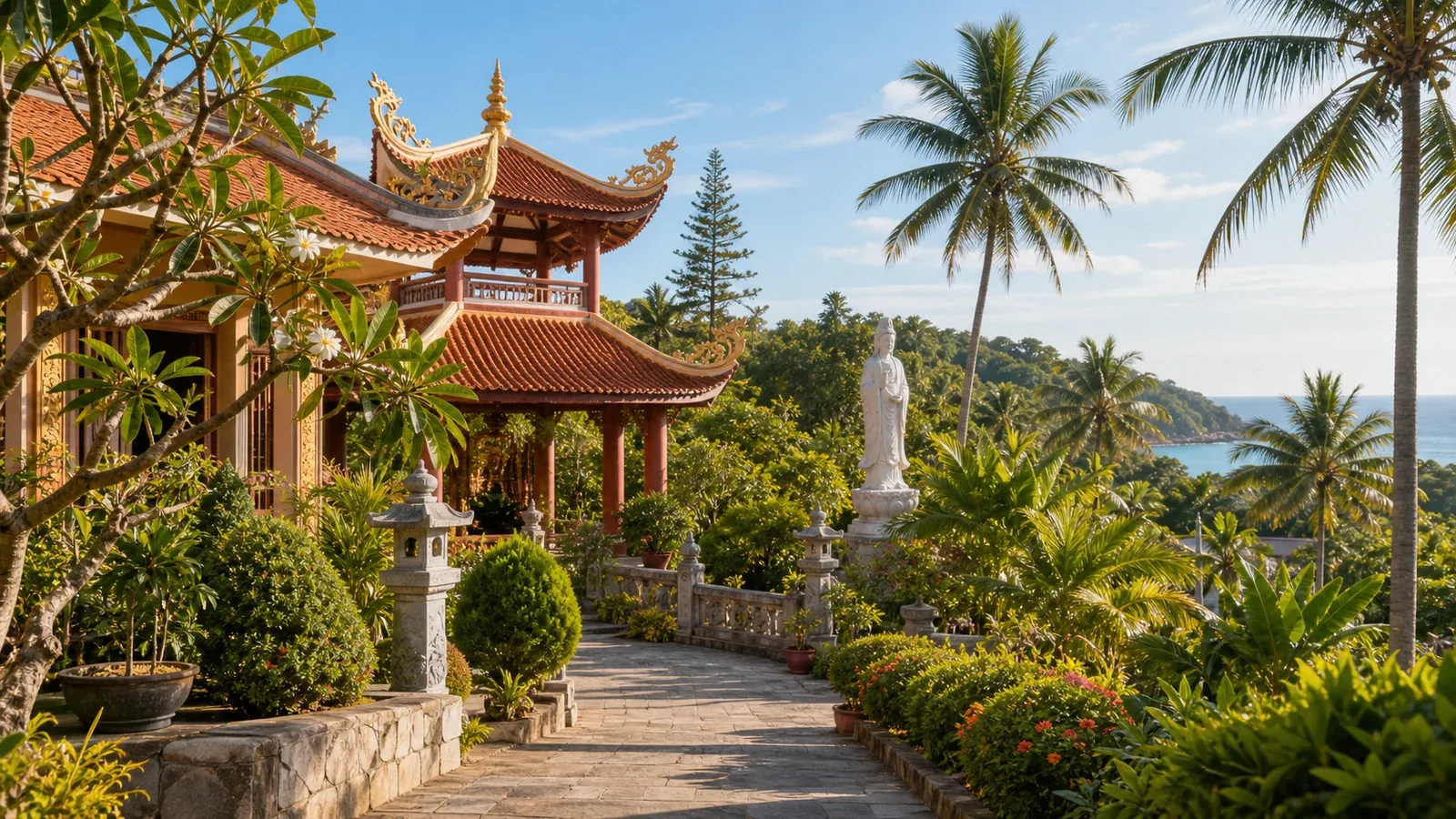
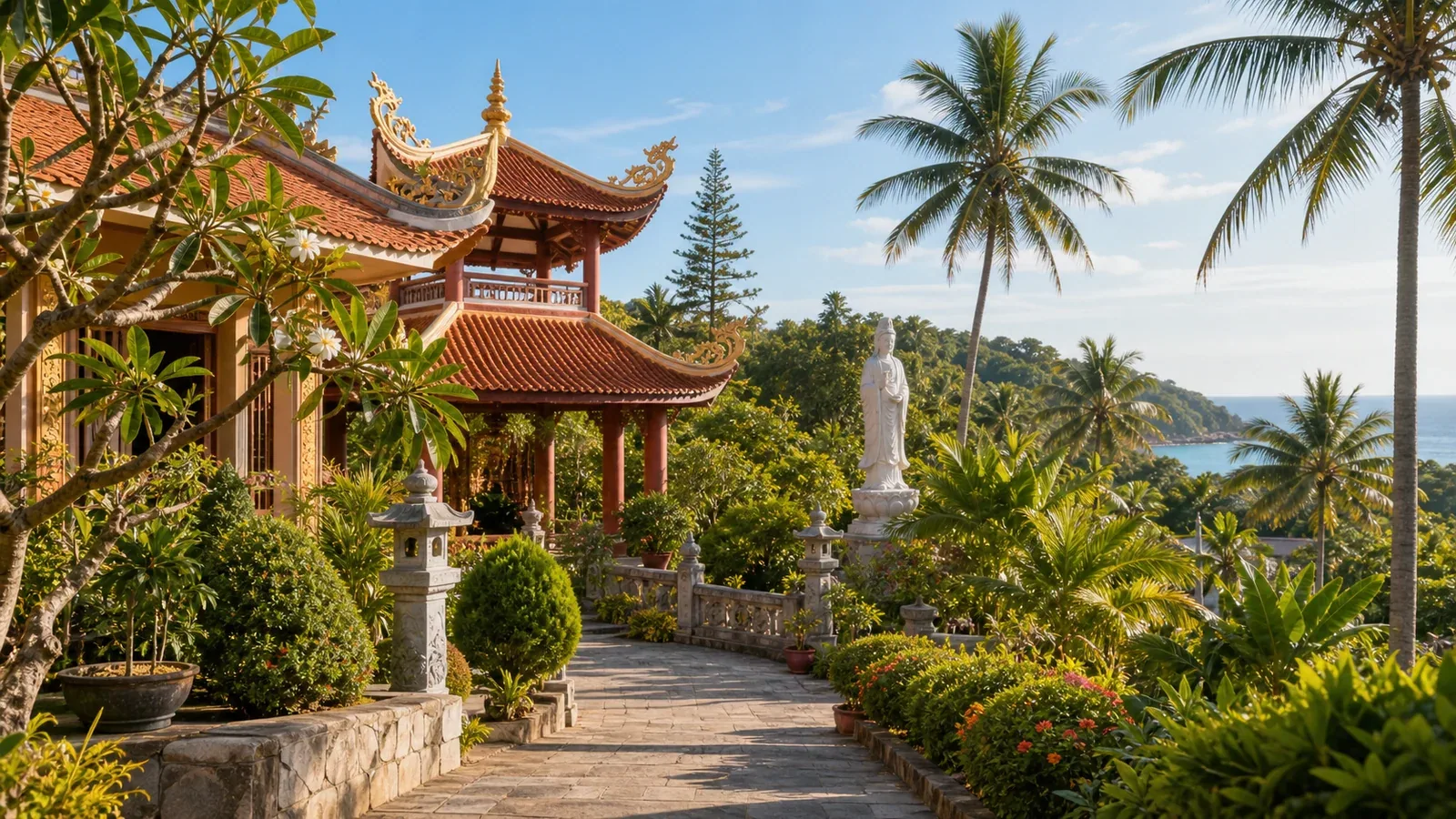
Ho Quoc Pagoda is the undisputed star of Phu Quoc's religious sites and one of the most impressive pagodas in southern Vietnam. Built on a hillside overlooking the ocean, the monastery combines traditional Vietnamese Buddhist architecture with a dramatic natural setting that feels almost cinematic.
What makes it special:
The pagoda complex is large and meticulously maintained. The main entrance gate features intricate dragon carvings and golden decorative elements. Beyond the gate, terraced gardens lead up the hillside through multiple prayer halls, meditation areas, and ornamental ponds. Each level offers expanding views of the sea below.
The main prayer hall houses a large golden Buddha statue and is decorated with traditional lacquerwork and carved wooden panels. On the highest terrace, a massive white Guanyin (Quan Am) statue faces the ocean — this is the most photographed element of the complex and visible from the coast road below.
Practical details:
- Free entry, open daily from approximately 6 AM to 6 PM
- The complex is large — wear comfortable shoes for walking and climbing stairs
- Restrooms available near the entrance
- A small shop near the entrance sells incense and religious items
- Parking is free for motorbikes and cars
- The east coast road leading here passes Sao Beach, making it easy to combine both in one trip
Photography: Ho Quoc is extraordinarily photogenic. Morning light illuminates the ocean-facing architecture, while afternoon light creates dramatic shadows on the ornate carvings. The view from the upper terrace looking back through the temple complex toward the sea is the money shot. Bring a wide-angle lens or use your phone's ultra-wide mode.
Dinh Cau Temple
Location: Duong Dong harbor entrance, on a rocky promontory
GPS: 10.2175, 103.9607
Time needed: 15-30 minutes
Best time to visit: Late afternoon (5-6 PM) for sunset views
Dinh Cau Temple is the most recognizable landmark in Duong Dong town — a small, colorful shrine perched on a rock outcrop at the entrance to the fishing harbor. It's dedicated to Thien Hau (the sea goddess), who protects fishermen, and has been a spiritual anchor for the island's fishing community for over a century.
What makes it special:
The temple itself is small — you can see everything in 10-15 minutes. But its location is the draw. Standing on the rocky promontory with the harbor's colorful fishing fleet on one side and the open sea on the other, especially during sunset, is one of Phu Quoc's signature moments.
The temple's architecture is traditional southern Vietnamese — low roof, carved eaves, red and gold color scheme, and a small interior shrine with incense and offerings. A lighthouse sits behind the temple on the highest point of the rock.
Below the temple, a stairway leads down to a small beach and rocky area where locals often fish in the evenings. The area fills with atmosphere during golden hour as fishing boats return to harbor.
Practical details:
- Free entry, accessible at all times (the outdoor area)
- Located a 5-minute walk from the night market — combine both
- The rock can be slippery after rain, so watch your footing
- Small but photogenic — the temple against the sunset sky is an iconic shot
- Best combined with a visit to the night market immediately afterward
Sung Hung Pagoda
Location: Central Duong Dong, on Tran Hung Dao Street
GPS: 10.2135, 103.9610
Time needed: 20-40 minutes
Best time to visit: Morning (8-10 AM) for quiet contemplation
Sung Hung Pagoda is the oldest Buddhist pagoda on Phu Quoc, originally constructed in the early 19th century. While it lacks the dramatic setting of Ho Quoc, it offers something more valuable to cultural visitors — authenticity and peace.
What makes it special:
This is a working local pagoda, not a tourist attraction. Monks live and practice here, local families come to pray, and the atmosphere is genuinely spiritual rather than performative. The gardens are peaceful and well-maintained, with mature trees providing deep shade and birdlife.
The architecture reflects southern Vietnamese Buddhist traditions — simpler and more understated than the grand pagodas of Hue or Hanoi. The wooden prayer hall has a warm, intimate feel with carved panels depicting scenes from Buddhist teachings.
The grounds include a small garden with bonsai trees, a bell tower, and several smaller shrines. The ancient banyan tree near the entrance is estimated to be over 200 years old.
Practical details:
- Free entry, open daily during daylight hours
- Located centrally in Duong Dong — easy to walk to from most town hotels
- Very few tourists visit, so you'll likely have the grounds mostly to yourself
- Monks may be chanting during morning hours — observe quietly from the courtyard
- This is the most authentic temple experience on Phu Quoc
Nguyen Trung Truc Temple
Location: Ganh Dau, northwest Phu Quoc
GPS: 10.3412, 103.8531
Time needed: 20-30 minutes
Best time to visit: Any time during daylight; combine with a north island trip
This temple honors Nguyen Trung Truc, a Vietnamese hero who led resistance against French colonial forces in the 1860s. He was captured on Phu Quoc and executed by the French, making this temple both a religious and historical site.
What makes it special:
The temple's significance is historical rather than architectural. For visitors interested in Vietnamese history, this is the most meaningful site on the island. The temple grounds include statues depicting Nguyen Trung Truc and plaques (in Vietnamese) explaining his resistance campaigns.
The Ganh Dau area in the far northwest of Phu Quoc is also worth visiting for its quiet beach with views toward Cambodia, making this temple a natural stop on a north island exploration day.
Practical details:
- Free entry
- Located far from Duong Dong — about 40 minutes by motorbike or car
- Best combined with Ganh Dau beach and the pepper farms in the area
- Signage is primarily in Vietnamese — a brief pre-visit read about Nguyen Trung Truc enhances the experience significantly
Other Temples Worth Knowing
Cao Dai Temple (Duong Dong): A small Cao Dai temple — representing Vietnam's unique syncretic religion — located in Duong Dong town. The colorful all-seeing eye above the entrance is distinctive. If you've never encountered Cao Dai, this is an interesting brief stop, though the larger Cao Dai temples in Tay Ninh (near Ho Chi Minh City) are far more impressive.
Phu Quoc Prison Museum: Not a temple, but the most significant historical site on the island. The former coconut-tree prison where French colonialists and later South Vietnamese forces held political prisoners. Displays are graphic and confronting. Free entry. Important for understanding the island's history beyond beaches and resorts.
Dinh Ba Temple: A small traditional temple near the Duong Dong river, primarily visited by locals. The incense-spiral interior and quiet atmosphere make it worth a brief stop if you're in the area, particularly for photography.
Temple Etiquette Guide
Respect at Vietnamese temples is straightforward but important. Follow these guidelines and you'll be welcomed everywhere.
Dress code:
- Cover shoulders — no tank tops, spaghetti straps, or bare shoulders
- Cover knees — no short shorts or mini skirts. Lightweight long pants, a maxi skirt, or knee-length shorts are fine
- No swimwear. If coming from the beach, bring a change of clothes or a cover-up
- Some temples provide cover-up wraps at the entrance, but don't count on it
Behavior:
- Remove shoes before entering any prayer hall or covered shrine
- Speak quietly inside temple buildings
- Don't point your feet at Buddha statues or monks — sit cross-legged or with feet tucked back
- Don't touch statues, altars, or religious objects
- Photography is generally allowed in outdoor areas but ask before shooting inside prayer halls. Never use flash
- If monks are chanting or praying, observe quietly from the entrance — don't walk between the monks and the altar
Offerings:
- You're not expected to make offerings, but it's a nice gesture to light an incense stick (usually available for 10,000-20,000 VND near the entrance)
- Cash donations are never required. Donation boxes are available if you wish to contribute
With children:
- Temples are fine to visit with kids. Brief them on quiet behavior before entering
- Hold children's hands near steep stairs and elevated areas
- The gardens at Ho Quoc and Sung Hung give kids space to explore quietly
Planning Temple Visits
The essential two-temple route (half day):
Morning: Ho Quoc Pagoda (east coast, 1 hour) → lunch at Sao Beach nearby → afternoon free. Or: Late afternoon at Dinh Cau Temple (15 minutes) → sunset → walk to the night market for dinner.
The cultural day trip (full day):
Morning: Sung Hung Pagoda (Duong Dong, 30 minutes) → drive to Nguyen Trung Truc Temple and Ganh Dau beach (northwest, 45 minutes + 30 minutes at the temple) → pepper farm visit nearby → lunch at a local restaurant → afternoon: Ho Quoc Pagoda (east coast, 1 hour) → Sao Beach.
Combine with other activities:
- Ho Quoc Pagoda pairs naturally with Sao Beach (10-minute drive)
- Dinh Cau Temple pairs with the night market (5-minute walk)
- Nguyen Trung Truc Temple pairs with the north island tour
- Sung Hung Pagoda pairs with any Duong Dong walking tour
Frequently Asked Questions
What is the most beautiful temple in Phu Quoc?
Ho Quoc Pagoda on the east coast. Its clifftop location overlooking the sea, ornate golden architecture, and extensive landscaped gardens make it the most visually impressive religious site on Phu Quoc. Entry is free.
What should I wear to visit temples in Phu Quoc?
Cover shoulders and knees — no sleeveless tops, short shorts, or swimwear. Lightweight long pants and a t-shirt with sleeves are fine. Remove shoes before entering prayer halls. Some temples provide cover-up wraps at the entrance, but bring your own to be safe.
Are Phu Quoc temples free to visit?
Yes, all temples and pagodas on Phu Quoc are free. No entrance fees. Donation boxes are available if you wish to contribute, and incense sticks are sold for small amounts (10,000-20,000 VND) if you want to make an offering.
What is the oldest temple in Phu Quoc?
Sung Hung Pagoda in Duong Dong, built in the early 19th century. It's the first Buddhist pagoda on the island and offers a quiet, authentic experience away from tourist crowds.
How many temples should I visit in Phu Quoc?
Two is enough for most visitors: Ho Quoc Pagoda for the spectacular setting and Dinh Cau Temple for the iconic harbor location. Add Sung Hung Pagoda and Nguyen Trung Truc Temple if you're interested in deeper cultural exploration.
What are the opening hours of Ho Quoc Pagoda?
Ho Quoc Pagoda is open daily from approximately 6 AM to 6 PM. The best time to visit is early morning between 7 and 9 AM for soft light and fewer visitors, or late afternoon from 4 to 5:30 PM for golden light on the ocean-facing facade. Entry is free at all hours.
Where is Dinh Cau Temple located?
Dinh Cau Temple sits on a rocky promontory at the entrance to Duong Dong fishing harbor — just a 5-minute walk from the night market. The shrine is dedicated to Thien Hau, the sea goddess who protects fishermen, and has been a spiritual anchor for the island's fishing community for over a century.
Can I photograph inside temples on Phu Quoc?
Photography is generally allowed in outdoor areas of all temples. Before shooting inside prayer halls, ask permission first. Never use flash inside. At Ho Quoc Pagoda, the upper terrace looking back through the complex toward the sea offers the most dramatic shot. Respect active worship — do not photograph monks or worshippers without consent.
How do I get to Ho Quoc Pagoda from Duong Dong?
Ho Quoc Pagoda is located on the east coast between Sao Beach and the An Thoi cable car station (GPS: 10.0618, 104.0403). From Duong Dong it is approximately a 30-minute motorbike ride along the coastal road. Parking is free for both motorbikes and cars. The route conveniently passes Sao Beach, making it easy to combine both in one trip.
Who was Nguyen Trung Truc and why is there a temple for him?
Nguyen Trung Truc was a Vietnamese hero who led resistance against French colonial forces in the 1860s. He was captured on Phu Quoc and executed by the French, making the temple in Ganh Dau both a religious and historical site. The grounds include statues and plaques explaining his resistance campaigns, though signage is primarily in Vietnamese.
Is Cao Dai religion represented on Phu Quoc?
Yes. A small Cao Dai temple in Duong Dong town represents Vietnam's unique syncretic religion. The colorful all-seeing eye above the entrance is its distinctive symbol. It is a worthwhile brief stop if you have never encountered Cao Dai, though the larger and more elaborate Cao Dai temples are in Tay Ninh near Ho Chi Minh City.
How old is Sung Hung Pagoda?
Sung Hung Pagoda was originally constructed in the early 19th century, making it the oldest Buddhist pagoda on Phu Quoc. An ancient banyan tree near the entrance is estimated to be over 200 years old. Unlike more tourist-oriented sites, monks live and practice here and local families come to pray, giving it an authentically spiritual atmosphere.
Which Temples to Prioritize
If you visit one temple: Ho Quoc Pagoda. It's genuinely stunning, free, and the east coast location means you can combine it with Sao Beach.
If you visit two: Add Dinh Cau Temple. It's quick (15 minutes), central, and pairs perfectly with sunset and the night market.
If you're culturally curious: Add Sung Hung Pagoda for the oldest, most authentic local temple experience.
If you're historically interested: Add Nguyen Trung Truc Temple and the Prison Museum for a deeper understanding of Phu Quoc's history beyond tourism.
Temples on Phu Quoc won't rival Angkor Wat or the temples of Kyoto, but they provide meaningful cultural moments that break up days of beach and theme parks — and Ho Quoc Pagoda is genuinely one of the most beautiful temples in southern Vietnam.
Related Guides
- Best Things to Do in Phu Quoc — Complete island activity guide
- North Island Tour Guide — Tour route passing key cultural sites
- Phu Quoc Photography Spots — Best photo locations including temples