A full Open Water certification in Phu Quoc costs USD 340-450 and takes 3-4 days, with SSI courses running about USD 400 and PADI courses USD 430-440 at the island's established dive centers. Thanks to shallow, sheltered sites around the An Thoi Archipelago, typically 5-12 metres deep, and a calm October-to-April season, it is one of the easiest and most beginner-friendly places in Vietnam to learn to dive.
Why Phu Quoc Is One of Vietnam's Easiest Places to Learn to Dive
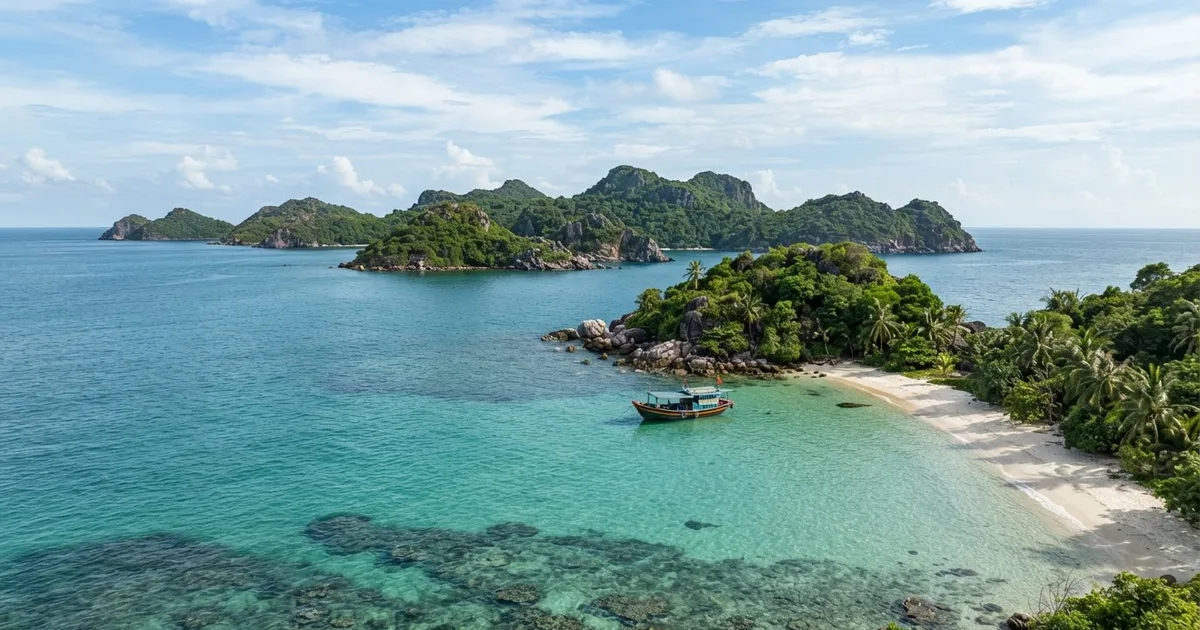
If you have been putting off learning to scuba dive because it sounds intimidating, Phu Quoc is the island that will change your mind. The main dive area, the An Thoi Archipelago off the southern tip of the island, is a cluster of small islands where the reefs sit in shallow water of roughly 5-12 metres. There are no deep walls or punishing currents to contend with, boat rides from An Thoi pier are short, and beginners always join guided dives with professional instructors.
Three facts make the island especially approachable for first-timers. First, no license is required for beginner or discovery dives, so you can try scuba before spending anything on a course. Second, beginner discovery dives are capped at a maximum depth of about 6 metres, shallow enough that you can usually see the surface above you. Third, the underwater terrain is forgiving: sandy patches and gentle sloping reefs give instructors calm spots to run skills sessions like mask-clearing and buoyancy control.
Marine life is classic tropical reef rather than big-animal action: hard and soft corals, anemones and clownfish, parrotfish, pufferfish, nudibranchs and the occasional cuttlefish or moray eel. Visibility in the dry season commonly reaches 10-20 metres. If your goal is a relaxed, low-pressure environment to earn your first dive license, this is exactly the setting.
Scuba Courses in Phu Quoc: Prices at a Glance
Open Water certification is the standard entry-level license and, per DiveVietnamPro, typically costs USD 350-450 in Phu Quoc and takes 3-4 days. At the budget end, VietnamSpot cites around USD 250-350 for a 3-day PADI Open Water course, while Sabrina Phu Quoc's local concierge listing puts a PADI Open Water at USD 380-450 when it includes training materials, full equipment, 4 open-water dives and the certification fee. Here is how the island's established dive centers price their published courses:
| Course | Provider | Price (USD) | Duration |
|---|---|---|---|
| PADI Open Water Diver | Viet Diving | 440 | 3-4 days |
| PADI Open Water Diver | Ecodive | 430 | 3-4 days |
| SSI Open Water Diver | Viet Diving | 400 | 3-4 days |
| PADI Open Water (market range) | Various shops | 350-450 | 3-4 days |
| PADI Scuba Diver | Ecodive | 340 | About 2 days |
| PADI Advanced Open Water | Viet Diving | 390 | 2 days |
| SSI Advanced Open Water | Viet Diving | 390 | 2 days |
| PADI Scuba Refresher | Ecodive | 110 | Half day |
| Discover Scuba Diving (no certification) | Various operators | 60-80 | Half day |
When you compare quotes, check exactly what is included. A complete Open Water package should cover training materials, rental equipment, the 4 open-water dives, boat transport, instructor fees and the certification card. Some shops advertise a low headline price and then add the digital learning code, marine park fees or lunch separately, which can push an advertised USD 350 course closer to USD 450 in reality. Ask whether hotel pickup and pool sessions are included, and confirm the maximum number of students per instructor before you pay a deposit.
PADI or SSI: Does the Difference Matter?
The two big certification agencies both issue licenses recognized at dive centers worldwide, and for a recreational diver the cards open the same doors. The practical difference in Phu Quoc is mostly price and format. At Viet Diving, the PADI Open Water course is listed at USD 440 while the SSI Open Water is USD 400, a USD 40 saving for what is essentially the same 3-4 day course with the same 4 open-water dives. At Advanced level, the two agencies are priced identically at USD 390 each.
PADI is the most recognized brand name and has the largest global network if you plan to continue diving across Southeast Asia. SSI tends to be slightly more flexible, with free digital theory you can start before you even arrive on the island, and many instructors argue its teaching standards are at least as rigorous. In practice, the quality of your instructor and the size of your class matter far more than the logo on the card.
Our advice: shortlist shops by reviews and instructor-to-student ratios first, then let the PADI-versus-SSI price gap be the tiebreaker. Saving USD 40 with SSI is real money, but not worth it if it means an eight-person class instead of a four-person one.
What the Open Water Course Actually Involves, Day by Day
A standard 3-4 day Open Water course in Phu Quoc follows the same rhythm as anywhere in the world. Day one is theory: video lessons, knowledge reviews and a final exam covering dive physics, equipment, hand signals and safety procedures. Many shops now let you complete the theory online before you arrive, which frees up an extra afternoon on the beach.
Day two moves to confined water, usually a swimming pool or a shallow sandy bay, where you practice the core skills: clearing water from your mask, recovering your regulator, controlling your buoyancy and sharing air with a buddy. Expect around 15-20 exercises repeated until they feel automatic. Days three and four are the payoff: four open-water dives in the An Thoi Archipelago, where you repeat those skills in real conditions. Training typically happens in the 5-12 metre range that characterizes the archipelago, with your final qualifying dives approaching the Open Water limit of 18 metres.
A complete package in the USD 380-450 bracket includes training materials, full equipment, the 4 open-water dives, certification and boat transfers, often with lunch on the boat. Bring swimwear, a towel, reef-safe sunscreen and a completed medical questionnaire; if you answer yes to any condition on the form such as asthma, heart issues or recurring ear problems, you will need a doctor's sign-off before entering the water. The minimum age for junior certification is 10 years old.
Not Ready to Commit? Discover Scuba and the Scuba Diver Option
If a full course feels like too much, there are two stepping stones. The first is Discover Scuba Diving, a half-day introduction with no certification and no license required. Operators in Phu Quoc typically charge USD 60-80, or around 1,800,000-2,200,000 VND, for a trip that includes two introductory dives. You get a short briefing, basic skills in shallow water, then a guided dive where the instructor stays within arm's reach. Depth is limited to about 6 metres, and many shops credit your Discover Scuba fee toward a full Open Water course if you upgrade within a year.
The second option is the PADI Scuba Diver course, listed by Ecodive at USD 340. It takes roughly two days, about half of the Open Water program, and certifies you to dive to 12 metres under the supervision of a dive professional. It is a genuine license, not just a taster, and you can upgrade to full Open Water later anywhere in the world by completing the remaining theory, skills and dives.
Who suits what: choose Discover Scuba if you are curious but unsure, traveling with non-divers, or squeezing diving into a single day. Choose the Scuba Diver course if you want a real credential but only have two days or a tighter budget. Choose full Open Water if you have 3-4 days and expect to dive again in the future, anywhere.
Advanced Courses, Refreshers and Fun Dives for Certified Divers
Already certified? Phu Quoc works well as a place to keep progressing. The Advanced Open Water course, typically USD 280-380 and 2 days according to DiveVietnamPro, consists of five adventure dives, usually including a deep dive to 30 metres and an underwater navigation dive, plus three electives such as peak buoyancy, night diving or fish identification. Viet Diving prices both its PADI and SSI Advanced courses at USD 390.
If your last dive was more than six months ago, most shops will ask for a refresher before taking you out on a boat. Ecodive lists its PADI Scuba Refresher at USD 110, a half-day of skills review in shallow water with an instructor. For certified divers who simply want to get wet, standard fun-dive trips run about USD 90 per person for 2 dives, including tanks, weights, a guide and the boat, with full equipment rental a modest add-on if not already bundled.
When to Get Certified: Phu Quoc's Diving Season
October to April is the best diving season in Phu Quoc for beginners and families, according to VietnamSpot. During these months the seas around the An Thoi Archipelago are at their calmest, visibility is at its best, and boat trips run on full schedules. May to October is the island's rainy season, which brings wind, chop and reduced visibility, and some operators scale back or suspend southern dive trips during the worst weeks.
Timing tips: book your course early in your holiday, because an Open Water certification needs 3-4 consecutive clear days and weather delays do happen. Water temperature sits around 27-30 degrees Celsius year-round, so a 3 mm shorty wetsuit is plenty in high season. If you are traveling during Tet, the Vietnamese New Year in late January or February, reserve your course well in advance since dive boats fill up quickly.
Who Should Get Certified in Phu Quoc (and Who Shouldn't)
Great fit for
- Complete beginners who want shallow 5-12 metre training sites and calm, forgiving conditions.
- Travelers combining a license with a beach holiday, since courses take just 3-4 days and leave time for snorkeling, island hopping and the night market.
- Families: kids from age 10 can earn a Junior Open Water, while non-diving companions can snorkel or ride along on the boat.
- Anyone who wants to test the water first with a USD 60-80 Discover Scuba session before paying for the full course.
Less suited to
- Experienced divers chasing big pelagics, dramatic drop-offs or crystal-clear 40-metre visibility. Phu Quoc's reefs are shallow 5-12 metre sites built for relaxed, easy diving, not adrenaline.
- Visitors coming between May and September, when the rainy season brings choppier seas and some operators cut their schedules.
- Divers with fewer than 3 full days available. If time is tight, the 2-day Scuba Diver course or a half-day Discover Scuba is the smarter buy than a rushed Open Water.
One honest comparison: for pure underwater spectacle, a few other destinations in Southeast Asia offer more drama. But for actually learning, with calm shallow bays, patient instructors and course prices of USD 400-440 that undercut many Thai island equivalents, Phu Quoc is genuinely hard to beat.
Frequently Asked Questions
How much does an Open Water course cost in Phu Quoc?
Expect USD 350-450 for the full 3-4 day course. Published prices include Viet Diving at USD 440 for PADI and USD 400 for SSI, Ecodive at USD 430 for PADI, and budget listings around USD 250-350. A fair price should cover training materials, equipment, 4 open-water dives and the certification card.
How long does it take to get dive certified?
Three to four days for Open Water: roughly one day of theory, one day of confined-water skills, then four open-water dives spread over the final two days. Completing the theory online before arrival can trim the schedule, and some shops run compressed 3-day versions for around USD 250-350.
Can I dive in Phu Quoc without a license?
Yes. No license is required for beginner or discovery dives. A Discover Scuba Diving session costs about USD 60-80, or roughly 1,800,000-2,200,000 VND, for a half-day with two introductory dives to a maximum depth of about 6 metres, always supervised directly by an instructor.
How deep will I dive as a beginner?
Discovery dives are capped at about 6 metres. Most dive sites around the An Thoi Archipelago sit between 5-12 metres, which is where most training happens. An Open Water license then qualifies you to 18 metres worldwide, and the Advanced course extends that limit to 30 metres.
Should I choose PADI or SSI in Phu Quoc?
Both licenses are recognized worldwide, so pick on price and instructor quality. At Viet Diving, SSI Open Water costs USD 400 versus USD 440 for PADI, a USD 40 difference, while both Advanced courses cost USD 390. SSI also offers free digital theory you can start before you travel.
What is the best time of year to learn to dive in Phu Quoc?
October to April, when the seas are calmest and visibility is best, which is exactly why it is considered the season for beginners and families. May to October is the rainy season, with wind, chop and reduced schedules at some operators. Water stays around 27-30 degrees Celsius all year.
What is included in the course price?
A complete USD 380-450 Open Water package includes training materials, full rental equipment, 4 open-water dives, the certification fee, boat transfers and usually lunch on board. Confirm whether the digital learning code, marine park fees and hotel pickup are included before paying, since some shops add them separately.
How old do you have to be to get certified?
Children can earn the Junior Open Water rating from age 10, with depth limits and supervision requirements until age 15. Discover Scuba programs also generally accept participants from 10 years old. Adults of any age in good health can certify; a medical questionnaire is mandatory, and certain conditions require a doctor's approval.
Planning to get dive certified on Phu Quoc? Sabrina Rental can help you choose between the island's dive centers, arrange transport to An Thoi pier for your course days, and sort out everything else for your trip, from motorbike rental to boat excursions. Message us for honest, up-to-date local advice.
Contact Sabrina Rental