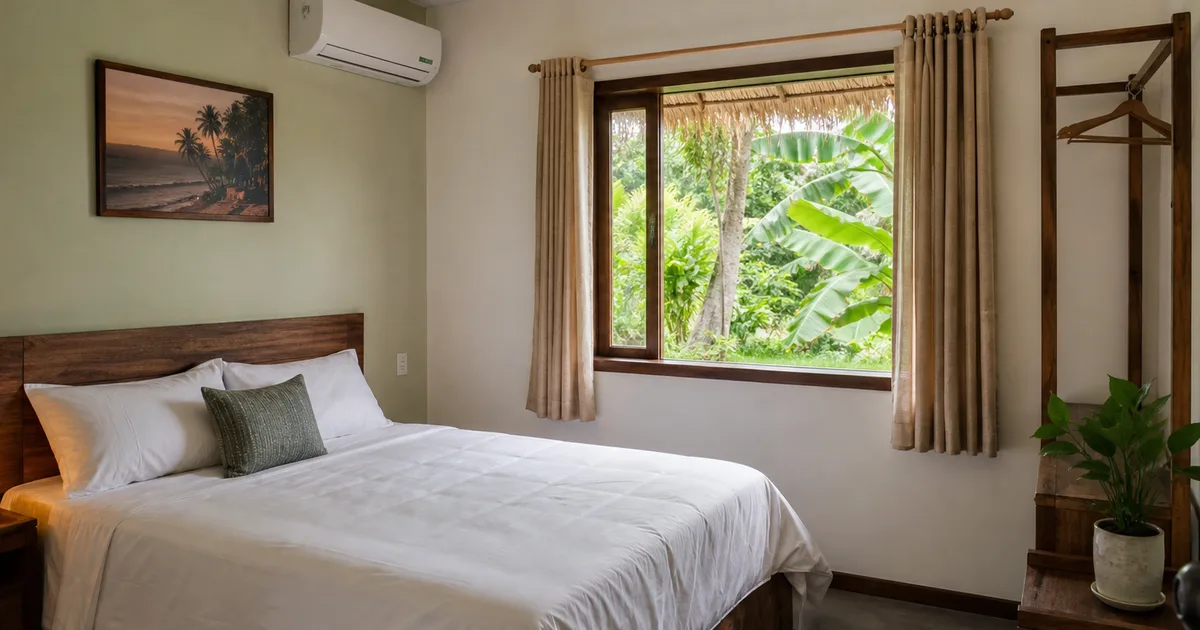
Phu Quoc's rapid tourism growth has attracted not just travelers but also scammers who specifically target foreign visitors booking accommodation. Living on this island since 2022, I have personally encountered every scam described below, helped victims recover money, and built a verification system that catches fraudulent listings before you pay a single dollar. This guide covers the 10 most common accommodation scams, the December 2025 scam wave that caught dozens of travelers, a step-by-step verification checklist, and a platform comparison showing which booking sites actually protect you.
Important Notice
This article documents real scam patterns observed firsthand and reported by travelers. No specific business names are used because scammers frequently change names. All patterns described are active as of early 2026.
1. Fake Listings (Non-Existent Properties)
Risk Level: Critical | Typical Loss: $200-2,000+
The most damaging scam on Phu Quoc involves entirely fabricated property listings. Scammers steal photos from legitimate hotels or generate realistic images using AI, then advertise these "properties" on Facebook groups, Instagram, and independent websites at prices 40-60% below market rate.
How This Scam Works
- A beautiful villa appears on Facebook or a poorly-known booking site at an unbelievable price
- The scammer communicates via WhatsApp with professional English and quick responses
- They send realistic-looking booking confirmations with logos and reference numbers
- They request 50-100% deposit via bank transfer, Wise, or cryptocurrency
- After payment they become increasingly slow to respond, then disappear completely
- The traveler arrives to find the address is a construction site, empty lot, or someone else's home
How to Spot It
- Price is 40% or more below comparable listings on Booking.com or Agoda
- Property has zero presence on Google Maps
- They refuse to do a live video call showing the property
- Only bank transfer accepted, no platform booking option
- Reverse image search reveals photos from other properties or stock sites
- They create artificial urgency saying "only available until tomorrow" or "last unit"
2. Bait-and-Switch
Risk Level: High | Typical Loss: $30-150/night in value
You book a stunning property based on listing photos, then a day or two before arrival you receive a message about an "unexpected issue" with your room. The replacement property is always worse and cheaper, but you are stuck because it is too late to rebook during high season.
Warning Signs
- The host contacts you 1-2 days before check-in about a "problem"
- They offer an "equivalent" alternative without letting you see it first
- If you refuse, they offer only a 50-70% refund
- The replacement property has no reviews or recent photos
Protection Strategy
Always book through platforms that guarantee the specific property you selected. Take screenshots of your exact booking including room type and photos. If a switch is attempted, immediately contact the platform's customer service rather than negotiating directly with the host.
4. Fake Review Manipulation
Risk Level: Medium | Typical Loss: Overpaying for poor quality
Some properties on Phu Quoc have hundreds of suspiciously positive reviews that all sound similar, were posted in a short time period, or come from accounts with no other review history. I have seen properties jump from 3.5 stars to 4.7 stars overnight after a batch of fake reviews. Others offer guests free meals or discounts in exchange for five-star reviews, which means the high rating does not reflect genuine experience.
Red Flags in Reviews
- A burst of 20+ five-star reviews within one week
- Reviewers have only ever reviewed that one property
- All reviews use similar phrasing or praise the same specific detail
- No photos in any reviews, only text
- Recent negative reviews contradict dozens of positive ones
- Property responds defensively to any criticism rather than constructively
5. Deposit Theft
Risk Level: High | Typical Loss: $50-500
You pay a security deposit at check-in, then at checkout the property claims damage you did not cause. This is especially common with villas and apartments where there is no standardized check-in inspection. Scratches that were already there, "stained" linens, or "broken" items that were never working become reasons to keep your deposit.
How to Protect Yourself
- Video record every room at check-in with timestamps visible
- Photograph any existing damage and send it to the host immediately via chat
- Never pay a cash deposit without a signed receipt listing the exact amount and return conditions
- Use platforms that handle deposits digitally (Booking.com, Airbnb)
- Ask for the deposit refund timeline in writing before you pay
6. Amenity Lies (Pools, WiFi, AC)
Risk Level: Medium | Typical Loss: Quality of stay
The listing says "swimming pool" but it is a shared puddle behind the building that has not been cleaned in weeks. "High-speed WiFi" means 2 Mbps on a good day. "Hot water" means a broken heater that the staff promises to fix tomorrow. On Phu Quoc, the most commonly exaggerated amenities are pool quality, WiFi speed, proximity to the beach, and the condition of air conditioning units.
Verification Tips
- Ask for a recent photo or video of the pool with the day's date shown
- Request a WiFi speed test screenshot (use Fast.com as reference)
- Check Google Maps satellite view to verify if a pool actually exists
- Read the most recent reviews first, not the highlighted ones
- Ask specifically: "Is the pool currently filled, clean, and available for use?"
7. Location Misrepresentation
Risk Level: Medium | Typical Loss: Daily transport costs + inconvenience
A listing says "5 minutes from the beach" but means 5 minutes by motorbike on a road with no sidewalk. "Near Duong Dong town" could mean 8 kilometers away. "Beachfront" sometimes means a property across a busy road from the beach with no direct access. On Phu Quoc, distance claims are almost always based on motorbike travel, not walking.
How to Verify Location
- Always check the exact pin on Google Maps, not just the area name
- Use Google Maps Street View if available for the area
- Ask the host: "Can I walk to the beach? How many minutes on foot?"
- Search for the property name on Google Maps to see its actual position
- Check if "beachfront" means direct beach access or just a view from the roof
8. Photo Manipulation and AI Images
Risk Level: Medium-High | Typical Loss: Disappointment + overpaying
Wide-angle lenses make tiny rooms look spacious. Professional photography from 2019 shows a property that has since deteriorated. Some new listings now use AI-generated interior photos that look impressive but represent nothing real. On Phu Quoc, the rainy season (June-October) causes rapid wear on properties, so photos taken in November may not reflect the July reality.
Detection Methods
- Reverse image search the listing photos on Google Images and TinEye
- Look for AI artifacts: warped text on signs, unusual light reflections, too-perfect symmetry
- Request a video walkthrough. Scammers and low-quality properties always refuse
- Check Google Maps reviews for guest-uploaded photos (these are honest)
- Compare listing photos with the property's Facebook or Instagram page for consistency
9. Fake "Limited Time" Discounts
Risk Level: Low-Medium | Typical Loss: Overpaying by 10-30%
The listing shows a "regular price" of $200 with a "special discount" bringing it down to $140. But the property was never $200 to begin with. The inflated original price exists solely to make the current price look like a deal. This is common on both platforms and direct booking websites on Phu Quoc, especially during shoulder season (March-May, October-November).
How to Verify Real Pricing
- Compare the "discounted" price with similar properties in the same area
- Use the Wayback Machine to check if the property was listed at the "original" price before
- Search the same dates on multiple platforms (Booking.com, Agoda, Airbnb) for the same property
- Contact the property directly and ask for their best rate without mentioning the platform price
10. "Fully Booked" Upsell Scam
Risk Level: Low | Typical Loss: $20-80 per night extra
You inquire about a budget room and are told it is "fully booked" but a more expensive room is available. In reality, the budget room exists and is available, but the property makes more money selling you the premium option. This is common at mid-range hotels on Phu Quoc that operate both through platforms and direct bookings.
Counter Strategy
- Check the budget room availability on a booking platform immediately
- Ask: "When will the budget room become available?" If they say "not for months," check the platform
- Book through a platform where you select the exact room type
- Walk in and ask at the front desk rather than calling ahead
The December 2025 Scam Wave
December 2025 saw the largest coordinated accommodation scam operation Phu Quoc has experienced. At least 30 travelers reported losing deposits to a network of fake villa listings that appeared simultaneously across multiple Facebook groups and a professional-looking booking website.
What Happened
A network of at least 8 fake villa listings appeared in the "Phu Quoc Expats" and "Phu Quoc Travel Tips" Facebook groups. Each listing used stolen photos from real villas, offered prices 50% below market, and directed interested travelers to a website that looked legitimate with a functional booking system. Travelers paid deposits of $300-1,500 via Wise international transfers. The website disappeared on December 18th, and all associated WhatsApp numbers went offline.
Aftermath and Lessons
- Estimated total losses exceeded $25,000 across 30+ victims
- Vietnamese police investigated but arrests were difficult due to cross-border payment routing
- Several victims partially recovered funds through Wise's fraud dispute process
- Facebook removed the scam accounts only after multiple reports over 2 weeks
Red Flags That Were Present
- All listings appeared within the same week
- All directed to the same external website
- None of the properties had Google Maps listings
- All requested payment via Wise (avoiding platform protections)
- The website domain was registered only 3 weeks before the scam started
Complete Verification Checklist
Use this checklist before paying any deposit or confirming any accommodation booking on Phu Quoc. Every item should be checked. If more than two items fail, do not proceed with the booking.
Pre-Booking Verification
- Search the property name on Google Maps. Does it exist with reviews?
- Reverse image search listing photos. Do they appear on other properties?
- Check if the property is listed on at least one major platform (Booking.com, Agoda, Airbnb)
- Request a live video call showing the property. Does the host agree?
- Verify the price is within 20% of comparable listings in the same area
- Check the domain registration date if booking through an independent website (use whois.com)
- Confirm the exact address and cross-reference with Google Maps satellite view
Payment Protection
- Pay through a platform whenever possible (built-in refund protection)
- If paying directly, use a credit card or PayPal (chargeback available)
- Never send cryptocurrency as a deposit
- Avoid bank transfers to personal accounts
- Get a written cancellation and refund policy before any payment
- Maximum deposit should not exceed 30% of total stay
At Check-in
- Video record every room and any existing damage
- Confirm total price including all fees in writing
- Test WiFi speed, AC, hot water, and pool before accepting the room
- Get a signed receipt for any cash deposit
- Save the host's phone number and a platform contact for disputes
Booking Platform Protection Comparison
Not all booking platforms offer the same level of protection. This comparison covers the platforms most commonly used for Phu Quoc accommodation and their actual dispute resolution effectiveness based on my experience helping travelers.
| Platform | Scam Protection | Refund Speed | Dispute Resolution | Verdict |
|---|---|---|---|---|
| Booking.com | Strong (verified properties) | 3-7 days | Good, phone support | Best overall protection |
| Agoda | Good (shared Booking.com inventory) | 5-14 days | Slow but functional | Good for Asia, slower refunds |
| Airbnb | Moderate (host-dependent) | 5-10 days | Inconsistent | Good for unique properties, weaker disputes |
| Facebook/Direct | None | Depends on host | None | Highest risk, use only with trusted contacts |
| Traveloka | Good (popular in Vietnam) | 7-14 days | Decent, chat support | Good budget option for Vietnam |
Frequently Asked Questions
What should I do if I already sent money to a scammer on Phu Quoc?
Act immediately. If you paid via Wise, file a fraud dispute through their app within 24 hours as success rates decrease significantly after that. For bank transfers, contact your bank's fraud department and request a recall. File a report with Vietnamese police (bring your passport and all transaction evidence) even though recovery is unlikely, as it helps track patterns. If you paid via credit card, initiate a chargeback immediately. Save all screenshots of communications, payment receipts, and the listing. Join the Phu Quoc Expats Facebook group and report the scam to warn others. I can help you navigate the Vietnamese police reporting process if needed.
Are Booking.com and Agoda listings for Phu Quoc generally trustworthy?
Major platforms verify that properties exist and have basic standards, so outright fake listings are rare. However, photos can be outdated, amenity descriptions exaggerated, and review scores inflated by incentivized reviews. The bait-and-switch and hidden fee scams can still happen on platforms. Always read the 5-10 most recent reviews (sorted by date, not rating), check guest-uploaded photos rather than professional listing images, and verify the exact location pin on the map. Booking.com generally has stronger dispute resolution than Agoda for Vietnam properties.
Is it safe to book accommodation directly from Facebook groups?
Facebook groups are the highest-risk channel for accommodation scams on Phu Quoc. That said, some legitimate property owners and managers do post in groups. The key distinction is verification. A legitimate operator will happily do a video call, has Google Maps reviews, is listed on at least one major platform, and accepts platform bookings. If someone only accepts direct bank transfer and refuses a video call, walk away regardless of how good the deal looks. Never send money based solely on a Facebook post.
How can I verify if a Phu Quoc villa is real before booking?
Use this five-step verification process. First, search the exact property name on Google Maps and check for reviews and photos from actual guests. Second, reverse image search the listing photos using Google Images. Third, request a live video call where the host shows you through the property. Fourth, check if the property appears on at least one major booking platform. Fifth, verify the address exists using Google Maps satellite view. If the property fails more than one of these checks, do not book it regardless of the price.
What are the safest ways to pay for Phu Quoc accommodation?
The safest method is booking and paying entirely through a major platform like Booking.com or Airbnb, which hold your payment and release it to the host after check-in. If booking directly, use a credit card (chargeback protection) or PayPal (buyer protection). Wise transfers are moderately safe as they offer fraud disputes but recovery is not guaranteed. Never pay via cryptocurrency, cash deposit to a bank account you cannot verify, or Western Union. For villa bookings, a 30% deposit through a platform with the balance paid at check-in is the standard safe arrangement.
What should I do if the property doesn't match the photos on Phu Quoc?
A bait-and-switch is when the accommodation you booked is replaced or looks nothing like the listing images. Document the discrepancy immediately with timestamped photos and video. Contact the booking platform's customer service directly — do not negotiate only with the host — and request relocation or a full refund. If you booked through Booking.com, Agoda, or Airbnb, their guest protection policies cover significant property misrepresentation. Never accept a partial refund offer without first escalating to the platform. I can help you draft the dispute message if needed — reach out on WhatsApp +84948523139.
Which booking platforms are safest for Phu Quoc accommodation?
Based on hands-on dispute experience, Booking.com offers the strongest protection — verified properties, phone support, and 3–7 day refunds. Agoda shares much of the same inventory and is reliable for Asia, though refunds run 5–14 days. Airbnb is good for unique villas but dispute resolution is inconsistent. Traveloka works well for budget Vietnam bookings. Facebook and direct independent-website bookings carry the highest risk and offer zero platform protection — use them only with contacts you can independently verify.
What's the safest deposit percentage for a direct Phu Quoc villa booking?
The safest deposit for a direct villa booking is no more than 30% of the total stay cost. The verification checklist I use draws this hard line: a legitimate property owner will accept a 30% holding deposit with the balance paid at check-in. Any demand for 50–100% upfront — especially via bank transfer, Wise, or cryptocurrency — is a strong signal of a fake listing. Never send the full amount before you physically arrive and confirm the property matches the listing.
What red flags indicate a fake Airbnb listing on Phu Quoc?
Fake or misleading Airbnb listings share several warning signs: professional listing photos that reverse image search traces back to other properties or stock sites; AI-generated interiors with warped text, unusual reflections, or too-perfect symmetry; a burst of five-star reviews in a single week from accounts with no other review history; and hosts who refuse a live video walkthrough. On Phu Quoc, photos taken before the rainy season (June–October) may also misrepresent the current condition of a property significantly.
How do I report a Phu Quoc accommodation scam?
Reporting a scam involves three parallel steps. First, file a dispute with your payment provider — Wise fraud disputes have the highest success rate within 24 hours; credit card chargebacks work up to 120 days. Second, report to Vietnamese police in Phu Quoc with your passport, all screenshots of communications, and payment receipts (recovery is unlikely but builds a case file). Third, report the listing to the platform and to the Phu Quoc Expats Facebook group to warn other travelers. The December 2025 scam wave showed that coordinated reporting accelerates account removal.
Should I pay the full amount upfront for a Phu Quoc villa?
No — paying 100% upfront for a Phu Quoc villa, especially outside a major booking platform, is the single biggest financial risk in accommodation scams here. The standard safe arrangement is a maximum 30% deposit to hold the booking, with the remaining balance paid at check-in once you have confirmed the property matches the listing. The December 2025 scam wave involved victims paying $300–1,500 deposits in full via Wise before arrival, with no recourse once the scammers disappeared.